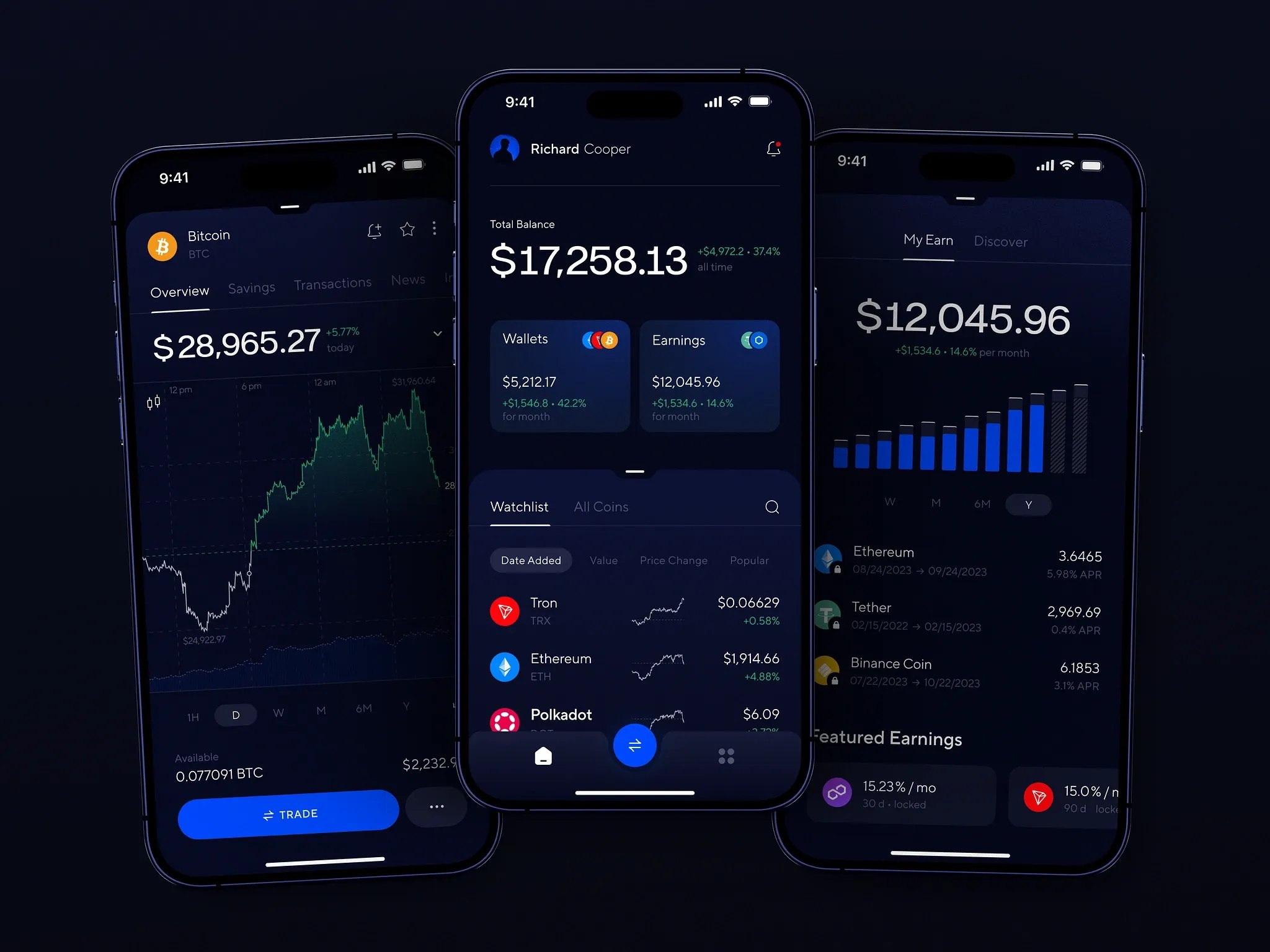
Cryptocurrency payment processor development is the work of building the system that accepts a crypto payment for an order: it issues a deposit address, watches the chain, matches what arrived to what was expected, and records the result. The same job is sold as crypto payment processing software development, as a custom crypto payment solution, and as creating a crypto payment processor. It is not a wallet the payer holds, not the checkout button, and not a router across card processors.
Shakuro designs and builds that system to order when the product is the processor, or when a hosted checkout will not take the settlement rules you actually run. If you already know which assets you will accept, who holds the keys, and whether funds stay in crypto, get in touch. The rest of this page is the boundary that turns that conversation into a scope: which states the first release can name, what a repeat of the same payment must not do, and which neighboring products we will not pretend to be.
If the job is the checkout that offers crypto next to cards and returns a paid or failed result to the store, that is payment gateway software. If the job is the keys and the balance the user signs from, that is a crypto wallet. If the job is choosing which processor or method handles each payment, that is a payment orchestration platform.
For those who prefer to listen rather than read, this article is also available as a podcast on Spotify.
What Is Crypto Payment Processing Software?
A cryptocurrency payment processor is the backend that turns an on-chain transfer into an order state. Without it, someone watches a wallet, looks up a hash, waits for confirmations, and types the result into the order. That holds for a test. It does not hold once two payments can arrive for the same address, or one payment can arrive late, short, or on the wrong network.
A gateway can sit in front of this processor and still not be the processor. The gateway owns the checkout session. The processor owns the address, the watch, and the match. A merchant that also takes cards and bank transfers often puts an orchestration layer above both, so each method has one route. This page does not take that routing job, and it does not take the payer’s key-management app.
| Product | What it owns | What this page does not take |
| Cryptocurrency payment processor | Deposit address, expected amount, confirmation rule, match to the order | The checkout button, the payer’s recovery phrase, a license |
| Payment gateway | Checkout session and the paid or failed result the store sees | The chain watch, unless you also operate the processor |
| Crypto wallet | Keys, signing, the balance the user controls | Matching a merchant order to an incoming transfer |
| Payment orchestration platform | Which processor or method handles this payment | The address and the confirmation rule |
| Cryptocurrency exchange | Order book, matching, trading balances | A merchant invoice and its deposit address |
The screen below is a trading dashboard concept. It is not a processor, and it is not a system we operate.
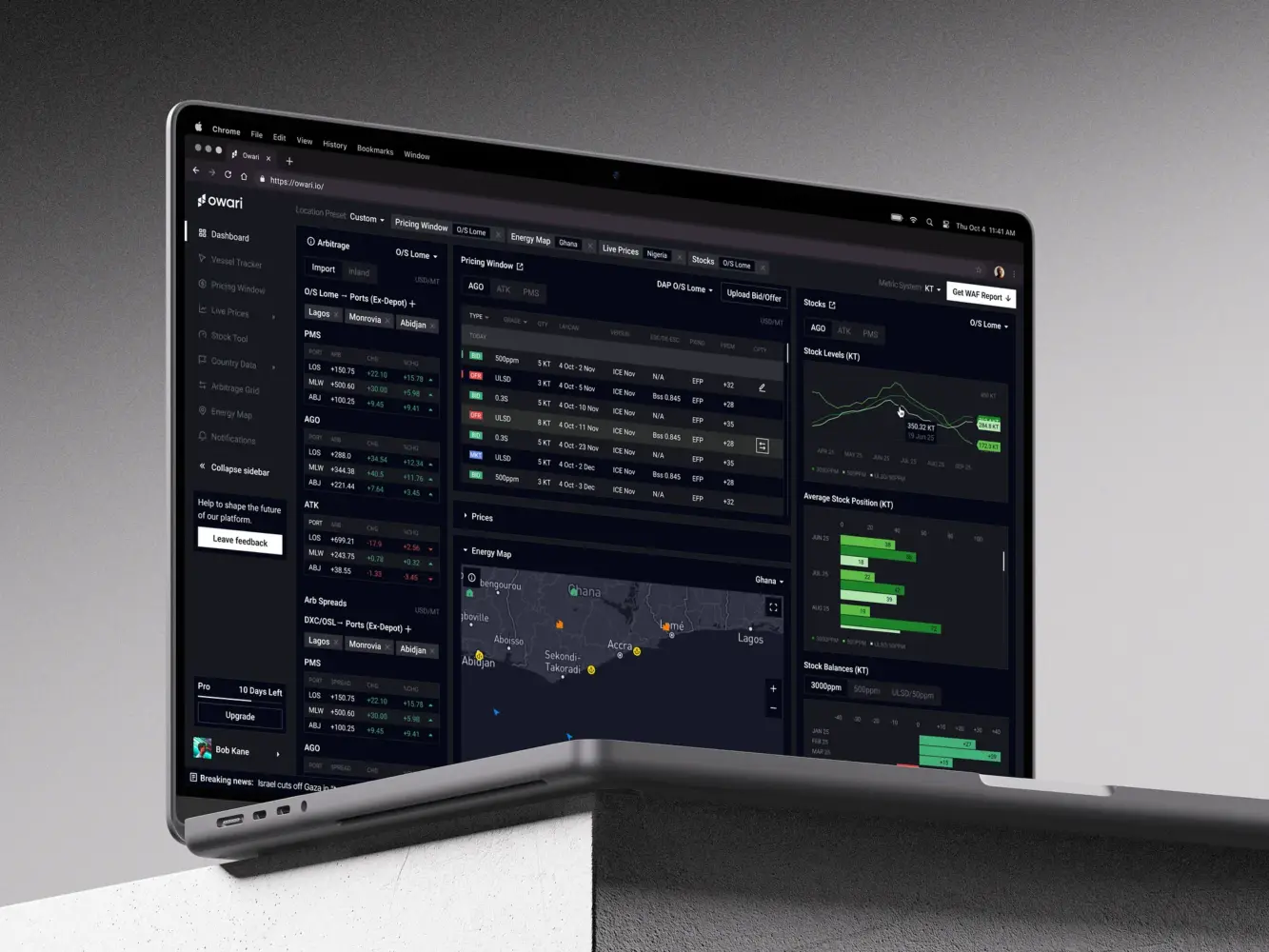
Dashboard Design for Stock Trading Platform by Shakuro
How Crypto Payments Work
The happy path is short. The work is the cases that are not on it.
- The payer selects crypto. The processor creates a payment request tied to the order, with an expected amount and an expiry.
- It issues a new address, or a memo on a shared address when the chain requires that. Reusing an address makes two orders look like one payment. A QR code only copies the address. It does not match the transfer.
- The payer broadcasts a transfer. From here the processor watches that address. It does not control whether the fee was high enough to enter a block.
- Confirmations accumulate. How many you require is a product rule you set before launch, not a universal number. Fewer confirmations return a result sooner and leave more risk if the chain reorganizes.
- The order moves to paid, underpaid, overpaid, expired, or wrong-network. Funds stay in the asset you received, or a later step sends them to an exchange if conversion is in the contract.
A working processor is the one that can name those states. A build that only updates the order on the happy path will need a person in the loop.
Types of Crypto Payment Platforms
People use “crypto payment platform” for three different buys. The name on the slide does not tell you which one you are pricing.
A merchant gateway is the checkout. A payment starts, an address is shown, the order updates. From the outside it looks like any other method. Internally it still needs this processor, or a hosted processor you rent. If the backlog is only the checkout, do not commission this page’s build.
A cryptocurrency payment processor is what you see once payments leave a single wallet someone refreshes by hand. It tracks transfers, records expected against received, and passes a result to the store, the ledger, or the next service. Several assets, or several internal services that must agree on the same payment, is usually when this piece stops being optional.
A conversion step is optional and separate. Some operators do not want the received asset on the balance sheet. Incoming funds then move to a liquidity venue. The processor records the rate and the result. It does not become the venue.
Core Components of Crypto Payment Systems
The names change. The roles do not. Miss one and the payment can still exist on-chain while your order does not know about it.
- Chain access. The processor reads transfers and broadcasts its own when funds must move. Your node gives you the view and the maintenance. A hosted node saves the maintenance and adds a vendor that can fall behind. Both are normal. A disconnected node does not delete the payment. It stops you seeing it.
- Payment engine. It knows which address belongs to which order, what was expected, and what arrived. An underpayment, a second transfer, and a transfer after expiry are noticed here, or they are noticed by a support ticket.
- Keys. Addresses come from a key store. Signatures for outgoing transfers are made there. That store is not the payer’s wallet, and a wallet app is the wrong estimate for it. An exposed key cannot be rolled back. Who may sign belongs in the first release, not in a later hardening phase.
- Monitoring. Something stays connected and applies the confirmation rule as blocks arrive. If it stops, payments remain on-chain and the order stays pending.
- Operator screens. Payment list, expected against received, status, the hash. When an earlier step fails, this is where a person sees it. A chart of a trading book is not that screen.
The image below is a cryptocurrency app design. It is not a processor, and it is not evidence that we settle merchant payments.
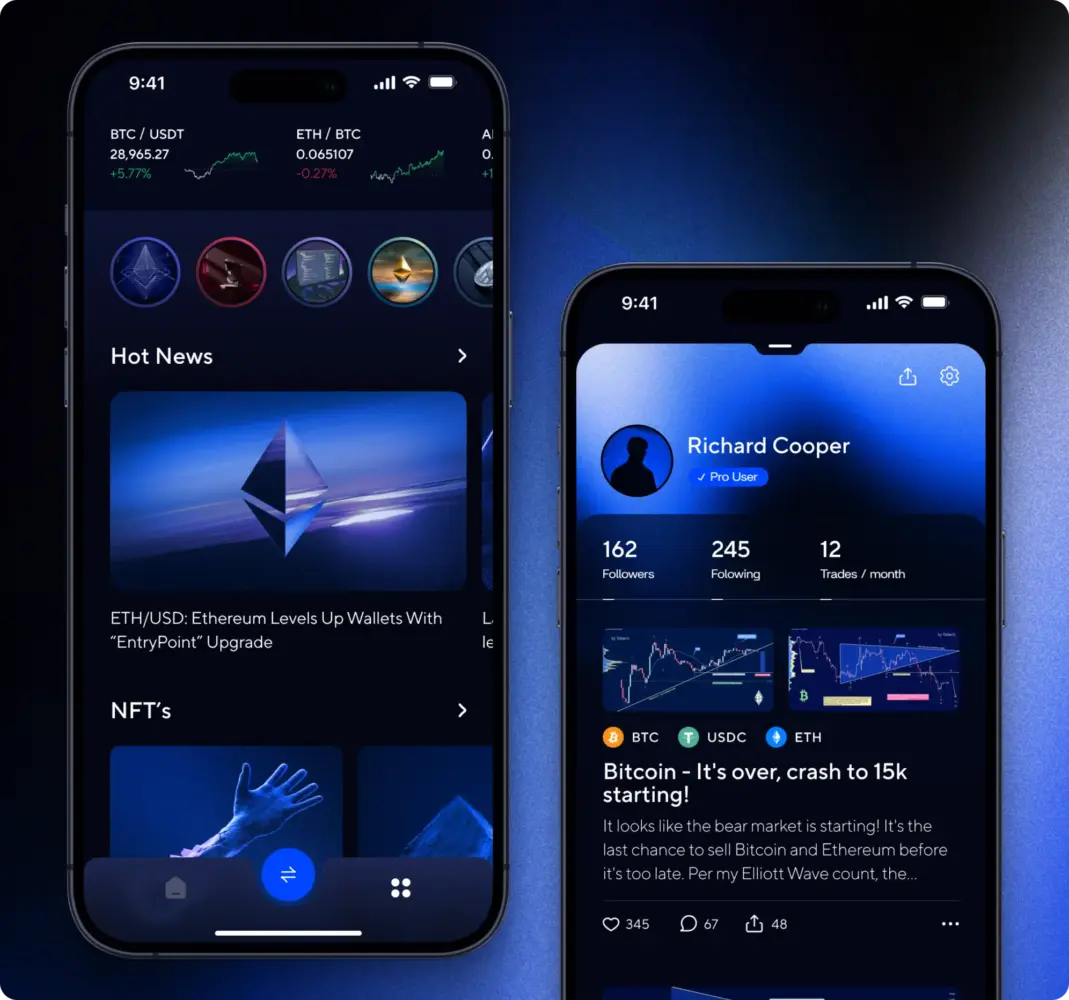
Crypto Trading App by Shakuro

Key Features of Crypto Payment Processing Platforms
After the first live payments, the same gaps show up. These are the ones that change the estimate. A feature list that does not change the state model is not a feature of the processor.
Multi-Currency Support
One asset is a valid first release. The second asset is not a toggle. Fees spike on different clocks, confirmation speed differs, and a token transfer is not a native coin transfer. Stablecoins show up when the buyer wants the invoice amount to stay still while the transfer confirms. They reduce the price swing. They do not remove a late transaction or a transfer on the wrong network.
Adding a chain later is cheaper than pretending five chains are one integration. Finish the first chain, including underpay and expiry, before you price the second.
How the Processor Stores Keys
Hot keys stay online for incoming detection and for small outgoing transfers, such as a sweep or a refund. Cold keys stay offline and hold the reserve. That split is a design once the amounts are no longer a test. Who may sign, from where, and with what approval, belongs in the first release. A library that generates a key on the application server is not that design.
This is still not a wallet product. The payer’s app, the recovery phrase, and the balance the user sees are priced on the wallet page linked above. The processor may call a signing service. It should not swallow that product into the same estimate.
Real-Time Transaction Monitoring
Confirmations are not instant, including on chains that advertise speed. While they build, the watcher has to stay up, match the transfer to the payment request, and ignore a transfer that does not meet the rule.
At low volume this looks like a scheduled job. At higher volume you see late arrivals, a fee too low to enter a block, and two transfers that sum to the expected amount. Those are payment states. They are not a reporting warehouse. A store of extracts for charts and exports is financial analytics software. Do not price it as a feature of the watcher.
Crypto-to-Fiat Conversion
Convert when the operator does not want the received asset on the books. Do not convert when the product is meant to hold it. The processor asks a venue for a rate, sends the conversion, and stores the rate, the fill, and the time. A short delay changes the fiat amount. The contract has to say who carries that difference: the merchant, the payer, or a spread you quoted when the invoice was created.
That venue is an exchange connection, not a trading terminal you also have to build. Cryptocurrency exchange software is a different product. Automated trading is a third product. Do not add it because conversion needs a price.
APIs and Merchant Tools
The store, the admin panel, and the accounting export do not live inside the watcher. The merchant API is the developer tool a storefront actually calls: create a payment, return the address and the state, and send a webhook when the state changes. A repeat of the same create call must not open a second payment. The webhook must be safe to deliver twice.
Finance will ask for a list, a balance, and an export. Those screens are ordinary, and they are where the product is operated every day. The web console and the API, when the product is the processor, are Web3 web development. If the buyer already runs a payments web app and only needs crypto settlement behind it, that surrounding app is fintech web development, and it is a separate scope from the watcher.
A payer or merchant phone app is a third scope. Web3 mobile app development covers that app. It does not replace the processor. A processor contract that quietly includes the phone app is two projects.
The dashboard below is an interface concept. It is not a live payment console.
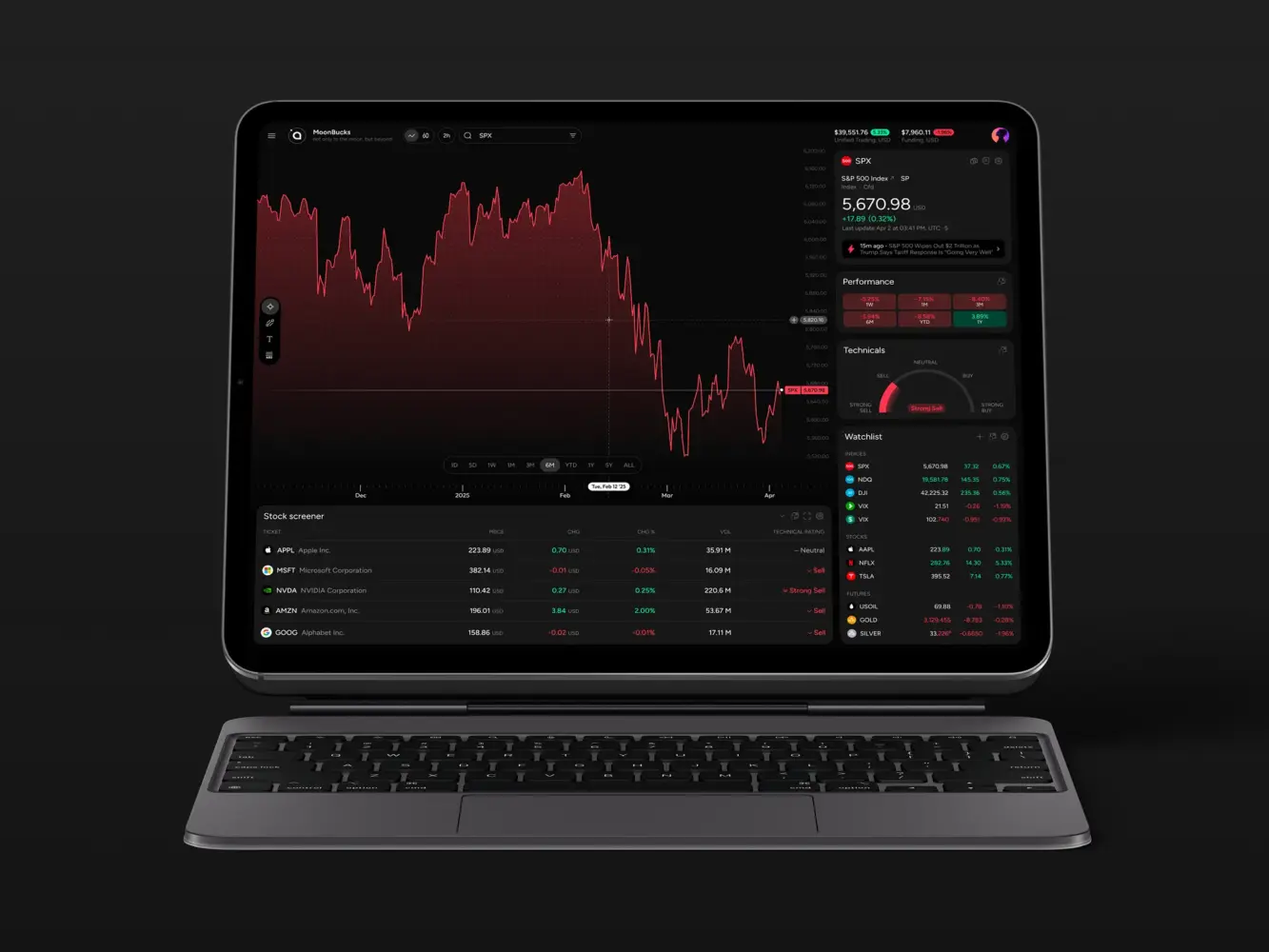
Financial Market Trading Analytics Tool Dashboard Design by Shakuro
Crypto Payment Processing Software Development Process
Nobody builds the whole platform in one pass. The early decisions are which states exist, who may move funds, and what is out of scope. An estimate before that list is a guess.
1. Product Strategy and Payment Model
Before code, name the buy. Building a crypto payment solution means one of these, not all of them.
- Accept crypto from a customer and update an order. You may only need a gateway in front of a hosted processor. Build this processor when you are the one who must issue addresses, match transfers, and settle, and a hosted product will not take the rules.
- Move value between your own services. Same engine, no checkout. The states are still required.
- Accept, then convert. Hybrid is common. Draw both halves before you price either.
Draw the states first: pending, seen, confirmed, underpaid, overpaid, expired, wrong network, refunded. Late, short, and wrong-network come up in that drawing, or they come up in production with no screen for them.
A fintech that already takes cards and wants a crypto rail beside them is looking at fintech app development for the existing product, plus this processor only if they will operate the rail. Renting a hosted processor is a valid answer. This page will say so.
2. UX/UI Design for Payment Flows
Payment screens expose weak copy immediately. Addresses are long. Network names look alike. A payer can send the right amount on the wrong chain, or a short amount because the network fee was not in the invoice.
The first screens are: choose the asset, show the address and the amount, show the state. Then the edge: still waiting, expired, underpaid, wrong network, and what the payer can do next. The state on the screen has to be the state in the engine, not a spinner that never ends. A darker theme does not create a confirmation.
3. Choosing the Technology Stack
The stack follows the failure modes, not a trend. The watcher must run continuously. The payment create call must be safe to repeat. The database must store the expected amount, the received amount, the hash, and the state, and must not overwrite history when a second transfer arrives.
PostgreSQL is a common store for that record. Redis is a common cache for a hot lookup. Neither choice repairs a model that keeps only the latest balance. Node, Python, or Go can host the API. The language is not the estimate. A retry policy, and a place to put a block the watcher missed, are the estimate.
Containers make a repeatable deploy. More than one service is not, by itself, a reason to start with a large orchestrator. Add that when you already have more than one process that must be restarted on its own.
4. Blockchain Integration
Start with the chains in the first release, not with a diagram of every chain a salesperson named. Bitcoin still appears in merchant flows. Ethereum appears where the asset is a token. A stablecoin is often the first token, because the invoice is denominated in a unit that is meant to hold still.
The worker reads blocks or a provider’s feed, detects a transfer to the issued address, and applies the confirmation count you configured. If the node falls behind, the order stays pending. Alert on that lag. Do not alert only after a person has already written in.
A general product that users call from their own wallet, with no deposit address you issued, is a blockchain app. This processor waits for a transfer. It is not that app.
5. Liquidity and Exchange Integration
Skip this step when funds stay in the asset you received. Include it when the contract says you convert.
The integration pulls a rate, sends a conversion, and stores the fill. At low volume it looks like one API call. At higher volume a thin book and a slow fill change the fiat amount. The rule for that difference belongs in the product model from step 1, not in a hotfix.
This is an exchange connection. It is not a matching engine, and it is not a protocol the payer calls directly. If the product is a protocol and the payer never sends funds to an address you issued, that is a DeFi platform. Price it there.
6. Security and Compliance
Access first: who may move funds, who may create a key, who may view a balance, who may mark a payment paid by hand. Then the log: every payment, every manual change, searchable later.
An exposed key, a role left too wide, and a missing check on the destination address are how these systems lose funds. The software can make those mistakes harder. It cannot promise the funds are safe, and this page will not.
Compliance follows the operator and the market, not the repository. Some products only need a payment history. Others need identity checks, reports, and a retention period counsel has named. Identity checks, when counsel says the operator must identify the payer, are KYC/AML software, a separate product. The company that writes the processor is not the company that transmits customer funds unless the contract says it operates the flow. A development contract does not grant that permission. Counsel names it before anyone holds customer assets. We do not publish a license, and we do not publish a certificate.
Repeated attempts and amounts that do not match can be visible in the payment log. Scoring them is fraud detection software. Do not fold that product into the processor estimate to make the security section look finished.
7. Deployment and Maintenance
The first live payments show what staging did not: a timeout, a delayed confirmation, a retry that opened a second watch. After that, the work is updates to node providers, chain rules, and the exchange API, plus a person who can read an unknown payment.
Support after launch is part of the same job. It is not a response-time promise this page does not state.
Cost of Crypto Payment Processing Software Development
Cost follows the choices above. Two diagrams can look alike and still be different projects: how many chains, whether you convert, whether counsel has named identity checks, and whether a person must resolve exceptions after launch.
We do not publish a price. An estimate without the chain list, the state list, and who holds the keys is a guess. These are the factors that move it.
- Assets and chains. Each new chain has its own fee behavior, confirmation behavior, and transfer format. Finish one before you multiply.
- Node and exchange connections. The hidden work is a retry, a node that falls behind, and a fill that does not match the quoted rate.
- Duties counsel has named. A history log is not an identity program. If counsel has not named the duty, do not price a compliance module to fill the slide.
- What happens at higher volume. Watching one address in a test is not watching a backlog of expired payments. Rebuilding that under live traffic is the expensive version.
The image below is an iOS trading-app design. It is not a cost model, and it is not a processor.
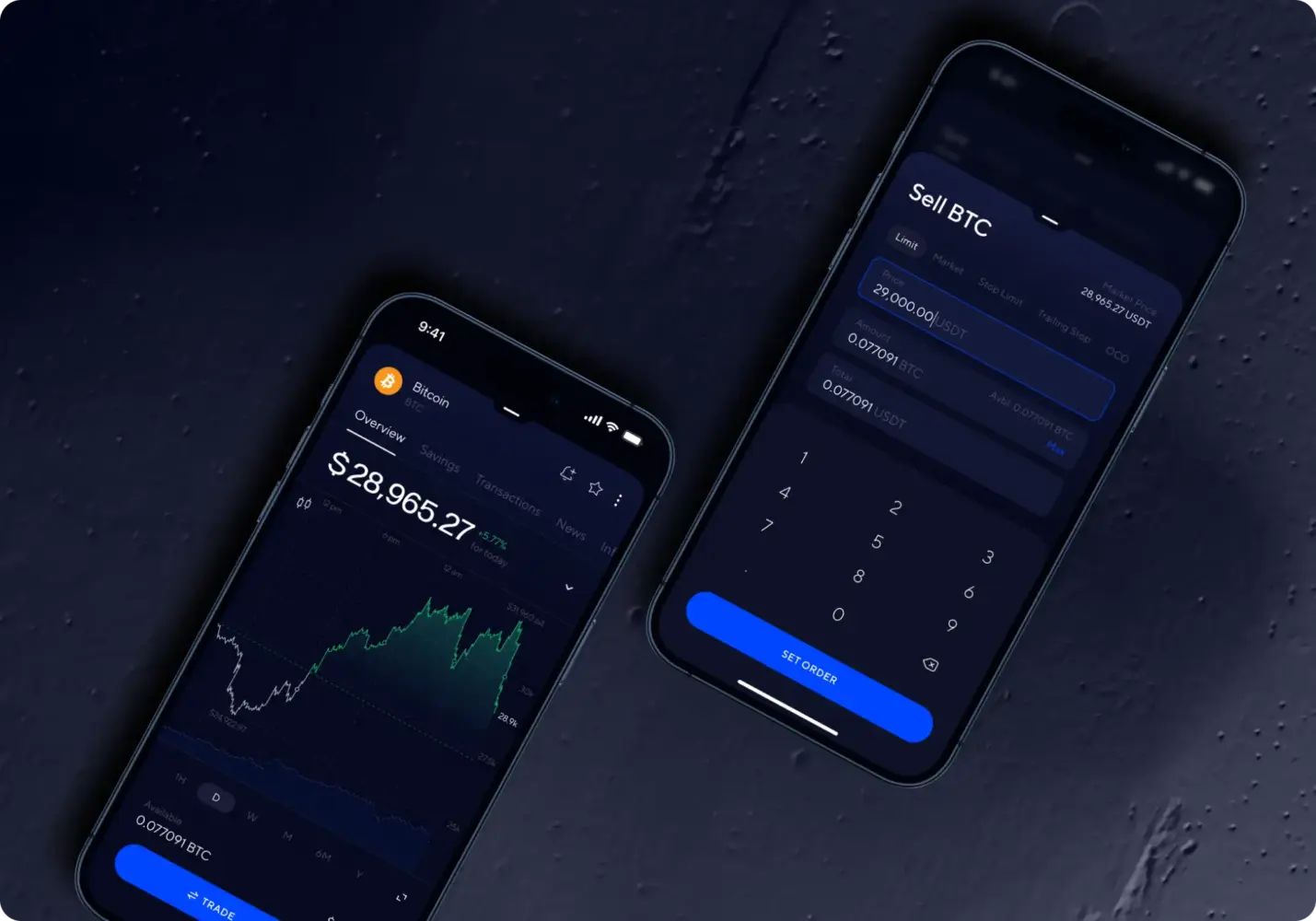
Cryptocurrency Trading App for iOS by Shakuro
Example Development Scenarios
A narrow first release is one or two assets, an address per payment, a confirmation rule, the failure states, and a small list a person can reconcile. Conversion can stay manual until a merchant asks for it. This is how you learn whether anyone will pay you to operate the rail. It is not a smaller gateway. A gateway is the other page.
A wider release starts with several assets, automatic conversion, approval for outgoing transfers, an audit log, and a watcher that alerts when it falls behind. It still is not a gateway, a wallet, and an exchange in one contract. Those stay separate pages. The effort after launch is keeping the match correct while volume and chain rules change. A longer list of screens that call the same create-payment API does not, by itself, make the project the wider one.

Common Challenges in Crypto Payment Processing Development
Testing uses wallets you control. Production uses payers who send the wrong thing. These are the four that change the design, not a longer list of warnings.
- Confirmation delay. Some transfers enter a block quickly. Others sit because the fee was low or the network was busy. The order stays pending. Support needs the hash and the confirmation count, not a guess.
- Price movement between invoice and confirmation. Quote a rate, an expiry, and who carries the difference. A stablecoin shrinks the swing. It does not delete the expiry.
- Key and access mistakes. A wide role, a key on the application server, a destination address that was not checked. Traffic does not create these. It reveals them. There is no rollback for an exposed key.
- Rules that change after launch. Reporting fields, retention, a new check counsel adds. The log has to be able to grow. The software does not decide the duty.
A processor does not make the operator compliant, and it does not make custody safe. Those are separate decisions, named before the build, not a line in the footer.
Our Experience in Web3 and Fintech Development
Shakuro does not have a published case of a cryptocurrency payment processor. Three public crypto and fintech projects are easy to misread as that work. They are interface projects. A trading screen does not prove a deposit address, a confirmation rule, or a settlement record.
Shariah-Compliant Investment Platform (ZAD)
ZAD is published as mobile app UX/UI design for a Shariah-compliant investment platform that combines a robo-advisor and trading. The case describes that interface. It does not document deposit addresses, confirmation rules, or a processor we operate. The screen below is from that design.
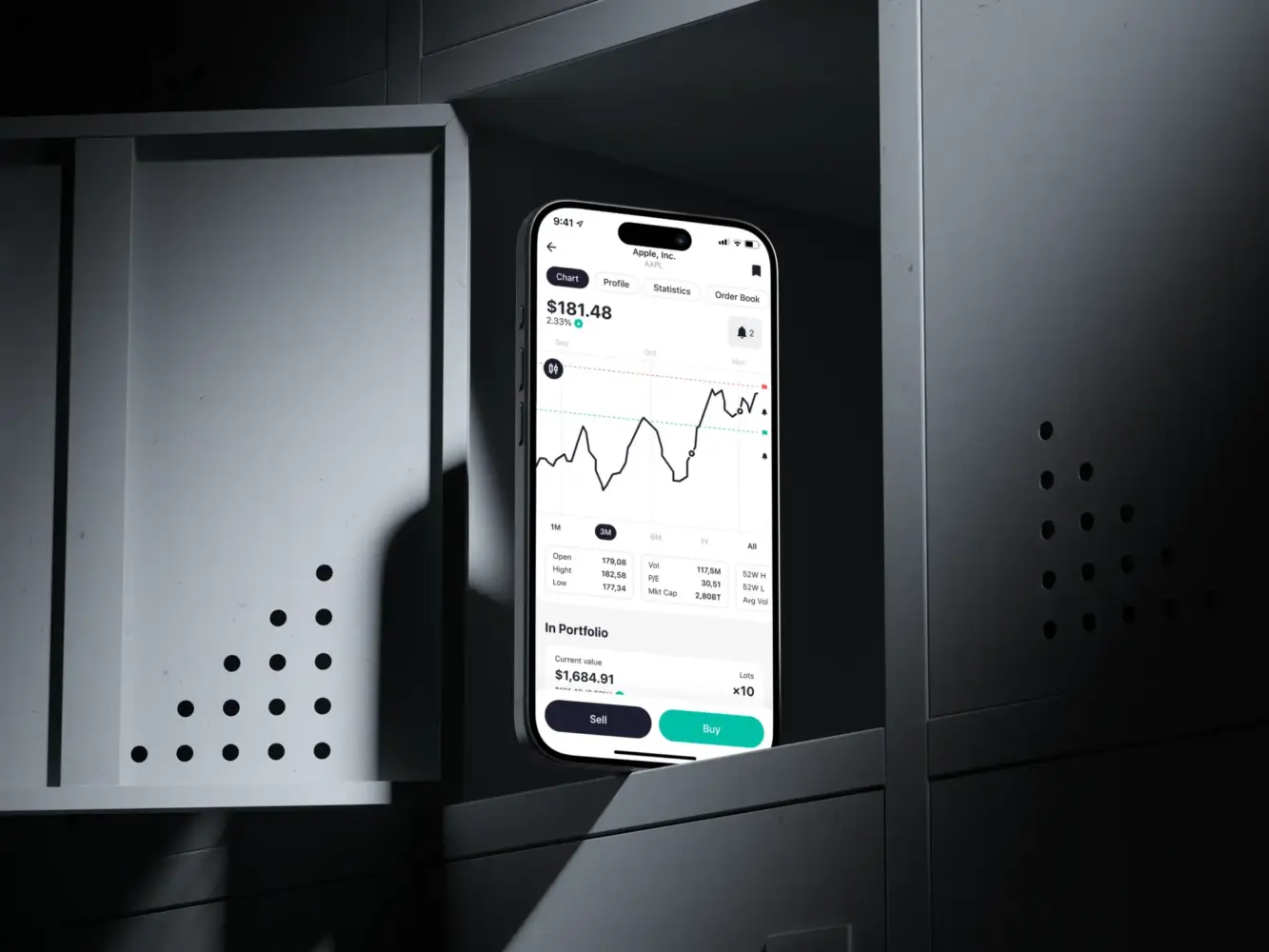
Mobile App UX/UI Design for Kuwaiti Investment Platform by Shakuro
Crypto Trading Ecosystem (Aurox)
Aurox is published as UI/UX design for a crypto trading ecosystem: a trading terminal, market pages, and token-related screens. The case is that design. It is not exchange matching, and it is not payment processing. The screen below is from that design.
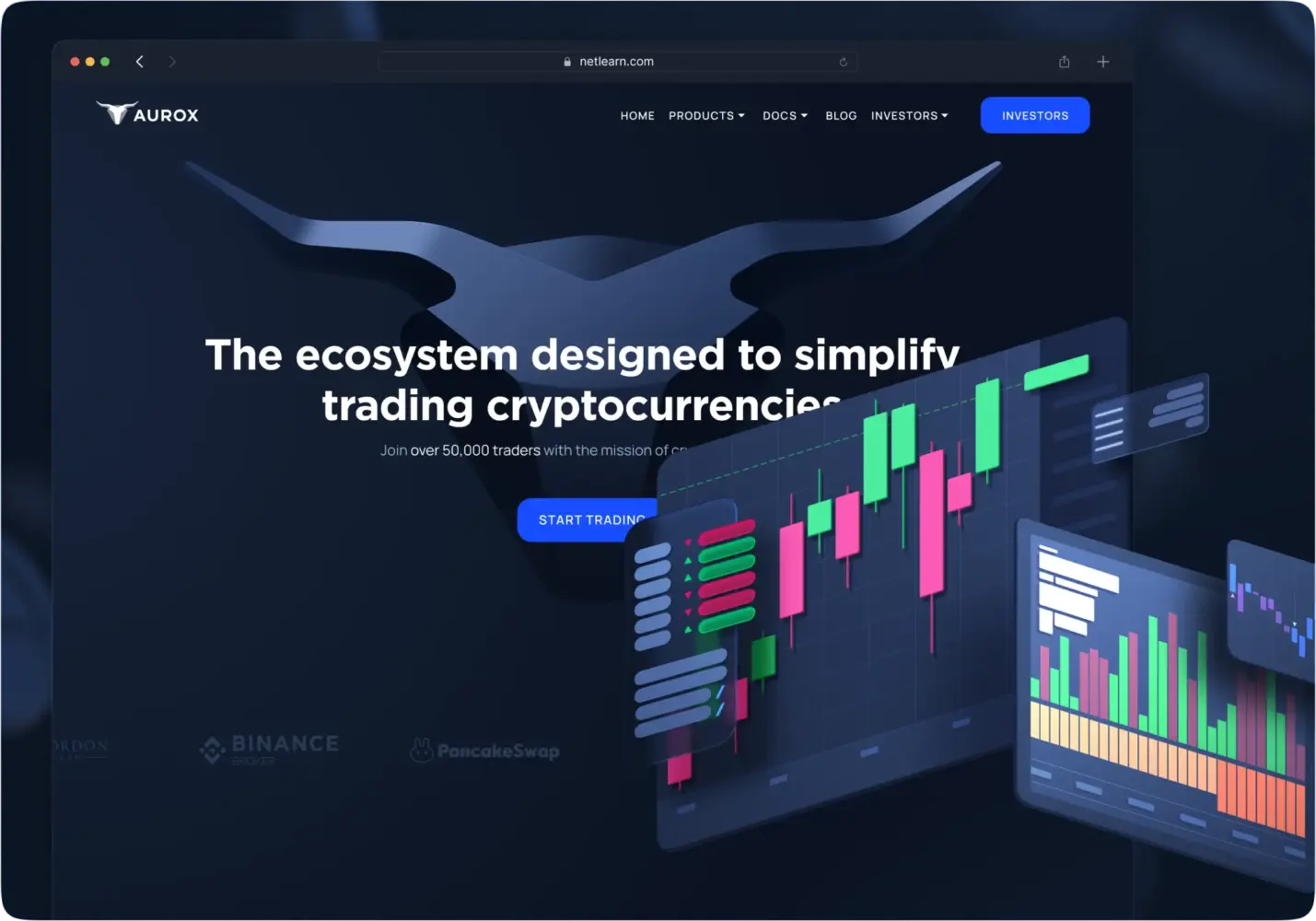
Premier Crypto Trading Ecosystem Design by Shakuro
Abyss is published as UI/UX design for a cryptocurrency investing app on iOS. The screens earlier on this page are that design. They are not evidence that we run custody or settle merchant payments.
What we can take is the build this page describes: the watcher, the payment record, the operator console, and the API. The wider on-chain practice around that build is Web3 app and software development. A fintech buyer whose product is already payments, lending, or banking uses the fintech app development page linked above for that product. It is not a substitute for the processor scope.
Why Work with a Crypto Payment Development Company
The failures are specific. A useful partner can name the state for an underpayment, a duplicate webhook, a node that falls behind, and a transfer on the wrong network. A partner who answers with a chain-logo list has not done the drawing in step 1.
Before a contract, the packet should already answer these. If it does not, the estimate is a guess.
- Who issues the address, and what happens if the create call is repeated.
- What the order shows when the transfer is short, late, or on the wrong network.
- Where the keys live, who may sign, and what stays offline.
- Which published projects are processors, and which are interface designs. This page has already answered that for Shakuro.
- Which duties counsel has named, and which of those the software must only record.
- Whether conversion is in the first release, and who carries a price move between invoice and fill.
Shakuro takes the processor when the asset list, the state list, and the key holder are real, and says so when the work is a gateway, a wallet, or a hosted checkout you should rent. That conversation does not include a promise that funds cannot be lost, and it does not include a promise of yield.
If that packet is ready, or if you want help turning a checkout idea into that packet, get in touch. Bring the assets, who holds the keys, and whether you convert. We will tell you whether the work is a processor, a gateway, or something we should not take.
FAQ
What drives the cost of crypto payment processing software development?
The chains in the first release, whether you convert, whether counsel has named identity checks, and whether a person must resolve exceptions after launch. A longer list of screens that call the same create-payment API does not, by itself. We do not publish a price without the chain list, the state list, and who holds the keys.
How does an MVP crypto payment gateway differ from an enterprise crypto payment processing platform?
Those are different products, not two sizes of one. A gateway is the checkout. Price that on the payment gateway software page. A narrow processor is one or two assets, an address per payment, a confirmation rule, and the failure states. A wider processor adds more assets, automatic conversion, approval for outgoing transfers, and an alert when the watcher falls behind. Neither size includes a wallet or an exchange unless those are separate contracts.
How is wallet security handled in crypto payment processing software?
Hot keys stay online for detection and for small outgoing transfers. Cold keys stay offline and hold the reserve. Who may sign, and from where, belongs in the first release. The software can make a wide role and a key on the application server harder. It cannot promise the funds are safe. The payer’s app and recovery phrase are a crypto wallet, not this processor.
Should crypto payment processing software convert payments to fiat?
Convert when the operator does not want the received asset on the books. Do not convert when the product is meant to hold it. Quote a rate, an expiry, and who carries the difference if the fill moves. The venue is cryptocurrency exchange software or an exchange API you do not operate. It is not a trading terminal you have to build in the same contract.
What compliance requirements apply to crypto payment processing software?
The ones counsel names for the operator and the markets you will launch in. Some products only need a payment history. Others need identity checks, reports, and a retention period. Identity checks are KYC/AML software when counsel says the operator must identify the payer. Writing the processor does not make the developer the company that transmits customer funds, and a development contract does not grant that permission. We do not publish a license or a certificate.
How do I choose a development partner for crypto payment processing software?
Ask who issues the address, what a repeated create call does, what the order shows for a short or wrong-network transfer, where the keys live, and which published projects are processors rather than interface designs. A headcount is not that answer. If the asset list and the key holder are real, get in touch. If the backlog is only a checkout button, we will say so.
Final Thoughts
Crypto payment processing software development is the match between an incoming transfer and an order, plus the states for everything that is not an exact match. The checkout, the payer’s wallet, and the router across card processors are other buys. A hosted processor is a valid buy when you do not need to operate the rail yourself.
Bring the assets, the states, and the name of the person who may move funds. That packet is the estimate. A chain-logo list is not.
Related reading