
Open banking API development is building secure, consent-based connections between banks, financial apps, and third-party providers, so a product can read account data, verify accounts, or initiate payments. A small MVP that uses an existing provider for one narrow use case with a limited dashboard costs around $30,000 to $80,000. A mid-level fintech product with richer workflows, custom data handling, admin tools, and several integrations sits closer to $80,000 to $180,000, and enterprise systems with multi-market support go well beyond that.
The first successful API call is rarely the hard part. Expired consent, incomplete bank responses, sandbox behavior that differs from production, mobile redirects, and pending payments are what the product has to survive. The bank side sets limits too: open banking APIs expose data from the core banking infrastructure, which shapes what financial apps built on top of it can do.
Below, we cover how open banking APIs work, architecture, integration, security, platforms vs custom infrastructure, the development process, common challenges, cost, and when outside services make sense.
What Is an Open Banking API?
Think of it as a controlled doorway between a financial institution and an approved third-party product. With the customer’s permission, that doorway can be used to retrieve account information, transaction history, balances, or to initiate certain payments, depending on the market and the permissions involved.
The key phrase is “with the customer’s permission.” Open banking is not a free-for-all where apps wander into someone’s bank account. A user grants consent, the bank verifies the user, and the third-party provider receives limited access for specific purposes. In the UK, for example, open banking standards describe RESTful read/write APIs that let authorized third-party providers access account data or initiate payments with customer consent.
That distinction matters. A finance app that asks users to hand over bank login details feels old-fashioned now, and frankly, a bit uncomfortable. Open banking replaces that pattern with standardized flows, stronger authorization, and much clearer boundaries.
Common use cases include:
- Account aggregation for personal finance apps
- Bank account verification for lending and onboarding
- Payment initiation for checkout or account-to-account transfers
- Cash-flow analysis for small business tools
- Affordability checks for credit products
- Financial dashboards for wealth, budgeting, or accounting products
Some of these use cases sound simple on paper. They are not always simple in production.

ZAD app by Shakuro
How Open Banking APIs Work
A typical flow starts with the user choosing to connect a bank account or authorize a payment. The product sends the user into a secure authorization journey, often through the bank or a regulated provider. The user reviews what data or action is being requested, confirms consent, and then returns to the app.
Behind that smooth-looking journey, several things happen. The app creates a consent request. The bank authenticates the user. Tokens are issued. The backend stores only what it needs. Then API calls retrieve account data, transaction details, payment status, or whatever the product is allowed to access.
It sounds tidy. In real life, there are a few wrinkles. Some users abandon the flow halfway through. Some banks return data in slightly different ways. Some consents expire sooner than the user expects. A payment can sit in a pending state while everyone waits. The product has to handle these cases without making the user feel like something broke.
This is where product thinking and engineering need to work together. A technically correct error message can still be useless. “Consent object invalid” may help a developer, but a normal person just needs to know whether they should reconnect their bank.
Open Banking API Architecture: The Pieces That Usually Matter
Good open banking API architecture is not just a diagram with boxes and arrows. It is the part of the project that decides how painful maintenance will be six months later.
Most systems include a few familiar layers:
API gateway and routing
The gateway handles traffic between your product, bank APIs, aggregator services, and internal systems. It can manage routing, rate limits, authentication checks, and request policies. If the product works across regions or providers, this layer becomes even more important.
Consent management
Consent is not a checkbox you bury somewhere in onboarding. It has a lifecycle. Users grant it, change it, revoke it, or need to renew it. Your system should know what permissions exist, when they expire, which accounts they cover, and what happens when access is removed.
Authentication and authorization
Open banking commonly depends on OAuth 2.0 and OpenID Connect patterns, with stronger profiles in many regulated ecosystems. The OpenID Foundation’s FAPI work, for instance, focuses on high-security API protection profiles for financial and other sensitive use cases. That is not trivia. It shapes how authorization requests, tokens, client authentication, and replay protection are handled.
Bank and third-party connectors
If you build direct bank integrations, connectors translate your product’s internal logic into each bank’s API behavior. If you use an aggregator or an open banking API platform, that provider handles much of the bank coverage, but your product still needs clean integration boundaries.
Data normalization
Financial data can be messy. Merchant names vary. Transaction categories may be missing or inconsistent. Timestamps can be awkward. A good normalization layer turns provider-specific responses into a structure your app can actually use.
Monitoring and audit logs
In open banking API development, you need to know when a bank connection fails, when consent expires, when payment status changes, and when latency spikes. Audit logs are not glamorous, but they are comforting when compliance or support teams ask, “What happened here?”
Developer portal and documentation
If external partners will use your API, a developer portal matters a lot. Clear docs, sandbox behavior, sample payloads, status codes, and webhook explanations save everyone time. Bad docs create support tickets. So many support tickets.
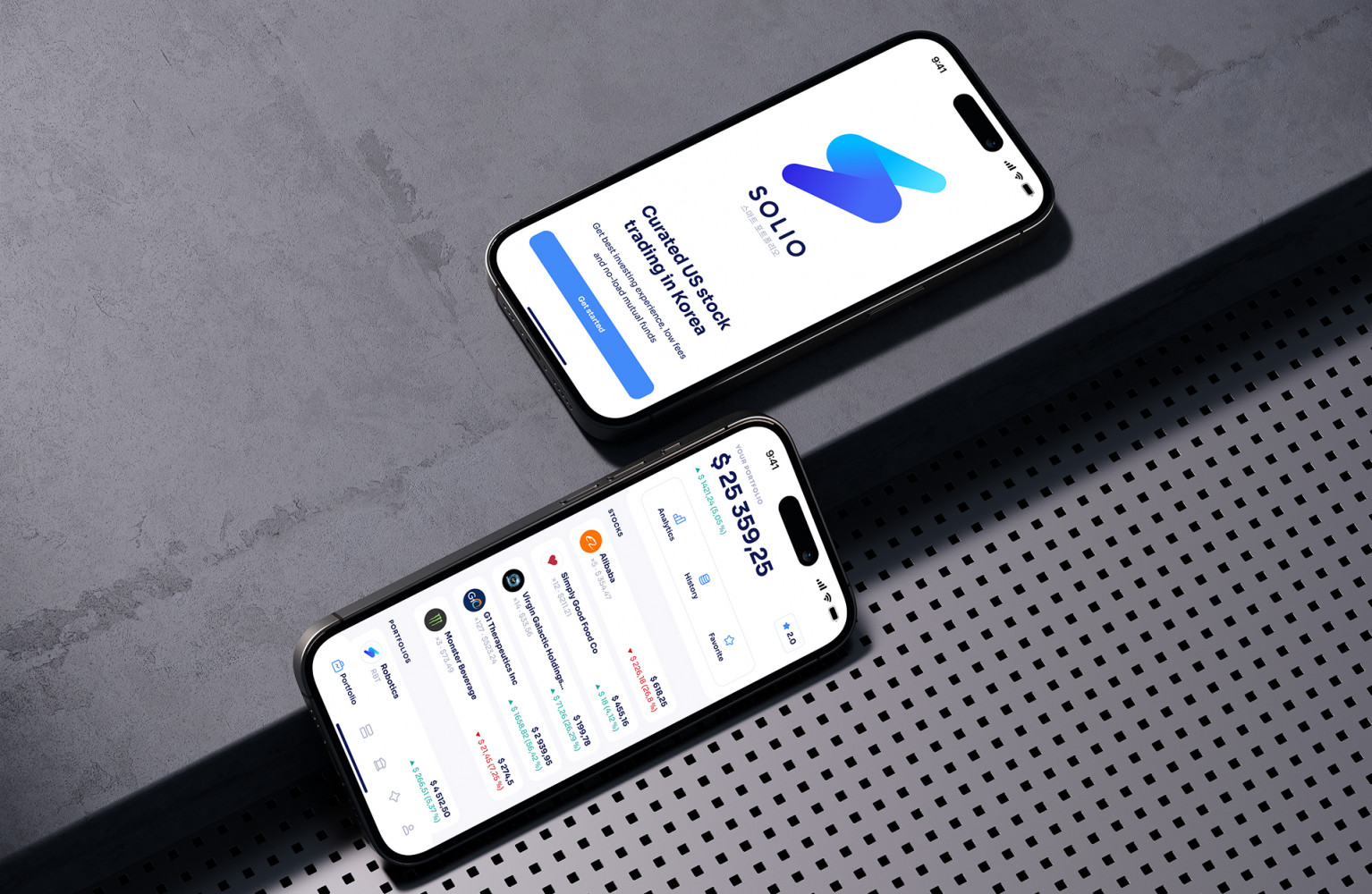
Solio App by Shakuro
What Open Banking API Integration Really Involves
You connect your app to banks, aggregators, payment providers, accounting platforms, lending systems, or internal finance tools. The work can be neat, but it is rarely plug-and-play in the purest sense.
To build open banking API integration, first, you decide what kind of access the product needs. Read-only account data? Payment initiation? Confirmation of funds? Business banking data? Each use case has different compliance, UX, and technical requirements.
Then comes provider selection. Some teams choose direct bank integrations because they need control or have a limited set of banks to support. Others use a platform to speed up coverage. There is no universal best option. A small budgeting app and an enterprise lending platform may make very different choices, and both can be right.
You also need to plan for:
- Sandbox differences compared with production
- Bank-specific error responses
- Token refresh and consent renewal
- Webhooks or polling for status updates
- Data mapping into your own domain model
- Rate limits and retry logic
- User-facing recovery flows
One small detail I have seen teams underestimate is the “reconnect” experience. Nobody puts it in the investor deck. But when consent expires or a bank connection breaks, a gentle, clear reconnect flow saves support hours and user frustration.
Open Banking API Security: The Part You Cannot Patch In Later
Security for an open banking API platform has to be designed from the beginning. It is tempting to treat security as a final review step, but financial products do not give you much room for that. The stakes are too high, and users feel it. People are already a bit nervous when they connect bank data to a new app.
At a practical level, security work usually includes:
- Strong customer authentication where required
- OAuth 2.0 and OpenID Connect-based authorization
- Secure token storage and rotation
- Encryption in transit and at rest
- Fine-grained permissions
- Rate limiting and abuse detection
- Audit trails for sensitive events
- Secure webhook verification
- Data minimization, so you do not store more than you need
By the way, the “do not store more than you need” part sounds obvious, but it changes product decisions. If a feature only needs the last 90 days of transactions, why collect more? Extra data can become extra liability. Not always, but often enough that it is worth asking the question early.
Open banking API security is also about user trust. Consent screens should be plain enough that a busy person can understand them. If the copy feels evasive, people hesitate. And honestly, they should.
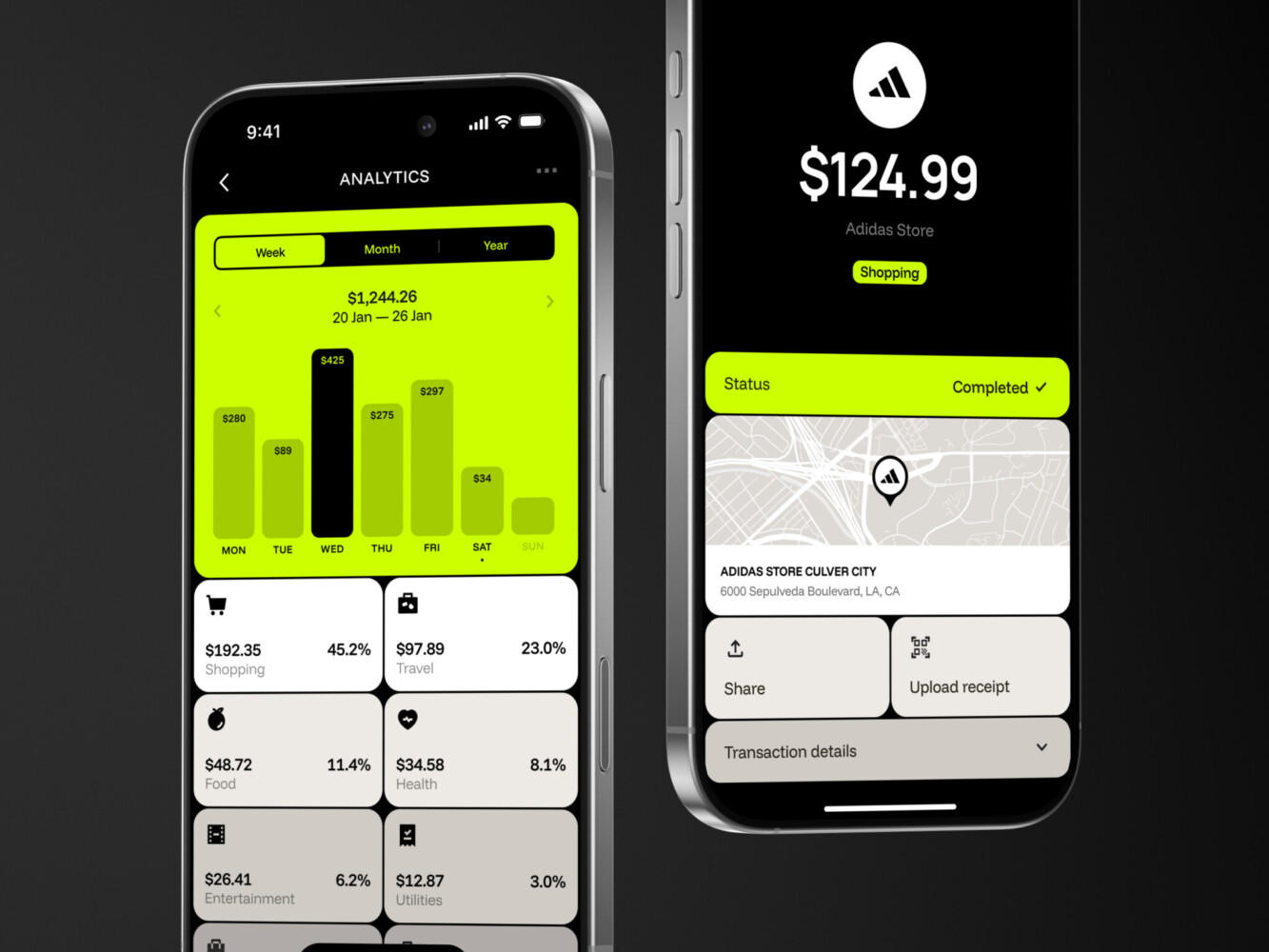
Banking application by Shakuro
Should You Use an Open Banking API Platform?
An open banking API platform can save a team a lot of time. Platforms usually provide bank connectivity, normalized data, payment initiation flows, compliance tooling, dashboards, and developer documentation. For many startups, this is the fastest way to test a product without spending months building bank-by-bank integrations.
The tradeoff is control. A platform may not support every market you need. Its data model may not match your product perfectly. Pricing can become painful at scale. You also depend on the provider’s uptime, roadmap, and support quality.
Here is the rough way I would think about it:
- Use a platform when speed, bank coverage, and compliance support matter more than deep customization.
- Build more custom infrastructure when you need unusual workflows, strict control, regional specialization, or long-term ownership of the integration layer.
- Mix both when you want to launch with a provider now and gradually move some critical integrations closer to your own system later.
That last option is common. Not always planned, but common.
The Open Banking API Development Process
A sensible development process keeps the technical work tied to the real product goal. Otherwise, you can spend months building a beautiful integration layer that does not quite solve the customer problem. It happens. More often than people admit.
1. Discovery and Product Strategy
Start with the use case. Are you helping users make payments, prove income, analyze spending, manage business cash flow, or onboard faster? The answer affects everything else. You also need to understand target markets, regulatory obligations, bank coverage, user expectations, and what the product must do on day one.
2. Compliance and Data-Flow Planning
Map what data enters the system, where it is stored, who can access it, and when it should be deleted. This is not only for lawyers or auditors. Developers need it too. A clear data-flow map makes architecture decisions less fuzzy.
3. UX/UI Design for Consent and Financial Workflows
Financial UX has to be calm. Users need to know what they are connecting, why it is needed, and what happens next. The best flows do not shout. They explain just enough, then get out of the way.
This is where fintech design experience really helps. Teams like Shakuro, for example, work on fintech products where security, dashboards, payment flows, and user trust all sit in the same room. That combination matters because open banking is not only a backend problem.
4. Architecture planning
For open banking API integration, choose the integration approach, define system boundaries, design the consent model, plan logging and monitoring, and decide how data will be normalized. This is also the moment to think about future markets, not just the first launch.
5. Core development and integrations
Backend teams build API clients, data models, authentication flows, admin tools, event handling, and business logic. Frontend teams build account connection, consent, payment, dashboard, and support states. QA starts early because mocks alone can hide too much.
6. Security testing and validation
Security reviews should cover token handling, API permissions, session behavior, webhook validation, logs, encryption, dependency risk, and failure states. If the product touches regulated markets, conformance and documentation work may also be required.
7. Launch, monitoring, and scaling
After release, watch conversion, consent failures, API errors, bank availability, payment status delays, support tickets, and latency. The first production month can teach you more than a neat internal demo ever will.
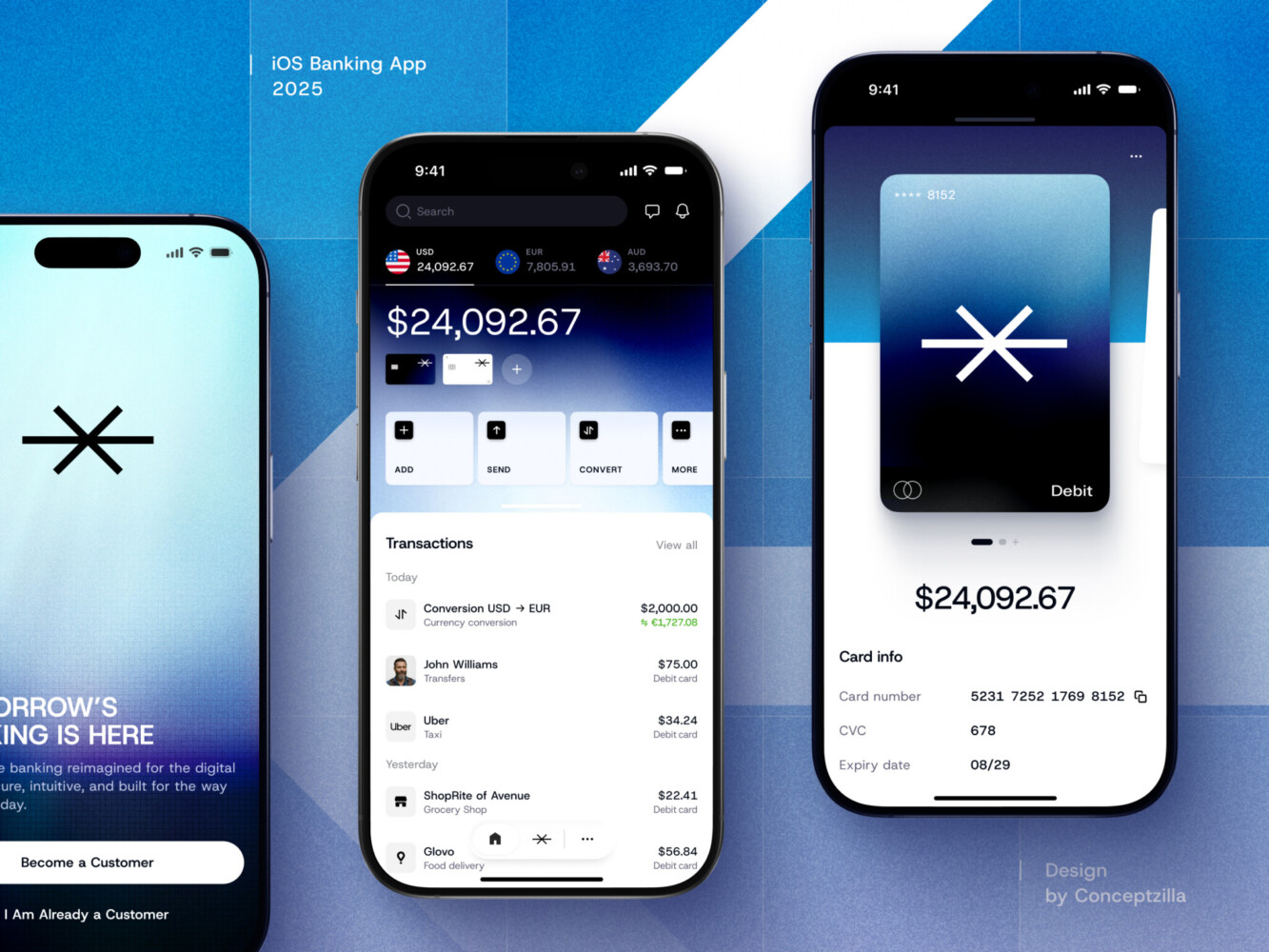
Mobile banking app by Conceptzilla

Common Challenges in Open Banking API Development
The first challenge is inconsistency. Standards help, but not every bank behaves in exactly the same way. Even when APIs follow a common profile, there can be differences in payloads, error codes, redirect handling, and uptime.
Another challenge is the gap between sandbox and production. A sandbox can tell you whether your basic flow works, but it may not recreate real user behavior, real bank delays, or the odd little cases that show up at scale.
Data quality can also be a headache. Transaction descriptions may be cryptic. Merchant enrichment may need extra processing. Categorization can be wrong. If your product makes decisions based on financial data, you need checks and fallbacks.
Then there is compliance. It is a little annoying, but you get used to it over time. Documentation, access controls, audit logs, retention policies, incident processes, and vendor checks are part of the product, not paperwork floating off to the side.
Finally, there is maintenance. Bank APIs change. Providers update versions. Users revoke consent. Regulations move. If nobody owns the integration layer after launch, the product slowly becomes brittle.
How Much Does an Open Banking API Cost to Build?
Cost depends on scope, region, provider choice, and how much compliance work is involved. Still, rough ranges help.
A small MVP that uses an existing provider, supports a narrow use case, and has a limited dashboard might land somewhere around $30,000 to $80,000. A mid-level fintech product with richer workflows, custom data handling, admin tools, and several integrations may sit closer to $80,000 to $180,000. Enterprise-grade systems, especially those with multi-market support, advanced security, custom analytics, and heavier compliance needs, can go well beyond that.
These numbers are not magic. They move based on:
- Number of supported banks or providers
- Account data vs payment initiation
- Compliance and security requirements
- Data normalization and enrichment
- Admin dashboards and reporting
- Mobile and web experience
- Monitoring, support, and maintenance needs
The cheapest version is not always the best version. But neither is the most complicated one. The best option is usually the one that proves the business case without painting the team into a corner.

Our Experience in Creating Fintech Solutions
We have been building fintech products of various difficulty for more than 19 years. The main focus is high security, accessibility, and easy navigation. The users can manage their assets while you do what you do best—grow your business.
To prove my words, I’ll highlight a couple of cases from our portfolio.
The first one is ZAD, a Shariah-compliant fintech platform for mobile investing. The main goal was to empower young people in their journey towards financial freedom. The app had to be secure, friendly, and supportive. We incorporated a robo-advisor that gave users a firm footing while they started the journey. At the same time, risk profiling is based on the improved KYC process.
The second one is Solio, a Korean stock trading app. We focused on creating an easy-to-use app with numerous features and integrations that helped beginners enter the world of stock trading. After studying the Korean market, we picked a problem-solving approach instead of one based on pure aesthetics. Just like ZAD, Solio has a robo-advisor and KYC/GDPR-based processes.
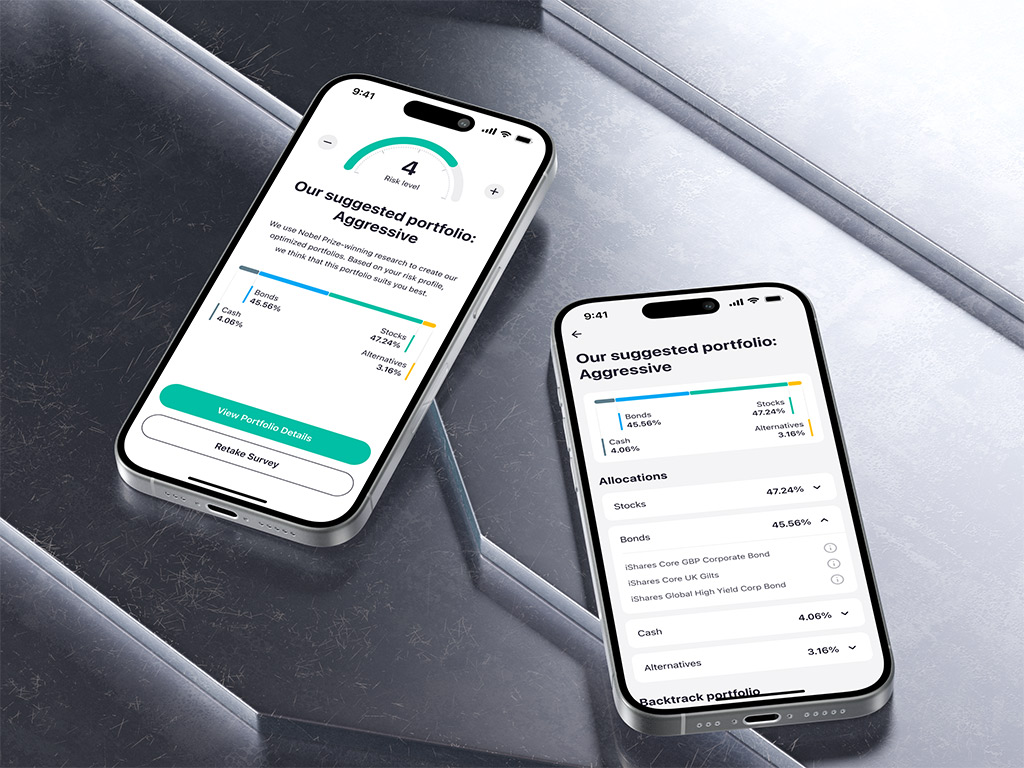
Risk profiling in ZAD app
When Open Banking Development Services Make Sense
They are useful when the project has too many moving parts for a small internal team to handle comfortably. That might mean complex backend architecture, financial UX, provider selection, security reviews, data dashboards, or compliance-heavy workflows.
Open banking development services can help with discovery, architecture, UX/UI, backend engineering, testing, and post-launch support. The real value is not just extra hands. It is pattern recognition. A team that has worked on fintech products has usually seen the same scary-looking problems before, only with different names.
That said, you still need strong product ownership on your side. No vendor can guess your risk appetite, business model, or customer promise perfectly. The best projects feel like shared work, with clear decisions and no mysterious black box.
Final Thoughts
Open banking can make financial products faster, smarter, and easier to use. But the actual work asks for more than a few API calls. You need clear consent flows, thoughtful architecture, careful security, reliable integrations, and patient monitoring after launch.
If there is one thing about open banking API development I would underline, it is this: build for the messy middle, not just the happy path. Users will drop off. Banks will return odd responses. Tokens will expire. A payment will sit in limbo at the worst possible time. A good product expects that and still feels calm.
For fintech teams planning a new product, the practical next step is to map the use case, data flows, provider options, and security requirements before writing too much code. It is less exciting than opening the IDE, sure. But it really helps.
If you are planning a fintech product that needs secure banking data, payment flows, or financial dashboards, Shakuro’s fintech web development team can help turn the rough idea into something people can actually trust and use.
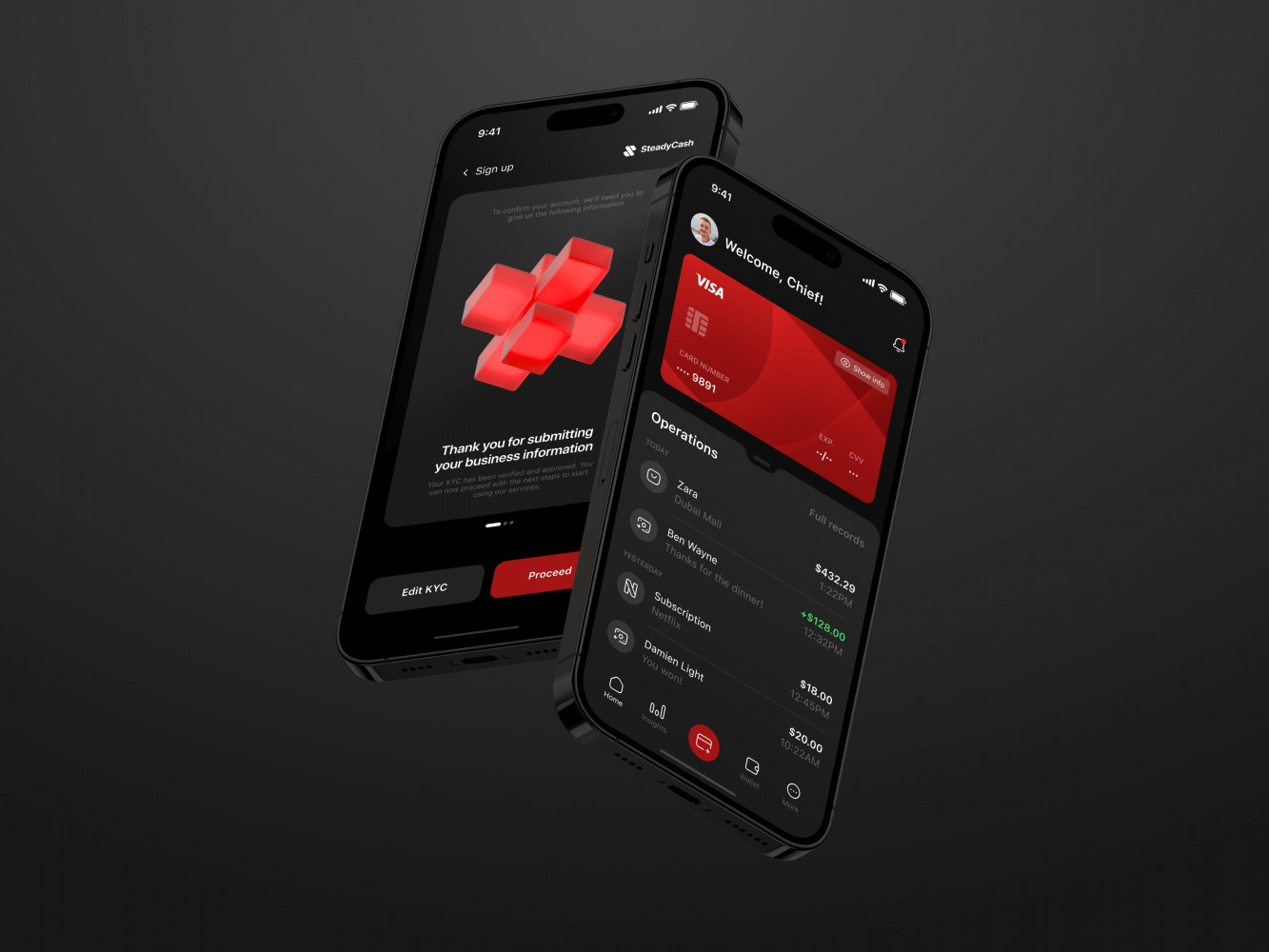
Mobile Banking App by Coneptzilla
FAQ
What is an open banking API?
An open banking API is a secure interface that lets an approved third-party product access bank account data or initiate payments with the customer’s consent. The user grants consent, the bank verifies the user, and the provider gets limited access for specific purposes. Typical uses are account aggregation, bank account verification, payment initiation, cash-flow analysis, and affordability checks. Permissions depend on the market and use case.
How long does open banking API development take?
A focused MVP can take a few months, especially when it uses an existing open banking provider. A larger product with custom integrations, advanced security, admin tools, and compliance work can take six months or more. The timeline depends heavily on scope: the number of banks, account data vs payment initiation, and how much data normalization the product needs.
How much does it cost to build an open banking API product?
A small MVP on an existing provider with a narrow use case and a limited dashboard costs around $30,000 to $80,000. A mid-level fintech product with richer workflows, custom data handling, admin tools, and several integrations costs about $80,000 to $180,000. Enterprise systems with multi-market support, advanced security, custom analytics, and heavier compliance go well beyond that.
Is open banking API integration secure?
Open banking integration can be secure when it is designed properly from the start. That means strong customer authentication, OAuth 2.0 and OpenID Connect authorization, secure token storage and rotation, encryption in transit and at rest, fine-grained permissions, rate limiting, audit trails, and webhook verification. Store only the data you need: extra data becomes extra liability.
Do you need an open banking API platform?
Not always. A platform helps when speed, bank coverage, normalized data, and compliance tooling matter more than deep customization, which is why many startups use one to test a product. Custom infrastructure makes more sense for unusual workflows, strict control, or regional specialization. Many teams launch with a provider and later move critical integrations into their own system.
What features should an open banking product include?
Most open banking products need consent management, secure account connection, data retrieval or payment flows, clear user status messages, and error recovery. Behind the scenes, add monitoring, admin tools, audit logs, and support for consent renewals. A gentle reconnect flow for expired consent or broken bank connections is easy to underestimate, but it saves support hours and user frustration.
Related reading
- Payment Gateway Software Development: How to Build a Secure Payment Processing System
- Banking Software Development: How to Build Modern Digital Banking Platforms
- Neobank App Development: How to Build a Digital Banking App
- Remittance Software Development: How to Build a Secure Money Transfer Platform