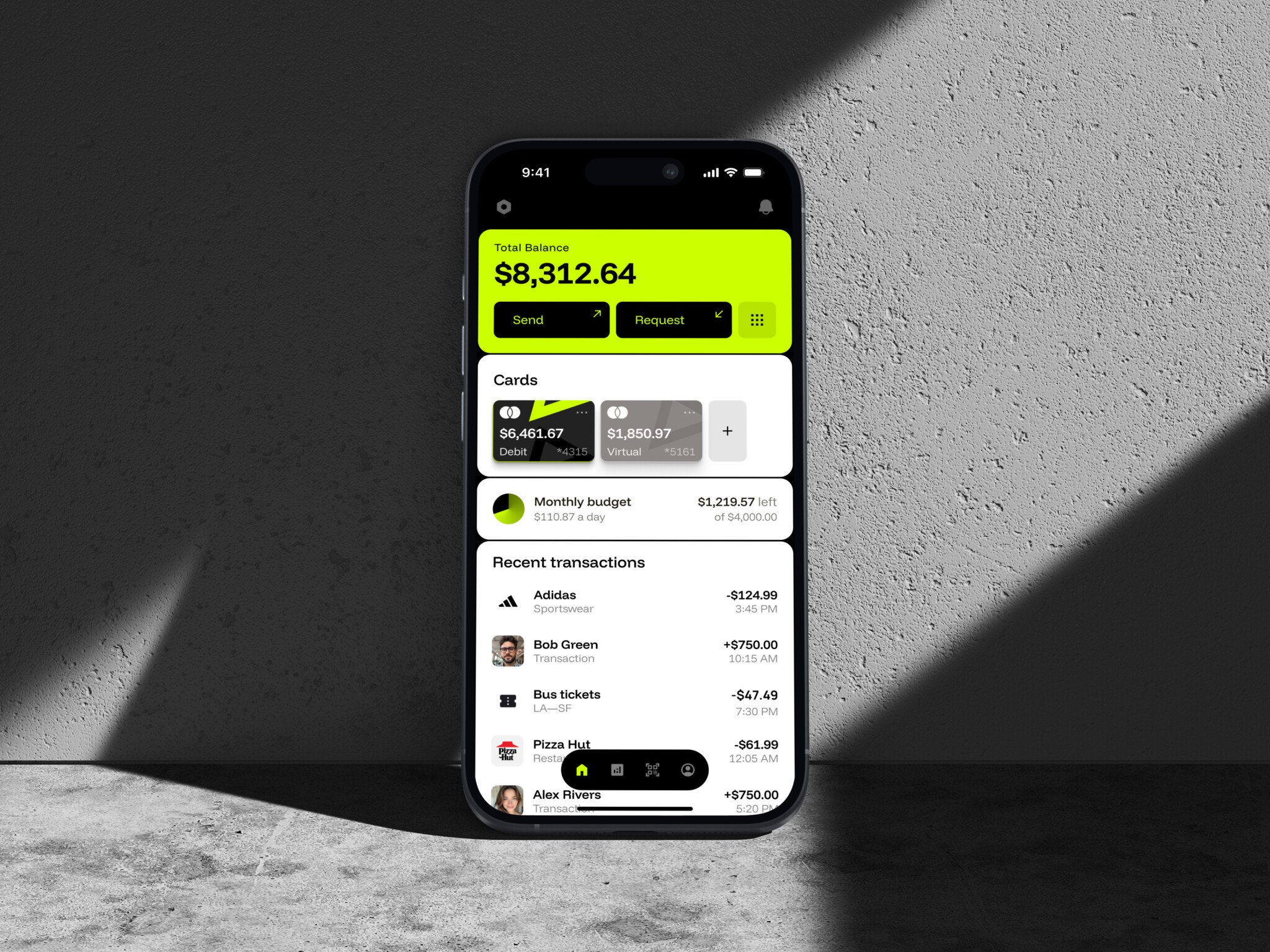
Core banking platform development is building the system that runs a bank’s accounts, ledger, payments, loans, and reporting, with customer apps and internal tools on top of it. An MVP with a basic ledger, user management, simple payments, and a single currency costs $150,000–400,000 and takes 3–6 months. An enterprise platform with lending, treasury, real-time payments, and multi-entity support costs $2 million–10+ million and takes 18–36+ months.
Many banks still run on legacy cores that need constant patches, carry security holes, and cannot connect to modern APIs. Replacing a core is risky: one data error during migration and customers leave. Keeping the old one is risky too, because maintenance eats the budget meant for new products.
This guide covers core banking features, architecture, the development process, integrations, security and compliance, modernization versus building from scratch, cost, common challenges, and how to choose a partner, based on our fintech software development work.
What Is a Core Banking Platform?
A core banking solution is the central system that handles the main financial operations of a bank, neobank, credit union, or fintech product. It keeps track of customer accounts, transactions, deposits, loans, cards, payments, fees, limits, and reporting.
If the mobile app is the front door, the core banking system is the building behind it. The app can look beautiful, but if the core is slow, rigid, or badly connected, users will feel it sooner or later.
The development process usually includes both the engine that processes financial operations and the internal tools people need to manage them. Think admin dashboards, customer support screens, audit logs, workflow approvals, product configuration, reporting, and integrations with outside providers.
A digital banking app and a core banking platform are not the same thing. The app lets customers open accounts, send money, freeze cards, or view spending. The core decides what is actually true in the system. That distinction sounds obvious, but in early product planning it gets blurred more often than you might expect.
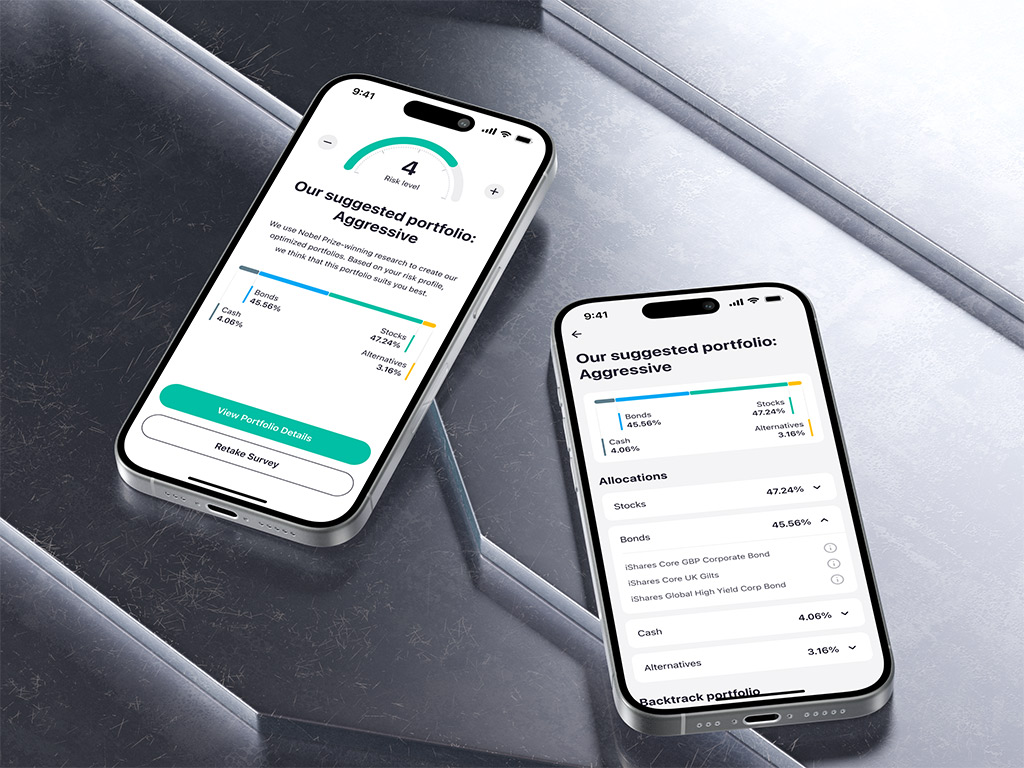
Risk profiling in ZAD app
Why Core Banking Systems Are Being Rebuilt
Many financial companies are still carrying systems that were built for a slower world. They may work, technically. But changing them can feel like moving furniture in a tiny room. Every new feature touches something old. Every integration becomes a project. Every report needs help from three teams.
Core banking system development matters now because financial products need to move faster without becoming reckless. Banks want to launch new account types, connect to payment providers, automate onboarding, use better analytics, and offer cleaner user experiences. Banks that work with several processors often add payment orchestration between the core and those providers. Fintech teams want the same thing, just with even more pressure from investors, competitors, and impatient users.
There is also the regulatory side. KYC, AML, PCI DSS, GDPR, audit trails, data retention, user permissions, fraud monitoring. Not exactly light reading for a Friday evening, but very real. If you build a financial product and leave compliance as an afterthought, it usually comes back with a bill attached.
Products like banking apps, payment platforms, lending software, trading tools, wealth management dashboards, and personal finance apps—that range matters because modern banking products rarely live in one neat category anymore. A digital bank may need payment flows, dashboards, lending logic, KYC, cards, and analytics all in one product.
Core Banking Platform Features
The feature set depends on the business model, of course. A credit union, a neobank, and a lending startup will not need the same platform. Still, most core banking solutions share a familiar backbone.
Account and customer management comes first. The system needs to create, update, freeze, close, and verify customer accounts. It also needs customer profiles, business profiles, document storage, status tracking, and support history.
Then come payments and transaction processing. Transfers, deposits, withdrawals, card transactions, scheduled payments, reversals, failed transaction states, fees, and transaction limits all need clear logic. Instant transfers between customers, the kind users expect from a P2P payment app, put the most pressure on this logic. This is where vague requirements get expensive. “The payment should fail gracefully” sounds simple until you define every failure case.
Product management is another major part. A bank may need to configure checking accounts, savings accounts, loans, cards, deposits, overdrafts, interest rates, fees, and eligibility rules. Hardcoding that logic is tempting in a hurry. Later, it becomes annoying. A configurable setup is usually a better option if the product will grow.
KYC and AML workflows also belong close to the core. The platform should support identity verification, document checks, sanctions screening, risk scoring, manual review, and audit history. Users just see an onboarding flow. The team behind it sees a queue of statuses, exceptions, edge cases, and compliance notes.
And yes, admin dashboards matter. They are not glamorous, but they are where a lot of real work happens. A good internal interface helps support teams resolve issues, compliance teams review activity, and managers see what is going on without asking engineering for a CSV every Tuesday.
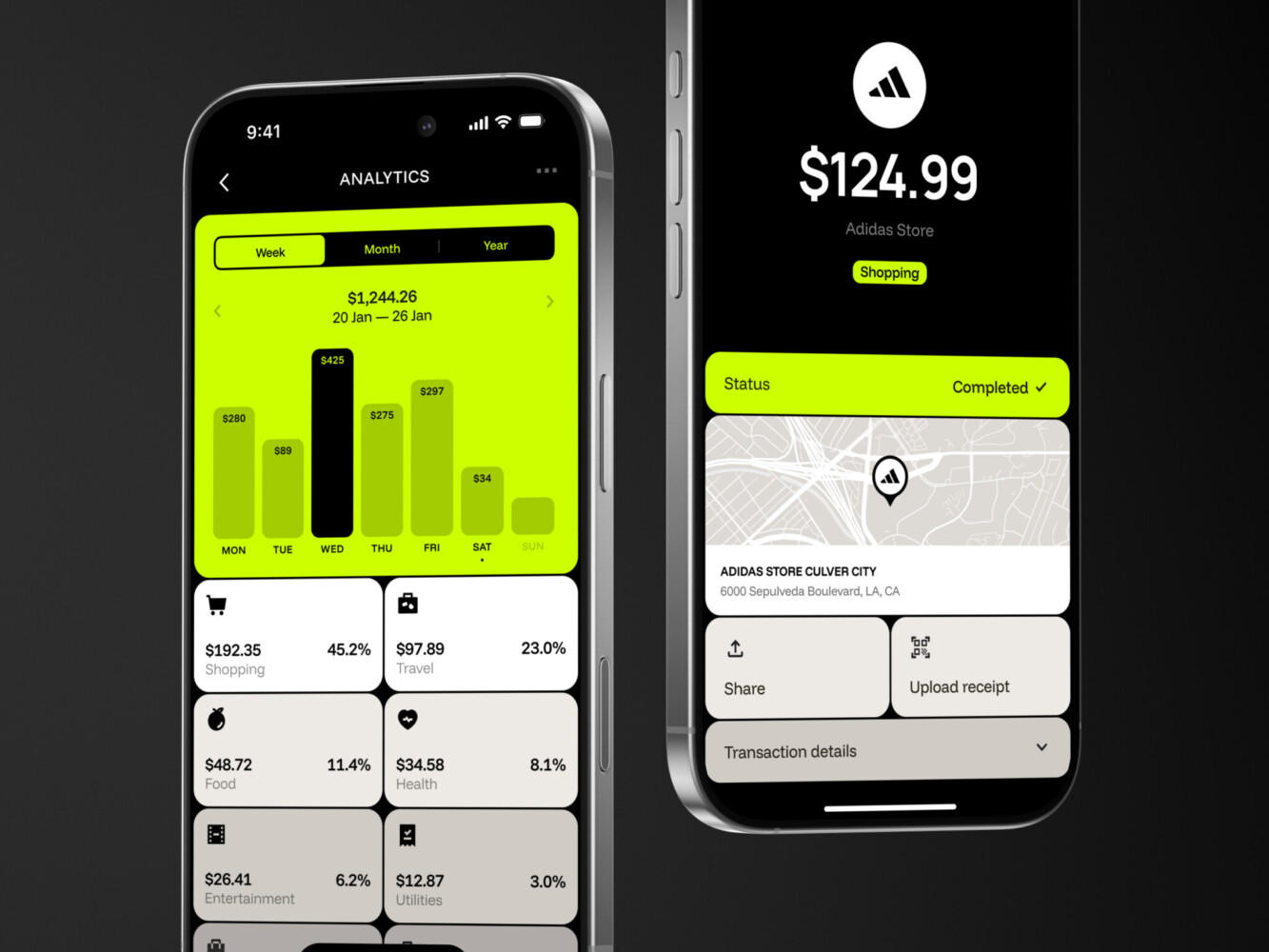
Banking application by Shakuro
Architecture: What Sits Under the Hood
Architecture is where core banking platform development gets serious. A simple diagram can hide a lot of decisions.
At the center, you usually have a ledger or transaction engine. This is the part that records money movement and account balances. Around it sit customer data, product configuration, payment processing, reporting, integrations, risk controls, and APIs.
An API layer is especially important. Modern financial products need to connect with mobile apps, web portals, payment gateways, banking APIs, KYC services, analytics tools, CRM systems, notification providers, and sometimes older internal systems that nobody wants to touch too much. Legacy systems have survived for a reason, even if they are not fun to work with.
For the frontend, fintech dashboards and portals often use tools like React or Next.js because teams need responsive interfaces that handle a lot of state and data. On the backend, stacks such as Python with FastAPI, .NET, or Ruby on Rails can work well depending on the product, team, existing infrastructure, and performance needs. By the way, we use these technologies in our fintech stack, along with cloud setup, monitoring, and databases such as MySQL, PostgreSQL, and MongoDB.
The main point is not to chase fashionable tools. The best option is the one your team can build, secure, test, maintain, and explain six months later when something weird happens in production.
Core Banking Development Process
Step 1. Discovery
A sensible development process starts before anyone opens the code editor. Discovery comes first. You need to understand the business model, user roles, regulatory context, workflows, integrations, reporting needs, and what should happen in the strange edge cases.
Step 2. UI/UX Design
Then comes UX and product design. This may sound like a customer-facing concern, but it is not only that. Internal banking tools can become painfully hard to use if design is treated as decoration. In my experience, messy admin screens create slow operations, more support tickets, and tired employees. People do their best, sure, but the interface keeps getting in the way.
Step 3. Architecture
Architecture planning follows. The team chooses how to structure modules, APIs, data storage, authentication, permissions, logging, and deployment. This is where you decide what belongs in the MVP and what should wait. It is also where someone has to ask the unpopular questions. What happens if a KYC provider is down? What if a payment is pending for too long? Who can reverse a transaction? What is logged? Who reviews it?
Step 4. Development
After that, development can move through backend services, frontend interfaces, integrations, QA, security checks, load testing, and deployment. Banking software development services should also include support after launch, because financial products are never really “done.” Regulations change. Payment providers update APIs. Users find odd paths through the product. Teams ask for better reports. It is a living system.
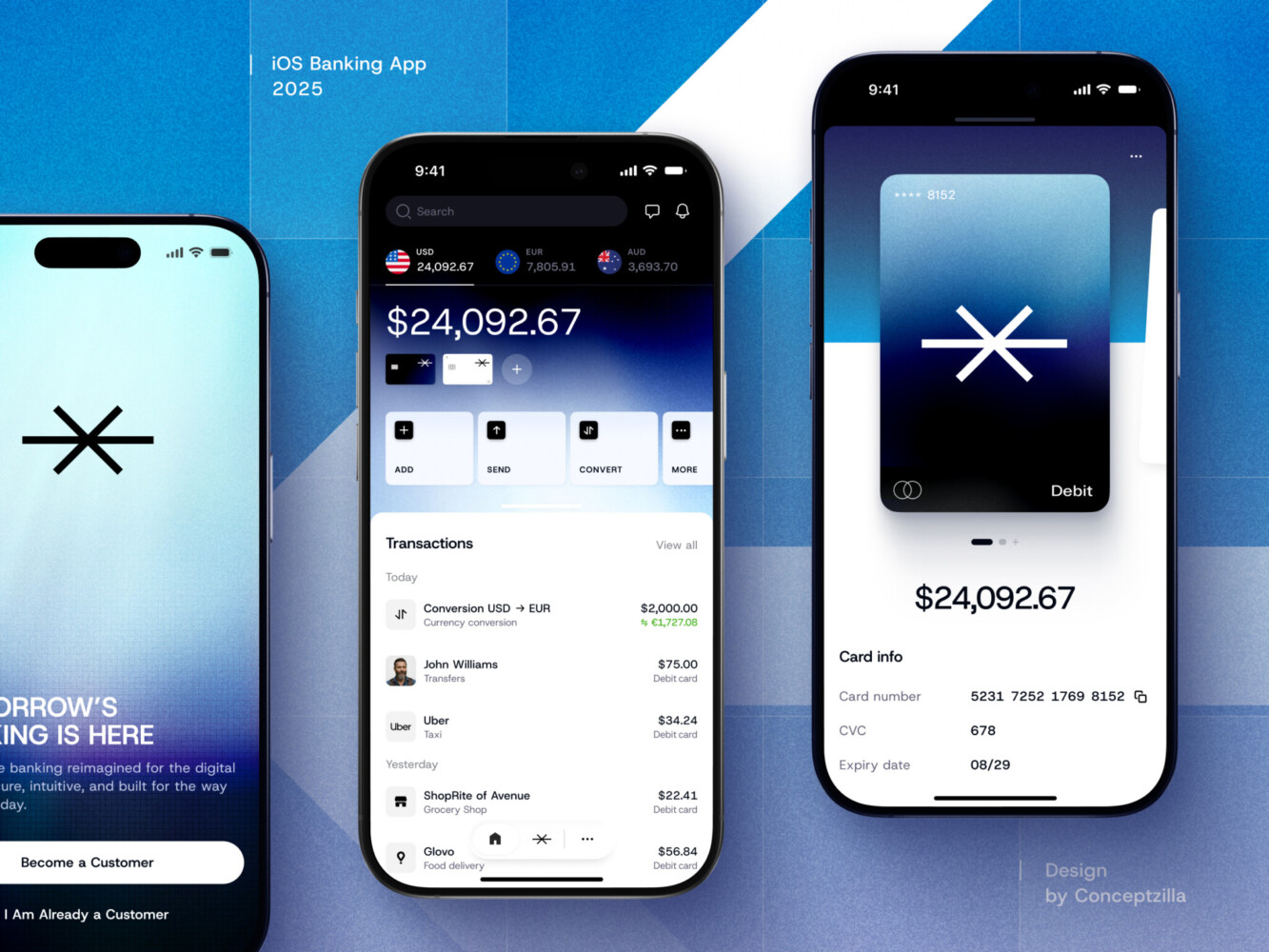
Mobile banking app by Conceptzilla

Integrations You Will Probably Need
Almost every banking platform needs integrations. Some are obvious: payment processors, banking APIs, card issuers, KYC vendors, identity verification tools, and notification services.
Others show up a little later. Analytics, CRM, fraud detection, credit bureaus, accounting software, document signing, customer support tools, and data warehouses. By the way, this is why integration planning should happen early. A product can look simple in a prototype and still need eight outside systems before launch.
Banking APIs, payment providers, analytics tools, KYC services, and other external systems are common integration work. That lines up with what most fintech projects need. The trick is not just connecting the APIs. It is designing clear states, retries, error handling, monitoring, and support tools around them.
If a transfer fails, the user needs a clear message. The support team needs enough context. The system needs logs. Compliance may need a record. Engineering needs a way to debug it without opening five dashboards and guessing.
Security and Compliance Are Not a Separate Chapter in Real Life
Security is often written as one section in a requirements document. In the actual product, it touches everything.
A core banking platform should include encrypted data transfer and storage, MFA, role-based access control, API security, audit logs, secure session handling, fraud monitoring, and regular vulnerability checks. Depending on the product and region, standards such as PCI DSS, GDPR, or other financial regulations may apply.
Regulation-aware development includes GDPR, HIPAA, PCI, authentication, MFA, role-based access, encrypted data, and API security. For banking software, those are not nice extras. They are table stakes.
The human side matters too. Permissions should be understandable. Audit logs should be searchable. Risk alerts should not be so noisy that teams ignore them. It is a little annoying to design these things carefully, but you get used to it. And later, when something needs investigation, everyone is grateful.
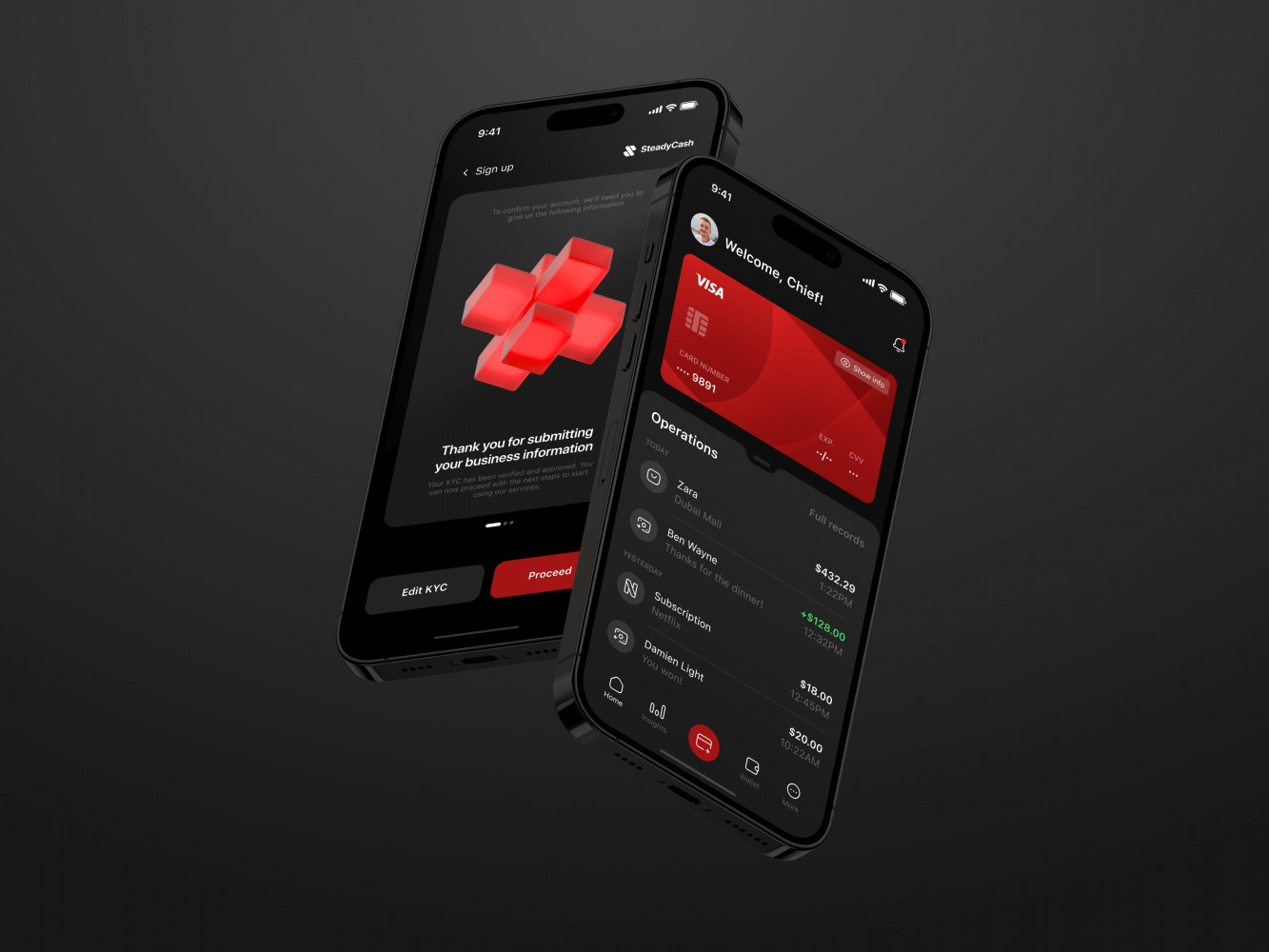
Mobile Banking App by Coneptzilla
Modernization vs Building From Scratch
Core banking modernization can mean several things.
Sometimes a company wraps an old core with APIs so it can build better digital products around it. Sometimes it replaces one module at a time, such as onboarding, payments, reporting, or customer management. Sometimes the old system is too limiting, and building a new platform becomes the cleaner path.
There is no universal answer. Building from scratch gives more control, but it also carries more responsibility. Modernizing in layers may reduce risk, but it can leave you managing old constraints for longer than planned. You have to look at the current system, migration risk, compliance requirements, budget, timeline, team capacity, and product roadmap.
If the legacy core still works well for transaction processing, keeping it for a while may be sensible. If every new feature takes months and nobody wants to touch the code, that is a different conversation.
How Much Does Core Banking Platform Development Cost?
It is hard to give a clean number without knowing the scope. Anyone who does should probably add a very large asterisk.
Cost depends on the number of user roles, account types, workflows, integrations, compliance requirements, design depth, data migration, reporting, testing, and support. An MVP for a focused fintech product is a very different effort from an enterprise platform with multiple regions, products, permissions, and legacy migration.
The big cost drivers are usually integrations, security, compliance, transaction logic, data migration, and testing. UX can also be a major factor, especially when the product has both customer-facing apps and internal tools.
A practical way to estimate is to split the platform into modules: onboarding, accounts, ledger, payments, cards, loans, admin portal, reporting, notifications, integrations, and support tools. Then define what each module must do in version one. Not someday. Version one. That little distinction saves a lot of money.
| Feature / Aspect | MVP (Minimum Viable Product) | Mid-Level Product | Enterprise-Level Product |
| Estimated Cost Range | $150,000 – $400,000 | $500,000 – $1.5 Million | $2 Million – $10+ Million |
| Timeline | 3 – 6 months | 9 – 18 months | 18 – 36+ months |
| Core Features | Basic ledger, user management, simple payments (ACH/wire), basic reporting, single currency. | Multi-currency support, loan origination, deposit products, advanced reporting, API gateway, compliance modules (KYC/AML). | Full suite: complex lending, treasury, trade finance, real-time payments, AI-driven analytics, multi-entity support, high-frequency trading capabilities. |
| Team Size | Small (3-5 devs, 1 PM, 1 QA) | Medium (8-15 devs, specialized BA, DevOps, Security) | Large (20+ devs, multiple teams, dedicated security, compliance, architecture, project managers) |
| Infrastructure | Cloud-based (AWS/Azure/GCP), basic setup. | Hybrid or advanced cloud setup, load balancing, basic disaster recovery. | Multi-region cloud or on-premise hybrid, high-availability clusters, robust disaster recovery, dedicated security ops. |
| Compliance & Security | Basic KYC/AML integration, standard encryption. | Advanced compliance workflows, audit trails, role-based access control, regular penetration testing. | Full regulatory compliance (GDPR, PCI-DSS, local banking laws), real-time fraud detection, extensive audit logs, certified security standards. |
| Integrations | Few key integrations (e.g., one payment processor, one identity provider). | Multiple integrations (payment gateways, credit bureaus, CRM, accounting software). | Extensive ecosystem: SWIFT, multiple payment networks, third-party fintech partners, legacy system bridges. |
| Scalability | Limited. Designed for thousands of users. | Moderate. Designed for tens to hundreds of thousands of users. | High. Designed for millions of users and high transaction volumes. |
| Maintenance & Support | Basic support, occasional updates. | Dedicated support team, regular feature updates, monitoring. | 24/7 support, dedicated DevOps/SRE team, continuous improvement, SLA-backed uptime. |
If you struggle to estimate your product, then drop us a message. Our fintech development team will help you get exact numbers.
A Few Things to Keep in Mind
First off, don’t just look at the development cost. The real expense often comes after launch. Maintenance, updates, compliance changes, and scaling infrastructure can easily add 20-30% to your annual budget. It’s a bit like buying a car; the sticker price is one thing, but insurance, gas, and repairs add up.
Second, an MVP isn’t about cutting corners on security. Never do that. In banking, trust is everything. An MVP means focusing on the *essential* features, not skipping the essential safeguards. You can skimp on nice-to-have reports, but you can’t skimp on encryption or KYC.
Lastly, these numbers assume you’re building from scratch or heavily customizing. If you’re using a white-label solution or a BaaS (Banking-as-a-Service) provider, your upfront costs might be lower, but you’ll pay more in recurring fees and have less control. It’s a trade-off.
Most founders underestimate the mid-level range. They think they can get away with an MVP for longer than they actually can. But once you start adding loans, cards, or international transfers, the complexity jumps significantly. It’s better to plan for that mid-level scope early on if you know you’re going to grow fast.
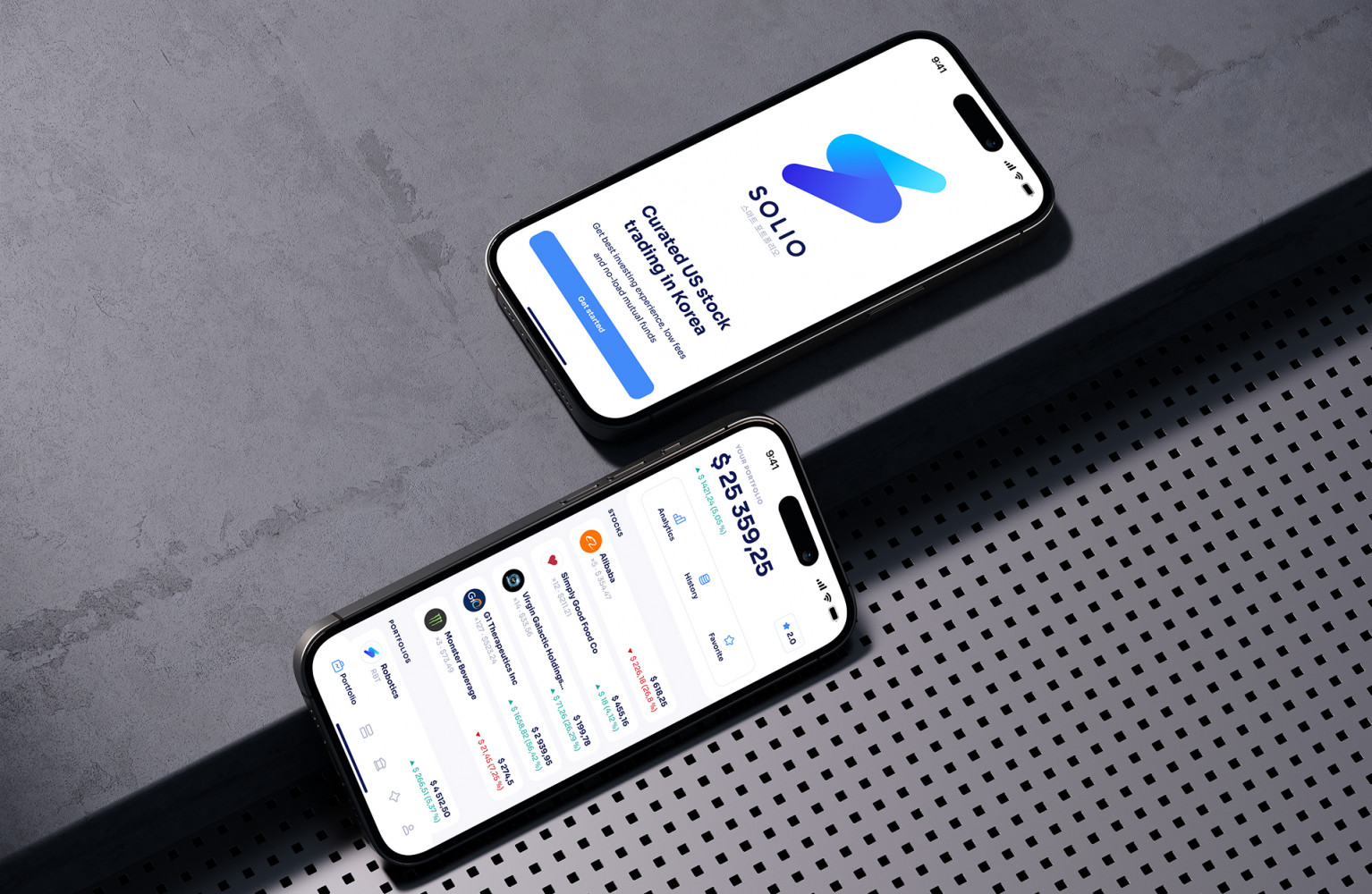
Solio App by Shakuro

Common Challenges in Core Banking Software Development
Data migration is one of the hardest parts. Old systems often contain duplicates, missing fields, inconsistent formats, or business rules that live in someone’s memory rather than documentation. It is not elegant work, but it is important.
Scalability is another challenge. Banking systems need to handle peaks, retries, background jobs, reconciliation, and reporting without slowing down the product. Performance issues in a social app are irritating. Performance issues in a banking system make people nervous very quickly.
Third-party dependencies can also be tricky. Payment providers, KYC tools, credit bureaus, and banking APIs all have their own limits, downtime windows, response formats, and quirks. Good engineering means planning for those quirks instead of pretending they will not happen.
And then there is UX complexity. Financial products contain rules, warnings, statuses, checks, limits, and forms. If you push all that complexity onto the user, the product feels heavy. Good UX does not remove the complexity. It organizes it so people can move through the task without feeling lost.
Our Experience in Building Fintech Products
For a core banking project, it helps to work with a team that has already handled financial workflows, data-heavy interfaces, and regulated product logic.
Our fintech portfolio includes ZAD, a mobile investment platform with robo-advisor and trading features built around Shariah-compliant investing. The mission was to deliver stock trading features with an easy-to-use interface, so people would have an easier time managing their assets. At the same time, all features should be in accordance with Shariah law.
It also includes Solio, a trading and investment app with KYC, profiling, localization, and third-party API integrations. This one is aimed at young people who don’t have much experience in stock trading. So we had to make the core banking features accessible for everyone. Also, the Korean market has different regulations that we also took into consideration.
Both cases show useful adjacent experience: complex financial UX, regulated flows, dashboards, integrations, user trust, and data-heavy product design. For many modern banking products, those skills matter just as much as the ledger.
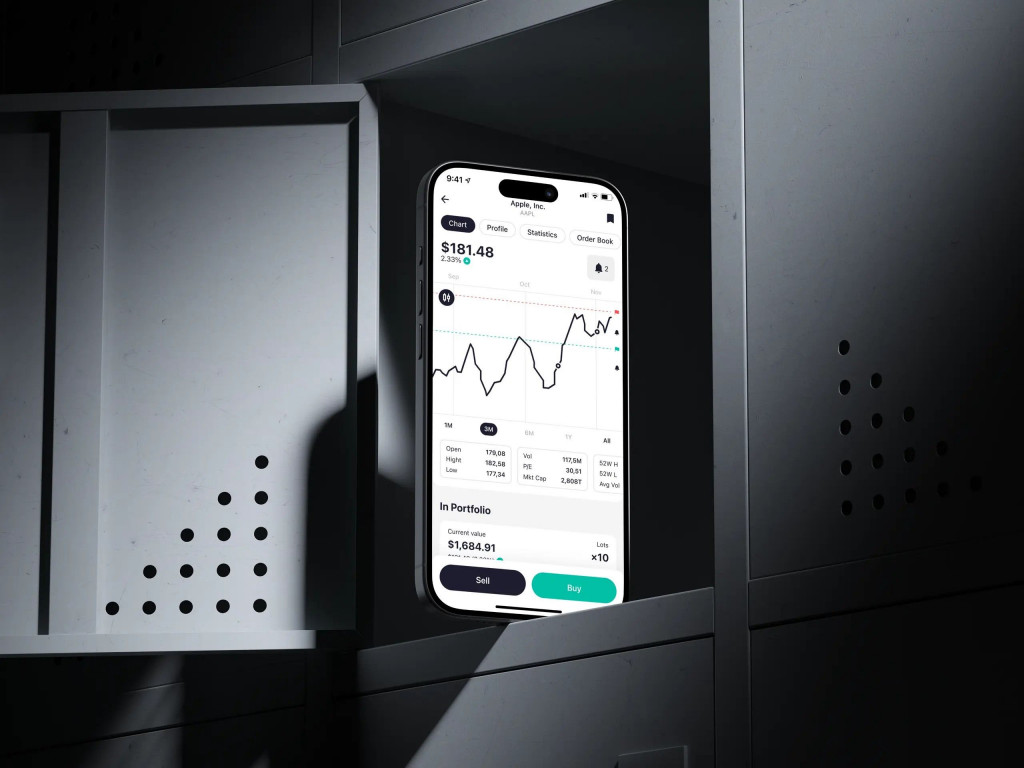
ZAD app by Shakuro
How to Choose a Core Banking Development Partner
A banking app development company should be able to talk about product decisions and technical risk in the same conversation. You do not want a team that only says “yes” to every feature. That sounds good in week one and becomes painful later.
Look for experience with fintech software development services, API integrations, security, permission systems, dashboards, QA, DevOps, and long-term support. Ask how they handle discovery. Ask what they need before estimation. Ask how they document decisions. Ask what happens after launch.
A strong partner should also care about the boring parts: logs, admin actions, reconciliation, error states, support workflows, and migration plans. Boring is good here. Boring keeps the product steady.
If you are choosing a partner, do not judge only by the mobile screens. Look at how they think about the system behind the screen.
Final Thoughts
Core banking platform development is demanding work, but it is also where a financial product gets its real strength. The interface may be what users notice first. The core is what earns trust over time.
A good platform helps teams launch products faster, connect external services, manage risk, and support customers without fighting the system every day. A weak one does the opposite. It slows everything down, usually in small ways at first, then in very expensive ways later.
If you are planning a digital banking platform development project or modernizing an existing system, start with the basics: clear workflows, careful architecture, security from the beginning, and honest planning around integrations. Sounds good, doesn’t it? Not easy, but good.
Shakuro helps fintech teams design and build financial products, from discovery and UX/UI to development, integrations, and ongoing support. If you are sorting through the idea now, it may be a good time to talk it through before the requirements get too tangled.
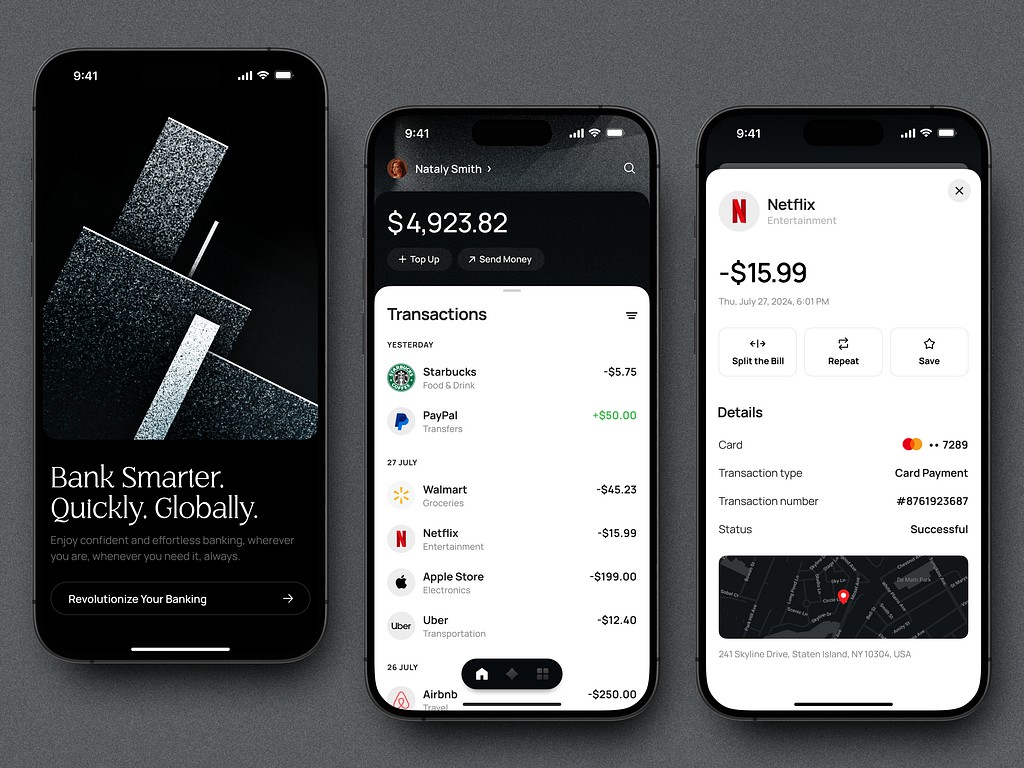
Fintech Mobile App UI Design by Shakuro
FAQ
How long does core banking platform development take?
A core banking MVP typically takes 3-6 months, a mid-level product 9-18 months, and an enterprise-level platform 18-36+ months. The MVP estimate assumes a basic ledger, user management, simple payments, and a single currency built by a small team of 3-5 developers, 1 PM, and 1 QA. Multiple account types, compliance workflows, and data migration push projects into the longer ranges.
How much does core banking platform development cost?
A core banking MVP is estimated at $150,000 – $400,000, a mid-level product at $500,000 – $1.5 Million, and an enterprise platform at $2 Million – $10+ Million. Integrations, security, compliance, transaction logic, data migration, and testing are the main cost drivers. Plan for post-launch spending too: maintenance, compliance changes, and scaling can add 20-30% to your annual budget.
What features should a core banking platform include?
A core banking platform should include customer and account management, a ledger or transaction engine, payments, configurable products such as accounts, loans, cards, fees, and interest rates, and KYC/AML workflows. It also needs admin dashboards, reporting, audit logs, permissions, notifications, and integrations with third-party services. Making product rules configurable rather than hardcoded pays off once the offering grows.
Can you modernize an existing core banking system instead of replacing it?
Yes, a legacy core banking system can often be modernized in layers instead of replaced at once. Options include wrapping the old core with APIs, replacing selected modules such as onboarding, payments, or reporting, improving dashboards, or rebuilding the platform over time. Keeping a core that still handles transactions well can be sensible, but if every new feature takes months, a new build becomes the cleaner path.
What integrations does a core banking platform need?
A core banking platform usually connects to banking APIs, payment processors and gateways, KYC and identity verification tools, card issuers, and notification services from the start. Credit bureaus, fraud detection, analytics, CRM, accounting software, document signing, and support platforms often follow. Each integration needs clear states, retries, error handling, and monitoring, so plan integrations early in discovery.
How do you keep a core banking platform secure and compliant?
Security for a core banking platform starts with architecture and continues through development, testing, and support. Key measures include encrypted data transfer and storage, MFA, role-based access control, API security, audit logs, secure session handling, fraud monitoring, and regular vulnerability checks. Plan compliance for standards such as PCI DSS, GDPR, and relevant financial regulations, even at MVP stage.
How do I choose a development partner for core banking system development?
Choose a team that discusses product decisions and technical risk in the same conversation instead of agreeing to every feature. Check its experience with API integrations, security, permission systems, dashboards, QA, DevOps, and long-term support. Ask how it runs discovery, what it needs before estimating, and how it documents decisions. Judge it by how it handles logs, reconciliation, and migration plans, not only by mobile screens.
Related reading
- Open Banking API Development: How to Build Secure, Scalable Banking Integrations
- Shariah-Compliant Banking Software Development: Building Ethical Islamic Finance Platforms
- Remittance Software Development: How to Build a Secure Money Transfer Platform
- Financial Data Platform Development: How to Build Scalable Data Infrastructure for Finance