
Cryptocurrency exchange software development is building the platform where users buy, sell, and convert digital assets: a matching engine and order book, wallet infrastructure, balances, APIs, and connections to the blockchain networks that confirm deposits and withdrawals. Large exchanges run hundreds of trading pairs and process thousands of orders every second, around the clock, because crypto markets never close.
The interface looks simple: a chart and an order form. Behind it, a slow matching engine affects trades and a vulnerability affects funds. Many exchanges also run an NFT marketplace next to spot trading, reusing the same custody layer. This makes exchanges one of the more demanding areas of fintech engineering, and teams that outgrow white-label platforms usually move to custom Web3 development.
The sections below cover exchange architecture, key features, the development process from planning to a working trading platform, cost, and the security and scaling challenges that appear as an exchange grows.
For those who prefer to listen rather than read, this article is also available as a podcast on Spotify.
Why Companies Build Custom Cryptocurrency Exchanges
White-label exchange platforms are easy to find. Most include the basic components: trading interface, wallet management, user accounts, and an administration panel.
For an early launch this approach can make sense. It allows a team to release a working platform without building every part of the system from scratch.
The trade-offs usually appear later.
Off-the-shelf exchanges are typically built around a fixed architecture. Core components—especially the matching engine and order management layer — are difficult to modify. When trading volume increases or the product team wants to add more advanced trading functionality, those limitations become noticeable.
Control over the infrastructure is another concern. When the platform relies on third-party software, the exchange operator does not fully control how the system behaves internally. For a product responsible for storing digital assets, that dependency can create risk.
Custom cryptocurrency exchange development removes many of these constraints.
Instead of adapting the product to an existing framework, engineers design the system around the expected trading activity. The matching engine can be optimized for speed, order processing can follow a specific trading model, and the architecture can be prepared for higher volumes as the platform grows.
Security is easier to handle this way as well. Exchanges usually rely on several protection layers—separated wallets, strong authentication, transaction monitoring, and strict internal access control.
Custom infrastructure also makes integrations simpler. Exchanges often connect to blockchain nodes, liquidity providers, payment systems, and analytics services. Fiat deposits by card or bank transfer often go through several providers, so larger exchanges add an orchestration layer for fiat payments to route them. A flexible architecture allows those connections to be added without major constraints.
There is also the decision about the product. Some exchanges focus on expert traders and stress speed and advanced order types. Some, on the other hand, focus on beginners and make trading easier. The team can adapt the product around its audience by building the platform in-house.
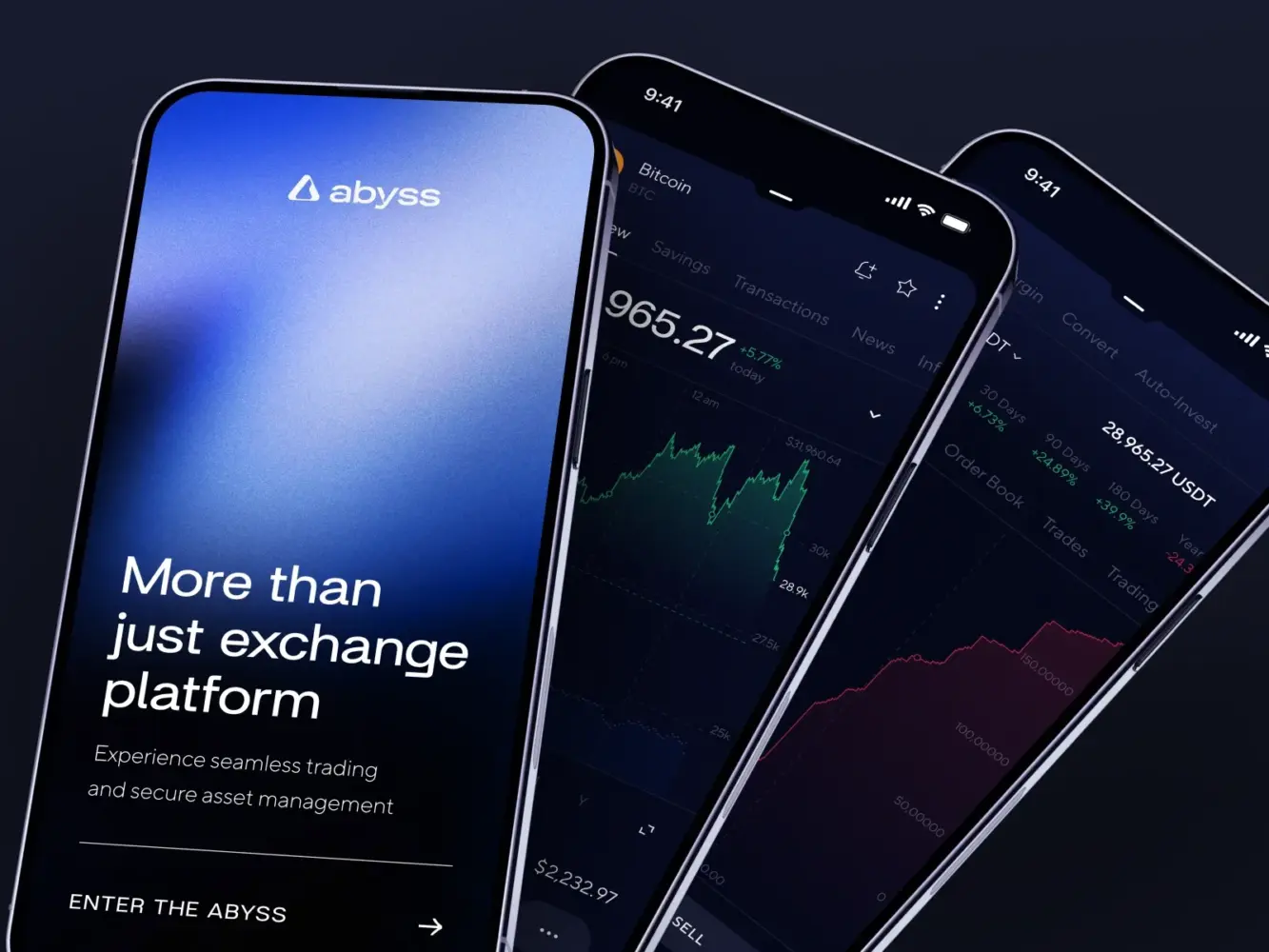
Crypto Finance App UI/UX Design by Shakuro
What Is Cryptocurrency Exchange Software?
Open any crypto exchange and the first thing you see is the interface—charts, prices, order forms. What actually makes trading possible sits behind that layer. Exchange software runs the market itself.
Its job is fairly mechanical. Orders come in, the system looks for matching offers on the other side, and once prices meet, the trade is executed. Balances update immediately after.
For traders the process is simple: deposit funds, choose a trading pair, place an order. The rest happens automatically.
Under the surface, though, the platform is busy. Orders move through the order book every second. Deposits arrive from blockchain networks and have to be verified. Withdrawals send assets back out. All of this happens while prices keep changing and new orders keep appearing.
Different exchanges handle these tasks in different ways.
Types of Crypto Exchanges
Most trading platforms follow one of three general approaches.
Centralized exchanges (CEX)
Centralized exchanges are the format most traders know. A company runs the platform and maintains the trading infrastructure.
Users deposit assets into wallets controlled by the exchange and submit orders through its interface. When an order comes in, the matching engine looks through the order book for a similar order and completes the trade.
Because everything runs inside a single platform, trades are usually completed quickly and markets tend to stay liquid. The downside is custody. Users leave their funds with the exchange and rely on the operator to secure them.
Decentralized exchanges (DEX)
Decentralized exchanges go a different way. The exchange functionality doesn’t run on a company’s servers; it lives in smart contracts on a blockchain.
Traders connect their wallets and interact with the protocol directly. The smart contract does the trade and keeps track of the results on the blockchain.
The exchange doesn’t take the user’s money; it stays in their wallet. The bad thing is that the blockchain network that the exchange uses has a major effect on how quickly deals happen and how much money is available.
Hybrid exchanges
Hybrid exchanges sit somewhere between those two models.
A lot of people keep the trading engine centralized so that orders can be processed fast. They employ decentralized or user-controlled wallets to store their assets. The idea is to keep centralized trading fast without making customers leave money on the site.
Core Components of Exchange Platforms
Even though exchange designs differ, the underlying systems usually follow the same structure.
- Matching engine
This is the part of the system where trades are executed. Incoming orders are compared against existing ones until a match is found. - Order books
The order book shows active buy and sell orders for each market and changes constantly as trades occur. - Wallet infrastructure
Deposits, withdrawals, and asset storage are handled through the wallet layer. Exchanges typically keep operational funds in hot wallets and store the majority of assets in cold storage. Designing secure crypto wallet infrastructure requires careful planning and strict security practices. - Liquidity management
Markets need a steady flow of orders to stay tradable. Exchanges often work with market makers or connect to external liquidity providers to keep order books active. - Trading interface
Traders use charts, order panels, and portfolio balances to interact with the platform. - API integrations
APIs allow external software to connect directly to the exchange. Automated trading tools and institutional platforms often rely on them.
Together these pieces form the foundation of most cryptocurrency exchanges.
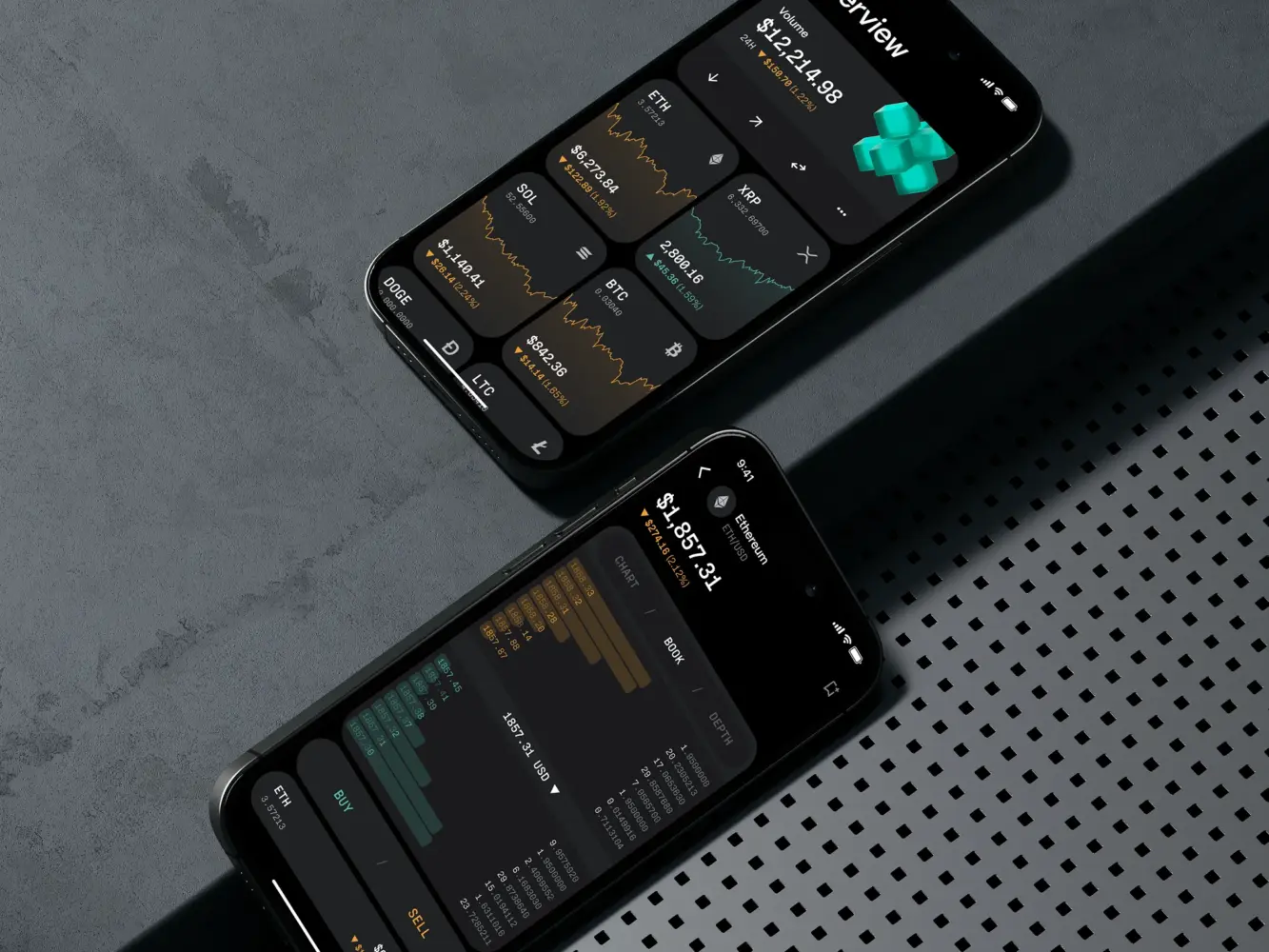
Crypto Trading Mobile App by Shakuro
Key Features of a Cryptocurrency Exchange Platform
High-Performance Matching Engine
Every exchange depends on a matching engine. It’s the component that decides which orders get filled and in what order.
The order book reveals what a trader wants to buy or sell. The matching engine analyses it and compares it to orders that are already on the other side of the market. If the prices are the same, the trade goes through.
On busy exchanges this happens extremely often. Large markets can see thousands of orders arriving within seconds, especially when prices start moving quickly.
For that reason exchanges pay close attention to the performance of the matching engine. It has to handle large volumes of orders while reacting almost instantly when new ones arrive. Slow processing can lead to delays in order execution and a poor trading experience.
Secure Wallet Infrastructure
One of the most important things for any exchange to do is handle user funds. The platform needs to keep those assets safe–this requires robust multi-chain asset management.
Most exchanges split funds between hot and cold wallets. Hot wallets are always linked to the network and are used for things like making deposits and withdrawals. Cold wallets stay offline and hold the majority of assets, which helps reduce risk if the online system is compromised.
Private key protection is another critical piece. Exchanges usually store keys in secure environments and add additional safeguards such as multi-signature authorization. With multi-sig setups, several approvals are required before a transaction can be completed, which helps prevent unauthorized transfers.
Much of the complexity comes from building crypto wallet development for exchanges that can safely manage keys, handle withdrawals, and still keep the platform responsive.
Liquidity and Order Book Management
A trading platform feels very different depending on how active the market is. When there are plenty of orders in the book, trades go through easily. When the book is thin, even modest orders can push the price around.
The order book shows how many buy and sell orders exist at different price levels and gives traders a sense of how much volume sits near the current market price.
Exchanges rarely rely only on their own users to keep that activity going. Many connect their platforms to outside liquidity sources—trading firms, market makers, or other exchanges that stream orders through API connections.
A lot of these orders are placed automatically by algorithmic trading systems used for market making, which constantly adjust bids and offers as the market moves.
Compliance and Identity Verification
Most crypto exchanges today have to deal with financial regulations. In many countries platforms are expected to verify who their users are and keep track of activity taking place on the exchange.
For that reason, new users are often asked to go through an identity check before they can use all trading features. This usually involves uploading identification documents and confirming basic personal information. These checks fall under KYC requirements, commonly referred to as “Know Your Customer.”
Exchanges also keep an eye out for signals of shady behavior. Transfers that are too substantial, trade patterns that don’t seem reasonable, or transactions that are related to blacklisted wallet addresses may need to be examined again.
Depending on the country, exchanges may also need to keep records of transactions and submit certain reports to regulators. For many platforms this has become a normal part of running the service.
Multi-Device Trading Experience
People rarely trade from just one place. Some prefer a full interface on a desktop, others keep an eye on the market from their phone, and professional traders often connect their own systems directly to the exchange.
Most platforms still revolve around the web interface. Everything runs in the browser, so there’s nothing to install.
Mobile apps cover a different use case. They make it easier to follow price movements, react to market changes, or close a position when you’re away from your computer. Many exchanges invest heavily in Native mobile development to make sure their trading apps remain fast and responsive on both iOS and Android.
Exchanges also let traders use APIs to link tools from outside the exchange. A lot of institutional desks and quantitative traders use these links to conduct automated strategies or link the exchange to their own trading platforms.
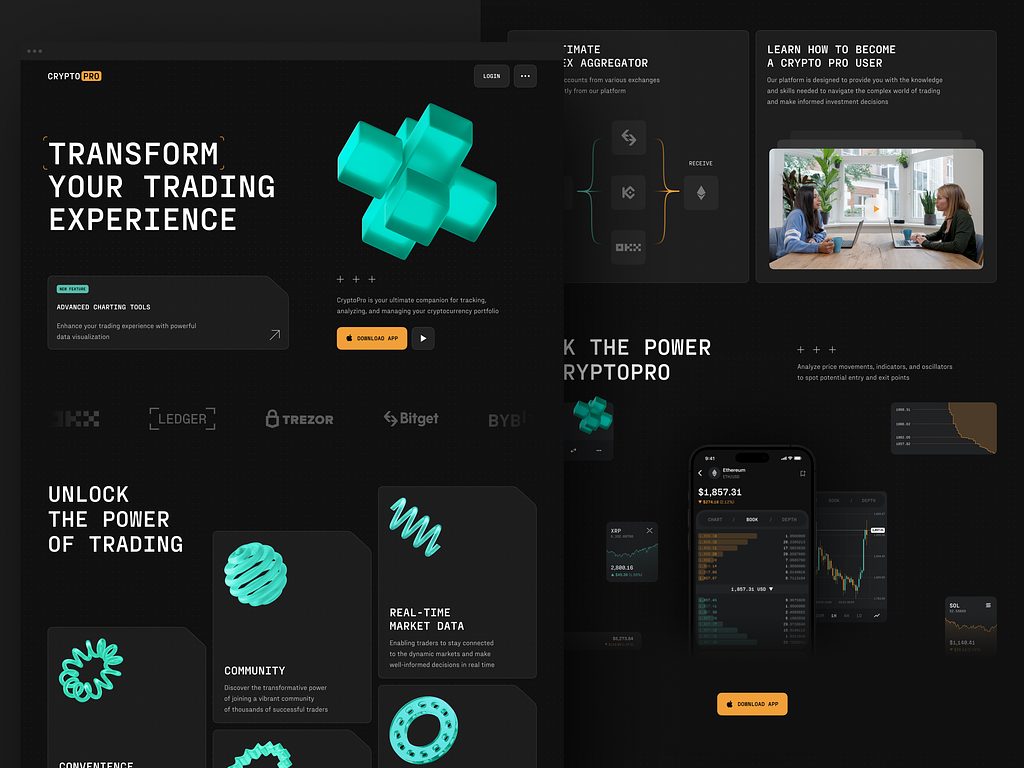
Crypto Trading Website by Shakuro
Cryptocurrency Exchange Development Process
1. Product Strategy and Market Research
Before anyone starts writing code, teams usually spend time working out what kind of exchange they are trying to build and who it is meant for.
One of the first questions when building blockchain architecture for financial platforms is the exchange model itself. Some projects choose a centralized platform where the operator runs the trading infrastructure and manages user balances. Others lean toward decentralized systems, and there are also hybrid designs that mix parts of both.
At this stage teams also look at where the platform will operate. Regulations around crypto trading vary widely depending on the country.
Technical discussions tend to start early as well. Building a trading platform usually involves deciding how the system will interact with different blockchain networks and what kind of infrastructure will support those interactions. Much of this planning connects to the broader question of blockchain architecture for financial platforms.
2. UX/UI Design for Trading Platforms
Once the idea of the exchange is clear, the team moves on to the interface, which is what traders use every day.
Most platforms revolve around a single trading screen. Price charts, the order book, recent trades, and the order form usually sit on the same page.
Designing that layout is not trivial. Markets change constantly, so the interface has to reflect those updates without becoming hard to read. Orders enter and leave the book, trades appear in real time, and prices shift from one second to the next.
Charts play a big role here. Many traders rely on them to follow price movement or spot short-term patterns. Clear visualization of order depth and recent trades also helps people understand what is happening in the market.
Placing an order should be straightforward. Traders often move quickly—switching markets, adjusting order parameters, or managing open positions. If the interface slows them down or hides key controls, it becomes noticeable right away. That’s why many teams rely on modern frontend frameworks such as React development to build responsive trading interfaces that can handle constantly updating market data.
3. Choosing the Technology Stack
Once the basic product decisions are made, the next step is choosing the tools the platform will run on. For an exchange this choice matters quite a bit. The system has to process orders quickly and keep running smoothly even when activity in the market suddenly spikes.
Very often backend services are written in more than one language. Some teams use Python and frameworks like FastAPI for parts of the system where it is required to build quickly and easily. Another popular choice for developing network services is Node.js. When performance becomes more critical—for example in components that handle trading activity—languages such as Go or Rust sometimes come into play.
The frontend development usually relies on modern JavaScript frameworks. You can find React and Vue used on a lot on trading platforms. They make it easy to create interfaces that always show charts, order books, and pricing data.
Behind the scenes the platform also needs a reliable data layer. PostgreSQL is often used to store structured information such as accounts, orders, and trade history. Redis is commonly added for caching and fast access to data that changes frequently.
Infrastructure is often built around containers. Docker packages the services, while tools like Kubernetes help run those services across several machines and keep them working together as the system grows.
4. Architecture and Security
As development moves forward, the structure of the system becomes an important topic. Exchanges deal with constant trading activity and large volumes of requests, so the platform needs to handle growth without breaking under load.
Many teams avoid building the exchange as one large application. Instead, the system is often split into smaller services. Trading logic, user accounts, wallet operations, and market data may run as separate components. This approach makes it easier to expand parts of the system that start receiving more traffic.
Services communicate with each other through APIs. These connections usually include authentication and encrypted communication so that sensitive data cannot be intercepted while moving between systems.
Security concerns extend beyond the internal architecture. Exchanges regularly face attempts to exploit vulnerabilities or overload the platform with traffic. Many platforms also introduce additional monitoring, like AI-driven fraud detection in fintech platforms, to identify suspicious activity.
5. Development and Integrations
After the core architecture is in place, the focus of development changes to the aspects that make the exchange perform as a market. The order book starts to work with the matching engine, and the platform starts to handle real trading activity.
A large part of the development also involves connecting the exchange to blockchain networks. The system needs to detect incoming deposits, verify transactions on the network, and send withdrawals to external wallets. Each blockchain has its own quirks, so integrations often have to be handled separately.
Some exchanges also support traditional payment methods. To make that possible, the platform may be connected to payment gateways or banking partners that process card payments and bank transfers.
For crypto transactions, exchanges sometimes rely on external services that handle transaction processing and payment flows. Much of this depends on crypto payment infrastructure, which connects blockchain activity with the rest of the platform.
6. Testing and Security Audits
Before an exchange is opened to real users, the system is usually tested under conditions that resemble an active market.
One area teams pay attention to is how the platform behaves when trading activity suddenly increases. When prices move quickly, large numbers of orders can arrive within seconds. Load testing helps reveal whether the infrastructure—especially the matching engine, APIs, and databases—can handle that pressure.
Security checks are carried out as well. Engineers and external specialists try to identify weak spots that could be used to access the system or disrupt its operation. Penetration tests and vulnerability scans are often part of this process.
If the platform includes decentralized components, the smart contracts also go through review. Audits help detect logic errors or security flaws before those contracts are deployed on-chain.
7. Deployment and Maintenance
After testing is complete, the exchange is moved into the production environment and opened to real users. From that moment the platform has to operate continuously while markets remain active.
Support services keep a tight eye on the system most of the time. Metrics like server load, trading activity, API calls, and others can help you tell if the platform is working regularly.
Security work continues as well. Software components need updates, logs are reviewed, and new vulnerabilities sometimes require patches or configuration changes.
As trading activity grows, the platform may need adjustments. Infrastructure can be expanded, new markets may be added, and additional features are introduced over time as the exchange develops.

Cost of Cryptocurrency Exchange Software Development
There’s no universal price for building a crypto exchange. Some platforms begin as small projects built by a few engineers, while others grow into large systems that take months—sometimes years—to develop. The final cost mostly depends on how ambitious the platform is meant to be.
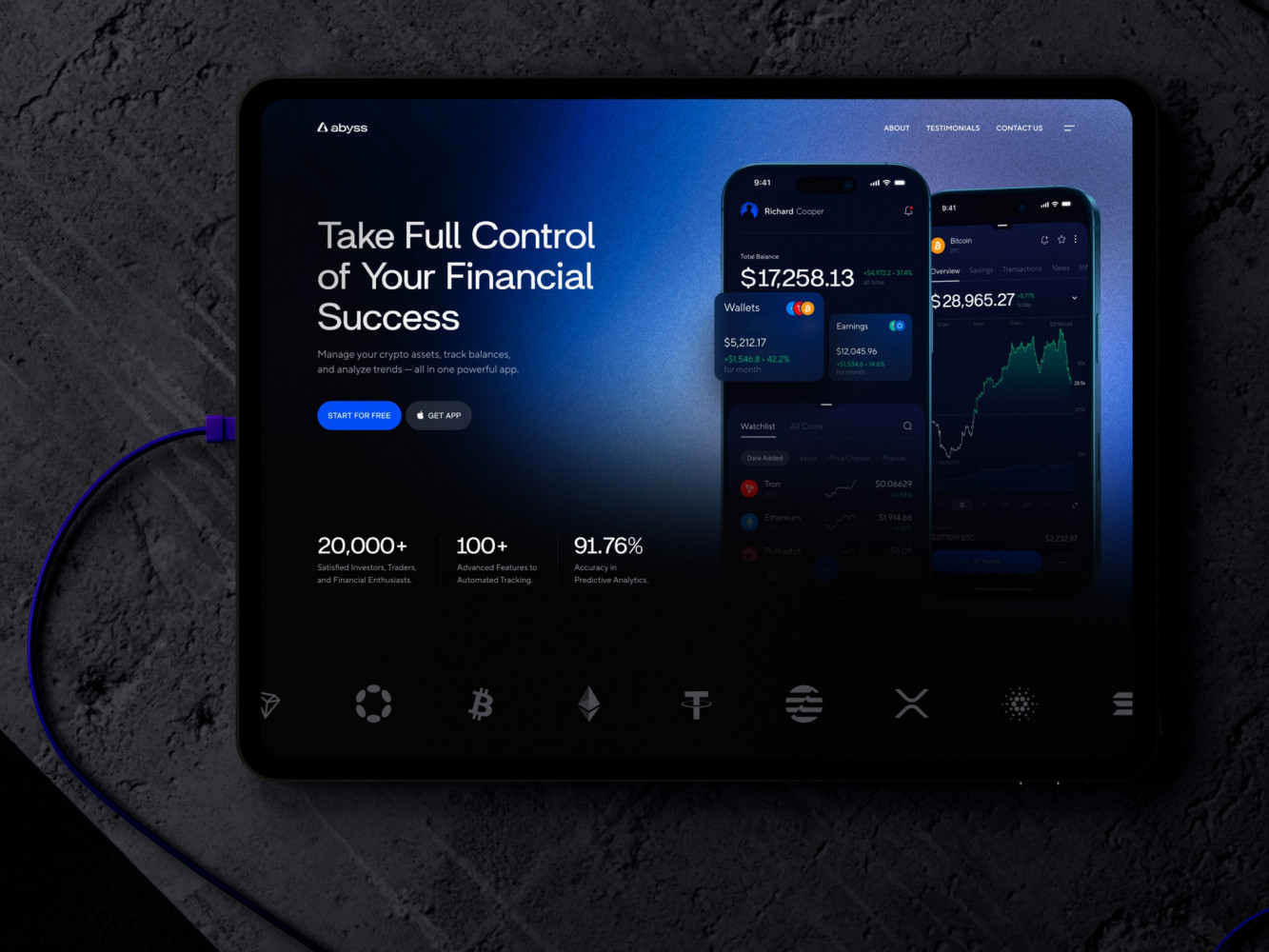
Landing Page Design for Crypto Exchange Platform by Shakuro
One of the first decisions that shapes the scope is the type of exchange. A centralized platform usually requires its own trading engine, wallet management, and systems for handling user balances. A decentralized exchange works differently, since much of the trading logic lives in smart contracts. That changes the development process rather than necessarily reducing the effort.
Supported assets also affect the amount of work involved. Every blockchain the platform integrates with requires its own handling for deposits, withdrawals, and transaction monitoring. Adding more networks increases the number of moving parts the system has to manage.
Liquidity is another consideration. Some exchanges rely mostly on trading activity from their users. Others connect to outside liquidity sources or market-making services so the order book stays active even when user activity is low.
Security often becomes one of the more demanding parts of the project. Exchanges are responsible for storing and moving digital assets, so wallet management, access controls, and monitoring tools need careful attention.
Because of that complexity, many companies prefer to work with teams that have already built trading platforms before. It’s common to partner with a cryptocurrency exchange development company or a crypto exchange software development company that understands how these systems operate.
Example Development Scenarios
A few projects start with a reduced version of the exchange that is called an MVP. In that case, the platform usually just has a few assets and focuses on the major transaction flow. The aim is to release it early, see how users respond, and improve the product over time.
A larger exchange platform is a whole different thing. It might support a lot of trading pairs, link to a lot of liquidity providers, and run on infrastructure that is made for a heavy trading activity. As more people use the platform, it often gets new features and integrations to keep up with demand.

Common Challenges in Crypto Exchange Development
Running a crypto exchange sounds straightforward on paper: people place orders, trades happen, the platform keeps the market moving. In reality, once the system is live, several problems tend to appear.
The most frequent challenges include:
- Handling high-frequency trading and traffic spikes. Crypto markets can become chaotic during price swings, and the system has to adapt to it, but without minor freezing or slowing down.
- Keeping digital assets safe. Exchanges hold funds that belong to their users. That alone makes them a target. Wallet infrastructure, key storage, and internal access policies all have to be treated with care.
- Managing liquidity and preventing market manipulation. A market with very few active orders can behave strangely. Prices may jump sharply and it becomes easier for a trader with enough capital to move the market.
- Adapting to evolving regulatory frameworks. The laws about crypto keep changing. New rules that didn’t exist a year ago may suddenly become necessary, especially as the industry moves toward broader decentralized trading ecosystems, and exchanges often have to adapt how they operate to stay compliant.
Our Experience in Fintech and Web3 Development
Shakuro has spent years working on products that sit somewhere between finance, trading, SaaS, and Web3. Some of them deal with digital assets. Some with trading data. Some with user behavior inside complex platforms where a lot is happening at once. Different products, different audiences, but the same general pattern: high-stakes interfaces, dense information, and systems that need to feel reliable from the first screen.
That kind of work leaves very little room for decorative thinking. When the product is tied to money, portfolios, wallets, rankings, or live market activity, design decisions stop being purely visual. They start affecting trust, speed, and how confidently a user can move through the platform.
Abyss is a good example of that.
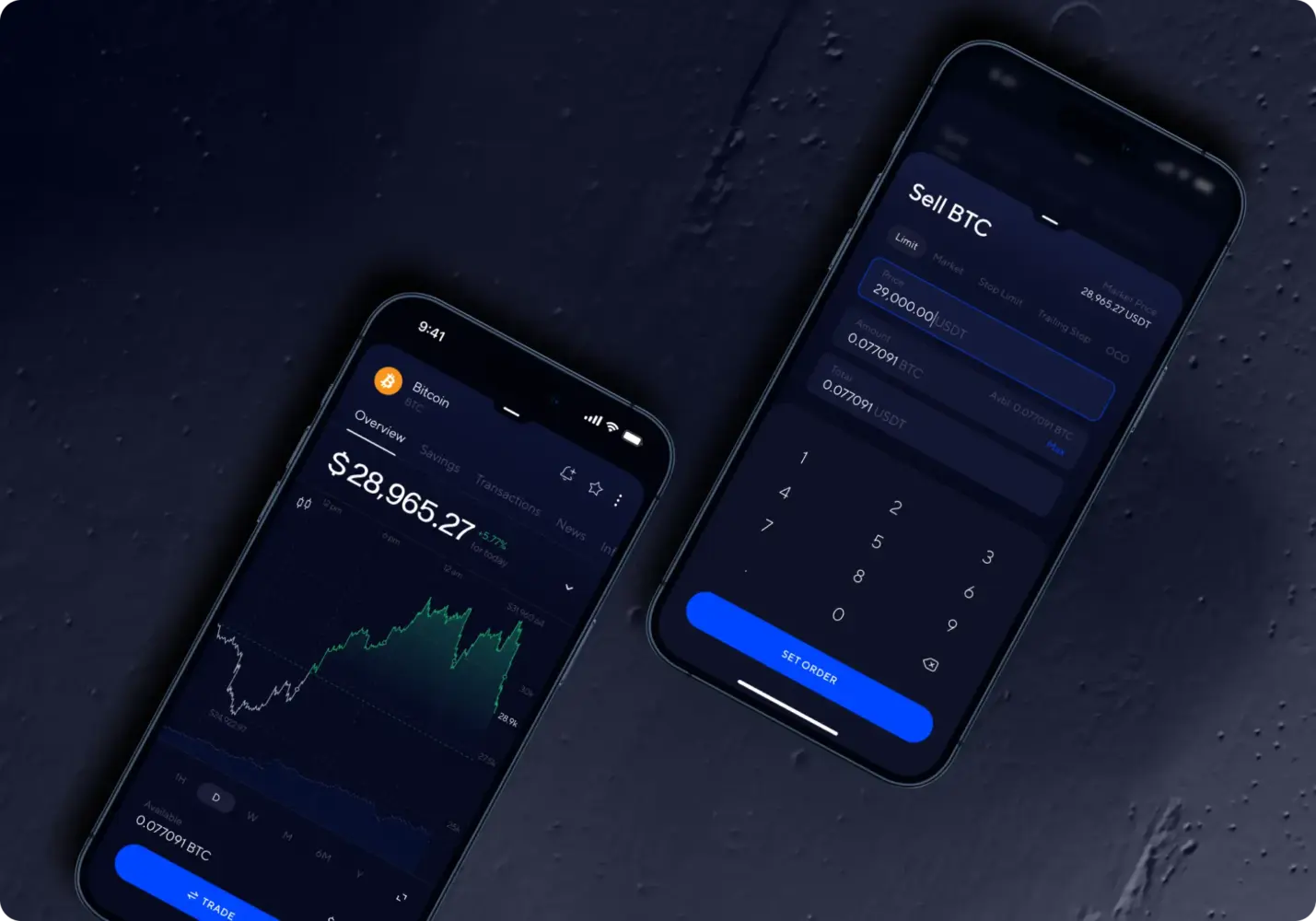
Cryptocurrency Trading App for iOS by Shakuro
It’s a cryptocurrency trading app for iOS built around the idea that digital asset management should not feel hostile to the user. The product includes the things people expect from this type of app—market data, wallets, trading, analytics—but the challenge was not simply to fit those features into a mobile screen. The challenge was to make the app feel clear and credible without flattening it into something generic.
The team worked through research, prototypes, and testing to understand where the interface needed to stay familiar and where it could be simplified further. That balance matters a lot in crypto products. If the interface feels too bare, it can look untrustworthy. If it feels overloaded, the product becomes harder to use. Abyss was shaped around that tension.
The visual identity also played a role here. It was not treated as a separate branding exercise detached from the product itself. The logo, typography, colors, and supporting visual language were all built to reinforce the same impression as the interface: modern, confident, accessible, but still serious enough for a product tied to asset management and trading.
Another interesting case is TraderTale.
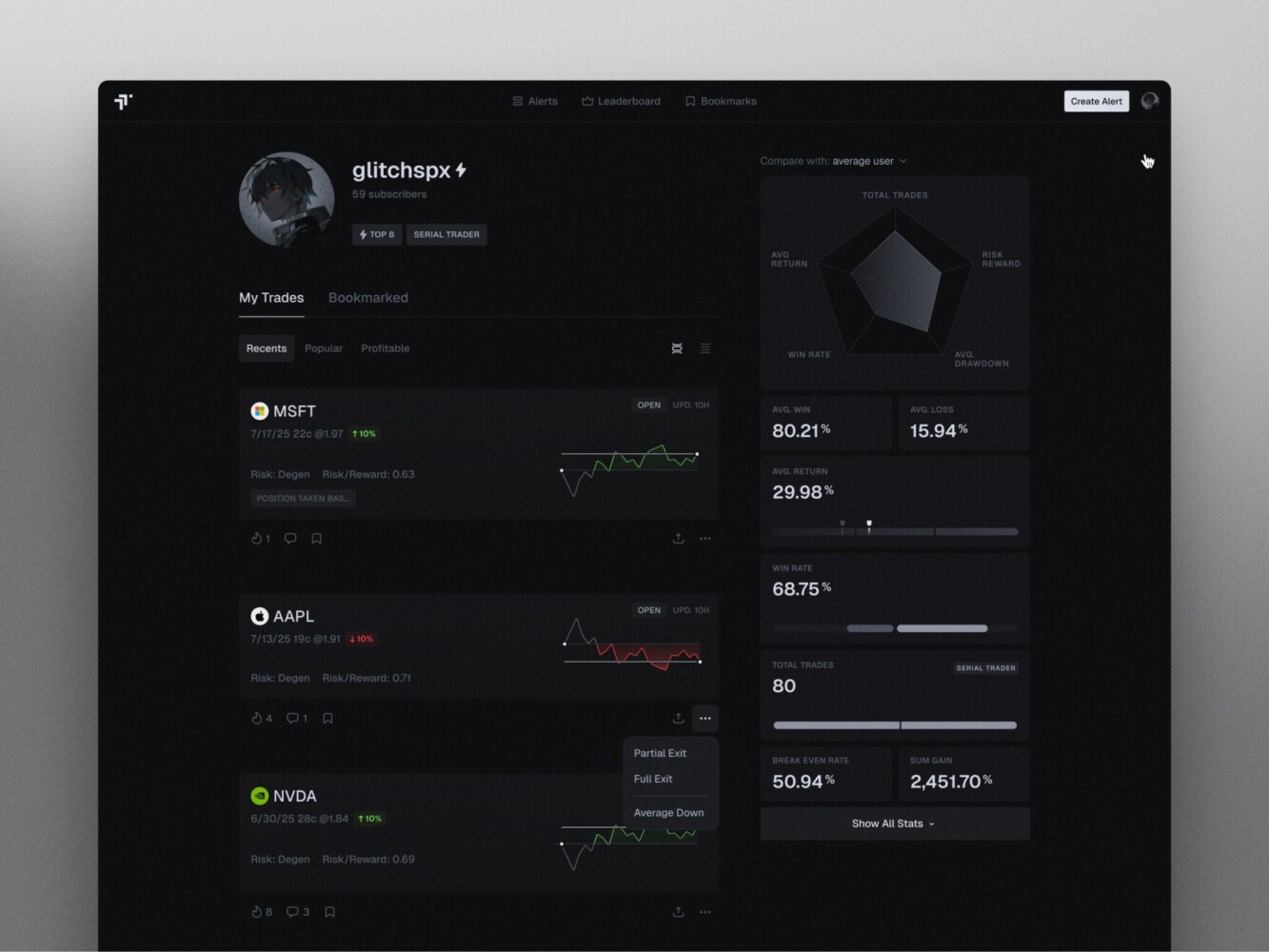
TraderTale: Social Platform for Traders by Shakuro
TraderTale is a fintech platform built around trading performance and reputation. Instead of treating trades as isolated events, it turns them into a visible track record. Profiles, levels, rankings, alerts—the product makes performance part of a trader’s identity inside the platform.
That creates an interesting design problem. Financial data has to remain readable and credible, but the system also needs to feel engaging enough that people want to return to it. If the platform leans too far into gamification, it risks looking unserious. If it leans too far into dry analytics, the social and reputational layer loses its effect.
The work on TraderTale focused on that middle ground. The interface was cleaned up and reorganized so that rankings, alerts, profile data, and detailed metrics could coexist without fighting for attention. Visual hierarchy did a lot of the heavy lifting. The platform needed to show progress, reputation, and activity clearly, but still keep the trading data central.
You can see that in features like the leaderboard, alert feed, detailed trade views, and user profiles. None of those screens work if the platform cannot organize financial information properly. At the same time, none of them work if the product feels cold or mechanically utilitarian. TraderTale needed both structure and energy.
Taken together, projects like Abyss and TraderTale say a lot about the kind of experience Shakuro brings to fintech and Web3 work.
This is not just about making crypto products look polished. It is about working with platforms where architecture, trust, live data, and user behavior are tightly connected. Some projects require blockchain integrations. Some rely on trading logic and analytics. Some behave more like SaaS products with heavy data layers. In practice, they all demand the same core strengths: the ability to design around complexity without making the product feel heavy.
That includes experience with scalable architectures, secure financial systems, Web3 integrations, and interfaces built for products that do not sit still. Trading platforms, blockchain applications, SaaS tools, and other complex web systems all tend to expose weak thinking very quickly. If the structure is poor, users feel it. If the hierarchy is off, the product becomes tiring. If trust is missing, the whole thing starts to fall apart.
That is exactly why this kind of portfolio matters. It shows not just category exposure, but the ability to work inside products where performance, clarity, and reliability are part of the product itself.
Why Work with a Cryptocurrency Exchange Development Company
Creating a crypto exchange is not just a design or coding task. It’s a system that needs to run continuously while processing financial activity. Orders come in, trades are executed, funds move between wallets, and everything has to keep working even when markets become chaotic. That is why many companies decide not to build these systems entirely on their own.
Working with engineers who have already dealt with trading platforms can save time. People who know this environment usually recognize common pitfalls early. They understand how trading engines behave under load and what tends to break when the system grows.
Architecture is another part where experience matters. An exchange is made of several interconnected pieces—order processing, wallet infrastructure, market data, APIs. If these components are poorly organized, the platform can start slowing down as activity increases. Developers who have seen similar systems before tend to design around those issues from the start.
Security is always part of the conversation as well. Exchanges deal with digital assets, which makes them good targets. Once the platform is live, protecting wallets, limiting access to critical services, and keeping an eye on system activities become daily worries.
Regulation gives the picture another layer. The rules for crypto trading platforms are different in different areas and are always changing. Teams who have worked on blockchain or fintech systems before usually have a better idea of how identity checks, monitoring, and reporting fit into the platform as a whole.
FAQ
What drives the cost of cryptocurrency exchange software development?
There is no universal price for cryptocurrency exchange software development, because cost follows the ambition of the platform. The main drivers are the exchange type (centralized, decentralized or hybrid), the number of blockchains you support, since each needs its own deposit, withdrawal and monitoring logic, the liquidity model with outside providers or market makers, and security work around wallets, access controls and monitoring tools.
How long does crypto exchange development take?
Crypto exchange development can take anywhere from a few months for a small MVP built by a few engineers to years for a large platform. The timeline grows with the number of trading pairs, blockchain integrations, liquidity providers and fiat payment partners, plus load testing, penetration tests and smart contract audits before launch. Work does not stop at release: new markets and features keep arriving as trading activity grows.
Should you build a custom crypto exchange or use white-label exchange software?
White-label crypto exchange software makes sense for an early launch, because it already includes a trading interface, wallet management, user accounts and an admin panel. The limits show up later: the matching engine and order management layer are hard to modify, and the operator does not fully control how third-party software behaves. A custom build lets you optimize the matching engine, follow your own trading model and add integrations freely.
What should an MVP include when building a crypto exchange?
An MVP crypto exchange usually supports a small number of assets and focuses on the main transaction flow: deposits, a trading pair order book, a matching engine, balance updates and withdrawals. The goal is to release early, watch how users respond and improve the product over time. Additional trading pairs, liquidity provider connections and advanced order types for expert traders come after the core flow proves stable.
How do you secure user funds in cryptocurrency exchange software development?
User funds are protected through several layers rather than a single tool. Most exchanges keep operational funds in hot wallets and the majority of assets in offline cold storage, store private keys in secure environments and require multi-signature approval for transfers. Services communicate through authenticated, encrypted APIs, and teams add transaction monitoring, strict internal access control, penetration tests, vulnerability scans and smart contract audits for decentralized components.
What compliance requirements apply to crypto exchange development?
Most crypto exchanges have to verify users under KYC rules before unlocking all trading features, which means document uploads and confirmation of basic personal information. Platforms also monitor for suspicious activity such as unusually large transfers, odd trading patterns or links to blacklisted wallet addresses. Depending on the country, they may need to keep transaction records and file reports with regulators, and the rules keep changing.
Final Thoughts
Building a crypto exchange usually doesn’t happen overnight. As always, it starts with an idea. The process then goes through a few steps: creating the system, building the trading engine and infrastructure, testing everything in real life, and finally launching the platform. Once users start trading, the focus shifts to keeping the system stable and gradually expanding it.
Over time a few things tend to matter more than anything else. The platform has to keep up with trading activity when the market gets busy. There needs to be enough liquidity so traders can buy and sell without extreme price jumps. Security has to be taken seriously from day one, especially when the system is responsible for holding digital assets. And, like it or not, regulation is part of the landscape as well.
For many companies, tackling all of that alone can be difficult. Teams that already have experience with fintech and blockchain platforms can often move through these challenges more smoothly.
If you’re thinking about launching a crypto exchange, working with a team like Shakuro can help turn that idea into a platform that is stable, secure, and ready to grow.
Related reading