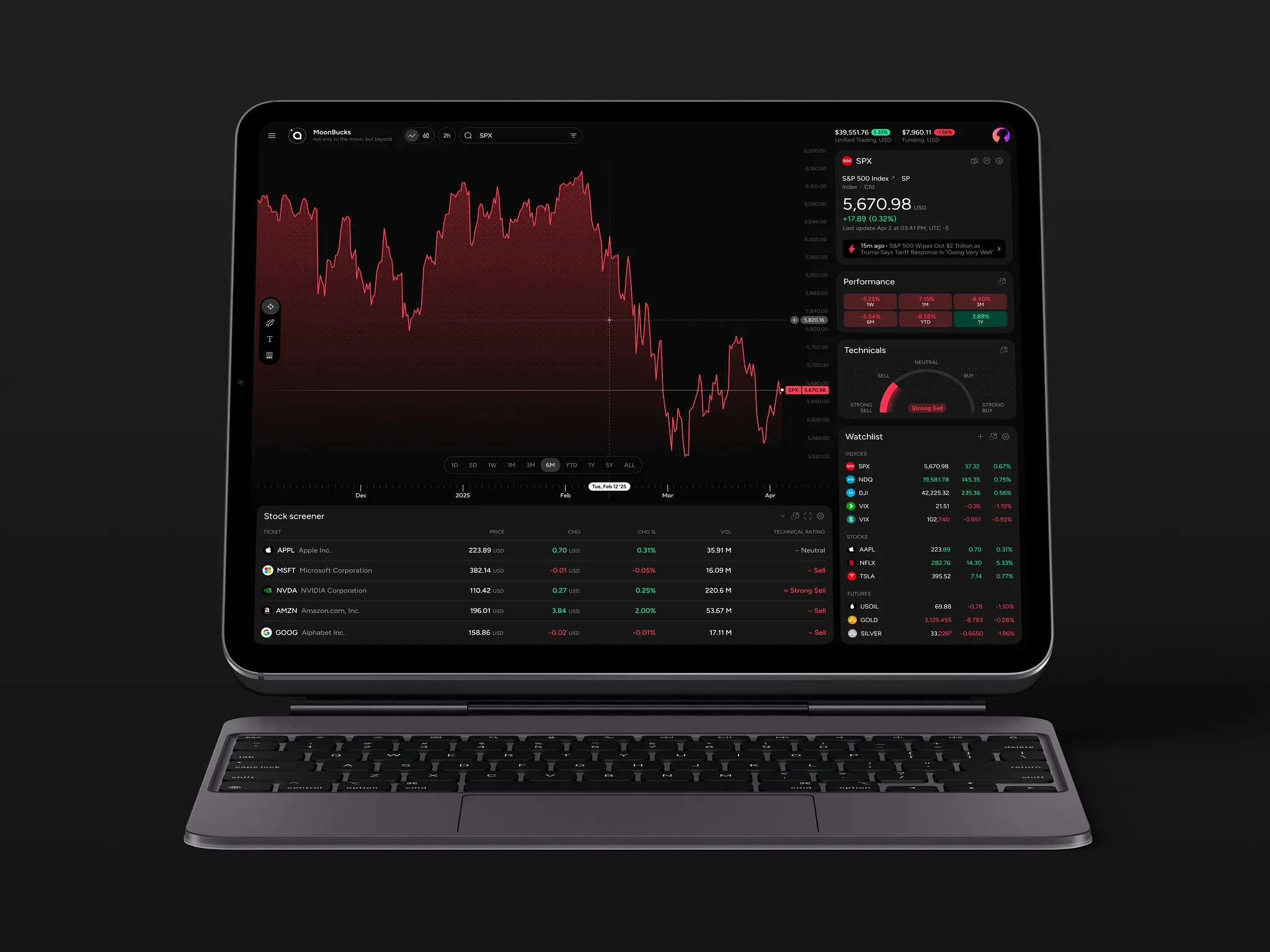
Algorithmic trading software development means building systems that run trading strategies automatically: they process real-time market data, execute strategies, apply risk limits, connect to several exchanges, and let teams backtest ideas on historical data before real money is involved.
Manual trading stopped being practical once markets got faster and data volumes grew, and today even smaller firms run part of their strategies through software. Algorithmic engines are a specialized part of broader trading systems. The core mechanics are similar across markets, so teams with fintech development expertise, including work on digital asset trading platforms, will recognize many of the patterns. Most hard problems appear only after launch, when the system runs against live markets.
This guide covers the types of algorithmic trading systems, key features, the development process, what drives cost, common production challenges, and two of our fintech projects, Four Pi Capital and TraderTale.
For those who prefer to listen rather than read, this article is also available as a podcast on Spotify.
What Is Algorithmic Trading Software?
At its simplest, algorithmic trading software is just software that sends trades instead of a person doing it manually. Someone defines the rules in advance—what to watch, when to enter, when to exit—and the system keeps running those checks without stopping. Some retail platforms go the other way with social trading, where people copy strategies shared by other traders instead of writing rules. When the situation matches the rules, an order goes out.
Not every trading algorithm is complicated. Some are very basic and built around clear conditions: price reached a level, volume changed, spread narrowed—act on it. Others combine several signals and restrictions at once. But in both cases the idea is the same: remove hesitation and do the same thing every time the same market situation appears.
What usually surprises people new to algorithmic trading system development is how little of the work is actually about the strategy itself. The logic might take weeks to prepare, but the infrastructure around it takes months. Market data has to arrive without gaps. Connections to exchanges need to stay stable. Orders have to be tracked from the moment they’re sent to the moment they’re filled or rejected. When something breaks, it’s rarely the math—it’s the plumbing around it.
From the outside, the flow looks simple enough: data comes in, rules are checked, orders are sent. In real trading environments, though, the details pile up quickly. Data delays, unstable connections, mismatched timestamps—small things that don’t look serious on paper end up causing most of the real headaches once money is on the line.
Types of Algorithmic Trading Systems
There isn’t one universal structure for automated trading systems. They tend to grow around the strategy they support. Some are built to react almost instantly. Others take their time and process more data before making decisions. Some are designed to run a huge number of transactions without pushing for extreme speed.
After working with a few different platforms, the patterns start to repeat. You see similar system types again and again, mostly defined by how fast they operate and what kind of workload they handle.
High-Frequency Trading Systems
High-frequency trading systems are built for speed, plain and simple. They run a very large number of trades, each targeting small price differences that may only exist for a short moment.
To make that possible, everything around the trading logic has to move quickly and predictably. Data processing can’t lag behind incoming feeds. Orders need to be created and sent without extra steps in between. Even network distance matters. In many setups, trading servers are placed inside or very close to exchange data centers just to shave off a bit of communication time.
These systems are demanding in ways that don’t always show up during early testing. What looks fine under light load starts behaving differently once the volume increases. When the system conducts thousands of trades in short bursts, small problems like slow memory access, extra processing steps, and delayed answers become clear. Keeping this kind of platform stable usually means constant tuning, not just building it once and moving on.
Quantitative Trading Platforms
Quantitative platforms usually come from research work, not from a need for speed. Teams build models, run them on historical data, see what breaks, then adjust and repeat. That cycle can run for quite a while before anything touches live markets.
Most of the heavy lifting here sits around data. Large datasets need to be stored, cleaned, and rechecked more than once. If the data quality slips, the model starts giving misleading signals, and that shows up later as bad trades. Because of that, these systems often look closer to data-processing platforms than typical trading tools.
Backtesting becomes routine in this setup. Not as a formality, but as a daily step. Strategies get replayed against past market conditions just to see how they behave when the market turns messy. Some survive that test, some don’t. Either way, it’s rarely a one-and-done process.
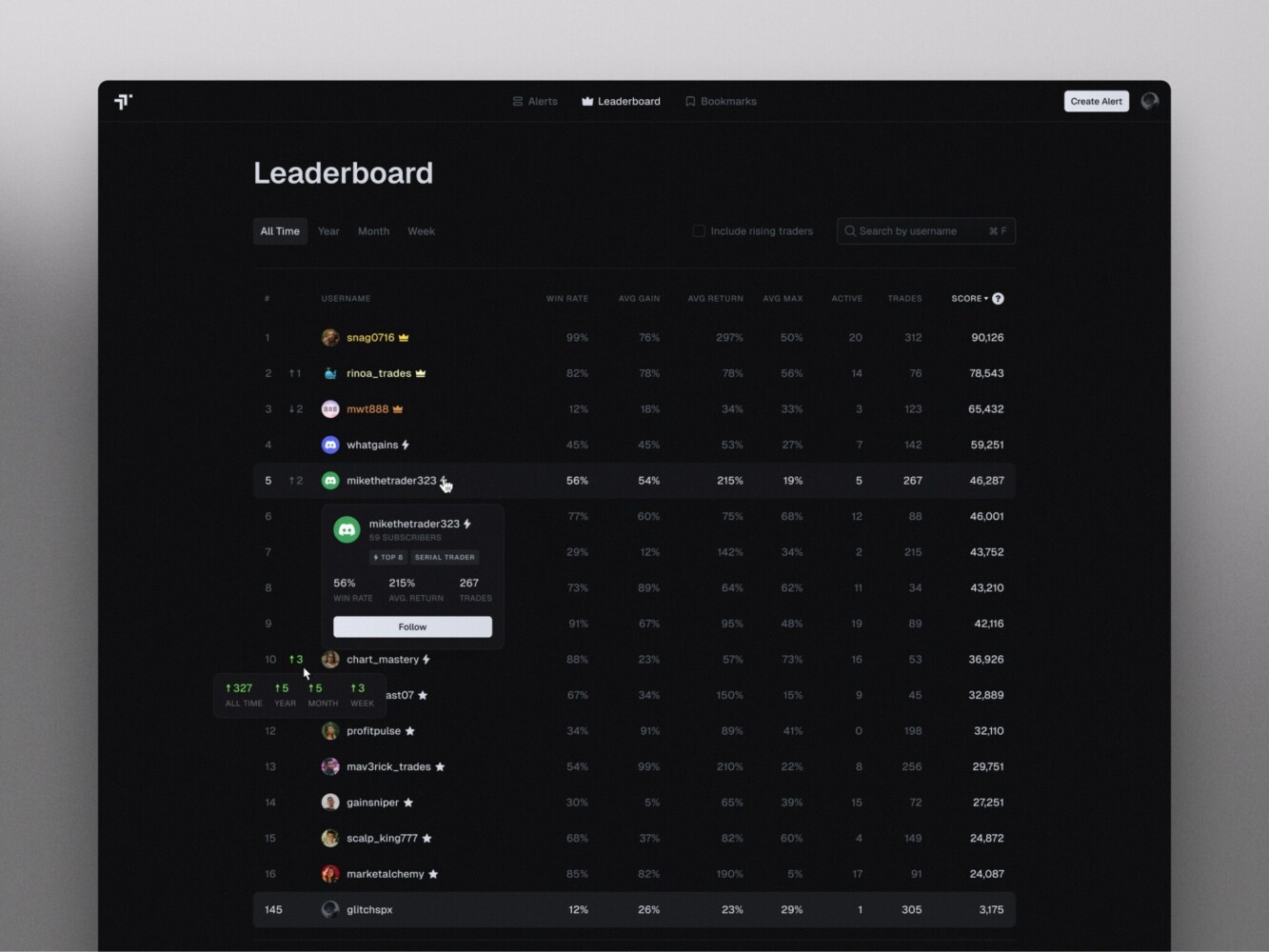
Leaderboard in TraderTale by Shakuro
Trading Bots
Trading bots come in all shapes—from small scripts to systems that sit inside full trading platforms.
At the simplest level, a bot just automates repetitive actions. Watch the price. Wait for a condition. Send an order. Repeat. That alone removes a lot of manual work, especially when trades happen frequently.
More advanced bots usually don’t run alone. They connect to exchange APIs, log what happens, retry failed actions, and keep working even when something temporary breaks. Crypto markets pushed this pattern forward because they never pause. Bots now also trade against liquidity pools on DeFi platforms, not only on centralized exchanges. Once trading runs 24/7, automation stops being optional.
In setups that involve digital assets, bots often depend on several moving parts working together—exchange responses, wallet operations, network confirmations. That’s where familiarity with blockchain-based trading infrastructure starts to matter, particularly when delays or failed transactions affect order timing.
Core Components of Algorithmic Trading Systems
Even though strategies differ, most trading systems end up sharing the same core pieces. Over time, you start noticing the repetition. Different project, different strategy—same building blocks underneath.
Problems usually don’t come from the overall idea. They show up in one of these parts when the load increases or when the market behaves differently than expected.
Market Data Feeds
Everything depends on incoming data. Prices, volumes, order book updates—the system reacts to whatever arrives through the feed.
The tricky part isn’t just receiving data, but receiving it consistently. Late messages, skipped updates, mismatched timestamps—small issues that don’t look serious at first. Later, they show up as strange behavior in trades that should have worked.
Most teams spend more time stabilizing data flow than they expect at the start.
Trading Algorithms
This is where the actual decisions live. The rules that say when to enter, when to exit, when to stay out.
Some algorithms stay compact. Others grow over time as new checks get added. It often happens gradually—one more condition here, another safeguard there—until the logic becomes harder to follow than intended. Cleaning it up becomes part of regular maintenance.
Execution Engines
Once a decision is made, the execution engine takes that instruction and turns it into a real order.
This part usually behaves well in controlled testing. The interesting problems appear later—under real trading load. Delayed confirmations, rejected orders, partial fills. Situations that weren’t obvious until the system started handling real traffic.
Reliability here matters more than elegance.
Risk Management Systems
Risk controls watch the system from the side. They don’t trade—they limit damage when something goes off track.
Position sizes, exposure limits, loss thresholds—these things are checked continuously. If limits are crossed, trading slows down or stops. Most teams refine these rules gradually, because real trading exposes edge cases that planning doesn’t always catch.
Risk systems rarely stay static for long.
Analytics Dashboards
Sooner or later, someone needs to understand what the system has been doing all day. Dashboards exist for that reason.
They collect trade results, system behavior, performance numbers—not just for reporting, but for troubleshooting. When something looks wrong, visual summaries help spot patterns faster than raw logs.
Without this layer, small issues take longer to notice. And in trading systems, delayed visibility often turns small problems into expensive ones.
Key Features of Algorithmic Trading Platforms
Real-Time Market Data Processing
Everything starts with incoming market data. Prices, volumes, order book changes—the system reacts to whatever arrives through those feeds. If data slows down or arrives unevenly, the rest of the logic starts working with the wrong picture.
Getting access to live data is usually the easy part. Keeping it stable under load is harder. Feeds don’t always behave the same way, and traffic spikes happen during active market periods. That’s when small delays begin to show—queues grow, updates come in late, and signals get calculated a bit later than intended.
Processing speed matters, but not in isolation. The data also needs to be prepared before strategies use it—filtered, normalized, sometimes combined from several sources. Without that step, logic becomes harder to maintain and results start drifting. Systems that already rely on financial data analytics platforms usually handle this better because the data flow is structured from the start.
Over time, most teams end up spending more effort on keeping data flow predictable than on chasing maximum speed numbers.

Stocks Trading Mobile App by Conceptzilla
Automated Trading Strategy Execution
The system needs to act on the data right away, without any delays or confusion. Strategy execution is when rules that have already been set become real orders.
At the beginning, the flow looks straightforward—check the condition, send the order, wait for confirmation. Later, it usually becomes more layered. Several conditions overlap, signals arrive at different times, and the sequence of actions matters more than expected.
Supporting multiple asset classes makes things less uniform. Each market behaves differently. Trading equities isn’t the same as working with derivatives, and digital assets add their own constraints. Order formats vary, trading hours differ, settlement rules change. The execution layer has to handle those differences without forcing the strategy logic to be rewritten every time.
What tends to happen in real projects is gradual adjustment. Execution works well in tests, then small issues appear once trading starts—delayed responses, partial fills, rejected orders. Fixes accumulate over time rather than happening all at once.
Risk Management Systems
Risk controls are usually quiet until something unexpected happens. That’s when they become the most visible part of the system.
Position limits are often the first thing added. They restrict how much capital can be tied to a single asset or strategy. Stop-loss rules follow—automatic exits when losses reach predefined levels. These controls don’t remove risk, but they prevent losses from growing unchecked.
As systems grow, portfolio-level checks start to appear. Instead of looking at one trade, the system monitors total exposure across multiple positions. That becomes necessary once several strategies run side by side.
In larger setups, monitoring sometimes relies on AI-driven financial analytics systems, especially when the amount of data becomes difficult to track manually. Even then, most teams keep the core risk rules simple. Complicated safeguards tend to create new failure points if something behaves unexpectedly.
Risk logic almost never stays fixed. It changes along with the strategies, usually after real trading exposes situations that weren’t obvious during earlier testing.
Backtesting and Simulation
No one runs a new strategy straight into live trading without testing it first. The usual starting point is historical data—load past market records and see how the logic behaves when those situations play out again.
What tends to happen is a lot of repetition. Run the test, look at the results, change something small, run it again. Sometimes the difference is obvious right away. Other times the results look fine in one period but fall apart in another. That’s usually when teams realize the idea needs more work than expected.
Simulation sits somewhere between testing and real trading. The system runs as if it were live, but without sending actual orders. This is where technical issues start showing up—timing gaps, incorrect order handling, things that didn’t appear during earlier tests. It’s less about math at this stage and more about whether the system behaves predictably when everything runs together.
Even after launch, this doesn’t really stop. Markets change, strategies get adjusted, and earlier assumptions stop matching reality. Backtesting becomes part of regular maintenance rather than something done only at the beginning.
Multi-Exchange Connectivity
Most trading setups don’t stay tied to a single exchange for long. Once volume grows or strategies expand, connecting to multiple platforms becomes the next step. Not because it sounds impressive, but because relying on one source limits flexibility.
The difficulty here isn’t connecting once—it’s keeping those connections stable. Every exchange behaves a bit differently. Message formats vary. Limits are handled differently. Some respond quickly, others lag during busy periods. None of that looks dramatic at first, but once several integrations run in parallel, the differences start to matter.
Systems that deal with crypto exchange infrastructure feel this even more. Digital asset exchanges don’t always behave the same way, and edge cases show up often—delayed responses, rejected requests, unexpected timeouts. Handling those situations becomes routine work rather than rare exceptions.
From the algorithmic trading platform development side, this part ends up sitting right in the middle of everything. It touches networking, backend logic, monitoring—all at once. Teams usually rely on stable backend setups and proven web development services here, not because it’s fancy, but because reliability matters more than clever solutions when the system runs non-stop.
Algorithmic Trading Software Development Process
1. Strategy Design and Market Research
This stage usually starts with rough ideas, not finished plans. Someone has a hypothesis about how the market behaves, or notices patterns that look repeatable. Before anything gets built, those ideas need to be checked against real numbers.
Most of the time goes into looking at historical data. Not once, but over and over. Load a dataset, test the assumption, see what falls apart. It’s common for early strategy versions to look convincing until real data is applied. Then gaps show up—signals appear too rarely, or results depend too much on specific conditions.
A lot of rewriting happens here. Rules get simplified. Some signals get dropped entirely. Others get adjusted because they react too late or too early. It’s rarely a straight path. More like trial and error until something stable starts to form.
Working with structured tools for data-driven trading insights helps keep this from turning into guesswork. When datasets are consistent and easy to compare, it becomes clearer which ideas hold up and which ones only worked by accident.
Another thing that tends to happen at this stage—strategies shrink. Early drafts are often overloaded with conditions. Later versions usually look simpler, not more complex.
2. UX/UI Design for Trading Dashboards
Even when trading runs automatically, people still need to watch what’s happening. That’s where dashboards come in. They’re less about appearance and more about visibility.
Most teams figure this out quickly: too much information on screen makes things worse, not better. If key numbers are buried under charts and panels, reaction time slows down. During active market periods, that becomes noticeable.
Dashboards usually start crowded. Every metric seems important at first. Then usage begins, and patterns show up—some numbers get checked all the time, others almost never. Over time, unnecessary pieces disappear.
Real-time updates add another layer of difficulty. Data refreshes constantly, and the interface has to keep up without freezing or showing outdated values. That’s harder than it looks at first, especially when multiple data streams update at once.
Frontend performance starts to matter here. Systems built on stable stacks—the kind typically used in React development—tend to handle frequent updates more reliably. Not because of trends, but because these tools have been pushed hard in similar environments.
Most dashboard designs settle into shape only after several rounds of use. The first version rarely survives unchanged. Adjustments happen as people start relying on the interface in daily work.
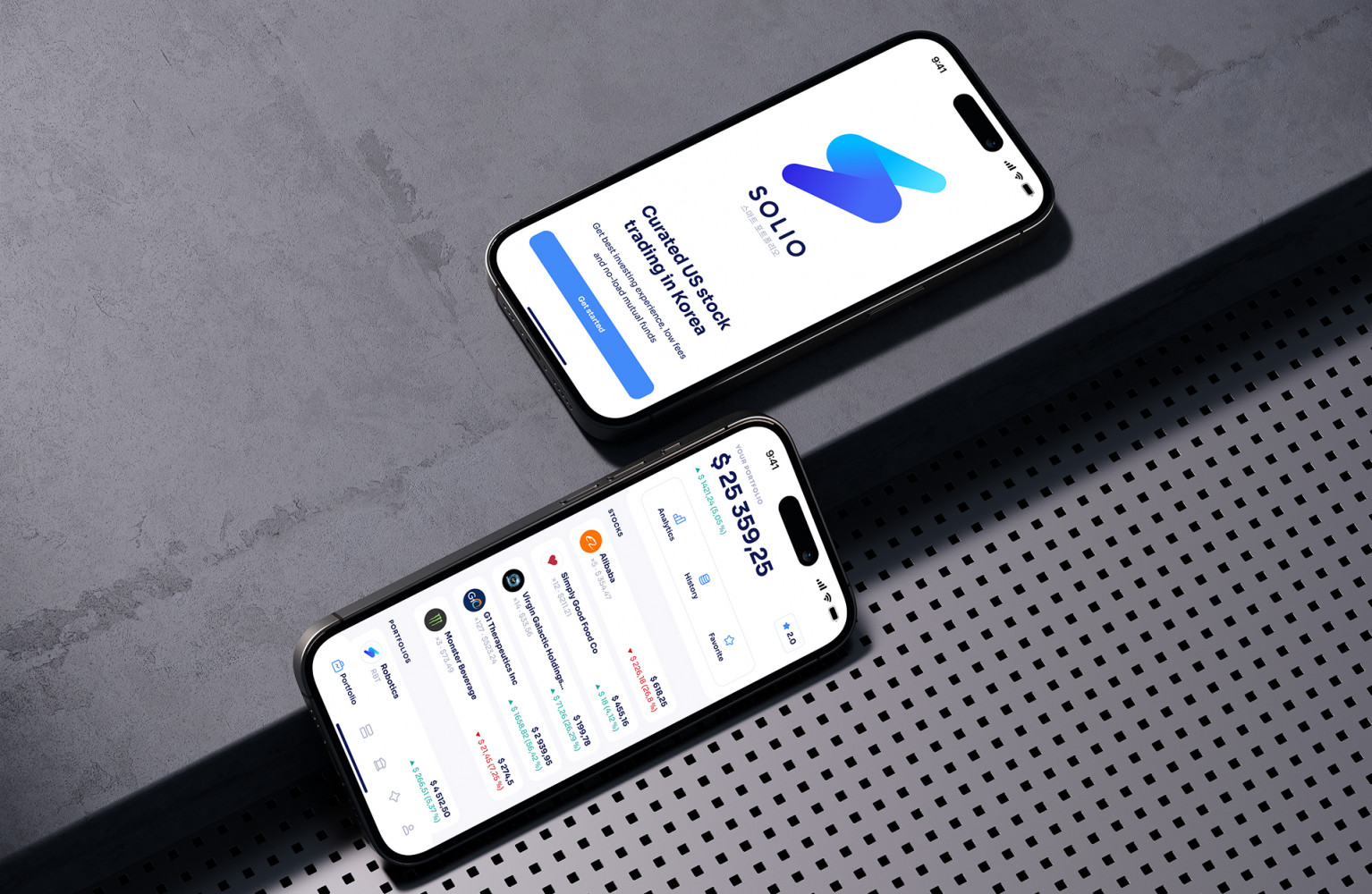
Solio App by Shakuro
3. Choosing the Technology Stack
By this point, the system already exists on paper. Not in full detail, but enough to understand what needs to run and where the pressure will be.
Backend choices usually follow that reality. Python appears often around strategy logic and data handling. Mostly because it’s easy to change things there without rewriting everything. C++ tends to show up later, when some part of the system starts lagging and speed becomes an issue. Not across the whole system—just in the pieces that need tightening. Java is still common in long-running platforms that aren’t meant to be rebuilt every year. Node.js is often used around APIs—especially where many services need to talk to each other.
Very few real systems stay single-language. They split. One service handles data intake, another processes signals, another manages connections to exchanges. That separation usually happens gradually, not all at once.
Frontend decisions usually get shaped by usage, not preference. Trading dashboards sit open for hours. Sometimes all day. Data keeps refreshing. If the interface starts lagging, people stop trusting what they see. That’s why React shows up so often—it handles frequent updates without breaking the structure. Vue appears in similar setups, especially when the interface grows step by step instead of being built all at once.
Databases almost always divide by purpose. PostgreSQL handles records that need to stay intact—trades, logs, settings. It holds steady even as data grows. Redis usually sits next to it, handling faster operations—caching, temporary values, recent calculations that don’t need long-term storage.
Infrastructure usually starts simple and becomes more layered later. Docker is widely used early on—mostly to avoid strange differences between environments. Without it, small setup mismatches start causing random failures. Kubernetes tends to appear once the system grows beyond a few services and manual deployment starts slowing everything down.
Most teams don’t pick stacks because they’re fashionable. They reuse what has already worked under pressure. Backend layouts often follow patterns seen in FastAPI development, especially when services need to stay separated and predictable. On the frontend side, approaches typical for frontend development usually last longer once dashboards begin running nonstop.
4. Trading Engine Development
This stage is where the system starts acting like a trading tool, not just a set of scripts and tests.
Trading rules that looked clear during planning now have to run continuously without breaking. Signals come in, the system checks conditions, decides what to do, then does it again a second later. At first everything seems manageable. Then small edge cases begin to show up—missing updates, signals arriving out of order, responses that don’t match expectations. Most of the real work happens while fixing those situations.
Order execution sits very close to the strategy logic. Once the system decides to trade, it needs to create the order, send it, and wait for confirmation. In test environments that part usually behaves well. In live conditions, things get less predictable. Orders fill partially. Some fail. Some return unexpected responses. Handling those outcomes becomes routine work rather than rare exceptions.
Market connectivity adds its own set of problems. The engine has to keep stable links to exchanges or liquidity sources for long periods without interruptions. When connections drop—and they do—the system has to reconnect and continue without losing track of what already happened. That recovery logic usually takes more effort than planned at the start.
A lot of this part ends up looking similar to systems used in financial transaction processing infrastructure. Requests go out, confirmations come back, and everything has to be tracked carefully so nothing is lost along the way.
5. Exchange and Market Integrations
Once the trading engine works on its own, it still needs somewhere to send orders. That’s where exchange and broker integrations come in.
The first integration usually looks straightforward. Connect to an API, authenticate, send test requests. After that, differences between platforms start showing up. Some exchanges respond quickly, others slow down during busy periods. Message formats aren’t identical. Error responses don’t always make sense right away. Supporting one exchange is manageable. Supporting several at once takes more patience.
Stock exchanges, crypto exchanges, and broker APIs all bring their own rules. Rate limits, authentication methods, order handling—each platform does things slightly differently. Those differences don’t look serious individually, but once multiple integrations run together, they start interfering with each other.
Crypto platforms add extra coordination because trading often happens alongside asset transfers. Systems tied to crypto asset management systems usually need to watch balances, transaction confirmations, and exchange responses at the same time. When something gets delayed, it affects more than one part of the workflow.
Most teams expect integrations to be quick compared to core development. In practice, they stretch longer than planned. Not because the connection itself is difficult, but because edge cases keep appearing—delayed responses, rejected requests, unexpected states that weren’t visible during early testing. Fixing those one by one is what eventually makes the system stable.
6. Testing and Strategy Validation
By now the system runs, at least in parts. Not perfectly, but enough to see where problems start showing.
Backtesting takes most of the attention here. Strategies get replayed on older market data. Then replayed again after small changes. Results rarely stay consistent at first. Something works in one period, fails in another. Timing shifts. Signals overlap. Rules that looked fine earlier begin to interfere with each other. That’s usually where the first real corrections happen.
Performance testing pushes the system harder than usual. More data, faster cycles, heavier load. Some services keep working as expected. Others slow down once traffic increases. Not dramatically—just enough to notice delays that weren’t visible earlier. Fixing that usually turns into a sequence of small changes rather than one big rewrite.
Stress testing under volatile conditions tends to expose different problems. Large bursts of updates, fast price movement, heavy order flow—all at once. Systems don’t always crash in these cases. More often they behave slightly wrong—late responses, dropped updates, repeated requests. Those details matter more than they seem.
Testing doesn’t really finish in one clean step. It repeats. Run tests, change something, run again. The cycle slows down only when new problems stop appearing every time.
7. Deployment and Monitoring
Deployment usually begins quietly. Limited rollout, smaller activity, fewer strategies running at once. Full usage comes later, once things hold steady for a while.
The first days tend to reveal things that testing missed. Not large failures—small ones. Delayed responses, mismatched data, rare edge cases that only appear under real traffic. Logs get checked more often than usual during that period.
Monitoring stays constant after that. Numbers get reviewed regularly—positions, execution results, response times. If something starts drifting, it needs to be visible early. Waiting too long usually makes recovery harder.
Risk exposure draws more attention once trading runs live. Strategies that behaved normally before sometimes react differently when market conditions shift. Not dramatically, but enough to require adjustment.
Support work continues in the background. Exchanges update APIs. Data feeds change behavior. Strategies evolve. Systems running nonstop usually depend on ongoing support services—small fixes, adjustments, maintenance that keeps the platform stable without interrupting trading.

Crypto Trading Mobile App by Conceptzilla

Cost of Algorithmic Trading Software Development
Costs in this type of project don’t come from a single source. They build up from several decisions made along the way—how complex the strategy is, how many systems need to connect, and how fast everything is expected to run.
The biggest factor is usually the trading logic itself. Simple strategies don’t take long to implement, especially if they rely on basic signals and limited rules. Once strategies become layered—multiple indicators, safeguards, execution logic—the workload increases quickly. More conditions mean more testing, more edge cases, more time spent fixing behavior that only appears under specific conditions.
The number of supported exchanges also changes the scope. One integration is manageable. Two or three already require extra coordination. Each exchange behaves differently, even when they claim to follow similar standards. Authentication methods vary, rate limits differ, error handling isn’t consistent. Supporting multiple exchanges usually means repeating the same work several times, with small but important adjustments.
Data infrastructure requirements add another layer of cost. Some systems only need current market data. Others rely on large historical datasets, fast storage, and constant synchronization. Handling high data volume usually means investing more time into pipelines, storage optimization, and backup logic. Without that foundation, strategy logic becomes unreliable.
Performance and latency expectations also push development effort higher. Systems that tolerate small delays are easier to build and maintain. Systems expected to react instantly—especially under heavy load—require more careful design. Optimization becomes part of the development cycle rather than a final step.
Example development scenarios
Costs usually become easier to estimate once the scope is tied to a specific type of system.
An MVP trading bot development is often the starting point. This type of system supports a limited number of strategies and connects to one or two exchanges. The goal isn’t full automation at scale, but testing whether the strategy works in real conditions. Interfaces stay simple. Infrastructure stays compact. Most effort goes into making sure the core logic runs without breaking.
An enterprise algorithmic trading infrastructure looks very different. Multiple exchanges, large data volumes, continuous monitoring, advanced risk controls—all running at the same time. Systems like this are built to operate without interruption, sometimes across several environments. Algorithmic trading platform development timelines stretch longer because stability becomes just as important as functionality.
Companies searching for an algorithmic trading development company usually arrive at this stage with at least a rough idea of scale—whether they need a lightweight prototype or a full production-grade system. The same applies to teams planning automated trading software development: early scoping decisions often determine whether the project stays manageable or grows into something far more complex than expected.

Common Challenges in Algorithmic Trading Development
Most problems don’t appear during early builds. They start showing after the system runs continuously and begins dealing with real market traffic.
Handling large data streams is usually one of the first pressure points. Market data arrives unevenly. Quiet periods pass without trouble, then activity spikes and the flow increases sharply. Queues begin forming. Updates arrive slightly late. Nothing dramatic at first, just small timing shifts that accumulate over time.
Reducing latency in execution becomes a separate task once the system starts trading regularly. Early tests often look stable. Under heavier load, delays start appearing in places that seemed fine before. Sometimes it’s internal—extra processing, slow queries. Sometimes external—network paths, exchange response time.
Managing risk gets more complicated once more strategies begin running together. One strategy is easy to follow. Several running at once start affecting each other. Positions overlap. Exposure grows faster than expected. Limits that worked earlier need revision. Monitoring usually expands here, sometimes using methods similar to AI-powered financial analytics systems, especially when manual tracking stops being practical.
Reliability problems show up most clearly during volatile markets. Calm conditions don’t reveal much. Fast price movement does. Sudden bursts of activity put pressure on every part of the system. Slow responses, dropped messages, repeated requests—small faults that repeat until they become visible.
None of these problems get solved permanently. They return in different forms as the system grows. One weak point gets fixed, another shows up somewhere else. That pattern tends to continue as long as the platform stays active.
Our Experience in Fintech Platform Development
Financial platforms rarely stay simple for long. Most start with one clear function—analytics, reporting, trading—then expand once real users begin working with them.
Work in this area usually revolves around data. Not small datasets, but ongoing streams—reports, transactions, historical records, live values. When those volumes increase, small structural decisions start to matter more than expected. Layout, data flow, system behavior under load—all of it becomes visible once usage grows.
Typical projects in fintech and SaaS environments involve dashboards, reporting tools, or platforms that stay open most of the day. These systems don’t refresh occasionally—they update constantly. If data handling or layout is inconsistent, users feel it immediately.
A recurring part of the work is organizing dense information so it remains readable. Not reducing the amount of data, but placing it where people expect to find it. That becomes more important over time, especially in fintech and SaaS systems where users return to the same interface every day.
Below are two examples that reflect that type of work.
Four Pi Capital: Building a Digital Presence for an Independent Financial Research Firm
Four Pi Capital works in investment research. Their output is mainly analytical reports—company reviews, industry outlooks, broader economic assessments. The audience includes financial advisors and private investors who rely on structured information rather than quick summaries.

Four Pi Analytics Website Design by Shakuro
At the start, there was no need for a complex application. The task was more basic—create a consistent visual structure that matched the company’s positioning as an independent research group.
The identity work followed the structure of the team itself. Four partners formed the basis for the visual concept. That idea carried into the logo and supporting materials. The final mark reflected the partnership model while keeping a visual reference to financial reporting formats.
Most effort went into documents rather than interfaces. Reports are the main product, so layout mattered more than decoration. Typography and spacing were adjusted to handle dense text blocks without making pages feel overloaded. Illustration elements were added carefully, mostly to separate sections and guide reading flow.
The website worked as a reference point rather than a product interface. It explained the company’s background, methodology, and areas of focus. No interactive tools—just structured content presented in a way that matched the printed materials.
Later, the same visual logic extended into recurring publications. That made reuse easier. New materials could follow existing rules instead of starting from scratch.
TraderTale: Designing a Trading Platform Focused on Performance Transparency
TraderTale dealt with live trading activity rather than reports. The platform focused on tracking performance over time, not just displaying isolated results.
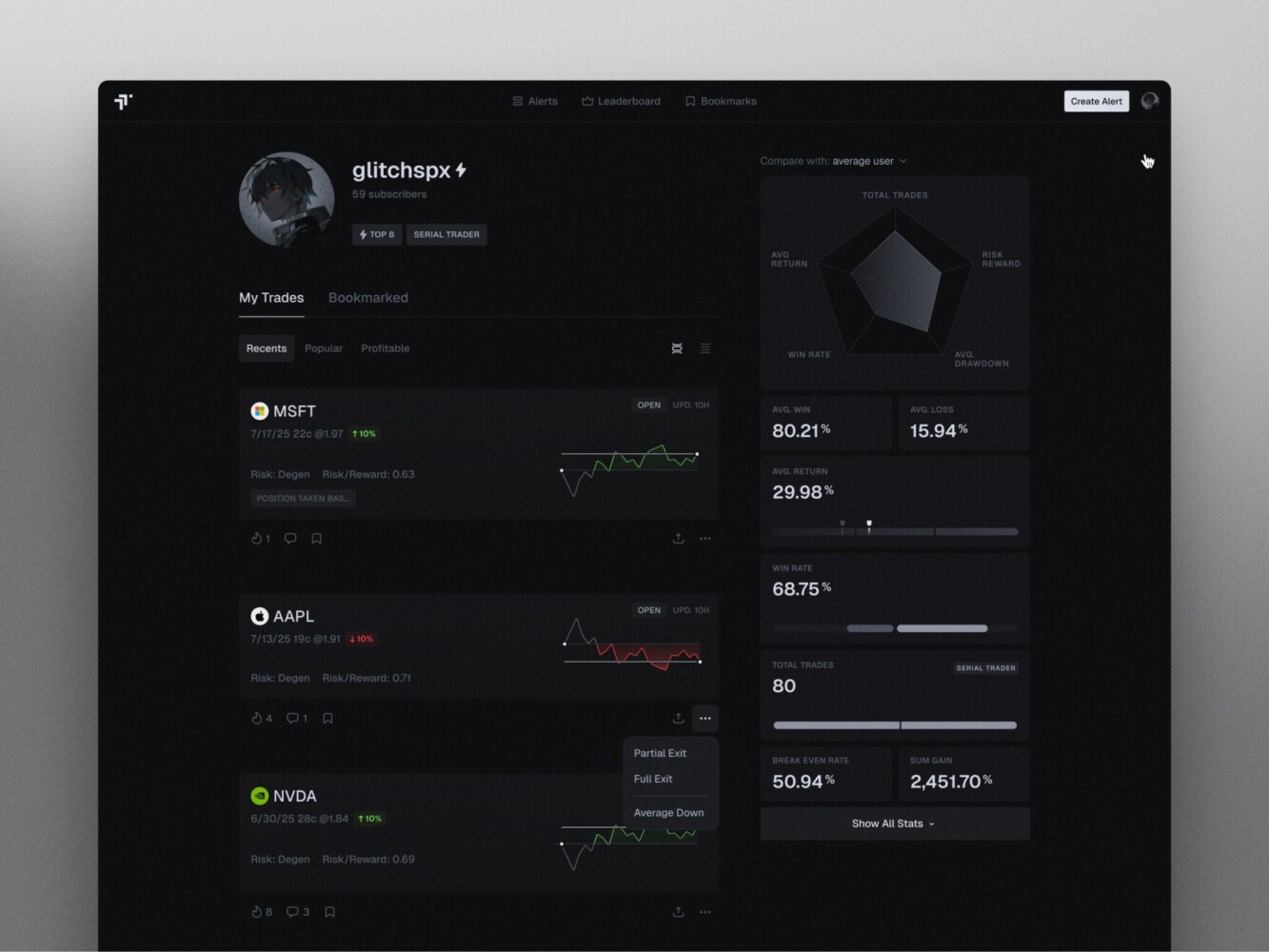
TraderTale: Social Platform for Traders by Shakuro
The idea was simple: make trading history visible in a way that shows patterns. Not just wins and losses, but consistency. That required handling a steady flow of data without overwhelming the interface.
The main difficulty showed up in layout. Trading dashboards tend to fill up quickly—charts, metrics, rankings, filters. Without structure, screens become harder to read as more elements appear.
Work began by setting fixed positions for the most important data blocks. Charts stayed in predictable places. Metrics followed consistent grouping. Only after that did visual styling begin.
Typography had to stay readable across dense views. Color usage stayed limited. Most visual elements were functional—used to signal changes or highlight active values.
Several areas became part of everyday workflow:
- leaderboard views showing long-term performance patterns
- alert feeds tracking ongoing activity
- detailed trade views combining charts and numbers
- user profiles showing performance history
Changes continued after launch. Some elements were simplified, others reorganized. Usage patterns made it clear which parts mattered most.
The finished platform behaved less like a static interface and more like an ongoing workspace. Data kept updating, and the layout had to keep up without creating visual clutter.
Across projects like these, the difficult part isn’t usually the first version. It’s keeping the system usable after new features appear. More data, more workflows, more interactions. Without structure, complexity builds faster than expected. That pattern repeats across research platforms, analytics tools, and trading systems.
Why Work with an Algorithmic Trading Software Development Company
Teams usually consider outside help once the system grows beyond early experiments. At the beginning, internal prototypes often work well enough. Later, once load increases and integrations multiply, gaps start to appear—especially around stability and long-term maintenance.
Experience with financial system architecture becomes noticeable early in the process. Trading platforms aren’t typical web applications. They depend on steady data flow, predictable execution timing, and reliable recovery when something fails. Without that foundation, new features tend to introduce side effects—small changes breaking parts of the system that seemed unrelated.
Working with teams experienced in fintech environments usually shortens the trial-and-error phase. Not because problems disappear, but because familiar patterns appear earlier. Many of the same issues repeat across trading systems—data flow interruptions, unstable integrations, scaling pressure. Experience mostly helps in recognizing those patterns before they grow into larger failures.
For algorithmic trading development companies, the difference often shows up later in the lifecycle. Early versions may look similar. Long-term behavior usually doesn’t. Systems built with stable architecture and predictable scaling tend to hold up better once traffic increases and workflows expand.
FAQ
What drives the cost of algorithmic trading software development?
Strategy complexity drives cost the most: simple signal-based rules are quick to implement, while layered strategies with several indicators and safeguards multiply testing and edge cases. Each supported exchange adds its own authentication, rate limits and error handling. Large historical datasets, fast storage and constant synchronization raise the data infrastructure bill, and strict latency targets turn optimization into a permanent part of development.
How long does algorithmic trading software development take?
The strategy logic may take weeks to prepare, but the infrastructure around it usually takes months. Stable market data feeds, exchange connections, order tracking and recovery logic consume most of the schedule. Integrations tend to stretch longer than planned because edge cases keep appearing, and enterprise systems with several exchanges and continuous monitoring take longer still, since stability matters as much as functionality.
What should an MVP trading bot include compared to an enterprise trading platform?
An MVP trading bot supports a limited number of strategies, connects to a small number of exchanges and keeps its interface and infrastructure compact. Its purpose is to prove the strategy works in real conditions. Enterprise algorithmic trading infrastructure adds multiple exchanges, large data volumes, continuous monitoring and advanced risk controls, all built to run without interruption, sometimes across several environments.
Which tech stack is used for algorithmic trading software development?
Python is common for strategy logic and data handling, C++ appears where specific components need more speed, Java suits long-running platforms, and Node.js often sits around APIs. React or Vue handle trading dashboards that refresh all day. PostgreSQL stores trades, logs and settings, Redis handles caching and recent calculations, Docker keeps environments consistent, and Kubernetes arrives once the system outgrows manual deployment.
How is an automated trading system tested before it trades live?
Testing starts with backtesting, where strategies are replayed on historical market data again and again after each small change. Simulation then runs the system as if it were live without sending real orders, exposing timing gaps and order handling bugs. Performance and stress tests push heavy load and volatile bursts through the system, and deployment begins with a limited rollout and fewer strategies.
How do I choose a development partner for algorithmic trading software?
Look for a team with real experience in financial system architecture, since trading platforms depend on steady data flow, predictable execution timing and reliable recovery after failures. Ask how they handle partial fills, rejected orders, exchange rate limits and dropped connections. Check that they plan ongoing support, because exchanges update APIs, data feeds change behavior and strategies keep evolving after launch.
Final Thoughts
A trading platform development usually follows a predictable path, even though details change from project to project. It starts with strategy design, moves into architecture decisions, then into development, and finally deployment. Each step depends heavily on the one before it. If early assumptions are weak, later stages usually take longer to stabilize.
Systems that hold up over time tend to share a few common traits. Data infrastructure remains stable even during heavy market activity. Risk controls stay visible and adjustable as strategies evolve. These pieces depend on each other. When one starts drifting, the rest usually follows.
Trading platforms rarely stay fixed after launch. New exchanges get added. Strategies expand. Data volume increases. What begins as a limited setup often turns into a long-running environment that needs regular adjustments.
For trading firms and fintech startups planning automated systems, early technical choices usually shape how stable the platform remains later. Teams that have worked with financial systems before tend to spend less time solving the same problems from scratch.
Companies building automated trading platforms often collaborate with experienced algorithmic trading software developers who understand financial workflows and long-running infrastructure—teams like Shakuro that focus on building systems meant to operate reliably as usage grows.
Related reading