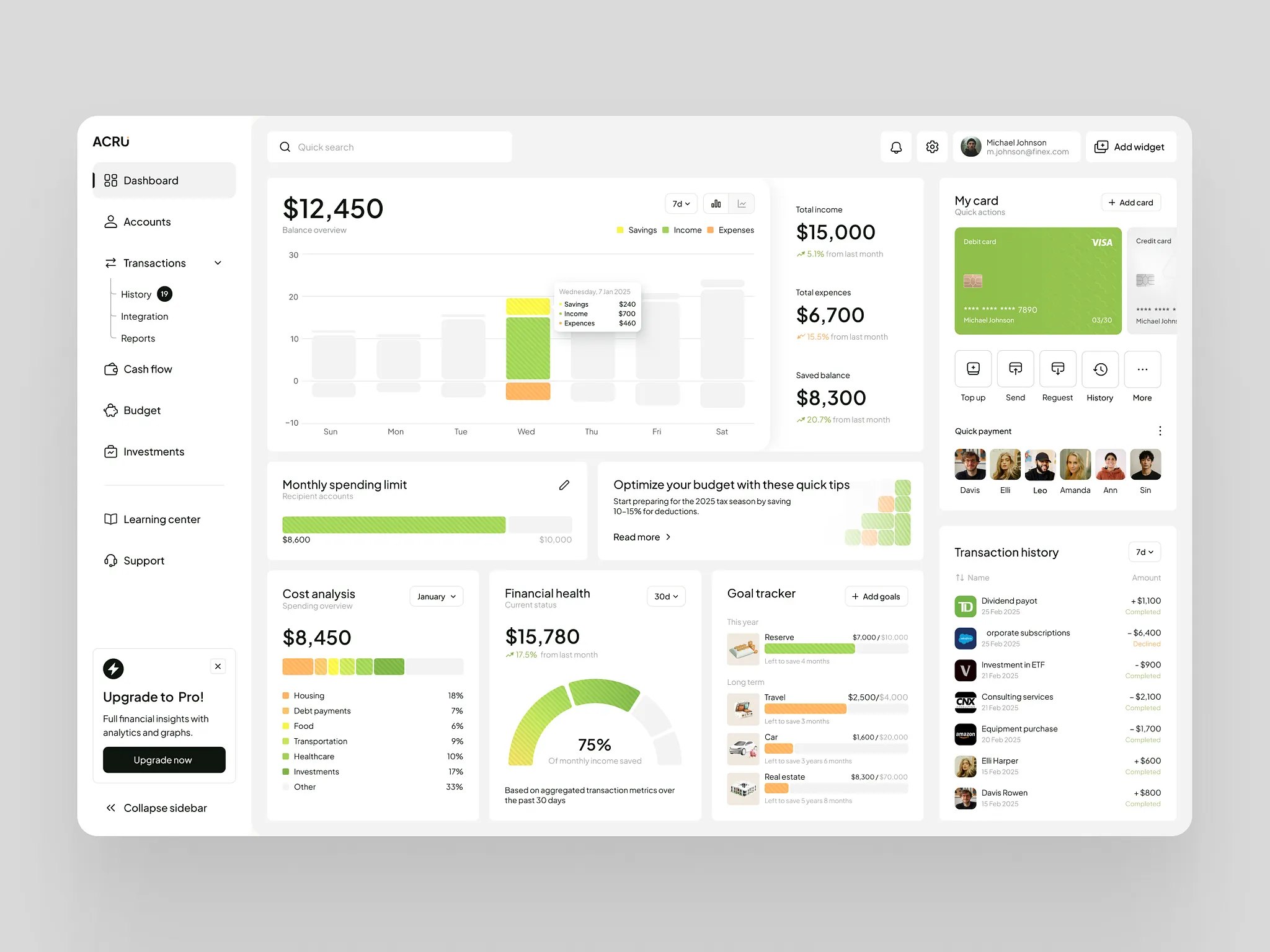
AI financial analytics software development means building finance tools where machine learning takes over the repetitive analysis: it scans transactions, flags unusual activity and risk, estimates future revenue, and prepares reports and projections that analysts review instead of calculating from scratch.
The need usually starts with a simple problem. Reports take longer to prepare, forecasts drift from reality, and analysts check the same numbers again and again as data volumes grow. An AI layer depends on the same foundations as data-driven financial analytics platforms: data movement, storage, and reporting under load. Once models reach production, keeping financial outputs stable and explainable takes careful engineering and real AI development expertise.
Below, we cover the types of AI used in financial analytics, key features, the development process, what drives cost, common challenges, and our experience in AI and fintech development.
For those who prefer to listen rather than read, this article is also available as a podcast on Spotify.
What Is AI Financial Analytics Software?
AI financial analytics software usually becomes relevant when finance teams start running into the same bottlenecks again and again. Reports take longer, forecasts need constant rework, and checking the numbers turns into a job of its own. The data keeps growing, but the process stays mostly manual.
In most cases, this software is added to an existing setup. Payment data, accounting records, and external feeds still come from the same sources. The difference is that models now process part of that flow in the background and point to things that stand out: a shift in pattern, an unexpected spike, a mismatch with earlier periods.
Forecasting is one of the clearest examples. Instead of updating projections by hand every time fresh numbers arrive, teams use models that adjust estimates automatically. The output still has to be reviewed, but the work becomes less repetitive.
The same applies to risk analysis. The system compares current activity with historical behavior and highlights cases that don’t look typical. This is especially useful in products connected to transaction processing systems, where a small discrepancy can quietly carry over into reporting or balances.

Mobile App UX/UI Design for Kuwaiti Investment Platform by Shakuro
Types of AI Used in Financial Analytics
Predictive analytics
Predictive analytics is used to estimate what may happen next based on past data. Finance teams apply it to revenue planning, cash flow projections, and changes in demand or customer behavior. When behavioral signals come from several products, a customer data platform often supplies the unified profiles these models rely on.
Fraud detection systems
Fraud detection systems are built to catch activity that looks unusual. Instead of relying only on fixed rules, they compare new transactions within transaction processing systems with previous patterns and flag the ones that need a closer look.
Automated reporting systems
Automated reporting systems are used when teams need the same financial reports on a regular basis but don’t want to rebuild them by hand every time. Once the data sources are connected, the platform can collect updated figures and assemble the report on its own.
Algorithmic decision-making systems
Some AI financial platforms are also built to support decisions that follow a fixed set of rules, model outputs, or live inputs. This is common in products related to automated trading systems, where reactions often need to happen quickly and without too much manual handling.
Core components of AI financial platforms
- Data pipelines—pull data from source systems and pass it further into storage, models, and reporting tools.
- Machine learning models—work through past and current data to find patterns, make forecasts, or catch things that look unusual.
- Analytics engines—handle the heavy processing and turn raw financial data into something usable.
- Dashboards and visualization tools—display the results in a way that is easier to read, compare, and keep an eye on over time.
- API integrations—connect the platform with outside systems such as banking and payment services, or trading software. Digital-only banks are a typical client here, since they already collect clean transaction data in real time.
Key Features of AI Financial Analytics Platforms
Predictive Analytics
Predictive analytics is useful when a finance team needs more than a backward-looking report. Instead of waiting for someone to revise the forecast by hand, the system updates projections as new data comes in.
This is usually applied to revenue planning, cash flow estimates, and trend tracking. The benefit is fairly practical: forecasts become easier to maintain and less tied to constant manual rework.
Fraud Detection and Risk Analysis
Fraud detection is one of the most practical parts of an AI financial platform. Transactions can be checked as they appear, with the system drawing attention to amounts, patterns, or behavior that don’t look typical.
The same principle is used in broader risk management systems. Rather than digging through large volumes of data after the fact, teams can catch irregular activity earlier and spend less time on routine.
Real-Time Data Processing
In some financial products, delayed data is barely useful data. Transactions keep coming in, balances change, prices move, and yesterday’s snapshot stops helping pretty quickly. For that reason, many AI analytics platforms are built to work with live streams rather than wait for scheduled updates.
This is especially important in products built around real-time trading analytics, where the value of a signal depends on how quickly it appears. The same applies to other finance tools that need to react to changes while they are still relevant.
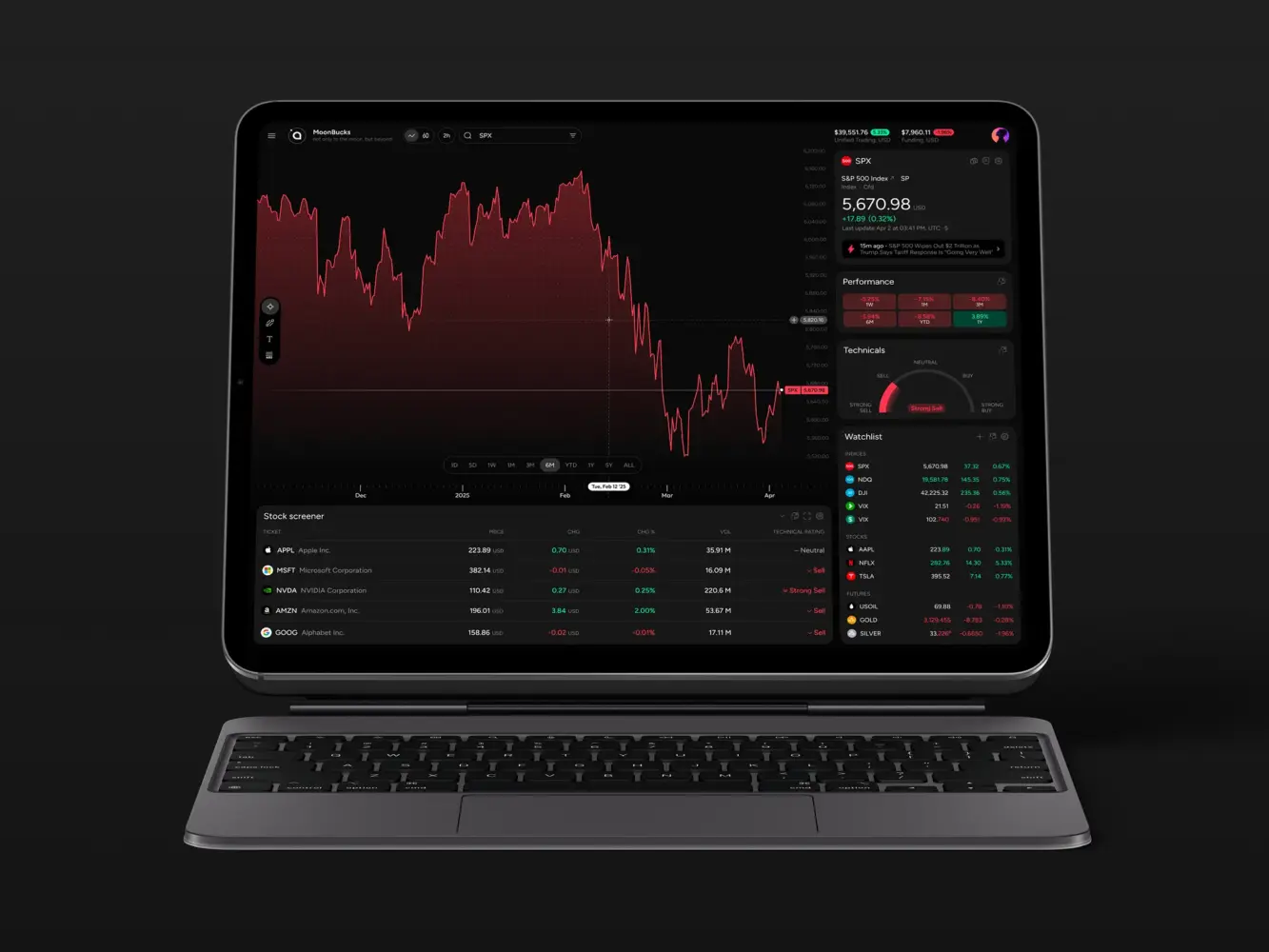
Financial Market Trading Analytics Tool Dashboard Design by Shakuro
Automated Insights and Reporting
AI platforms are often used to do more than calculate numbers. They can also surface patterns, highlight changes, and turn large datasets into reporting that is easier to review.
That usually leads to custom dashboards built for different roles. Analysts, managers, and operations teams rarely need the same view, so the interface has to present insights clearly. This is one of the reasons frontend development matters in analytics products just as much as the data layer behind them.
Integration with Financial Systems
Most AI financial analytics platforms have to work with systems that are already in place. That may include banking tools and payment platforms, or trading software.
Connecting those parts is often less straightforward than it looks. Data has to move cleanly between services, formats have to match, and failures have to be handled without breaking the whole flow. This becomes even more important in products tied to crypto transaction systems, where several systems may need to exchange data at the same time. In builds like this, solid web development services are part of the foundation, not an extra layer.
AI Financial Analytics Software Development Process
1. Data Strategy and AI Use Case Definition
This stage usually starts with a basic question: what exactly should the platform improve? For one company, that may be forecasting. For another, fraud detection, reporting, or risk analysis. Until that is clear, model selection doesn’t mean much.
Business goals come first, because they shape everything that follows—what data is needed, how it should be processed, and where AI actually adds value instead of complexity. At the same time, teams define the specific use cases the platform needs to support and check whether the existing financial data architecture can handle them.
2. UX/UI Design for Analytics Platforms
Once the use cases are clear, the next step is the interface. Financial analytics products usually deal with dense, fast-changing data, so dashboards have to show AI outputs in a way that people can read quickly and use without second-guessing them.
At this stage, teams work on layout, filtering, charts, tables, alerts, and the general flow of the dashboard. The goal is simple: make important changes easy to notice and keep the interface from feeling heavier than the data itself. For web-based products with interactive dashboards, React development is often a practical choice.
3. Choosing the Technology Stack
The stack depends on what the platform is expected to handle. A reporting tool with a few predictive models needs one setup. A larger system with live data, model inference, and several integrations needs another.
Python and Node.js are common backend choices. TensorFlow and PyTorch are widely used for machine learning, while Kafka and Spark are often added when the product has to process large datasets or continuous streams. PostgreSQL and BigQuery are typical storage options, while Docker and Kubernetes are often used to manage infrastructure and scaling.
Where the platform depends on fast APIs and stable model-serving endpoints, FastAPI development is often a sensible fit. The broader machine learning layer usually sits within full AI development services.
4. Machine Learning Model Development
Once the data is in place, teams can move to the model layer. This usually means training models on historical financial data, checking how they perform, and seeing whether the results are actually useful for the task—not just technically correct.
In finance, a model is only part of the job. It still has to produce forecasts or signals that make sense in real conditions. That is why this stage often involves repeated tuning, retraining, and a fair amount of adjustment before the output becomes reliable enough to use.
5. Data Pipeline and Integration
This part is about getting the data where it needs to go and keeping it there without constant manual handling. Some inputs are updated in batches, others need to move through the system almost immediately, so teams usually build both kinds of pipelines.
Integration sits in the same stage because the platform rarely works with one source only. It may need data from internal tools, external services, payment infrastructure, or systems tied to blockchain data integration if part of the financial activity happens on-chain.
6. Testing and Model Validation
Before release, teams usually check two things at once. First, whether the model is giving results that are accurate enough to trust. Second, whether the platform itself keeps working normally when the load gets closer to real conditions.
This part tends to reveal the less obvious problems. A model may perform well during training and still produce weak output on live cases. The system may also start slowing down once larger volumes of data move through it. Both issues have to be caught before launch.
7. Deployment and Continuous Learning
After that, the models are moved into production and start working with live data. From there, the task changes. It is no longer about getting the first version out, but about keeping the system in good shape over time.
Financial data does not stay still, so models have to be reviewed and updated as patterns change. In practice, teams monitor the results, retrain models when needed, and keep fixing weak spots after release. That is one reason ongoing support matters in products like this.

Stocks Trading Mobile App by Conceptzilla

Cost of AI Financial Analytics Software Development
The cost of financial analytics software development depends less on the interface and more on what is happening underneath. A simple dashboard with a few charts is one thing. A system that has to process live financial data, run models, and connect to several external services is another.
One of the main cost factors is model complexity. A lightweight forecasting model is usually faster to build than a platform that includes several models for prediction, anomaly detection, and risk analysis.
Data volume matters too. The more data the system has to store, process, and analyze, the more attention has to go into infrastructure and performance.
Real-time processing also affects scope. If the platform needs fresh outputs as data arrives, the build becomes more demanding than a system based on scheduled updates.
Integration complexity is another major factor. Connecting the product to banking tools, payment services, trading platforms, or internal systems often takes a significant part of the work.
A basic MVP AI analytics platform usually focuses on one narrow use case, such as forecasting or automated reporting. An enterprise AI financial system is broader. It may include multiple models, larger data flows, real-time processing, custom dashboards, and a deeper integration layer. That difference has a direct impact on both timeline and budget in AI fintech software development and broader financial AI software development.

Common Challenges in AI Financial Analytics Development
One of the first problems is data quality. Financial platforms often pull data from several sources, and the records do not always match in structure, timing, or completeness. If the inputs are inconsistent, the output will be unreliable too.
Model accuracy is another challenge. It is not enough to train a model that works well in isolation. In a financial product, the results have to stay useful when new data starts coming in and conditions begin to shift.
Scale creates its own problems. Large datasets, frequent updates, and heavier workloads put pressure on both the model layer and the infrastructure around it. What works on a smaller volume may start breaking down once the platform grows.
Compliance adds another layer of difficulty. Depending on the product, teams may have to think about audit trails, explainability, data handling rules, and other regulatory requirements from the start. Similar issues come up in products related to DeFi analytics systems, where technical complexity and transparency often overlap.
Our Experience in AI and Fintech Development
Building AI financial analytics platforms takes more than model work. The product has to make sense as financial software first: clear enough to use, stable under load, and structured in a way that supports real data flows rather than demo scenarios. That is where Shakuro’s experience becomes relevant. A lot of this work sits at the intersection of financial platforms, analytics-heavy SaaS products, and scalable product infrastructure.
This matters especially in fintech, where the challenge is rarely just “add AI.” More often, the task is to build a product that can process complex financial logic, present it clearly, and still feel trustworthy to the user. That applies to analytics systems, investment platforms, and other data-driven tools where confidence in the interface is part of the product itself.
One example is ZAD, a Shariah-compliant mobile investment platform that combines robo-advisor logic with trading functionality. The product was designed for people without deep investment experience, which meant the interface had to feel simple and dependable from the start. At the same time, the platform had to reflect clear financial logic and stay aligned with ethical and compliance-related requirements rather than treat them as a side constraint.
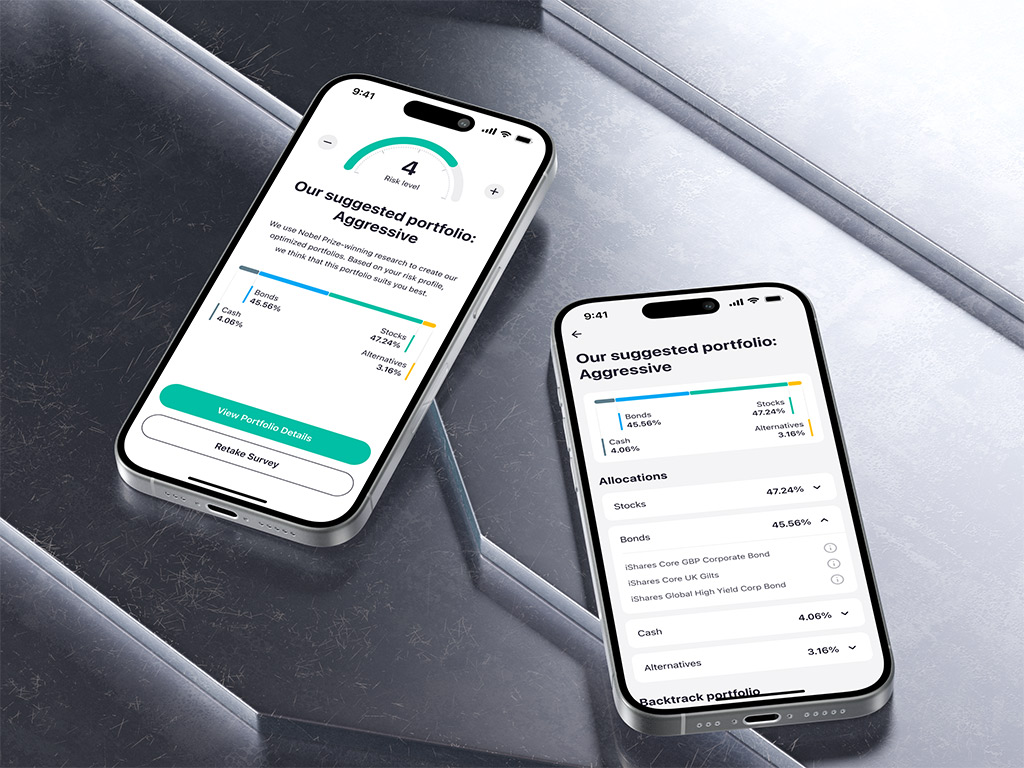
Risk Profiling in ZAD App by Shakuro
The work included product research, wireframing, and UX/UI design for a financial product aimed at a specific regional audience. In practice, this kind of project says a lot about Shakuro’s experience with intelligent financial systems: not only the ability to design around complex functionality, but also the ability to work within stricter trust, ethics, and compliance expectations.
More broadly, this is the kind of background that supports AI-driven analytics products as well. Financial platforms depend on structured data, readable interfaces, and infrastructure that can grow with the product. The same is true for data-heavy SaaS systems, where performance, usability, and backend stability all matter at once. That overlap between fintech and SaaS is a useful one when building AI-powered platforms that need to analyze, surface, and act on financial information at scale.
Why Work with an AI Financial Analytics Development Company
A platform like this is usually more complicated than it looks from the outside. On paper, it may seem like a mix of dashboards, models, and data connections. In reality, all of those parts have to work together inside a financial product where mistakes are expensive and delays are noticeable.
That is why companies often choose financial analytics developers that already have experience with both AI and fintech. Machine learning is only part of the work. The rest is data infrastructure, integration with financial systems, and making sure the product still behaves predictably when the load grows.
This also matters on the engineering side. A solution that works well on a small dataset can start breaking down once the platform begins handling more users, more transactions, or more models at once. Financial analytics software company with practical AI development services experience is usually better prepared for that shift because they build with scale in mind from the start.
There is also the finance-specific side of the work. Financial software has less room for loose logic, unstable outputs, or weak integration choices. Experience with that kind of environment usually saves time later, because many of the hard parts are already familiar.
FAQ
What drives the cost of building an AI financial analytics platform?
The cost depends less on the interface and more on what happens underneath, so there is no single price. Budgets grow with model complexity, since several models for prediction, anomaly detection and risk analysis take longer than one lightweight forecasting model. Data volume, real-time processing instead of scheduled updates, and integrations with banking, payment and trading systems also add significant work and time.
What should the MVP of an AI financial analytics platform focus on?
A basic MVP usually focuses on one narrow use case, such as forecasting or automated reporting. That keeps the data scope, model work and integrations manageable while the team checks whether the output is useful. An enterprise AI financial system is broader, with multiple models, larger data flows, real-time processing, custom dashboards and a deeper integration layer, which lengthens both timeline and budget.
Can an AI financial analytics platform work with our existing finance systems?
Yes, in most cases AI financial analytics software is added to an existing setup. Payment data, accounting records and external feeds keep coming from the same sources, while models process part of that flow in the background and point to shifts, spikes or mismatches with earlier periods. The integration layer must keep formats consistent and handle failures without breaking the whole data flow.
How does an AI financial analytics platform detect fraud?
Instead of relying only on fixed rules, the platform compares new transactions with previous patterns and flags the ones that do not look typical, such as unusual amounts or behavior. Transactions can be checked as they appear, so teams catch irregular activity earlier rather than digging through large volumes of data after the fact. Flagged cases still go to people for a closer look.
How do you keep models accurate in an AI financial analytics platform?
Accuracy needs ongoing work, because financial data does not stay still. Before release, teams validate both model output and platform performance under realistic load, since a model can do well in training and still give weak results on live cases. After launch they monitor results, retrain models when patterns change and keep fixing weak spots, which is why ongoing support belongs in the plan.
What compliance issues affect AI financial analytics software development?
Depending on the product, teams have to plan for audit trails, explainability of model outputs, data handling rules and other regulatory requirements from the start rather than after launch. Financial software leaves little room for loose logic or unstable outputs, so these requirements shape the data architecture, the integrations and how AI results are presented on dashboards to analysts and managers.
Final Thoughts
Fintech analytics software development usually follows a fairly clear path. First comes the data. Then the models built on top of it. After that, the product layer that turns outputs into something people can actually use. Deployment comes later, once those pieces are working together as a system rather than as separate parts.
In practice, most of the real work sits inside that sequence. Data has to be clean enough to trust. Models have to be accurate enough to be useful. Infrastructure has to hold up once the platform starts dealing with real traffic, larger datasets, and more demanding integrations.
That is usually what separates a promising prototype from a platform that works in production. If you’re planning to build AI-powered financial analytics software, it helps to do it with a team like Shakuro, that understands both machine learning and the realities of financial analytics platform development.
Related reading
- Data Analytics for eLearning Platforms: How to Build Data-Driven EdTech Systems
- SaaS Analytics Platform Development: How to Build Scalable Data-Driven SaaS Products
- Fraud Detection Software: Features, Architecture, Cost, and Development Process
- Sports Analytics Software Development: Features, Architecture, and Cost