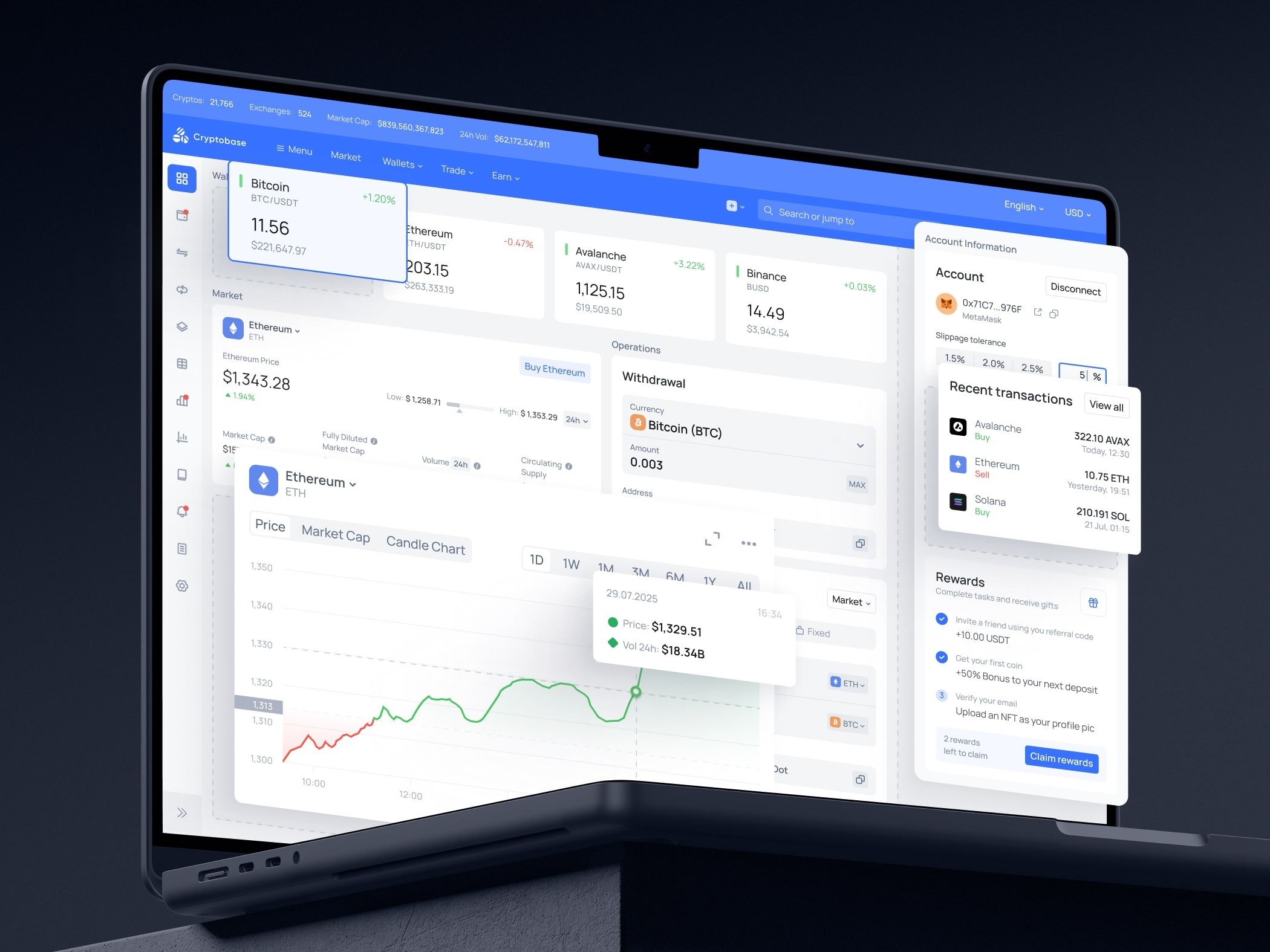
DeFi platform development is building financial services that run on smart contracts instead of a bank or a company: lending protocols, decentralized exchanges, staking, and liquidity pools, where users keep control of their assets and every transaction is visible on the blockchain.
Most DeFi products are not standalone. A lending protocol depends on external price feeds, a trading interface relies on liquidity from other pools, and wallets act as the entry point. What you build is usually one layer inside a larger system, so the work is about structure: how contracts are organized, how funds move, and how dependencies are handled. Without a clear picture of the blockchain infrastructure for decentralized applications, it is easy to ship something that works in a demo and breaks when liquidity drops or gas spikes.
This guide covers types of DeFi platforms, core components, the development process, security and compliance, what drives cost, common challenges, and our experience in Web3 development and fintech.
For those who prefer to listen rather than read, this article is also available as a podcast on Spotify.
What Is a DeFi Platform?
In a DeFi platform, smart contracts are the main part of the system, not a company’s backend. The contracts set out the ways the money can be used, such as for transfers, swaps, lending, and collateral. Some protocols accept NFTs as collateral too, which ties DeFi more closely to NFT marketplace development than it may seem. The interface on top is just a way to call that logic.
From the outside, it can look like any other financial product. You connect a wallet, see balances, make a transaction. The difference shows up in how that transaction is handled. There’s no internal service processing it and no operator in the middle. The request goes to a contract, and the outcome is determined by its code.
That changes the structure of the system.
In traditional finance, one party controls custody, execution, and records. Here, those pieces are separated. The user holds assets in a wallet. The contract defines the rules. The network confirms the result. The platform itself doesn’t hold funds or make decisions—it provides access to the contracts.
Trust shifts with that. You’re not relying on a company to process things correctly. You’re relying on the contract to do exactly what it was written to do. If the logic is sound, it works. If there’s a flaw, there’s no manual override.
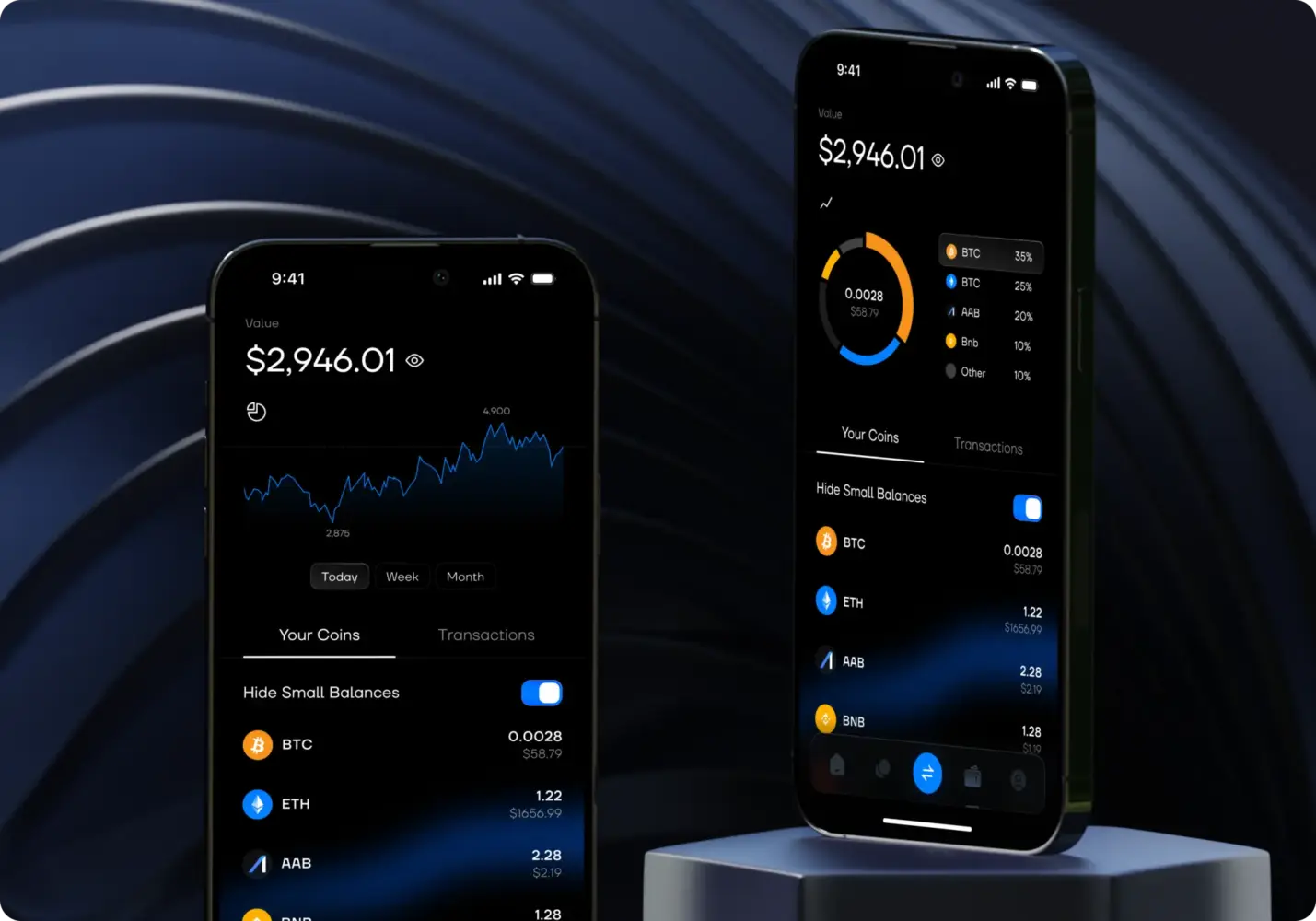
Crypto Trading App and Wallet Experience by Shakuro
Types of DeFi Platforms
Most DeFi products fall into a few patterns. The implementations differ, but the structure is usually familiar.
Decentralized exchanges (DEX)
DEXs are built for asset swaps directly from the user’s wallet. There’s no central order book in the usual sense. Instead, trades go through liquidity pools, and pricing depends on how those pools are balanced.
When you build a DEX, the interface is not the hard part. The complexity sits in how liquidity is arranged, how swap calculations behave, and how the system holds up under uneven activity. This is where the underlying crypto exchange infrastructure becomes the product.
Peer-to-peer crypto trading platforms
These platforms let people who want to trade immediately connect to each other. The system doesn’t set the terms; the people involved do. Contracts are often used as escrow, which means that money is held until both parties do their part.
There is less automation and more collaboration between users than with DEXs. You have to deal with matching, trust signals, and situations where one side doesn’t follow through.
In real products, these models are often combined. Automated swaps handle standard trades, while peer-to-peer flows cover cases where fixed logic doesn’t fit.
Lending and borrowing platforms
These platforms are built around a simple idea: one group of users provides assets, another takes them on loan. If you supply funds, they’re added to a shared pool and start generating yield. If you borrow, you have to lock collateral—usually more than you’re taking—so the system has a buffer.
Everything is handled on the contract level. Deposits are tracked there, interest builds up there, and collateral is checked against market prices. The position closes automatically if it goes below a safe level. It just follows the rules in the contract; no one steps in to control it.
Yield farming and staking platforms
These platforms are all about using assets that aren’t being utilized. Users either lock tokens in a protocol or give liquidity to a pool and get rewards in exchange, which are usually more tokens.
In staking, the flow is straightforward: assets are locked for a period of time, and rewards accumulate based on the network or protocol rules. In yield farming, it’s a bit more involved. Users move assets between pools, chase higher returns, and often deal with multiple tokens at once.
From a product side, this ties closely to crypto wallet integrations for DeFi platforms. Users aren’t creating accounts or transferring funds into a platform—they connect a wallet, approve transactions, and stay in control of their assets the whole time.
Underneath, the logic is still contract-driven. Rewards distribution, lock-up conditions, and liquidity rules are all defined there. The interface just shows what’s happening and lets users interact with it.
Core components of DeFi platforms
If you take most DeFi products apart, you’ll see the same pieces repeated. They can be combined differently, but the base stays roughly the same.
Smart contracts
This is where everything actually happens. The contract lays out the regulations for how money moves, how interest is calculated, how swaps work, and what happens to collateral. Once it’s deployed, it runs as written. If there’s a mistake in the logic, it stays there until the contract is replaced.
Liquidity pools
Instead of matching users directly, many systems rely on shared pools of assets. Trades, loans, and other operations pull liquidity from these pools. Conditions—price, interest—shift depending on how much is inside and how it’s used.
Governance mechanisms
Some platforms add a layer where users can vote on changes. Usually through tokens. In theory, this lets the protocol evolve without a central owner. In practice, activity varies—sometimes it’s broad participation, sometimes decisions come from a smaller group.
Blockchain nodes
Nodes are just machines running the network software. They receive transactions, include them in blocks, and execute contract calls. When a user clicks “confirm,” the request ends up on one of these nodes and gets processed there.
Front-end applications
This is the interface—the part you open in a browser. It connects to a wallet, forms transactions, and shows balances and positions. It doesn’t do anything on its own. Without it, you’d still be able to interact with the contracts, just in a much less convenient way.
Key Features of a DeFi Platform
Smart Contract Infrastructure
Smart contracts are what everything goes through. They move money, make trades, keep track of loans, and inspect collateral. When a user clicks a button, the request goes straight there.
There’s no extra layer where something gets reviewed. The contract either allows the action or rejects it—based on the conditions inside it.
The rules aren’t hidden anywhere. They’re in the contract itself. If you want to understand how the system behaves, you read the code.
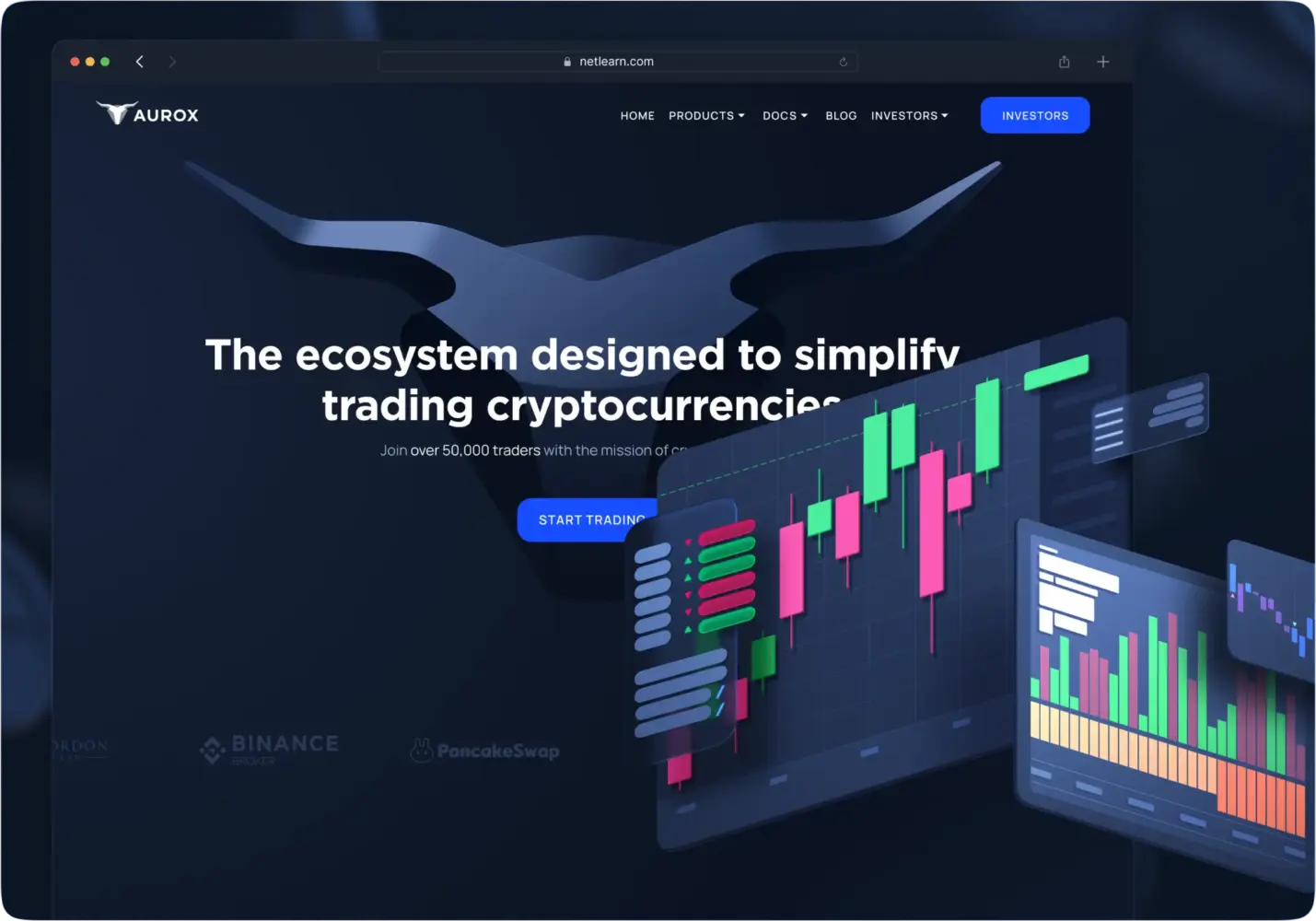
Premier Crypto Trading Ecosystem Design by Shakuro
Liquidity Pools
A smart contract holds a collection of tokens in a liquidity pool. Users put tokens in, and the protocol uses them for swaps, loans, or other operations.
Instead of matching users directly, the platform pulls liquidity from these pools. That’s how trades happen and how borrowing is funded. The conditions—pricing, interest—depend on how the pool is structured and how much liquidity is available at a given moment.
A lot of the behavior here comes down to automated trading and liquidity algorithms. They define how assets are priced inside the pool, how imbalances are handled, and how the system reacts when usage shifts.
Tokenomics and Governance
People use tokens as a reward and occasionally to get the protocol to change.
Voting is usually tied to how many tokens you hold. Proposals get submitted, people vote, and the outcome depends on that distribution. This is what’s referred to as a DAO.
In practice, the result depends less on the mechanism itself and more on who holds the tokens.
Wallet Integrations
DeFi platforms don’t work with accounts in the usual sense—they rely on wallets. A user connects a wallet, and that becomes their identity inside the product.
The integration itself is fairly straightforward: the interface connects to the wallet, asks for permission to interact, and then uses it to sign transactions. Funds stay in the wallet the whole time.
This is where secure wallet integrations matter. If the connection is handled poorly, it affects everything—from transaction safety to how users move through the product.
Cross-Chain Compatibility
DeFi products rarely stick to one chain. Users move their assets around—cheaper fees, better liquidity, different features—so the product has to support that.
That’s where bridges come in. They’re used to move assets between networks or to work with contracts on other chains.
Once you add this, the system gets more complicated. Different networks behave differently, and you have to account for that. This is where broader web development services come into play, especially when everything has to be tied into one interface.
DeFi Platform Development Process
1. Product Strategy and Protocol Design
Everything starts with the use case. What exactly the platform is supposed to do—lending, trading, staking—and how it fits into the existing ecosystem.
A lending protocol works one way: pools, collateral, liquidation rules. A DEX is different: liquidity, pricing logic, slippage. Staking platforms have their own structure around lock-ups and rewards. These are not interchangeable—each one leads to a different contract design.
At this stage, the focus is on how the system behaves, not how it looks. What happens when users deposit funds, how returns are calculated, what triggers edge cases. A lot of decisions here depend on financial data analytics for DeFi platforms, especially if the product relies on pricing, risk parameters, or dynamic conditions.
Tokenomics is usually defined here as well. How tokens are distributed, what they are used for, and if they have anything to do with the government. The same is true for voting: if the protocol says to do it, the rules need to be clear from the outset.
2. UX/UI Design for DeFi Applications
DeFi interfaces can get messy – too many numbers, unclear actions, hidden risks. All of that shows up quickly.
Most of the work goes into dashboards and core flows. Balances, positions, pool data, transaction history—users should be able to understand their state without guessing. Liquidity management is one of the areas where things break first if the interface isn’t clear.
Feedback matters just as much. When a user signs a transaction, it should be obvious what they’re approving and what will change after. Otherwise, errors are on the product, not on the user.
From a tech side, this is usually handled with modern front-end stacks. React development can help to keep interfaces responsive and manageable as the product grows.
3. Choosing the Technology Stack
The stack that DeFi platform developers use depends on where the logic lives and how much of the system you control.
For smart contracts, the choice is usually tied to the network. Solidity is standard for Ethereum and EVM-compatible chains. Rust shows up on networks like Solana. The language itself is less of a preference and more of a constraint—you follow the ecosystem you’re building in.
On the backend side, there’s still work to do. Indexing data, handling APIs, processing events. Node.js is common for real-time flows. Python with FastAPI is often used when you need a clean, structured backend. Teams working with FastAPI development usually focus on performance and predictable APIs.
The frontend is where users interact with everything. React is the default choice in most cases, though Vue is still used in some stacks. What matters here is how well it handles wallet connections, state updates, and transaction flows—not the framework itself. This is where broader frontend development decisions come into play.
For infrastructure, Docker is used to package services, and Kubernetes helps manage them at scale. Especially once the product grows beyond a single service, you need a way to keep everything running consistently.
4. Smart Contract Development and Security
Contracts deal with real funds, so even small mistakes matter. You write the logic, run tests, check edge cases—then go through it again. The obvious flows are usually fine. Problems show up in less typical scenarios.
Audits are part of the process. Another team reviews the code and looks for things that can break or be abused. It doesn’t make the system “safe,” but it helps catch what you missed.
Most issues are predictable: access checks done wrong, edge cases around calculations, gaps in how the contract handles state. Nothing exotic—just things that weren’t thought through far enough.
After launch, some teams add monitoring on top—for example, AI-powered fraud detection and analytics to spot unusual activity early.
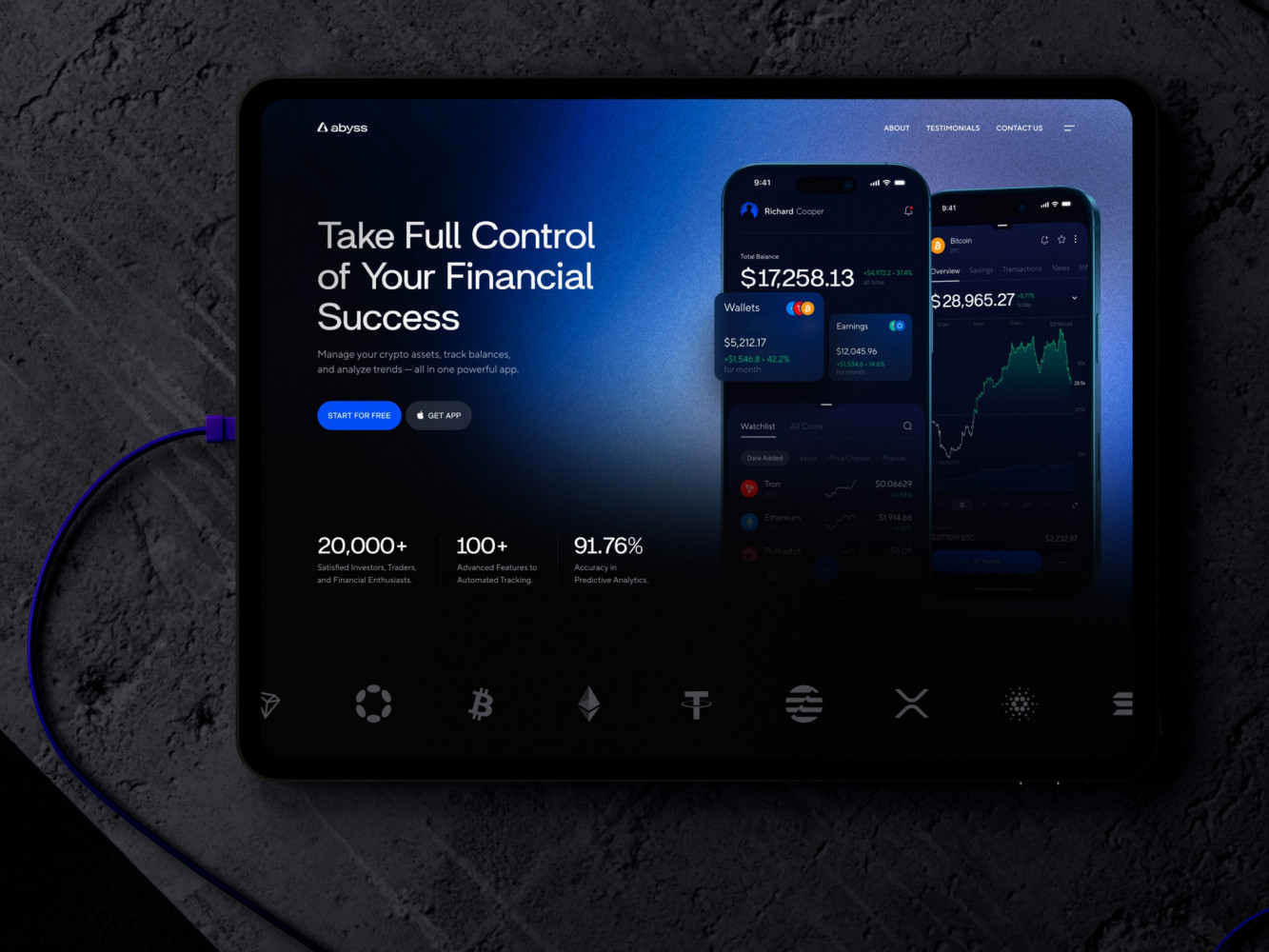
Landing Page Design for Crypto Exchange Platform by Shakuro
5. Blockchain Integrations
At some point, you have to pick where the product runs. Ethereum is the default for many teams, BNB Chain is used when fees matter, Solana comes up when throughput is the priority. The choice affects everything—tooling, performance, even how contracts are written.
Once that’s decided, you connect to the network. That means working with nodes, sending transactions, reading contract data, handling confirmations. Nothing abstract here—just making sure requests go through and the app stays in sync with the chain.
Wallets are part of this layer as well. Users connect, sign transactions, and that’s how they interact with the system. If this breaks, the product doesn’t work.
All of this ties back to building scalable blockchain applications, especially when the platform has to handle multiple networks or higher load.
7. Deployment and Maintenance
Once everything is ready, contracts are deployed to the network. After that, they’re live—there’s no quiet fix if something goes wrong.
The front end is launched alongside it. This is what users interact with, so it has to be in sync with the contracts from the start.
After launch, the work doesn’t stop. You watch how the system behaves—transactions, load, anything unusual. If something breaks, you deal with it on the interface or infrastructure side.
Ongoing updates, fixes, and monitoring usually fall under support services, especially as the product grows and usage becomes less predictable.

Cost of DeFi Platform Development
There’s no fixed price for a custom DeFi platform development. The price depends on how complicated the system is and how much threat you are willing to take.
The biggest factor is the contracts. Simple logic is one thing. Once you add lending mechanics, liquidations, or custom pricing models, the amount of work grows quickly.
The choice of networks also matters. Supporting one chain is straightforward. Adding more means extra work, like integrations, testing, and maintenance.
Liquidity design is another piece. Basic pools are easier to handle. More advanced setups—dynamic pricing, incentives, rebalancing—take more time to get right.
Security is its own cost layer. Audits aren’t optional if real funds are involved, and good auditors are not cheap. The more complex the contracts, the more time they need to review them.
If you look at typical scenarios, the gap is pretty clear.
An MVP DeFi protocol usually covers one core function—for example, simple swaps or basic lending. Fewer features, one network, limited logic. This is where teams test the idea and see how it behaves in real conditions.
A full-scale DeFi ecosystem is a different scope. Multiple features, deeper integrations, more complex tokenomics, ongoing updates. At that point, you’re not building a single product, but a system that has to hold up under real usage.
That’s where the role of a DeFi development company or experienced DeFi platform developers becomes more noticeable—not just in writing code, but in structuring the system so it doesn’t break once users start interacting with it.

Common Challenges in DeFi Platform Development
Smart contract vulnerabilities
Small mistakes are easy to miss. A condition slightly off, a calculation that doesn’t hold in edge cases—that’s enough. Once the contract is live, you can’t just patch it like a backend.
Liquidity management
Liquidity moves all the time. Users add funds, pull them out, shift between pools. If too much leaves, parts of the system stop working the way they should. Pricing drifts, borrowing gets limited, swaps become inefficient.
Cross-chain interoperability challenges
As soon as you support more than one network, things stop being predictable. Transfers take time, data doesn’t always line up, bridges can fail or get delayed. You have to deal with different conditions on each chain.
Regulatory uncertainty in decentralized finance
There’s no stable framework here. Requirements change, sometimes quickly. What works in one region might not work in another. It mostly affects how the product is launched and what restrictions you have to build around it.
A lot of this ties back to how the system is put together from the start, especially if it connects to external layers like crypto payment infrastructure.
Our Experience in Web3 and Fintech Development
We’ve worked on Web3 and fintech products where transactions, assets, and user actions are part of the core flow. Not demos—real products where things have to work under load.
Most of the work comes down to structure. How contracts are connected to the interface. How wallet interactions are handled. How users move through actions that involve real funds.
The same areas keep coming up in different projects:
- systems based on contracts and wallet flows
- interfaces for trading and managing assets
- working with live data without breaking the UI
- making sure the system stays stable as more people use it
Selected Works
Culture Pulse—Web3 collectibles platform

Revolutionary Web3-infused Technology and Collectibles Brand by Shakuro
A marketplace built around physical items tied to digital tokens. Each collectible is linked to a token through an NFC chip. When someone buys it, they get both the item and its digital version in a wallet.
The work was around how this actually functions as a product. Marketplace structure, drop mechanics, product pages, navigation. The goal was to make the flow clear: what the user buys, what they receive, how ownership is tracked.
A lot of attention went into how items are presented. Different types of memorabilia had to look consistent, even though the content varies. The system had to support that without turning into a set of disconnected pages.
Abyss—Cryptocurrency trading app
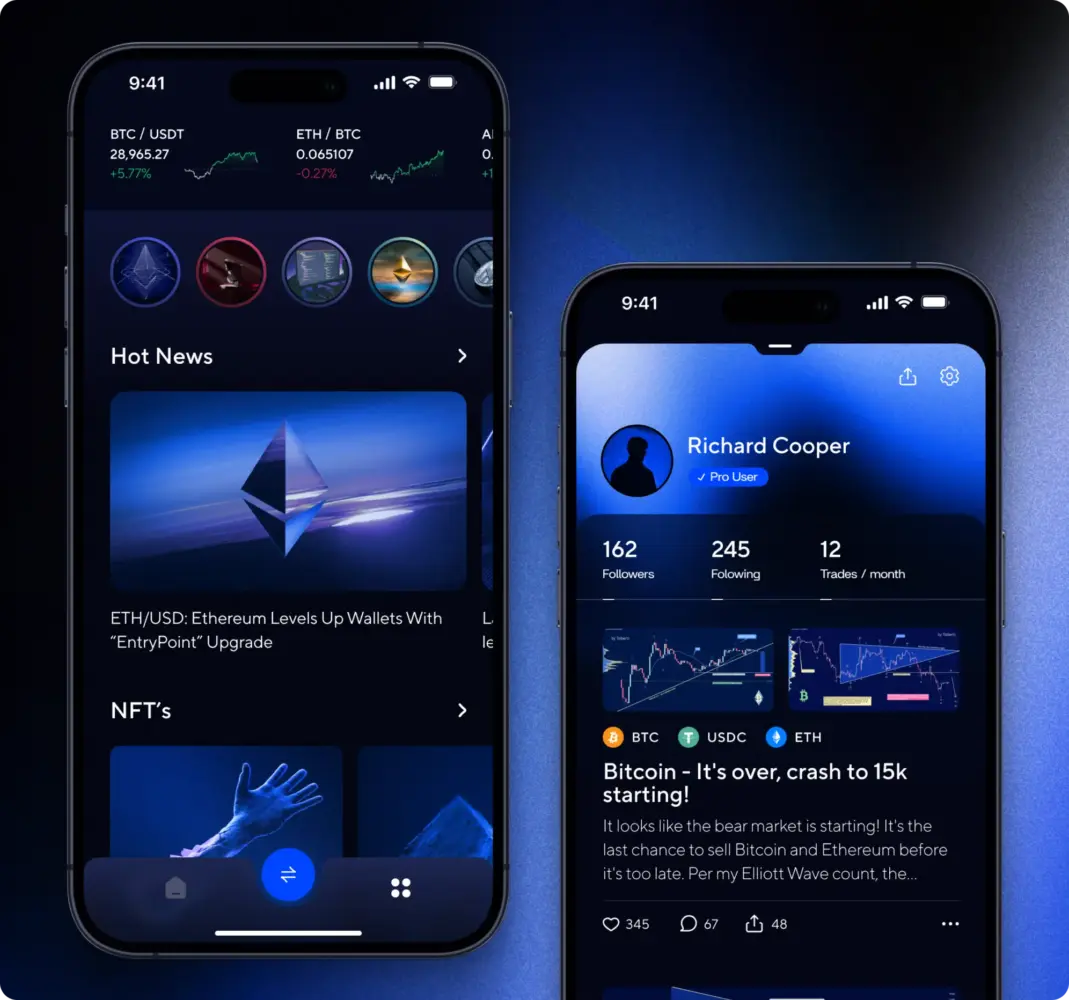
Crypto Trading App by Shakuro
A mobile app for managing assets and trading. Wallets, balances, charts, transactions—all in one place.
The main focus was on core screens. Home, portfolio, trading, analytics. Users should be able to open the app and understand their position without digging.
Trading screens were built to handle real-time updates. Prices move, balances change, transactions go through—the interface has to keep up without lag or confusion.
Across both cases, the work is mostly about how things behave. The logic is already complex—the product shouldn’t make it harder to use.
Why Work with a DeFi Development Company
DeFi platform development without prior experience causes the same issues that tend to repeat. Contracts get rewritten, flows break under real usage, edge cases show up too late.
Working with DeFi platform developers that have already dealt with this mostly comes down to avoiding that cycle.
Security is one part. Contracts need to be structured carefully from the start—not just for expected behavior, but for situations that don’t show up in basic testing.
Scalability is another. It’s not only about more users. It’s about how the system behaves when activity changes—sudden volume, uneven liquidity, multiple actions at once. This is where experience with scalable SaaS products starts to matter.
Speed is more about fewer corrections later. If the base is done right, you don’t spend time reworking core parts of the system.
In practice, the value of hiring a DeFi development company shows up in a few things:
- contracts that don’t need to be rewritten after launch
- fewer issues with edge cases and unexpected behavior
- systems that hold up when usage grows
- clearer structure from the beginning, without trial-and-error iterations
It’s less about “moving faster” and more about not having to redo the same work twice.
FAQ
What drives the cost of decentralized finance platform development?
Smart contract complexity is the biggest cost factor: simple logic is quick, while lending mechanics, liquidations or custom pricing models expand the work fast. Each extra network adds integrations, testing and maintenance. Advanced liquidity design with dynamic pricing, incentives or rebalancing takes longer to get right, and security audits are a separate cost layer that grows with contract complexity.
What should an MVP of a decentralized finance platform include?
A DeFi MVP should cover a single core function, such as simple swaps or basic lending, on one network with limited logic. Its job is to test the idea and see how the protocol behaves in real conditions. A full-scale decentralized finance ecosystem adds multiple features, deeper integrations, more complex tokenomics and ongoing updates, and must hold up under real usage.
Why are security audits necessary in decentralized finance platform development?
Audits are necessary because smart contracts handle real funds and cannot be patched like a backend once deployed. An external team reviews the code for anything that can break or be abused, such as wrong access checks, calculation edge cases or gaps in state handling. An audit does not make the system safe by itself, so teams also test edge cases repeatedly and add monitoring after launch.
Which tech stack is used for decentralized finance platform development?
The network decides the contract language: Solidity for Ethereum and EVM-compatible chains, Rust for networks like Solana. Backends for indexing data, APIs and event processing often use Node.js or Python with FastAPI. React is the usual frontend choice, with Vue in some stacks, and Docker and Kubernetes package and manage services. Ethereum, BNB Chain and Solana each suit different fee and throughput priorities.
Should a decentralized finance platform support multiple blockchains?
Support multiple chains only when users need it, for cheaper fees, better liquidity or specific features, because cross-chain support makes the system far less predictable. Bridges move assets between networks, but transfers take time, data does not always line up, and bridges can fail or get delayed. Each added network also increases integration, testing and maintenance cost, which is why an MVP typically runs on one network.
How do I choose a development partner for decentralized finance platform development?
Choose a team that has shipped real Web3 products and can explain failure modes: liquidity drops, gas spikes, or contracts that behave as written but not as intended. Ask how they structure contracts for untypical scenarios, organize audits, and handle wallet integrations and liquidity design. The payoff is contracts that do not need rewriting after launch and fewer edge cases discovered by live users.
Final Thoughts
DeFi products don’t come together all at once. You start with the idea, define how the protocol should work, turn that into contracts, and only then move to launch. Each step builds on the previous one—if something is off early, it shows up later.
By the time the product is live, a few things matter more than anything else:
- security—contracts have to behave as expected, even in edge cases
- liquidity—without it, core features stop working properly
- transparency—users need to understand what’s happening with their funds
- user experience—if the interface is confusing, the system won’t be used
Most issues in DeFi app development don’t come from one big mistake. They come from small gaps in these areas.
If you’re planning a decentralized finance development, it’s worth getting the structure right from the start — contracts, flows, integrations. Teams like Shakuro work with Web3 and fintech products where these systems are part of a larger architecture, not isolated features.
Related reading