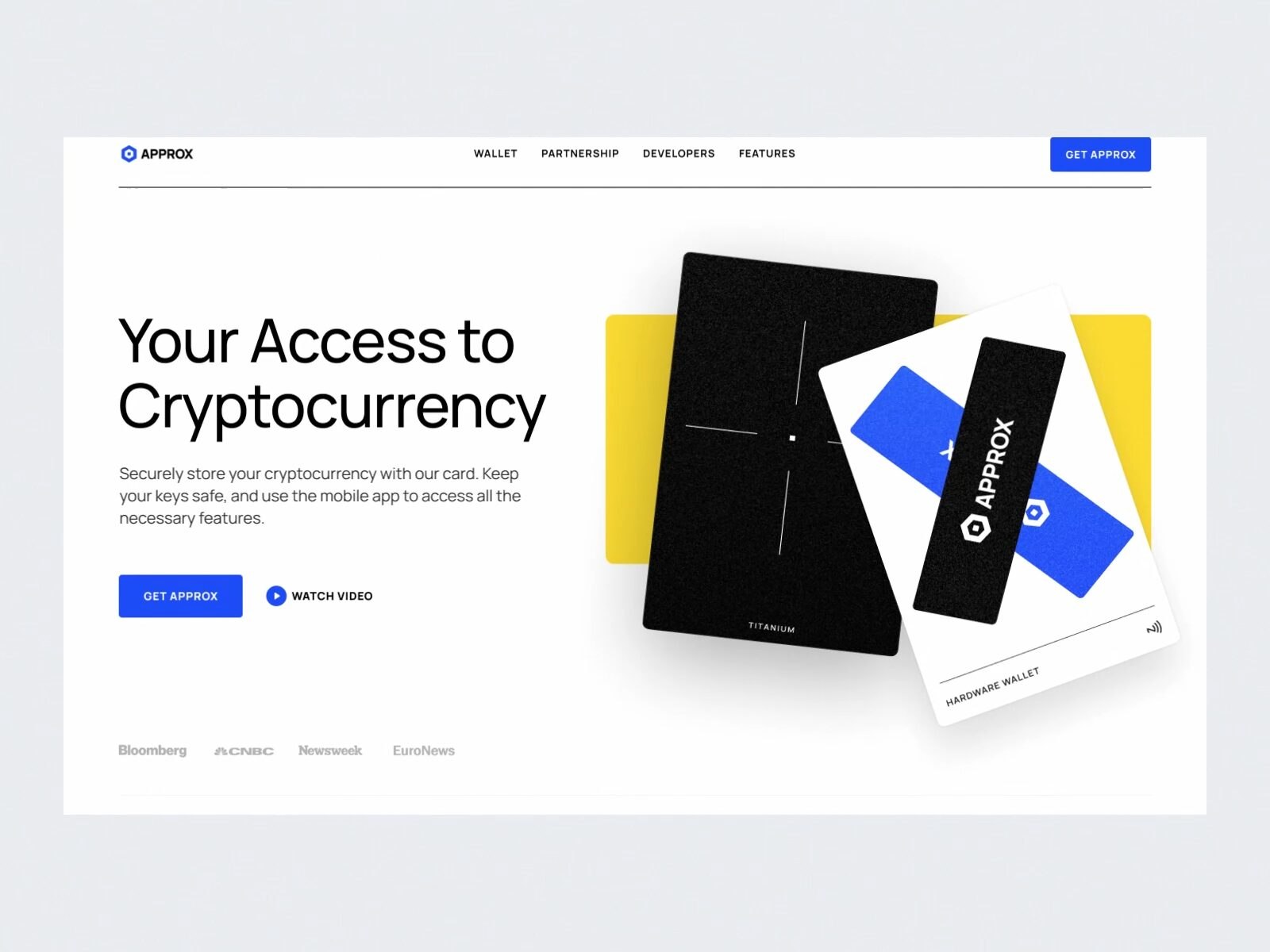
Cryptocurrency exchange software is the venue where one order meets another: a book, a match, a balance, and a path for deposits and withdrawals. It is not a wallet a person installs, not a checkout that takes crypto for a product, and not a layer that sends a card payment through several banks.
This page is for a company that wants that venue built. Name the venue type, the chains, and whether the operator will hold assets. The trading site is Web3 web development. The phone app is Web3 mobile app development. Get in touch with that list. This page does not publish a rate card, a build duration, or a license memo.
Key storage is crypto wallet development. Taking crypto as payment for something else is cryptocurrency payment processor development. Routing a card or bank deposit across providers is a payment orchestration platform. Do not add those products because the brief contains the word crypto. An earlier edition of this page was recorded as a podcast episode. The recording is not this revision.
Why Companies Build Custom Cryptocurrency Exchanges
A white-label package is a vendor’s screens and a fixed set of modules. It is the right start when the venue type, the chains, and the withdrawal rules already fit that package. It stops being enough when the operator needs a market the package does not have, a chain it does not speak, or a withdrawal rule it will not change.
Custom cryptocurrency exchange software development is the other path. The book, the balances, and the surfaces are specified for this operator. The cost of that path is the specification, not a number this page can print. A package also does not hand over a liquidity source, a custody policy, or permission to operate. Those are the operator’s decisions, made with counsel, before the build starts.
| Question | White-label package | Custom venue |
| What you receive | Screens and modules the vendor already ships | A book, balances, and surfaces specified for this operator |
| Where it breaks | A market, a chain, or a withdrawal rule the package will not change | The venue type was never named, so the engine is guessed |
| What it is not | A license, a market maker, or a custody policy | A published price or a promise about trading results |
A desk that sends orders to a broker, and does not run the book, is trading software development. A bank-style account on a phone is fintech app development. Neither one is this venue.
What Is Cryptocurrency Exchange Software?
Cryptocurrency exchange software is the system that accepts an order, keeps it on a book until it can trade, records the fill, and updates two balances. Deposits and withdrawals are the edges of that system. They are not the product by themselves.
Ethereum.org describes the custody split in plain language. On a decentralized exchange, a person trades tokens and does not give up control of the assets. On a centralized exchange, the person deposits assets before the trade and trusts the operator to look after them. While those assets are deposited, they are at risk, because centralized exchanges are attractive targets for attackers. The page is What is DeFi?. That is a design constraint for the build. It is not advice to buy, sell, or hold any asset.
A useful venue has six parts, in this order. An account or a wallet connection. A market, which is one pair. An order. A book. A match. A balance change, plus a deposit and a withdrawal that the chain or a fiat provider confirms. Skip the balance change, and the screen shows a trade the ledger does not have.
Types of Crypto Exchanges
Three venue types cover the briefs that actually arrive. The choice is who holds the assets before the trade, and where the match happens. It is not a ranking of which type will earn more.
| Venue | What to write down |
| Centralized | The operator holds assets after a deposit. The match is off-chain. Name who must approve a withdrawal. |
| On-chain | The trader keeps the assets. The match is a contract or a pool. Name the chains, and what the contract refuses. |
| Hybrid | The book can be off-chain. Write which assets the operator still holds. Do not treat the word hybrid as the end of custody risk. |
A swap venue is still exchange software. Lending, staking, and liquidity pools are DeFi platform development. A collectible market beside spot trading is NFT marketplace development. A dApp that is not a venue is blockchain app development. Keep those on their own pages.
The published mobile service describes decentralized exchange apps as simple, non-custodial swap apps that talk to third-party services. That is a phone surface. It is not a centralized matching engine, and this page will not pretend the two are the same hire.
Core Components of Exchange Platforms
Designs differ. The parts that have to exist do not.
- Matching. Incoming orders are compared with orders already on the book. A match updates both sides. A miss stays on the book or is rejected, and the reason is visible.
- Order book. Active bids and asks for one market, with size at each price. It changes as orders arrive and as trades print.
- Balances. What the venue believes each account can trade, withdraw, or has locked in an open order. The chain balance and the venue balance are two numbers. They are not required to match at every second, and the screen should say which one it is showing.
- Deposits and withdrawals. A chain confirmation, or a fiat provider confirmation, before the ledger credits or releases funds. The wallet product that stores keys is the other article, linked above.
- Identity slot. A call to the check the operator’s counsel names, and a hold on the withdrawal until that check returns. The check itself is a digital identity platform.
- Operator screen. Failed deposits, stuck withdrawals, a market that must halt. If the only view is a trader chart, the operator is blind.
Key Features of a Cryptocurrency Exchange Platform
Features follow the venue type. A centralized book needs a fast match and a withdrawal approval. An on-chain venue needs a contract that refuses a bad swap, and a screen that shows the refusal before the person signs. Adding both, plus a fiat router, plus a wallet app, is how a brief becomes three products.
High-Performance Matching Engine
The matching engine decides which orders fill, and in what order. The book shows what someone wants to buy or sell. The engine compares that with orders on the other side. If the prices cross, the trade prints and both balances move. If they do not, the order rests, expires, or is rejected.
What “fast” means is a number the operator sets: orders in a burst, and the delay a trader will notice. This page will not invent that number. A slow match is a product defect because the price on the screen and the price in the fill are no longer the same moment. The engine also needs a halt. A market that cannot be paused will keep matching through a bad price feed.
Order types are a scope decision, not a slogan. A limit order rests. A market order takes what is on the book and can move the price when the book is thin. Stop and conditional orders fire later. Each extra type is a rule the engine must test, including the case where the trigger arrives during a halt.
Bots that quote both sides of a market are algorithmic trading software. They talk to the venue. They are not the venue. Do not fold a strategy product into the exchange brief to make the book look busy.
Secure Wallet Infrastructure
On a centralized venue the operator holds assets after the deposit. Ethereum.org states the consequence: the person trusts the operator to look after those assets, and the venue is a target. The software has to separate an online balance, used for withdrawals the operator has approved, from a reserve that does not sit on the trading servers. A withdrawal above a threshold needs more than one approval. That is a control. It is not a promise that funds are safe.
How keys are stored, how a cold reserve is signed, and how a wallet app is built are the wallet article. This page only needs the exchange side: a balance, a withdrawal request, a status the trader can see, and a reason when the request is refused. An on-chain venue does not take that custody. Saying “hybrid” does not remove the question. Write down which assets, if any, the operator still holds.
Liquidity and Order Book Management
A book with size near the last price fills a modest order without throwing the price. A thin book does the opposite. The software can show that depth. It cannot create the orders.
Operators who do not yet have their own flow connect to an outside source: a market maker, a trading firm, or another venue that streams orders. Those orders arrive through an API, and they can disappear when the source disconnects. The screen should show a stale feed. Matching against a price that is already gone is worse than a halt.
None of this is a forecast of volume, and none of it is a reason to trade. Liquidity is a dependency you name in the brief: own users, an outside feed, or both. If the feed is the whole book, the venue is a front on someone else’s market, and the contract should say so.
Compliance and Identity Verification
This page does not say which permission an operator needs, and it does not tell a company to open a venue in a given country. Counsel names the checks. Engineering builds the slots those checks plug into.
The slots are ordinary. An identity check before a feature unlocks. A record of the order, the fill, the deposit, and the withdrawal. A hold that stops a withdrawal until a review finishes. A way to freeze one account without halting the whole market. A report export the operator’s counsel asked for, in the shape they asked for. If the brief says “be compliant” and lists none of these, the brief is not ready.
Do not treat a blog post as the memo. Do not treat a vendor’s identity widget as the permission to operate. The widget is a call. The permission is the operator’s.
Multi-Device Trading Experience
Traders do not stay on one screen. The web venue is the full book, the chart, the order form, and the operator tools. That site is the Web3 web development work linked above. The phone app is for a person who needs to see a fill or cancel an order away from the desk. That app is the Web3 mobile app development work linked above. An API is for a desk that connects its own tools. It is not a fourth product unless the brief says the clients are other systems.
The trading screen fails in a specific way: the book moves, the chart moves, and the order form still shows the old price. The person signs the old price. Show the price the order will use, and show when the feed is late. Charts and depth are there so a person can see the market. They are not a signal to enter a trade.
The frames below are interface studies. They are not a running venue, and they are not evidence that a matching engine or a custody system was delivered.
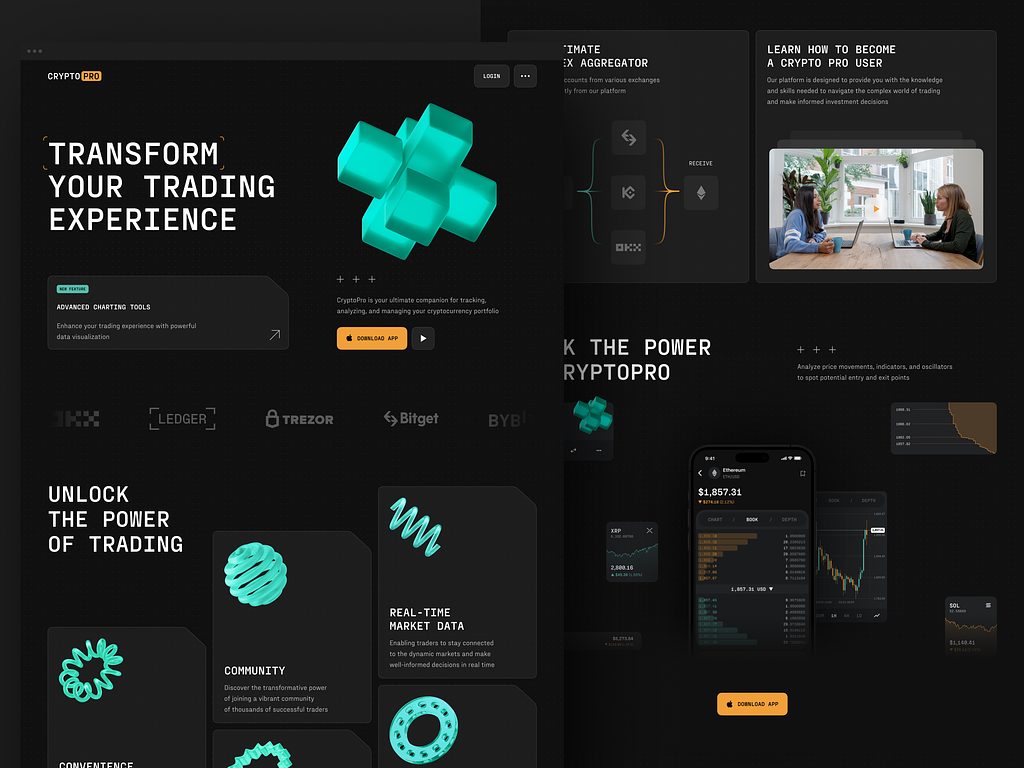
Crypto Trading Website by Shakuro
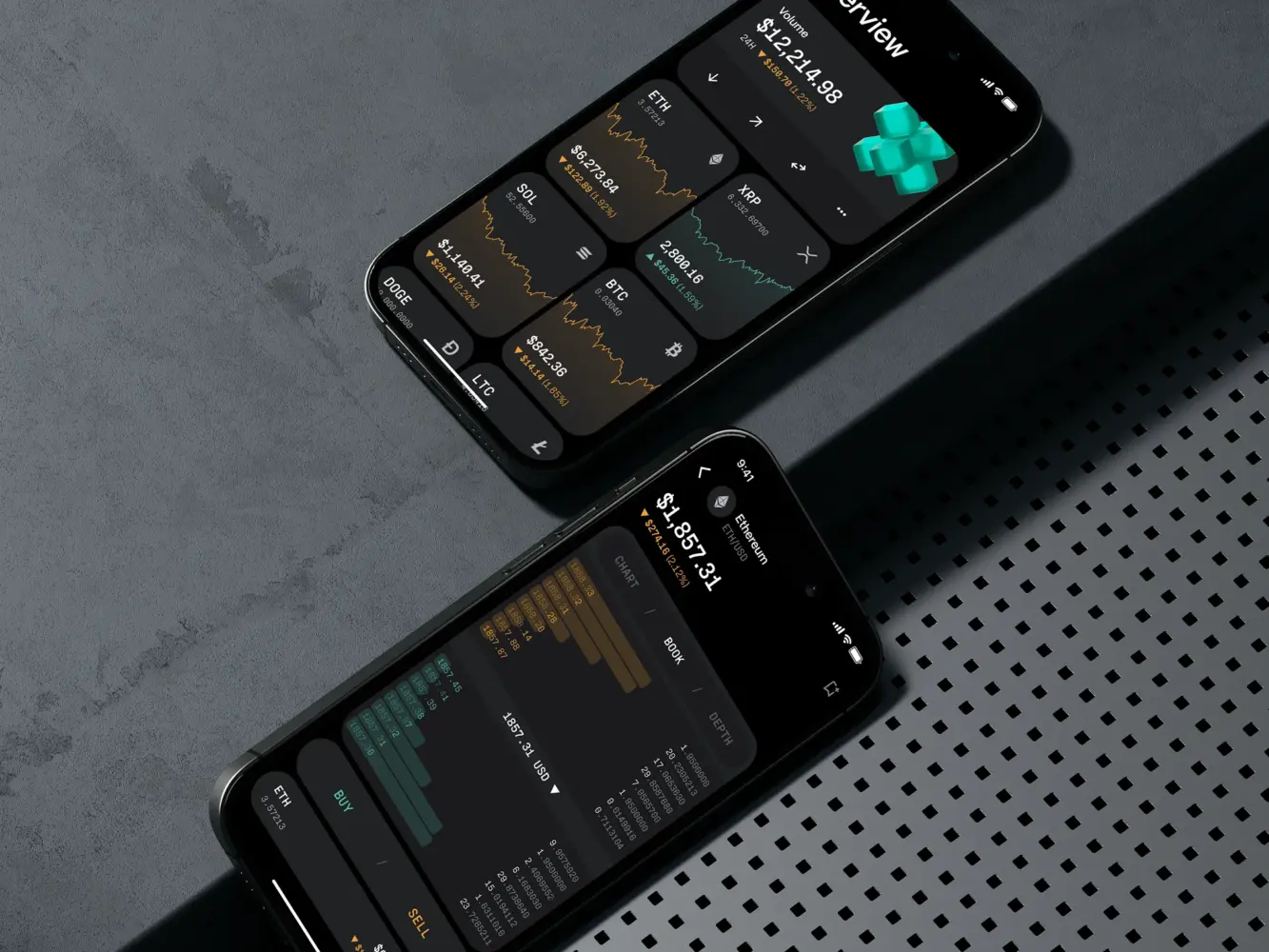
Crypto Trading Mobile App by Shakuro
Cryptocurrency Exchange Development Process
The order below is the order that keeps the engine from being built twice. Strategy names the venue. Design names the screens a trader and an operator actually use. The stack comes after those two, not before.
1. Product Strategy and Market Research
Write four lines before anyone opens a repository. Centralized, on-chain, or hybrid. Which chains. Whether the operator holds assets. Whether fiat deposits are in scope. If fiat is in scope, the card and bank path is the orchestration page already linked, and the exchange ledger still has to record the credit.
Who the venue is for changes the screens, not the slogan. A retail spot market needs a clear order form and a withdrawal status. A desk needs an API, a drop copy, and a halt they can see. A market for one asset the operator issued is a smaller book, not a smaller custody question.
Country of operation is a counsel question. The engineering question is which checks and records that counsel requires, and which markets must be able to halt. A team that answers the country question with a stack diagram is answering the wrong question.
2. UX/UI Design for Trading Platforms
The trading screen is one page: chart, book, recent trades, order form. Markets move while the person is looking. Orders enter and leave. If the form hides the price that will be used, the person will notice on the first bad fill.
Two other screens matter as much, and briefs skip them. The withdrawal status, including a refusal and the reason. The operator view of a stuck deposit. A beautiful chart with no withdrawal status is a demo.
Placing an order should take the fields the order type needs and no more. Switching markets should not reset a size the person just typed, unless the size is in the other asset and would now mean something else. Say which.
3. Choosing the Technology Stack
The stack is whatever can hold the book, apply the match in the order you specified, and keep an audit of both. A web screen and a phone screen can be separate clients of that book. They should not each keep a private copy of the balance.
Chain clients, indexers, and fiat providers fail on their own clocks. The venue needs a place to park a deposit that has not confirmed, and a place to show a feed that has gone quiet. Picking a language does not answer that. Name the failure before you name the framework.
On-chain venues add a contract. The contract has to refuse the swap the screen already told the person would fail. A web portal that only displays a contract you do not understand is a front, and the brief should say who writes the contract and who reviews it. Review is not the same job as operating the venue.
4. Architecture and Security
Split the system where the failures split. The match. The ledger. The chain watcher. The withdrawal signer. The identity call. The public API. If one process does all of these, a bug in the public API is a bug in the signer.
Security work on this product is specific. Who can approve a withdrawal. What happens to open orders when a market halts. Whether an admin can change a balance without a second person and a record. How a key used for the online balance is kept off the web servers. A generic “we follow best practice” line does not answer any of these.
Monitoring is part of the architecture. A failed chain watcher, a withdrawal stuck in pending, a feed older than the threshold you set. An alert that pages someone. A dashboard that only shows volume will not catch a halted withdrawal.
5. Development and Integrations
Build the book and the ledger before the chart. Integrations come in an order that matches the money. Chain deposits and withdrawals for the assets you named. Then the identity slot. Then an outside liquidity feed, if you named one. Then fiat, if you named it. Then the phone app, if you named it.
Each integration needs a refusal path. A chain that reorgs. A fiat provider that credits late. A feed that sends a price of zero. The venue should reject or park the event, not print a trade from it.
Merchant checkout, a wallet the end user installs, and a multi-provider card router stay on the pages linked at the top. Connecting them later is a new brief. It is not a hidden part of this one.
6. Testing and Security Audits
Test the cases that move money. Two orders that should match, and two that should not. A withdrawal above the threshold, with one approval and with two. A deposit that confirms, and one that does not. A halt in the middle of a match. A feed that goes stale. An identity check that times out.
Load is the operator’s number from the strategy section, not a slogan. Run that burst. See whether the book and the balance still agree.
An external review of the withdrawal path, and of any contract, is a separate engagement. This page does not claim that review has been done for a client, and it does not sell a certificate. Ask who reviews, and ask to see the issues they filed. A slide that says “audited” is not the review.
7. Deployment and Maintenance
Deployment is the moment the ledger starts. After that, a release cannot rewind a fill. You need a way to ship a screen fix without redeploying the signer, and a way to halt one market without taking the API down.
Maintenance is the chain clients, the fee schedule the operator sets, new assets the operator actually wants, and the stuck-withdrawal queue. It is not a promise of uptime this page can print. Name who is paged, and what they can do at night without a second approval they do not have.

Cost of Cryptocurrency Exchange Software Development
There is no rate card for cryptocurrency exchange software development on this page. An earlier edition talked around price without printing one. This revision will not add a price range or a duration. The estimate follows the factors below, and it is a conversation after those factors are written down.
| Factor | What it changes |
| Venue type | Centralized book, on-chain swap, or a hybrid you have defined |
| Chains | Each network has its own deposit, confirmation, and withdrawal path |
| Custody | Whether the operator holds assets, and who must approve a withdrawal |
| Fiat | Card and bank deposits are a separate connection, not the book |
| Liquidity | Own users, an outside feed, or a book that is thin on purpose |
| Surfaces | The website, the phone app, an API for other systems, or a named subset |
| Checks | The identity, record, and hold slots counsel named, not a slogan |
The frame below is a landing-page study for an exchange marketing site. It is not a quote, and it is not the trading venue.
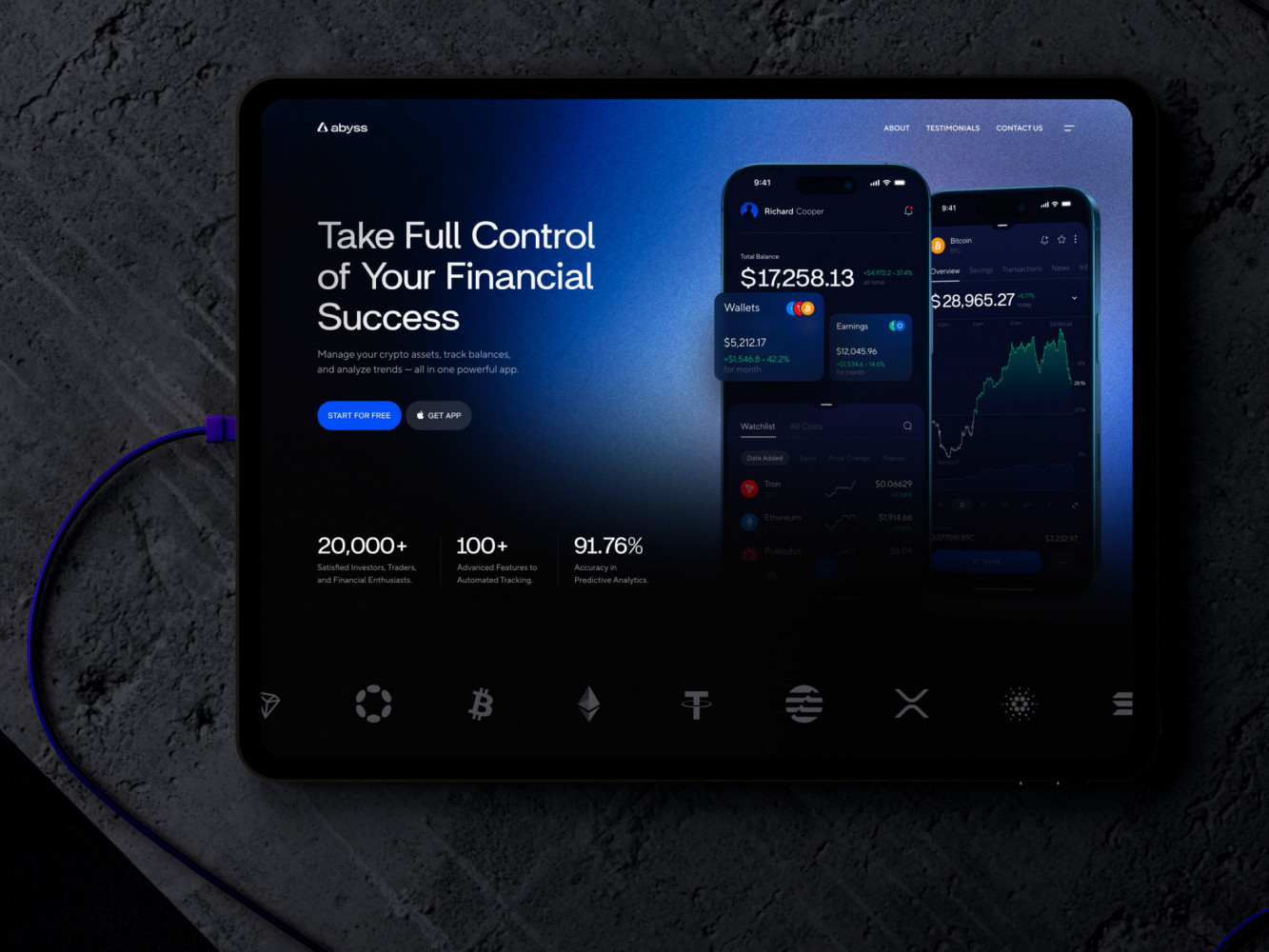
Landing Page Design for Crypto Exchange Platform by Shakuro
Send the factor list through get in touch. Do not attach a price you invented, and do not expect one in the reply until the venue type and the chains are written down. The calculator below is a prompt for that conversation. It is not a published tariff.
Example Development Scenarios
A first cut is one pair, one chain, limit and market orders, a deposit, a withdrawal with a second approval, and a screen that shows a refusal. It is a venue you can watch fail in a small way. It is not a public market, and it does not include a phone app, a fiat router, or a second chain unless you added them on purpose.
A wider venue adds the surfaces and the chains you named, an operator halt, a stale-feed rule, and the identity slots counsel named. An outside liquidity feed is its own line. A contract review is its own line. None of these lines has a duration on this page.

Common Challenges in Crypto Exchange Development
Four problems show up after the screens look finished.
The book and the balance disagree. A fill printed, and one side did not move. Or a withdrawal left, and the balance still shows the funds. The fix is one ledger both the match and the signer read. Two databases that “sync later” will disagree during the later.
The feed is quiet and the market is not. Orders keep matching a price that is already gone. Halt the market when the feed is older than the threshold you set. Show the halt on the order form.
Withdrawal approval is a chat message. If a large withdrawal can leave because someone said yes in a channel, the control does not exist. Put the second approval in the signer. Record who approved, and what they saw.
The brief grew a second product. A wallet app, a merchant checkout, a card router, or a lending pool appeared because a competitor has one. Those are the other pages. Adding them here does not make the venue safer, and it does not make a trading result more likely. This page does not discuss returns.
Our Experience in Fintech and Web3 Development
Published work is narrower than a matching engine, and this page will not widen it. Abyss is UI, UX, and branding for a cryptocurrency app: research, prototypes, a visual identity, and physical media. The case page does not describe an order book, a ledger, or custody. TraderTale is UI and UX for a social trading platform: profiles, a leaderboard, alerts, and a way to publish a trade idea. It is not an exchange venue. The industries on that case are fintech and SaaS.
The frames in this section are those design studies, plus an interface from an earlier article. They show how a trading screen can be drawn. They do not show a production match or a withdrawal signer.
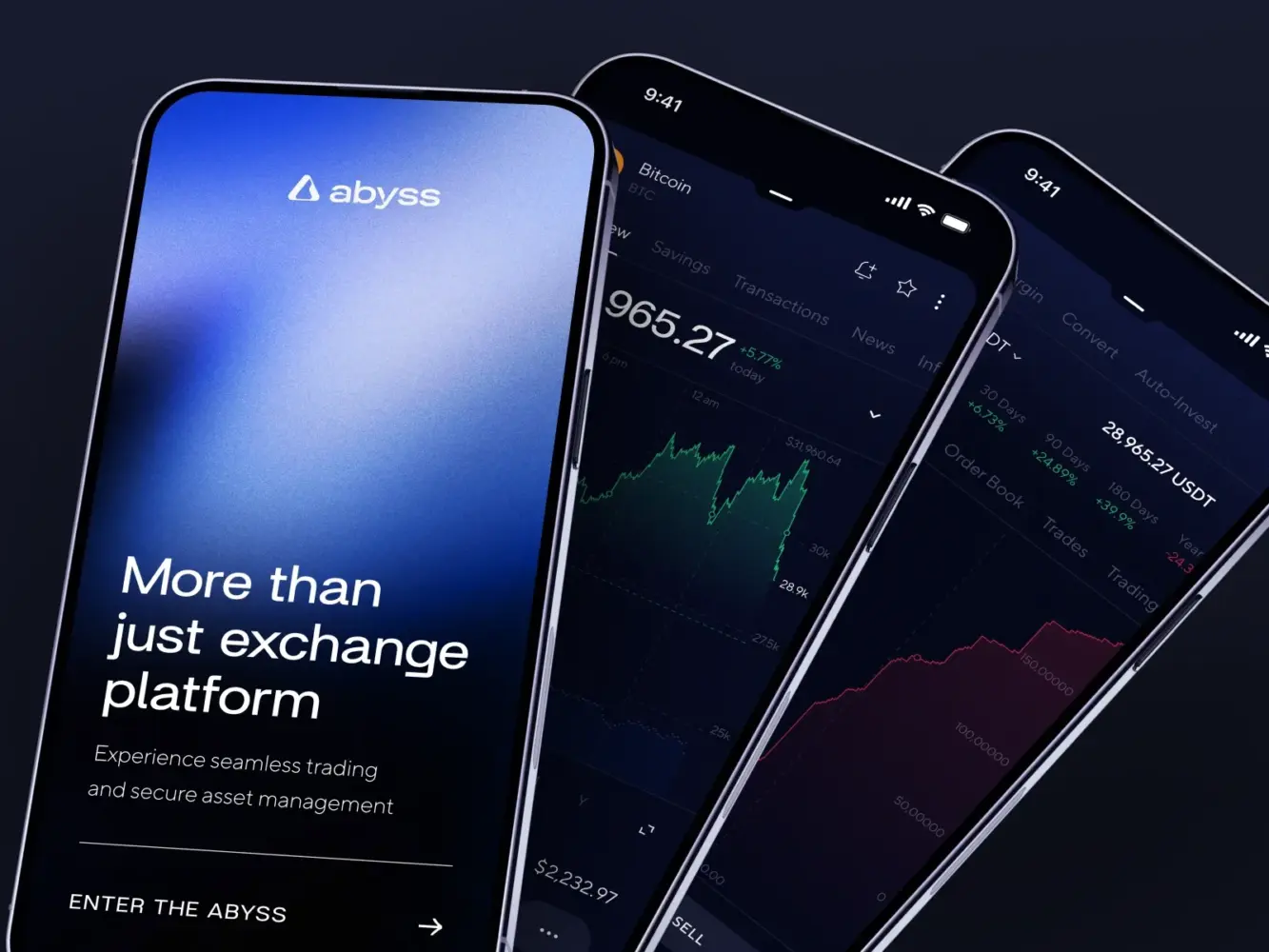
Crypto Finance App UI/UX Design by Shakuro
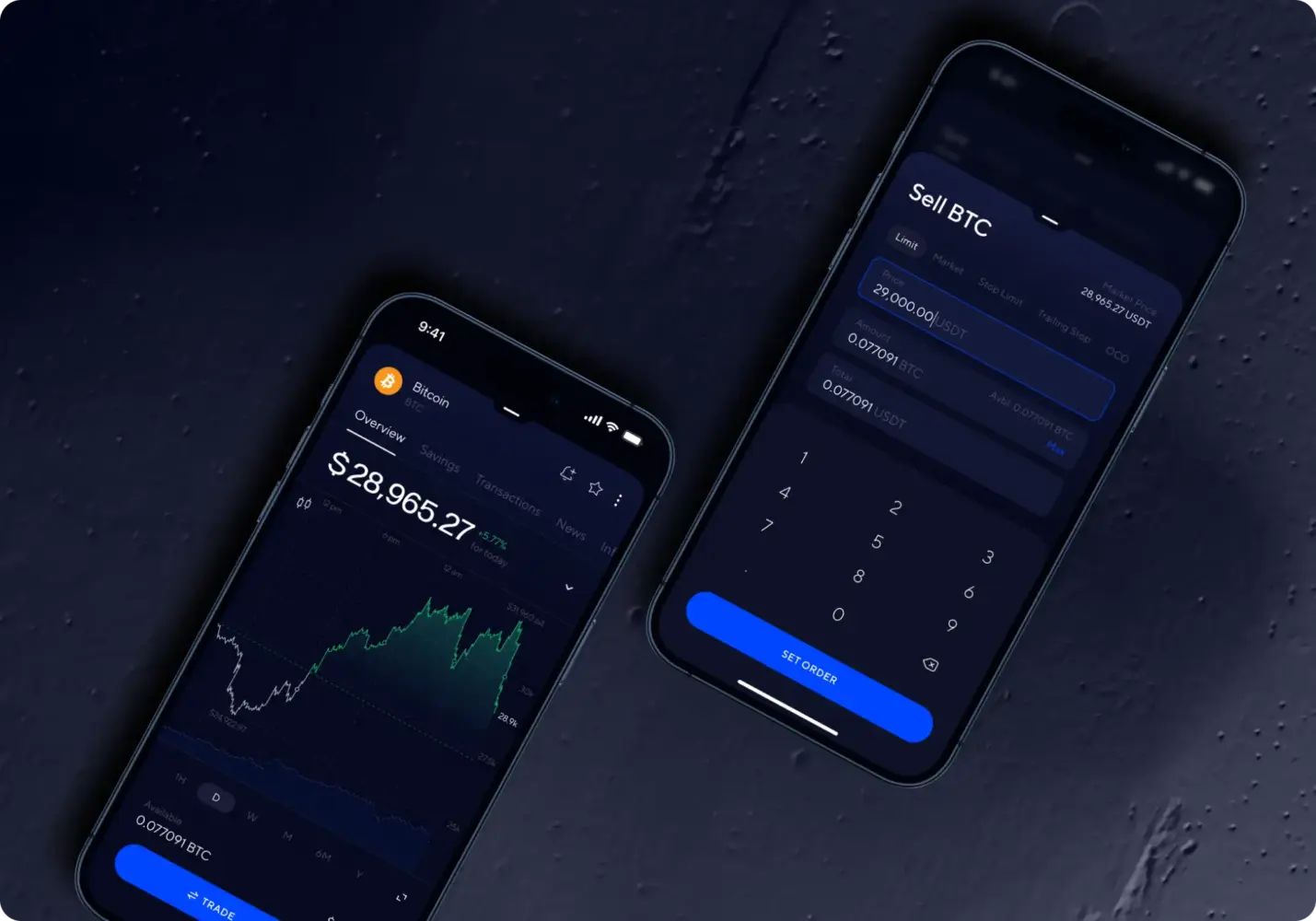
Cryptocurrency Trading App for iOS by Shakuro
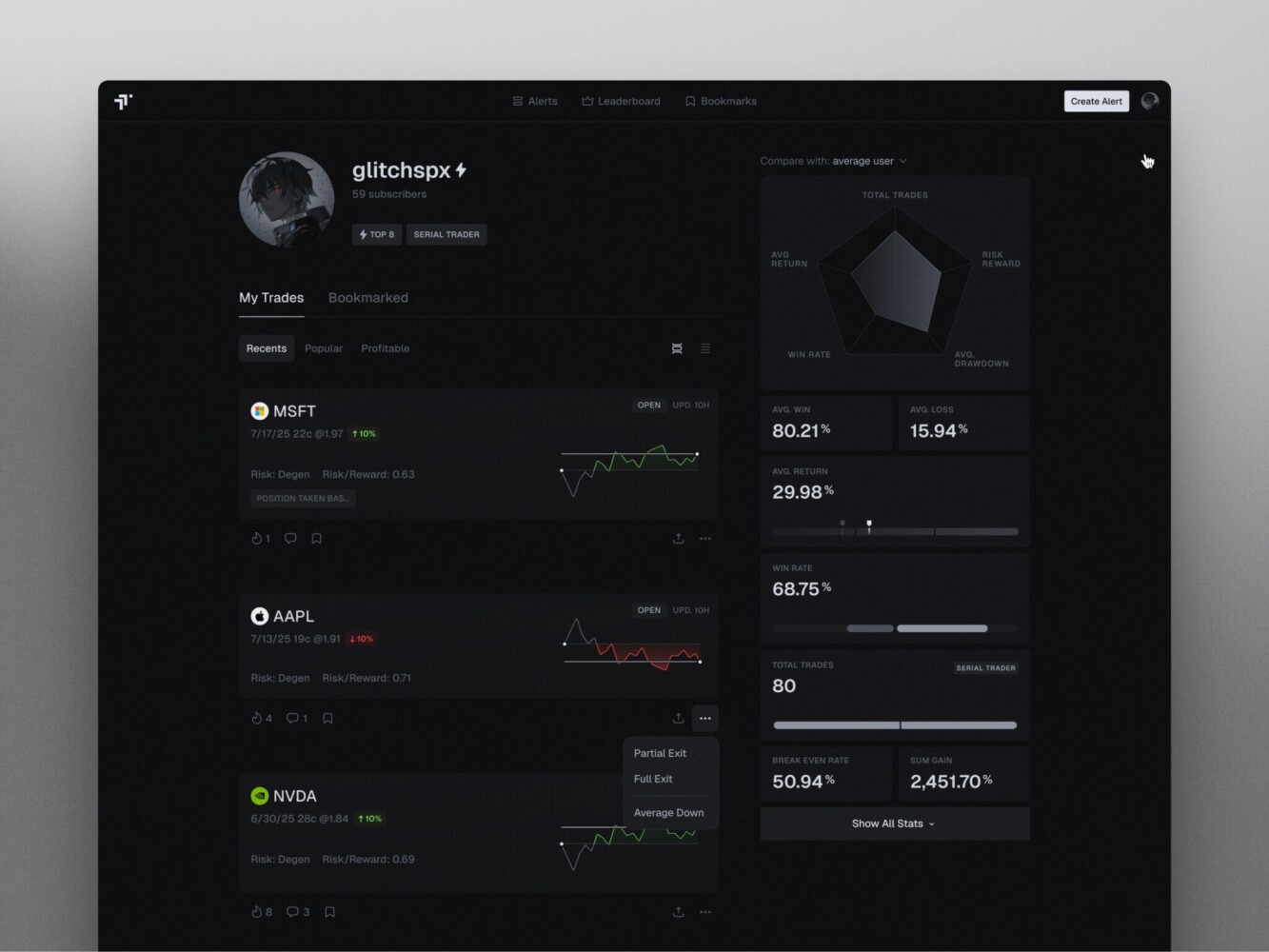
TraderTale: Social Platform for Traders by Shakuro
What you can hire from the published service pages is the web product and the phone product around a digital-asset venue. The wider map of product types, including wallets and on-chain tools, is Web3 app and software development. The matching engine and the ledger are scope you name in the same conversation. They are not a case study on this site today. Ask to see that limit in writing before you treat a design frame as an exchange.
Why Work with a Cryptocurrency Exchange Development Company
Hire for the venue, not for a stack list. A useful partner can say which of the three venue types they are being asked to build, can separate the book from key storage, and can show a withdrawal that waits for a second approval. A useful partner can also say what they have not shipped. On this site, that sentence is the Abyss and TraderTale limit above.
Ask four questions before you sign. Where does the match happen. Who can move a balance. What is halted when a feed goes quiet. Which neighboring product they will refuse to hide inside the same contract. A team that answers all four with a claim of long experience has not answered.
Shakuro can take the web and mobile surfaces described on the service pages linked at the top, and can talk through the engine and the ledger as scope. That conversation starts with the factor list, not with a tariff and not with a country recommendation.
FAQ
What drives the cost of cryptocurrency exchange software development?
The factors in the cost table: venue type, chains, whether the operator holds assets, fiat or not, liquidity source, surfaces, and the checks counsel named. There is no universal price on this page. A range invented before those factors are written down is not an estimate.
How long does crypto exchange development take?
This page does not publish a duration. The length follows the same factors as the cost, especially how many chains, whether the operator holds assets, and whether fiat deposits are in scope. Ask for a schedule after that list exists. Do not accept a duration from a page that has not seen the list.
Should you build a custom crypto exchange or use white-label exchange software?
Use a package when its markets, chains, and withdrawal rules already match the operator. Build a custom venue when they do not, and when you can name the venue type before the engine is written. Neither choice is a license, a liquidity source, or a view on whether anyone should trade.
What should an MVP include when building a crypto exchange?
One pair, one chain, limit and market orders, a deposit, a withdrawal that needs a second approval, and a screen that shows a refusal. Add a phone app, a second chain, fiat, or an outside feed only if the brief names them. The wallet app, the merchant checkout, and the card router stay on their own pages.
How do you secure user funds in cryptocurrency exchange software development?
On a centralized venue, separate the online balance from the reserve, and require more than one approval before a large withdrawal leaves. Record who approved it. That is a control, not a guarantee. Key storage and a wallet the person installs belong to crypto wallet development, linked above. An on-chain venue avoids that custody only if the operator truly does not hold the assets. Ethereum.org’s note on deposited assets is the reason to write that down, not a reason this page gives to trade.
What compliance requirements apply to crypto exchange development?
This page does not list permissions and does not choose a country. Counsel names the checks. The build needs a slot for the identity check, a record of orders and transfers, a hold on a withdrawal, and an export in the shape counsel asked for. A blog post is not that memo.
Final Thoughts
Before you write, check six lines. The venue is centralized, on-chain, or a hybrid you can define. The chains are named. You know whether the operator holds assets. Fiat is in or out. The liquidity source is own users, an outside feed, or neither. The surfaces are the site, the phone, an API, or a named subset.
If a line is blank, the engine will be guessed. If the brief has grown a wallet, a merchant checkout, or a card router, put those back on their own pages. If you want a view on returns, this is the wrong page.
When the six lines are filled, use the form linked in the opening and again in the cost section. Bring the list. The invented price and the license question stay with the people who can answer them.
Sources
- What is DeFi? on ethereum.org. Decentralized exchanges let a person trade tokens without giving up control of the assets. A centralized exchange requires a deposit before the trade, and the person trusts the operator to look after the assets while they are deposited.
- Abyss and TraderTale, for the published scope of the design work named above. The service pages linked in the opening describe the web and mobile surfaces, not a completed exchange engine.
Related reading