NFT marketplace development means building a platform where users mint, buy, sell, and auction NFTs, with wallet connection, smart contracts for sales and royalties, a gallery, and analytics. An MVP with basic minting, fixed-price sales, MetaMask wallet connect, and a single chain such as Polygon costs around $30,000–60,000. An enterprise marketplace with multi-chain support, complex auctions, royalty management, mobile apps, and fiat on-ramps costs $150,000–500,000+.
Listing on OpenSea or Rarible is the quick option, but you accept their fees, their rules, and their generic look, and it is hard to build a community or a brand on someone else’s platform. A custom marketplace lets you shape the user experience, keep more of the revenue, and fit the product to a niche such as art, gaming, music, or collectibles. It sits on the same foundations as other blockchain applications.
The sections below cover types of NFT marketplaces, key features, the development process from smart contracts to audits, cost, common challenges, and our Web3 development projects.
For those who prefer to listen rather than read, this article is also available as a podcast on Spotify.
What Is an NFT Marketplace?
It’s basically a digital bazaar where people go to prove they own something unique on the internet. Before this tech came along, copying a digital file was trivial, and proving who made it or who owned the “original” was a nightmare.
Now, these platforms use blockchain to lock that ownership down permanently. They enable users to create (or “mint”) assets, list them for sale, bid on items, and trade them peer-to-peer without needing a middleman to hold their hand.
The flow of an NFT marketplace platform is pretty straightforward, even if the tech underneath is complex. A creator connects their crypto wallet, uploads their file, and hits “mint.” This action creates a unique token on the blockchain. Once it’s live, they can set a fixed price or start an auction. Buyers browse, connect their own wallets, and if they like what they see, they sign a transaction to buy it.
The smart contract handles the swap automatically: the NFT goes to the buyer, the crypto goes to the seller, and often, a royalty fee automatically routes back to the original creator. It’s seamless, which is kind of the magic trick here.
Types of NFT marketplaces
Depending on your goals, you might lean towards one model over another. Many founders get stuck trying to be everything to everyone, and usually, that’s a recipe for a diluted brand. It helps to pick a lane early.
Open marketplaces
These are the wild west of the NFT world. For example, OpenSea or Rarible. Basically, anyone can jump in, mint whatever they want, and list it for sale immediately. There’s no gatekeeper. The upside is massive volume and variety. And the downside is, well, quality control because it is practically non-existent. You’ll find incredible art right next to obvious scams or low-effort cash grabs. If you want to build a new product with NFT platform development, going fully open is risky because you have to work extra hard to build trust with your users.
Curated marketplaces
On the flip side, you have your curated platforms such as Foundation or SuperRare. In this case, you cannot just upload anything you want. You need an invitation or go through a review process to get your collections live. This, in turn, gives you a level of exclusivity and quality. People know they are not getting any spam content. As a startup, this is a great system to build a premium brand, but it is limiting in terms of scalability. You are sacrificing speed for quality. It is a delicate balance to get right, trust me.
Niche NFT platforms
These platforms are designed to serve a particular sector or industry, and to be honest, I think this is where a lot of the real potential is heading. You are no longer building a general store, you are building a boutique:
- Gaming: Platforms designed to handle trading of in-game assets, skins, or characters that need to be compatible with other games.
- Art: Spaces designed to handle high-end digital art, often with features to suit visual art.
- Music: Marketplaces designed to handle royalty splits and streaming rights, which is a whole other ball game compared to images.
- Real estate: Yes, virtual land and tokenized physical deeds have their own marketplaces too.
Focusing on a niche lets you solve specific problems that generic platforms ignore. Like, try finding a marketplace that handles complex music royalty splits on a general site—it’s a pain. NFT marketplace software development for a specific vertical lets you really nail those features.
Core components of NFT marketplaces
Regardless of the type you choose, every functioning platform needs a solid backbone. If any of these pieces are weak, the whole thing wobbles.
- Smart contracts: These are the non-negotiable brains of the operation. They execute the rules of the trade automatically. If the code has a bug, you lose money. They handle the transfer of ownership and the distribution of funds.
- NFT minting systems: This is the interface that lets users turn a regular file into a blockchain asset. It needs to be user-friendly because if it’s too technical, you’ll scare off normal users. Also, it should handle gas fees efficiently, or people will bounce.
- Secure wallet integrations: You can’t have a marketplace without connecting to users’ crypto wallets (like MetaMask, Phantom, or Coinbase Wallet). That’s how a user logs in and signs a transaction. And it has to be smooth, because nobody wants to deal with connection problems when they’re trying to buy something.
- Trading mechanisms: You’ll need a good trading engine to connect buyers and sellers. This logic has to be fast and secure to prevent front-running attacks, etc.
- Metadata storage: The actual image or video file is probably too large to fit on the blockchain, but you’ll still want to store the data related to the NFT, i.e., the metadata, and the actual file on a decentralized storage system like IPFS or Arweave. If you put it on a central server, it’ll break when the server goes down.
Getting these components to talk to each other smoothly is sometimes the real engineering challenge for NFT marketplace developers. It’s about creating a system that feels invisible to the user while being bulletproof underneath.

Crypto Trading Mobile App by Conceptzilla
Key Features of an NFT Marketplace
NFT Minting
It’s the act of turning a digital file, for example, a song, an image, or a 3D model, into a unique asset on the blockchain. In the early days, this was a nightmare for regular users. You had to write code or use complicated CLI tools. Nowadays, your platform needs to let users create and mint NFTs directly from the browser. One click, maybe two.
Under the hood, your smart contracts are doing the heavy lifting here. They generate that unique digital fingerprint (the token ID) and lock the metadata to it. But if your minting process is slow or the gas fees are unpredictable, creators will leave. You need to optimize this flow, maybe even look into “lazy minting,” where the NFT isn’t fully written to the chain until it’s bought, just to save your users some headache.
NFT Trading and Auctions
Once the assets are out there, people need to trade them. One size does not fit all here, so you need to implement flexibility during NFT trading platform development:
- Fixed price sales: Simple, straightforward. Seller sets a price, buyer pays, and it’s done. Great for quick transactions, kind of like buying something on Amazon.
- Auctions: You’ve got timed auctions where the highest bidder at the end wins. It creates urgency.
- Bidding mechanisms: Sometimes you want to let people make offers below the asking price. It keeps the conversation going even if a buyer isn’t ready to pay full price yet.
Getting the logic right for auctions is trickier than it looks. What happens if someone bids in the last second? Do you extend the timer? Most digital asset trading platforms do, by the way, to prevent sniping bots from ruining the fun. If your trading engine lags during a high-demand drop, you’re going to have angry users flooding your support channel.
Wallet Integration
Users need to connect their crypto wallets, like MetaMask, Phantom, or WalletConnect, to interact with your marketplace. It’s their login, their identity, and their vault all in one.
For secure wallet development, the user experience here is critical. Your integration has to detect what wallet the user has, guide them through the signature request smoothly, and handle different networks (Ethereum, Solana, Polygon) without confusion. If authentication feels like a chore, people aren’t coming back. It really helps to have clear error messages, too. Like, tell me why it failed instead of just saying “no.”
Royalty Management
This is arguably the biggest selling point of NFTs for creators. In the traditional art or music world, once you sell a piece, that’s it. You don’t see a dime when it gets resold for millions later. That’s pretty unfair, if you think about it.
Custom NFT marketplace development changes the game with automated royalty management. You bake the royalty percentage into the smart contract. So, every time the NFT changes hands on the secondary market, a slice of that sale automatically goes back to the original creator. No lawyers, no chasing payments.
For a platform, supporting this is non-negotiable if you want to attract serious artists. It shows you respect their long-term value. Just make sure your smart contracts are actually enforcing this, because some newer marketplaces have been skirting around it, and well, let’s just say the community notices.
NFT Analytics and Market Insights
Finally, don’t leave your users in the dark. The crypto market moves fast, like, really fast. Prices swing, trends shift overnight. Both buyers and sellers are hungry for data.
You need dashboards that show real-time analytics: sales volume, floor prices, trending collections, and historical pricing charts. They give context. Is this collection heating up? Is the floor price stabilizing? When I’m looking at a potential buy, I want to see the trajectory, not just the current tag.
Giving these kinds of insights creates trust. It makes your financial data analytics platforms look legitimate, like a real financial tool instead of a toy. And it keeps users engaged, scanning the charts to find the next big thing.
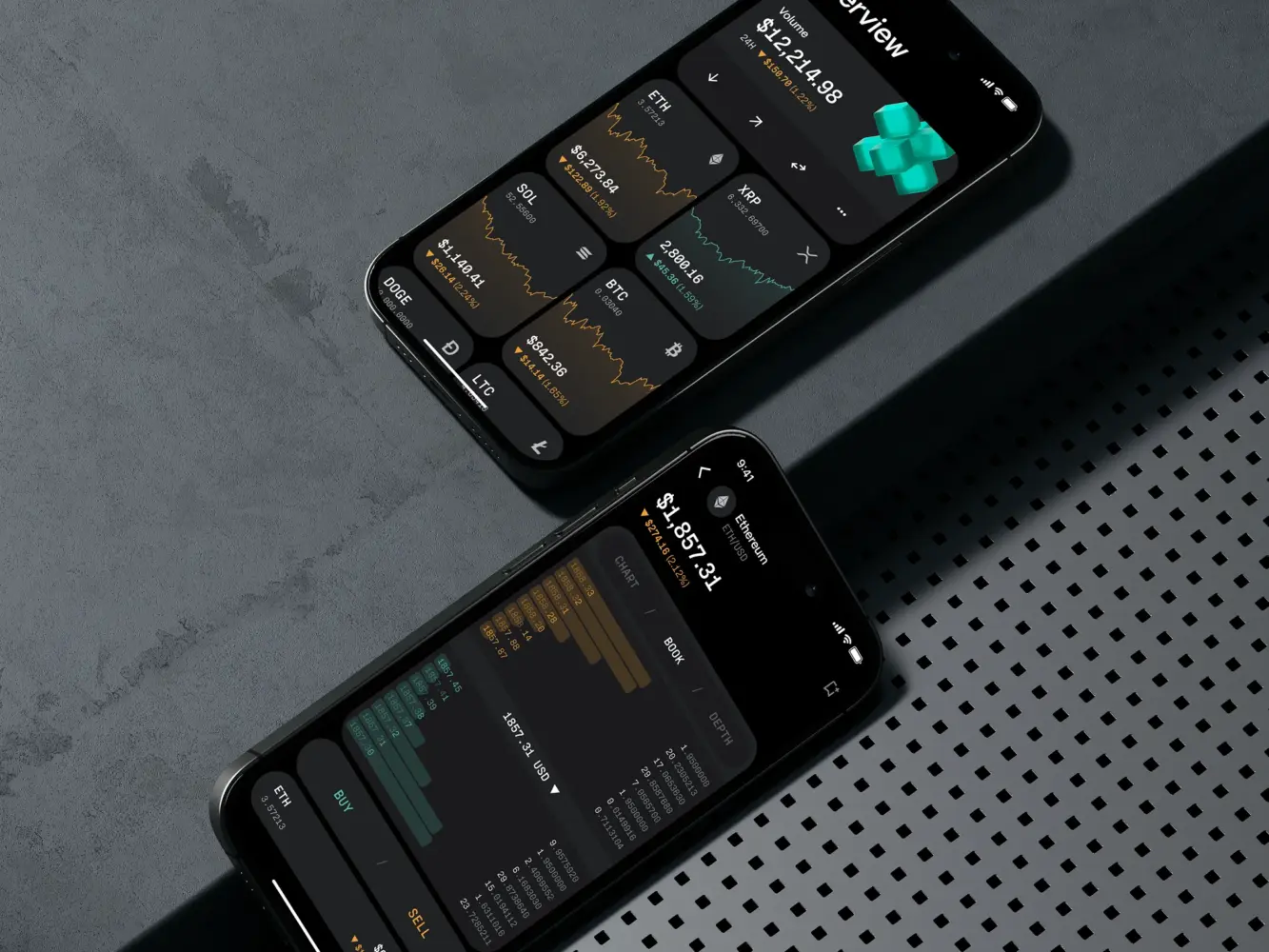
Crypto Trading Mobile App by Shakuro
NFT Marketplace Development Process
Step 1. Product Strategy and Marketplace Model
Before writing a single line of code, we have to think about what we are going to build. Do we want to create an open marketplace where anyone can offload their art (high volume, high risk)? Do we want to create a premium marketplace where we carefully select artists (premium feel, slower growth)? Or maybe we want to create a marketplace for a specific type of collectibles, like gaming items or music royalties?
This decision shapes the rest of NFT marketplace development. You also need to get really clear on who your users are. Are they crypto-native degens who know what “gas” means, or are they traditional artists who need a super simple interface?
Step 2. UX/UI Design for NFT Platforms
Once the strategy is set, it’s time to design. And look, in the NFT world, visuals are everything. If your platform looks clunky or confusing, people assume the assets are low quality too. You have to offer intuitive interfaces for browsing, minting, and trading.
The trick is making blockchain stuff feel invisible. When a user clicks “mint,” they shouldn’t see a wall of technical jargon. They should see a progress bar and a clear confirmation. Focus heavily on how the digital assets are presented: large images, clean galleries, and easy-to-read metadata. It sounds obvious, but you’d be surprised how many platforms mess this up. A good design really helps build trust.
Step 3. Choosing the Technology Stack
Now we get into the engine room. Picking the right tech stack is crucial because switching later is a pain.
- Smart contract technologies: If you’re on Ethereum or EVM-based chains, you’ll need Solidity. If you’re on Solana, you’ll need Rust. There’s just no way around it if you want custom logic.
- Backend technologies: You’ll need something robust to handle your off-chain data. Node.js is a great choice. It works well with web3. Python (FastAPI) is another great choice, particularly if you’re working a lot with data.
- Frontend technologies: Most people use React. This is because the web3 library support is huge. Vue.js is another option. You may not find as many pre-built components.
- Infrastructure: You’ll want to use Docker to containerize everything. You’ll likely want to use Kubernetes too. Trust me when I say you don’t want to try to manage servers when you’re seeing a lot of traffic.
Step 4. Smart Contract Development
This is the meat of your marketplace. Your smart contracts are what handle all of the minting, all of the trading, all of the royalties. This is your money code. Because of this, there’s no room for error.
For blockchain NFT marketplace development, you need to ensure security and transparency. Apart from being just an unpleasant glitch, a bug here means lost funds. Always write tests before you write the actual contract logic. It feels backward sometimes, but it saves so much headache later. Make sure your contracts are upgradeable (via proxies) but also secure against reentrancy attacks. It’s a delicate balance when it comes to smart contract development for decentralized platforms.
Step 5. Blockchain Integrations
Your platform doesn’t live in a vacuum. You need to integrate with actual blockchain networks. Ethereum is the big dog, but gas fees can kill user enthusiasm. That’s why many startups opt for Polygon for cheaper transactions or Solana for speed.
And don’t forget storage! You can’t put huge image files on the blockchain. You need to integrate scalable blockchain infrastructure like IPFS or Arweave for your NFT metadata and assets. If you host these on a central server and that server goes down, your NFTs are basically broken links. And nobody wants to buy a broken link, right?
Step 6. Testing and Smart Contract Audits
Don’t skip this part, even if it’s tempting. Rigorous smart contract security audits by reputable firms are a must. They’ll find things you missed.
Besides the contracts, you need platform performance testing. Can your system handle 10,000 users clicking “buy” at the same time? Test those wallet integrations across different devices and browsers. Nothing kills momentum like a wallet connection that fails on mobile. It’s a little expensive, but consider it insurance for your NFT platform development.
Step 7. Deployment and Maintenance
Finally, you hit deploy. But honestly, that’s just the beginning. Launch day is chaotic. You need to be monitoring platform performance closely—watching for failed transactions, slow load times, or weird errors.
It’s an ongoing process. The web3 space is a rapidly changing environment. New standards are emerging, threats are changing, and users are asking for features you didn’t even think about. You need a plan to make ongoing improvements. If you think you’re done when you launch, you’re already behind. This isn’t a sprint. This is a marathon. And if you’re flexible and listen to your users, you’ll be just fine.
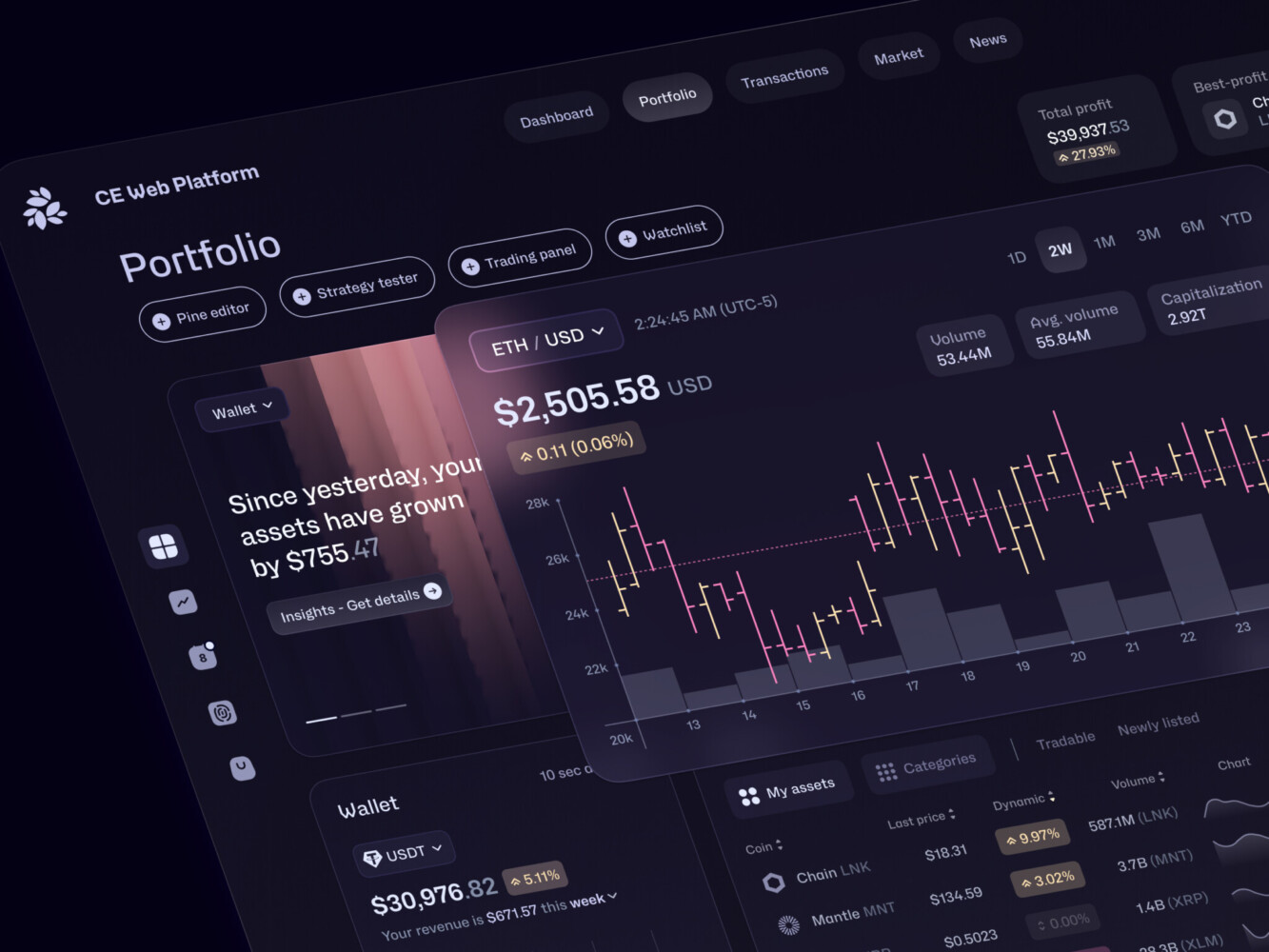
Crypto Exchange Web Platform by Conceptzilla
Cost of NFT Marketplace Development
You start out with a great idea, a grand vision. Then you start looking at the costs of development, you start looking at the costs of audits, and suddenly your simple NFT marketplace doesn’t look so simple anymore.
The truth is, there’s no one answer. There’s no one price. You can’t just say, “Hey, I want to build an NFT marketplace. What’s the price?” Well, are you building a small house or a mansion? There are a few key factors that affect the price.
Key Factors Affecting Development Cost
First off, let’s look at blockchain networks. This affects your whole budget. If you’re building on the main Ethereum network, you’re looking at a situation where your users are going to have to pay more gas. And you may need to implement more complex code to offset those costs.
Developing for Solana or Polygon might be cheaper initially because the transaction fees are lower, but finding NFT marketplace developers who specialize in Rust for Solana can sometimes be pricier than the more common Solidity devs. It’s a trade-off. You pick the chain based on your users, but that decision directly impacts your dev hours.
As for marketplace complexity, do you want a basic site where people list items and buy them? That’s one thing. But what if you want advanced auction types, bundled sales, fractional ownership, or cross-chain trading? The complexity skyrockets. Every extra feature adds layers to the backend and the smart contracts.
Speaking of which, smart contract development is usually the biggest chunk of your budget. They handle real money. You need senior engineers who know what they’re doing. Junior devs might charge less, but if they mess up the logic, you could lose everything. Paying for experience here is survival. And don’t forget, custom contracts take way longer to write and test than using pre-made templates.
Security audits can’t be skipped to save a buck. An audit by a reputable firm isn’t cheap—we’re talking thousands, sometimes tens of thousands of dollars depending on the code size. But compare that to the cost of a hack? It’s peanuts. If you get drained of funds because you skipped the audit, your reputation is toast anyway.
Example Development Scenarios
To give you a rough idea, let’s look at two common paths. Keep in mind, these are ballpark figures. Rates vary wildly depending on whether you hire a freelance team of NFT marketplace developers in one region or a top-tier agency in another.
MVP NFT Marketplace
Let’s say you’re a startup testing the waters. You want an MVP.
- Scope: Basic minting, fixed-price sales, simple wallet connect (MetaMask), and a standard gallery view. Stick to one chain, like Polygon, to keep things simple.
- Team: A small team: 1-2 backend devs, 1 frontend dev, and a part-time designer.
- Cost vibe: You’re looking at something in the range of $30,000 to $60,000. It’s lean. You’re using some existing libraries, maybe a simpler audit scope.
It won’t win design awards, and it won’t handle millions of users on day one, but it proves your concept. The platform gets the job done without burning your whole seed round.
Enterprise-Scale NFT Marketplace Platform
Now, imagine you’re an established company or a well-funded startup aiming for the big leagues.
- Scope: Multi-chain support (Ethereum, Solana, Flow), complex auction mechanisms, royalty management, advanced analytics dashboards, mobile apps, high-end UI/UX, and maybe even fiat on-ramps.
- Team: A full squad. Project manager, UI/UX designers, multiple senior solidity/rust engineers, backend architects, QA testers, and security specialists.
- Cost vibe: You’re easily looking at $150,000 to $500,000+. Why so much? Because you’re paying for top-tier security audits (multiple rounds), custom architecture that scales, and a polished user experience that rivals the big players. You’re building infrastructure that needs to stay up 24/7 under heavy load. It’s a serious investment, but if you pull it off, the ceiling is way higher.
NFT marketplace development scenarios side by side:
| NFT marketplace | MVP NFT marketplace | Enterprise-scale platform |
| Scope | Basic minting, fixed-price sales, MetaMask wallet connect, standard gallery view | Complex auctions, royalty management, analytics dashboards, mobile apps, high-end UI/UX, fiat on-ramps |
| Blockchain | One chain, like Polygon | Multi-chain (Ethereum, Solana, Flow) |
| Team | 1-2 backend devs, 1 frontend dev, part-time designer | PM, UI/UX designers, senior Solidity/Rust engineers, backend architects, QA, security specialists |
| Security audits | Maybe a simpler audit scope | Top-tier audits, multiple rounds |
| Cost | $30,000 to $60,000 | $150,000 to $500,000+ |
At the end of the day, you get what you pay for. Trying to build an enterprise platform on an MVP budget usually leads to technical debt that haunts you later. It’s better to start small, validate, and then scale up than to overbuild and run out of cash.

Abyss Crypto Management App by Conceptzilla

Common Challenges in NFT Marketplace Development
Smart contract vulnerabilities
In traditional web development, if you push a bug, you roll back the deploy, fix it, and move on. In web3, you can’t just “undo” a smart contract once it’s live on the mainnet. If there’s a vulnerability, like a reentrancy attack or an integer overflow, hackers can drain the liquidity pool in minutes. And I mean minutes.
Once the funds are gone, they’re gone. There’s no customer support line to call. That’s why I always say: treat your smart contracts like they’re made of glass. One crack, and the whole thing shatters. You need rigorous testing and multiple audits.
Scalability issues during high traffic
Here’s a scenario: You launch a hyped collection. Twitter is buzzing, Discord is exploding, and suddenly 10,000 people try to mint at the exact same second. If your crypto payment infrastructure isn’t ready, your site crashes. Or worse, it slows down so much that transactions time out, users panic, and they start screaming on social media.
In NFT marketplace software development, the bottleneck isn’t always your servers, either. Sometimes it’s the blockchain itself. If you’re on the Ethereum mainnet during a congestion spike, gas fees skyrocket, and transactions fail left and right. Users get charged for failed txs, and they are not happy about that.
You have to architect for scale from day one: load balancers, caching layers, and maybe even layer-2 solutions to offload the pressure. It’s a little annoying to over-engineer early on, but trust me, you don’t want to be rewriting your database schema while a drop is live.
Managing NFT metadata and storage
A lot of new devs think the image file lives on the blockchain. But it doesn’t. The blockchain only stores a token ID and a link (URI) to the metadata. If you host that image on a regular AWS server or a centralized database, and that server goes down or you stop paying the bill, your NFTs point to nothing. Poof. Your “permanent” digital asset is now a broken link.
It’s a bit of a wake-up call when you realize you need decentralized storage like IPFS or Arweave for custom NFT marketplace development. But even then, it’s tricky. Pinning services can fail, and gateways can be slow. That’s why you need a solid strategy for immutable, decentralized storage, and you need to test those links relentlessly.
Ensuring marketplace security
Beyond the smart contracts, your actual platform (the website, the API, the database) is a huge target. Phishing attacks, DDoS attempts, wallet drainers disguised as legitimate features—it’s a constant cat-and-mouse game.
Internal security matters too. Who has access to the admin panel? What happens if an employee’s credentials get compromised? Some marketplaces get hijacked because an admin account had weak 2FA. It sounds basic, but in the rush to launch, these things get overlooked.
Implement end-to-end encryption, strict access controls, and real-time monitoring for suspicious activity. It’s a little paranoid, sure, but in this space, paranoia is a virtue.
Honestly, facing these challenges feels daunting sometimes. But every major NFT marketplace platform out there has dealt with them. They built systems to handle these issues. If you go in with your eyes open and respect the complexity, you can build something that lasts for years.
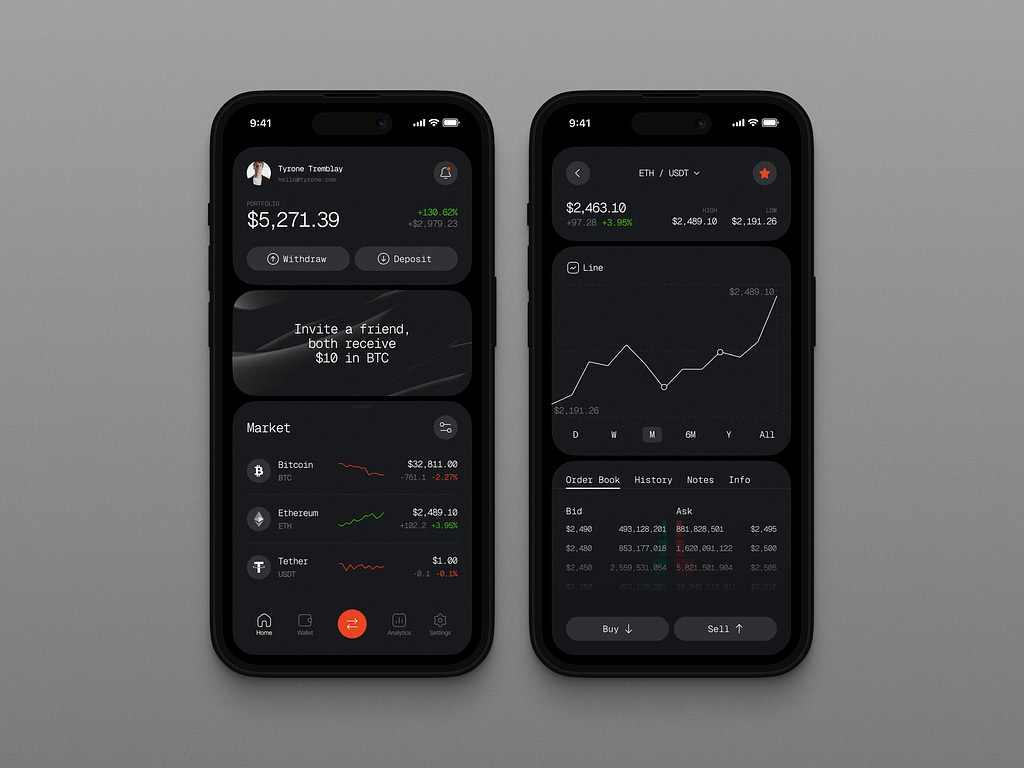
Crypto App Design Concept by Conceptzilla
Our Experience in Web3 Platform Development
For more than 19 years, we have been building a variety of products for this industry: blockchain, digital assets management, complex apps, scalable SaaS platforms, etc.
We focus on making them more accessible, giving users tools and knowledge to achieve success. Complex processes turn into simplified, easy-to-grasp workflows. What’s more, we use AI for processing large data. It adds personalization and shortens the time for making financial decisions with glanceable reports.
Together with accessibility, we implement easy-to-scale but robust infrastructure so you can grow your business more efficiently. The same goes for security: our team follows international standards, like KYC, GDPR, etc. But it doesn’t end there—we constantly look for new ways to improve our full-cycle services.
The real-life cases from our portfolio for sure speak better than just words.
Culturepulse: Create an NFT Platform
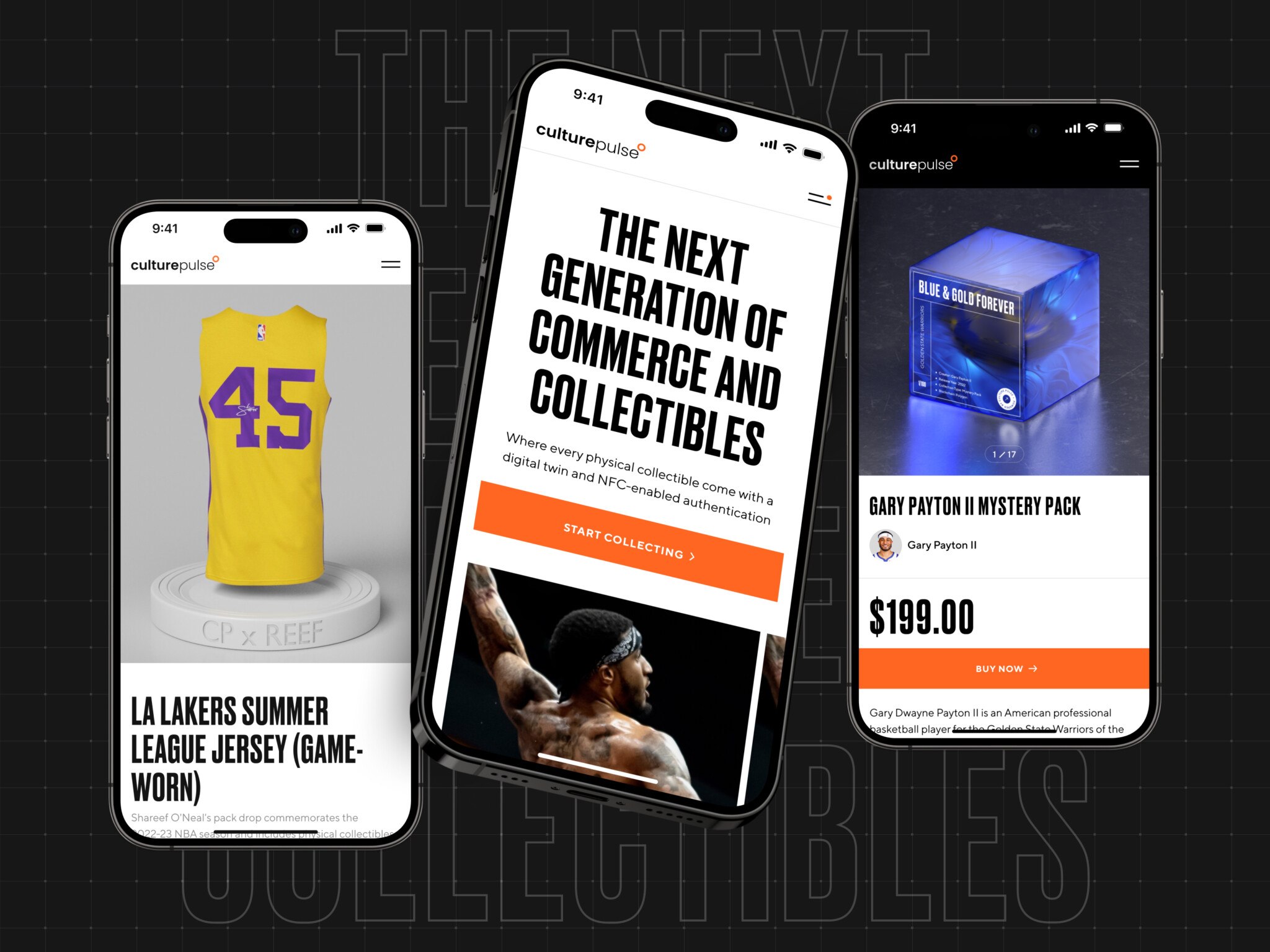
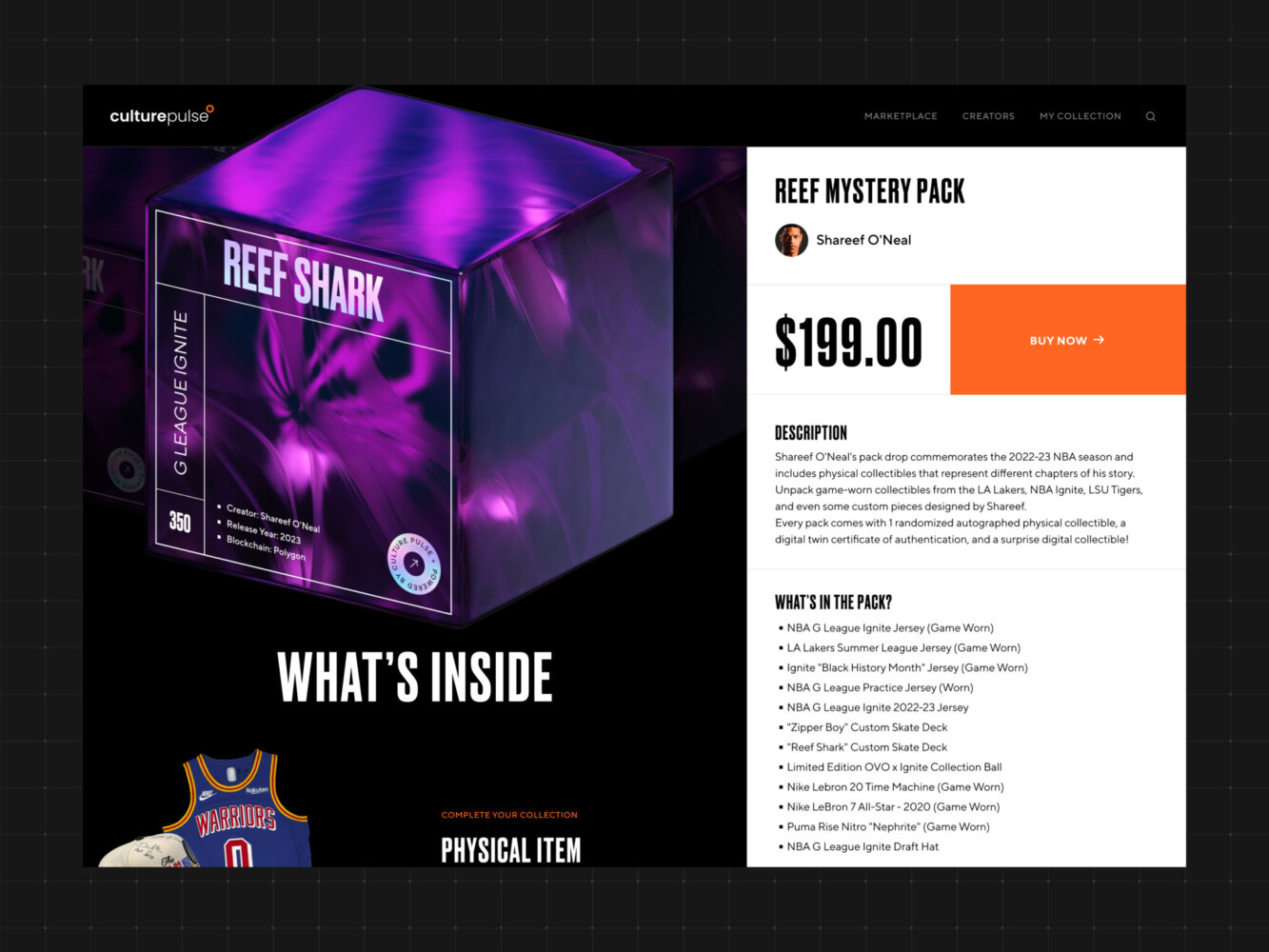
Culturepulse is an NFT marketplace where celebrities, especially athletes, can sell their exclusive items. Fans can buy these digitalized game-worn memorabilia and personal relics, receiving a physical copy later. Culturepulse needed an NFT marketplace development company like us to bring this idea to life.
We created a navigation that resembled a marketplace but remained unique. Thus, users would be familiar with it. While adding explanatory elements, the team still kept sports memorabilia a central part of the system. They were packed into consistent collections with 3D scenes.
Since buying NFTs from celebrities depends on time, Culturepulse decided they needed a mobile version as well. So most of our design decisions were adapted to small screens.
Aurox: Build a Web3 Ecosystem
Aurox is an entire Web3 ecosystem that combines a trading terminal, website, and even the $URUS token. The company wanted an easy-to-use platform that could streamline cryptocurrency trading and solve multiple UX problems. For example, placing orders from multiple CEXes and DEXes using one simple order form.
With user-centric design, we simplified the trading process and catered to new, inexperienced traders. They could manage, borrow, and lend cryptocurrencies efficiently. For doubters, we implemented a free trial option. Pro-level traders got comprehensive market reports, rates, and easy access to the DeFi space.
Why Work with an NFT Marketplace Development Company
Web3 is different. It’s not just another app stack. The margin for error is razor-thin, and the learning curve is steep. Like, real steep.
That’s why partnering with a specialized NFT marketplace development company often makes way more sense than trying to wing it with a generalist team. It’s about leveraging experience that’s already been battle-tested.
Expertise in blockchain architecture
First off, the architecture. In traditional web2 stuff, if your server crashes, you reboot it. In web3, if your architecture is flawed, you might lock users’ funds forever or create bottlenecks that kill the user experience. An experienced Web3 agency has seen it all. They know which blockchain fits your specific use case—whether you need the security of Ethereum, the speed of Solana, or the low costs of Polygon.
Such agencies apply patterns that work. It really helps avoid those “why didn’t we think of that?” moments three months into development.
Secure smart contract development
Your smart contracts are your bank vault. If you hand this job to a junior dev who learned Solidity from a weekend tutorial, you’re playing with fire. One tiny logic error, one missed reentrancy guard, and your liquidity is gone.
Specialized development companies live and breathe this stuff. They have senior engineers who have written hundreds of contracts and, more importantly, seen them get hacked (or prevented hacks). They know the common pitfalls because they’ve fixed them before. They also have established relationships with top audit firms, which speeds up the verification process. When you work with them, you’re buying peace of mind.
Scalable marketplace platforms
Finally, let’s talk scale. It’s easy to build a marketplace that works for ten users. It’s a whole different beast to build one that handles ten thousand concurrent users during a hyped drop without melting down. Generalist agencies often underestimate the infrastructure needed for NFT trading platform development of such scale. They might set up a standard database that chokes under the load of blockchain events.
A dedicated Web3 partner knows how to architect for scale from day one. They’ll implement proper indexing solutions (like The Graph), optimize gas usage so your users don’t quit when fees spike, and set up backend systems that can auto-scale when traffic surges. For example, many in-house teams spend months refactoring their entire platform after a failed launch because they didn’t plan for growth. A good agency builds that scalability into the foundation, so you’re ready for the hype, not scrambling during it.
Well, yeah, what I want to say is, hiring a specialist firm is an accelerator. You skip the painful trial-and-error phase and get straight to building something robust. Sure, it costs money upfront, but compare that to the cost of a security breach or a crashed launch? The math basically writes itself, and it also lets your internal team focus on what they do best, while the experts handle the heavy lifting.
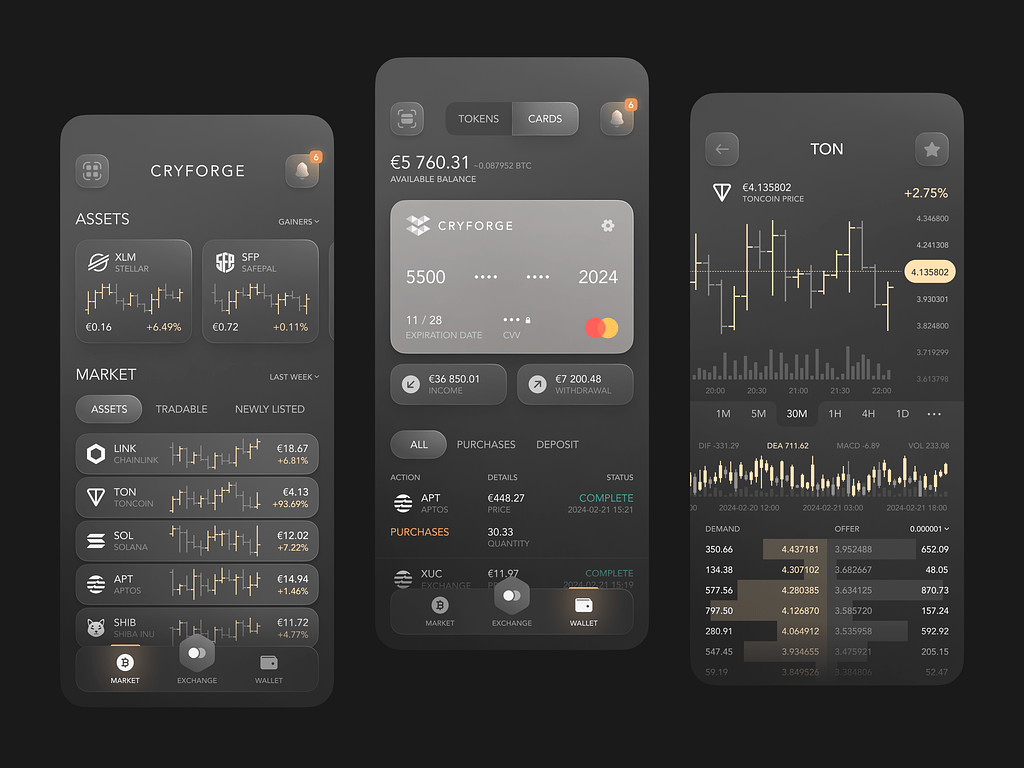
Crypto Mobile App Concept by Conceptzilla
FAQ
How much does NFT marketplace development cost?
A lean NFT marketplace MVP on one chain costs roughly $30,000 to $60,000, while an enterprise-scale platform starts around $150,000 and can pass $500,000+. The gap comes from multi-chain support, complex auctions, royalty management, analytics, mobile apps, fiat on-ramps, and several rounds of security audits. Smart contract development is usually the largest part of the budget because it needs senior engineers.
What should an MVP NFT marketplace include?
An MVP NFT marketplace needs basic minting, fixed-price sales, a simple MetaMask wallet connection, and a standard gallery view on a single chain such as Polygon. Auctions, bidding, cross-chain trading, fractional ownership, and advanced analytics can wait until the concept is validated. Keep asset files and metadata on decentralized storage like IPFS or Arweave even at MVP stage, or tokens may point to broken links.
What team do you need to build an NFT marketplace?
An MVP NFT marketplace can be built by 1-2 backend developers, 1 frontend developer, and a part-time designer. An enterprise platform needs a full squad: a project manager, UI/UX designers, several senior Solidity or Rust engineers, backend architects, QA testers, and security specialists. Contract engineers matter most, since a logic error in live contracts can drain user funds with no way to roll back.
Is it better to build your own NFT marketplace platform or sell on OpenSea?
Build your own NFT marketplace platform when fees, rules, and branding on OpenSea or Rarible start holding back your business. A custom marketplace lets you control the user experience, keep more of the revenue, and add niche features such as music royalty splits or in-game asset trading. Listing on an existing marketplace is simpler if you only need to sell a collection.
Which blockchain should an NFT marketplace be built on?
Pick the chain your target users already use, then weigh fees, speed, and developer availability. Ethereum offers security and liquidity but high gas fees, Polygon gives cheaper transactions, and Solana is chosen for speed. Lower fees do not always mean a lower build cost: Rust developers for Solana can be pricier to hire than the more common Solidity engineers for EVM chains.
How do you keep an NFT marketplace secure and stable at launch?
Order smart contract audits from reputable firms, write tests before contract logic, and guard against reentrancy attacks before going live on mainnet. Load-test the platform for drops where 10,000 users try to mint or buy at the same moment, using caching, load balancers, and layer-2 options. Protect admin accounts with strict access controls and strong 2FA, and monitor for suspicious activity in real time.
Final Thoughts
If you’ve made it this far, then it’s likely that you understand that NFT marketplace development is, at its core, building a solid digital economy from the ground up. It’s not as simple as jumping on a hype train, but that’s exactly what people do.
You have your spark of an idea, maybe it’s a new way for gamers to trade skins or a platform for musicians to own their royalties, but then comes the heavy lifting, building out the architecture to ensure it doesn’t crumble under pressure. Then comes the nitty-gritty of smart contracts, building out the rules that everyone must trust implicitly. And finally, after all the testing and tweaking, comes launch day. As exciting as it sounds on paper, it’s a bit of a rollercoaster to get to that point, but loops, backtracks, and “aha!” moments at 2 AM notwithstanding, success comes down to a few non-negotiables.
A solid blockchain infrastructure, because at the end of the day, users must trust that their assets are secure, and that’s it. A solid user experience, because the tech can be complicated, but the user experience must be effortless. A solid marketplace architecture, because you want to be ready when your platform blows up.
If you’re serious about launching a platform that lasts, my advice is don’t go it alone. Partner with experienced NFT marketplace developers who’ve seen the pitfalls and know how to navigate them. They bring the battle-tested knowledge you need to skip the rookie mistakes and build something secure, scalable, and actually useful.
Related reading