Fan engagement app development for a sports team or league usually starts with a lean MVP: digital tickets that work offline, live scores, news, and push notifications. A basic MVP for a small local club costs about $50k–$100k, a mid-tier app for a professional team with live scores, basic stats, a loyalty program, and ticketing and CRM integrations $150k–$300k, and a league-wide platform with live video and advanced gamification $500k to millions. Maintenance adds at least 20–30% of the initial build cost per year.
Most of the work sits behind the screens: licensed data feeds from providers like Sportradar or Opta, integrations with ticketing and CRM, traffic spikes when a final kicks off, community moderation, and a reason for fans to open the app between games. These are the areas to check first when you choose sports app developers.
Below, we cover what a fan engagement app is, the features to build first, planning for teams and leagues, architecture and integrations, peak traffic, security, and accessibility, the development process, cost, engagement metrics, and our experience with the AJP platform.
Key Takeaways:
- Start Small, Think Big: Don’t try to build everything at once. A lean MVP focused on core utilities like tickets, scores, and news is better than a bloated app that crashes. You can always add gamification or AR later.
- It’s About the Whole Journey: Engagement doesn’t stop when the whistle blows. The best apps create anticipation before the match, enhance the experience during it, and keep the conversation going afterward.
- Integrations Are Make-or-Break: Your app doesn’t live in a vacuum. Plan early for how it talks to your ticketing system, CRM, and data feeds. Bad integrations lead to bad user experiences.
- Native vs. Cross-Platform Depends on Goals: There’s no single “best” tech stack. Choose based on your budget, timeline, and performance needs. For most clubs, cross-platform is a smart, cost-effective start.
- Data Drives Decisions: Ignore vanity metrics like downloads. Focus on activation, repeat use between games, and conversion. Let fan behavior tell you what to build next.
- Peak Traffic Requires Planning: Sports are bursty. Your infrastructure needs to handle massive spikes during big games without breaking. Test for this early.
- Community Takes Work: Features like forums or polls aren’t “set and forget.” They require active moderation and operational effort to stay healthy and engaging.
What Is a Fan Engagement App?
If you ask five different people, you’ll probably get five different answers. Some will say it’s a ticketing solution. Others will swear it’s a social network. The truth is, it’s kind of all of that, but wrapped up in something that actually feels useful.
At its core, it’s a digital home for your fans. Not just a place to store a PDF of their ticket, but a space where the relationship with the team or league lives 24/7. It’s where the passion goes when the whistle blows and the lights go off.
Now, here’s where it gets interesting. There’s a big difference between a team-specific app and a league-wide platform.
A team app is intimate. It’s hyper-local. Think of it like your local pub. Everyone knows each other, the banter is specific, and the loyalty is deep. You’re talking about exclusive content from the players, local sponsor deals, maybe a community forum where fans debate the starting lineup. It’s about depth. The user feels like they’re part of the inner circle.
A league-wide platform is more like a massive festival. It’s broad. It’s about connecting fans of different teams under one umbrella. You might have fantasy leagues that span the whole competition, news feeds that cover every match, or rewards that work across multiple venues. It’s less about “us vs. them” and more about celebrating the sport itself. The challenge here is scale. You’re trying to please everyone, which, let’s be honest, is nearly impossible. But when it works, it creates a huge ecosystem.
But the real magic happens in how the experience shifts throughout the event lifecycle. Most apps fail because they only focus on one part. Usually the “during” part. And even then, they do it poorly.
Before the event, it’s about anticipation. This is where you can really hook people. It’s not just sending a push notification saying “Game starts in 2 hours.” That’s lazy. It’s about building the narrative. Maybe it’s a quiz predicting the score, with points that unlock discounts on merch. Or behind-the-scenes videos from the locker room prep. It’s getting the fan emotionally invested before they even leave their house. You want them buzzing.
During the event, the sports fan engagement app needs to be a companion, not a distraction. If I’m at the stadium, I don’t want to be staring at my screen missing the goal. But if I’m on the couch? I want stats. Real-time ones. I want to see how my favorite player is performing compared to last week. I want to vote for “Man of the Match” alongside thousands of other fans. It’s about adding layers to the viewing experience. For those in the stadium, it might be ordering food to their seat so they don’t miss a play. Practical, sure, but it removes friction.
After the event, this is where most apps drop the ball. The game ends, and the app goes silent until next week. Big mistake. This is when the emotions are highest. Whether your team won or lost, people want to talk about it. They want to relive the highlights. They want to see their name on a leaderboard if they participated in some in-game challenge. It’s about extending the high. Or helping them process the loss. Either way, keeping the conversation going here turns a one-time viewer into a lifelong member.

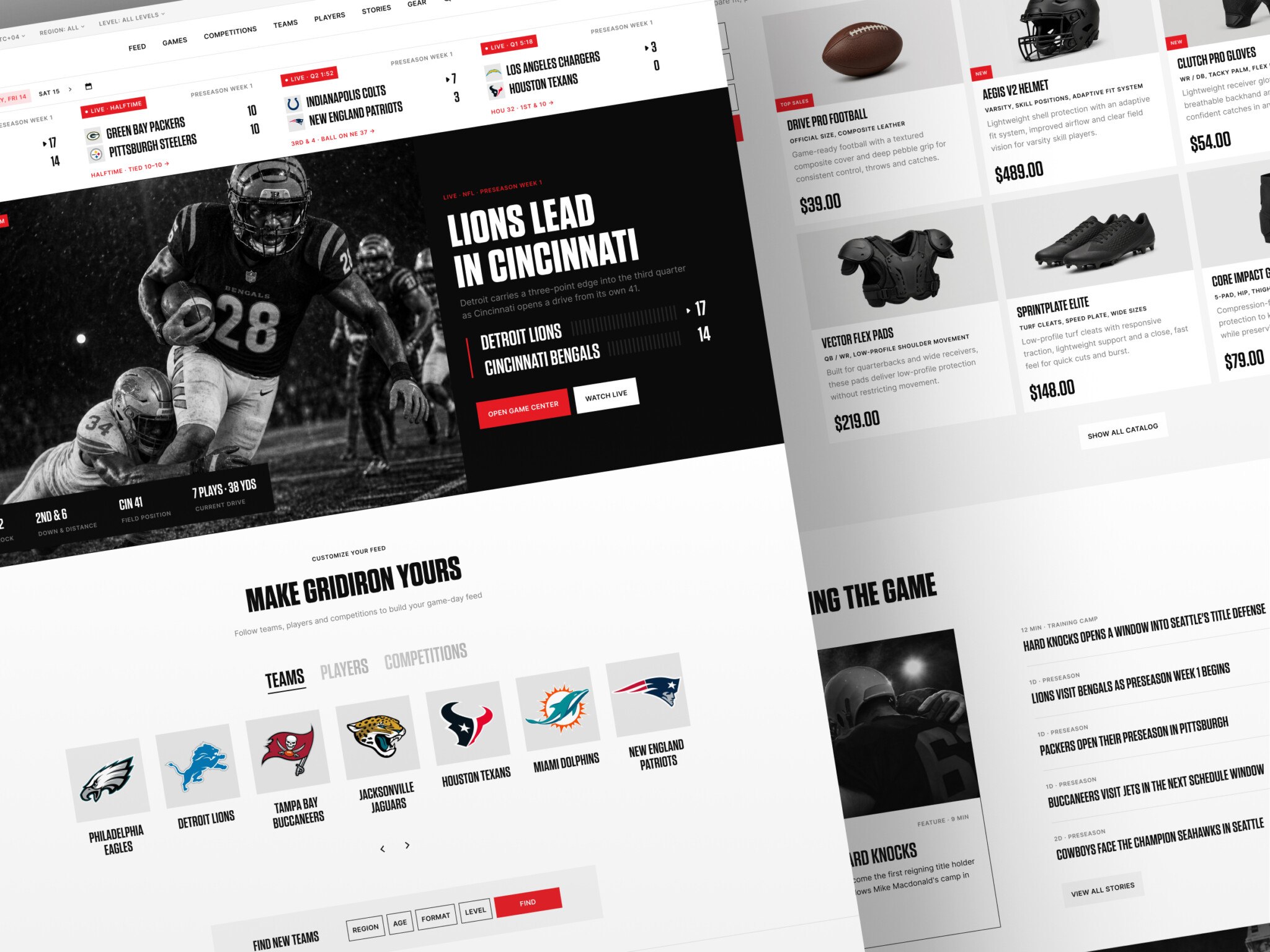
A website for a golf club by Conceptzilla
What Should a Sports Fan Engagement App Include?
Essential MVP Features
Let’s start with the basics. You can’t build a fancy penthouse without a solid foundation, right? Teams often rush to add gamification before they’ve even nailed the essentials. Don’t do that. Fans will uninstall your app in seconds if they can’t find the kickoff time or check a player’s stats.
Your MVP needs team and player profiles that are actually up to date. Schedules and live scores have to be accurate, obviously, but also easy to read at a glance. News and highlights should be front and center, not buried three clicks deep. And make account preferences simple. If I want to mute transfer rumors during a match day, let me do it without a PhD in UX design.
Notifications are tricky. They’re powerful but also annoying if overused. Relevant ones—like injury updates for key players or ticket sale alerts—are gold. Generic “check out our latest post” pings? That’s how you get uninstalls. Get this layer right first. Everything else is just decoration until then.
Game-Day Features
Game day is chaos. Your app needs to thrive in that environment, not crumble under it.
Digital tickets are table stakes now, but they must work offline. Venue info matters too—restroom locations, concession stands, accessibility routes. Sounds basic, but when you’re in a packed stadium with 60,000 people, those details save sanity.
Live updates should complement the broadcast, not compete with it. Think contextual stats, not just score refreshes. And here’s something folks forget: navigation under weak network conditions. Crowded venues murder cell signals. If your sports fan engagement app relies entirely on real-time data fetches, it’ll fail when fans need it most. Cache smartly. Pre-load maps. Make core functions work offline. Test it in actual crowded conditions, not just your office Wi-Fi. Seriously, go to a concert or a busy mall and try using your prototype there. You’ll learn more in an hour than in a week of lab testing.
Features That Bring Fans Back
Okay, so you’ve got them through the door. Now what? This is where retention lives or dies. Memberships, polls, rewards, community features, personalized content—they all sound great. But each one carries operational weight that nobody talks about enough.
Memberships require backend infrastructure, payment processing, tier management, and customer support for billing issues. Someone has to handle failed renewals at 2 AM on a Sunday. Polls seem lightweight, but moderation is real work. Trolls show up. Spam happens. You need rules, enforcement, and maybe even human review during high-emotion moments like derby days.
Rewards programs are operationally heavy. Inventory tracking, fulfillment logistics, fraud prevention, partner coordination, etc. Many clubs launch shiny point systems only to realize six months later that nobody could redeem anything because the warehouse integration broke. Community features demand active moderation. Empty forums feel dead; toxic ones drive people away. You need dedicated staff or trusted volunteers keeping conversations healthy.
Personalized content sounds magical, but it requires clean data, segmentation logic, and ongoing content tagging. If your recommendation engine suggests youth academy videos to hardcore ultras who only care about first-team transfers, you’ve lost credibility.
None of this means don’t build these features. Just go in with eyes open. Each one is a commitment, not a checkbox. The apps that stick around aren’t the flashiest—they’re the ones backed by teams willing to do the unglamorous work behind the scenes. Because ultimately, fan engagement isn’t a tech problem. It’s a relationship problem. And relationships take effort.
How Do Teams and Leagues Plan the App?
Fan engagement app development isn’t just about handing a list of features to a dev shop and hoping for the best. It starts with understanding who you’re actually talking to.
Audience research sounds boring, I know. But if you don’t know whether your core users are 18-year-old students on tight budgets or 50-year-old season ticket holders who value comfort over hype, you’re guessing. And guessing is expensive. You need to map out fan journeys. Not just the “happy path” where everything goes right, but the messy bits. What happens when a match is postponed? How do they find their seat in the rain? Where do they get frustrated? That’s where your app can actually help.
Ownership is also a crucial thing. Who owns the content? Who owns the data? If you’re a single club, you probably want full control. You want to know that John from Section 12 bought a jersey after watching a specific highlight. That data is gold. But if you’re part of a league-wide platform, it gets complicated. Does the league own the user relationship, or does the individual team? Who gets the email address?
These aren’t just technical questions; they’re political ones. You need to sort this out before writing a single line of code, or you’ll be fighting over it later when the app is already live.
MVP priorities are crucial because everyone wants everything now. But you can’t have it all. You need a framework to decide what stays and what waits.
I like to keep it simple: “Launch Now vs. Later.”
Launch Now includes anything that solves an immediate pain point or is essential for basic function. Digital tickets? Yes. Live scores? Yes. Basic news feed? Yes. If the app doesn’t work without it, it’s in this bucket.
Later is for the nice-to-haves. AR experiences, complex gamification leagues, integrated e-commerce with dynamic pricing. These are great, but they add complexity and risk. If they break, they break the whole experience. Push them to phase two. Get the core right first.
The key is knowing which game you’re playing. Don’t try to build a league-level infrastructure for a local club. And don’t expect a boutique club app to handle the traffic of a global final. Match the ambition to the reality. It saves a lot of headaches down the road.
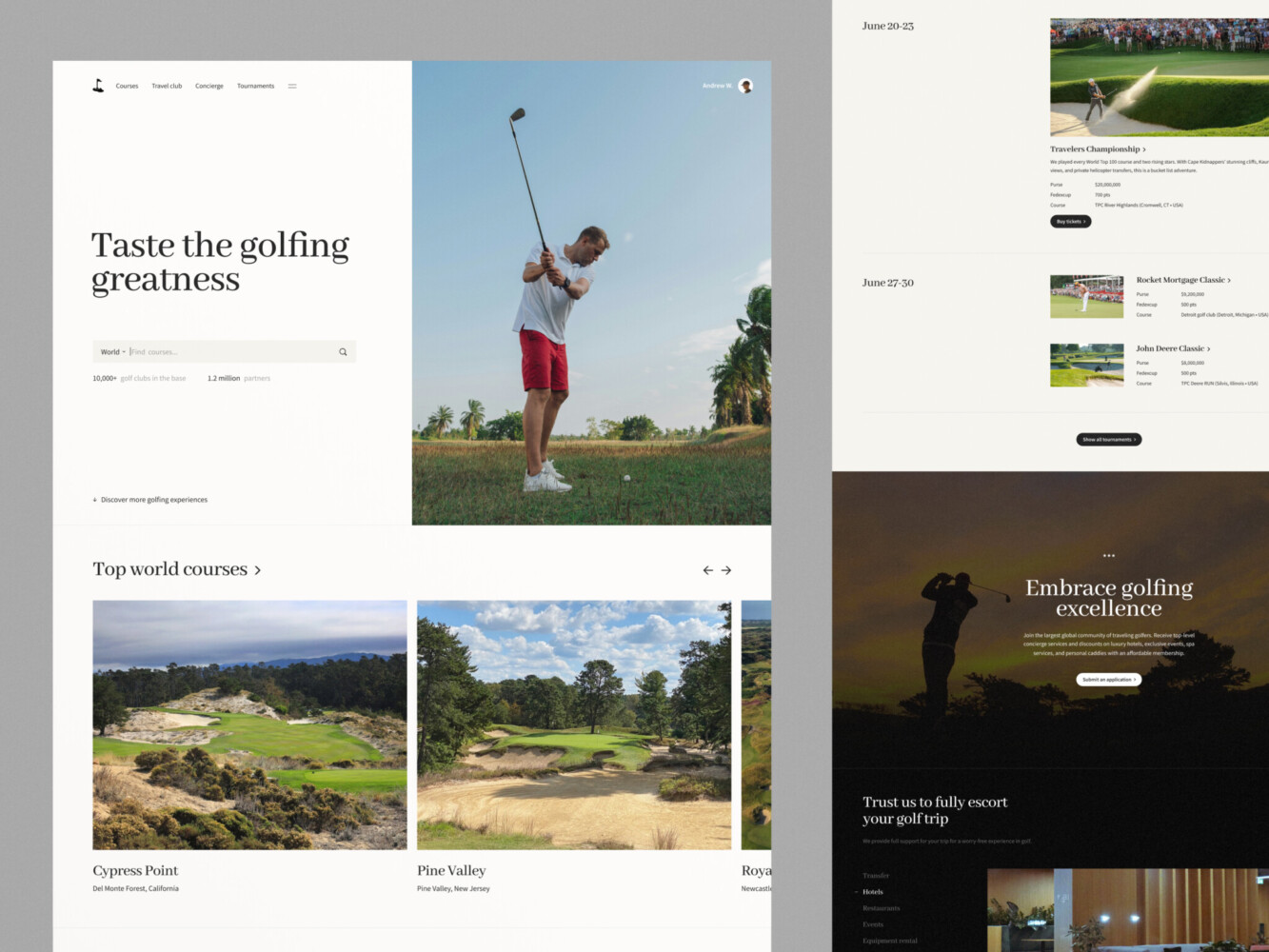
Golf Website Design Concept by Shakuro
Architecture, Integrations, and Tech Stack
The architecture of a fan engagement platform for sports teams usually breaks down into a few key pieces. You’ve got the mobile client—the thing fans actually hold in their hands. Then there’s the backend, which is the brain. It handles all the logic, the user accounts, and the data processing.
You need a Content Management System (CMS) because marketing teams hate waiting for developers to update a banner. They want to change a headline or swap a video link themselves, instantly. And don’t forget admin tools. Someone has to manage those polls, ban the trolls, and check the analytics. If your admin panel is a nightmare, your team will stop using it, and the app will become a ghost town.
Analytics are huge. Not just “how many downloads,” but real behavioral stuff. Where do they drop off? What content keeps them scrolling? You need event-driven updates here. When a goal is scored, thousands of phones need to light up at the exact same second. If your system is polling for updates every 30 seconds, you’re already behind. You need push notifications that are fast and reliable.
Now, integrations. This is where most projects bleed money. You’re not building in a vacuum. You have to talk to other systems. Sports data feeds are critical for live scores and stats. Ticketing systems need to sync so a bought ticket appears in the app without manual entry. CRM tools need to know who your high-value fans are. Payments have to be secure and smooth—nobody wants to fumble with credit card details while the halftime show is on. Video rights are a legal minefield. You can’t just embed a YouTube link. You need a secure streaming infrastructure that respects broadcast blackouts and licensing deals. It’s complex, but it’s necessary.
So, what to choose for fan engagement app development—native or cross-platform? It depends on what you’re building. If you’re a single club with a tight budget and you need to launch on iOS and Android quickly, cross-platform is a no-brainer. It’s cheaper, faster to maintain, and for 90% of fan engagement features—news, polls, tickets—it works perfectly fine. The performance gap has narrowed so much that most fans won’t notice.
But if you’re a league with massive scale, or if you’re doing heavy AR, complex animations, or need peak performance for live video streaming, native might be worth the extra cost. It gives you more control over the hardware. It’s smoother. But it’s also twice the work. You’re maintaining two codebases.
Don’t let a developer sell you on a stack because it’s trendy. Look at your product needs. Do you need speed to market? Go cross-platform. Do you need absolute peak performance for a specific high-end feature? Maybe go native for that part. Mix and match if you have to. The best tech stack is the one that lets your team sleep at night because it’s stable, not the one that looks best on a conference slide.
Building for Peak Traffic, Security, and Accessibility
Here’s the thing about sports: it’s not steady. It’s bursty. One minute your servers are humming along nicely, handling a few hundred users checking the schedule. The next minute? The championship final starts, or a star player gets traded, and suddenly you have 500,000 people hitting your “Live” button at the exact same second.
Building for peak traffic doesn’t mean having big servers. It’s about expecting things to break and planning for it. Apps can crash during halftime because they couldn’t handle the surge of people trying to vote for “Player of the Match.” It’s embarrassing. You need auto-scaling infrastructure that can breathe. When the load spikes, the system adds more resources. When it drops, it scales back down. And you need caching. Aggressive caching. If everyone is looking at the same score, don’t hit your database for every single request. Serve it from memory. It’s faster and cheaper.
Live sports data is messy. Feeds get delayed. Sometimes one provider says the score is 2-1, and another says it’s 2-2 because of a VAR check that hasn’t been confirmed yet. Conflicting data is a nightmare for UX. How do you show that to a fan without confusing them? In my experience, transparency helps. A little “Data Delayed” tag or a “Pending Review” status is better than showing wrong info with confidence. Fans forgive delays; they don’t forgive being misled.
Security is another beast. You’re holding personal data, payment info, and sometimes even location data if you’re doing venue navigation. Account protection needs to be robust. Two-factor authentication shouldn’t be an afterthought. Payments need to be bulletproof. Fraud detection is key here, especially if you’re selling high-demand tickets or limited-edition merch. You don’t want bots buying up your inventory while real fans get locked out.
Fan engagement software for sports relies on privacy and consent. GDPR, CCPA—it’s not just legal box-ticking. Fans are getting smarter about their data. They want to know why you need their email. They want to opt out easily. If you make it hard to unsubscribe or delete their account, they’ll just uninstall the app and leave a bad review. Be clear. Be honest. Ask for only what you need.
Moderation is the unsung hero of community features. If you have comments or forums, you will get toxicity. It’s inevitable. Sports bring out passion, and sometimes that passion turns ugly. You need automated filters for hate speech and slurs, but you also need human moderators for the nuanced stuff. An AI might miss sarcasm or context-specific insults. Having a plan for this before launch saves you from PR disasters later.
And finally, accessibility. This is often overlooked. Your live interfaces need to be readable. High contrast for people watching in bright sunlight or dim bars. Large touch targets for people with shaky hands or who are wearing gloves in cold stadiums. Screen reader compatibility for visually impaired fans. Not just inclusivity, but good design. If your text is too small or your buttons are too close together, everyone suffers, not just those with disabilities.
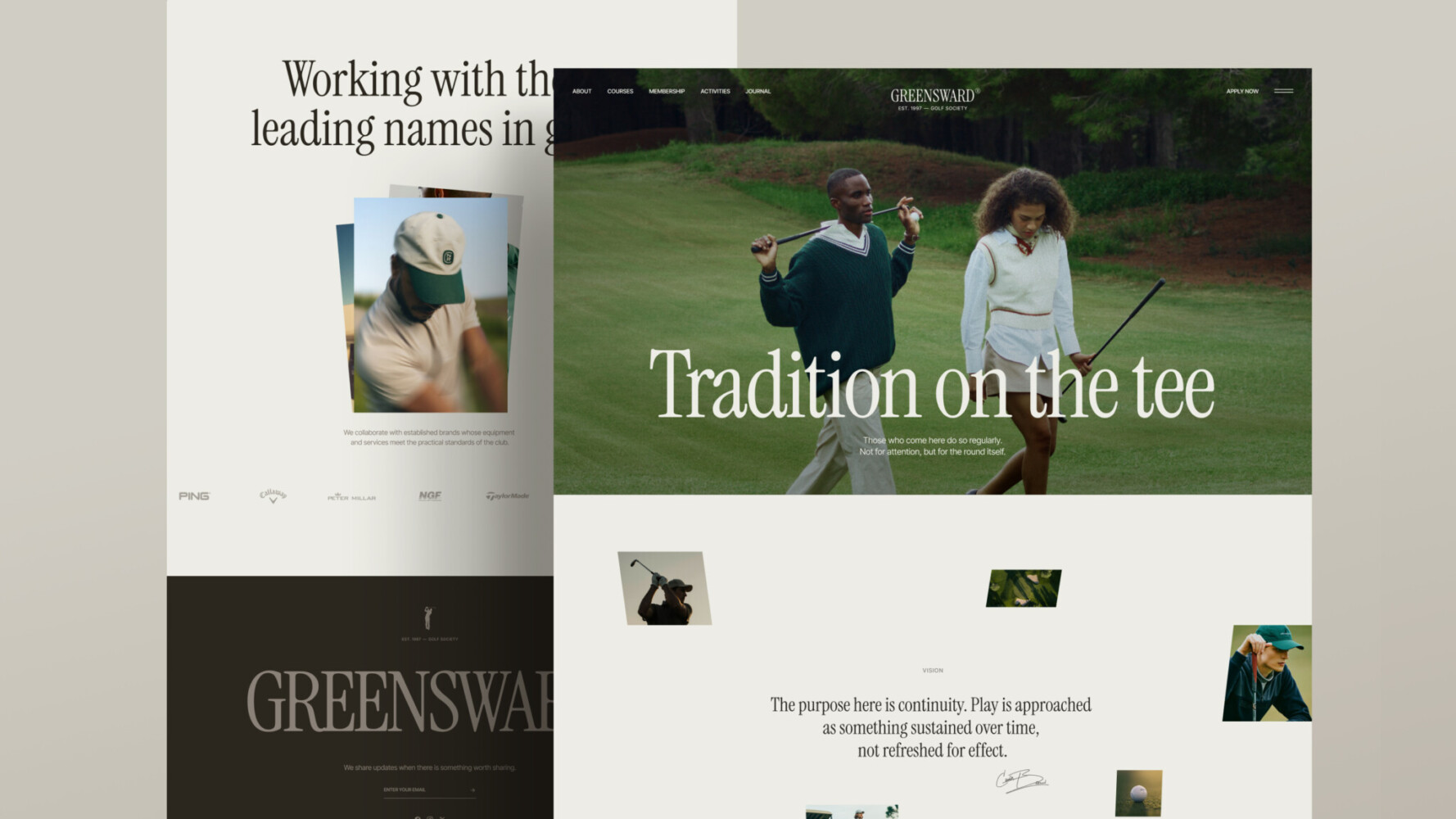
Greensward website by Shakuro
Fan Engagement App Development Process
Step 1. Discovery
This isn’t just sitting in a conference room guessing what fans want. It’s talking to them. Going to the stadium. Watching how they use their phones during a match. Are they struggling to find their seat? Are they trying to order food, but the queue is too long? You need to map out those pain points. This is where your mobile app development strategy really takes shape. You’re not just building features; you’re solving problems. If you skip this, you’re building in the dark.
Step 2. UX Prototype
Don’t write code yet. Sketch it out. Use tools like Figma. Get the flow right. How many clicks does it take to buy a ticket? Is the live score easy to find? This is where UI/UX design shines. You want it to feel intuitive, not like a puzzle. Teams spend weeks coding a feature only to realize users can’t find the button. A quick prototype saves you that headache. Get feedback from real fans here. Watch them try to use it. See where they get stuck. It’s humbling but necessary.
Step 3. Technical Planning
Now you bring in the engineers. What’s the stack? How will it scale? What are the security requirements? This is where you decide on native vs. cross-platform, as we talked about earlier. You also plan your integrations. Who’s providing the data feed? How will the ticketing system talk to the app? Get these details locked down before you start building. Changing architecture mid-build is expensive and messy.
Step 4. Building MVP
The MVP build is where the magic happens. But keep it lean. Remember that “Launch Now vs. Later” framework? Stick to it. Build the core features first. Tickets, scores, news. Get them working perfectly. Don’t get distracted by the shiny AR stuff yet. Focus on stability. A buggy app is worse than no app.
Step 5. Testing
Once you have something working, it’s time for integration testing. This is where things usually break. Does the payment gateway actually process the transaction? Does the live score update when the data feed changes? Test every connection. Test it on different devices. Test it on slow networks.
But the real test for a fan engagement app is event-day load testing. Simulate the chaos. Use tools to mimic thousands of users hitting the app at once. Can it handle the spike? Does the server crash? Does the database lock up? Do this before the big game, not during. It’s stressful, but it’s better to find the breaking point in a lab than in front of 50,000 angry fans.
Step 6. Launch
Launch day is exciting, but it’s not the end. It’s just the beginning. Monitor everything. Watch the logs. Listen to user feedback. Be ready to patch bugs quickly. And then, iteration. This is key. The app isn’t a statue; it’s a living thing. Add new features based on what fans actually use. Drop the ones they ignore. Keep improving.
Throughout this whole process, mobile app development and UI/UX design aren’t separate phases. They’re woven into every step. Design informs the build. The build tests the design. It’s a loop, not a ladder. Keep it flexible, keep it human, and you’ll end up with something people actually want to use.

How Much Does a Fan Engagement App Cost?
The truth is, the cost of a sports fan engagement app varies wildly. It depends on what you’re building, who you’re building it for, and how complex your existing tech landscape is. But we can break down the main drivers so you know where the budget goes.
First, platforms. Are you building for iOS and Android? That’s two codebases if you go native, or one if you go cross-platform. Cross-platform is usually cheaper upfront, but remember, you still need to maintain both stores, handle different update cycles, and deal with platform-specific quirks. It’s not a huge saving, but it adds up.
Live data licensing is a big one. You can’t just scrape scores from a website. You need official feeds from providers like Sportradar or Opta. These aren’t cheap. They charge based on usage, coverage, and sometimes even the level of the league. If you want real-time, second-by-second stats for every player, you’re paying a premium. If you’re okay with a slight delay and basic scores, it’s less. But don’t skimp here. Bad data kills credibility.
Integrations are another major cost driver. Connecting to your ticketing system, your CRM, and your payment gateway—it’s not plug-and-play. Every system has its own API, its own quirks, its own security requirements. If your ticketing provider is old and clunky, you’ll spend more time building connectors than building the app itself. Same with CRM. You want seamless data flow, but that requires custom work.
Video is expensive. Not just the hosting, but the rights. If you want to show highlights, you need licenses. If you want live streaming, you need a robust CDN (Content Delivery Network) that can handle massive spikes. And you need DRM (Digital Rights Management) to prevent piracy. It’s a whole ecosystem of costs that people often underestimate.
Custom rewards sound fun, but they’re operationally heavy. If you’re giving away digital badges, it’s cheap. If you’re giving away physical merch, tickets, or experiences, you need logistics. Inventory management, shipping, fraud prevention. It’s a whole supply chain.
Moderation is an ongoing cost. If you have community features, you need people watching. AI helps, but it’s not perfect. You need human moderators, especially during high-emotion games. That’s salaries, tools, and training.
As I said before, the digital fan engagement in sports doesn’t stop costing money when the app launches. You have server costs, maintenance, updates for new OS versions, bug fixes, and customer support. It’s a living product. Budget for at least 20-30% of the initial build cost per year for maintenance. It’s standard in the industry.
So, what does this look like in practice? Let’s look at some scope-based examples.
A basic MVP for a small local club might focus on news, schedules, and simple digital tickets. No live video, no complex gamification. Maybe $50k–$100k to build, depending on the team’s location and rates. It’s lean, functional, and gets the job done.
A mid-tier app for a professional team with a decent following. This includes live scores, basic stats, a loyalty program with digital rewards, and maybe some simple community forums. Integrations with ticketing and CRM are solid. This could range from $150k–$300k. You’re investing in retention and data.
A high-end league-wide platform is for the big leagues. Live video streaming, complex AR experiences, multi-team data, advanced gamification, heavy moderation, and massive scale. We’re talking $500k to millions. It’s an enterprise-level product with enterprise-level costs.

Branding for Emerill by Shakuro

How Do You Measure Whether Fans Stay Engaged?
After fan engagement app development, how do you know if it’s actually working? It’s easy to get lost in vanity metrics. Downloads look great on a slide deck, sure. But a download isn’t an engagement. It’s just a potential. I’ve seen apps with a million downloads and barely a thousand daily active users. That’s a ghost town, not a community.
You need to look at metrics that actually tell you if fans are sticking around. And honestly, it starts with activation. Did they do the one thing that makes the app useful for them? For some, that’s buying a ticket. For others, it’s setting their favorite player. If they open the app once and never come back, you haven’t activated them. You’ve just installed software on their phone. Track that first meaningful action. It’s your baseline.
Repeat use between games is the holy grail. Sports are episodic. There’s a game, then silence, then another game. If your app only gets opened on match day, you’re missing 90% of the relationship. Are they checking news during the week? Are they participating in midweek polls? Are they watching training clips? You want to see a steady hum of activity, not just spikes. If the graph looks like a heartbeat monitor during a crisis, you have a problem.
Notification opt-in and response rates are huge. Everyone asks for permission to send push notifications, but few track who actually says yes. And even fewer track who clicks. If you have a 10% opt-in rate, that’s decent. But if only 1% of those people click through, your content isn’t resonating. Or you’re sending too much junk. Test different types of alerts. See what sticks. A goal alert should have a high click-through. A “buy our new socks” alert? Probably not so much. Learn the difference.
Content engagement is tricky because “views” can be misleading. Did they actually read the article, or did they just scroll past it? Look at time-on-page, scroll depth, and shares. If people are sharing your highlights or articles on social media, that’s organic growth. That’s free marketing. It means the content hit an emotional chord. Track those shares. They’re worth more than likes.
Now, the business side: ticket or merchandise conversion. At the end of the day, clubs need revenue. Is the app driving sales? Not just direct purchases in the app, but assisted conversions. Did they see a jersey in the app and buy it at the stadium store later? Use tracking links and promo codes to connect the dots. If the app isn’t helping sell tickets or merch, it’s hard to justify the budget. Make sure the path from “seeing” to “buying” is short. Remove friction.
Membership retention is the ultimate test of loyalty. If you have a paid tier or a loyalty program, are people staying? Churn is the enemy. If members leave after three months, something’s wrong. Maybe the rewards aren’t valuable enough. Maybe the exclusive content isn’t exclusive enough. Talk to the people who leave. Ask them why. It’s painful, but it’s the best data you’ll get.
Event-day reliability isn’t a user behavior metric, but it’s critical. If the fan engagement platform for sports teams crashes during the big game, engagement drops to zero. Track uptime, error rates, and load times during peak traffic. If your tech fails, your fans leave. It’s that simple. Monitor this closely. It’s the foundation everything else sits on.
Don’t try to track all of these at once. Pick the three or four that matter most to your current goals. Are you trying to grow the user base? Focus on activation and notifications. Trying to make money? Focus on conversion and retention. Keep it simple. Data is only useful if you act on it. Otherwise, it’s just noise.
Our Experience in Building Sport Apps
At Shakuro, we’ve been in the trenches building sports-adjacent platforms that tackle a lot of these same engagement challenges, even if they aren’t always labeled “fan apps” in the traditional sense.
AJP, for instance. Now, let’s be clear right off the bat: AJP is a web platform, not a native mobile fan engagement app. But the problems it solves are incredibly similar to what clubs face. It’s all about managing a massive, passionate community around a specific sport.
We helped build out systems for event discovery that actually work. Instead of a static list, users can filter by weight class, belt level, and location. It’s intuitive. Then there are the athlete profiles.
In jiu-jitsu, your ranking is your identity. We built dynamic profiles that update in real-time as athletes compete, showing their win-loss records and current standings. It creates this natural hook for fans and competitors alike to keep coming back to check their status.
Registration was another big piece. Signing up for tournaments can be a nightmare of paperwork. We streamlined it into a digital flow that handles waivers, payments, and bracket placement automatically.
And while it’s web-based, the mobile experience was a priority. The interface had to be responsive and fast because coaches and athletes are checking brackets on their phones while walking between mats. It’s not an app store download, but it feels like one. That’s the bar you should aim for, regardless of the platform.
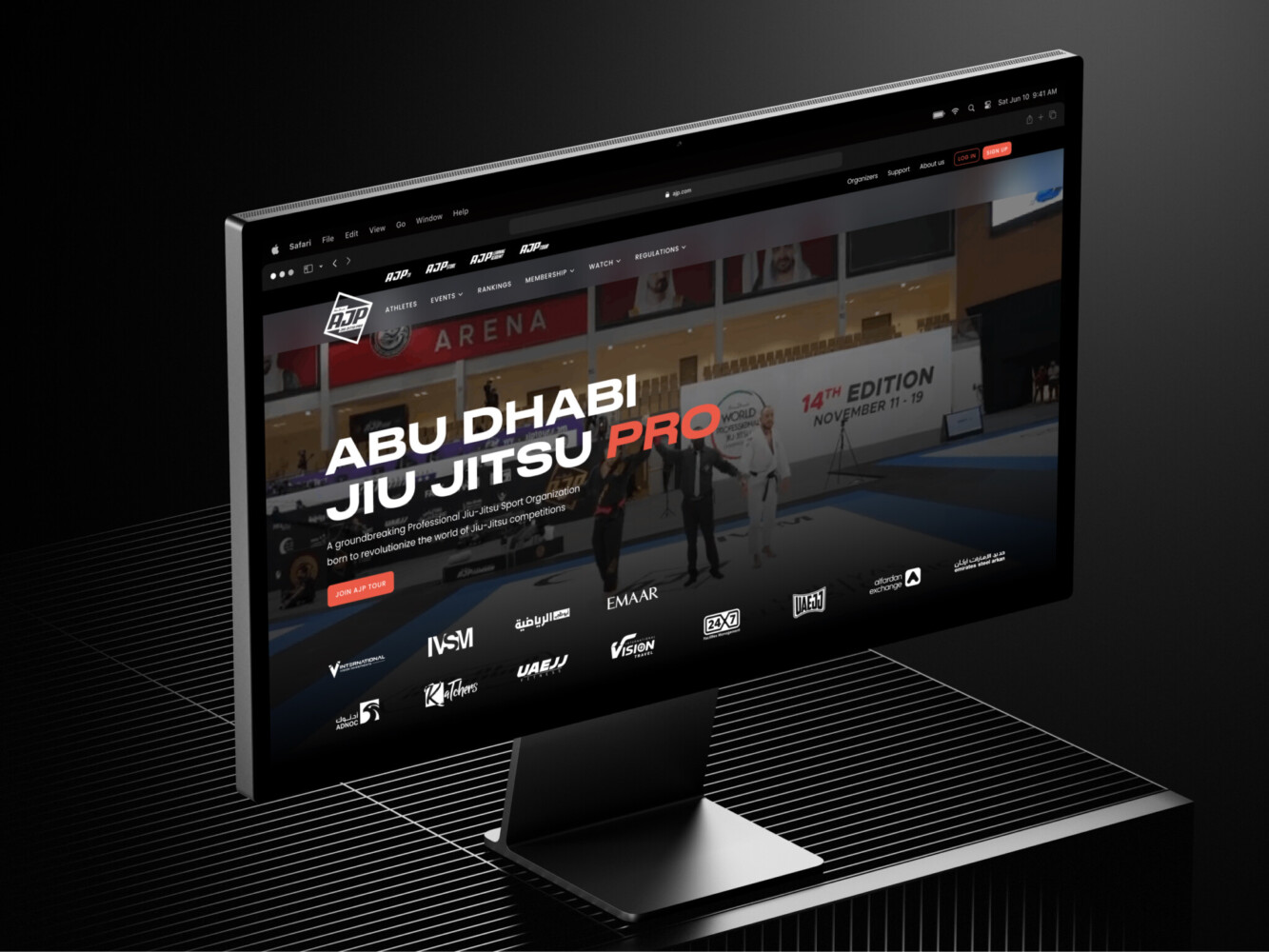
AJP website by Shakuro
Final Thoughts
Fan engagement app development is a marathon, not a sprint. Too many teams try to run before they can walk, launching with a bloated feature set that nobody uses. Start small. Pick the one or two things that actually solve a pain point for your fans. Maybe it’s just seamless ticketing and real-time stats. Get that right. Make it bulletproof. That’s your useful first release. Everything else is noise until you’ve nailed the basics.
Once your fan engagement app is live, don’t just set it and forget it. Watch how fans use it. Where do they click? Where do they drop off? What features do they ignore? Let their behavior guide your next steps. If they’re not using the polls, maybe they want more video content. If they’re complaining about load times, fix the infrastructure. It’s a conversation, not a monologue. The best apps evolve because they listen.
If you’re thinking about taking this step, or if you’re stuck in the middle of a messy build, let’s talk. Reach out to Shakuro. We can help you cut through the noise and build something that actually matters to your fans. No pressure, just a chat.
FAQ
How long does fan engagement app development take?
A lean MVP for a single club usually takes 3 to 4 months. A complex league-wide platform with video and heavy integrations takes 6 to 9 months or more. The timeline depends mostly on integrations with ticketing, CRM, payments, and data feeds, and on event-day load testing, which has to happen before the big game, not during it.
How much does a fan engagement app cost?
A basic MVP for a small local club with news, schedules, and simple digital tickets costs about $50k–$100k. A mid-tier app for a professional team with live scores, basic stats, digital rewards, forums, and ticketing and CRM integrations ranges from $150k–$300k. A league-wide platform with live video, AR, and advanced gamification costs $500k to millions. Budget 20–30% of the build cost per year for maintenance.
Can one fan engagement app work for several teams?
Yes, but it’s tricky. You need a multi-tenant architecture where each team has its own branded space while the backend is shared. The hard part isn’t the tech; it’s the politics: who owns the data, who gets the fans’ email addresses, and who controls the content. Settle these questions with the league and the clubs before development starts.
Which features belong in a fan engagement app MVP?
Keep the MVP simple: digital tickets that work offline, live scores, basic news, push notifications, and a simple profile setup. If the app doesn’t work without a feature, it’s in. Everything else, such as gamification, AR experiences, and complex stores, can wait for phase two, because each of these adds complexity and operational work.
How do live scores get into a sports fan app?
Nobody types them in manually. You buy a license from a data provider like Sportradar or Opta, and their API pushes the data to your backend, which sends it to the app. It’s automated, but it costs money: providers charge based on usage, coverage, and sometimes the league level, and second-by-second player stats cost a premium. There is always a slight delay.
Should a fan engagement app be native or cross-platform?
For a single club with a tight budget that needs iOS and Android quickly, cross-platform is usually the right start: it is cheaper, faster to maintain, and handles news, polls, and tickets well. A league with massive scale, heavy AR, complex animations, or live video streaming may need native development for peak performance, at the cost of maintaining two codebases.
What should a team measure after launching a fan engagement app?
Ignore downloads. Track activation (the first meaningful action, such as buying a ticket), repeat use between games, notification opt-in and click-through rates, and ticket or merch sales linked to the app. For paid tiers, watch membership retention, and on event days, monitor uptime, error rates, and load times. Pick the three or four metrics that match your current goals.
Related reading