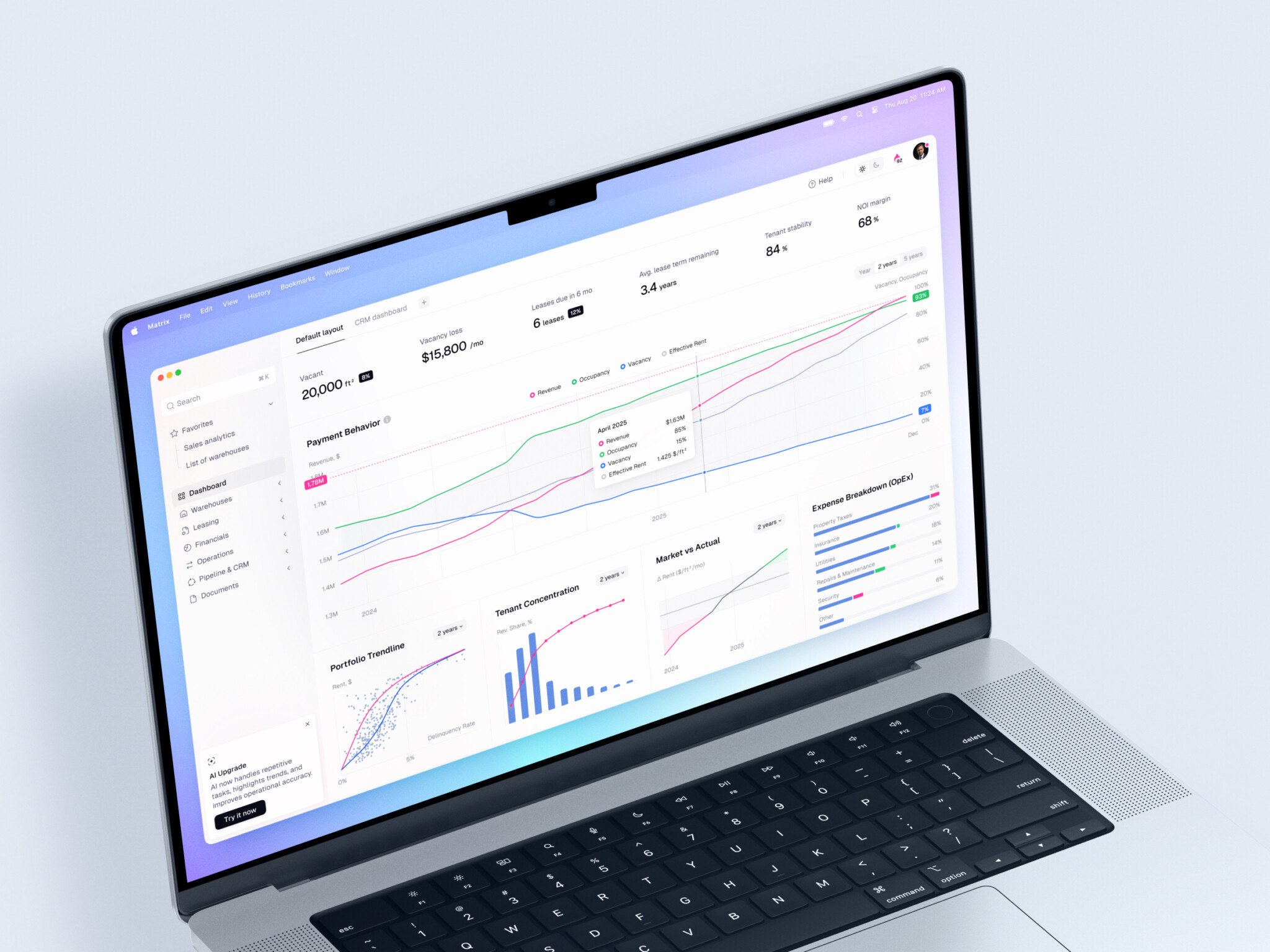
SaaS MVP development means building the first usable version of a software-as-a-service product: just enough functionality to solve one problem for one group of users and learn from their real behavior. A very small MVP with a simple workflow, basic UI, standard auth, and little integration work may take a few months. A B2B platform with dashboards, permissions, data imports, billing, and admin tools takes longer, and real-time features, AI, or compliance move the budget again.
A SaaS MVP differs from a regular one. Even without paid plans on day one, it needs account states and billing logic, workspaces and permissions for team accounts, onboarding that shows value quickly, and analytics from the first release. Skipping these usually means rebuilding core architecture later, which is what separates SaaS app development from a quick prototype.
This guide covers what a SaaS MVP is, the core features to prioritize, how to choose a tech stack, the development process and MVP product design, cost drivers and timeline, common mistakes, and when it makes sense to bring in a development team.
What Is a SaaS MVP?
It is the first usable version of a software-as-a-service product. It includes just enough functionality to solve a specific problem for a specific group of users, then collect useful feedback from real behavior.
That last part matters. Real behavior is different from opinions.
People will tell you they like an idea. They may even smile during a demo. Then the product launches and nobody finishes onboarding. Or they use one feature every day and ignore the big dashboard everyone was proud of. This is annoying, of course, but it is also gold. A good SaaS MVP gives you that information before you spend six more months building the wrong thing.
For example, imagine a project management SaaS for small architecture studios. The full dream might include resource planning, client portals, invoicing, project templates, time tracking, file approvals, AI summaries, and a mobile app. The MVP may only need team accounts, project boards, deadline tracking, client comments, and one clean report. Not because the rest is useless. It might be very useful later. But the first question is smaller: will studios actually manage active projects in this tool instead of spreadsheets and chat threads?
That is the job of the MVP. It narrows the question so the answer becomes visible.
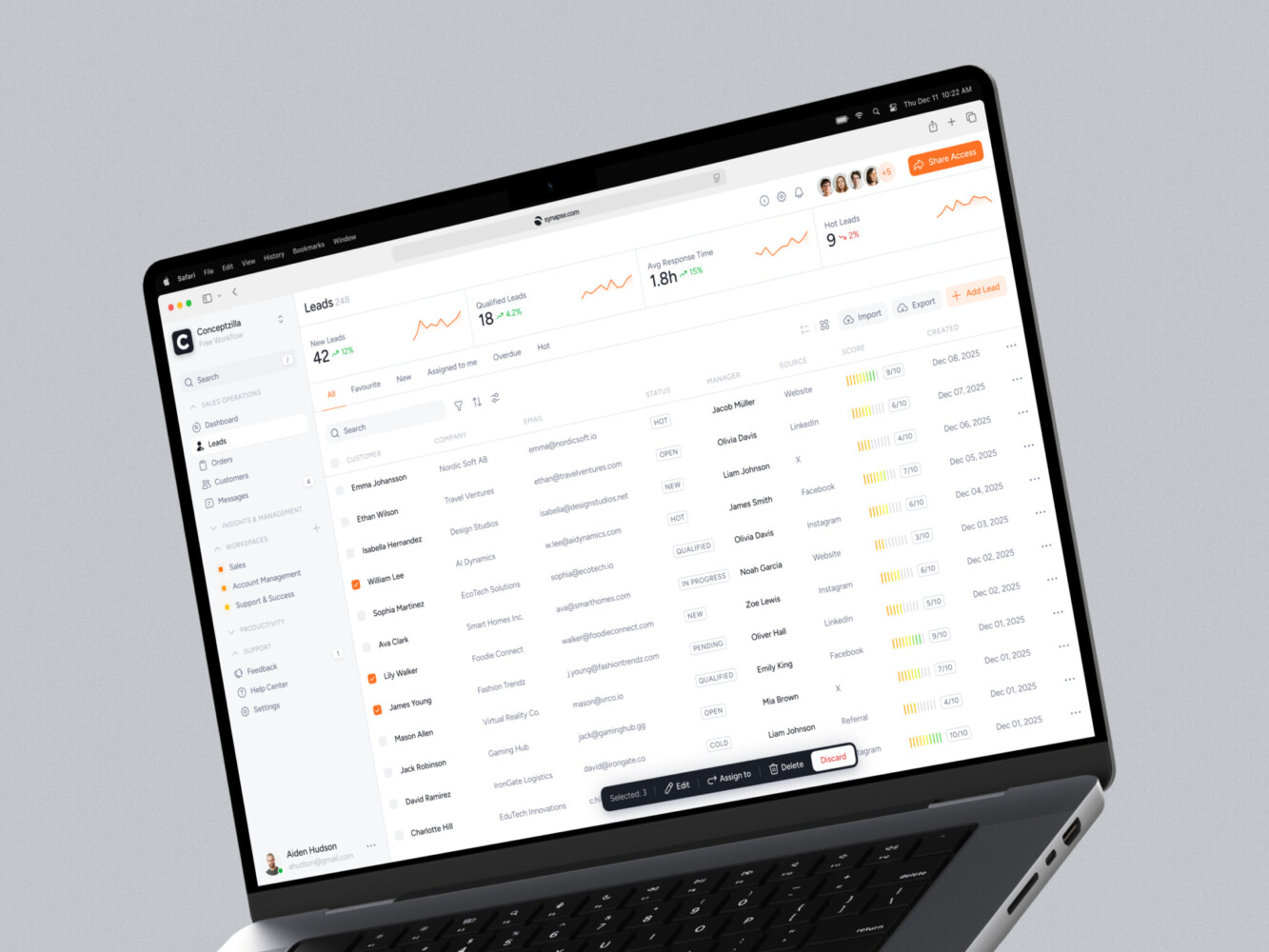
CRM dashboard design by Conceptzilla
Why SaaS MVP Development Is Different From a Regular MVP
SaaS products have a few special headaches. The kind that creep into planning meetings and make estimates wobble.
First, there is the subscription model. Even if you do not launch paid plans on day one, the product usually needs account states, plan limits, trials, billing logic, or at least a structure that can handle them later.
Second, SaaS often means multiple users inside one company account. That brings in workspaces, permissions, invitations, admin roles, and sometimes multi-tenancy. If you ignore this too long, you may end up rebuilding core architecture when the first team customer shows up.
Third, SaaS products live and die by onboarding and retention. A marketplace can sometimes survive with messy first-time use because users come for inventory. A SaaS tool has to prove its value quickly. If users do not reach the “oh, that’s useful” moment, they leave.
And one more point: SaaS MVPs need measurement. You need to know who signs up, where they get stuck, which feature brings them back, and whether the product is becoming part of someone’s workday. Without that, you are steering by mood.
Core SaaS MVP Features to Prioritize
Feature lists can get out of hand fast, so let us stay practical. Most early SaaS products need a few building blocks before anything fancy makes sense.
Authentication and Account Setup
Users need to create an account, sign in, reset a password, and manage basic profile details. For B2B products, you may also need company accounts, team invitations, and workspace switching.
This sounds boring. It is also one of those areas where boring is good. Authentication should be clear, secure, and forgettable. If people are thinking too much about logging in, something is off.
One Core Workflow
Every strong MVP has one central workflow. A user uploads a file and gets a report. A manager creates a project and assigns tasks. A trader checks market signals. A customer success lead sees risky accounts.
When teams try to build five core workflows at once, the product often becomes shallow everywhere. The better move is to make one workflow feel complete enough that users can rely on it.
This is especially true when you build SaaS MVP products for busy professionals. They do not care that the roadmap is ambitious. They care that today’s task gets done without friction.
Subscription or Payment Path
Not every SaaS MVP needs full billing at launch, but it should at least have a plan for it. Stripe, Paddle, Chargebee, and similar tools can handle a lot of billing complexity, but the product still needs to understand plan limits, account status, trial logic, and access rules.
For some MVPs, a manual sales-led payment flow is enough in the beginning. That is fine. Actually, for early B2B SaaS, it can be the best option because it keeps you close to customers. Just do not pretend billing architecture does not exist. It will come knocking.
Admin Panel or Internal Dashboard
Founders often forget the admin side until support emails start arriving. Then everyone wants to inspect users, change account states, review failed actions, export data, or check activity logs.
A simple internal dashboard really helps. It does not need to be beautiful. It needs to be useful and safe. Who signed up? Which workspace failed payment? Did an import finish? What error did the user hit? These little answers save a lot of time.
Role-Based Permissions
If your product serves teams, permissions are not optional for long. Admins, members, viewers, billing owners, analysts, editors, and external guests may all need different access.
For an MVP, keep roles simple. Two or three roles are usually enough. But design the model carefully, because permission logic tends to spread through the product like spilled coffee. Once it gets everywhere, changing it is tedious.
Basic Analytics and Activation Tracking
In SaaS MVP development, you need to know what users do after signup. Not in a creepy way. In a product survival way.
Track activation events, onboarding completion, feature usage, drop-off points, retention, errors, and plan movement. Even a modest setup with tools like PostHog, Mixpanel, Amplitude, Google Analytics, or custom event tracking can give the team better questions.
For example, are users leaving because they do not understand setup or because the main output is not useful? Those are completely different problems.
Essential Integrations
Most SaaS products connect to something: email, payment systems, calendars, CRMs, spreadsheets, data warehouses, storage, messaging tools, or industry-specific APIs.
The mistake is trying to integrate with everything. Early on, choose the one or two integrations that make the core workflow valuable. If customers keep asking for the same next integration, great. Now you have a signal.
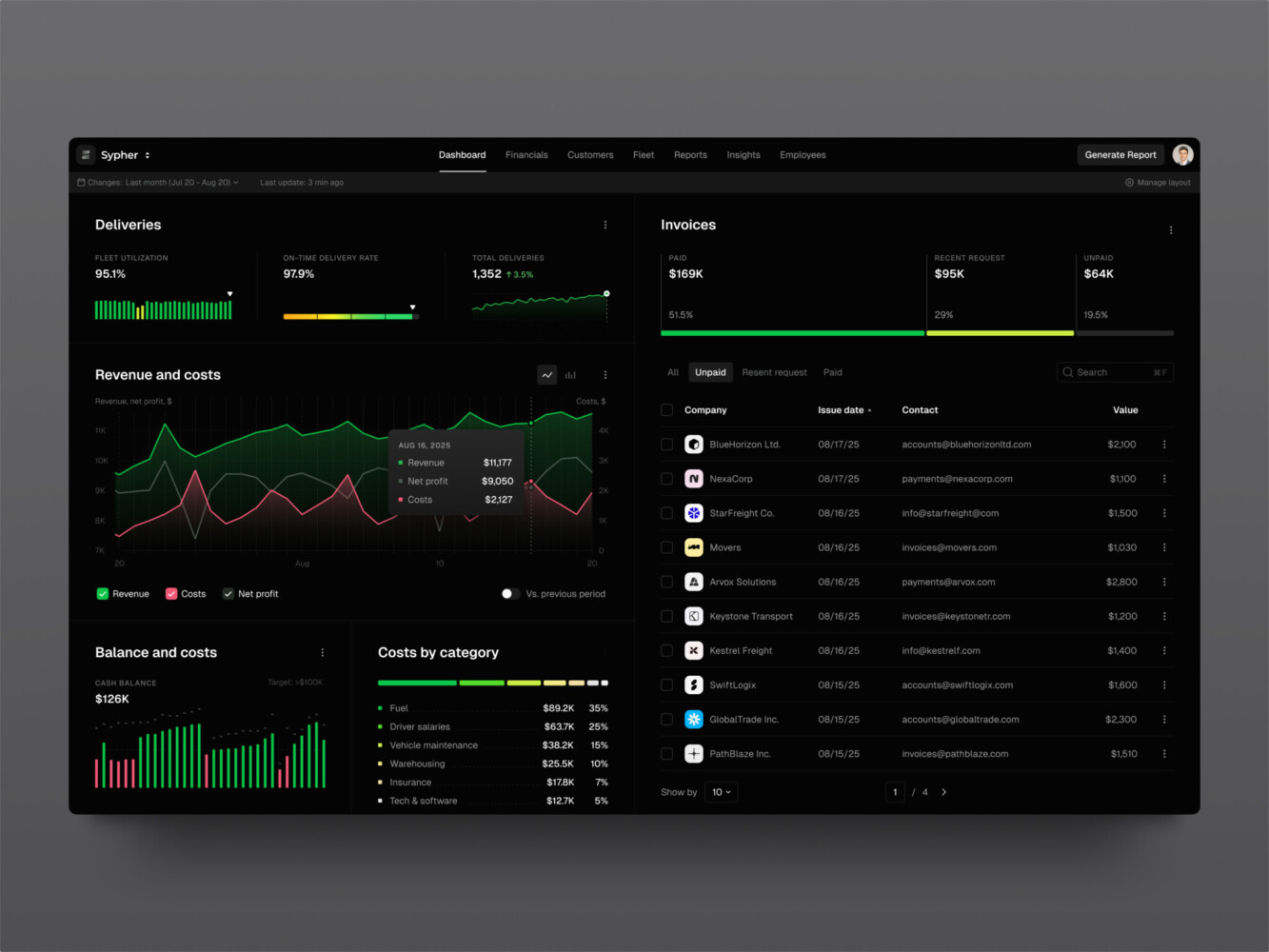
SaaS analytics platform by Shakuro
SaaS MVP Tech Stack: What to Choose Early
The best tech stack is not always the newest one. Early products benefit from tools that are predictable, easy to hire for, and strong enough to handle growth without turning the codebase into a knot.
For the frontend, React and Next.js are common choices because they support fast development, good performance, and flexible product interfaces. Vue or Svelte can also work well if the team already has experience there.
For the backend, Node.js, Python, Ruby on Rails, .NET, and Java all have their place. The best option depends on the product’s logic, integrations, performance needs, and the team that will maintain it. Rails, for instance, can be lovely for moving fast on a business app. Python makes sense when data workflows or AI features are part of the product. .NET is often a good fit for enterprise-heavy systems. There is no universal winner, no matter what social media says on a Tuesday.
Databases usually start with PostgreSQL or MySQL. PostgreSQL is a strong default for many SaaS products because it handles relational data well and can stretch pretty far before you need specialized storage. For real-time, search-heavy, or analytics-heavy products, you may add Redis, Elasticsearch, ClickHouse, BigQuery, Snowflake, or another tool later.
As for cloud hosting, the SaaS MVP tech stack can include AWS, Google Cloud, Azure, Render, Fly.io, Vercel, Heroku, or something else. Pick based on the team’s skills, compliance needs, deployment workflow and budget. Early-stage teams should not spend three weeks designing infrastructure for a product that has twelve beta users. Still, the foundation should not block normal scaling either.
The practical stack usually includes:
- Frontend framework
- Backend framework
- Relational database
- Authentication provider or custom auth
- Billing tool
- Analytics tool
- Email service
- Logging and monitoring
- CI/CD pipeline
- Error tracking
- Cloud storage if files are involved
The quiet trick is to choose tools that make the next six months easier, not tools that look impressive in a pitch deck.
The SaaS MVP Development Process
MVP work feels faster when the process is clear. It does not need to be heavy. In fact, too much process can smother a small product. But the team should know what happens first, what decisions are still open, and what “ready” means.
1. Product Discovery and Validation
Start by defining the customer, the problem, the current workaround, and the moment when the user feels pain. This is where interviews, competitor research, workflow mapping, and quick experiments help.
I like asking a slightly blunt question here: what happens if the product does not exist? If the answer is “people are mildly inconvenienced,” be careful. If the answer is “teams lose revenue, waste hours, make bad decisions, or cannot complete a key job,” now we have something.
2. UX and UI Design
Good MVP design is not decoration. It is how the team finds the shortest useful path through the product.
Wireframes, clickable prototypes, and user flow diagrams help reveal awkward logic before developers build it. This is much cheaper than discovering during QA that onboarding needs four extra screens and the dashboard makes no sense to new users.
Our MVP design services frame this around discovery, information architecture, prototyping, visual design, user testing, launch, and support. That sequence is sensible because it treats design as a way to reduce risk, not just make screens look nice.
3. Architecture Planning
Even a small MVP needs architecture decisions. How will tenants be separated? How will roles work? Where will billing status live? What data needs audit logs? Which integrations are critical? What happens if an external API fails?
This is where a product can stay lean without being flimsy. You do not need enterprise architecture for a beta. You do need a structure that will not collapse the first time a paid customer invites their team.
4. Core Development
SaaS MVP development should focus on the core workflow, supporting infrastructure, and only the features needed to validate the product. The phrase “only the features needed” sounds simple. It is not. People get attached to ideas. Founders especially. I say that with affection.
A good team keeps asking, “Does this help the user reach value sooner? Does it help us learn something important? Does it reduce launch risk? If not, maybe it belongs in the backlog.
5. Integrations
Integrations often take longer than expected, mostly because external systems have their own moods. API limits, odd data formats, webhook delays, incomplete docs, expired tokens, duplicate records. You know, the usual.
For an MVP, integrate deeply where the product needs it and lightly everywhere else. A manual import may be enough for early validation. A polished two-way sync might be version two.
6. Testing and Validation
Testing should cover the main user path, permission logic, billing states, key integrations, security basics, performance, and the admin side. If the product handles sensitive data, add extra attention to access control and logging.
User validation should not wait until the product feels perfect. Bring beta users in when the core workflow is usable. Watch where they slow down. Listen to what they say, but pay even more attention to what they do.
7. Deployment and Iteration
Launch is not the finish line. It is more like the first serious check-in with reality.
After release, track activation, retention, support issues, conversion, feedback, and usage patterns. Then improve the product in small, deliberate steps. The best teams keep a tight loop: ship, measure, learn, adjust. Not glamorous, but it works.
When we provide SaaS MVP development services, we put post-launch support, monitoring, real user behavior, and iteration directly into the process. That is important because early software usually needs careful tending after it meets real users.
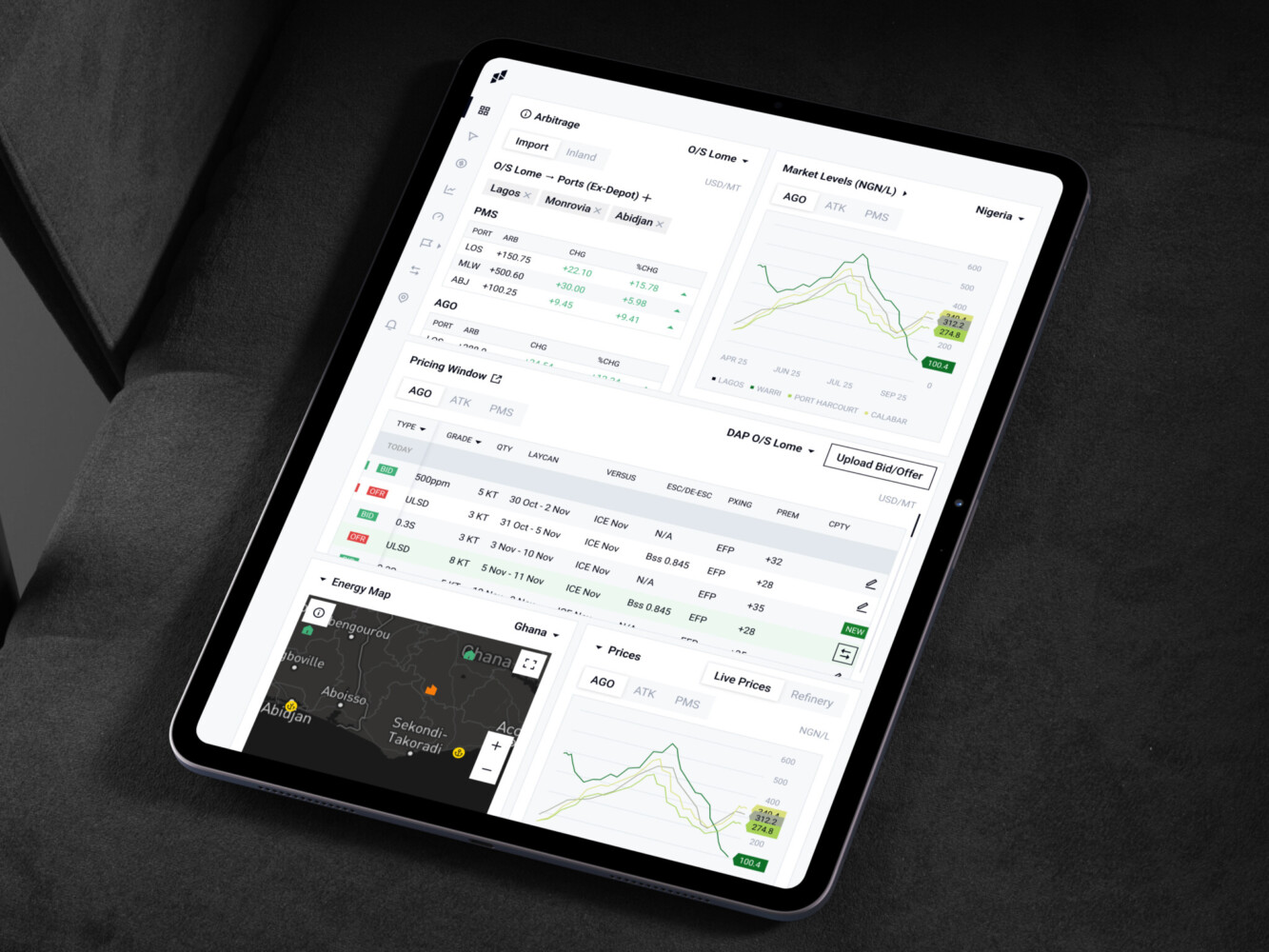
Owari platform by Shakuro
SaaS MVP Development Cost and Timeline
The cost depends on scope, design complexity, integrations, team setup, compliance needs, and how much of the product has already been validated.
A very small MVP with a simple workflow, basic UI, standard auth, and little integration work may take a few months. A more complex B2B platform with dashboards, permissions, data imports, billing, admin tools, and custom workflows takes longer. If you add real-time features, AI, compliance requirements, or heavy data visualization, the budget moves again.
The main cost drivers are usually:
- Number and complexity of user roles
- Dashboard and reporting depth
- Billing and subscription rules
- Third-party integrations
- Data migration or import logic
- Security and compliance requirements
- Custom UX/UI design
- Admin tools
- Testing depth
- Post-launch support
Some SaaS MVP development costs are hidden, for example, unclear scope. Many teams spend more money debating features mid-development than they would have spent on proper discovery at the start. It feels faster to skip planning. Sometimes it is. For about two weeks. Then the bill arrives in confusion.
If budget is tight, cut scope before cutting quality in the core workflow. A smaller product that works is better than a larger one that makes users nervous.

Common SaaS MVP Mistakes
The same mistakes show up again and again. Different products, different markets, same little traps.
Building Too Many Features
This is the classic one. The team wants the MVP to impress investors, please early users, match competitors, and express the whole vision. Understandable. Dangerous.
An MVP should show the direction, not contain the entire map.
Treating Onboarding As an Afterthought
If users do not understand what to do first, they will not hang around admiring the architecture. Onboarding should guide users to value quickly. That may mean a checklist, sample data, templates, smart defaults, a short setup wizard, or a friendly empty state.
Skipping Analytics
Without analytics, feedback becomes anecdotal. The loudest customer wins. Or the founder’s favorite idea wins. Neither is ideal.
Track the main activation path from day one. You do not need twenty dashboards. You need the few signals that tell you whether the product is becoming useful.
Ignoring Permissions
Permissions feel like a later problem until the first team account asks why a junior user can see billing data. Then it becomes today’s problem.
Keep permissions simple, but do not skip them if your product is built for teams.
Choosing Architecture Only for Speed
In MVP development for startups, speed matters. Of course it does. But if every decision is optimized for this Friday, the product may punish you in three months.
The better approach is lightweight architecture with sensible boundaries. Build the MVP fast, but leave room for normal growth.
Waiting Too Long to Talk to Users
Teams sometimes protect the product from users until it is “ready.” I get the instinct. It feels safer. But a SaaS MVP exists to learn, and learning needs real people.
Show the product earlier than is comfortable. Not when it is broken, obviously. But before the team had polished every corner.
Our Experience in SaaS MVP Development
Examples make this topic less abstract. Two Shakuro case studies are useful here because they show different sides of SaaS-like product complexity.
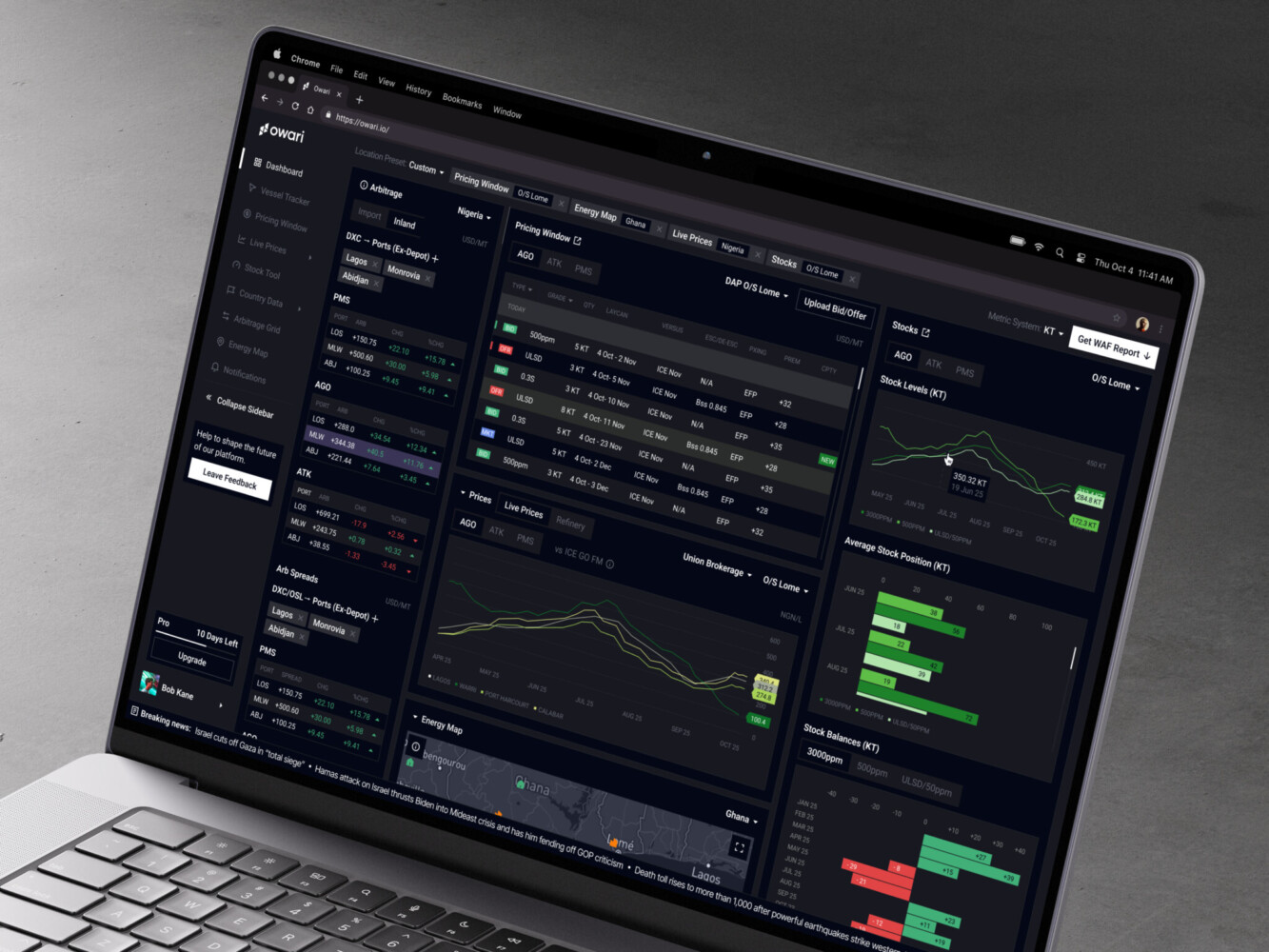
Owari is a digital trading platform for West African oil and gas markets. The product helps traders, brokers, and analysts work with complex market data, real-time algorithms, table-heavy interfaces, dashboards, stock levels, country data, vessel tracking, and maps. What I like about this case is that it shows a very real MVP problem: the product has to make complicated data usable without flattening the business logic.
That is hard. A dashboard is not automatically useful because it has charts on it. The information has to be structured in a way that matches how professionals make decisions. Many subscription products eventually face this same challenge: lots of data, different user groups, and a need for clear interfaces that do not make people work too hard.
Symbolik Social is different. It is a social platform for financial analysts, connected to a serious analytics context. The case includes Next.js, React, TypeScript, Tailwind CSS, Radix UI, C#, ASP.NET Core, MySQL, WebSockets, RabbitMQ, Auth0, logging, monitoring, background tasks, and AWS S3. That list sounds technical, because it is. But the interesting part is not the stack by itself. It is the product need behind it: real-time interactions, groups, profiles, content creation, messaging, watchlists, and secure collaboration for a specialized audience.
For founders, the lesson is pretty simple. A SaaS MVP can be narrow and still technically serious. You do not need every feature at launch, but you do need the right foundation for the product’s core behavior.
Owari dashboard by Shakuro
When to Hire a SaaS MVP Development Company
Some teams should build in-house. If you already have a strong product designer, backend engineer, frontend engineer, QA support, and someone who can own product decisions, great. Keep it close.
But hiring a SaaS MVP development company can make sense when the idea is clear enough to build, yet the team does not have the time or skill mix to ship it well. This often happens with founders who have domain expertise but not a full product team. It also happens when an internal team is busy with the main business and cannot take on a new platform without burning out.
Outside help is especially useful when the product includes:
- Complex dashboards
- Multi-user workspaces
- Billing and subscriptions
- Sensitive data
- Real-time features
- Heavy integrations
- Investor deadlines
- UX-heavy onboarding
- A need to move from prototype to production
The point is not to outsource thinking. The best results happen when founders stay close to the product and the development team brings structure, design maturity, architecture, and delivery rhythm.
If you compare SaaS MVP development services, look beyond the portfolio screenshots. Ask how the team handles discovery, feature prioritization, technical tradeoffs, post-launch support, and awkward feedback. Especially awkward feedback. That is where product work gets real.
Shakuro works with SaaS products across MVPs, dashboards, admin panels, subscription products, workflow automation tools, and B2B platforms.
Final Thoughts
A SaaS MVP should not feel like a cheap product. It should feel like a focused one.
That is the line I would keep coming back to. The product can have fewer features. It can use manual steps behind the scenes. It can launch with one customer segment, one integration, or one main dashboard. That is fine. But the core workflow should be clear, reliable, and useful enough that real users come back.
The best MVPs leave the team with better questions. Which users activate fastest? What feature do they rely on? Where do they hesitate? What are they willing to pay for? What should be built next, and what can quietly stay in the backlog?
You agree, that sounds good, doesn’t it? Not easy, but good.
If you are planning a SaaS product and need help shaping the first version, you can tell Shakuro about your project. Bring the idea, the rough edges, and even the messy notes. That is usually where the useful work starts.
Real-time data dashboard by Shakuro
FAQ
How long does it take to build a SaaS MVP?
A simple SaaS MVP with one workflow, basic UI, and standard auth may take a few months. A more complex B2B SaaS product with dashboards, roles, billing, integrations, and admin tools takes longer. The timeline depends less on the word “MVP” and more on the number of decisions the product needs to support.
How much does SaaS MVP development cost?
SaaS MVP development cost depends on scope, design depth, integrations, security requirements, team structure, and post-launch support. The biggest drivers are user roles, dashboards, billing rules, data migration, and admin tools. The safest way to control cost is to define one core workflow, validate it early, and avoid building full-product features before users prove they need them.
What features should a SaaS MVP include?
Most SaaS MVPs need authentication, one core workflow, account or workspace logic, basic permissions, admin tools, analytics, and essential integrations. Billing may be fully automated or partially manual at first, depending on the sales model. Onboarding matters too: a checklist, sample data, or templates help users reach value quickly.
What is the best tech stack for a SaaS MVP?
The best stack is the one your team can build, maintain, and scale without drama. Common choices include React or Next.js for frontend, Node.js, Python, Rails, or .NET for backend, PostgreSQL for the database; and standard tools for auth, billing, analytics, monitoring, and deployment.
Should startups build a SaaS MVP in-house or hire a development company?
Build in-house if you already have the right people and enough time. Hire a development company if you need product strategy, UX/UI design, engineering, QA, architecture, or delivery support to get from idea to launch without overloading your team. Outside help pays off most with complex dashboards, multi-user workspaces, billing, sensitive data, and heavy integrations.
What are the most common SaaS MVP mistakes?
The most common SaaS MVP mistakes are building too many features, treating onboarding as an afterthought, skipping analytics, ignoring permissions for team accounts, choosing architecture only for speed, and waiting too long to show the product to users. Each one either delays learning or forces the team to rebuild core parts a few months after launch.
How do you compare SaaS MVP development companies?
When comparing SaaS MVP development companies, look beyond portfolio screenshots. Ask how the team runs discovery, prioritizes features, handles technical tradeoffs, supports the product after launch, and deals with awkward feedback. Check case studies with similar complexity, such as data-heavy dashboards, multi-user workspaces, or subscription billing.
Related reading