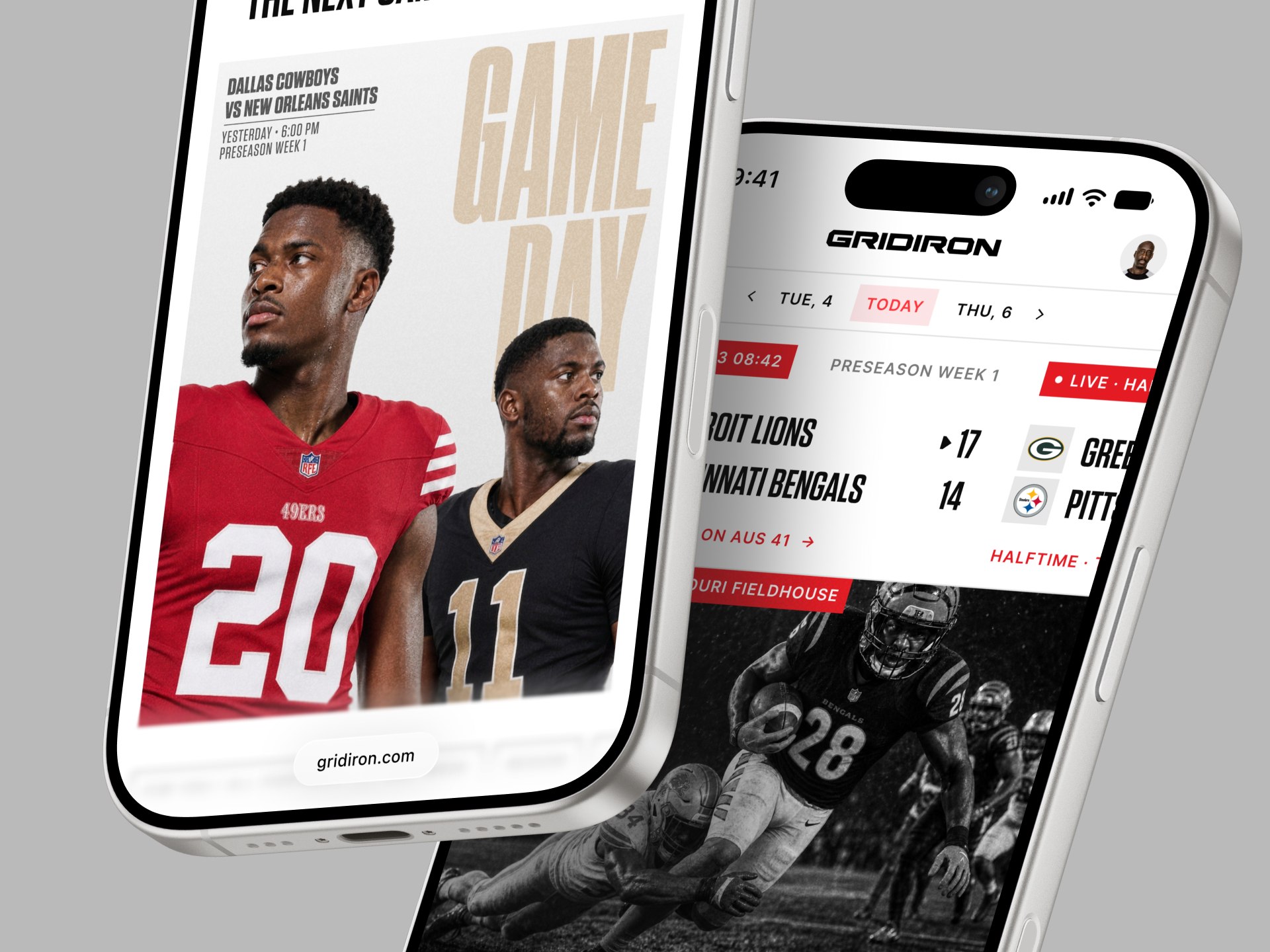
A live sports product often sounds fairly simple in the first planning meeting. Stream the match, display the score, and send a few notifications. Sounds manageable, right? Then the awkward questions begin. Who owns the broadcast rights? How low does the delay need to be? What happens when 200,000 fans open the app after a controversial goal?
For decision-makers, the difficult part of live sports app development is rarely one feature or technology. It is getting a lot of moving parts to behave like one product. Video delivery, live statistics, mobile apps, subscriptions, content protection, regional restrictions, analytics, and admin tools all have to work together. Usually under pressure, too. Sports traffic is not polite or predictable. An app can sit quietly for hours and then face a huge spike the moment a final begins.
And honestly, users do not care how complicated the technology is. They want the stream to start quickly, the score to be correct, and the app not to freeze during penalties. Fair enough.
So, what does it actually take to build a live sports app that holds up on game day? In this article, we will look at the essential features, streaming architecture, technology choices, security requirements, development stages, and costs involved. We will also talk about the less glamorous problems that tend to appear late in the project, when they are much more expensive to fix.
Key Takeaways:
- Define your lane early: Don’t try to be a streaming service, a data tracker, and a social network all at once. Pick one core value proposition (video, stats, or community) and nail it before expanding.
- Rights come first: Never start technical planning until you’ve secured broadcasting and data licenses. Your entire architecture—from geo-blocking to DRM—depends on what you’re legally allowed to show.
- Latency is the enemy: Whether it’s video buffering or delayed stats, any lag breaks the immersion. Invest in low-latency protocols (like Low-Latency HLS) and robust CDN strategies to keep users in the moment.
- Plan for the peak: Sports traffic isn’t gradual; it’s explosive. Use pre-warming, aggressive caching, and rigorous load testing to ensure your app doesn’t crash during the championship final.
- Start small, validate fast: Build an MVP focused on one sport or league. Prove that users want your specific experience and are willing to pay for it before you invest millions in a multi-sport platform.
What Is a Live Sports App?
At its core, it is any product that brings the game to your screen in real time. But “real time” can mean a lot of different things. For some, it’s just the final score popping up on a lock screen. For others, it’s a 4K stream of the match with zero lag. And for a growing chunk of users, it’s about betting, predicting outcomes, or chatting with other fans while the play unfolds.
Let’s break it down, because if you’re building one, you need to know which lane you’re in.
First, you’ve got live-score apps. These are the utilitarian ones. Think of them as the news ticker of the sports world. They’re lightweight, data-heavy, and focused on speed. The user intent here is simple: “Did my team win?” or “Who scored?” You don’t need massive bandwidth for this, but you do need rock-solid data feeds. If your score is wrong, you’re done.
Then there are fan engagement platforms. These are less about the raw broadcast and more about the community. They might have live scores, sure, but the main draw is the interaction. Polls, trivia, second-screen experiences, and maybe even fantasy leagues integrated directly into the match view. The goal here isn’t just to inform; it’s to keep the user sticky. To make them feel like part of the crowd, even if they’re sitting on their couch alone.
And finally, the big one: live sports streaming apps. This is what people usually mean when they type “app to watch sports live” into Google. They want the video. They want the commentary. They want the full experience. But here’s the thing—building a streaming app is a whole different beast compared to a score tracker. You’re dealing with massive video infrastructure, DRM (digital rights management), latency issues, and huge bandwidth costs. It’s not just an app; it’s a broadcasting network in your pocket.
Many teams try to boil the ocean by building all three at once. It rarely works well. You end up with a bloated app that does everything okay but nothing great.
When users search for ways to watch sports live, they’re often looking for convenience and reliability. They don’t care about your tech stack. They just want the game to start when the whistle blows, not five minutes later because your server choked. Understanding this distinction—between delivering data, fostering community, or streaming video—is crucial. It dictates your tech choices, your budget, and honestly, your chances of survival in a pretty crowded market.
So, ask yourself: What are we really building? A scoreboard? A social hub? Or a TV station? Because trying to be all three from day one is a quick way to burn through your runway.
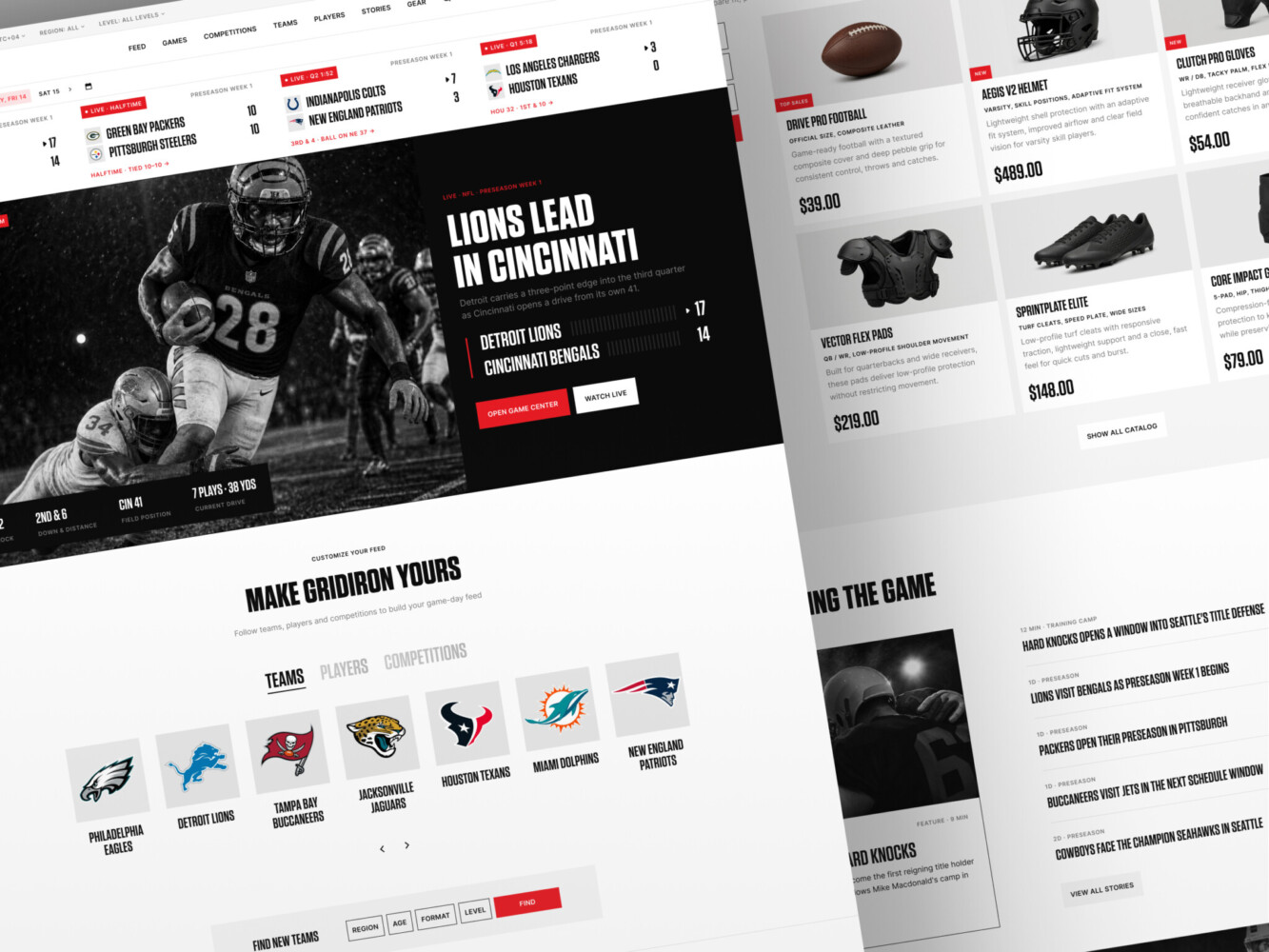
American Football Platform Design Concept by Shakuro
Types of Live Sports Apps You Can Build
When you’re sketching out ideas for a live sports app, it’s tempting to think you need to do it all. But in reality, the type of product you choose dictates almost everything else—your budget, your legal headaches, and even how you keep the lights on. Let’s look at the main categories, because they’re not created equal.
Live Video Streaming Platforms
This is the heavyweight champion of complexity. If you’re building a live stream sports app, you’re essentially becoming a broadcaster. You’re dealing with massive video infrastructure, content delivery networks (CDNs), and strict digital rights management (DRM).
The architecture here needs to handle millions of concurrent viewers without buffering. Licensing is a minefield. You can’t just stream a game; you need the rights, which are often sold by region or even by device type. Monetization usually leans on subscriptions or pay-per-view, but the development scope is huge. You’re not just building an app; you’re building a TV network.
Live Score and Statistics Apps
On the other end of the spectrum, you’ve got the data-driven apps. These are lighter on bandwidth but heavy on speed. The goal is to get the ball-in-net notification to the user faster than they can hear the crowd roar from their neighbor’s house. Architecture here is all about efficient data pipelines and low-latency APIs. Licensing is simpler—you’re buying data feeds from providers like Sportradar or Genius Sports, not broadcasting rights. Monetization is often ads or premium data tiers. It’s easier to build, but the market is crowded, so you need a unique angle.
League and Team Apps
These are official products, usually built in partnership with a specific league or club. Think of the NBA app or your local football club’s official platform. The scope here is broad: tickets, merchandise, news, and maybe some live content. The big advantage? You have direct access to branding and often exclusive content. The downside? You’re at the mercy of the organization’s bureaucracy. Development is often a mix of internal teams and external agencies. Monetization is diverse, from ticket sales to fan memberships.
Fan Engagement and Second-Screen Apps
These live sports apps don’t necessarily show the game, but they enhance the experience. Imagine watching a match on TV while using an app to vote on “Man of the Match,” predict the next corner kick, or chat with other fans. The architecture focuses on real-time interactivity and social features. Licensing is minimal since you’re not showing copyrighted video. Monetization can be tricky—often through brand partnerships or gamified rewards. It’s a great way to build community, but you need to solve the “why would I open this?” problem.
Sports News and Highlights Platforms
This is for the fan who missed the game but wants the gist. Short-form video, key moments, and expert analysis. The technical challenge here is video processing and quick turnaround times. You need to ingest footage, edit it, and push it out fast. Licensing is still a factor, as highlights are often controlled by rights holders. Monetization is typically ad-based. It’s less about real-time latency and more about content velocity.
Fantasy and Prediction Apps
Fantasy sports have exploded, and for good reason. They turn passive viewing into active participation. Users draft teams, make trades, and compete against friends. The architecture is complex because you’re managing user-generated data, complex scoring algorithms, and real-time updates based on live stats. Licensing involves data feeds again, but also potentially gambling regulations if real money is involved. Monetization is strong here, with entry fees, premium leagues, or betting integrations.
See the pattern? Each type of live stream sports app pulls you in a different direction. A streaming platform demands massive infrastructure investment. A fantasy app requires robust backend logic. A news app needs a sharp editorial engine. You can’t use the same blueprint for all of them. Knowing which lane you’re in helps you avoid over-engineering—or worse, under-preparing for the specific challenges of your chosen model.
How Live Sports Apps Make Money
At the end of the day, even the sleekest app needs a way to pay for those expensive servers and developer salaries.
There’s no one-size-fits-all model here. It really depends on who you are and what you’re offering. But generally, you’re looking at a mix of these streams:
- Subscriptions: The classic “Netflix for sports” approach. Users pay a monthly or yearly fee for access. This works great if you have exclusive content or a massive library of games. It provides predictable revenue, which investors love.
- Pay-per-view (PPV): Perfect for big-ticket events. Think boxing matches or championship finals. You don’t need a huge subscriber base; you just need enough people willing to drop $20 for one night. It’s high-risk, high-reward.
- Advertising: If you’re not charging the user, you’re selling their attention. Banner ads, pre-roll videos, sponsored overlays during the stream. It’s tricky in live sports because you don’t want to interrupt the action, but done right, it can be lucrative.
- Sponsorships: This is bigger than just ads. It’s about integrating a brand into the experience. Maybe a betting company sponsors the “prediction of the match” feature, or a car brand powers the “speed stats” overlay. It feels less intrusive and more native.
- Premium Statistics: For the hardcore fans. Basic scores are free, but if you want advanced analytics, heat maps, or player tracking data, you pay up. This is a nice upsell for data-heavy apps.
- Memberships: Often used by clubs or leagues. It’s not just about watching; it’s about belonging. Early ticket access, exclusive merch discounts, member-only forums. It builds loyalty, which is harder to quantify but incredibly valuable.
- In-app purchases: Mostly for fantasy or gaming elements. Buying extra lives, premium picks, or cosmetic items for your avatar. It’s small transactions, but they add up.
Now, how does this change live sports app development?
If you’re a broadcaster, you’re likely leaning on subscriptions and PPV. You already have the content; you’re just digitizing the distribution. Your goal is to migrate cable subscribers to digital ones.
For leagues and clubs, it’s more about memberships and sponsorships. They’re not just selling a game; they’re selling the identity. They might use the app to drive ticket sales or merchandise, so the app itself might not need to be directly profitable if it boosts the main business.
For sports media startups, it’s a different ballgame. You probably don’t have exclusive rights. So you’re relying on advertising, affiliate marketing (like linking to betting sites), or maybe a freemium model with premium stats. You have to be scrappier. You have to find niches the big players ignore.
And here’s the critical part I mentioned earlier: you cannot plan your tech stack until you know your rights.
Quite often, startups build incredible streaming architectures, only to realize they can’t actually show the game in half their target markets because of licensing restrictions. Or they build a global app, but their data feed license is only for North America. It’s a nightmare.
So, before you hire a single developer, get your legal team on the phone. Confirm what you can show, where you can show it, and how you’re allowed to monetize it. Because building a beautiful app that you’re legally forbidden to launch is a special kind of pain.

A website for a golf club by Conceptzilla
Essential Features of a Live Sports Streaming App
Registration, Profiles, and Personalized Feeds
You might think, “Why bother with registration? Just let them watch!” But you need to know who your users are. Not just for marketing, but for personalization. A fan of the Lakers doesn’t want to see highlights from the Premier League front and center. They want their team.
Profiles allow users to save favorites, set preferences, and pick up where they left off across devices. That personalized feed is the hook. It keeps them coming back even when their favorite team isn’t playing. It’s smart curation, not just a random list of games.
Live Video With Adaptive Bitrate Playback
This is the non-negotiable. If the video buffers during a penalty kick, you’ve lost trust. Forever.
Adaptive bitrate streaming (ABR) is the tech that adjusts the video quality based on the user’s internet speed. If they’re on a shaky 4G connection, the quality drops slightly to keep the stream smooth. If they’re on Wi-Fi, it goes up to 4K. It’s invisible to the user, but it’s the difference between a five-star review and a one-star rant. You also need low-latency protocols here. We’re talking seconds, not minutes, behind real-time.
Real-Time Scores, Statistics, and Commentary
Video is great, but data is king. Fans love stats. Who has possession? What’s the pass completion rate? Is this player having their best game ever?
Your app needs to overlay this data seamlessly. Maybe it’s a small ticker at the bottom, or maybe it’s an interactive layer they can tap into. And commentary? Whether it’s audio or text-based, it adds context. It makes the user feel like they’re in the stadium, not just staring at a screen.
Schedules, Reminders, and Push Notifications
Life gets busy. People forget when games start. That’s where your notification engine comes in. But don’t just spam them. Be smart. Send a reminder 15 minutes before kickoff. Alert them when their favorite player scores. Let them know when a match they follow is about to start.
It’s about being helpful, not annoying. And giving users control over what they get notified about is key. If they only care about finals, don’t wake them up for a friendly match at 3 AM.
Search, Filters, Replays, and Highlights
Not everyone can watch live. Maybe they’re at work or in a different time zone. So, you need a robust library of past content. But finding a specific goal from three weeks ago shouldn’t be a treasure hunt.
Good search and filtering are essential for live sports app development. Filter by team, player, date, or competition. Highlights need to be quick to load and easy to share. Social sharing is huge for organic growth. If a user can clip an amazing play and post it to Twitter in two clicks, you’ve just gained free marketing.
Subscriptions, Payments, and Access Control
If you’re charging for content, this part needs to be frictionless. No one wants to jump through hoops to pay you money. Support multiple payment methods, handle recurring subscriptions smoothly, and make cancellation easy (yes, really—it builds trust).
Access control is the bouncer. It ensures that only paying users can see the premium streams. It needs to be secure to prevent piracy, but not so aggressive that it locks out legitimate users who are just trying to log in from a new device.
Polls, Chats, Reactions, and Fan Communities
This is where the “social” in social sports comes alive. Watching alone is fine, but watching with thousands of other fans? That’s electric.
Live chats, even if moderated heavily, create a sense of belonging. Polls (“Who will win?”) keep users engaged during slow moments. Reactions (like hearts or fire emojis) let people express emotion without typing. It turns a passive viewing experience into an active event.
Admin Panel, CMS, Analytics, and Moderation
This is the stuff users never see, but you’ll live in it. Your content management system (CMS) needs to be easy for your editors to update schedules, upload highlights, and manage news.
Analytics are your compass. Who’s watching? For how long? Where do they drop off? You need this data to improve. And moderation? Crucial. Live chats can get toxic fast. You need tools to ban users, filter keywords, and keep the community safe.
Live Sports App Architecture
If you’re building an app to watch sports live, the architecture is where the rubber meets the road. It’s not just about writing code; it’s about orchestrating a symphony of data and video that has to stay in perfect time, millions of times a second.
Let’s map out the journey of that video signal, because it’s more complex than most people realize.
It starts with video acquisition. You’re getting the raw feed from the stadium—maybe via satellite, fiber, or even 5G backpacks for remote locations. That raw signal is huge and unmanageable for the internet. So, it goes into encoding and transcoding. Here, you’re compressing the video into different qualities (1080p, 720p, 480p) so it can travel over various network speeds.
Next is packaging. The video is chopped into tiny chunks and wrapped in a format the internet understands. These chunks sit at the origin server, which is the single source of truth for your content. But you can’t serve millions of users from one server. That’s where the CDN (Content Delivery Network) comes in. It copies those chunks to servers all over the world, so a user in London gets the video from a server in London, not one in New York. Finally, it hits the player on the user’s device, which reassembles the chunks into a smooth stream.
But video is only half the story. You also have live scores and stats.
This is where your backend gets busy. You’re pulling data from sports data providers (like Sportradar or Perform). This data hits your backend APIs, which then need to push it to thousands of users instantly. You can’t use standard HTTP requests here; they’re too slow. You need WebSockets or similar real-time protocols to keep a persistent connection open.
To handle the load, you’ll use caching (like Redis) to store frequently accessed data and event queues (like Kafka or RabbitMQ) to manage the flow of information without crashing your servers. If a goal is scored, that event needs to ripple through your system faster than the video does, or users will see the celebration before they see the ball hit the net.
Now, let’s talk protocols, because this is a key decision for your tech lead.
- HLS (HTTP Live Streaming): The industry standard. It’s reliable and works on almost every device. But it has a lag of 10–30 seconds. For most broadcasts, that’s fine.
- Low-Latency HLS: An improvement on the standard, bringing lag down to 2–5 seconds. It’s a good middle ground for most live stream sports app projects.
- DASH (Dynamic Adaptive Streaming over HTTP): Similar to HLS but more open-source friendly. It’s great for flexibility but requires more work to ensure compatibility across all devices.
- WebRTC: The speed king. It offers sub-second latency. But it’s heavy on bandwidth and battery, and it doesn’t scale as easily as HLS. Use this if you’re building a betting app where every second counts, but be prepared for higher infrastructure costs.
And don’t forget the safety nets when doing live sports app development.
Multi-CDN delivery is a must. If one CDN goes down (and they do), you switch to another automatically. Failover streams ensure that if your primary encoder fails, a backup kicks in immediately. Monitoring isn’t optional; you need to know if a stream is buffering in Tokyo before your users start tweeting about it.
Finally, there’s the tricky part: synchronization. You need the video, the audio, the live stats, and the chat to all align. If the chat is talking about a goal that hasn’t happened on screen yet, the magic is broken. This requires precise timestamping and careful engineering to keep everything in lockstep.
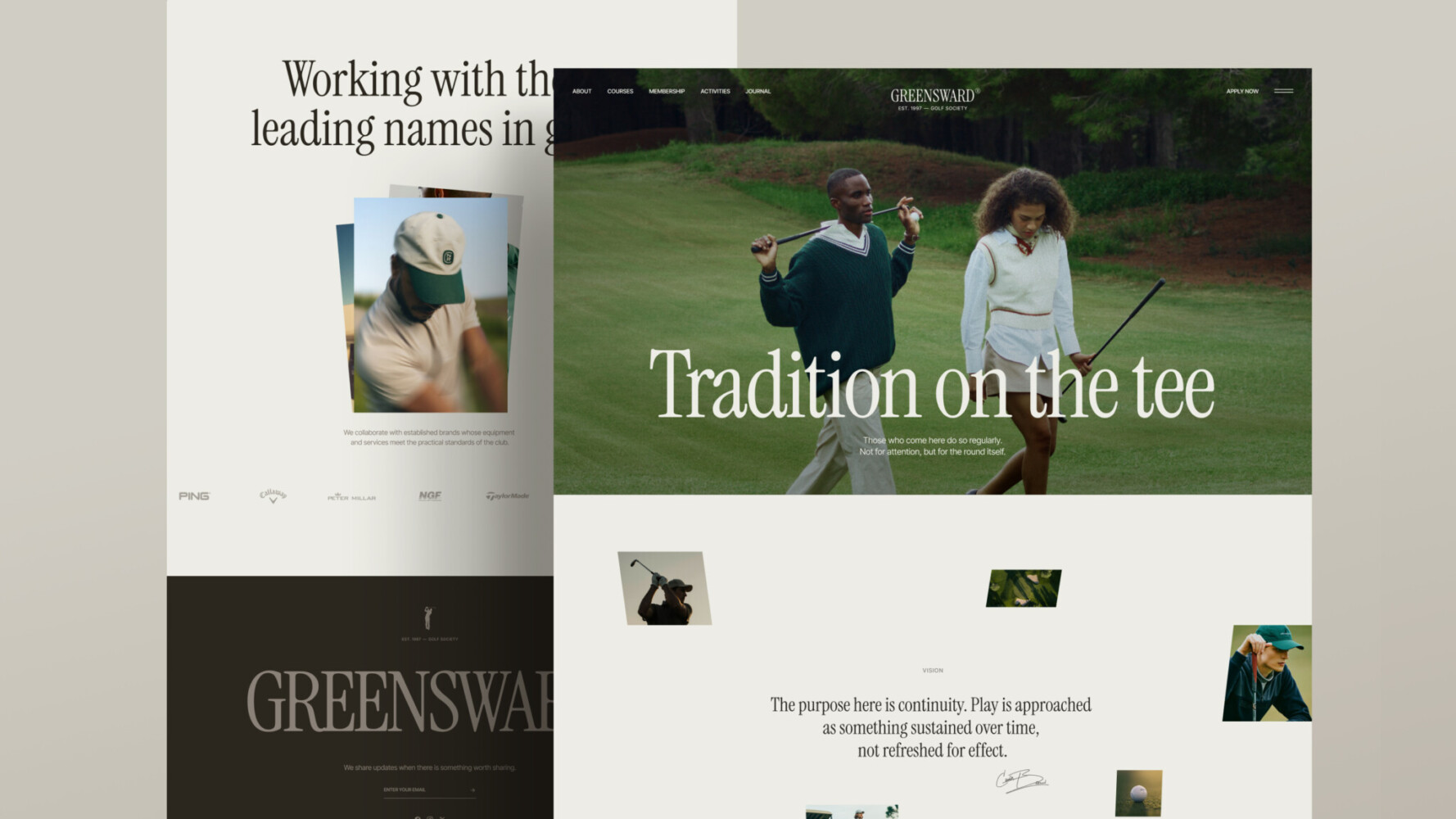
Greensward website by Shakuro
Choosing the Right Technology Stack
Choosing a tech stack for a live sports product feels a bit like picking a starting lineup. You don’t just pick the most famous names; you pick the ones that play well together and fit your specific game plan.
Let’s break it down, because there’s no “best” stack—only the best one for your team and your goals.
Mobile: The Front Line
If you’re going native, Swift for iOS and Kotlin for Android are the gold standards. They give you the best performance and access to every single device feature. But let’s be real—maintaining two separate codebases is expensive and slow.
That’s where cross-platform tools like Flutter or React Native come in. For a lot of sports apps, 95% of the performance is indistinguishable from native. Unless you’re doing some heavy-duty AR filters or complex video processing on the device itself, cross-platform is often the smarter move for startups. It lets you launch on both stores at once, which is huge for momentum.
Web and Admin Tools: The Control Room
For your web player and especially your internal admin panels, React is still the king. It’s got a massive ecosystem, and finding developers who know it is easy. If you need better SEO for your public-facing pages (like news articles or highlight reels), Next.js is the way to go. It’s basically React with superpowers for server-side rendering. Your editors will thank you when the CMS loads instantly.
Backend: The Engine
Here’s where teams get stuck trying to use the “coolest” new language for live sports app development. Don’t do that. Use what your delivery team can support reliably.
- Node.js is great for real-time features because it handles thousands of concurrent connections (like live chats) very well.
- Python is a powerhouse if you’re doing heavy data analytics or AI-driven recommendations.
- .NET is rock-solid for enterprise-level stability, especially if you’re already in the Microsoft ecosystem.
Honestly? If your team knows Python, stick with Python. A well-written app in a familiar language beats a poorly written one in a trendy language every time.
Infrastructure: The Backbone
You’re not building this on a server in your closet. You need:
- Cloud Storage (like AWS S3) for all those VOD clips and highlights.
- CDN to deliver that content globally.
- Redis for caching. When a million people hit “refresh” at halftime, Redis keeps your database from exploding.
- PostgreSQL for your core user data and subscriptions. It’s reliable and handles complex queries well.
- Event Streaming (like Kafka) to handle the firehose of live stats and scores.
- Monitoring and Autoscaling. You need to know when things break before users do, and your servers need to automatically grow during the World Cup final and shrink back down on a random Tuesday.
Streaming Services: Build vs. Buy
This is the biggest decision you’ll make. Do you build a custom video pipeline using tools like FFmpeg and manage your own encoders? Or do you use a managed service like Mux, AWS MediaLive, or Wowza?
Building it yourself gives you total control and can be cheaper at a massive scale. But it’s a nightmare to maintain. You’re now a video engineering company. Managed services cost more per minute of video, but they handle the encoding, packaging, and DRM for you. For most founders, especially early on, buying is the best option. It lets you focus on the product, not the pixel-pushing.
What Should Drive Your Decision?
Don’t just copy what Netflix does. Look at:
- Latency: Do you need sub-second speed for betting? Then you might need WebRTC and a more complex stack.
- Audience Size: Are you expecting 100 users or 100,000? Your infrastructure needs to match.
- Target Devices: Are you mostly mobile? Then prioritize Flutter or React Native.
- In-House Expertise: This is the big one. If your team loves JavaScript, don’t force them to learn Go just because it’s fast. Speed of development matters more than micro-optimizations in the beginning.
It’s about finding the balance between “cool tech” and “tech that actually ships.”
The Live Sports App Development Process
So, you’ve got the idea. You’ve got the passion. Now comes the part where things get real: the actual build.
It isn’t a straight line. It’s more like a relay race where you’re passing the baton between legal teams, designers, and engineers, all while trying not to drop it. Here’s how it usually goes down, step by step.
1. Discovery, Audience Research, and Rights Assessment
You need to know who you’re building for and what you’re allowed to show. Many projects stall for months because someone assumed they could stream a certain league, only to find out the rights were locked up by a competitor until 2030.
This phase is about asking the hard questions. Who is your user? The casual fan who just wants highlights? Or the hardcore bettor who needs stats in milliseconds? And crucially, do you actually have the legal right to broadcast this content? If the answer is no, stop. Everything else is wasted effort.
2. MVP Definition and Monetization Planning
Don’t try to build the Super Bowl app on day one. Define your Minimum Viable Product (MVP). What is the one thing your app must do perfectly? Maybe it’s just streaming one specific league with basic scores.
At the same time, figure out how you’ll make money. Are you going subscription-only? Ad-supported? If you wait until after launch to figure this out, you’ll end up ripping out half your codebase to insert payment gateways or ad slots. Plan it now.
3. UX/UI Design and Interactive Prototyping
Sports fans are emotional. They’re fast. They’re distracted. Your design needs to reflect that. This isn’t the time for minimalist, empty white space. You need high contrast, clear typography, and intuitive navigation.
Create interactive prototypes. Click through them. Pretend you’re watching a game while your kid is screaming in the background. Can you still find the “mute” button? Can you see the score clearly? If not, go back to the drawing board. Good design in sports is about clarity under pressure.
4. Streaming and Real-time Architecture Planning
This is the technical backbone. Your engineers need to decide on the protocols (HLS, WebRTC, etc.), the CDN strategy, and how you’ll handle the data firehose.
You’re mapping out how video gets from the stadium to the phone and how scores get from the data provider to the screen. This is where you decide if you’re building a custom pipeline or using a managed service. Get this wrong, and your app to watch sports live will buffer during the most important moment of the season.
5. Mobile, Backend, and Admin Development
Now the builders get to work. Your mobile team is crafting the iOS and Android apps, ensuring they feel native and smooth. Your backend team is building the APIs, the user management systems, and the logic that ties everything together.
And don’t forget the admin panel! Your content team needs a way to upload highlights, manage schedules, and ban toxic users without calling a developer. If the admin tool is clunky, your content will suffer.
6. Data, Payment, Analytics, and Video Integrations
This is the “plumbing” phase. You’re connecting the pipes.
- Data: Integrating with providers like Sportradar to pull in live stats.
- Payments: Setting up Stripe or Apple Pay so users can actually give you money.
- Analytics: Installing tools like Firebase or Mixpanel to track what users are doing.
- Video: Connecting your player to the CDN and ensuring DRM (digital rights management) is working so pirates can’t steal your stream.
It’s tedious, but it’s what makes the app function as a business, not just a demo.
7. Functional, Load, Playback, and Device Testing
You think it works? Prove it.
- Functional Testing: Does every button do what it’s supposed to?
- Load Testing: What happens when 50,000 people log in at once? Does the server crash?
- Playback Testing: Does the video start quickly? Does it adapt to bad Wi-Fi?
- Device Testing: Does it work on an old iPhone 8? A cheap Android tablet? A brand-new Samsung?
In my experience, this is where most bugs hide. You’ll find that your live sports streaming app looks great on a Pixel 7 but breaks completely on a three-year-old iPad. Fix it now, not after launch.
8. Store Submission, Launch, Monitoring, and Iteration
Apple and Google have strict rules, especially for apps with live video and payments. Submit early. Expect rejections. It’s part of the game.
Once you’re live, the real work begins. Monitor your servers. Watch your analytics. Read the reviews. You’ll find things you missed. Users will ask for features you never thought of. That’s okay. Live sports app development is never really “done.” It’s a cycle of listening, fixing, and improving.

Golf club website by Conceptzilla
Security, Compliance, and Content Protection
In the world of live sports, you’re dealing with two types of valuable assets: user data and copyrighted video. Protecting both is non-negotiable.
Authentication and Access Control
You need to know exactly who is logging in. Standard username/password combos are okay, but adding Multi-Factor Authentication (MFA) for admin accounts is a must.
Role-based access control (RBAC) is also key. Your intern shouldn’t have the same permissions as your lead engineer. Limit access to what people actually need to do their jobs. For payments, use established gateways like Stripe or Braintree. Never, ever store credit card numbers on your own servers. It’s a liability nightmare.
Protecting the Video: The Holy Grail
This is where things get technical. If you’re streaming live sports, you are a target for pirates. They will try to steal your stream and rebroadcast it for free. Here’s how you stop them:
- DRM (Digital Rights Management): This is the encryption layer that prevents users from downloading or recording your stream. It’s essential for any premium content.
- Signed URLs and Tokenized Playback: Instead of giving everyone a static link to a video, you generate a unique, time-limited link for each user. If they share it with a friend, the link expires before the friend can use it.
- Watermarking: You can embed invisible or visible watermarks into the video stream. If a pirated copy shows up online, you can trace it back to the specific user account that leaked it. It’s a powerful deterrent.
- Geo-restrictions: Remember those licensing deals we talked about? You need to enforce them. If you only have rights to show a match in France, you must block IP addresses from outside France.
- Concurrent-stream limits: Stop one person from paying for a subscription and sharing their login with their entire office. Limit the number of devices that can stream at once per account.
Compliance: The Rules of the Road
Beyond security, there’s compliance. And this varies wildly depending on where your users are.
- Privacy Obligations: GDPR in Europe, CCPA in California. You need to be transparent about what data you collect and give users the right to delete it.
- Age Restrictions: If your app includes betting or certain types of content, you need robust age verification. You can’t just ask, “Are you over 18?” and take their word for it.
- Accessibility: Sports are for everyone. Your app needs to support screen readers, closed captions, and high-contrast modes. It’s not just good ethics; in many places, it’s the law.
- Regional Broadcasting Requirements: Some countries have specific rules about how much live sports can be behind a paywall. You need to know these rules before you launch.
I’ll say it again because it’s so important: Content rights and data-provider licenses are product requirements, not post-launch details.
Your entire architecture—your geo-blocking, your DRM, your payment models—depends on what you’re legally allowed to do. If you build a global app and then find out you only have rights for one state, you’ve built a castle on sand.
So, involve your legal team from day one. Make security and compliance part of your core design, not an afterthought.
Scalability and Performance During Major Events
If you’re running an e-commerce site, traffic might ramp up slowly during a sale. But in live sports? It’s a cliff. One second, you have 10,000 users. The next, a goal is scored, or the championship final kicks off, and suddenly you have 500,000 people hitting your servers at the exact same millisecond.
If your architecture isn’t built for that specific kind of violence, you will crash. And when you crash during the Super Bowl, you don’t just lose users. You lose credibility.
So, how do you survive the peak?
Pre-warming and Autoscaling
You can’t wait for the traffic to hit before you add more servers. By then, it’s too late. You need “pre-warming.” This means you manually spin up extra capacity hours before a big match. You know the schedule. You know when the big games are. Use that knowledge.
Autoscaling helps, too. Your cloud infrastructure should be set to automatically add more resources when CPU usage spikes. But be careful—autoscaling has a lag. If the spike is too fast, you’ll still get crushed. That’s why pre-warming is your safety net.
Caching is Your Best Friend
Every time a user requests data, you shouldn’t have to ask your main database. That’s too slow. Use aggressive caching (like Redis or Cloudflare) to store static content—team logos, player bios, even recent scores. Serve those from the edge, close to the user. It takes the load off your core systems.
Load Testing: The Fire Drill
I cannot stress this enough: test championship-level traffic before your first high-profile broadcast.
Don’t guess. Simulate it. Use tools to flood your own system with millions of virtual users. See where it breaks. Does the login page fail? Do the notifications stop sending? Find the weak links now, when it’s just you and your team, not when 2 million fans are watching.
Graceful Degradation
Sometimes, despite your best efforts, things will go wrong. When they do, you need a plan for “graceful degradation.” This means if your live video stream fails, the live stream sports app shouldn’t just show a white screen. It should fall back to a live audio commentary, or a text-based play-by-play, or at least a static score update. Keep the user engaged, even if the primary experience is broken.
The Devil in the Details: Sync and Latency
During peaks, two things usually suffer: synchronization and latency.
- Sync Errors: If your video is 10 seconds behind real-time, but your live stats are only 2 seconds behind, users will see a “Goal!” notification before they see the ball hit the net. It ruins the immersion. You need to monitor this gap constantly.
- Notification Surges: When a goal is scored, everyone gets a push notification at once. This can overwhelm your notification provider (like Firebase or OneSignal). Queue these messages. Don’t send them all in one burst. Spread them out over a few seconds.
Unreliable Connections and Backup Feeds
Remember, your users aren’t all on fiber-optic Wi-Fi. Many are on shaky 4G or crowded public Wi-Fi. Your live sports app needs to handle packet loss gracefully. Don’t let the whole app freeze because one API call failed.
Always have a backup feed for the stream itself. If your primary encoder dies, switch to the secondary one automatically. Users might see a brief glitch, but they won’t miss the game.
Incident Response
Finally, have a plan for when things go wrong. Who do you call? How do you communicate with users? A simple “We’re experiencing high traffic, please bear with us” banner is better than silence.
Building for scale isn’t about hoping for the best. It’s about expecting the worst and planning for it. Because in live sports, there are no do-overs.
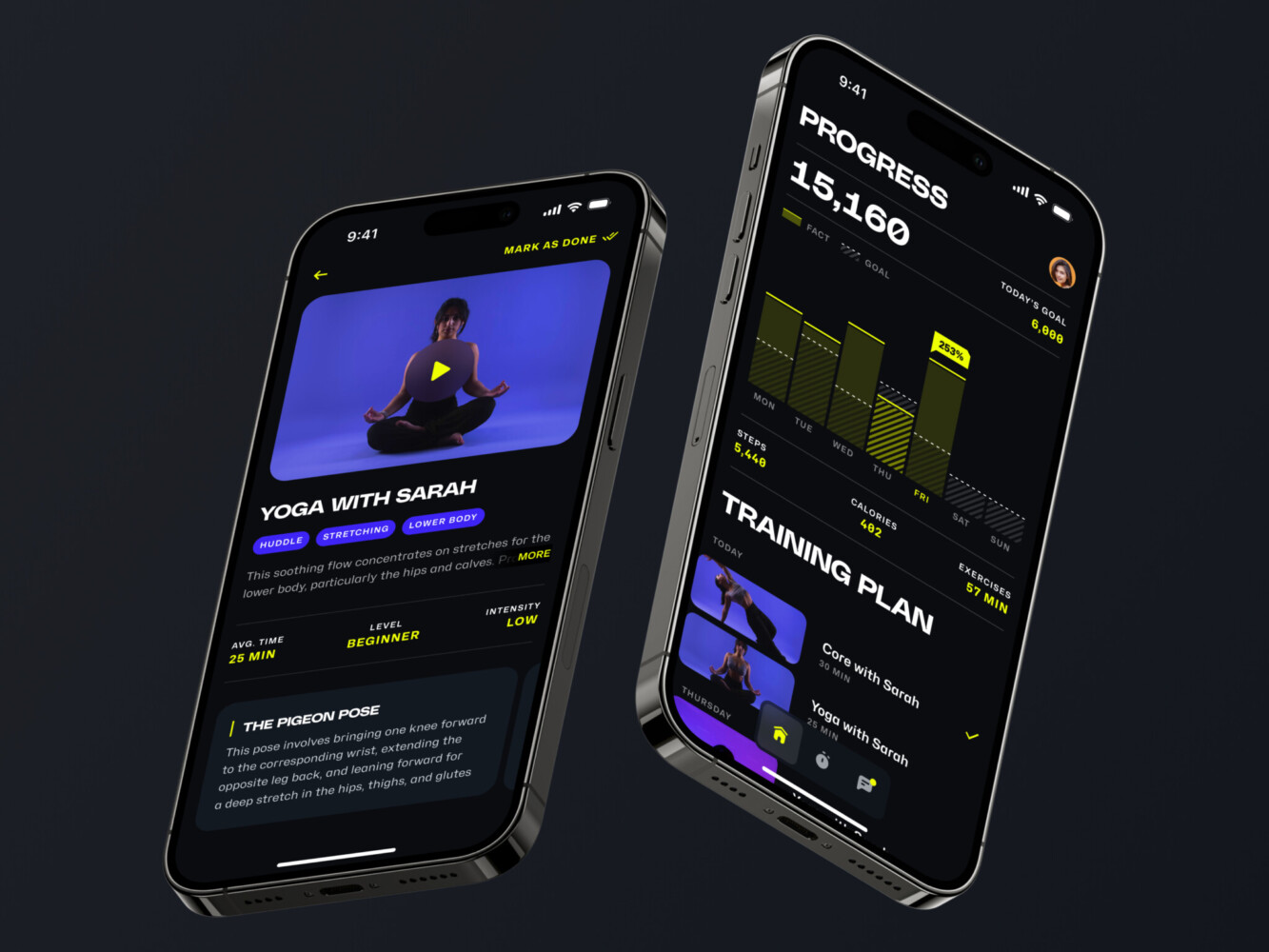
YogaMate app by Shakuro
How Much Does Live Sports App Development Cost?
The Lean MVP ($50,000 – $100,000)
This is your “proof of concept” tier. You’re likely using managed streaming services (like Mux or AWS MediaLive) rather than building custom video infrastructure. The focus is narrow: maybe one league, basic playback, simple user auth, and perhaps a free/ad-supported model to test demand. You’re not building fancy second-screen features or complex betting integrations yet. It’s functional, it streams, and it validates whether people actually want your product.
Mid-Level Product ($150,000 – $300,000)
Now you’re getting serious. This range covers apps with real-time scores, detailed statistics, subscription management, and fan engagement tools like polls or chat. You’re integrating multiple data feeds, implementing proper DRM, and probably supporting both iOS and Android natively or via a polished cross-platform build. The UX is custom, not templated. You’ve also budgeted for load testing and basic analytics. This is where most viable commercial sports apps land.
Enterprise or League-Wide Platform ($500,000 to Several Million)
If you’re building the official app for a major league or a global streaming service, welcome to the big leagues. Costs here explode because of scale and complexity. You’re dealing with multi-CDN strategies, sub-second latency for betting, advanced watermarking, geo-blocking across dozens of regions, and massive concurrent user loads. Custom video pipelines, dedicated DevOps teams, 24/7 monitoring, and enterprise-grade security audits all add up fast. And let’s not forget legal—licensing negotiations alone can cost more than some startups’ entire dev budgets.
What Actually Drives These Numbers?
It’s rarely just “coding hours.” The real cost drivers for a live stream sports app are often invisible:
- Video Rights & Data Feeds: Licensing can dwarf development costs. A premium data feed from Sportradar might run 20k-50k/year. Broadcast rights? Sky’s the limit.
- DRM & Content Protection: Implementing Widevine, FairPlay, or PlayReady isn’t plug-and-play. It requires specialized expertise and ongoing vendor fees.
- CDN Traffic: Video delivery is expensive. At scale, egress costs can hit tens of thousands per month during peak seasons.
- Platform Coverage: Supporting iOS, Android, web, smart TVs, and tablets multiplies QA and maintenance effort.
- Peak Concurrency Engineering: Designing for 10k users is cheap. Designing for 500k simultaneous viewers during the finals? That’s architectural overkill that costs real money.
- Custom UX & Moderation: Off-the-shelf chat widgets won’t cut it for live sports toxicity. Building safe, scalable community features takes time.
- Integrations: Payment gateways, analytics, CRM, ticketing systems—each adds complexity and testing overhead.
And remember: these are development costs. They don’t include ongoing hosting, licensing renewals, content moderation teams, or marketing. Budget for at least 20–30% of your initial build cost annually just to keep the lights on and the app secure.
The key takeaway? Don’t anchor to a single number. Anchor to your scope. Define what “minimum” really means for your business, then build from there.
Common Live Sports App Development Challenges
If you think building a live sports app is just about hiring good developers and buying some servers, I have some bad news. It’s actually a minefield of logistical, technical, and legal headaches.
Securing broadcast and sports-data rights
You can build the most beautiful app in the world, but if you don’t have the legal right to show the game or display the official stats, you’re dead in the water. Rights are often sold by region, by device, and by time period. Navigating this maze requires lawyers, not just engineers. And it’s expensive.
Keeping video, scores, and commentary synchronized
It sounds simple, but it’s technically brutal. If your video stream is 15 seconds behind real-time due to buffering, but your live score updates instantly via a fast API, users will see a “Goal!” notification long before they see the ball hit the net. It breaks the immersion. Keeping these elements in lockstep requires precise timestamping and clever engineering to delay data until the video catches up.
Handling unpredictable traffic spikes
Sports traffic isn’t linear. It’s explosive. One minute you’re handling a normal load; the next, a penalty kick happens and your server load triples in seconds. If your autoscaling isn’t tuned perfectly, your app crashes right when everyone is watching. And once you lose trust during a major event, it’s hard to get it back.
Supporting fragmented devices and network conditions
Your users aren’t all sitting on high-speed Wi-Fi with the latest iPhone. Some are on old Androids with cracked screens, using spotty 4G on a crowded train. Your app needs to look good and function smoothly across thousands of different device combinations and network qualities. Testing for this is a nightmare, but ignoring it means losing a huge chunk of your audience.
Controlling streaming infrastructure costs
Video is heavy. Every minute of 4K streaming costs money in bandwidth and processing. If you’re not careful, your CDN bill can eat your entire revenue margin. Optimizing bitrate ladders, using efficient codecs, and managing cache hits are constant battles to keep costs down without sacrificing quality.
Preventing account sharing and content piracy
People love to share passwords. And pirates love to steal streams. If one person buys a subscription and shares it with ten friends, you’re losing money. If someone rips your stream and puts it on an illegal site, you’re losing value. Implementing DRM, concurrent stream limits, and watermarking helps, but it’s an arms race you’re always fighting.
Maintaining reliable third-party integrations
You’re likely relying on outside providers for everything: data feeds, payment gateways, push notifications, and video encoding. If one of them has an outage, your app breaks. You don’t control their uptime, so you need robust fallbacks and monitoring to handle their failures gracefully.
Retaining users between games and seasons
Sports are seasonal. What do users do in the off-season? If your app is only useful during live matches, they’ll delete it to save space. You need to build features that keep them engaged year-round—news, highlights, fantasy leagues, or community discussions. Otherwise, you’re starting from zero every time a new season begins.
Our Experience With Sports Products
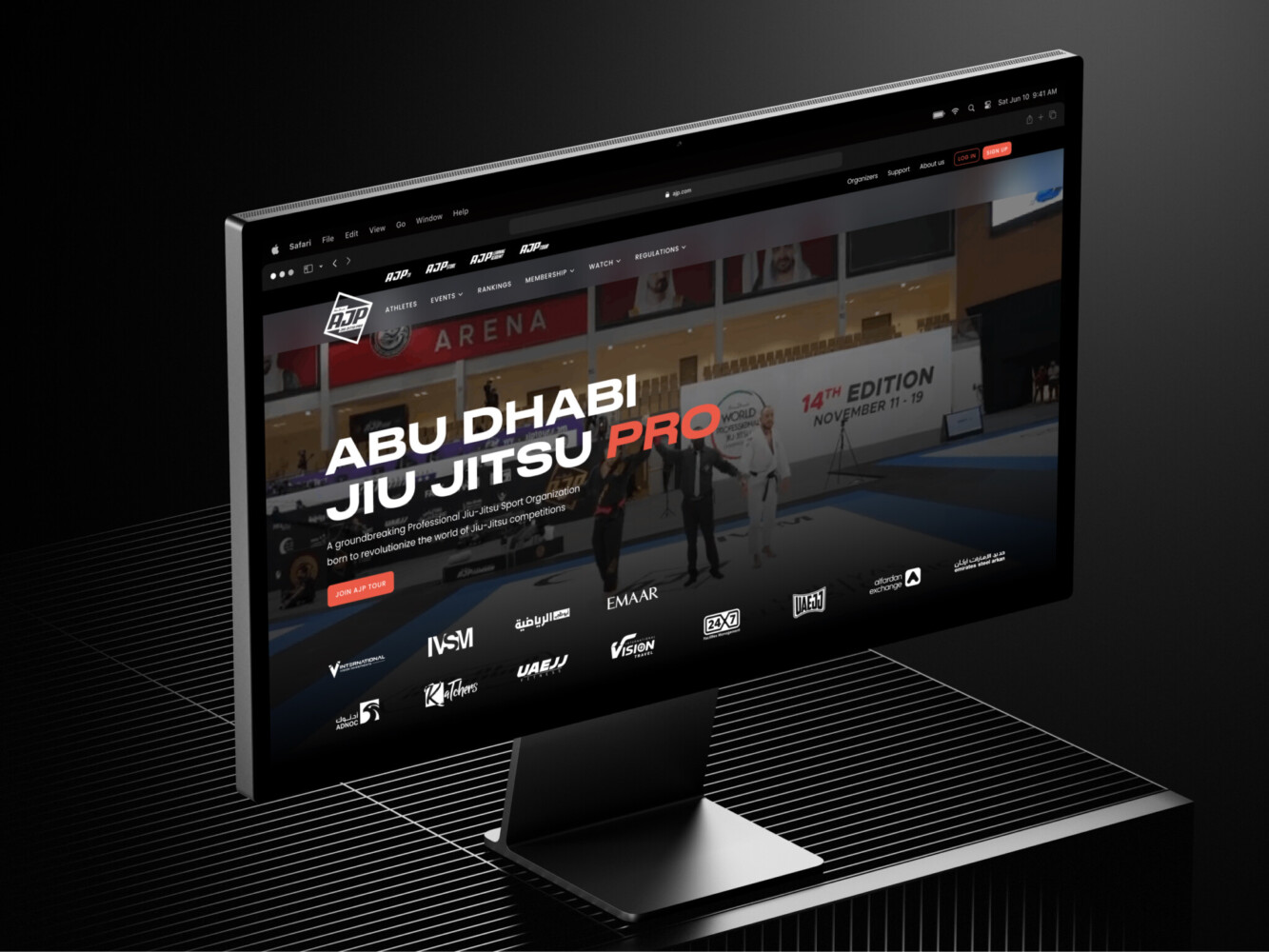
AJP is a great example. We designed and built a global sports platform that serves thousands of athletes, coaches, and fans worldwide. The scope was massive. We had to handle:
- Event Discovery and Registration: Athletes needed to find tournaments across different continents, sign up, and pay fees seamlessly.
- Live Rankings and Statistics: As matches happened, results had to update instantly. Leaderboards shifted in real-time. This required a robust backend that could handle high-frequency data updates without choking.
- Schedules and Results: With hundreds of matches happening simultaneously across multiple mats, keeping the schedule accurate and accessible was a huge UX challenge.
- Athlete Profiles: Each competitor needed a digital passport—a place to track their history, medals, and stats over time.
Why does this matter for someone looking to build a live sports app? Because it proves we know how to handle complex sports data. Whether it’s a jiu-jitsu match result or a soccer goal, the principle is the same: data needs to be accurate, fast, and presented clearly.
It also shows our expertise in live event workflows. Sports aren’t static. They’re dynamic, chaotic events. Our team knows how to design systems that remain stable even when the pressure is on and the data is flowing in from multiple sources at once.
And finally, it demonstrates scalable UX. We built a mobile experience that worked for a novice white belt checking their first match time and a black belt coach managing a whole team. Making complex information simple for different user types is a skill that translates directly to any sports product, streaming or otherwise.
So, while AJP might not have a video player, it has all the other DNA of a top-tier sports platform. It’s proof that we can handle the heavy lifting of sports tech, from the database to the user’s fingertips.
AJP website by Shakuro
How to Choose a Live Sports App Development Company
Choosing the right partner for live sports app development is a bit like picking a co-pilot for a high-speed race. You don’t just want someone who knows how to code; you want someone who knows how to handle the pressure when the engine starts smoking.
Here’s what you should really look for.
Dig into their real-time architecture knowledge
Don’t just ask if they’ve built apps. Ask them how they handle latency. Ask them about HLS vs. WebRTC. If they start talking about “just using a standard video player,” run. You need a team that understands the nuances of adaptive bitrate streaming, CDN failovers, and how to keep video and data in sync. If they can’t explain it simply, they probably don’t understand it deeply enough.
Ask the hard questions about data and scale
Sports data is messy. Ask them: “How have you integrated with providers like Sportradar or Genius Sports before?” And more importantly: “How do you test for peak loads?”
You want a partner who doesn’t just hope for the best during the championship final. They should have a plan for load testing, disaster recovery, and observability. Can they spot a server spike before it crashes the app? Do they have experience with DRM and content protection? These aren’t optional extras; they’re the foundation of a viable sports business.
Look for full-system capability
A live sports product isn’t just a mobile app. It’s a ecosystem. You need a team that can deliver the whole package:
- Mobile Apps: Smooth, native-feeling experiences for iOS and Android.
- Backend: Robust APIs that can handle millions of requests.
- Admin Tools: Easy-to-use dashboards for your content and moderation teams.
- Analytics: Deep insights into user behavior.
- Infrastructure: The cloud setup that keeps it all running.
If you have to hire three different agencies to build these pieces, you’re setting yourself up for integration nightmares. Find a team that sees the big picture.
Post-launch support is key
Launch day is just the beginning. Sports seasons change, rights deals shift, and bugs appear. You need a partner who sticks around to monitor, update, and iterate. Don’t sign with a “build and dump” shop.
So, where do you start? Maybe you’re not ready to build the whole thing yet. That’s fine. Start small. Let’s discuss an MVP to validate your idea. Or perhaps you already have an app that’s struggling with lag? We can audit your existing product to find the bottlenecks. Or if you’re still in the planning phase, let’s estimate the required streaming architecture so you know exactly what you’re getting into.
The goal isn’t just to build an app. It’s to build a product that fans love and that actually makes money. Let’s make sure you’re set up for that from day one.
Final Thoughts
At the end of the day, the strongest live sports products aren’t necessarily the ones with the most features. They’re the ones that simply work when it matters most.
It’s a simple equation, really: clear audience need plus reliable real-time delivery. If you can solve a specific pain point for a specific group of fans—whether it’s faster stats, better community interaction, or just a buffer-free stream—you’ve got something. But if the tech fails during the final minute of the game, none of that matters. Trust is hard to earn and easy to lose in this industry.
My advice? Don’t try to boil the ocean. Start small. Pick one sport, one audience, or even one specific competition format. Nail that experience. Validate that people actually want what you’re building and are willing to pay for it. Once you’ve got that foundation solid, then you can think about expanding to other leagues or adding complex new features. It’s much easier to scale success than it is to fix a broken, over-complicated product.
If you’re ready to move from idea to execution, let’s talk. Whether you need to plan a scalable live sports app from scratch or want to audit your current setup, Shakuro is here to help you build something that doesn’t just launch but lasts. Let’s get your fans off the sidelines and into the action.
Sports application by Shakuro
Frequently Asked Questions
How long does it take to develop a live sports app?
Typically 4 to 9 months for an MVP. Complex streaming platforms with custom infrastructure can take 12+ months. It really depends on your scope and how many integrations you need.
What features should a live sports app MVP include?
Keep it lean: user registration, a reliable video player (or live score feed), basic schedule viewing, and a simple payment gateway if you’re charging. Skip the fancy social features until you know people actually want the core product.
How do live scores get into a sports app?
You don’t manually type them in. You buy data feeds from specialized providers like Sportradar or Genius Sports. They send the data via APIs or WebSockets, and your backend pushes it to the app in real time.
Which streaming protocol is best for live sports?
For most apps, low-latency HLS is the sweet spot—it’s reliable and works on almost every device. If you’re building for betting where every second counts, look at WebRTC, but be ready for higher costs and complexity.
How much does it cost to maintain a live sports streaming app?
Plan for about 20–30% of your initial development cost per year. This covers server hosting, CDN bandwidth (which can get pricey during peaks), third-party API licenses, and ongoing bug fixes.
Do I need broadcasting rights to stream sports in an app?
Yes, absolutely. You cannot legally stream copyrighted sports content without a license from the rights holder. Doing so is a fast track to being shut down and sued. Always sort out the legal side before writing code.
Can one app support multiple sports, leagues, or teams?
Technically, yes. But be careful. Supporting multiple sports means dealing with different data structures, rules, and fan expectations. It’s usually smarter to master one niche first before trying to be everything to everyone.
Related reading