
Sports software development covers the whole system behind a sports product: mobile and web apps, admin panels, scoring logic, analytics dashboards, payments, wearable integrations, and APIs. A lean MVP usually runs between $40K and $80K with a small team (2–3 devs + part-time designer) working 3–4 months. Mid-level products such as team management platforms or a league’s ticketing and CRM system cost $120K to $300K and take 6–9 months, while enterprise platforms start around $500K and take 12–18+ months.
The mobile app is usually what fans, athletes, coaches, and fantasy players see first, but it is rarely the whole product. The harder work sits behind it: real-time data that has to be fast and accurate, traffic spikes at tip-off, athlete health data under HIPAA and GDPR, and third-party sports data licenses that can cost $100K+/year alone.
Below, we cover what to build beyond a mobile app, fantasy sports systems, core features, architecture and real-time data, the development process, cost, common challenges, when custom development makes sense, and our work for AJP, Abu Dhabi Jiu Jitsu Pro.
What Is Sports Software Development?
It is the process of designing and building digital products for sports organizations, fitness brands, clubs, leagues, fan communities, fantasy platforms, coaching teams, and sports-related businesses.
That can mean a mobile app, yes. But it can also mean a web platform for tournament organizers, a dashboard for coaches, a CRM-like system for club managers, a fantasy scoring engine, or an internal tool that helps a team run daily operations without ten spreadsheets and a long email thread.
The main point is simple: sports products are usually connected systems. People, events, stats, payments, schedules, rankings, locations, permissions, and live updates all bump into each other. You need software that can handle that without making everyone quietly suffer.
Why a Mobile App Is Only One Part of the Product
A mobile app gives users access. It does not automatically give the business control.
Someone has to manage users. Someone has to update events, fix incorrect scores, approve content, process refunds, review suspicious activity, segment notifications, and look at performance data. If there is no admin side, the team ends up doing awkward manual work in the background.
And one more point: mobile apps are not always the best place for complex tasks. A coach planning a season may prefer a web dashboard. A league manager may need bulk editing. A support team may need filters, exports, and audit logs. Try doing all of that on a phone after a long game day. Not fun.
This is why good sports software development services usually look beyond the interface and ask: what does the whole operation need?

Golf Website Design Concept by Shakuro
What to Build Beyond a Mobile App
So, what can you build besides the app itself?
A web platform is often the first useful layer. It can support richer workflows: managing leagues, tournaments, rosters, payments, venues, schedules, content, and reports. For many sports businesses, this is where the real day-to-day work happens.
An admin portal is another big one. It lets staff control users, roles, subscriptions, notifications, disputes, and settings. It is not glamorous, but it really helps. A good admin panel can save hours every week and prevent those “who changed this?” moments.
Then there are analytics dashboards. Sports products create a lot of data: attendance, engagement, player progress, retention, purchases, match results, training activity, campaign performance, etc. If the data is hidden in a database, it is not helping much. Put it into a dashboard, and suddenly decisions get easier.
You may also need partner portals, coach dashboards, athlete profiles, live scoreboards, content management tools, API integrations, reward systems, and internal reporting. It depends on the business model. A youth sports club, a fantasy platform, and a wearable fitness product all need different things.
In this case, you may need sports custom software development services. Not because “custom” sounds fancy, but because the product has its own rules.
Fantasy Sports Software Development: Systems Behind the Interface
It is a good example of why a mobile app is not enough.
Users see drafts, contests, leaderboards, player cards, and scores. Behind that, there is a lot going on. You need player data feeds, scoring rules, contest logic, lineup validation, rankings, payments or wallet flows where applicable, notifications, anti-fraud checks, and admin tools for disputes.
Daily fantasy sports software development adds even more pressure because contests move quickly. The platform has to handle time-sensitive entries, lineup locks, live updates, and clear rules. If a score is wrong or a contest state changes late, people notice. And they are usually not shy about saying so.
This type of product needs careful backend planning. The scoring engine has to be reliable. The admin tools need to be clear. The data sources must be monitored. It is a little annoying to set all this up properly, sure, but you get used to caring about the boring parts because they protect the user experience.

Greensward website by Shakuro
Core Features of a Sports Software Ecosystem
Most sports platforms need a mix of user-facing and business-facing features.
On the user side, common features include profiles, schedules, live scores, push notifications, payments, subscriptions, chat, community feeds, rewards, bookings, rankings, and content. If the product is for athletes, you may also need training logs, progress charts, wearable sync, goals, and coach feedback.
On the business side, you usually need admin roles, content controls, reporting, permission management, payment tracking, support tools, moderation, exports, and analytics.
The trick is not to add everything at once. That sounds obvious, but it is easy to forget when everyone in the room has “just one small feature” to add. In my experience, the best option is to define the product’s core loop first. What does the user do again and again? What does the business need to manage again and again? Build around that.
Architecture, Integrations, and Real-Time Data
Sports software development can be surprisingly data-heavy.
A typical setup may include mobile apps, a web frontend, backend APIs, databases, admin tools, third-party sports data providers, payment systems, notification services, analytics, monitoring, and cloud hosting. If the product includes video, live scores, or wearable data, the technical picture gets bigger.
Real-time features deserve special attention. Live scores, leaderboards, match updates, and fantasy contests all need speed, but also accuracy. Fast and wrong is not a win. The system should handle delays, retries, fallback states, and manual corrections.
Security matters too. User accounts, payment details, personal data, and performance metrics need protection. Role-based access, encrypted data transfer, secure APIs, MFA for admins, logging, and compliance checks are not decoration. They are the adult supervision of the product.
The Sports Software Development Process
Step 1. Discovery
Discovery is where things get real. And honestly, it’s messier than people admit. In my experience, I can say that stakeholders in sports often don’t know what they need until they see what’s possible. A coach might ask for “better player tracking,” but what they really mean is “I need to justify roster decisions to the GM before the trade deadline.”
So you spend weeks interviewing, watching practice, and even sitting in film rooms. It’s tedious, sure, but skipping this? That’s how you build something nobody uses.
By the way, always talk to the equipment manager or the video coordinator. They’re the ones who’ll tell you if your brilliant idea breaks their daily workflow.
Step 2. UX/UI Design
In sports software development, it’s about context. Imagine designing a tablet interface for a sideline trainer during a rain delay. Glare, wet fingers, split-second decisions. Your beautiful gradient buttons? Useless. Many teams reject entire platforms because the font was too small under stadium lights.
So you prototype in actual environments, not just Figma mocks. And one more point: accessibility matters more here than folks realize. Not everyone on staff has perfect vision or tech literacy. Designing for the least tech-savvy user often makes it better for everyone.
Step 3. Architecture
Architecture is where you either set yourself up for success or future pain. Sports data is wild. Live stats, biometrics, video feeds, ticketing systems, all hitting at once during peak moments. If your backend can’t scale when 50,000 fans check scores simultaneously, you’re done.
So you design for bursts, not averages. Microservices help, but don’t over-engineer early. Sometimes a well-tuned monolith beats a fragile distributed mess, especially when your team is small.
Step 4. Development
Development itself is iterative, but with sports-specific quirks. Seasons don’t wait for your sprint cycle. You might need to ship a critical fix mid-playoffs. That means building feature flags and rollback plans from day one. Also, domain knowledge is non-negotiable.
When you hire sports app developers, look for people who understand offside rules or salary cap mechanics; they write cleaner code. Pair programmers with sports ops folks whenever possible.
Step 5. Integrations
Integrations are the silent killers. Seriously. Every league, venue, or team has its own legacy systems. Some use modern APIs; others rely on FTP drops or even Excel exports.
You’ll spend more time wrangling data formats than writing new features. And permissions! Athlete health data, broadcast rights, fan PII. Mess this up and you’re not just debugging, you’re lawyering. When opting for daily fantasy sports software development, build abstraction layers early so swapping out a broken vendor doesn’t require rewriting your core.
Step 6. QA & Testing
QA in sports isn’t just testing functionality. It’s stress-testing reality. Can your app handle overtime? What if GPS signals drop in a concrete tunnel? Does video sync stay accurate after three hours of playback?
We simulate worst-case scenarios constantly. Also, involve actual users in UAT, not just internal testers. A strength coach will spot workflow issues your QA team never imagined. And please, test offline modes. Locker rooms and buses have terrible connectivity. Assuming constant internet is optimism, not engineering.
Step 7. Deployment & Support
Deployment needs to respect the sports calendar. Never deploy during live events unless it’s an emergency. Schedule releases around bye weeks or offseason lulls. Blue-green deployments aren’t optional here; downtime during a broadcast window is catastrophic. Also, document everything.
Support in fantasy sports software development is ongoing, but different. Users won’t file Jira tickets mid-game. They’ll text you directly or yell across the hallway. Set expectations early: define SLAs that match operational realities, not corporate ideals. Monitor proactively. If latency spikes during warmups, fix it before tip-off. And gather feedback relentlessly. Post-season retrospectives with actual staff yield gold.
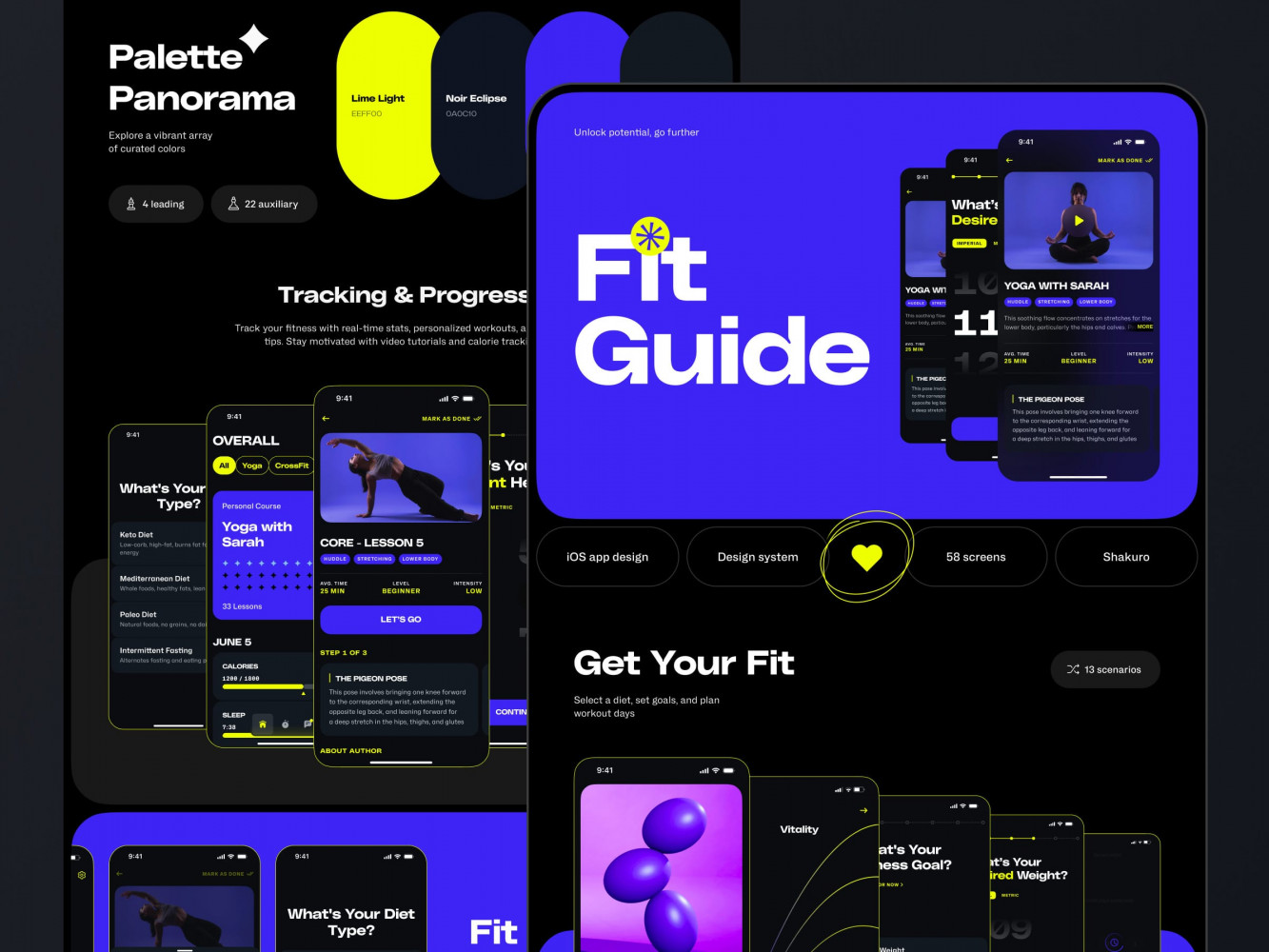
Website Design for a Yoga & Wellness Platform by Shakuro

How Much Does It Cost to Build a Sports Software Product?
Let’s start with an MVP. Say you’re testing a fan engagement tool or a basic athlete wellness tracker. You’re stripping everything to the bone: core functionality only, minimal integrations, maybe one platform (iOS or web).
Usually, a lean MVP runs between $40K and $80K. Yeah, some agencies quote lower, but those often skip proper QA or scalable architecture. And trust me, rebuilding because your MVP couldn’t handle playoff traffic costs way more upfront savings. This range assumes a small team (2–3 devs + part-time designer) working 3–4 months.
Mid-level products are where things get serious. Think team management platforms with scheduling, performance analytics, and staff collaboration tools. Or a regional league’s ticketing + CRM system. Here, you’re looking at $120K to $300K.
Why the jump? Integrations. You’re probably connecting to wearables, video analysis software, payment gateways, and maybe a broadcast API. Each adds complexity. Also, UX gets heavier—multiple user roles (coaches, admins, athletes), offline support, compliance checks. Budget 6–9 months with a full squad: backend, frontend, QA, PM.
Allocate 15–20% for discovery and architecture. Skipping that phase here is like building a house without blueprints.
Enterprise solutions? Buckle up. League-wide platforms, global broadcasting systems, or integrated venue operations suites. These aren’t products; they’re ecosystems. Costs start around $500K and easily climb past $2M. At this level, you’re paying for resilience, security audits, dedicated DevOps, and 24/7 support SLAs.
Development takes 12–18+ months with specialized teams. Also, licensing fees for third-party sports data (like Sportradar or Stats Perform) can be $100K+/year alone. Don’t forget change management—training hundreds of staff across time zones isn’t free.
A few caveats, by the way. Geography matters hugely. A US-based team charges 2–3x more than Eastern Europe or LatAm for similar quality. But communication gaps can add hidden costs. Also, maintenance isn’t optional.
Budget 15–25% of initial build cost annually for updates, security patches, and minor enhancements. Sports tech rots fast if neglected. And one more point: avoid fixed-price contracts for anything beyond MVPs. Scope creeps inevitably in sports. Time-and-materials with clear milestones protects both sides.
Look, these numbers might sting. But underbudgeting hurts worse. In sports software development, it’s better to phase wisely: validate with an MVP, then invest strategically. The goal isn’t spending less—it’s spending smartly so your product actually survives past launch. Worth every penny when it works, honestly.

Common Challenges Beyond the Mobile App
You know, everyone loves talking about the shiny mobile app. But in my experience, I can say that the real headaches in sports software live outside that little rectangle on your phone. Honestly, it’s a little annoying how often these get glossed over in pitch decks. Let me share what actually keeps teams up at night.
Data Fragmentation
First off, fragmentation is brutal. You’ve got wearable tech spitting out biometrics, video analysis tools tagging plays, ticketing systems tracking fan behavior, and legacy spreadsheets holding decades of scouting notes. None of these talk to each other cleanly.
And don’t get me started on timestamp mismatches during live events. One second off, and your sync’d video overlay shows a player sprinting when they’re actually tying their shoe. Trust me, fans notice.
Human Factor
Sports environments are high-stress, low-patience zones. Coaches won’t tolerate a 5-second load time during halftime adjustments. Trainers need one-handed operation while taping ankles. Yet so many products are designed for office desks, not muddy sidelines or chaotic locker rooms.
If software doesn’t work under real-world chaos, it’s useless. By the way, always test with actual staff, not just tech-savvy interns. Their feedback hurts more but saves you later.
Compliance and Privacy
Athlete health data is legally radioactive. HIPAA, GDPR, league-specific regulations—they’re not checkboxes, they’re landmines. Projects stall for months because legal realized post-launch that consent flows didn’t cover minor athletes. Or worse, data residency requirements forced a complete architecture rethink mid-build.
Broadcast rights matter too. Accidentally exposing proprietary footage through a misconfigured API endpoint? For sports custom software development services, that’s not a bug fix; that’s a lawsuit.
Scalability
Scalability during peak moments is another beast. Sports traffic is explosive. Playoff games, transfer deadlines, draft nights—your system must handle 100x normal load for minutes, not hours.
Most cloud auto-scaling assumes gradual ramps. But when 200K fans hit your API simultaneously at tip-off? Your servers melt before autoscale kicks in. It’s better to pre-warm infrastructure and cache aggressively. It costs more upfront, but downtime during live events destroys trust faster than any feature can rebuild it.
Integration Debt
Integration debt accumulates silently. Every new vendor partnership adds another fragile connection. Today’s cutting-edge wearable might be obsolete in 18 months. Your codebase becomes a museum of deprecated APIs.
Documentation rarely keeps pace. So you end up reverse-engineering logic from comments written by someone who left two years ago. Fun times.
Domain Complexity
Sports rules aren’t static. Rule changes, new stats, evolving strategies—they demand constant software updates. A product that worked perfectly last season might be wrong today. Maintaining accuracy requires embedded domain experts, not just developers guessing from wikis. Staying current isn’t maintenance—it’s core product work.

Mobile Sport App by Shakuro
When to Choose Sports Software Development Services
Custom development makes sense when the product cannot be described as “a standard app with a few screens.”
You probably need custom work if your platform has unusual scoring rules, multi-role workflows, real-time data, complex admin logic, third-party integrations, wearable devices, fantasy mechanics, or a business model that does not fit a ready-made tool.
It also makes sense when the product is part of your competitive edge. If the way you manage tournaments, reward users, analyze performance, or engage fans is what makes the business different, then forcing it into a generic platform can feel like wearing shoes one size too small. You can walk, technically. But why suffer?
Our Experience in Sports Software Development
A good example of sports software development beyond a simple app is our work for AJP, Abu Dhabi Jiu Jitsu Pro. AJP is a professional Brazilian Jiu-Jitsu organization that runs local and international events in more than 40 countries, with over 7,000 registered athletes. So, this was not a “make it look nice” website task. The product had to support a living sports ecosystem.
The main challenge was control. AJP already had a growing athlete base and a strong competition network, but it needed a platform infrastructure that felt specific to the organization. We worked on the brand update and designed a new global website experience with better navigation, an interactive event map, redesigned athlete profiles, a content library, event registration, and a new mobile experience.
It shows how much sports software lives outside the mobile interface. Athletes need to plan their competition calendar, register for events, check rankings, analyze stats, and view competitor performance. Event pages need schedules, venue details, participant lists, brackets, past results, scores, and victory methods. That is a lot of structured information, and it has to stay clear for beginners, professionals, coaches, kids, and hobbyists alike.
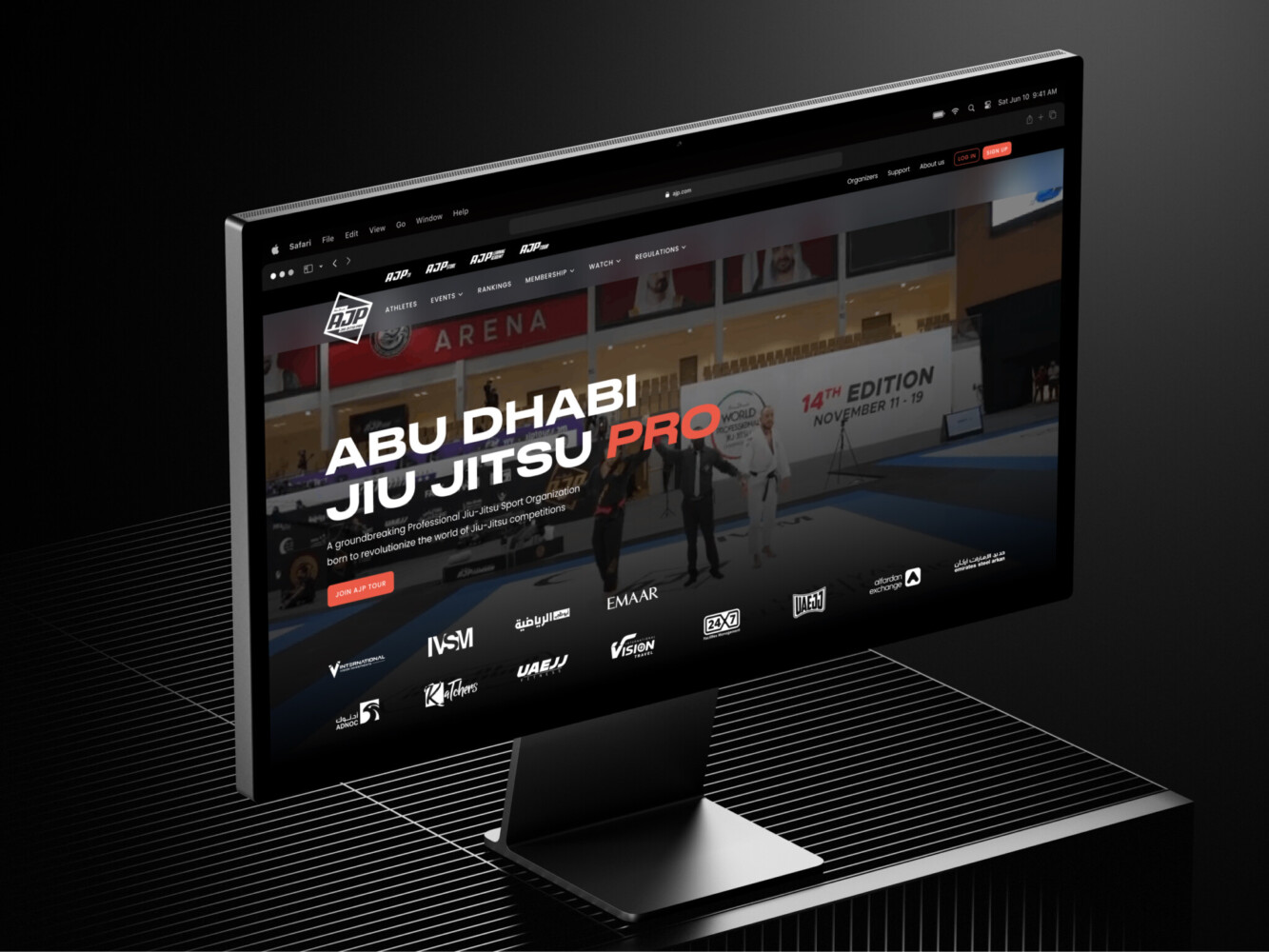
AJP website by Shakuro
Final Thoughts
The strongest sports products are rarely just apps. They are systems.
A mobile app may be the part users love, but the web platform, admin tools, backend, integrations, dashboards, and support workflows are what keep the product alive when real people start using it. That is the part worth thinking through early.
So if you are planning a sports product, start with the app idea, sure. Then ask the better question: what needs to exist around it so the business can actually run?
Need sports software that goes beyond “just an app”? Shakuro can help you shape the full product around it: web platform, admin panel, dashboards, integrations, real-time data, fantasy features, and the backend logic that keeps everything running.
Tell us what you’re building, and we’ll help you turn it into a sports software product people can actually use, manage, and scale.
FAQ
What is sports software development?
Sports software development is the design and development of digital products for sports businesses, clubs, leagues, athletes, fans, fantasy platforms, and fitness-related companies. Besides mobile apps, it usually includes web platforms, admin portals, analytics dashboards, scoring engines, payment systems, and integrations with sports data providers and wearables.
How much does sports software development cost?
A lean sports software MVP usually runs between $40K and $80K. Mid-level products with scheduling, performance analytics, or ticketing and CRM cost $120K to $300K, and enterprise platforms start around $500K and can climb past $2M. Add third-party sports data licenses, which can be $100K+/year, and 15–25% of the initial build cost annually for maintenance.
How long does it take to build sports software?
A lean sports software MVP takes a small team (2–3 devs + part-time designer) about 3–4 months. Mid-level products need 6–9 months with a full squad of backend, frontend, QA, and PM, plus 15–20% of the budget for discovery and architecture. Enterprise platforms take 12–18+ months with specialized teams.
Is a mobile app enough for a sports product?
A mobile app is enough only for a very small sports MVP. Most serious products also need admin tools, backend systems, analytics, integrations, and web dashboards for managing leagues, tournaments, rosters, payments, venues, schedules, and content. The app is the front door; staff and partners work in the tools behind it.
What features should a fantasy sports platform include?
A fantasy sports platform usually includes contests, drafts, scoring rules, player data feeds, lineups with validation and locks, leaderboards, payments or wallets where needed, notifications, fraud checks, and admin controls. Daily fantasy adds time-sensitive entries and live updates, so the scoring engine and data sources need careful backend planning and monitoring.
When do I need custom sports software?
You need custom sports software when your product has unique workflows, real-time data, complex rules, integrations, or business logic that ready-made tools cannot support well. It also makes sense when the way you manage tournaments, reward users, analyze performance, or engage fans is what makes your business different from competitors.
Can sports software include wearable integrations?
Yes. Wearable integrations are common in fitness, wellness, training, and reward-based sports products, but they need careful planning because data sync can be tricky. Timestamps have to match other sources, health data falls under HIPAA and GDPR, and today’s wearable might be obsolete in 18 months, so each integration adds maintenance.
Related reading