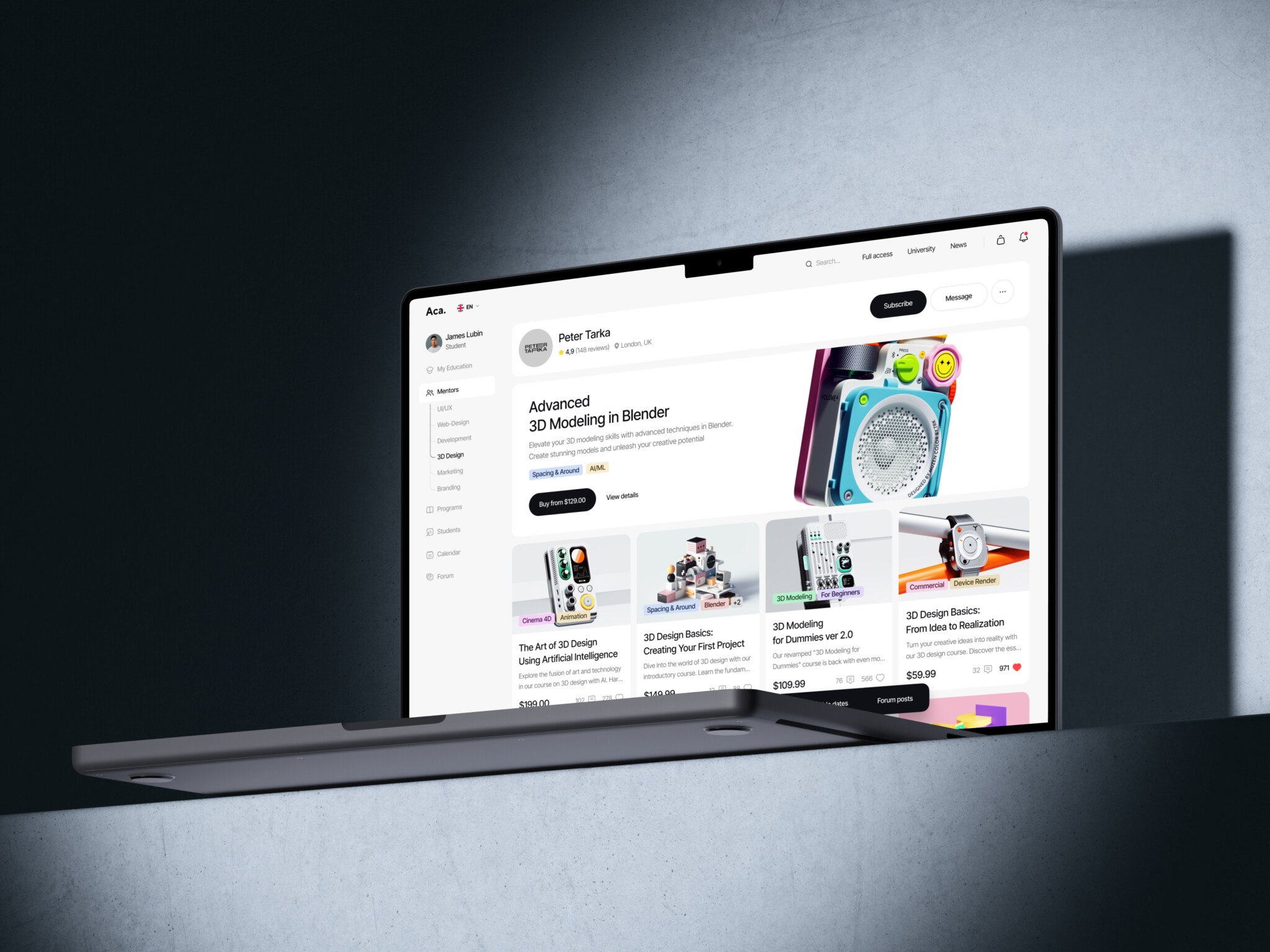
Educational SaaS platform development is the work of building one learning product that many customers use by subscription. The customers can be schools, companies, or instructors. They share one codebase. Their records stay apart. Plans, the bill, and who may see a roster are part of the product, not a plugin added in year two.
The reader here is a company that wants to sell that product. A learning system one school runs for its own students is a different order. A lesson that happens on a phone is a different order. Custom work is justified when a white-label course tool cannot express the contract: who is billed, what happens when a school adds seats mid-term, and which customer is allowed to see a grade.
The product shell, tenants and plans and the bill, is SaaS web development. The learning product inside it, lessons and the roles around them, is eLearning web development. If that is the brief, discuss the first customer before a team prices a platform.
An earlier edition of this page was recorded as a podcast episode. The recording is not this revision. This page does not publish a rate card, a build duration, an uptime promise, or a certificate of compliance.
What is an Educational SaaS Platform?
A customer logs in and uses the product. They do not install a copy on a server in their building. The vendor hosts one system and charges on a schedule. That is the definition. The rest is a choice about the first customer.
Three checks decide whether the order belongs on this page:
- The company is selling the product to many organizations, not running courses for one organization.
- The bill repeats. A one-time course purchase is a different product.
- A fix ships to every customer from one codebase. A separate install per school is a different operations model, and a more expensive one to keep.
The frame below is a design study for an education website. It is not a shipped multi-tenant product. The file label that says LMS does not make this page that order.
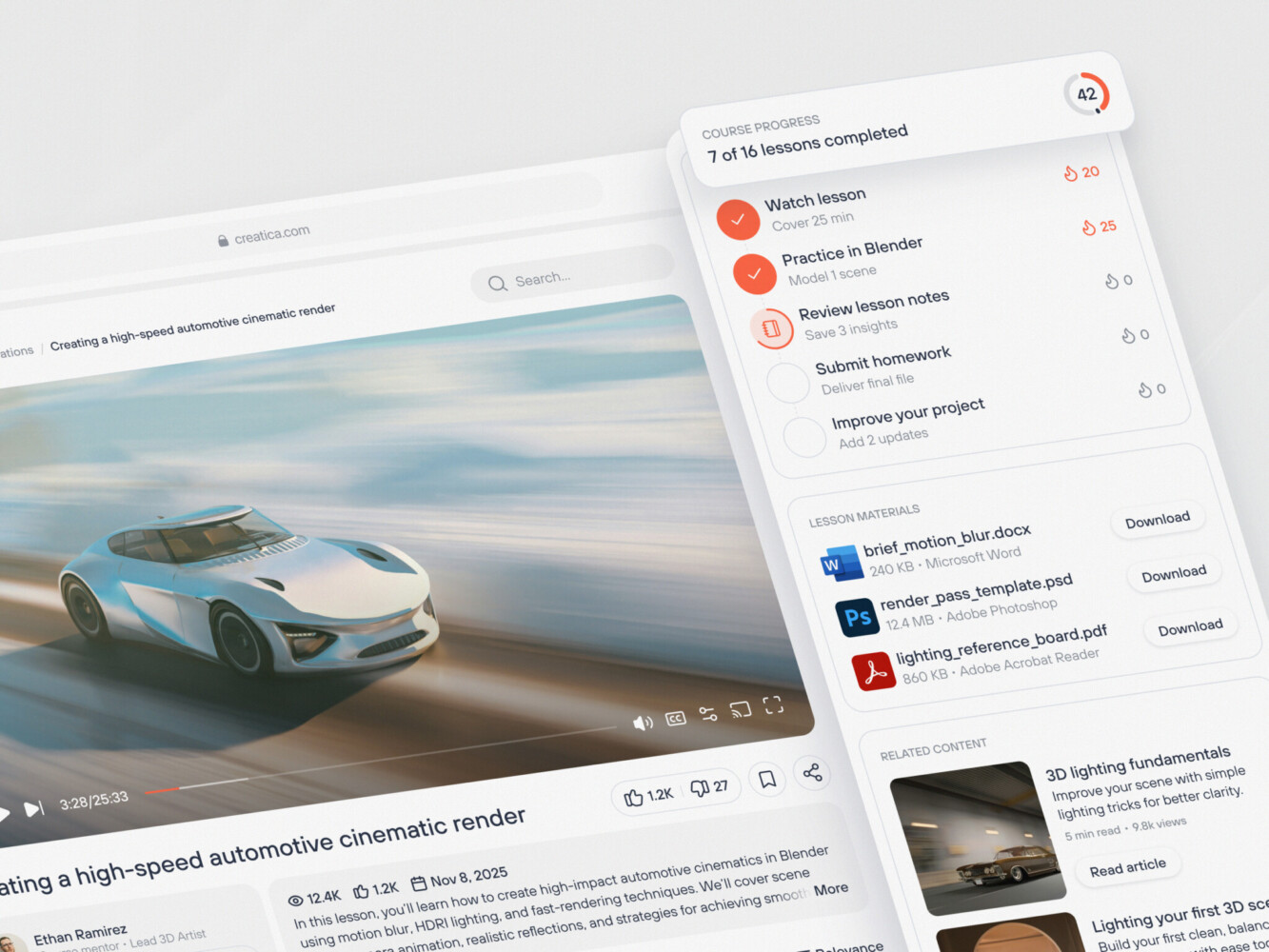
Online Education Web Platform Design by Conceptzilla
Types of Educational SaaS Platforms
The name on the contract changes the product. Read the type, then follow the link if the brief is that type. Do not fold three products into one estimate so the proposal looks complete.
LMS SaaS Platforms
Courses, enrollments, and a grade book are LMS development, including when a vendor hopes to sell that system to many schools. This page does not take that key. If the brief is the learning system, start there. Come back here only for the commercial shell: a plan, a customer per school, and a bill that is not a license key.
A district that wants its own system, and has no plan to sell it, does not need tenancy. Building a tenant model for one customer is extra work they will pay to maintain.
Corporate Training SaaS
Assigned training, a manager’s view of who finished, and an export the HR desk already expects, is a corporate training platform. Selling that desk to many companies adds a subscription shell. The shell can be this page. The desk is not.
Course Platforms and Marketplaces
One brand selling its own courses, with checkout and an instructor, is an online course platform. Many independent instructors selling on one catalog is an edtech marketplace. Neither is a school product sold by subscription to districts. A gateway that moves card data for other merchants is a third order. Subscription rules on this page are not that build.
The frame below is a design study of a course dashboard. It is not a case, and it is not a price.
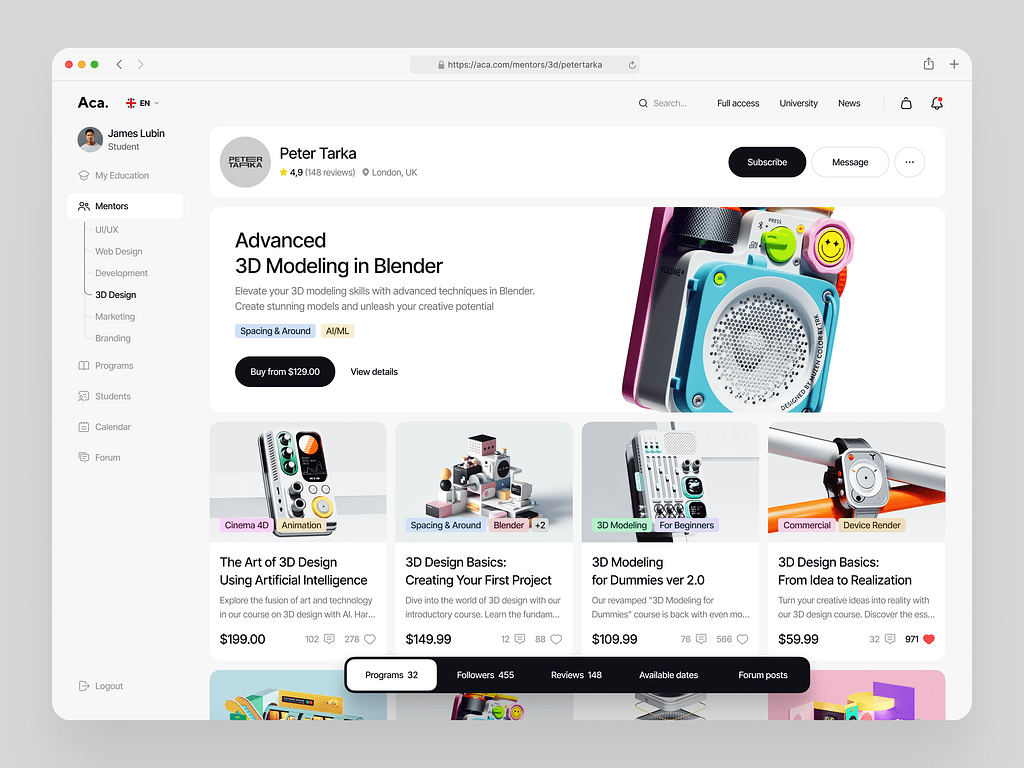
Online Courses Platform Website Dashboard by Shakuro
Core Components
Skip any of these and the product cannot take a second customer. Later sections say how to choose. This list is only the inventory.
Multi-Tenant Architecture
One running system, many customers, and a rule that customer A cannot read customer B. The patterns live in a separate article on multi-tenant SaaS architecture. This page only needs the decision: which party is the tenant. A school, a campus, a company, or an instructor are not the same party, and the admin screen follows that choice.
Subscription and Billing System
A plan, a payer, and a rule for a change in the middle of a term. The card charge can sit with a processor the client already uses. The rules are the product. A pricing page with three columns is not a billing system.
Content Delivery System
Lessons have files. Video is the heavy file. A quiz is not. Write down which one the first customer actually has, because a transcoder and a delivery network are a different slice from a form that stores an answer.
Analytics Dashboards
An admin screen that shows who finished is in scope. A reporting product is not. Completion over time, for the people who teach, is e-learning analytics. Which plan a customer uses, and which feature they never open, is a SaaS analytics platform. Do not estimate both as one chart.
API Integrations
The first integration is the system the first customer already runs: a roster file, a login they already have, or a meeting tool with a name. An API with no named other system is a document, not a feature.
The frame below is a design study. A no-code layout in the picture is not a recommendation to ship the product on a no-code tool.
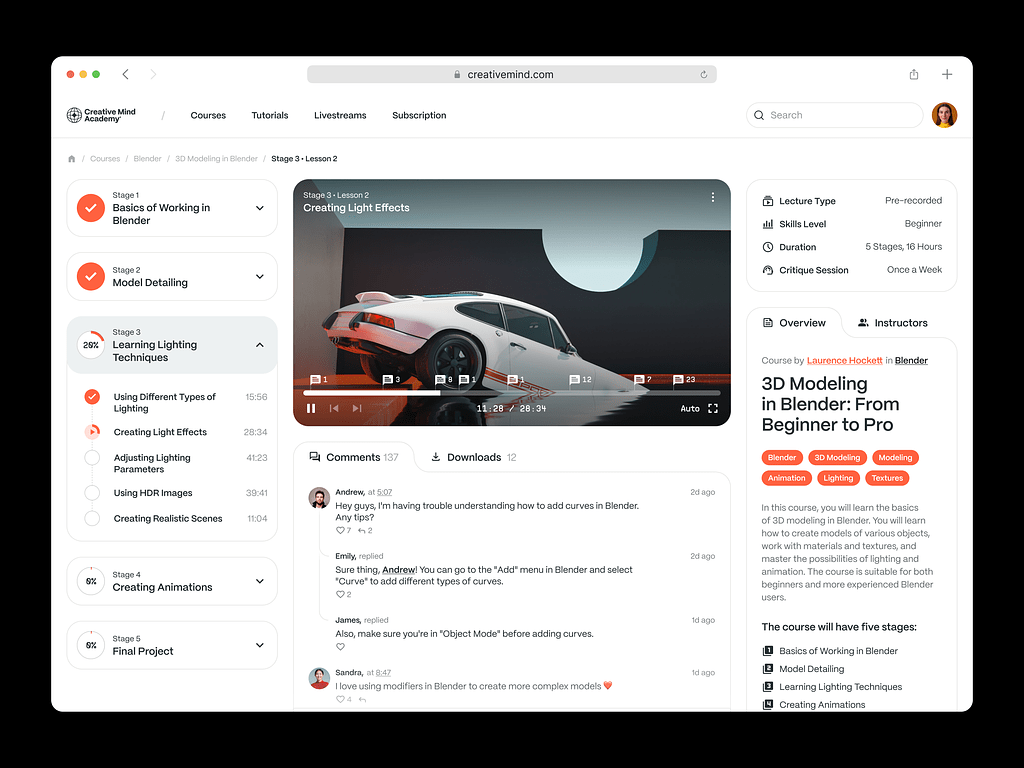
Online Courses Platform Website by Shakuro
Key Features of Educational SaaS Platforms
The first release is the smallest product a second customer can pay for. Everything else waits until that customer has used it.
Multitenancy
Pick one isolation rule and keep it. A tenant id on every row is the smallest start, and it fails the day a query forgets the id. A schema per tenant, or a database per tenant, costs more to operate and is easier to show a school that asked for separation. Mixing the three in one product is how a later rewrite starts.
One busy tenant must not be able to slow the others. That is a limit you test with two tenants, not a sentence in a proposal. This page does not repeat the pattern guide linked above.
Subscription and Billing System
Write these four lines before anyone draws a pricing page:
- Who pays: a school, a company, an instructor, or a learner.
- What the unit is: a seat, a campus, a course, or a flat plan.
- What happens when the count changes in the middle of a term.
- What happens when the card fails three days before a class: a grace period, a lock, and who gets the email.
Enterprise paper rarely matches a monthly plan. An annual invoice and a usage cap are rules in the same engine, or they become a spreadsheet. If the finance desk is calculating invoices by hand, the billing work is not done.
Content Management and Delivery
Someone has to own the files. Who uploads, who checks, and what happens when a video is replaced. A player with no owner stalls in the second month.
If the product is the player, and the lesson is a video, that order is a video-based learning platform. A quiz and a PDF beside one video can still live here. A platform whose whole job is video does not.
The phone frame below is a design study of a course app. A lesson that has to happen on the phone, with a download for a bad connection, is a mobile learning platform. A browser on a phone is not that order, and this page does not take that key.
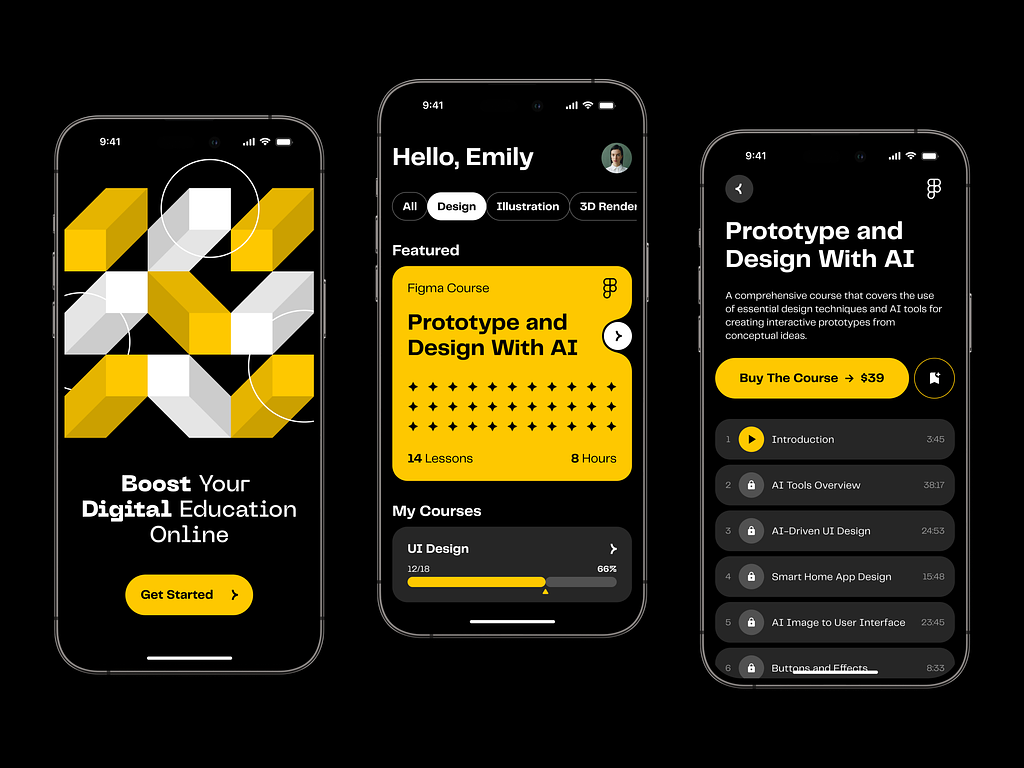
Online Course Educational Mobile App by Shakuro
Analytics and Reporting
The person who teaches wants to know who is behind. The person who pays wants to know who finished, and whether the plan is used. Those are two reports. Put the second on the admin screen of this product. Send the first, if it becomes its own product, to the analytics page linked above. This page does not promise a completion rate. It has no measured one.
Export to a spreadsheet is a real request from a school admin. It is a file, not a warehouse. Do not build the warehouse because one buyer asked for a download.
Personalization and AI Features
A next-lesson row can be a sequence an instructor wrote. That is not an AI-powered learning platform. That product changes the path from the learner’s answers. It is a separate order.
If a later release needs a model, that is AI development services, scoped after the first customer can finish a lesson without it. Do not put a model in the first estimate to make the proposal look current.
Educational SaaS Platform Development Process
The sequence is the order of decisions, not a calendar. This page does not publish a duration.
1. Product Strategy and SaaS Model Design
Name the first customer before the stack. A K-12 district, a university, a company, and an instructor do not sign the same contract. A school product, in the sense of this page, is something many schools subscribe to. A website for one school is education website development, and it is not this order.
If the company already has a product and only wants courses inside it, write down whether the learner already has an account there. If yes, the work is a module in that product, not a second platform, and the estimate should say so. This page will not name a turnkey tool that embeds a course for you. The infrastructure question is that account, plus where the video file lives.
A line that says the product must handle millions of students is not a requirement. The number that changes the work is how many people log in at the same minute on a Monday, and whether that minute is a video start or a quiz submit.
2. UX/UI Design for SaaS Platforms
Three screens, and they are not the same screen. The customer admin cares about people, plans, and a roster. The instructor cares about putting a lesson up and seeing who stalled. The learner cares about finishing the lesson without a second navigation.
The learning screens are e-learning web design. Building those screens into the product is frontend development. Every extra step between a finished file and a learner opening it is a place the instructor stops. That is a retention fact, not a measured lift.
3. Choosing the Technology Stack
The stack is a team constraint, not a ranking. Python with FastAPI development fits a data-heavy API. React development fits the screens. Other stacks exist. Naming four languages and calling one of them old is not a decision.
A relational database is a common place for a tenant id and a transaction around a grade. It is not a requirement this page imposes. Containers are how the same build reaches every environment. A cluster manager is a later line, after one environment is boring and stable.
4. Multi-Tenant Architecture Design
Database per tenant, schema per tenant, or a tenant id on every row. Pick one. The first is the easiest to show a school that asked for separation, and the most expensive to operate. The last is the smallest start, and it needs a test that a forgotten filter cannot return another tenant’s rows.
Role checks sit on top of that. A learner must not open the billing screen. Test that with two tenants, not with one demo account. A general product sold to companies, with no learning catalog, is B2B SaaS platform development. Do not use that page’s scope to pad this one.
5. Integrations and APIs
Name the other system. “We will have an API” is not an integration.
For a US school district, the usual pair is a roster the district already exports from its student information system, and a login (single sign-on) the district already runs. That is not a turnkey go-to-market product, and this page will not list vendors that claim to be one. The work is a written map: which fields the file has, which field is the student, and what happens when the file drops a student mid-term. Engineers still build that map. Single sign-on does not remove it.
A meeting tool, if a live class is in the first release, is a named integration with a join link and a stored recording. It is not a promise that we operate the meeting.
6. Testing and QA
Two tests before any feature test. A query without a tenant id must not return rows. A billing change mid-term must produce the invoice the contract described, including a failed card. Load is a third test, and it uses the Monday number the client wrote down, not a round number from a blog.
7. Deployment and Scaling
Ship from a pipeline, not from a laptop. Watch the things a learner feels: login at the start of a class, a video that does not start, a quiz that does not save. An alert on processor load, with no alert on those three, pages the wrong person.
More copies of the same build come after one copy is correct. A rewrite disguised as a launch plan is how the first customer waits.
Cost of Educational SaaS Platform Development
There is no price list for this work on this page. Five teams will name five numbers, because the number is the contract, not the label on the product.
What moves an estimate, and nothing else on this page does:
- Who the tenant is, and how strictly their records must be separated.
- Whether the first release is accounts, one lesson type, and a plan, or also single sign-on, a roster import, and a live class.
- Whether video must be transcoded, or a quiz and a PDF are enough.
- How many other systems have a name. Each unnamed integration is a guess.
- Whether the Monday login count is a classroom or a district.
A white-label course tool can test demand. It stops fitting when the contract has a rule the tool cannot express. That is the point where custom work starts. It is not a dollar line.
Example scenarios
Two shapes, so the first conversation has something to point at. Neither shape has a price on this page.
MVP SaaS Learning Platform
One payer, one plan, accounts, a lesson a person can finish, and an admin screen that shows who finished. One lesson format, not every format. No model, no live class, no roster import. The point of this shape is a second customer, or a clear no.
Enterprise EdTech SaaS
A buyer who will ask about the Family Educational Rights and Privacy Act, a login they already run, a roster file, and a separation you can show. The US Department of Education describes that Act on its FERPA page; the material there is about education records. Meeting the question is scope. It is not a certificate this page issues, and it is not an uptime figure this page will print. A European buyer will ask which personal records leave the tenant and who can export them. That question is also scope, not a badge.
Maintenance is a separate conversation after the first release is in use. This page will not print a percent of the build as a support fee.
What to bring to a pricing conversation, instead of a rate card:
| Write this down | First version | Later, if a buyer requires it |
| Tenant | One kind of customer, one isolation rule | A stricter separation you can show |
| Bill | One plan, one payer, a failed card | Mid-term seats, an annual invoice |
| Lesson | One format the first customer already has | Video transcoding, a live class, a second format |
| Other systems | None, or one named file | Single sign-on, a roster file, a meeting tool |
| Not printed here | A dollar range | A duration, an uptime promise, a compliance certificate |
The figure below is a design study. The word “price” in its file name is not a rate card.
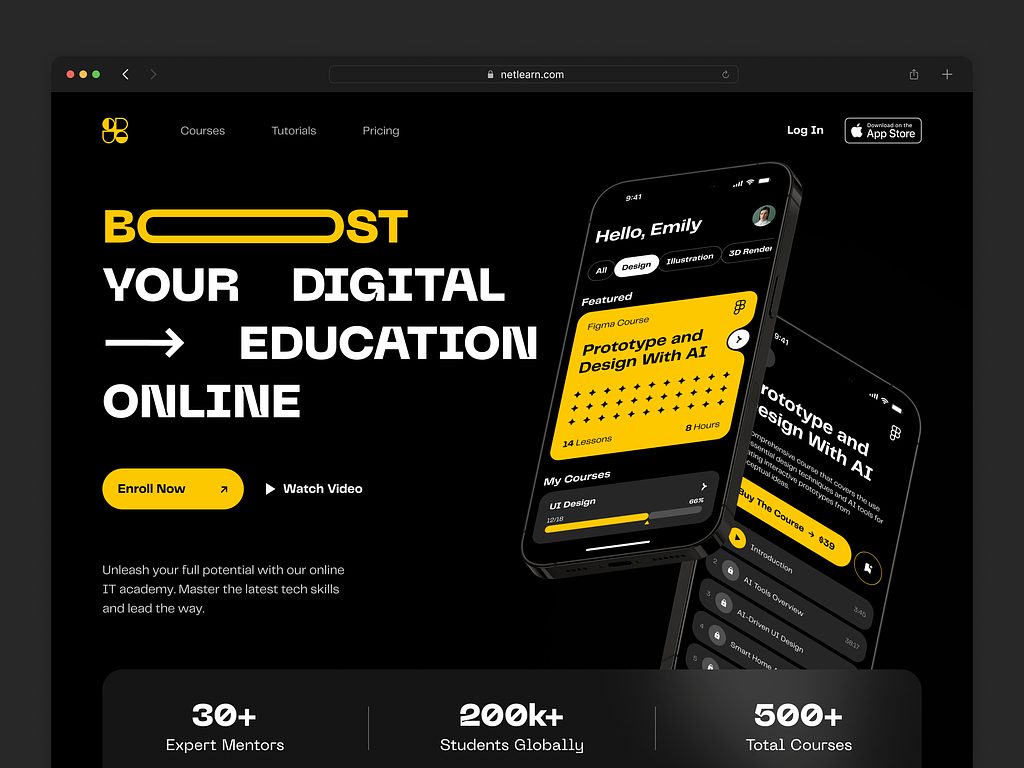
Online Education Website UI UX Design by Shakuro

Common Challenges in EdTech SaaS development
The same four problems show up. They are decisions, not slogans.
Designing Scalable Multi-Tenant Systems
The failure mode is a Monday, not a theoretical million. A district logs in at the start of class. If that count was not written down, nobody tested it. A cache and a split database are answers to a measured queue, not a line in a first proposal. Write the tenant rule on day one. Do not plan a database split for a customer you do not have.
Managing Subscription Billing
The processor is the easy part. The awkward part is the rule. Add seats mid-cycle: prorate, or bill the next term, and write which one. A downgrade: when access actually changes. A failed payment before a class: a grace period, or a lock, and who gets the email. If those three are undecided, billing is not designed.
Maintaining Performance Under Growth
A video that takes several seconds to start is a different problem from a quiz that does not save. Measure the one the first customer uses. A phone browser of this product is still this product.
An earlier edition of this page printed a count of people using study apps and a percentage of organizations using phones in training. Neither had a source we will stand behind, so both are gone. Do not add a native app to this estimate because a chart said learners have phones. That app is the mobile learning page linked above.
User Retention and Engagement
A subscription ends when the person who pays cannot see that people finished, or when the instructor cannot put a lesson up. That is a product fact. This page does not publish a churn rate. Comments and a feed are a later slice, and they are real work. They are not a toggle.
The frame below is a design study of a landing page. It is not a retention feature shipped as a school product.
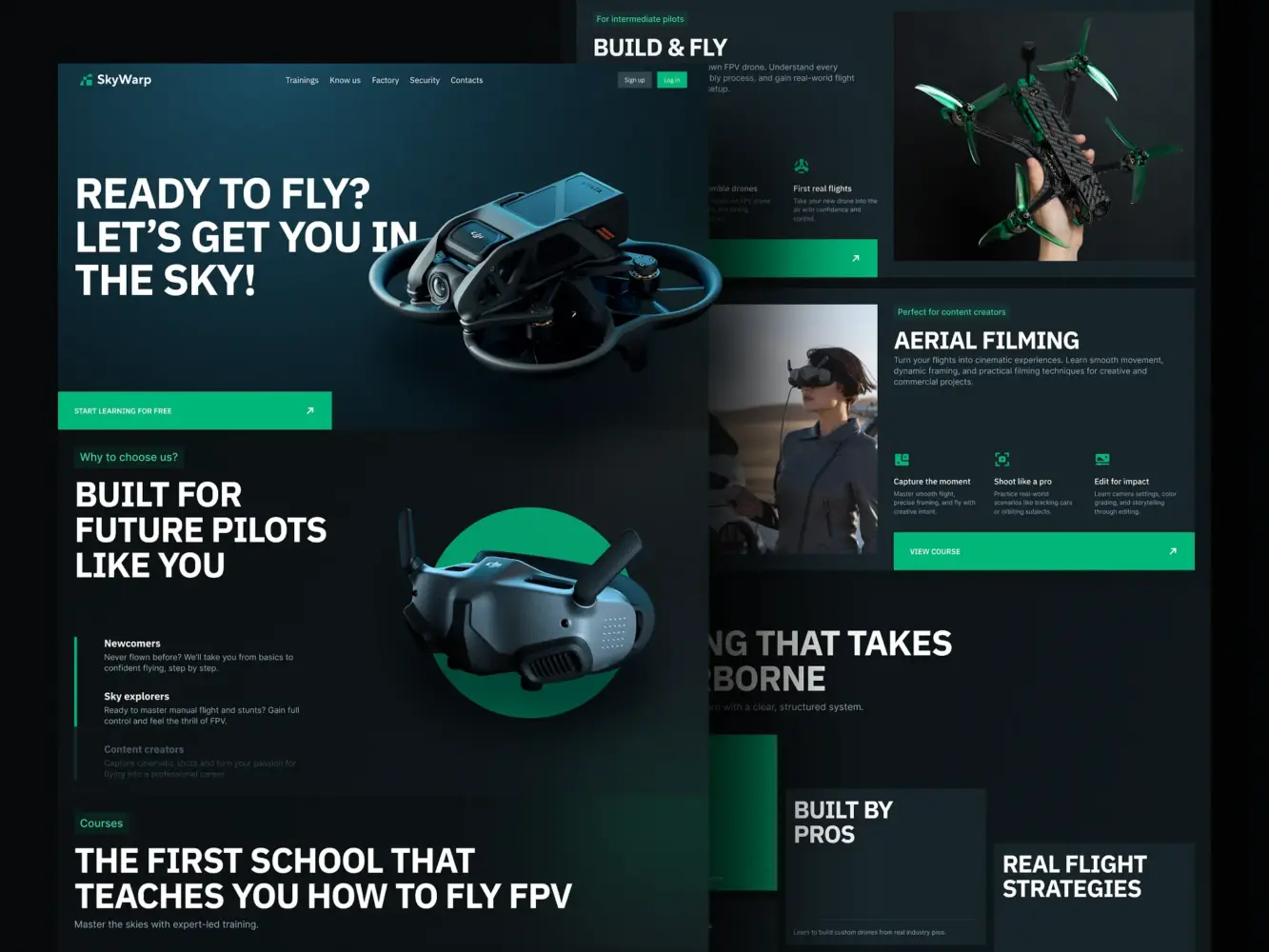
Landing Page for Drone Education Community by Shakuro
Our Experience in SaaS and EdTech Development
Two published cases sit near this work. Neither is a product sold by subscription to many schools. This page will not state a user count the case pages do not state, and it will not treat a design study as a third case.
A product sold by subscription to many customers, as a practice, is SaaS development. The learning product, as a practice, is e-learning software development. Use those pages for the practice. Use the cases below for what was actually published.
Proko: Build a SaaS Art Learning Platform
Proko is an art education platform for one brand, Stan Prokopenko’s. We designed and developed it. The old site was a limited WordPress setup. The published work added comments, following, and a feed, a video-first layout, a simpler checkout, and responsive mobile layouts. The case page also names payment options, gamification, and artificial intelligence in the brief, including basic feedback that does not wait for an instructor.
The case does not describe a tenant per school, or a subscription sold to many organizations. The heading above is the old label. The frame below is the mobile layout from that published work. The case describes responsive layouts of the site, not a separate native learning app, and not the product this page is selling.
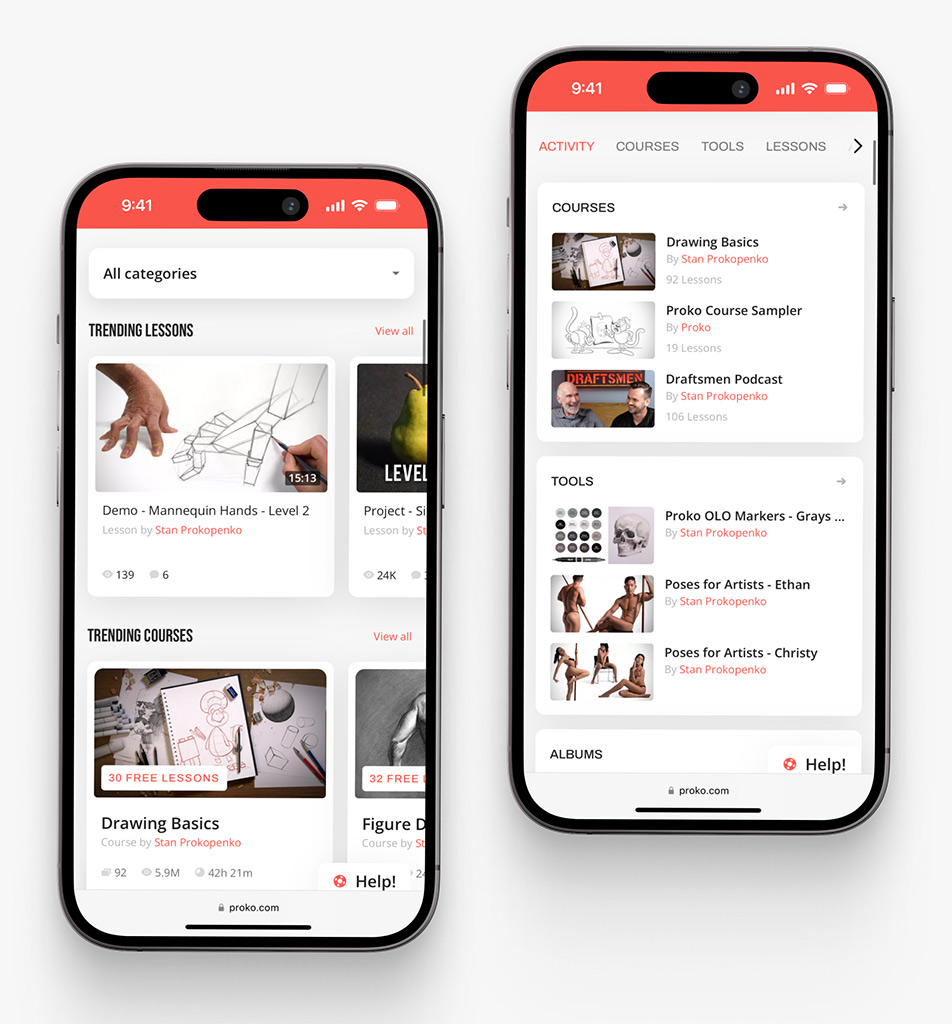
Proko app on mobile by Shakuro
CGMA: Create a Virtual Classroom
CG Master Academy is one academy. We designed and developed a virtual classroom for them, replacing a Drupal system that had stopped fitting, and moving the old records onto the new structure. The published integrations are Discord, Zoom, video files from Zoom, YouTube, and Vimeo, PayPal for a one-time payment and for installments, and PDF receipts and certificates. The case page also names a help desk and a CRM integration.
That is one academy’s classroom. It is not a product sold to many schools, and it is not evidence of a tenant model. Do not read the case headline as a result we measured.
The frame below is a separate design study. It is not the CGMA build.
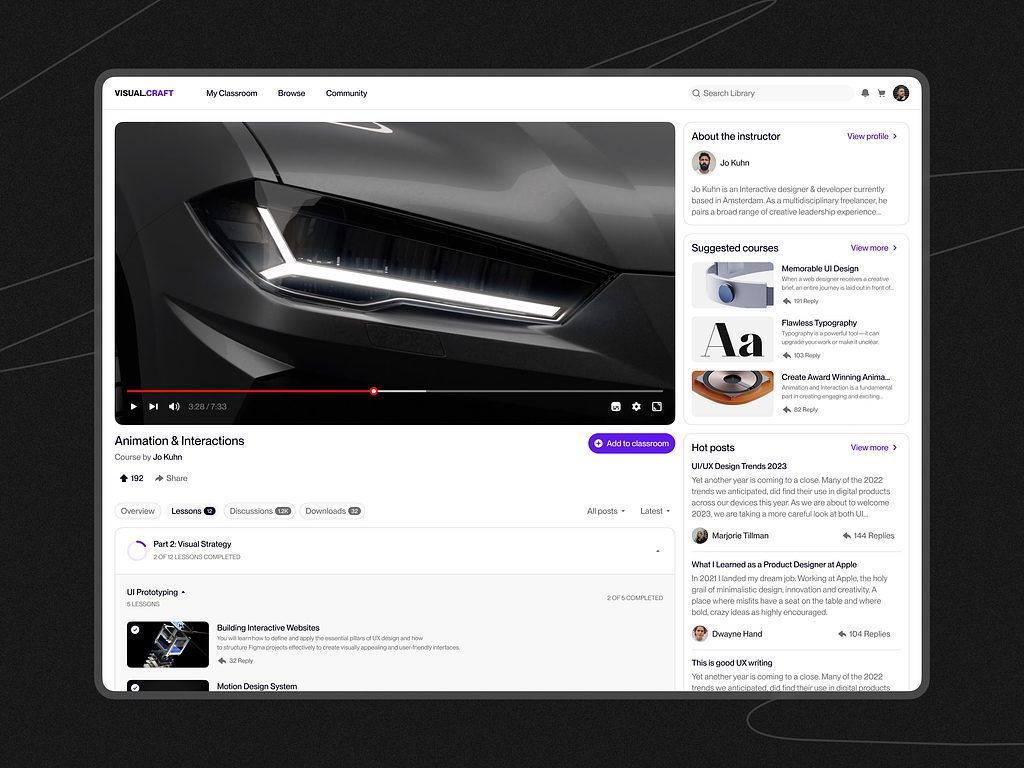
E-learning Education Web Platform by Conceptzilla
Why Work with an Educational SaaS Development Company
An in-house team can build this. The reason to hire a team that has shipped learning products is the list of decisions above, already made once: a tenant rule, billing rules, and a lesson a person can finish. That does not transfer a case we did not publish, and it does not shorten a buyer’s calendar.
What you are buying is the first version a second customer can pay for, then a path for the buyer who asks about a roster and a login they already have. If the buyer is a school, their window is their calendar. Missing it means waiting for their next window. That is their constraint. It is not a claim that a team will hit a month.
Usability is part of that version. If the instructor cannot put a lesson up, they will not use the product, and the person who pays will not renew. A powerful engine with no path through the three screens is an unfinished order.
FAQ
How much does edtech SaaS development cost?
There is no price list for this work on this page. The estimate moves with the tenant rule, the lesson format, the named integrations, and the Monday login count. A white-label tool can cover a demand test and will not cover a contract it cannot express. Ask for a number against a written first customer, not against the phrase “edtech SaaS”.
How long does educational SaaS platform development take?
This page does not publish a duration. Accounts, one lesson format, and one plan are a shorter cycle than a release that includes single sign-on, a roster import, and a separation you can show a district. Plan around the buyer’s calendar. Do not treat that calendar as a build estimate.
Should I use a white-label or no-code tool instead of custom edtech SaaS development?
Use a white-label or no-code tool when the test is demand: a course, an account, a payment. Custom work starts when the contract needs its own tenant rule, billing rules, or a roster from a system the tool does not speak. A model that changes the lesson path is the AI learning page linked above, not a reason to skip the first version.
Which multi-tenant architecture suits an edtech SaaS product?
One rule. A database per tenant is the easiest to show and the hardest to operate. A schema per tenant sits in the middle. A tenant id on every row is the smallest start and needs a test that a forgotten filter cannot leak a row. Do not mix them. A limit so one tenant cannot slow the others belongs in the same decision. The pattern guide is linked above.
What does billing need to handle in an edtech SaaS platform?
Upgrades and downgrades, a seat added mid-term, a failed card, a grace period, an annual invoice, and a usage cap. The processor can be one the client already uses. The rules are what gets built. Checks for those cases matter more than a new pricing page.
What compliance and enterprise requirements affect edtech SaaS development?
A district or a university will ask about FERPA, linked above. A European buyer will ask which personal records leave the tenant and who can export them. This page does not certify either, and it does not print an uptime figure. Single sign-on, a roster file, and a separation you can demonstrate are scope. They are why that release is more work than the first version. They are not a badge.
Final Thoughts
Three things, and then a conversation.
- The tenant rule, written down, with a test that one customer cannot read another.
- A lesson a person can finish, and an admin who can see that they finished. That is what the payer renews on.
- A bill that matches the contract, including the mid-term change and the failed card.
If the brief is that product, write about the product. If the brief is a learning management system, a phone app, or a reporting product, use the pages linked above. Building the wrong one is the expensive mistake.
Related reading