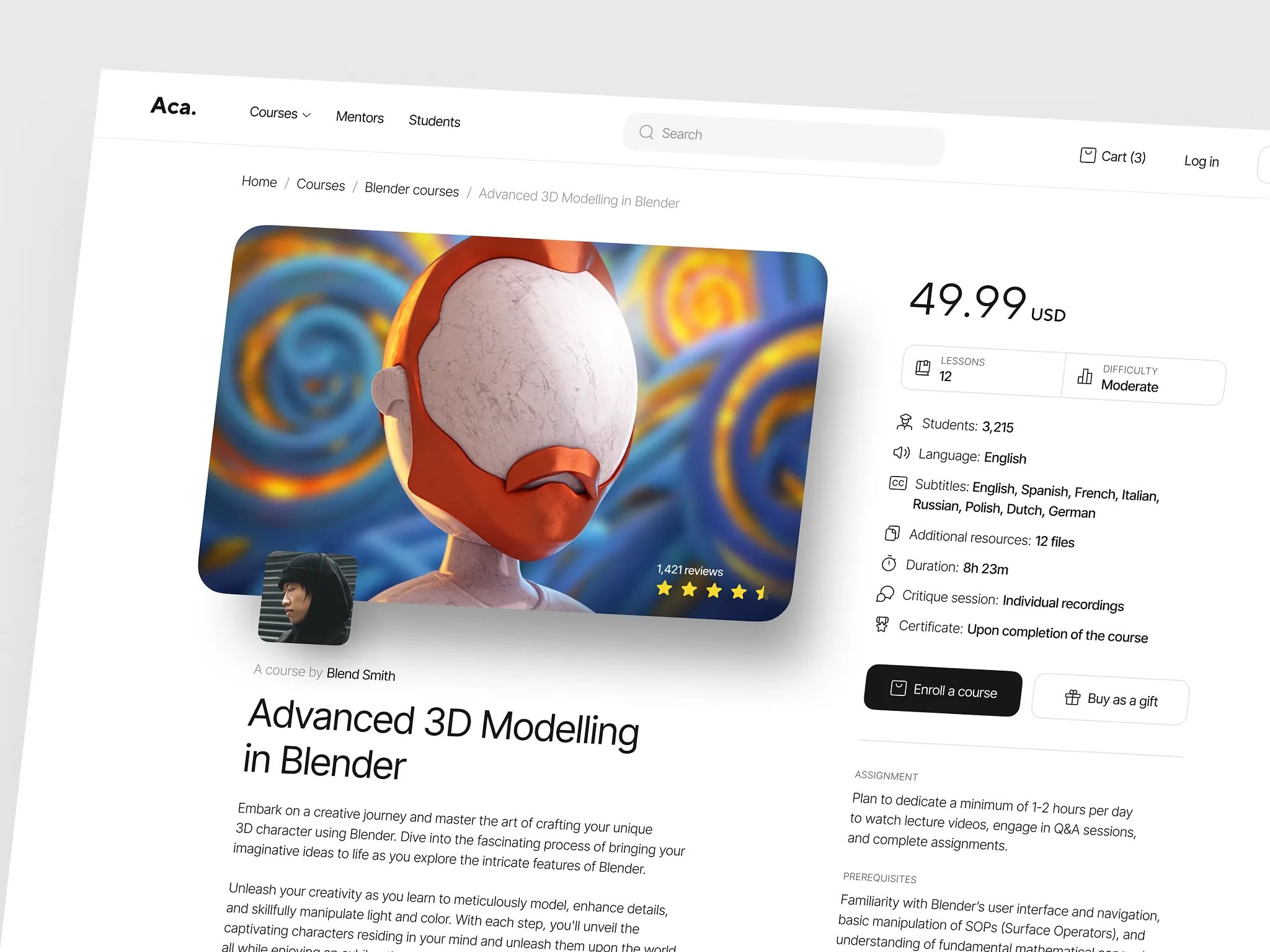
Online course platform development is building your own platform to sell and deliver courses: course pages, video lessons, payments or subscriptions, progress tracking, certificates, and an admin panel, under your brand and with your own user data.
Third-party marketplaces are useful at the start, but they limit branding, control over user data, monetization rules, and the learning experience. Once a creator, startup, or training company grows into a real education business, those limits start to cost money. For teams working in eLearning or with a SaaS background, owning the platform often makes more sense. Many of the same product and technical decisions apply to scalable edtech SaaS platforms.
This guide covers how online course platforms work, key features, the development process, what drives cost, the problems that appear as the platform grows, and what building Cubebrush taught us about content platforms.
For those who prefer to listen rather than read, this article is also available as a podcast on Spotify.
What Is an Online Course Platform?
An online course platform is a system for publishing, managing, and selling educational content online. Creators use it to turn separate materials—video lessons, texts, assignments, quizzes, downloads—into a structured product that people can actually buy and complete. Businesses use it for the same reason, just at a different scale: to deliver training, manage access, and keep everything in one place instead of stitching together several tools.
The core job of such a platform is fairly straightforward. It helps course owners create courses, organize lessons, upload materials, and update content when needed. On the learner side, it gives people a personal account, access to the course they paid for, and a clear learning path instead of a random folder of files. Some platforms now add an AI tutor on top, so learners can ask questions about a lesson without waiting for the instructor.
The second part is content delivery. The platform has to make the material easy to consume, whether that means streaming video, opening text lessons, downloading worksheets, passing quizzes, or returning to unfinished modules later. If this part is clumsy, even strong content starts to feel worse than it is.
The third part is monetization. A course platform is not just a teaching tool. It is also a business tool. It can support one-time purchases, subscriptions, bundles, memberships, and other paid access models. It can also handle payments, user permissions, and in some cases promo codes, upsells, or team access for companies.
So in practice, an online course platform is less about “hosting lessons” and more about running the whole course business through one product.
Types of course platforms
Online course platforms are built for different business models. Some are made for one company that sells its own courses. Some work as marketplaces where many instructors publish content. Others are used by companies for training employees, partners, or clients. On the surface, they may look similar, but the product logic behind them is different.
Standalone course platforms
A standalone platform is built for one business or one personal brand. All the content belongs to the same owner, and the whole product is shaped around that business model.
This format is common for creators, private schools, expert-led education brands, and startups selling courses under their own name. They are not sharing space with other instructors, and they are not tied to marketplace rules. That usually means more control over pricing, design, communication with learners, and the overall learning experience.
Course marketplaces
A marketplace is a platform where many instructors can publish and sell courses. The platform owner manages the product itself, but the catalog is built by different course creators.
This model is harder to build because there are more moving parts. You need separate logic for students and instructors, course moderation, search and filtering, reviews, payout flows, and often admin tools for managing the whole ecosystem. If that is the direction, it helps to look at how learning marketplaces are usually structured.
Corporate course platforms
Corporate platforms are used for training inside or around a business. Sometimes that means internal learning: onboarding, compliance, product training, employee development. Sometimes it is external training for clients, partners, or distributors.
In these systems, the focus is usually not on flashy course sales pages. It is on access control, reporting, team structure, and learning at scale. That is why they are often closer to enterprise learning systems than to creator-led course platforms.
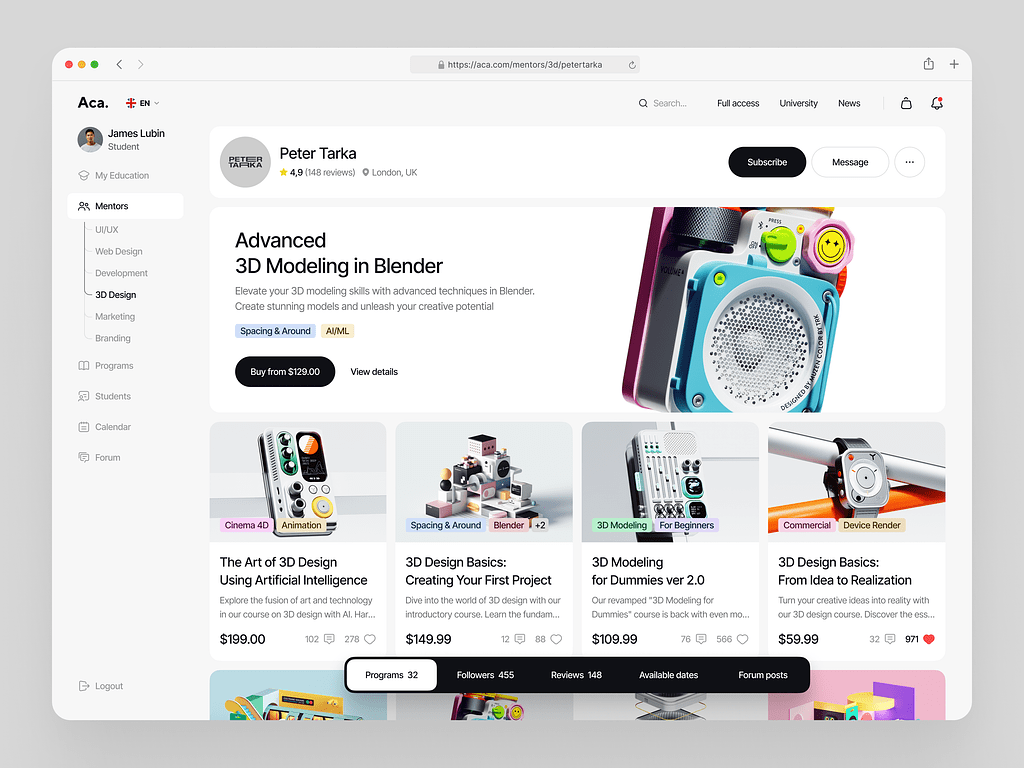
Online Courses Platform Website Dashboard by Shakuro
Core components
Whatever type of platform you build, the same core parts usually show up underneath.
- A course management system is what allows admins or instructors to create courses, split them into lessons, upload materials, and edit content without asking developers to change everything manually.
- Video hosting and delivery matter because most online education products depend on video. Lessons need to load нормально, play without friction, and work across devices.
- User management covers registration, login, profiles, permissions, and access rules. It is what makes sure the right people see the right content.
- Payment systems are what turn the platform into a business. They handle purchases, subscriptions, discounts, and access based on payment status.
- Analytics dashboards help the team understand what is going on after launch: what people buy, where they stop learning, which courses perform better, and where the product starts losing users.
So even a fairly simple course platform is usually not just a website with lessons uploaded to it. It is a product with content, users, payments, and business logic all tied together.
Key Features of an Online Course Platform
The feature set of an online course platform usually looks obvious on paper. Upload lessons. Sell access. Let people watch the content. But in real products, the details matter more than the checklist. A platform can have all the expected functions and still feel inconvenient if content is hard to manage, video works poorly, or payments create friction.
Course Creation and Management
The platform should make it easy to build and update courses from the admin side. That includes creating course pages, adding modules and lessons, editing descriptions, changing the order of materials, and publishing updates without involving developers in every small change.
It also needs to support different content formats. In most cases, video is the main one, but not the only one. Courses often include documents, downloadable materials, quizzes, short tests, and text blocks. If the system is built only around video uploads, content teams start working around the platform instead of through it, and that usually becomes a problem later.
Video Delivery and Streaming
Video delivery is one of the most sensitive parts of the product. If lessons load slowly, freeze, or behave badly on mobile, users notice it immediately. It affects the course itself, even if the content is strong.
That is why stable playback matters so much. A good platform should support high-quality video and adaptive streaming, so the system can adjust to the user’s connection instead of forcing the same quality on everyone. This is especially important in video-based learning systems, where video is the main format and not just one part of the experience.
Payments and Monetization
An online course platform also needs to support the way the business makes money. Some products sell access to single courses. Others work better with subscriptions. In some cases, bundles make sense, especially when several related courses are sold together.
The important part is not just showing a price and a checkout button. The platform has to connect payments with access logic. When a user pays, access should open correctly. When a subscription expires, the system should react accordingly. When someone buys a bundle, the platform should handle that without manual work from the team. Under the hood, this depends on reliable payment processing systems, even if the user never thinks about them directly.
User Engagement Features
Getting a user to buy a course is one task. Getting them to keep going is another. A lot of course platforms lose people not because the content is weak, but because the product gives them no reason to return after the first session.
Progress tracking is one of the basics here. Deeper learning analytics go further and show where people drop off and which lessons need rework. People need to see where they stopped, what they have already completed, and how much is left. It is a simple feature, but without it the learning process starts to feel messy very quickly.
Gamification can help too, as long as it is used with some restraint. Badges, streaks, points, completion markers, and small rewards can push users to stay consistent, especially in longer programs. It is not magic, and it does not fix poor content, but it can make the experience feel more active.
Notifications matter for the same reason. Reminders about unfinished lessons, new modules, deadlines, live sessions, or course updates help bring users back into the product. In more advanced platforms, this logic becomes part of AI-driven engagement and personalization, where the system adapts prompts, recommendations, or study paths based on user behavior.
Analytics and Reporting
Once the platform is live, the team needs to see what is actually happening inside it. Otherwise decisions are made blindly.
At the course level, analytics help track things like enrollments, completion rates, lesson drop-off points, quiz results, and revenue by course or cohort. At the user level, they show how people move through the platform, where they lose interest, which content they ignore, and what brings them back.
This matters for both product and business decisions. If users keep stopping on the same lesson, there is probably a problem with that part of the course. If one pricing model performs better than another, the team needs to know that too. Good reporting turns the platform from a content storage system into something the business can actually improve over time.
That is where learning analytics platforms become relevant. And if the product is being built as a custom web solution rather than on top of a rigid template, the analytics layer usually needs to be considered early, as part of the broader web development work, not added as an afterthought.
Online Course Platform Development Process
Online course platform development usually looks straightforward from the outside. Pick a design, upload lessons, connect payments, launch. In reality, most important decisions are made much earlier. The team has to decide what kind of business it is building, how people will move through the product, and what technical setup will support that without becoming a problem six months later.
1. Product Strategy and Monetization Model
The first step is not design and not development. It is figuring out what the platform is supposed to be.
A subscription model works when the business is built around ongoing access to a growing course library. A course marketplace development model is different. There, the platform is not just selling content to learners but also managing instructors, payouts, moderation, and catalog structure. A B2B training platform is different again, because the buyer is often a company, not an individual user. That usually means team access, internal admins, reporting, and account-level management.
These are not minor details. The business model changes the product structure. It affects user roles, payment logic, dashboards, analytics, and even support processes. If that part stays vague at the beginning, the platform often ends up being rebuilt around the real model later.
2. UX/UI Design for Learning Platforms
Once the product logic is clear, the next step is the interface. In learning products, this part matters more than many teams expect.
Users need to understand the platform without thinking too much about it. They should be able to open a dashboard, see what they bought, continue from the lesson where they stopped, and understand what comes next. Course navigation has to be simple. Progress has to be visible. The personal account should feel clear, not overloaded.
There is also the business side of the interface. Pricing pages, checkout, onboarding, trial flows, and course previews affect conversion. After purchase, the same interface affects retention. If the product feels confusing, people leave even when the content itself is good. This is one of the reasons strong React development and solid frontend development matter in these projects. The interface is not just decoration here. It carries a big part of the product logic.
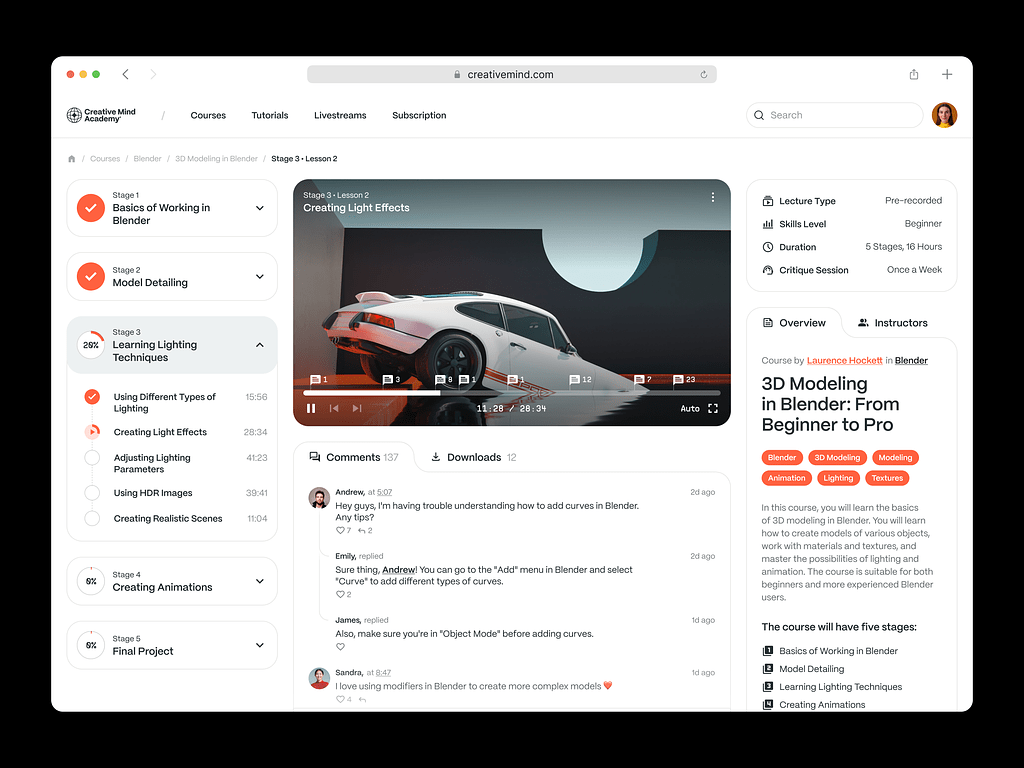
Online Courses Platform Website by Shakuro
3. Choosing the Technology Stack
The stack should follow the product, not the other way around.
A lot of course platforms start with the same basic needs: user accounts, course access, payments, progress tracking, admin panels, and content management. That does not require anything exotic. It requires a stack the team can work with comfortably and support without pain later.
On the backend, Python, Node.js, and Ruby on Rails are all common choices. Python is often picked when the team wants a clean API layer and predictable structure. Node.js is a common option when the product has a lot of web logic and the team prefers to stay close to JavaScript across the stack. Rails is still used when speed matters and the team wants to move fast without assembling too much from scratch. If the backend is being built in Python, FastAPI is one of the frameworks teams often look at for this kind of product.
On the frontend, React is a very standard choice for course platforms because there are usually many interface states: dashboards, lesson pages, filters, admin views, checkout flows, account settings. Vue can handle the same kind of work too. The choice is often less about ideology and more about what the team already knows well and wants to maintain long term.
For the database, PostgreSQL is a safe and common option when the product has a lot of structured data: users, enrollments, payments, lessons, quiz results, access rules. MongoDB is sometimes used when the data model is looser or the team has a clear reason to go that route, but it is not something every platform needs just because it sounds modern.
Infrastructure usually starts simpler than people expect. Docker is often enough at the beginning to make development and deployment more predictable. Kubernetes can make sense later, but mostly when the platform is already growing and the system is becoming more distributed. Putting it into the architecture too early can add more complexity than value.
So the real question is not “what stack is best for online course platform development.” The better question is: what stack will let this team build the product, launch it, and keep developing it without turning maintenance into a separate problem. That is usually the more useful way to think about web development for a platform like this.
4. Platform Architecture
This is the part users do not see, but it decides how stable the platform feels once real traffic starts coming in.
A course platform needs a backend that can handle more than a few people watching lessons at the same time. As the product grows, the system has to deal with more logins, more payments, more course data, more progress records, and more content requests without slowing down or breaking in obvious places. Video and file delivery matter here too, because content is often the heaviest part of the product.
In practice, platform architecture is about leaving room for growth from the start. That does not mean making everything overly complex on day one. It means building the product in a way that can support more users, more courses, and more business logic later. That is especially important for products moving toward SaaS platform architecture rather than staying as small content websites.
5. Integrations and APIs
Most course platforms do not work as isolated products. They usually depend on other systems around them.
Payment systems are the obvious example, because the platform has to charge users and connect payments with access rules. Analytics tools are also important, since product teams need to see what users buy, where they drop off, and how courses perform over time. Marketing platforms often come into the picture too, especially when the business uses email campaigns, lead funnels, or retargeting after sign-up.
That is why integrations and APIs matter early, not just after launch. If the platform cannot connect cleanly with outside tools, the team ends up doing too much manually. And if analytics is treated as an afterthought, it becomes much harder to understand what is happening inside the product. In more advanced setups, this starts to overlap with broader data analytics systems rather than simple dashboard widgets.
6. Testing and QA
Course platforms have a lot of basic flows that need to work without surprises. Registration, login, checkout, course access, lesson progress, quiz submission, password reset, subscription renewal—none of this is glamorous, but all of it affects how reliable the product feels.
Testing usually starts with user flows. Can a new user sign up, pay, and get access without friction? Can a returning user continue from the right lesson? Can an admin update content without breaking the course structure? After that comes performance testing, especially if the platform is expected to handle larger traffic or heavy content delivery.
Payment logic deserves extra attention. If there is one area where mistakes get expensive fast, it is this one. Users should not lose access after paying, and the team should not be fixing billing issues by hand every week.
7. Deployment and Scaling
Launch is not the finish line. It is the point where the platform starts behaving like a real product.
Once users arrive, the team gets a better view of what needs attention. Sometimes the weak point is infrastructure. Sometimes it is admin workflows, slow pages, or services that were fine in testing but struggle under real load. That is why deployment is usually followed by a second phase: watching the platform closely, fixing bottlenecks, and scaling parts of the system as usage grows.
This is also where ongoing maintenance starts to matter. A course platform is not something you launch and leave alone for a year. Content changes, users grow, integrations need updates, and small issues pile up if nobody owns support after release. That is why long-term support is usually part of the real development process, even if it is not always discussed at the beginning.
Cost of Online Course Platform Development
There is no fixed price for online course platform development, because the budget depends on what exactly is being built.
A small platform for one course business and a large product with marketplace logic are not even the same type of work. Both may fall under course platform development, but the amount of design, engineering, testing, and infrastructure behind them will be very different.
One of the biggest cost drivers is the feature set. A basic platform may only need registration, course pages, lesson access, payments, and a simple admin panel. That is a manageable scope. Costs rise when the platform also needs subscriptions, bundles, certificates, quizzes, notifications, analytics, different user roles, or custom dashboards. None of these features is unusual on its own, but together they make the product much heavier.
The expected number of users also matters. If the platform is being built for a small launch, the architecture can stay relatively simple. That does not always mean building something huge from day one, but it does affect how the system is designed.
Video infrastructure is another major factor. Many online course products depend on video, and video is rarely the cheapest part of the stack. Storage, streaming, playback quality, mobile compatibility, and content delivery all add complexity. In online learning platform development, this part is often underestimated at the beginning and then becomes one of the areas where costs grow fastest.
Integrations push the budget up too. A platform with one payment provider and basic analytics is simpler than one connected to multiple external services. As soon as the product needs payment systems, marketing tools, analytics platforms, email automation, CRM sync, or custom reporting, development becomes more involved. Every integration adds logic, edge cases, and testing.
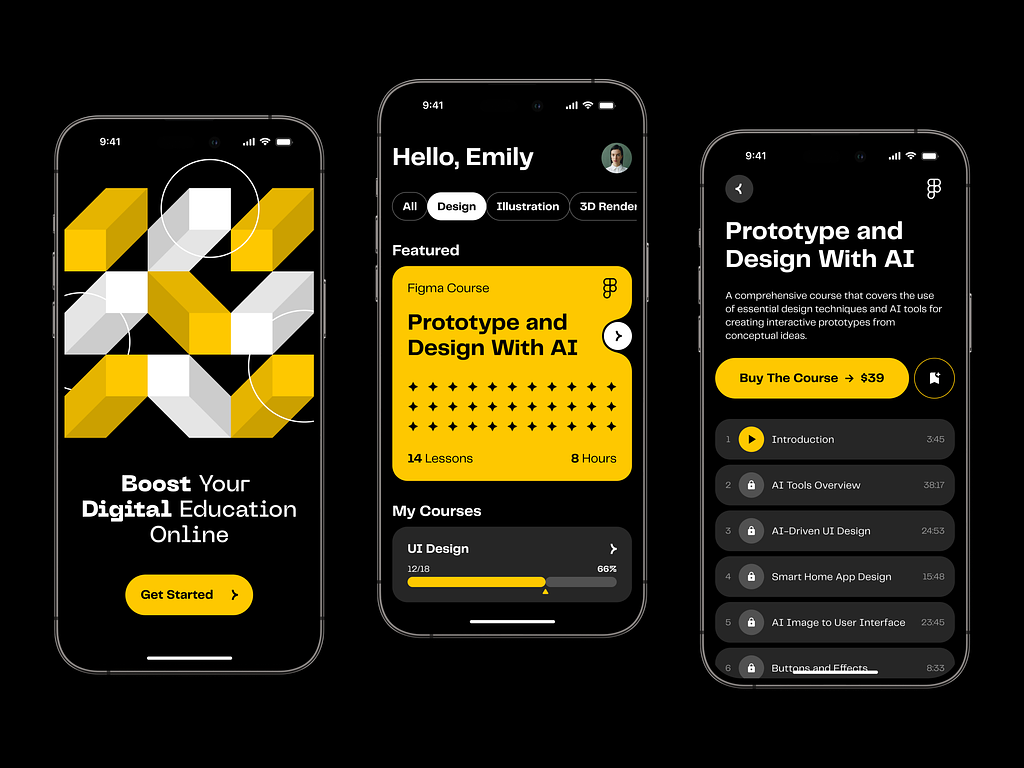
Online Course Educational Mobile App by Shakuro
The difference is easier to see in two common scenarios.
An MVP course platform is built to launch with the essentials. Usually that means course management, video lessons, user accounts, payments, and a basic admin side. The goal is to get the product live, test demand, and avoid spending money on features nobody has validated yet.
A full-scale course marketplace development is a much bigger project. It has to work for learners, instructors, and admins at the same time. It may need catalog management, search and filters, reviews, instructor dashboards, payout logic, moderation tools, and more advanced analytics. At that point, the team is no longer building a simple course website. It is building a more complex platform with several layers of business logic.
So the real question is not “how much does an online course platform cost.” It is “what kind of platform are we actually building, and what does it need on day one.” That is usually where the budget starts to make sense.

Common Challenges in Course Platform Development
Most course platforms sound simple at the planning stage. Upload lessons, sell access, grow the catalog. The difficult part starts later, when real users arrive and the product has to keep working under more pressure than the first version was ever tested against.
One of the most common problems is video delivery at scale. A few uploaded lessons are easy enough to manage. A growing library with many active users is different. The platform has to store large media files, deliver them reliably, and keep playback stable across devices and connection speeds. If video starts buffering, loading slowly, or breaking on mobile, users usually blame the course itself, not the infrastructure behind it.
User engagement is another weak point for many products. Getting someone to buy a course does not mean they will finish it. In fact, many platforms lose users after the first few lessons. Sometimes the content is the issue, but often the product is part of the problem too. Poor navigation, weak progress tracking, inconvenient mobile use, and lack of reminders all make it easier for learners to drop off. That is one reason many teams start paying more attention to mobile-first learning platforms instead of treating mobile as a secondary version of the product.
Payment and monetization logic also gets complicated faster than expected. One-time purchases are manageable. Things become harder when the platform adds subscriptions, bundles, trials, promo codes, renewals, or different access levels. Then the team has to deal not just with checkout, but with failed payments, access rules, billing changes, refunds, and all the edge cases that appear once real money starts moving through the product.
Then there is scaling infrastructure. A platform may work perfectly well with a small audience and still start struggling once usage grows. The challenge is not just surviving a traffic spike. It is making sure the system can keep growing without turning every new release into a technical risk.
So the hard part of course platform development is usually not building the first version. It is building something that still works when the business starts behaving like a real business.
Our Experience in EdTech and SaaS Development
Building an online course platform usually means dealing with more than course pages and video lessons. The product has to work as a business system too: with structured content, clear user flows, reliable payments, admin tools, and room to grow without falling apart once usage picks up. That is why this kind of work sits at the intersection of eLearning products and SaaS products.
Shakuro’s experience in this area comes from building content-heavy platforms, scalable web products, and systems where UX has a direct effect on retention, conversion, and everyday usability. That matters in course platform development because even a strong content offering can underperform if the product is hard to navigate, slow under load, or awkward to manage on the admin side.
What Cubebrush Taught Us About Building Content Platforms
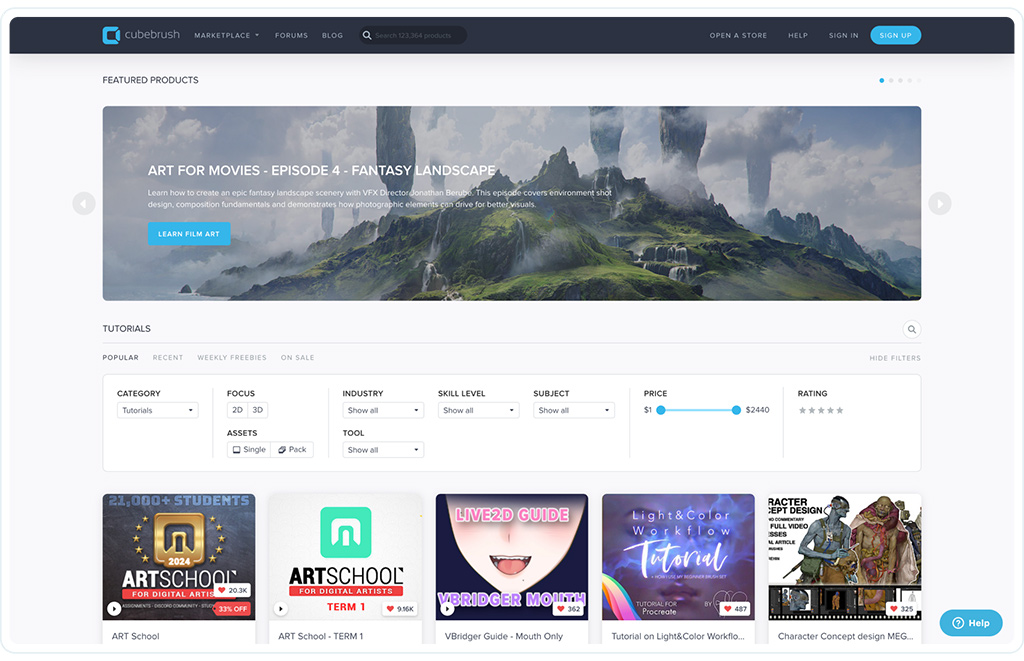
Cubebrush Platform by Shakuro
One great example is Cubebrush, a digital marketplace built for artists. At first glance, it is not the same as a traditional online course platform, but the product challenges overlap more than they seem. The platform had to support a large content catalog, individual seller spaces, a smooth shopping experience, and a structure that worked well across devices. The client came with the idea of an e-commerce platform where people could open their own store and present their content, and Shakuro worked on the project through the full lifecycle: strategy, prototyping, UI/UX design, web development, and support.
That kind of work is directly relevant to course platforms. Many online education products also depend on content organization, creator or instructor accounts, strong search and navigation logic, and a clean user experience that does not get in the way of discovery or purchase. In Cubebrush, the team also used a UI Toolkit to help multiple developers work on the product in parallel while keeping the interface consistent. That is the kind of decision that becomes important when the platform is expected to scale and evolve over time.
The other useful point in this case is that the product was built not just to function, but to stay fast and clear. The interface was designed to remain highly legible and quick across devices while still looking polished. That balance matters in UX-driven products of any kind, including course platforms, where users need to browse content, return to it easily, and move through the system without friction.
So while the exact format may differ from one project to another, the core strengths carry over: building scalable web applications, shaping SaaS-like product logic, and designing interfaces that support the business instead of getting in its way.
Why Work with an Online Course Platform Development Company
An online course platform is easy to underestimate.
At first, it can seem like a fairly standard product: upload lessons, connect payments, give users access. But once the platform starts growing, the complexity shows up quickly. Content has to be managed properly. Video has to work without friction. Payments have to match access rules. The admin side has to stay usable. And the whole system has to keep working as more users and more courses appear.
That is where a team with experience in eLearning products usually has an advantage.
First, there is architecture. If the platform is built without growth in mind, problems tend to show up later—in performance, in admin workflows, in content management, or in places where new features are hard to add. A good development company helps avoid that by thinking about scale early, before the product becomes harder to change.
Second, there is UX/UI. In course platforms, this is not just about nice screens. Users need to understand where they are, what they have access to, how to continue learning, and how to pay without confusion. If the interface feels messy, even strong content starts to feel worse.
There is also the question of speed. A team that has worked on similar products usually moves faster not because it rushes, but because it does not waste time solving familiar problems for the first time.
And finally, monetization matters. Selling one course is simple enough. Selling subscriptions, bundles, different access levels, or corporate plans is not. That logic affects both the user side and the admin side, so it helps when the team already understands how these products make money in practice.
So the value is not just in development itself. It is in making fewer wrong decisions early.
FAQ
What drives the cost of online course platform development?
The feature set drives cost the most, and there is no fixed price because scope varies so widely between projects. Registration, course pages, lesson access, payments and a simple admin panel keep a build manageable. Subscriptions, bundles, certificates, quizzes, analytics, extra user roles and custom dashboards make it heavier. Video storage and streaming, expected user numbers, and integrations such as CRM sync or email automation push the budget up further.
What should an online course platform MVP include?
An online course platform MVP should launch with course management, video lessons, user accounts, payments and a basic admin side. That scope is enough to get the product live and test demand before spending money on features nobody has validated. Marketplace functions such as instructor dashboards, payout logic, moderation tools, reviews and advanced analytics belong to a later, much bigger stage of the project.
Should I build a custom online course platform or sell through a marketplace?
A custom online course platform pays off once you are building an education business rather than simply hosting content. Third-party marketplaces are useful at the start, but they limit branding, give you little control over user data, impose standard monetization rules and leave almost no freedom to shape the learning experience. Owning the platform removes those limits, at the price of development and ongoing support.
Which monetization model should an online course platform support?
Choose the monetization model before design starts, because it changes the whole online course platform. Subscriptions suit a growing course library, bundles work when several related courses sell together, and corporate training needs team access, internal admins and account-level reporting. A marketplace model adds instructors, payouts and moderation. Each model affects user roles, payment logic, dashboards and access rules, so leaving it vague often leads to a rebuild.
What support does an online course platform need after launch?
An online course platform needs active support after launch, since real traffic exposes weak points that testing missed. Expect to watch performance closely, fix bottlenecks in infrastructure, slow pages or admin workflows, and scale parts of the system as usage grows. Content changes, integrations need updates and small issues pile up, so plan for someone to own maintenance from the start rather than treating it as optional.
How do I choose a development partner for an online course platform?
Choose a team that has shipped eLearning or content-heavy products and can explain how it would plan architecture for growth before the product becomes hard to change. Check their UX work: learners should always see what they can access, how to continue and how to pay. They should also understand subscriptions, bundles, access levels and corporate plans, since that logic touches both the learner and admin sides.
Final Thoughts
First, you need to define what and who you are teaching, and why people would buy it. Then comes the platform, which has to make that content easy to access and easy to manage. After that, monetization becomes part of the product too, whether the business sells subscriptions, single courses, bundles, or something more complex. And if the platform starts growing, scaling is no longer a technical detail in the background. It becomes part of the day-to-day reality.
A few things make the biggest difference here. The first is content quality. If the material is weak, the platform will not save it. The second is UX. People need to find courses, move through lessons, and come back without friction. The third is scalability. A platform that works for the first hundred users should not start falling apart when the audience gets larger.
So the goal is not just to launch. It is to build something that can support the business after launch too. If you need a custom online course platform built around your product, content, and monetization model, Shakuro can help with that.
Related reading