
Educational SaaS platform development means building one learning product that many schools, companies, or instructors use by subscription, with courses, content delivery, billing, and analytics shared across tenants. An MVP where instructors upload videos and quizzes and students take tests, with user accounts and basic billing, costs about $50,000–100,000. An enterprise EdTech SaaS with SSO, FERPA and GDPR compliance, strict tenant isolation, and deep HR or student information system integrations costs approximately $250,000–500,000+.
One-off builds work for fifty users and start to wheeze at five thousand. SaaS changes the model: a multi-tenant architecture lets you onboard a new partner in minutes instead of building a separate product for each one. The platform often shares its core with learning management systems, while subscription billing, pricing tiers, and tenant isolation add their own work.
Here we look at types of educational SaaS platforms, key features, a step-by-step development process, cost, scaling and billing challenges, and our own education software development projects, including Proko and CGMA.
For those who prefer to listen rather than read, this article is also available as a podcast on Spotify.
What is an Educational SaaS Platform?
It’s software that delivers learning experiences over the internet, usually for a recurring fee. Instead of buying a license, installing it on a server in the basement, and forgetting about it until it crashes, you subscribe. The provider hosts everything in the cloud. You just log in and go.
The big difference between a custom edtech SaaS platform and the traditional LMS of the past really comes down to three things.
First, multi-tenancy. Old-school LMSs were often single-tenant, meaning every client got their own separate installation. If you had ten clients, you had ten servers to manage. Ten databases to back up. It was a logistical mess. SaaS platforms use a multi-tenant architecture where one instance of the software serves multiple customers. Their data is kept separate, sure, but the codebase is shared. This is huge for efficiency.
Second, billing. Traditional models relied on hefty upfront licensing fees. SaaS uses subscription billing. Monthly or annual payments. This aligns the vendor’s interests with the customer’s success. If the product sucks, people cancel. Simple as that.
Third, updates. With legacy systems, upgrading was an event. A painful, expensive event that happened maybe once a year. With SaaS, updates are continuous. You push a fix on Tuesday, and everyone has it by Wednesday. No downtime, no manual patches. It keeps the product fresh and secure without the headache.

Online Education Web Platform Design by Conceptzilla
Types of Educational SaaS Platforms
Not all EdTech SaaS is created equal. Depending on who you’re selling to, the platform looks very different.
LMS SaaS Platforms
These are your standard multi-tenant learning management systems, for example, platforms like Canvas or Blackboard, but modernized. They’re designed for schools and universities. The focus of EdTech SaaS development here is on structure: courses, grades, attendance, and compliance. Because they’re multi-tenant, a district can spin up new schools instantly. The infrastructure handles the load, so the team doesn’t have to panic every September when students flood back in.
Corporate Training SaaS
This side of the house is all about employee development with platforms like Degreed or Cornerstone. The vibe of enterprise learning systems is different. It’s less about grades and more about skills gaps, compliance training, and career paths. Companies need to track who watched the harassment prevention video and who completed the safety module. It’s often integrated directly into HR systems. The stakes are high because non-compliance can lead to legal issues. So, reliability and audit trails are key.
Course Platforms and Marketplaces
Creator economy stuff like Teachable, Kajabi, or Udemy. These are platforms for selling and managing courses. The user isn’t necessarily an institution; it’s an individual expert or a small business. The focus is on marketing tools, payment gateways, and student engagement. It’s less about rigid curriculum and more about conversion. Can you turn a visitor into a buyer? Can you keep them watching? The course platforms’ architecture needs to handle spikes in traffic when a popular creator launches a new course.
Core Components
Regardless of the type, there are a few building blocks you will have to use in SaaS LMS development. You can’t really skip these if you want to scale.
Multi-Tenant Architecture
We mentioned this, but it bears repeating. Such architecture is the foundation. You need a database design that isolates customer data securely while sharing resources efficiently. If you get this wrong, you’ll spend years refactoring.
Subscription and Billing System
You need a robust way to handle recurring payments. Apart from charging a credit card, you need to deal with upgrades, downgrades, proration, failed payments, and churn. Integrating with something like Stripe or Chargebee is common, but you still need to build the logic around it. What happens when a school’s contract expires mid-semester? You need rules for that.
Content Delivery System
Learning is media-heavy: videos, PDFs, interactive quizzes, etc. You need a Content Delivery Network (CDN) to serve this stuff fast, anywhere in the world. If a video buffers for ten seconds, you’ve lost the student’s attention. So the system needs to transcode videos into different qualities automatically and store assets efficiently.
Analytics Dashboards
In education platform development, data is actually useful. Teachers want to see who’s falling behind. Managers want to see completion rates. You need real-time analytics that don’t slow down the main application. This often means using a separate data warehouse or processing pipeline. Don’t try to run complex reports on your live transactional database. It’ll choke.
API Integrations
No platform lives in isolation. You need to talk to other systems, like Student Information Systems (SIS), HR platforms, Zoom, Slack, etc. That’s why a strong API strategy is essential. You want webhooks for real-time updates and RESTful or GraphQL endpoints for data exchange. If your platform is an island, it’s a hard sell. People want their tools to play nice together.
Getting these components right takes time and careful planning. But when they click into place, the machine hums. That’s when you can start focusing on what really matters: the learning experience.
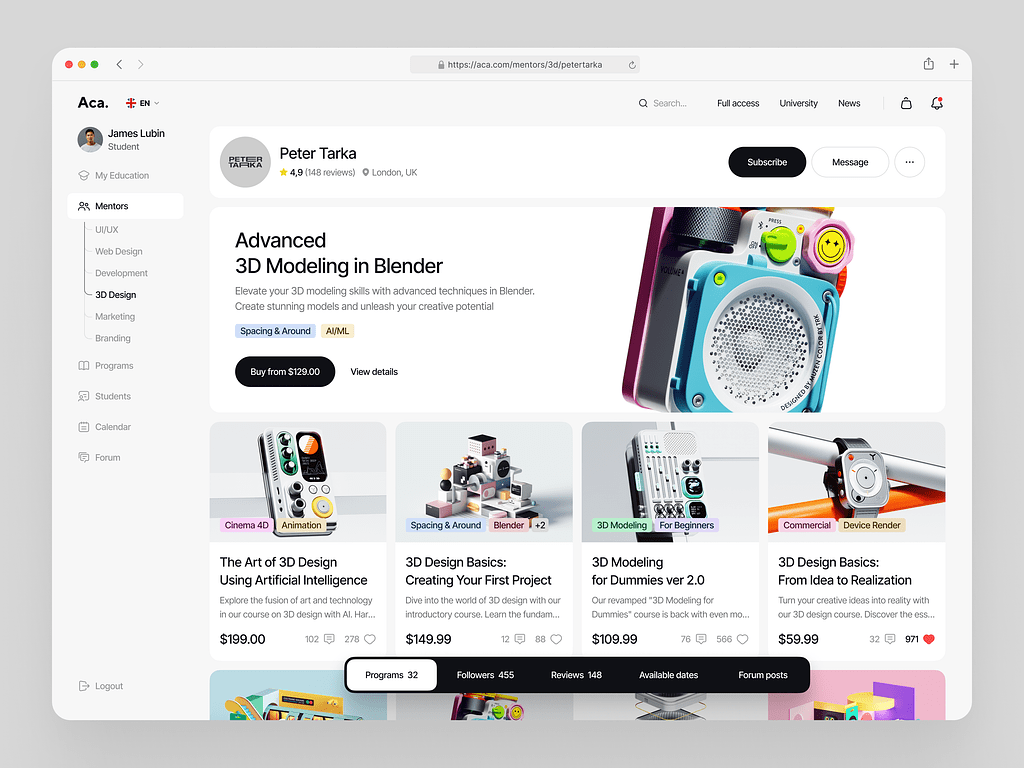
Online Courses Platform Website Dashboard by Shakuro
Key Features of Educational SaaS Platforms
Multitenancy
This is the backbone. If you’re building for multiple organizations, say, ten different school districts or fifty corporations, you can’t give each one their own server farm. It’s too expensive and a nightmare to maintain. The modern approach means one instance of your software serves everyone.
But multi-tenant LMS development has one challenge—data isolation. School A should never, ever see School B’s student records. It’s a lawsuit. In my experience, the best approach is logical isolation at the database level. Every query needs a tenant ID attached to it.
Sounds simple, but developers forget. They write a query, test it with one user, and it works. Then they launch, and suddenly data leaks happen. Scalability ties into this too. When one tenant has a spike in usage, it shouldn’t drag down the performance for everyone else. You need resource throttling and smart load balancing.
Subscription and Billing System
Money matters. And in SaaS, billing is a continuous relationship. You need a system that handles recurring payments effortlessly. But it’s more than just charging a card every month.
Think about plan management. Schools might start with a basic package and then want to add premium features mid-year. Can your system handle that upgrade seamlessly? What about prorating the cost? If a company adds ten new employees in March, do they pay for the full year or just the remaining months? Your billing engine needs to figure that out automatically. If you’re sending manual invoices for every little change, you’re going to drown in administrative work.
When you create learning management with SaaS, automate subscriptions. Use tools like Stripe Billing or Recurly, but make sure your internal logic matches the complexity of your contracts. Because let’s be real, enterprise contracts are rarely simple.
Content Management and Delivery
At the end of the day, people are here to learn. So, how do they get the material? You need a robust Content Management System (CMS). For video-based learning systems, it should be easy for instructors to upload videos together with PDFs, quizzes, and interactive modules. Drag-and-drop is pretty much standard now. If it’s clunky, teachers will hate you.
But delivery is just as important as storage. Video is heavy. If you’re hosting raw video files on your main server, you’re asking for trouble. Your CDN should be able to serve that content quickly, whether the user is in New York or Nairobi. Also, think about formats.
Not everyone has high-speed internet. Your system should transcode videos into different resolutions automatically. As for the quizzes, they need to be flexible. Multiple choice, sure, but also open-ended, peer-reviewed, maybe even code submissions for tech courses. The CMS needs to handle all of this without breaking a sweat.
Analytics and Reporting
As important as it is, data is useless if you can’t understand it. Teachers and managers don’t want raw logs. They want insights. Who is struggling? Who is ahead? Which course has the highest drop-off rate?
You need learning analytics systems that are clean and actionable. Real-time tracking is a nice-to-have, but historical trends are often more valuable. Can a manager see that completion rates dropped by 15% last month? Can a teacher identify students who haven’t logged in for a week?
These alerts can save a student from failing. But beware of data overload. Don’t show everything, just what matters. And make sure the reports are exportable. Administrators love their Excel sheets.
Personalization and AI Features
When done right, AI can really enhance educational SaaS platform development. I don’t mean replacing teachers, but augmenting the experience.
Content recommendations are a great starting point. If a student finishes a module on Python basics, the system should suggest the next logical step. Maybe intermediate Python, or maybe a related topic like data structures. It keeps learners engaged because they don’t have to hunt for what’s next.
Adaptive learning is the holy grail. The platform adjusts the difficulty based on performance. If a user aces a quiz, skip the remedial stuff. If they struggle, offer more practice problems or alternative explanations. AI-driven personalization is hard to build. You need good data models and a lot of testing. But when it works, it feels magical. Students feel seen. They feel like the course is tailored for them. That’s a powerful retention tool. Just don’t slap an AI-powered label on everything. Make sure it actually adds value.
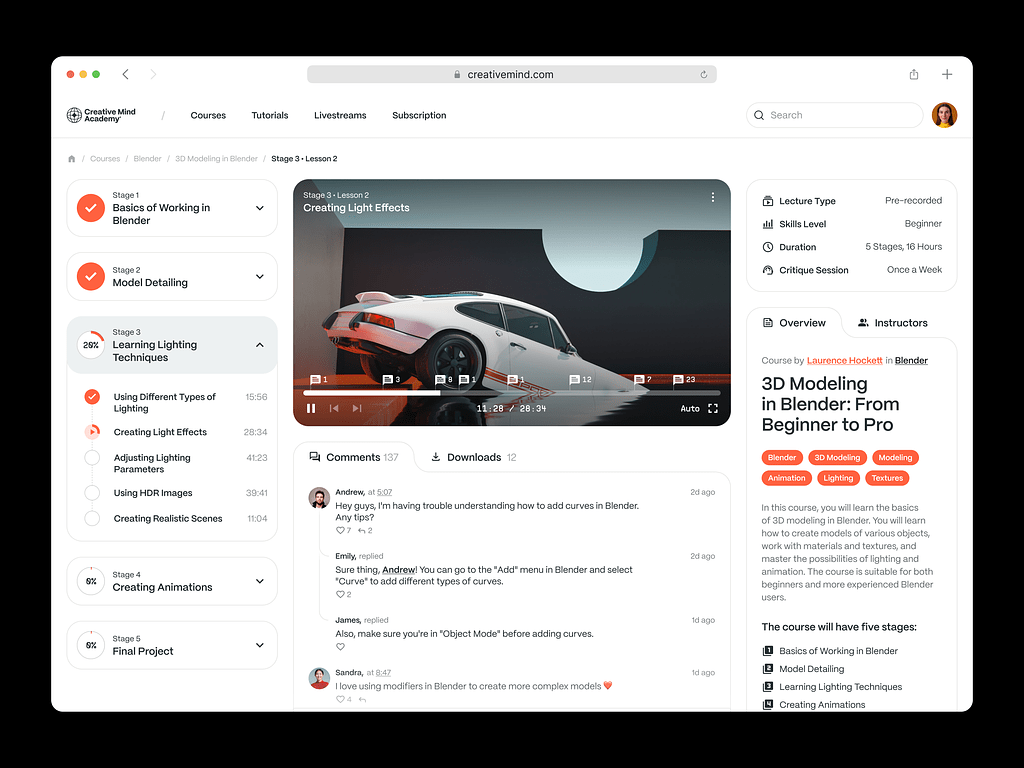
Online Courses Platform Website by Shakuro
Educational SaaS Platform Development Process
Building an EdTech SaaS platform is a marathon. And if you try to sprint the whole way, you’ll burn out before you even hit product-market fit.
Here’s how the process usually looks when it’s done right.
1. Product Strategy and SaaS Model Design
Before you write a single line of code, you need to know who you’re building for. It sounds obvious, but you’d be surprised how many founders skip this. Are you targeting K-12 schools? Universities? Corporate HR departments? Each has different needs, different budgets, and different decision-making processes.
The same goes for the pricing model. Do you charge per user or per school? Flat fee? If you charge per student, you need a system that can handle fluctuating numbers. Schools enroll and drop students all the time. Your model needs to reflect that reality.
The platform structure also impacts learning platform SaaS development. Are you building a marketplace? A closed LMS? A hybrid? Define the core value proposition early. If you try to be everything to everyone, you’ll end up being nothing to anyone.
2. UX/UI Design for SaaS Platforms
Design in EdTech is often an afterthought. But, on the contrary, it’s one of the most important things. If teachers find your interface confusing, they won’t use it. If students find it boring, they’ll tune out. So you need to design distinct dashboards for different roles.
Admins also need high-level overviews. They care about billing, user management, and compliance. For instructors, you have to deliver easy-to-use tools to create content and grade assignments quickly. They don’t have time to click through five menus to upload a PDF. And learners want a clean, distraction-free environment to acquire new skills.
To create such a design, your team should focus on usability and reduce friction. Every extra click is a chance for someone to give up. Remember, good design aids retention. If it feels good to use, people stick around. It’s that simple.
3. Choosing the Technology Stack
Every EdTech platform developer has their favorite language. But for SaaS, you want stability and speed, so the team has to adapt.
For the backend, Python with FastAPI is a strong contender. It’s fast, async-ready, and great for data-heavy tasks. Another popular choice is Node.js, especially if your team is already full-stack JavaScript. Ruby on Rails is getting old, but it’s still incredibly efficient for getting MVPs out the door. Don’t underestimate it.
On the frontend, React is the safe bet with a huge community and lots of libraries. Vue is also excellent if you prefer something a bit more lightweight and flexible.
As for databases, PostgreSQL is the workhorse and one of our go-to options. It’s reliable, handles complex queries well, and supports JSON if you need some NoSQL flexibility. MongoDB can be useful for unstructured data like logs or flexible course content, but be careful with transactions.
Infrastructure-wise, Docker is non-negotiable. Containerize everything, and if you’re planning to scale, look at Kubernetes early. It’s complex, yes, but it manages your containers beautifully once you get the hang of it.
4. Multi-Tenant Architecture Design
We talked about this before, but designing a custom edtech SaaS platform is different from just understanding it. You need to decide on your isolation strategy. Database-per-tenant? Schema-per-tenant or just a tenant ID column in every table?
Database-per-tenant is the most secure but hardest to maintain. Schema-per-tenant is a middle ground. Tenant ID is the easiest to start with but requires strict discipline in your code. Whichever you choose, stick to it because mixing strategies is a recipe for disaster.
As I said before, access control is critical when you manage personal data. That’s why you have to use Role-Based Access Control (RBAC). A student shouldn’t be able to access admin endpoints and vice versa. Test this thoroughly and think about scalability. Can your architecture handle ten thousand tenants? Ten million? Plan for the future, even if you’re far from being an enterprise SaaS system.
5. Integrations and APIs
Your platform doesn’t exist in a vacuum and needs to talk to other systems. Payment gateways like Stripe, for example. You’ll also likely need to integrate with CRMs like Salesforce or HubSpot for sales teams and analytics platforms like Mixpanel or Segment to track user behavior. Segment itself is a customer data platform (CDP), so it can also merge those signals into one profile per learner.
It’s wiser to build a robust API from day one with REST or GraphQL, documenting it well. If you plan to have partners or third-party developers build on your platform, your API is your product. Treat it with respect. Webhooks are your friend for real-time updates. Don’t make other systems poll your API every five seconds and push data when it changes.
6. Testing and QA
Don’t skimp on testing, especially with billing. I can’t stress this enough: a bug in your billing logic can cost you thousands of dollars in refunds and lost trust. During education platform development, write automated tests for every payment scenario. Upgrades, downgrades, cancellations, failed cards, etc.
Scalability needs too. Use load testing tools to simulate thousands of users hitting your platform at once. Does it crash? Does it slow down? Find the breaking points now, before a live launch. What’s more, put yourself into users’ shoes and validate user flows. Walk through the entire journey as a teacher, a student, and an admin. Is it intuitive? Are there dead ends?
7. Deployment and Scaling
Launch day is exciting, but it’s just the beginning. Apply CI/CD pipelines to automate your deployments. Manual deploys are error-prone and stressful, so automate the routine things. This will help your testers to focus on critical points.
Scaling is an ongoing process, and you need to monitor your metrics. CPU usage, memory, database connections, and others. Set up alerts, and when things start to tick up, you want to know before your users do. Still, it’s better to scale your infrastructure horizontally. Add more instances, not just bigger servers. It’s more resilient. When you receive feedback, keep iterating to improve the product.
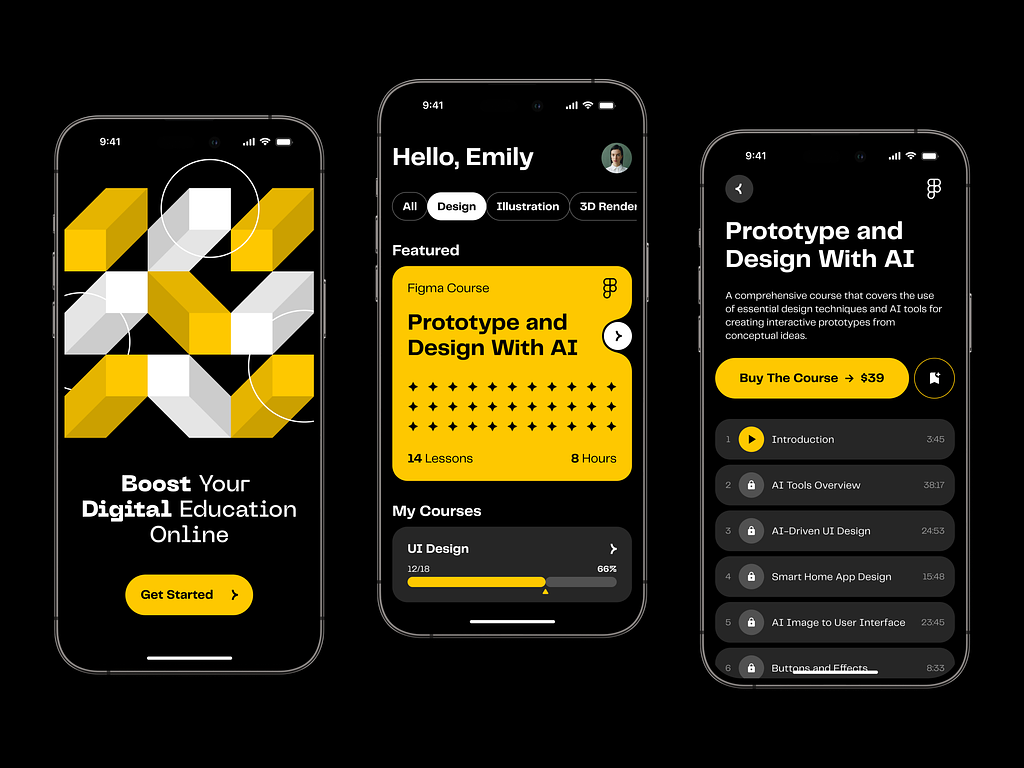
Online Course Educational Mobile App by Shakuro

Cost of Educational SaaS Platform Development
If you ask five different agencies, you’ll get five different answers. And they’ll all be right, in their own way. But there is one truth: it’s almost always more than you think. Not because developers are trying to rip you off, but because complexity hides in the corners. You plan for the happy path, but then you realize you need to handle edge cases you didn’t even know existed.
Multi-tenant architecture complexity is a huge driver. If you go with a simple “tenant ID in every table” approach, it’s cheaper upfront. But if you need strict data isolation for enterprise clients, like separate databases or schemas for each school district, the engineering effort jumps significantly. You’re building infrastructure that needs to be secure, scalable, and easy to manage. That takes senior-level talent. And senior talent isn’t cheap.
Are you building a basic course player? Or are you adding live video streaming, AI-driven recommendations, gamification, and peer-to-peer grading? Each feature adds layers. Video streaming alone requires transcoding, storage, and CDN costs. AI features need data pipelines and model training. It adds up fast. Don’t try to build everything at once. Pick the core value and stick to it.
Integrations are another hidden cost sink. Every third-party service you connect to—Stripe for payments, Salesforce for CRM, Zoom for classes—requires development time. You need to handle authentication, error handling, and data syncing. When those APIs change (and they will), you need to update your code. In learning platform SaaS development, it’s ongoing maintenance.
The same goes to scalability requirements. Building for 100 users is vastly different from building for 100,000. If you anticipate rapid growth, you need to invest in robust infrastructure from day one. Kubernetes clusters, load balancers, and auto-scaling groups. It’s more expensive to set up, but it saves you from a catastrophic rewrite later.
So, what does this look like in real numbers? Well, it varies by region and team structure. But let’s look at two common scenarios.
Example scenarios
MVP SaaS Learning Platform
Let’s say you’re a startup founder. You want to validate your idea, therefore, you need a basic platform where instructors can upload videos and quizzes while students can watch them and take tests. You need user accounts, basic billing, and a simple admin dashboard.
For such a project, the team can be small: one backend dev, one frontend dev, maybe a part-time designer. Off-the-shelf tools for billing and hosting will likely cut here. No custom AI, no complex integrations. Just the basics.
As for the price, you might be looking at $50,000 to $100,000. It could be less if you use no-code tools or buy a white-label solution, but you’ll lose flexibility. It could be more if you hire a premium agency. But for a custom-built MVP, that’s a realistic range. It gets you to market. It lets you test.
Enterprise EdTech SaaS
Now, imagine you’re building for large university systems or corporate enterprises. You need strict compliance (FERPA, GDPR). You need single-sign-on (SSO). You need advanced analytics, custom reporting, and deep integrations with existing HR or Student Information Systems. You need multi-tenancy with high isolation. You need 99.9% uptime guarantees.
This isn’t a two-person job. It requires a team of senior edtech platform developers, DevOps specialists, QA testers, and security experts. You’re building for scale and security from day one. The development cycle is longer, and the testing is more rigorous.
Consequently, the expenses will be much higher, approximately from $250,000 to $500,000+. That’s just for the initial build. Maintenance, updates, and support will add another 20-30% annually. It’s a significant investment, however, enterprise contracts are also much larger. The ROI is there, but the barrier to entry is higher.
Educational SaaS platform cost by scope, based on the two scenarios above:
| Educational SaaS platform | MVP SaaS learning platform | Enterprise edtech SaaS |
| Scope | Video and quiz uploads, user accounts, basic billing, simple admin dashboard | FERPA/GDPR compliance, SSO, advanced analytics, HR/SIS integrations, high tenant isolation, 99.9% uptime |
| Team | One backend dev, one frontend dev, maybe a part-time designer | Senior developers, DevOps specialists, QA testers, security experts |
| Initial build | $50,000 to $100,000 | Approximately $250,000 to $500,000+ |
| Maintenance, updates, support | — | Another 20-30% annually |
The key is to be honest about where you are. Don’t build an enterprise solution if you’re validating an MVP. And don’t build an MVP if you’re signing contracts with Fortune 500 companies. Match the investment to the stage.
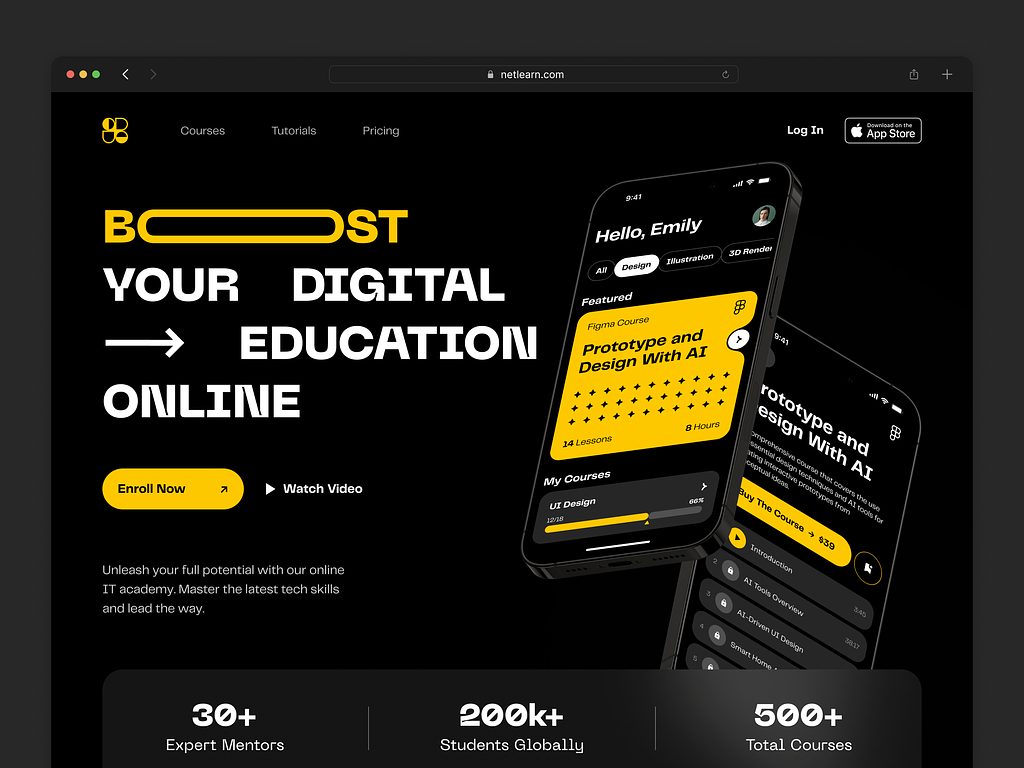
Online Education Website UI UX Design by Shakuro

Common Challenges in EdTech SaaS development
Look, if building EdTech SaaS was easy, everyone would be doing it. Plenty of promising startups stumble because they hit walls they didn’t see coming. It’s usually the same four hurdles.
Designing Scalable Multi-Tenant Systems
The technical backbone. When you start, having all your customers in one database feels fine. But then you land that first big district contract. Suddenly, you have 50,000 students logging in at 8 AM on a Monday. If your architecture isn’t solid, the whole thing grinds to a halt. Apart from storing all that data, isolating it is also a challenge. You need to make sure Tenant A never sees Tenant B’s data.
Quite often, scaling doesn’t mean adding more servers. It’s about database sharding, caching strategies, and load balancing. If you don’t plan for this early, you’ll spend months refactoring while your competitors are shipping features. It’s painful. You have to think about tenancy from day one. Don’t treat it as an afterthought.
Managing Subscription Billing
Money is awkward, especially when it’s recurring. You’d think charging a credit card every month is a solved technology. And technically, it is. Stripe, Chargebee, Recurly—they handle the heavy lifting. But the logic around it is on you.
What happens when a school wants to add 500 students mid-cycle? Do you prorate? How? What if they downgrade? What if a payment fails three days before the semester starts? Do you lock them out immediately? You need grace periods, dunning management, and clear communication. These are just a few questions you have to answer during multi-tenant LMS development.
Enterprise contracts rarely fit into neat monthly boxes. They have custom terms, annual invoicing, and complex usage caps. Your billing system needs to be flexible enough to handle these edge cases without requiring manual spreadsheets. If your finance team is spending half their week manually calculating invoices, you’ve failed. Automate it or hire someone who can.
Maintaining Performance Under Growth
Speed matters. In education, attention spans are short. If a video takes five seconds to load, a student clicks away. If a quiz submission times out during an exam, you’ve got an angry parent on the phone.
As you grow, your database gets bigger. Queries get slower. Images pile up. Without proper optimization, your platform becomes sluggish. You need monitoring showing which endpoints are slow before your users do. Use caching aggressively, CDNs for static assets, and database indexing for frequent queries.
But optimizing for scale often conflicts with speed of development. Adding a cache layer takes time. Sharding a database takes time. You have to balance moving fast with staying stable. It’s a constant tug-of-war. If you ignore it, technical debt accumulates. Eventually, you stop being able to ship new features because you’re too busy fixing old ones.
Performance is critical when it comes to mobile versions. Nearly 750 million people are using mobile apps for studying, and approximately 47% of organizations use mobile devices in their training programs. That’s why you have to build mobile-first learning systems.
User Retention and Engagement
This isn’t a technical challenge, strictly speaking. But it’s arguably the hardest. You can build the most scalable, secure, billable platform in the world. But if teachers don’t like using it, you’re dead.
SaaS LMS development has a notorious churn problem. Schools try new tools, get frustrated by the learning curve, and go back to what they know. Or students sign up for a course, get excited, and drop off after week two.
Retention is about engagement. Is the interface intuitive? Does it save them time? Does it provide value immediately? You need feedback loops. Surveys, usage data, direct conversations. You need to understand why people leave. Is it the content? The UX? The price?
Don’t underestimate the power of community. Platforms that foster interaction between students or between teachers tend to stick. People stay for the network, not just the tool. But building that community takes effort. It’s not a feature you can code in a sprint. It’s a culture you have to cultivate.
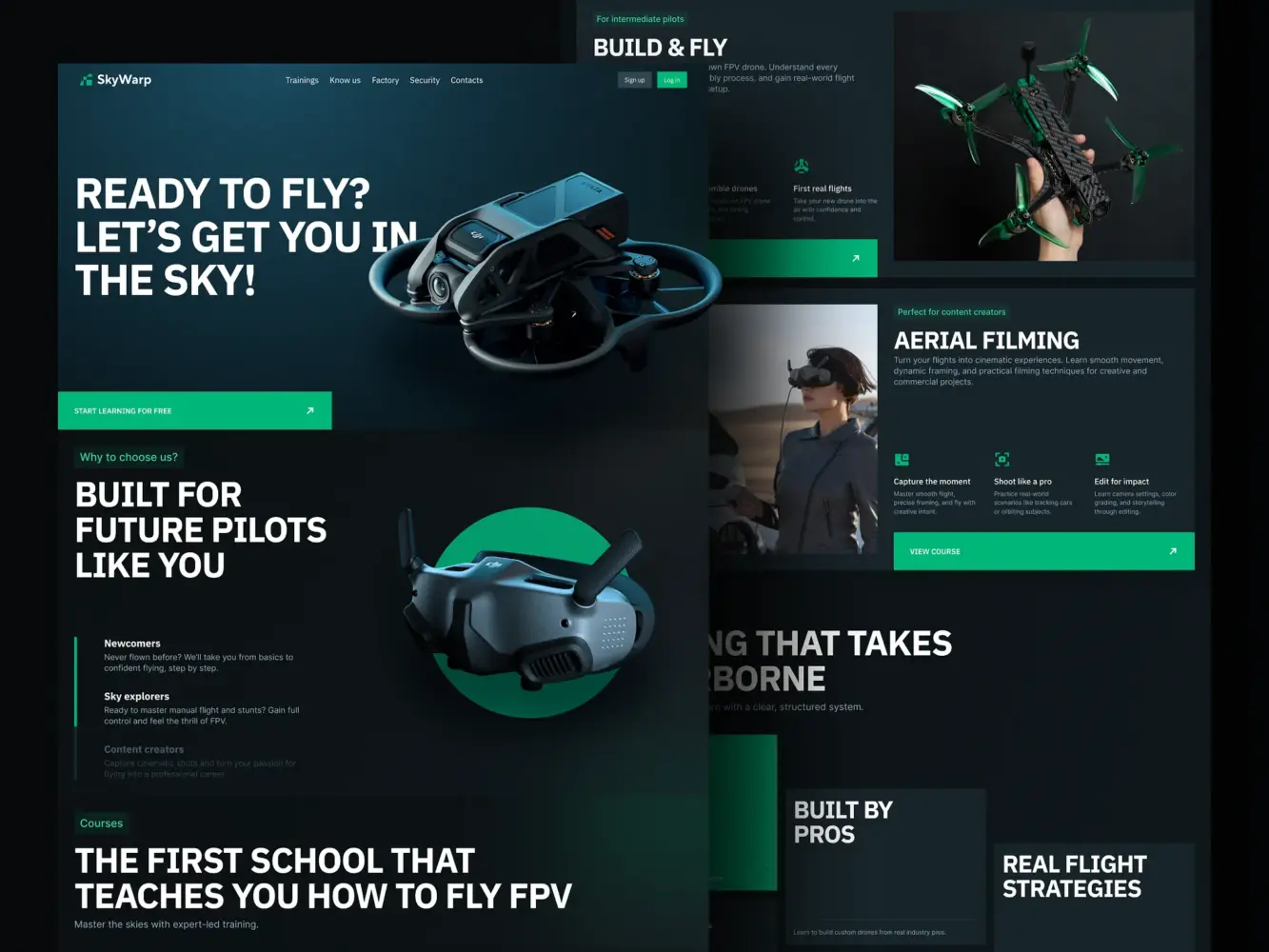
Landing Page for Drone Education Community by Shakuro
Our Experience in SaaS and EdTech Development
We at Shakuro have been working in this industry for a while now. We have witnessed how trends change, how technology transforms, and how EdTech has progressed from clunky courses on CD-ROMs to AI-powered courses. And we can tell you that nothing beats experience.
Our core expertise lies in SaaS architecture. One size doesn’t fit all. Every customer has its own requirements. For some, there is a need for rigid data isolation. For others, there must be the ability to scale rapidly with multi-tenancy. This means designing scalable yet flexible architectures.
Instead of just writing the code, we help you build the business. Or at least, the technical foundation that allows you to grow. We’ve helped startups go from zero to hundreds of thousands of users. We know the pain points. We know where the bottlenecks hide. Whether it’s database optimization, caching strategies, or microservices decomposition, we’ve done it.
As edtech platform developers, we like solving the hard problems. Like how to sync progress across devices in real-time. They require custom engineering. And that’s where we shine. However, none of that technical prowess matters if the product is unusable. That’s why UX-centered design is at the heart of everything we do. We don’t just hand off designs to developers and hope for the best. We look for friction points. Is this button hard to find? Is this workflow confusing?
So, if you’re looking to build something lasting, something that scales, something that actually helps people learn—we’ve been there.
Proko: Build a SaaS Art Learning Platform
Stan Prokopenko, the founder of Proko, wanted a social-oriented, more advanced platform where people could take video courses, speak with like-minded artists, and improve their skills. Features like personal recommendations, convenient payment options, online streaming, and gamification should enhance the learning process.
First of all, we made the user flow easier and added different social networking elements, such as comments, following, feeds, etc. Together with video content prioritization, it increased the user engagement. When working on the mobile version, we faced a challenge: to fit a large amount of data and content into small screens. We kept everything user-friendly using dashboards and visual hierarchy. In addition, we established anti-spam filters, subtitles, and chatbots thanks to artificial intelligence technologies.
CGMA: Create a Virtual Classroom
CG Master Academy wanted to look for ways of taking its existing CMS to another level since it reached certain limitations.
We have upgraded the obsolete CMS based on Drupal, creating an opportunity for scalability, performance, and security. In order to implement a virtual classroom, we integrated Discord and Zoom, allowing chatting in real time.
As for the payment system, we integrated PayPal with automated PDF generation. So the system could generate receipts and certificates with ease.
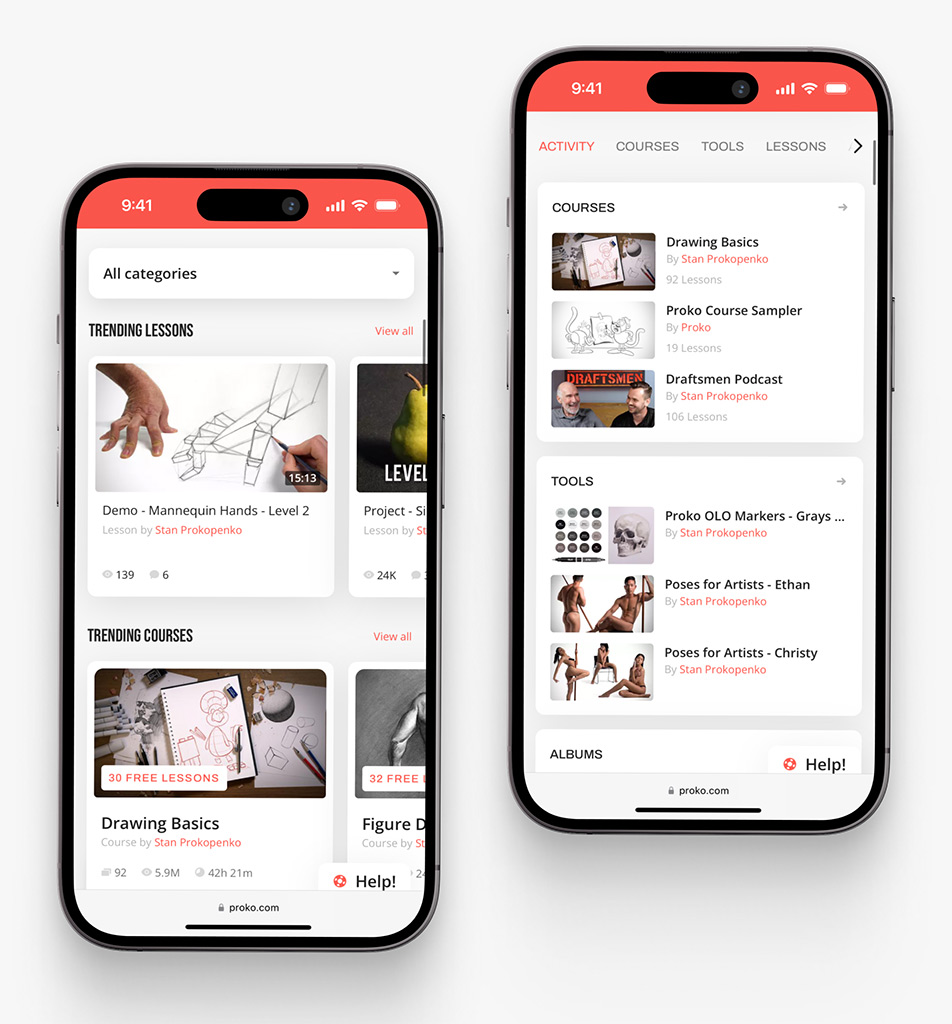
Proko app on mobile by Shakuro
Why Work with an Educational SaaS Development Company
You could start edtech SaaS development in-house. Hire a team, rent an office (or set up Slack channels), and start coding. It’s your call. But building a scalable platform is more complex than creating a simple landing page.
That’s why partnering with a specialized agency makes sense.
SaaS expertise is the biggest factor. Such agencies know where the bodies are buried, so to speak. When you work with a team that has built these systems before, you skip the learning curve. You don’t have to figure out how to handle prorated upgrades or data isolation from scratch. They’ve already solved those problems for other clients. That knowledge transfers directly to your project. It saves time. It saves money. And it saves you a lot of headaches.
Startups often focus on features. “Look, we have AI!” “Look, we have gamification!” But if the foundation is weak, none of that matters. When you spike in traffic, does the system hold? Can you onboard a new school district in minutes, not weeks? In learning platform SaaS development, a specialized agency builds with scale in mind from day one. They design for growth. They use infrastructure that expands automatically. You might not need to support a million users today, but you want the ability to do so tomorrow without rewriting your entire codebase.
Fast time-to-market is crucial. In EdTech, timing is everything. School years start in August. Corporate fiscal years start in January. If you miss those windows, you’re waiting another year. That’s a long time to burn cash without revenue. An experienced team moves faster since they have established processes and reusable components. Such agencies know how to prioritize an MVP that actually delivers value.
And finally, UX-driven development. This is where many tech-focused teams fail. They build powerful engines but put them in cars with no steering wheels. In education, usability is retention. If a teacher finds your platform confusing, they won’t use it. If a student finds it boring, they’ll drop out.

E-learning Education Web Platform by Conceptzilla
FAQ
How much does edtech SaaS development cost?
A custom-built MVP of a SaaS learning platform typically costs $50,000 to $100,000, while an enterprise edtech SaaS product costs approximately $250,000 to $500,000+ for the initial build. Maintenance, updates and support add another 20-30% annually. Prices move with multi-tenant isolation requirements, features such as live video or AI recommendations, third-party integrations and how much traffic the infrastructure must handle from day one.
How long does educational SaaS platform development take?
Timing is set less by a fixed number of months than by scope and market windows. An MVP with user accounts, basic billing, video lessons and quizzes has a much shorter cycle than an enterprise product, where compliance, SSO, deep integrations and more rigorous testing make development longer. Plan the launch around your buyers: school years start in August and corporate fiscal years in January.
Should I use a white-label or no-code tool instead of custom edtech SaaS development?
A white-label solution or no-code tools can lower the cost of a first version, but you lose flexibility. They fit when you only need to test demand with basic courses, accounts and payments. Custom edtech SaaS development makes sense when you need your own multi-tenant model, billing rules that match your contracts, integrations with SIS or HR systems, or features like adaptive learning.
Which multi-tenant architecture suits an edtech SaaS product?
Choose one isolation strategy and stick to it. Database-per-tenant is the most secure but hardest to maintain, schema-per-tenant is a middle ground, and a tenant ID column in every table is the easiest start but demands strict discipline in every query. Enterprise clients such as school districts may require stricter isolation. Add role-based access control and resource throttling so one busy tenant cannot slow the others.
What does billing need to handle in an edtech SaaS platform?
Billing has to cover far more than a monthly charge: upgrades and downgrades mid-year, proration when a school adds students mid-cycle, failed payments with grace periods and dunning, and enterprise contracts with annual invoicing and usage caps. Stripe, Chargebee or Recurly process payments, but the business rules around them are yours to build. Automated tests for every payment scenario protect against costly refunds.
What compliance and enterprise requirements affect edtech SaaS development?
Enterprise buyers such as university systems and large corporations usually expect FERPA and GDPR compliance, single sign-on, advanced analytics with custom reporting, deep integrations with HR or Student Information Systems, high tenant isolation and 99.9% uptime guarantees. Meeting these requires senior developers, DevOps specialists, QA testers and security experts, which is why enterprise builds cost far more than an MVP.
Final Thoughts
We’ve covered a lot of ground. If I had to boil educational SaaS platform development all down to the absolute essentials, three things matter most.
First, scalability. You can have the best curriculum in the world, but if your platform crashes when fifty students log in simultaneously, you’re done. Build for growth from day one.
Second, retention. Acquiring users is expensive. Keeping them is where the profit is. If teachers and students don’t love using your product, they’ll leave. Focus on UX. Focus on value. Make their lives easier, not harder.
And third, monetization. You’re running a business, not a charity. Your billing system needs to be robust, flexible, and invisible. Recurring revenue is the lifeblood of SaaS.
Building an educational SaaS platform is hard. But it’s also deeply rewarding. You’re building tools that help people learn, grow, and succeed. That’s worth getting right.
If you’re ready to take the leap, don’t go it alone. Partner with a team that understands the landscape. A team that has seen the pitfalls and knows how to navigate them. Let’s build something that lasts. Something that scales. Something that actually makes a difference.
Related reading