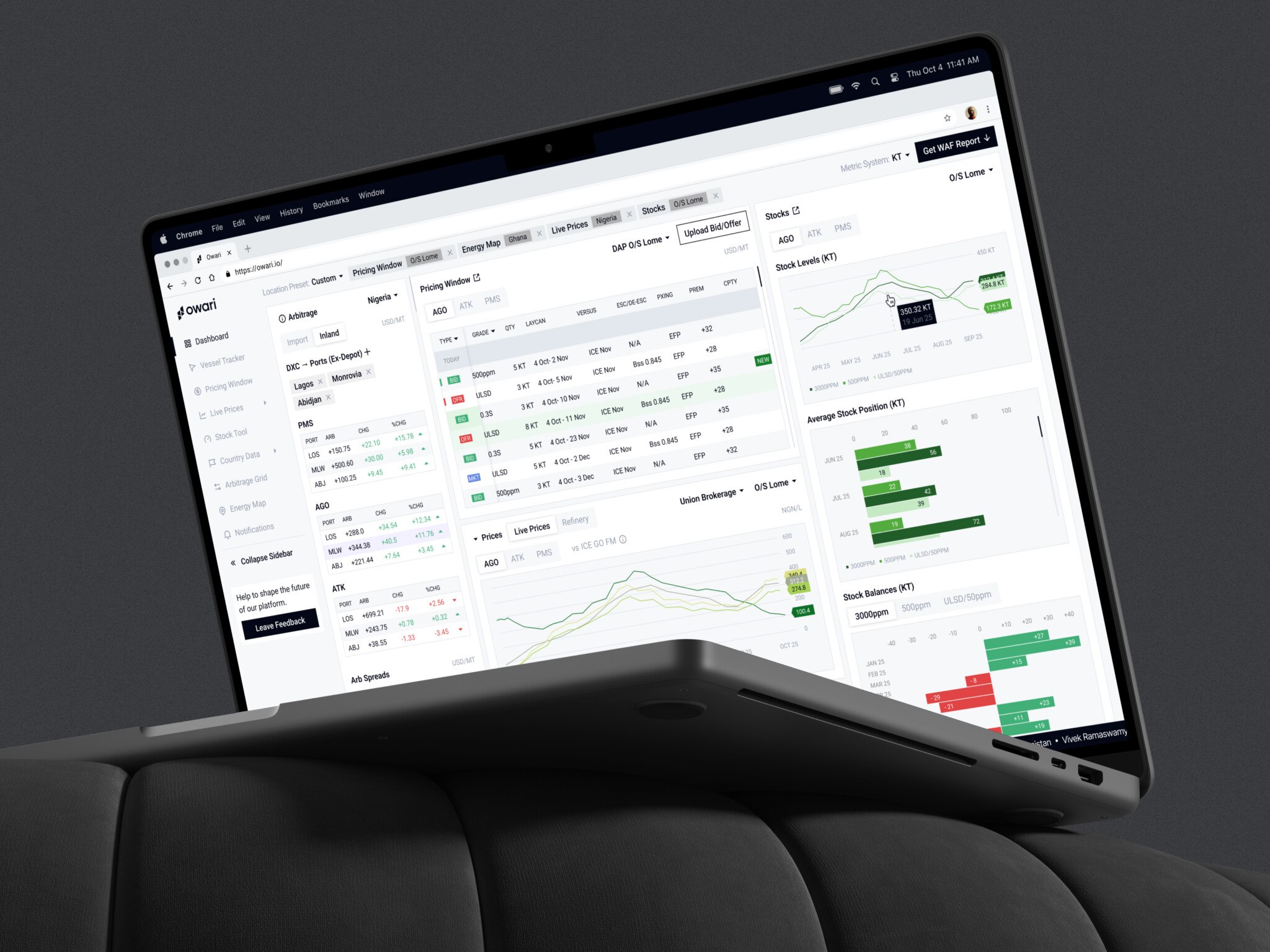
Financial data platform development is the work of collecting, checking, and serving the records a financial business uses to move money, measure risk, and explain a number to a customer, an auditor, or a regulator. A data platform for financial services is not a trading screen and not a marketing profile of the customer. It is the layer that records which source a balance came from, which identifier joined the files, who is allowed to see the row, and whether the figure still matches the system of record.
This guide is about those decisions: sources, normalization, lineage, access, and data quality. It does not price a build. An estimate depends on the source list, the licenses, and how close the platform sits to the ledger. The same article is available as a podcast on Spotify.
What Is a Financial Data Platform?
A financial data platform is the infrastructure that turns source files and events into numbers the business is willing to defend. The consumer might be a mobile balance, a credit decision, a risk report, or a warehouse query. The platform’s job is not to invent a better number than the source. It is to keep the source, the mapping, and the served figure in a state that can be explained.
Four uses show up in almost every finance data platform, and they must not share one unchecked copy:
- Operations need the current account, payment, or position, with a visible stale state when the feed stops.
- Risk needs a grouped exposure that can be reconciled back to the books.
- Regulatory and management reporting need a number that can be reproduced for a past date.
- Product analytics need behavior and performance, separated from the ledger so a dashboard query cannot lock the system of record.
For banks, the Basel Committee uses a narrower term. In Principles for effective risk data aggregation and risk reporting (BCBS 239), risk data aggregation means defining, gathering, and processing risk data according to the bank’s risk reporting requirements. Paragraph 13 addresses the principles initially to systemically important banks, at group and solo level. National supervisors may apply them more widely, in proportion to the size, nature, and complexity of the bank. A non-bank fintech firm is not automatically in that scope. If the firm still reports balances, credit exposure, or client assets, the same questions apply as engineering tests: which source is authoritative, is the set complete, and is the process written down.
Three neighboring products get mistaken for this one. A custom trading platform accepts and shows orders and positions. It consumes market and account data. It is not the place to keep the only copy of the general ledger. A customer data platform joins identity for service and marketing. It is not the system of record for a balance. Data warehouse development builds a store for queryable history. A warehouse can sit inside a financial data platform. It does not, by itself, decide entitlements or reconcile a payment file.
| Product | Job | Must not be asked to |
| Financial data platform | Defend a financial number from a named source | Place the order or replace the core ledger |
| Trading software | Accept, route, and show orders and positions | Be the only copy of the general ledger |
| Customer data platform | Join customer identity for service and marketing | Be the system of record for a balance |
| Data warehouse | Store history that can be queried | Be the live license check on a vendor feed |
A banking app is a consumer of this layer. The balance on the screen is only as good as the account extract behind it. The shot below is a mobile banking concept, not a data-platform build.
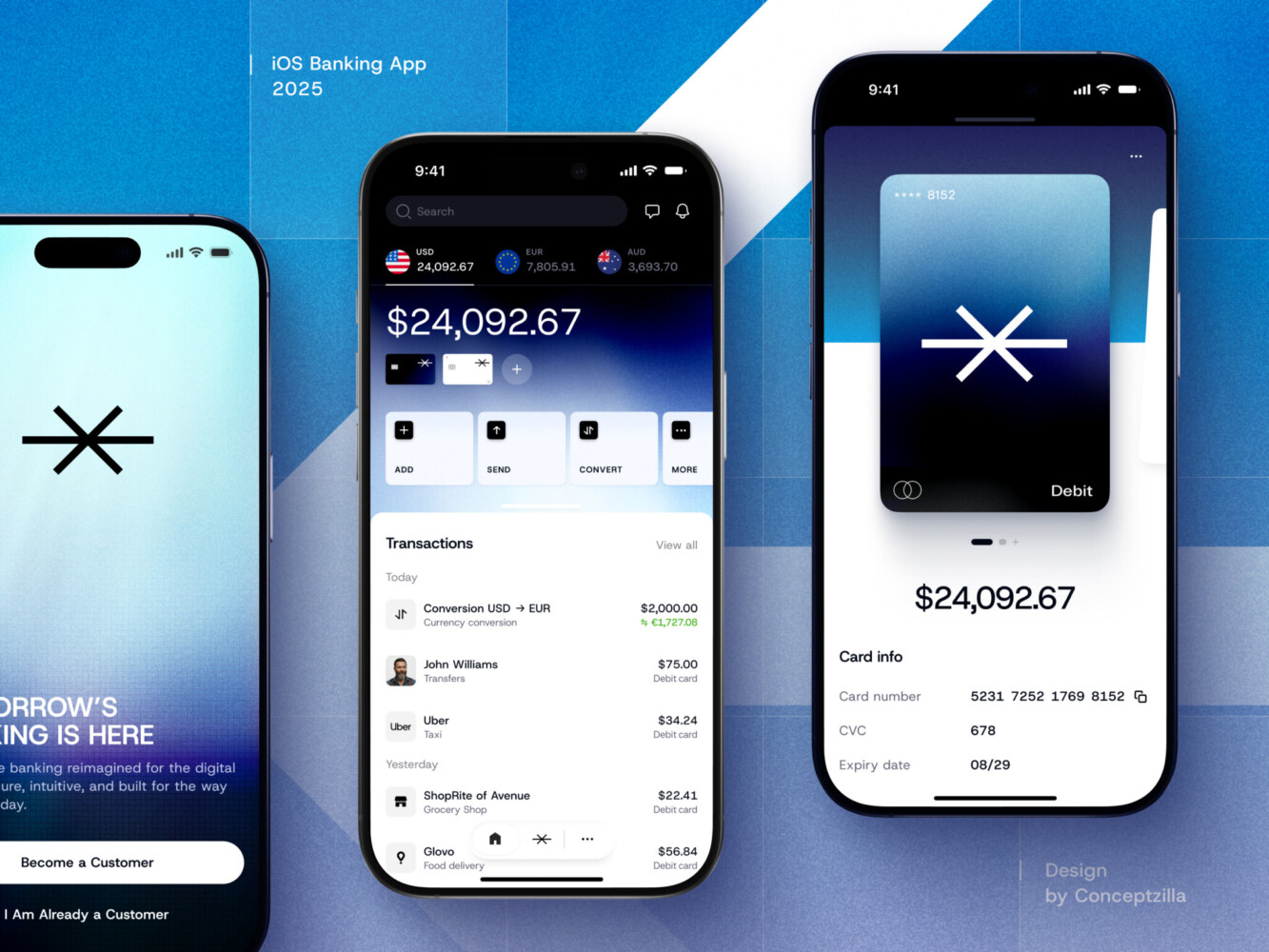
Mobile banking app by Conceptzilla
Types of Financial Data Platforms
Teams usually need one dominant type and a thin contract to the others. Building all three as one undifferentiated store is how a reporting query ends up on the ledger.
Transaction and account records
A financial account data platform serves payments, transfers, balances, and statements. The system of record is usually a core banking platform or the processor behind a payment gateway software integration. The platform may store an extract, a mapped event, and a reconciliation result. It should not silently become a second ledger.
A neobank app shows the result. If the app and the extract disagree, the product has a data defect, not a layout defect. Continuity matters here in a specific way: a debit that leaves one account and never arrives in another is not an analytics rounding error. The platform has to keep the original event, the mapped record, and the break.
Market data, not the trading system
Market data is a licensed feed: prices, reference data, corporate actions, and sometimes depth. The platform’s job is to record the vendor, the entitlement, the instrument identifier, and the time of the last successful update. A trading system, including algorithmic trading software, reacts to that feed. Missing a tick is a market-data problem. Placing an order is a trading-system problem. Mixing the two in one service makes both harder to audit.
A social product can show a quote next to a comment. The stock analytics platform guide is that social layer: it still needs the identifier, the normalization, and a stale-data state. The community layer does not create the feed.
Analytics, credit, and performance
An analytics data platform reads from the transaction and market layers and serves reporting, segmentation, and performance views. A banking analytics platform is this type when the questions are about portfolios, arrears, or product use, not about posting the next payment. A financial performance platform is the same idea pointed at results the business already defines: revenue, loss, completion, or exposure. The platform does not get to invent the definition. BCBS 239 paragraph 37 expects a bank in scope to keep a dictionary of the concepts it uses, so the same term means the same thing across the organization. That dictionary is useful even when the paper itself is not in scope.
Credit data platform development is a specific case of this type. A credit decision needs at least three files on one party identifier: the application as submitted, the bureau or partner response as received, and later performance from servicing. Keep the bureau file unchanged. Map it beside the original. Do not flatten it into a single score column and throw the response away. There is no universal bureau timetable to publish here. The contract with that provider sets the freshness, and the platform should show the time of the file it actually used.
The crypto trading app below is a consumer of account and market data. Designing the app does not design the feed, the entitlement check, or the ledger extract.
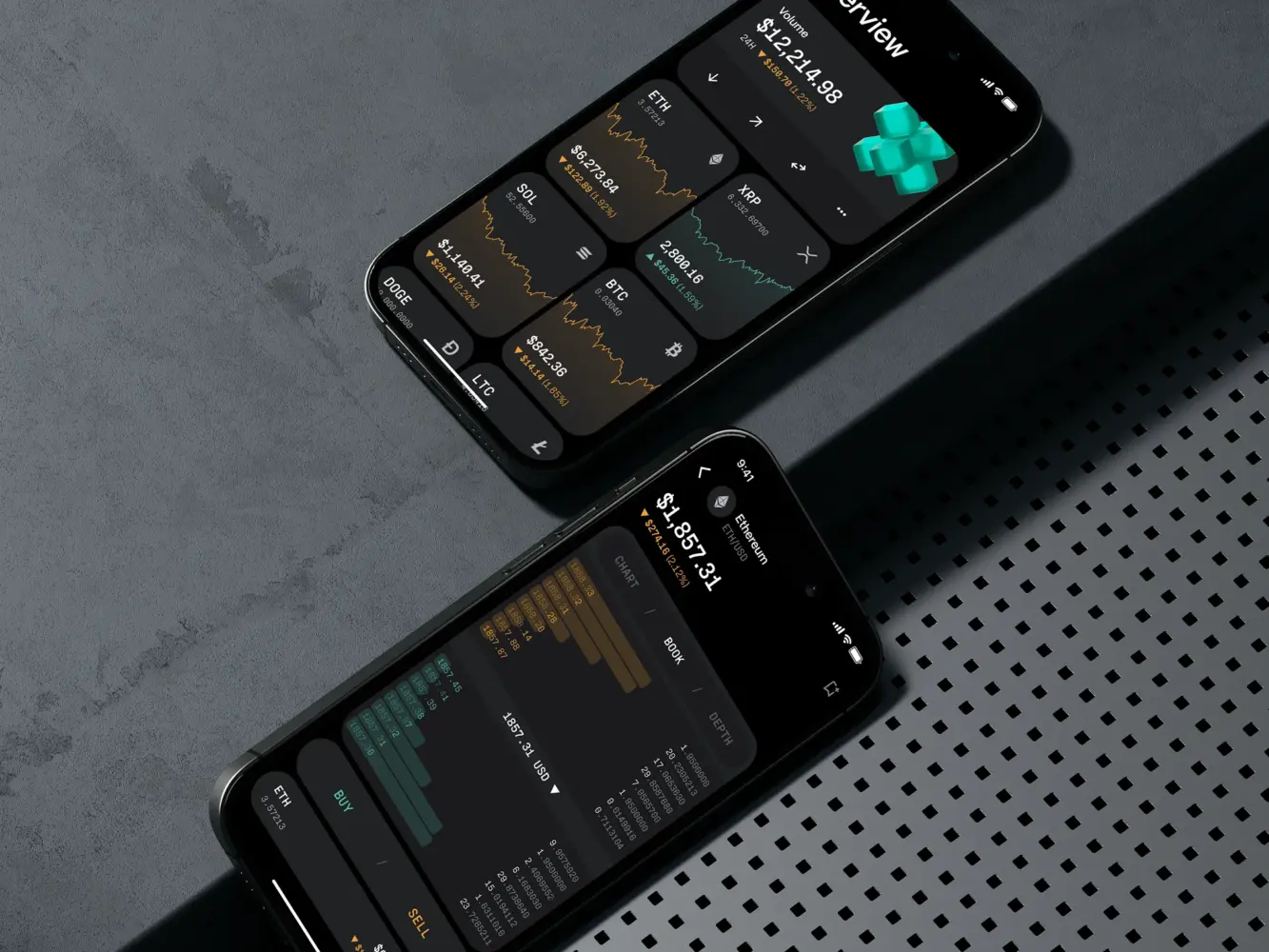
Crypto Trading Mobile App by Shakuro
Key Features of Financial Data Platforms
The features that matter are the ones that survive a dispute: where the row came from, what it was called, who ran the job, and who was allowed to read it.
Sources and the system of record
Data integration starts with a source catalog, not with a connector library. For each feed, name the owner, the system of record, the license, the arrival clock, and what the platform is allowed to do with a late or partial file. BCBS 239 paragraph 36(d) tells a bank in scope to strive toward a single authoritative source for risk data for each type of risk. Paragraph 36(c) says risk data should be reconciled with the bank’s sources, including accounting data where appropriate. Outside that scope, the same rule still prevents a common failure: three teams each export a spreadsheet and call it the balance.
Typical sources, and the decision each one forces:
- Core ledger or account system: this is usually the system of record for a balance. The platform stores an extract and a reconciliation, not a competing balance that can be edited.
- Payment events: keep the original message and a mapped record. The scheme name belongs in the catalog. A refund and a chargeback are new events, not silent edits of the first payment.
- Market vendor: the license decides who may see the instrument, not only whether the file arrived.
- Reference and party data: legal entities and instruments need stable identifiers before any join.
- Customer master: identity and consent can inform access. They do not replace the ledger.
Identifiers and normalization
Normalization is a versioned map, not a one-time cleanup. Two files that both say “the client” are not joined until they share an identifier the business accepts.
For legal entities, the Legal Entity Identifier is a 20-character alphanumeric code. GLEIF states that every LEI is unique and can represent only one entity, and that the code connects to reference information from authoritative local sources, including ownership, in the Global LEI Index. The same page describes ISO 17442 as a global standard, a single unique identifier for each legal entity, supported by high-quality data, and a public good available free of charge. An LEI does not tell you the balance. It tells you which entity the balance belongs to.
For instruments, the Financial Instrument Global Identifier is a 12-character alphanumeric identifier issued under the Object Management Group. OpenFIGI states that a FIGI, once assigned, never changes, and that a retired FIGI is not reused. The code itself is semantically meaningless: it carries no facts about the instrument or the issuer. Those facts sit in metadata. The page also describes a check digit using the Modulus 10 Double Add Double technique. A ticker is a trading symbol that can be reused or mean different things on different venues. A FIGI is not a ticker. The platform should store both when both arrive, and should not treat them as interchangeable.
A practical mapping record has five fields: source identifier, target identifier, scheme, valid-from time, and the person or job that approved the map. Without the valid-from time, a later corporate action rewrites history.
Lineage and reconciliation
Lineage is the record of which job read which dataset and what it wrote. The OpenLineage specification defines a job as a process that consumes and produces datasets, a dataset as data with a unique name inside a namespace, and a run as one execution of that job with a start and a completion or failure time, identified by a unique id relative to the job. That is an engineering spec, not a statute. It is a concrete way to store the trail.
For banks in the BCBS 239 scope, paragraph 39 is stricter than a tool choice. Supervisors expect the bank to document and explain every risk-data aggregation process, automated or manual, including why a manual workaround exists, how critical it is to accuracy, and what will reduce its impact. Footnote 17 defines reconciliation as comparing items or outcomes and explaining the differences. A row count that matches is not a reconciliation if nobody can explain a difference in amount.
The financial data layer is the contract other systems are allowed to call: a named API or warehouse view, with a freshness time, an identifier scheme, and a statement of which source it reflects. Internal tables are not that layer. If a product reads the internal table directly, the contract does not exist.
Data pipeline development is how files and events get into that layer. Real-time data processing is justified only for the records whose consumer cannot wait for the next batch. A daily risk pack does not need the same path as a payment status. Principle 5 says the required timing depends on the nature and volatility of the risk and on its criticality. Copying a millisecond target from a trading system onto a monthly report only adds a second pipeline to reconcile.
Access, entitlements, and quality
Access is a data rule. A login proves who the person is. It does not prove that their license, role, or purpose allows that instrument, that legal entity, or that client’s positions. Market data entitlements fail in exactly this gap: the file is on the server, and the wrong desk can see it.
PCI DSS is a baseline of technical and operational requirements for payment account data. The Council describes it as a standard developed to protect payment card account data. It is not a general label for every financial table. If the platform stores payment account data, PCI scope has to be decided with the acquirer and the qualified reviewer, not assumed away because a processor exists. If the platform stores only a token, write down what the token replaces and who still holds the account data. Do not claim the warehouse is out of scope without that review.
Quality checks that belong in the first release are specific: the file arrived, the identifier column is populated, the amount still matches the source after mapping, and a late file is marked late. Principle 3 says data should be aggregated on a largely automated basis so as to minimise the probability of errors, and that controls surrounding risk data should be as robust as those applicable to accounting data. Principle 4 asks a bank in scope to capture material risk data and to make it available by business line, legal entity, asset type, industry, region, and other groupings the risk requires. Those are completeness tests, not a dashboard theme.
An analytics screen is not evidence that those tests exist. The interface below is a product surface. The pipeline is the part the screenshot does not show.
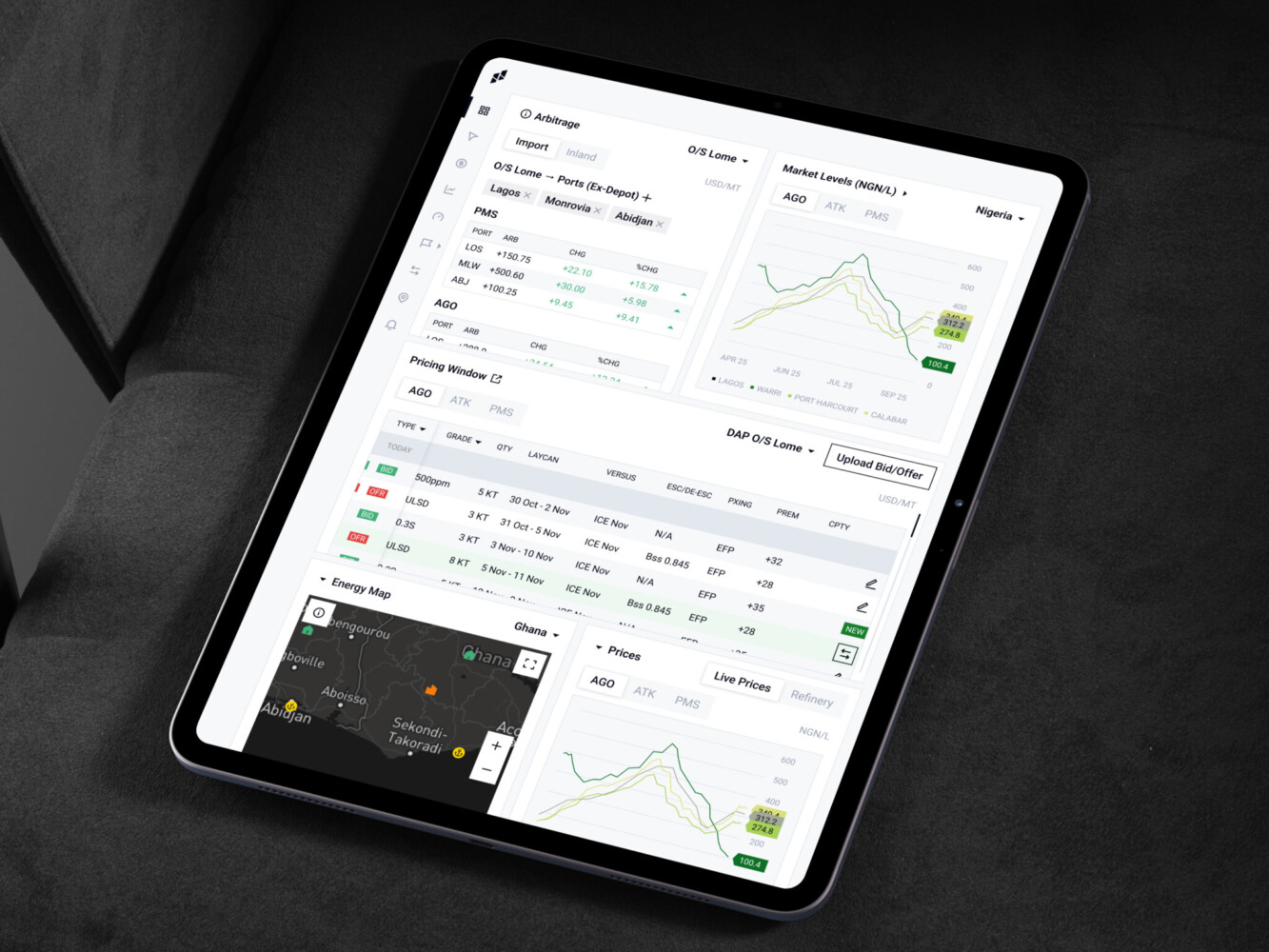
Owari platform by Shakuro
Financial Data Platform Development Process
The useful order is the order of decisions that are expensive to reverse. A technology list before a source catalog produces a platform that can store anything and explain nothing.
Finance data strategy
A finance data strategy names the numbers the platform must defend, the audience for each number, and the source that is allowed to change it. Start with one number, not with a platform diagram. Examples that are specific enough to build against: the customer-visible balance, the end-of-day exposure by legal entity, or the payment status a support specialist is allowed to quote. If two teams disagree on the definition, that disagreement is the project. A warehouse will not settle it.
Principle 2 asks a bank in scope to design and maintain data architecture that supports risk data aggregation and risk reporting in normal times and in stress, not only on a quiet Friday. For any firm, the practical version is a written answer to three failures: the vendor file does not arrive, the mapper rejects a row, and someone needs last quarter’s number after the mapping has changed.
The financial data layer
After the source catalog and the identifier map, define the financial data layer: the views and APIs other products may call. Each contract needs the identifier scheme, the freshness field, the source it reflects, and the entitlement check. Data engineering services cover the jobs that fill those contracts. Python app development is a common way to write the mapping and reconciliation jobs. It is not a requirement of the architecture. The language matters less than whether a failed run is visible and repeatable.
Serving that layer to people is a separate piece of work. Custom web application development fits internal review tools and the APIs products call. UI/UX design matters when an operator must see a break, a stale quote, or a missing identifier without reading a log. A BI dashboard can sit on a warehouse view. It should not be the only place a break can be found, and it should not query the live ledger to make a chart feel current.
The mobile banking concept below is the kind of surface that consumes the layer. The screen can be finished while the extract is still wrong. That is why the contract comes before the visual polish.
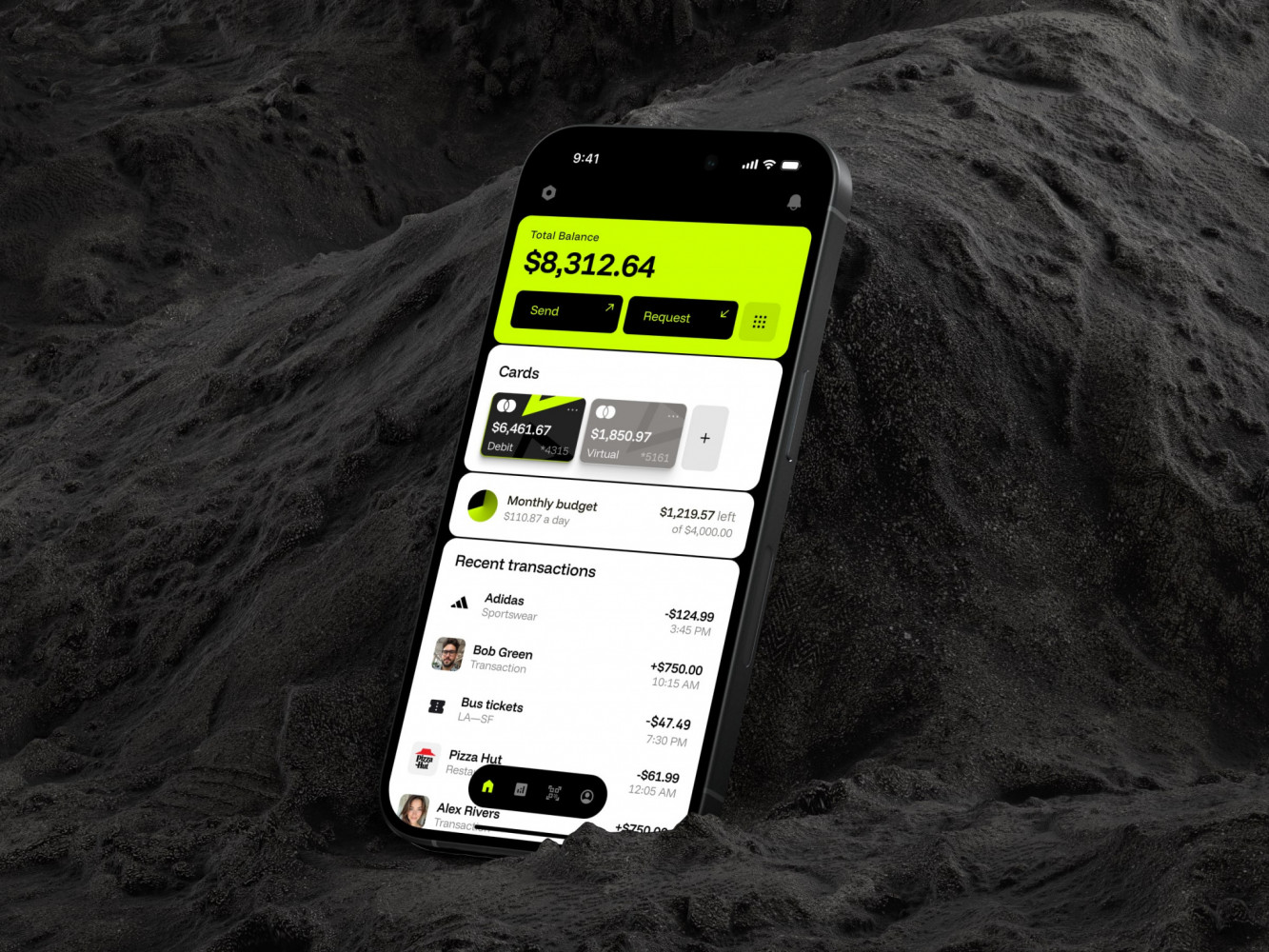
Mobile Banking App by Conceptzilla
What to test before calling it live
Test the explanations, not only the happy path. Replay a known file and compare the served amount with the source. Submit a late file and confirm the consumer shows the previous successful time. Change a mapping and confirm yesterday’s number does not move. Ask a user without the entitlement to open the instrument and confirm the row is absent, not merely hidden in the interface. Deploy the jobs only after those checks have an owner. Scaling a pipeline that cannot explain a difference just produces a faster unexplained difference.
Cost of Financial Data Platform Development
There is no honest single price for financial data platform development. A published range would describe a different source list from yours. The cost moves with the decisions below. A calculator can collect scope. It cannot see a vendor contract you have not listed.
What moves the estimate
| Driver | What changes the work | What it does not tell you |
| Sources and licenses | Each vendor file, API, and entitlement rule is its own connector and its own permission check | A dollar figure, or whether the license allows redistribution |
| Distance from the ledger | Reading a published extract is smaller than becoming the system of record | Whether the extract is complete or late |
| History and replay | Years of statements or ticks mean storage, reprocessing, and a way to reproduce an old number | A latency target for the live screen |
| Exception work | Breaks need a queue, an owner, and a written reason for any manual fix | That automation removes the need for judgment |
| Consumers | An API, a warehouse view, and a mobile balance are three contracts | That a finished screen proves the pipeline |
Compliance work belongs in the same list when it is real. A bank applying BCBS 239 has to document aggregation processes and manual workarounds. A platform that stores payment account data has a PCI DSS scoping conversation. Neither fact produces a standard fee. Certification, audit, and legal review are priced by the firms that perform them, against the actual environment.
What a first release can prove
A first release should prove one defended number. A workable set is: one system of record, the original file retained, a versioned identifier map, a reconciliation that explains differences, an entitlement check, and one consumer that shows freshness. That is an MVP in the sense that it can be wrong in public and still be diagnosed. It is not a promise that a bank-account aggregator, a particular database, or a fixed number of months is enough. Adding a second source is a new estimate, because the join and the license change.
What a wider system adds
A wider financial data system adds sources, history, and audiences. It may serve risk, finance, and a customer app from the same contracts. It still should not collapse the ledger, the market feed, and the marketing profile into one editable table. More consumers mean more entitlement rules and more reconciliation pairs. They do not, by themselves, justify a second system of record.
Bring the source list to a scoping conversation before asking for a quote. Get in touch and send the numbers the platform must defend, who consumes them, and which files are already the system of record. The calculator below is a way to start that scope. It is not a quote.

The banking concept below is a consumer again. The estimate is driven by the extract and the checks behind it, not by the number of screens.
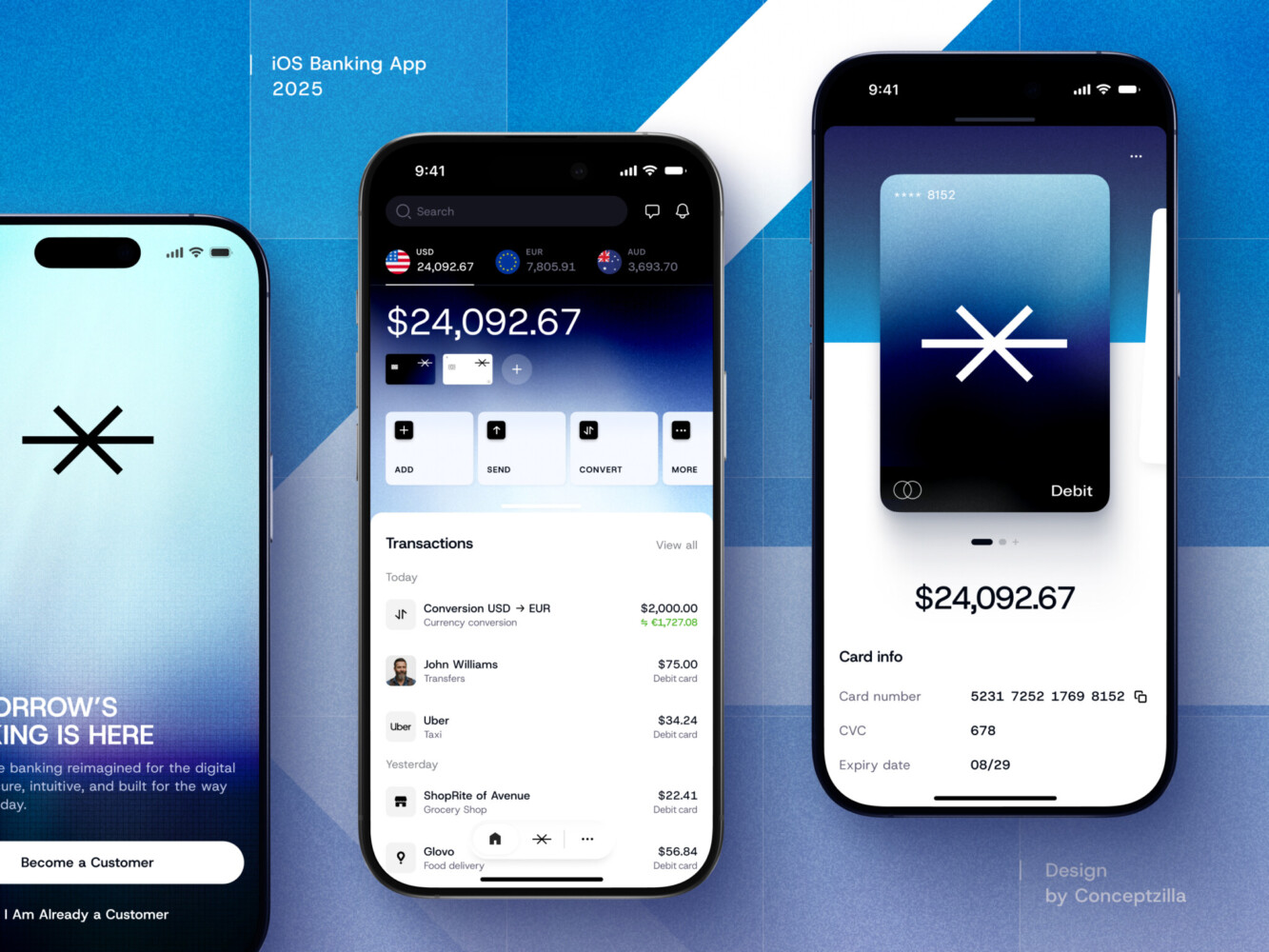
Mobile banking app by Conceptzilla
Common Challenges in Financial Data Platform Development
The failures that cost a rebuild are usually naming, freshness, and undocumented manual fixes. Volume comes later, and only after those three are visible.
Identifier breaks
Two files can describe the same payment or the same client and still fail a join. A ticker changes. A legal entity has an LEI in one file and a local registration number in another. A bureau file uses a different party key from the application. The platform should reject the join and keep both keys, not guess. A guessed join is how a credit file lands on the wrong person and a position lands on the wrong instrument.
A stale file that still looks live
Financial screens fail when an old value keeps the styling of a live value. The consumer needs the time of the last successful update and a state that does not look current after the clock expires. That rule applies to a balance, a quote, and a bureau response. A larger processing platform does not fix a screen that hides the age of the file. Store the arrival time even when the day’s volume is small.
Manual work nobody wrote down
Spreadsheets appear because a file is late or a mapping is wrong. BCBS 239 paragraph 39, for banks in scope, expects that workaround to be documented: why it exists, how critical it is, and how its impact will be reduced. For everyone else, an undocumented spreadsheet becomes the real system of record within a quarter. The platform should have an exception queue with an owner. A manual correction should be a new event, linked to the original row, not an overwrite.
Scaling the wrong thing
Teams scale storage or add a stream processor while the source catalog is still a wiki page. More capacity does not create a single authoritative source. It creates a larger unexplained copy. Scale the path only after replay and reconciliation already work on the current volume.
A management app can look complete and still be a client of unresolved data. The concept below is that kind of surface.

Abyss Crypto Management App by Conceptzilla
Our Experience in Fintech and Data Platform Development
Shakuro designs and builds the products that have to show financial data without pretending the screen is the source. The two public cases below are product work. They are not evidence of an exchange feed, a risk-aggregation engine, or a core ledger.
TraderTale
TraderTale is a fintech platform that turns trading performance into reputation. On the case page, the services are UI design and UX design. The work was a clear system for financial data on screen: a trade alert with chart, metrics, rationale, and risk profile, and a way to show progress without burying the numbers in game decoration. We did not build the brokerage, the market-data feed, or the ledger. The case is relevant here because the interface only works if those numbers stay tied to a source. It is not a financial data platform implementation.
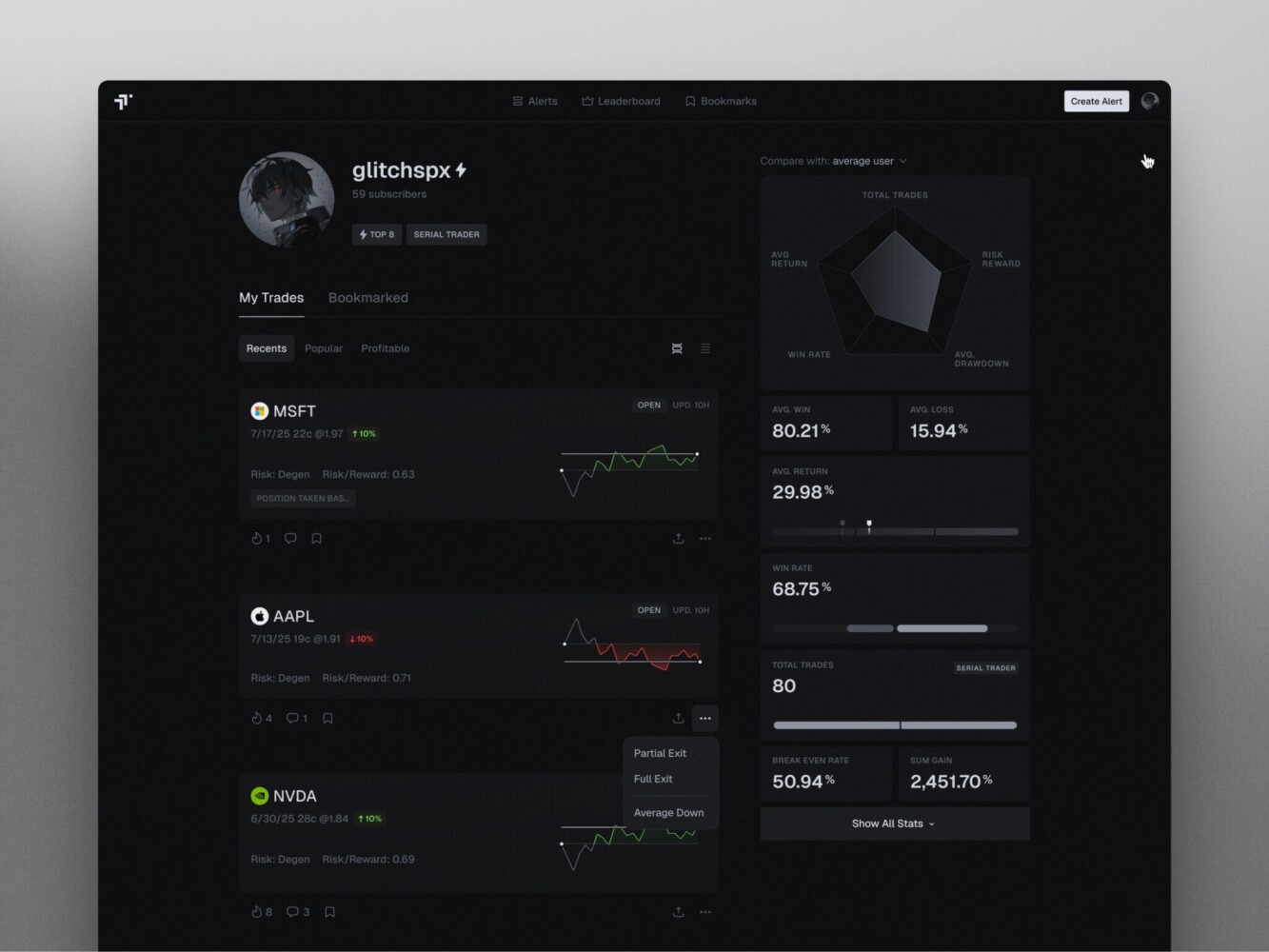
TraderTale: Social Platform for Traders by Shakuro
Symbolik Social
Symbolik Social is a social product around an existing financial analytics tool associated with Tom DeMark. The case page lists UI design, UX design, web development, and React. The frontend described there uses Next.js, React, and TypeScript. The backend described there is a C# and ASP.NET Core 6 API, with Entity Framework Core, MySQL, and WebSockets for real-time interactions in the product. That is an application and API for a social layer. The case page does not describe an exchange connection, the indicator engine, or a risk-data aggregation platform, and this article does not add those claims.
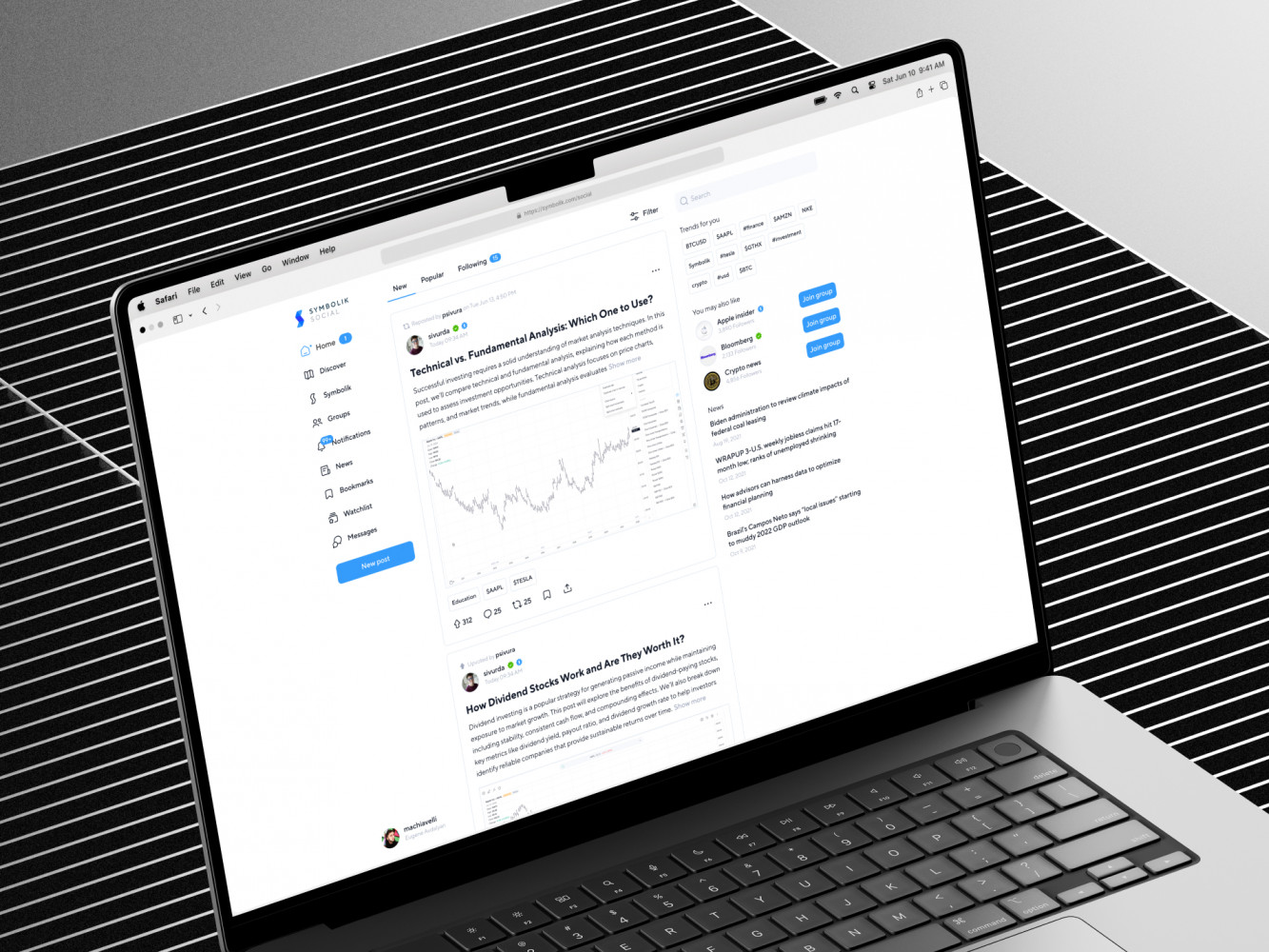
Symbolik case by Shakuro
If the product you need is the screen, the API, and the operational states around financial records, that is work we can scope. If the product you need is a licensed market-data plant or a bank’s risk-aggregation program under BCBS 239, say that at the start. Those are different projects, and a design case does not cover them. Fintech app development is the commercial home for the product work. The data contracts still have to be named before the interface is treated as done.
Why Work with a Financial Data Platform Development Company
A development partner is useful when the team can separate the screen from the source and can show that separation in a previous delivery, not only in a diagram. Data platform development services, in this sense, means scoping the source list, the identifier map, the reconciliation, and the consumer. It does not mean a fixed stack or a pre-priced platform.
What to ask before you hire
Ask four questions and expect concrete answers:
- Which system is allowed to change the number, and where is the copy labeled as a copy?
- Which identifier joins the files, and what happens when it is missing?
- How is a difference explained, and who owns the exception?
- Which of your public cases are interface work, and which are data infrastructure? Do not accept a design case as proof of a feed.
The team around that work is a set of roles, not a headcount slogan.
| Role | Owns | Does not own |
| Source owner in the business | Which file is official, and which definition of the number is accepted | The chart library or the deployment tool |
| Data engineer | Ingestion, the versioned map, and the reconciliation job | The vendor license negotiation alone |
| Application engineer | The API and a screen that can show a stale or broken state | The risk policy |
| Finance or risk reviewer | Whether a break is acceptable for that report | The deployment pipeline |
A small first release can be staffed with those roles part-time. A wider source list needs more of the same roles, not a different kind of promise. Experience with ledgers and payment events matters because a reversed transaction is a new event. Headcount does not substitute for that.
Get in touch when you can name the number and the source. We will tell you if the work is a product surface, a data contract, or both. We will not turn a concept shot into a claim about infrastructure we did not build.

The app below is another product surface. It does not show the pipeline, the entitlement check, or the reconciliation.
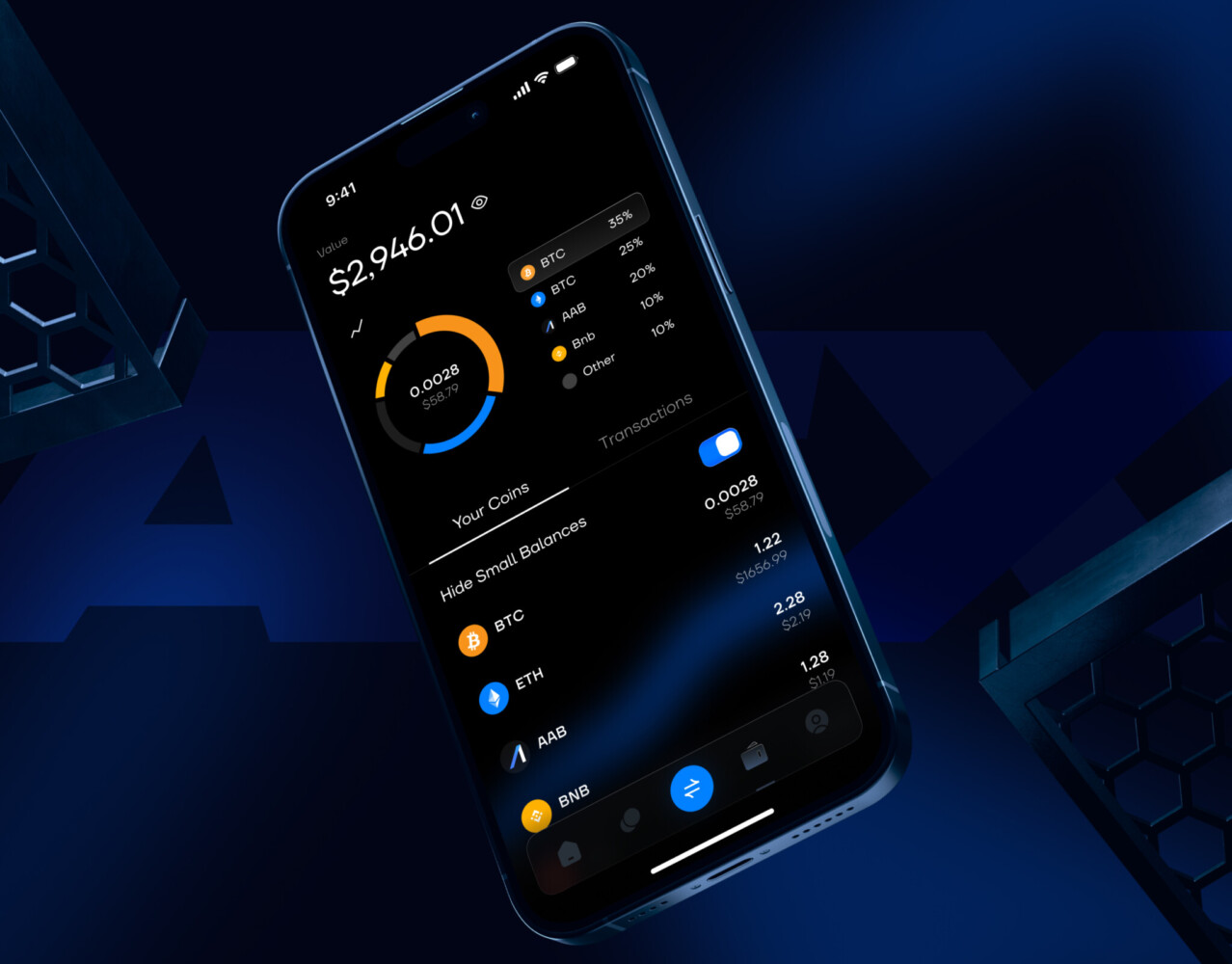
ATX app by Shakuro
FAQ
How much does financial data platform development cost?
There is no single range that survives contact with a real source list. The estimate moves with the number of sources and licenses, the distance from the ledger, the history that must be replayed, the exception process, and the number of consumers. Certification and legal review are separate costs, priced by the firms that perform them. Use the calculator on this page to start a scope, then write to us with the source list. A figure given without that list is not an estimate.
How long does it take to build a financial data platform?
Duration follows the same list. One published extract, a versioned map, a reconciliation, and one consumer is a smaller project than a multi-vendor history with entitlements and several audiences. License negotiation and access to the system of record often take longer than the first job. We do not publish a month count that would describe someone else’s sources.
What team does financial data platform development require?
You need a source owner, a data engineer, an application engineer, and a finance or risk reviewer who can accept or reject a break. The same roles cover a first release and a wider system. What changes is how much of each role the source list requires. A large team that cannot name the system of record is not a financial data team.
What should an MVP include when building a financial data platform?
One defended number. One system of record. The original file retained. A versioned identifier map. A reconciliation that explains differences. An entitlement check. One consumer that shows the time of the last successful update. A second source, a second audience, or a live market entitlement is a later release, not a footnote on the first.
Which regulations shape financial data infrastructure?
It depends on the firm and the data, not on a universal fintech list. BCBS 239 applies initially to systemically important banks, at group and solo level, and national supervisors may extend it proportionately to other banks. Its practical tests are an authoritative source, completeness by the groupings the risk needs, documented processes, and reconciliation with sources. PCI DSS is a baseline for payment account data, not for every table in a warehouse. Other regimes, including privacy law, apply when the records are personal data. Name the regime from the actual data and the actual license. Do not paste a compliance list onto a platform that does not hold that data.
How do I choose a development partner for financial data platform development?
Ask them to name the system of record, the identifier, and the reconciliation, and to separate interface cases from infrastructure cases. Read the case page, not only the retelling. A partner that answers with a stack list and a price range, before asking what the number is and who may change it, is not ready to build the platform.
Final Thoughts
A financial data platform is finished enough to trust when a disputed number can be walked back to a source, an identifier, a run, and a person who was allowed to see it. The screen, the warehouse, and the trading system can all be excellent and still fail that test.
Before commissioning the build, check this list:
- The number to defend is written down, with the audience.
- The system of record is named, and every other copy is labeled as a copy.
- Entity and instrument identifiers are chosen, and missing keys fail the join.
- Original files are retained, and mappings have a valid-from time.
- A late or partial file cannot look live.
- Manual fixes are new events with an owner, not silent overwrites.
- Payment account data is either out of the design or inside a real PCI scoping conversation.
- Interface work is not being used as proof of a feed or a ledger.
If that list is already clear, get in touch and send it. If it is not clear, the next meeting should produce the list, not a stack diagram.
Sources used for the regulatory and identifier facts: the BCBS 239 PDF, the GLEIF LEI page, the OpenFIGI overview, the PCI DSS page, and the OpenLineage spec.