Custom data pipeline development is the work of taking records from the systems a company already runs, checking them, and delivering a number a person or a product will act on. A connector catalog does that when every source is standard and the rule is a field mapping. It stops being enough when the same word, such as “active account,” means a different thing in each export.
The usual symptom is not a missing chart. Billing, the warehouse, and the CRM each publish a count, and the counts do not match. The cause is usually a late event, a renamed field, or two definitions of one word. A new dashboard draws the disagreement. It does not settle it.
This page is that path. It is not a financial data platform, and it is not a customer data platform. If the missing piece is the product around the numbers, that work sits with SaaS development. If the missing piece is the path, describe the sources and what a wrong number would do to the business. An earlier edition of this page was recorded as a podcast episode. The recording is not this revision.
Quick Facts
| Question | Answer |
| What it is | The path from source systems to a number a person or a product can use |
| Best for | A company whose exports disagree, or whose product cannot wait for a manual file |
| Not this page | A financial data platform, a customer data platform, a warehouse by itself, or a dashboard by itself |
| Named tools | Only pages opened for this revision: Microsoft’s ETL note, Google Cloud Dataflow, Amazon Kinesis Data Streams |
| What this page will not quote | A dollar range or a duration. An earlier edition did. Those figures are removed. |
What Is Data Pipeline Development?
Data pipeline development is the design and build of that path: where records enter, what is rejected, how a field is renamed, and where a trusted row lands. Microsoft’s Azure Architecture Center describes the same job in one sentence: organizations commonly need to gather data from multiple sources in various formats and move it to one or more data stores, and the data often needs to be shaped, cleaned, or transformed before loading. The note is Extract, transform, and load (ETL).
A useful pipeline has five stops, in this order. A source emits a record. Ingestion accepts it or parks it. A check decides whether the record is complete. A transformation applies a rule the business already agreed. Delivery writes the result where a person or a product reads it. Skip the check, and the last stop publishes a clean-looking wrong number.
The store at the end of the path is often a warehouse. Building that store is data warehouse development. The pipeline is the work that gets a trustworthy row into it. The wider practice around sources, models, and jobs is a data engineering platform. This page stays on the path itself.
Sending a curated row back into a CRM or a billing tool is still a pipeline, pointed the other way. The action inside that tool is a different product. A score for the next action is predictive analytics. It can consume the pipeline’s output. It is not the pipeline.
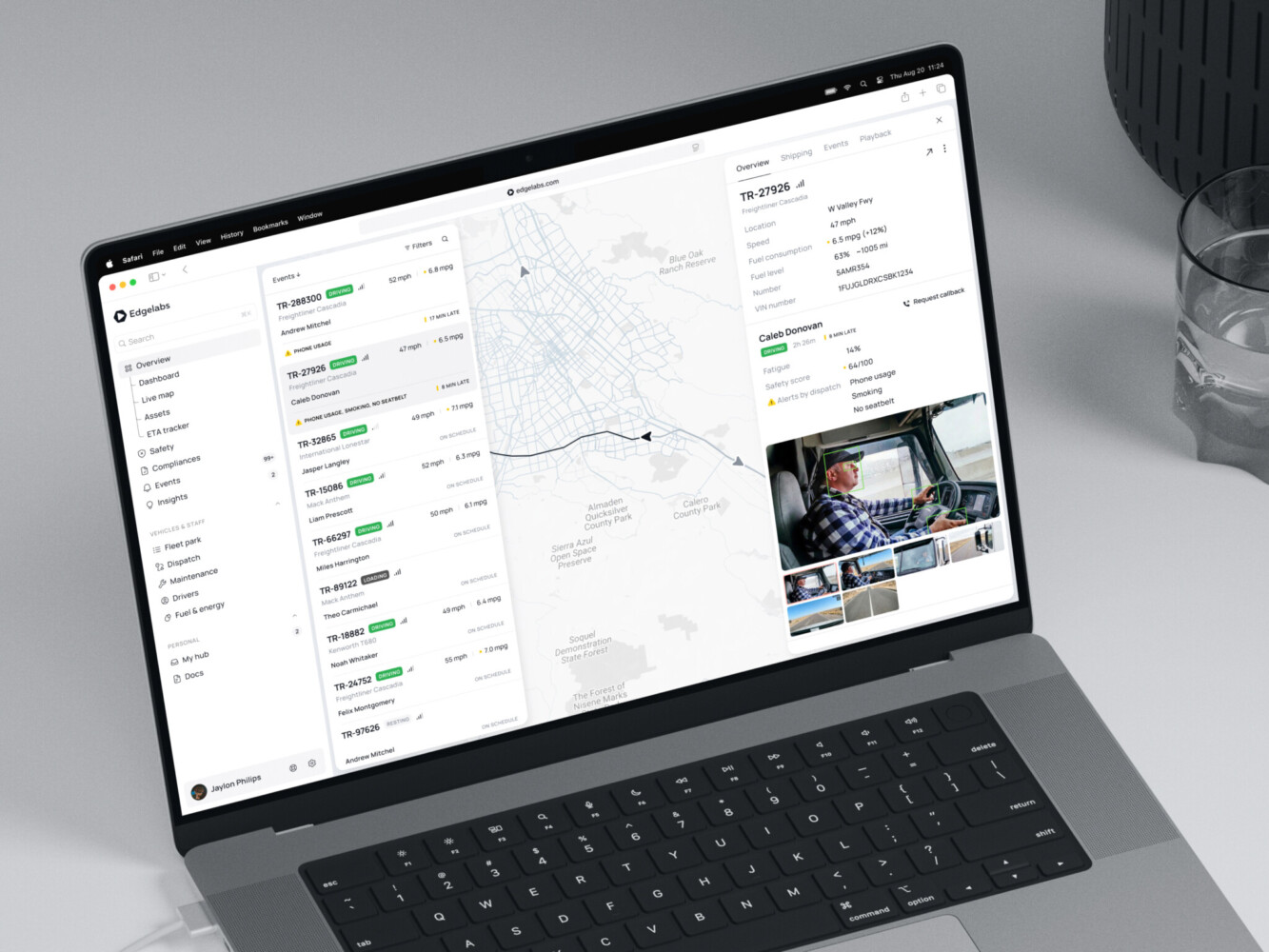
Telematics dashboard by Shakuro
Core Data Pipeline Architecture Components
Draw the path before naming a vendor. If a box on the diagram has no owner, it will fail on a Friday and nobody will know which team to call.
Data sources
Sources are the systems that already hold the record: a product database, a billing export, a CRM, a file a partner drops on a schedule, a stream of events from the app. Each source needs three facts written down: who can change the schema, how late a record may arrive, and what “missing” looks like. A source with no owner is not a source. It is a favor that will stop.
Ingestion layer
Ingestion is the door. It accepts a record, stamps when it arrived, and refuses to pretend a failed call succeeded. Idempotency matters here: the same event delivered twice must not become two rows. Events from several payment providers, each with its own status names, stay an ingestion problem only while the goal is a clean table. Once the goal is routing and retries across those providers, that build is a payment orchestration platform.
Processing layer
Processing is where the agreed rule runs: a currency conversion, a join to a customer key, a filter that drops test accounts. The rule has to be the one finance and product already signed, not a rule invented in the job. If two teams define “active” differently, the job cannot pick a winner. It can only show both and wait.
Storage layer
Storage is where the checked row waits for a reader. That may be a warehouse table, a lake of raw files, or both: raw files for replay, modeled tables for the report. Replay matters more than the brand of store. If a bad day cannot be rerun from the raw file, the pipeline has no memory.
Orchestration and monitoring
Orchestration is the timetable and the alarm. A job that fails silently is worse than a job that does not exist, because people keep trusting yesterday’s number. The minimum alarm is: which source, which run, which check failed, and whether the published table still holds the last good run. A green dashboard over a stale table is a failure, not a success.
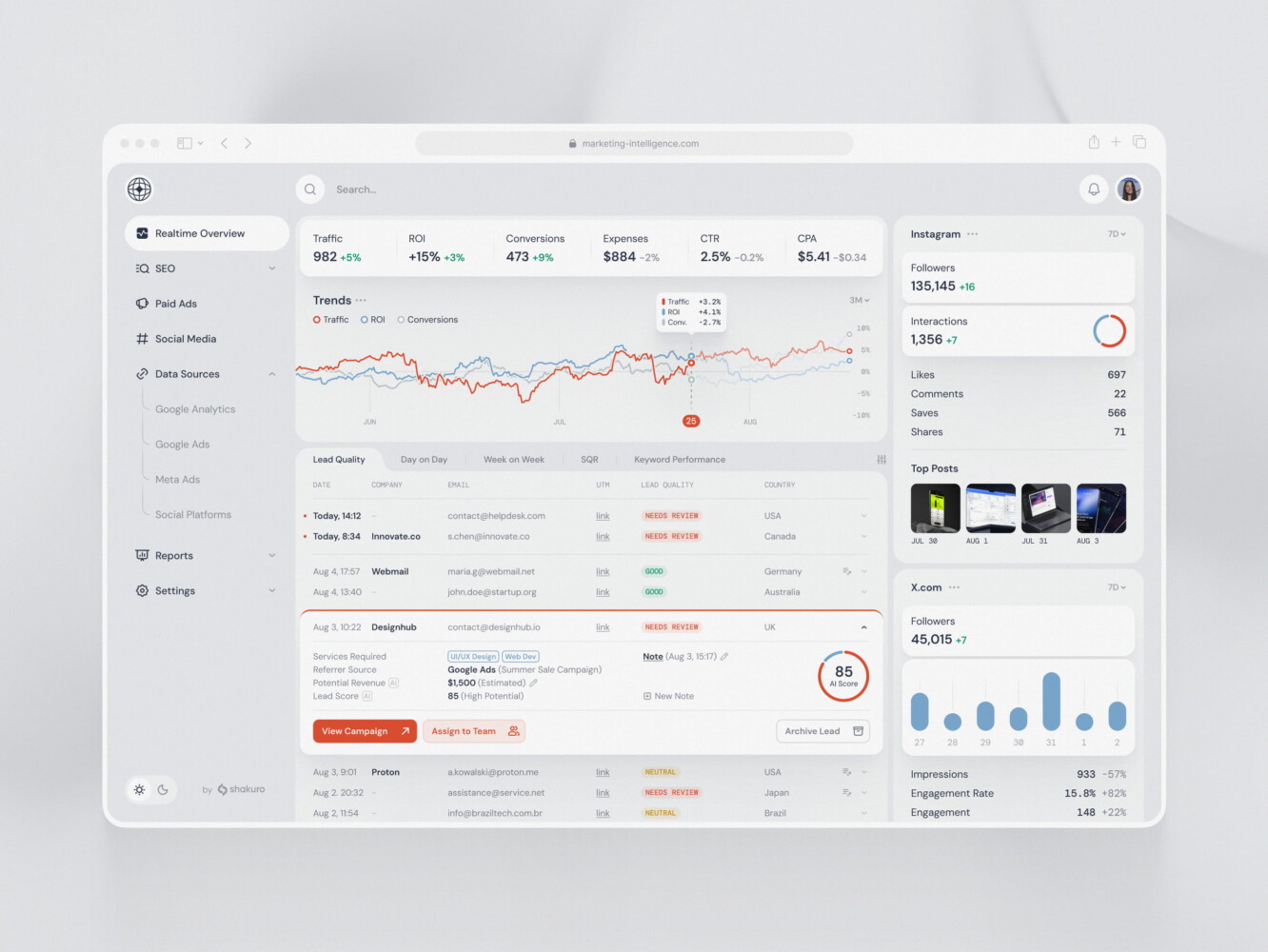
SaaS marketing dashboard by Conceptzilla
Batch vs Real-Time Pipelines
Batch means the job runs on a clock and reads a set of records. Real-time means the product cannot wait for that clock. Most companies need one of each, not a slogan that everything is streaming.
| Question | A scheduled batch | A stream |
| When it fits | A nightly finance file, a partner drop, a report that is read in the morning | A fraud hold, a stock count, or a screen that would mislead if it showed yesterday |
| What usually breaks | A full copy of a table that barely changed, or a file that arrived late and was skipped | A late event, a schema change, a retry that double-counts |
| What to write down first | The clock, the owner of the file, and what the report shows if the file does not come | How late is still acceptable, and which number must stay on the last good event |
Google Cloud’s own overview says Dataflow is a service for unified stream and batch processing: pipelines that read from one or more sources, transform the data, and write it to a destination. That page is Dataflow overview. It is one vendor’s tool, not a requirement. Amazon’s introduction to Kinesis Data Streams describes an application that reads data records from a stream. The page is What is Amazon Kinesis Data Streams. Naming the tool does not choose the clock. The product does.
When the product cannot wait for a nightly file, the design belongs with real-time data processing. Late events and retries are normal in that design. Treating them as rare bugs is how the downstream screen drifts.
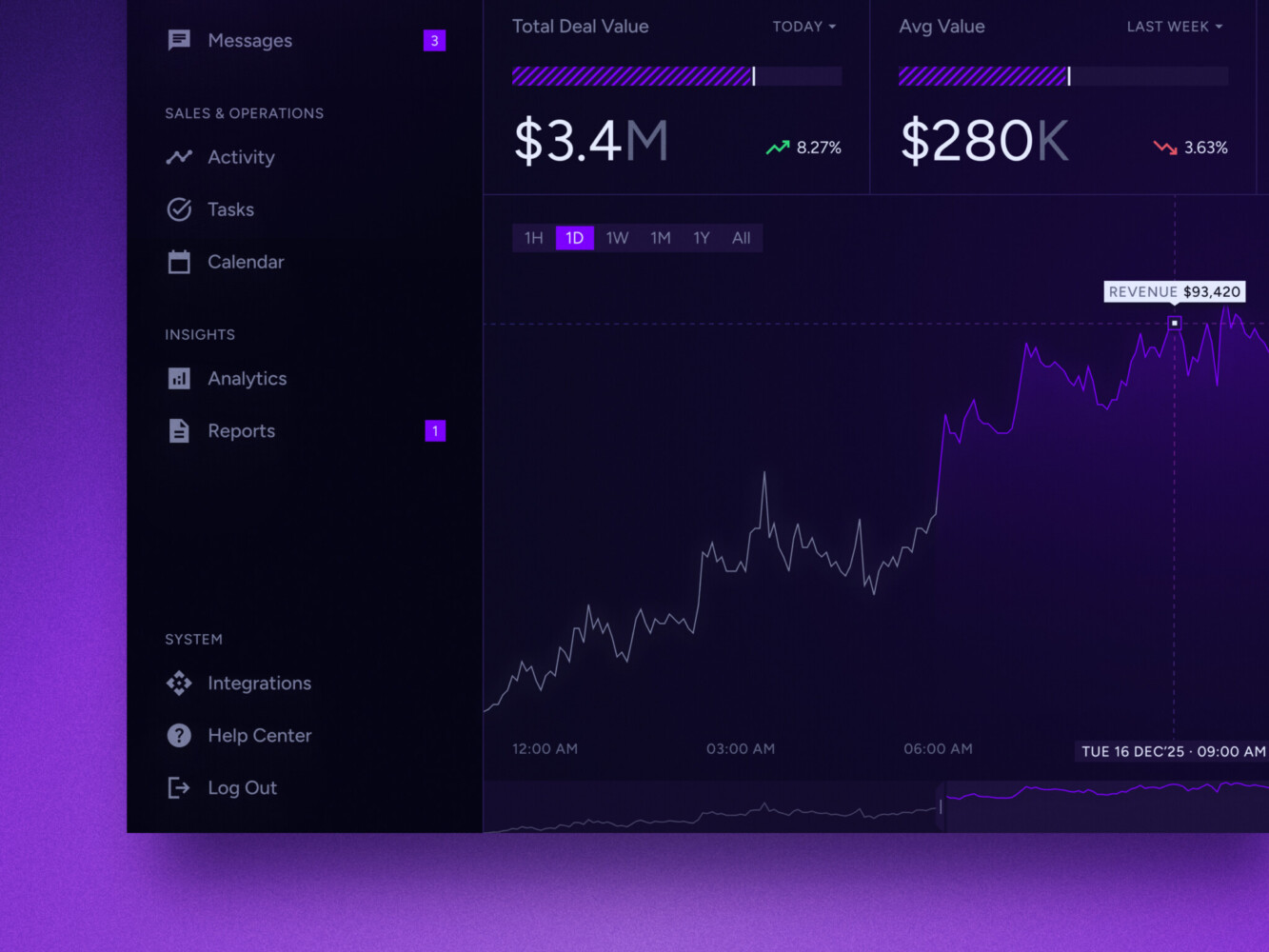
Real-time data dashboard by Shakuro
ETL Pipelines vs ELT: Which Approach Fits Your Product?
ETL transforms before the load. ELT loads first and transforms in the destination. Microsoft’s note draws the line in one place: ELT differs from ETL solely in where the transformation takes place, and in an ELT pipeline the transformation occurs in the target data store. Same source page as above.
| Choice | ETL | ELT |
| Fits when | The destination should not see raw rows, or the rule must run before anything is stored | The warehouse can transform, and raw history is useful for a replay |
| The risk | A transformation bug drops rows before anyone can inspect them | Raw rows land in a store that more people can query than should |
| Do not decide by | Which acronym the last vendor used | Which acronym the last vendor used |
Pick the place the check runs, then the acronym. If a bad row must be visible before it is modeled, keep the raw file and transform after. If a bad row must never enter the store, transform before the load and keep a reject log that a person can read.
The frame below is a dashboard design, not a pipeline and not a product-analytics build.
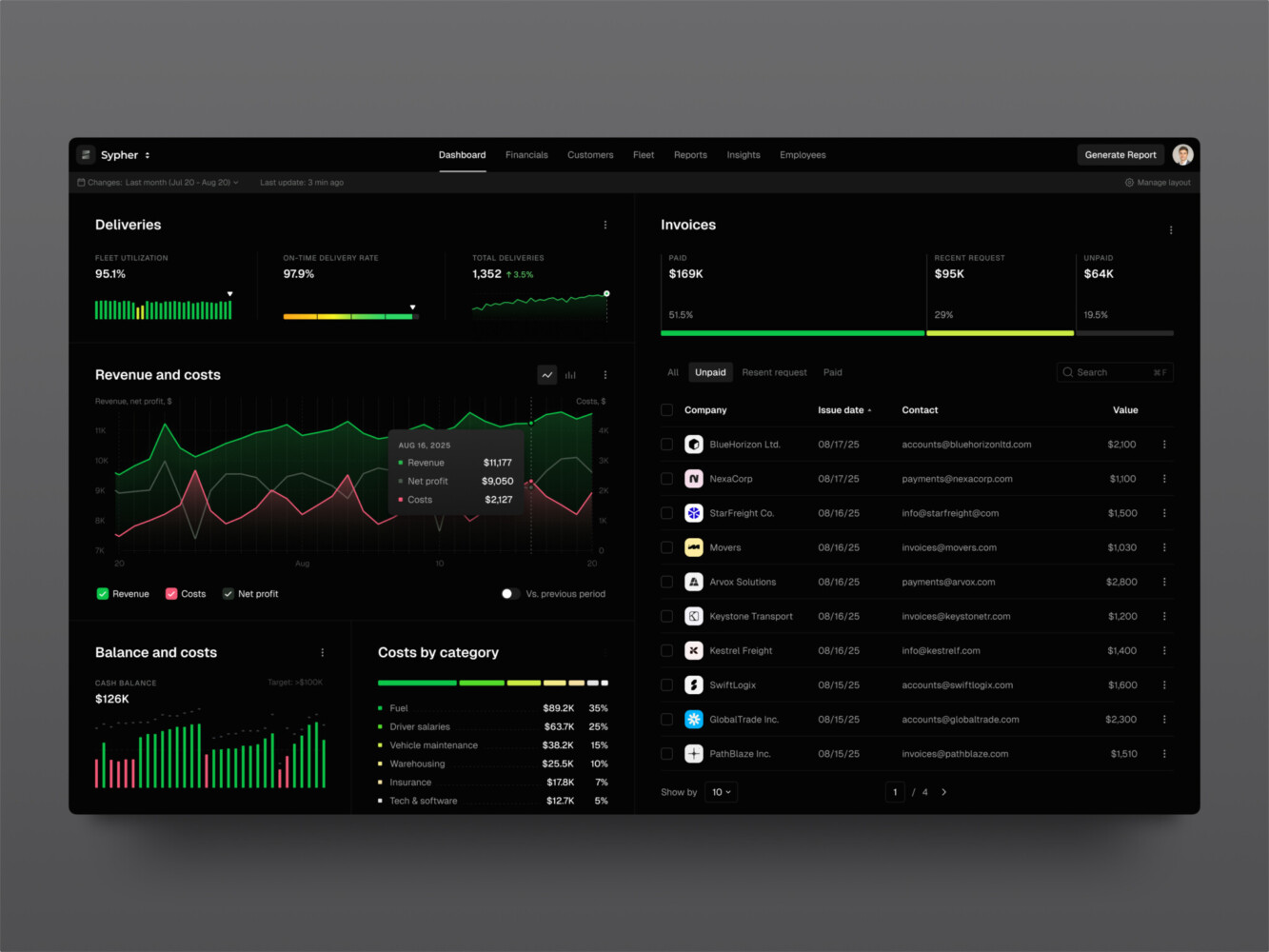
SaaS analytics platform by Shakuro
How to Design a Custom Data Pipeline
Start from the number someone will argue about, not from a tool diagram. Write the number, who owns the definition, which sources feed it, and what the reader should see if today’s run failed.
- Which number, and whose definition. If two teams disagree, the pipeline cannot publish one figure and call it truth.
- Which sources, and who can change their schema without telling you.
- How late a record may be and still count. “Real-time” without a late window is a wish.
- What the published table holds if this run fails: the last good run, or an empty day. Pick one and write it down.
- Who is paged, and what they can rerun without reloading the whole history.
A schema contract is a list of fields, types, and which fields may be null. When a source adds a field, the job should keep running and flag the new field. When a source removes a field the contract required, the job should stop that source and leave the last good table in place. Guessing a default for a missing amount is how a report goes quiet and wrong.
Design the failure before the happy path. A reject table, a rerun of one day, and an alarm that names the source are the design. The screen that later makes the rows readable is a data visualization platform. Do not estimate the screen and the path as one line.
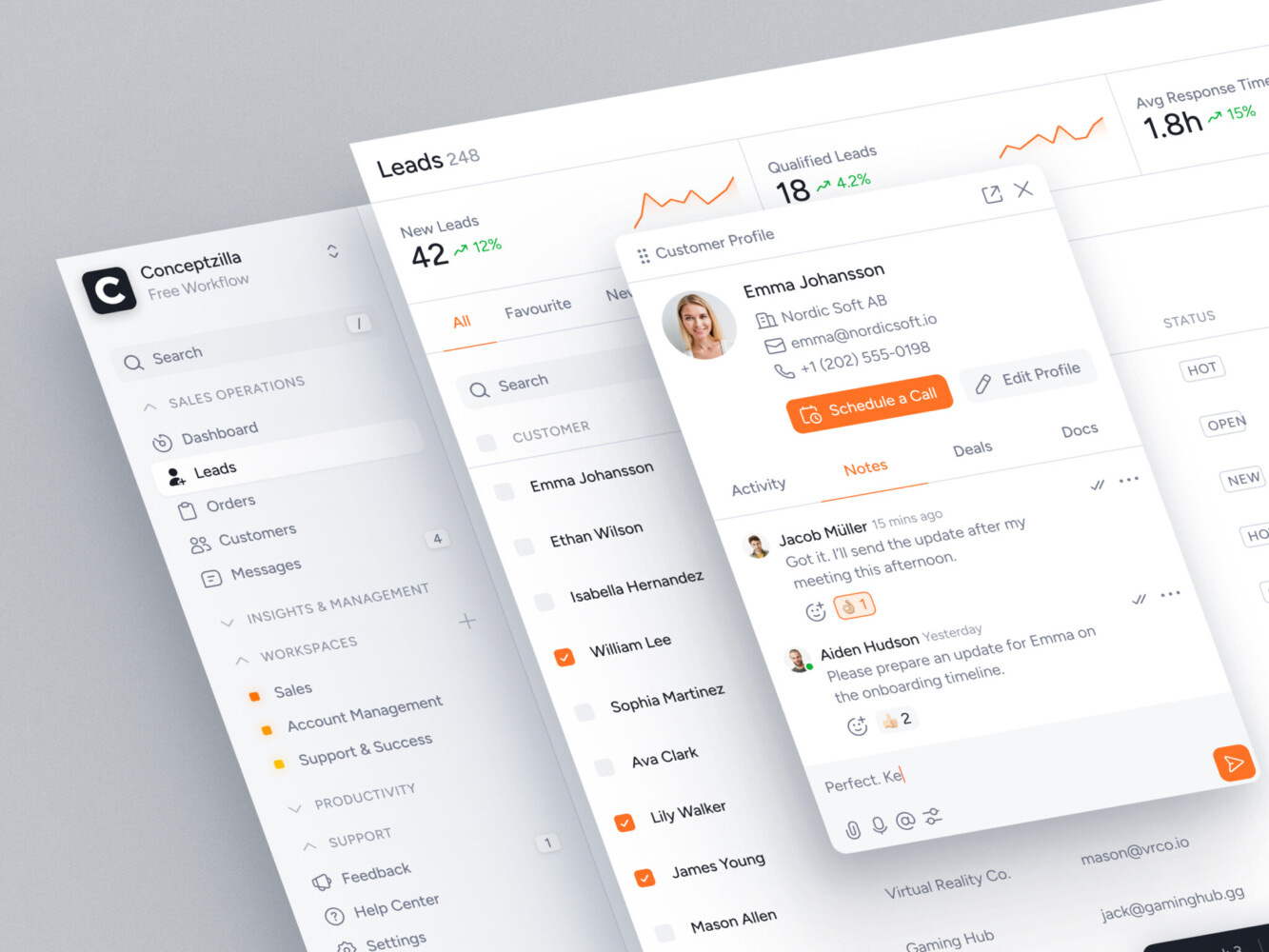
CRM dashboard design by Conceptzilla
Data Pipeline Automation: From Manual Exports to Reliable Workflows
Automation is not a cron entry that emails a spreadsheet. It is a run that can fail in public: the same steps, the same checks, a record of what was rejected, and a way to repeat one bad day without a person copying files.
A manual export is still the right tool when the file is rare and a person must look at it. It is the wrong tool when the same export is rebuilt every week and nobody can say which version the report used. The switch is worth it when a missed file would change a decision, not merely because the weekly export is tedious.
Custom connectors, validation jobs, and the small tools around a rerun are often Python. That work belongs with Python app development services, not a settings screen in a managed catalog. Use the catalog when it already speaks the source and the rule is a mapping. Write code when the rule is product logic or the source is undocumented.
Cloud Data Pipeline Development: AWS, Azure, Google Cloud, and Hybrid Setups
The cloud follows the stack the team already runs. Moving a pipeline to a second cloud so a diagram looks modern adds a network boundary and a second bill, and it does not fix a bad definition of “active.”
On Google Cloud, Dataflow is the service named above for stream and batch jobs. On AWS, Kinesis Data Streams is the stream named above; other AWS services exist, and this page does not describe ones it has not opened. On Azure, the ETL note linked above is the architecture description used here. A vendor feature list is not a design.
A hybrid path is ordinary: a source that cannot leave the company network, and a destination in the cloud. The failure there is usually the window when the network is closed, or a credential that expired, not the logo on the destination. Write down who rotates that credential and what the published table shows while the window is shut.
Security, Compliance, and Data Governance in Pipeline Development
Governance here is practical. Who may read the raw file, who may read the modeled table, which fields are masked before a wider team can query them, and how a row can be traced back to the run that wrote it. A pipeline that copies a production table into a store with broader access has widened the breach, even if every job is green.
This page does not claim a certification, a legal opinion, or a retention period. Those come from the company’s own counsel and from the contract with the source. What the build can do is keep a reject log, keep raw files for a replay the contract allows, and refuse to invent a default for a missing personal field.
The frame below is a dashboard concept. It is not evidence of a clinical pipeline, and it is not a healthcare product this page estimates.

Doctor’s Dashboard Design Concept by Shakuro
Common Data Pipeline Development Challenges
These are the failures that show up after the first demo, when someone trusts the number.
Unstable source APIs
A partner changes a field name, a page size, or an auth header, and the job either crashes or, worse, succeeds with a partial file. Pin the contract, alert on a new or missing field, and do not let a partial file replace the last good table.
Schema drift
Drift is a source that grew a column, dropped a column, or changed a type. Additive fields can be flagged and ignored until someone names them. A removed required field stops that source. Silent coercion of a string into a number is how amounts become zero.
Duplicate or missing events
At-least-once delivery means duplicates are expected. The job needs a key that makes the second copy a no-op. Missing events are the harder case: a gap in a sequence, or a day with no file. The alarm should say “gap,” not “success, zero rows.”
Slow transformations
A join that scans a full history every night will miss the morning report long before the warehouse is “too small.” Incremental runs, a clear grain, and a way to rebuild one day are the usual fix. A larger cluster is the fix only after the query is known to be necessary.
Poor monitoring
A single green light is not monitoring. The useful signals are freshness of the published table, rows rejected, and whether the last run wrote anything. An alarm that fires on every retry will be muted. An alarm that fires when the published number is older than the agreed clock will be read.
Unclear metric definitions
This one is not a tooling bug. If finance and product do not agree what the number means, no job will reconcile the slides. Write the definition down, or publish both figures with their names. Do not average them.
Rising cloud costs
The usual surprise is a nightly full copy of a table that barely changed, or a retry storm that reprocesses the same day. The fix is incremental loads and a cap on retries, not a new vendor. This page does not quote a cloud bill.
The frame below is a dashboard design for a trading screen. It is not a financial data platform, and it is not the pipeline this page estimates.
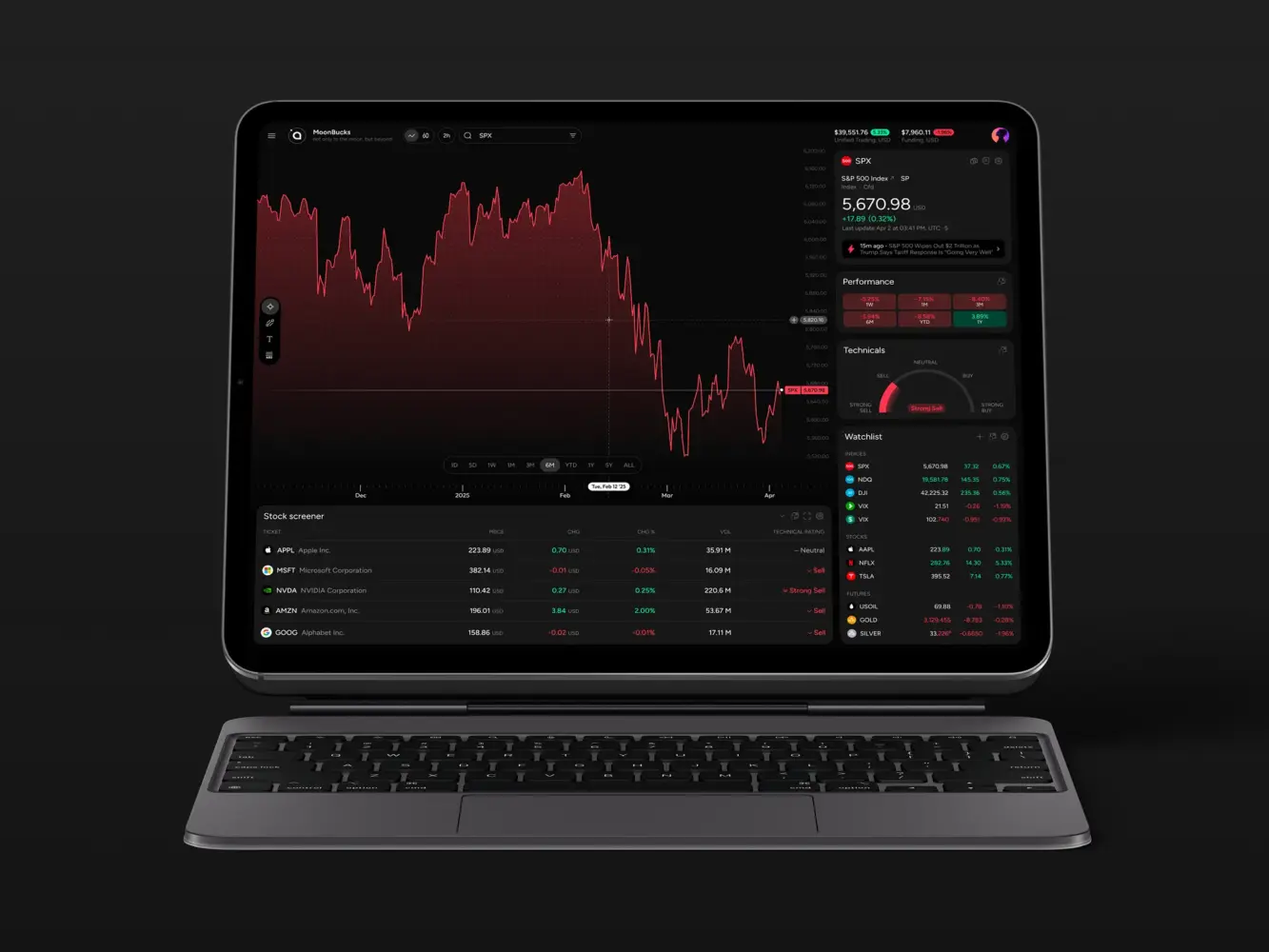
Financial Market Trading Analytics Tool Dashboard Design by Shakuro
How Much Does Data Pipeline Development Cost?
This page does not publish a rate card. An earlier edition printed dollar ranges and week counts. They were not a quote, and they are gone. The estimate follows the sources, the latency, and what a wrong or late number would do to the business.
| What changes the estimate | Why it changes the work |
| Number of sources and who owns each schema | An undocumented partner API is a different job from a database the team already runs |
| Latency | A morning file and a stream that must handle late events are not the same build |
| The check before a number is published | A reject log and a one-day rerun take design time that a happy-path demo skips |
| Who may see raw rows | Masking and a separate raw store add work a chart does not show |
| What a wrong number costs | A weekly internal slide and a customer invoice are not the same risk, and not the same test |
Bring the source list, the clock, and the definition of the number. That is enough for a first estimate. A stack preference is not a substitute. The calculator below is a prompt for that conversation, not a price.

Our Experience With Data-Heavy Products
The published Shakuro cases below are product design and development around data-heavy screens. They are not pipeline builds, and they are not proof that a warehouse or a stream was delivered.
Owari is a live platform for traders, brokers, and analysts in the West African oil and gas market. The published case says a functional prototype already existed when Shakuro was brought in to revamp the experience: UX, a design system, a landing page, and custom back-end and front end based on data visualization APIs. The case also says the product’s own functionality rests on data aggregated from various sources. It does not describe Shakuro as the team that designed that aggregation path. The dashboard is the screen. The path is a separate question.
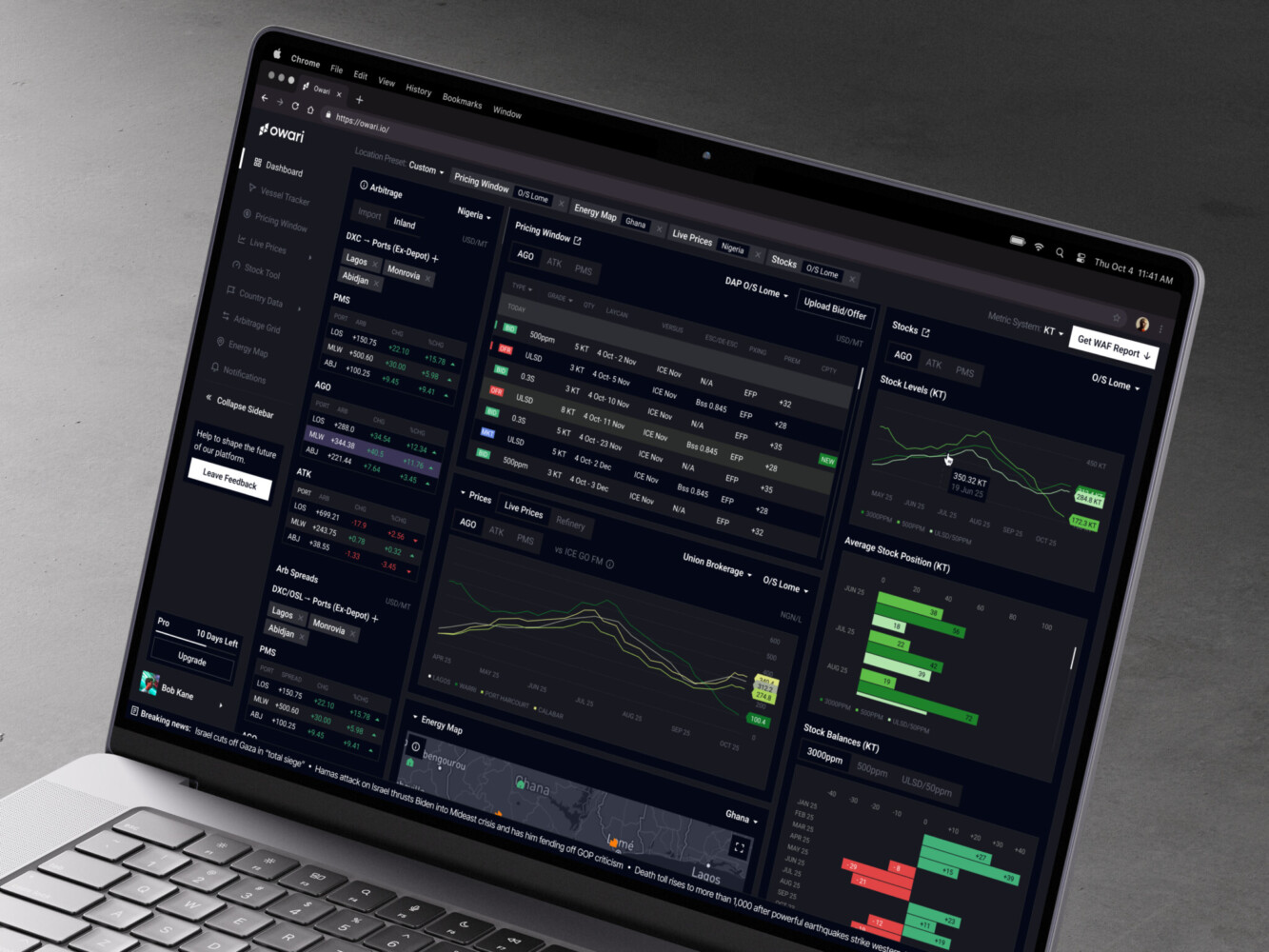
Owari dashboard by Shakuro
Symbolik Social is a social platform for market professionals. The published case describes design and development: a Next.js and TypeScript front end, an ASP.NET Core API, MySQL, and WebSockets with RabbitMQ for instant updates of discussions, watchlists, and financial data streams. That is product messaging to the screen. It is not an ETL pipeline, and it is not the financial data platform named above.
TraderTale is a design case: a platform where trading performance becomes a profile, with the financial figures simplified so a person can read them. The case does not describe ingestion, a warehouse, or a stream.
If the brief is the screen, start from those cases. If the brief is the path that makes the screen’s number trustworthy, do not cite the cases as the build. Describe the sources instead.
Why Work With a Data Pipeline Development Company
Do not hire a custom team for one documented API and a weekly file a managed connector already handles. Hire when the rule is product logic, the source has no contract, or a failed run is currently invisible to the people who own the number.
The code around connectors, checks, and reruns is the Python work linked above. The place an operator sees which source failed, and reruns one day without a terminal, is a small internal tool. That tool is custom web application development, built for the people who own the number, not a marketing site.
Activation, retention, and billing health inside a product are a SaaS analytics platform. The pipeline can feed that product. It does not replace it. Cleaning events so a model can train is still this path. Choosing the model and the product around it is AI development services.
A partner worth the conversation will say when a managed connector is enough, will name who is paged when a source changes, and will show a rerun of one bad day before talking about a platform. Write through get in touch with the source list and the cost of a wrong number. Do not attach a price you invented, and do not expect one in the reply until that list exists.
Final Thoughts: A Pipeline Is Only Good If People Can Trust the Data
A pipeline is finished when a person can say which run produced the number, what was rejected, and what the table holds if today’s run failed. A green job and a fresh chart are not that test.
Volume that no longer fits a single warehouse job is a big data platform, a different architecture and a different estimate. Keep it off this brief until the path for one number is already trusted.
If the exports disagree and the definition is written down, the next step is the inquiry above, not another diagram.
The last frame is a dashboard design. It is not an exchange, and it is not evidence of a pipeline.
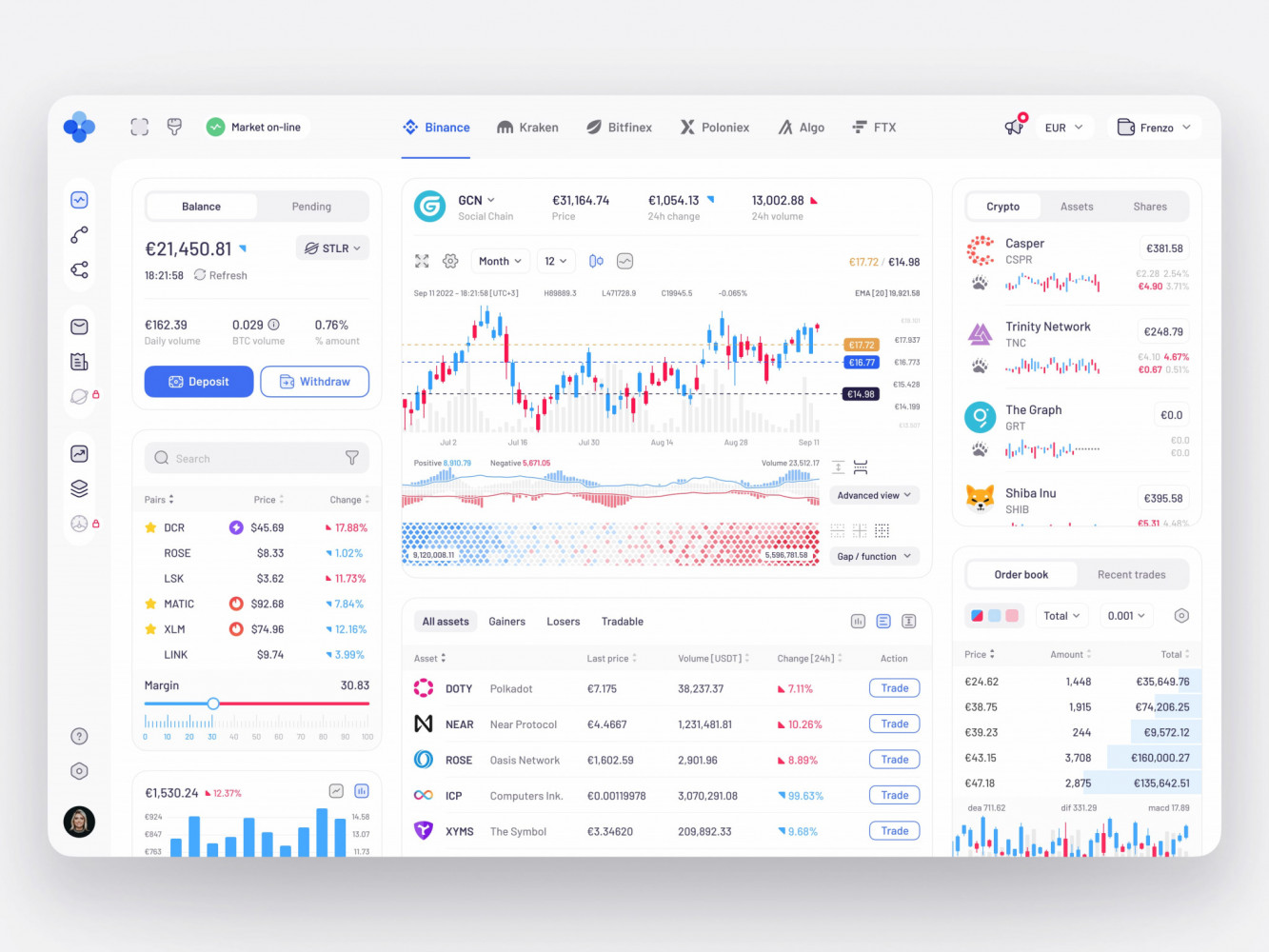
Crypto Trading Dashboard Design by Conceptzilla
FAQ
What is data pipeline development?
It is the design and build of the path that collects records, checks them, applies an agreed rule, and delivers a number a person or a product will use. It is not the warehouse, the dashboard, a financial data platform, or a customer data platform.
How long does custom data pipeline development take?
This page does not publish a duration. A nightly sync of two stable sources is a different job from a stream that must handle late events and a schema that changes without notice. The length follows that difference, the number of owners, and whether a one-day rerun is in the first release.
How much does data pipeline development cost?
This page does not publish a rate card. The estimate follows how many sources have an owner, whether the clock is a file or a stream, what must be checked before a number is published, and what a wrong number would do to the business. Bring those facts. A dollar figure without them is a guess.
When does a business need a real-time data pipeline?
When a decision or a product screen would be wrong if it showed the last nightly file: a fraud hold, a stock count, a live operational view. A report that is read in the morning does not need a stream. Late events and retries still have to be designed, or the screen will drift. That design is covered on the real-time page linked above.
When is custom data pipeline development worth it instead of managed services?
Use a managed connector when it already speaks the source and the rule is a mapping. Custom development is worth it when the rule is product logic, the source is undocumented, or a failed run is invisible to the people who own the number. A custom team for one weekly CSV is a waste.
How do I choose a data pipeline development partner?
Ask who is paged when a source changes, whether they can rerun one bad day, and whether they will say a managed connector is enough. Then send the source list and the definition of the number. Shakuro’s matching work is the Python development and the custom web application linked above, plus the inquiry form. A partner who starts from a platform diagram, before the number, is the wrong order.