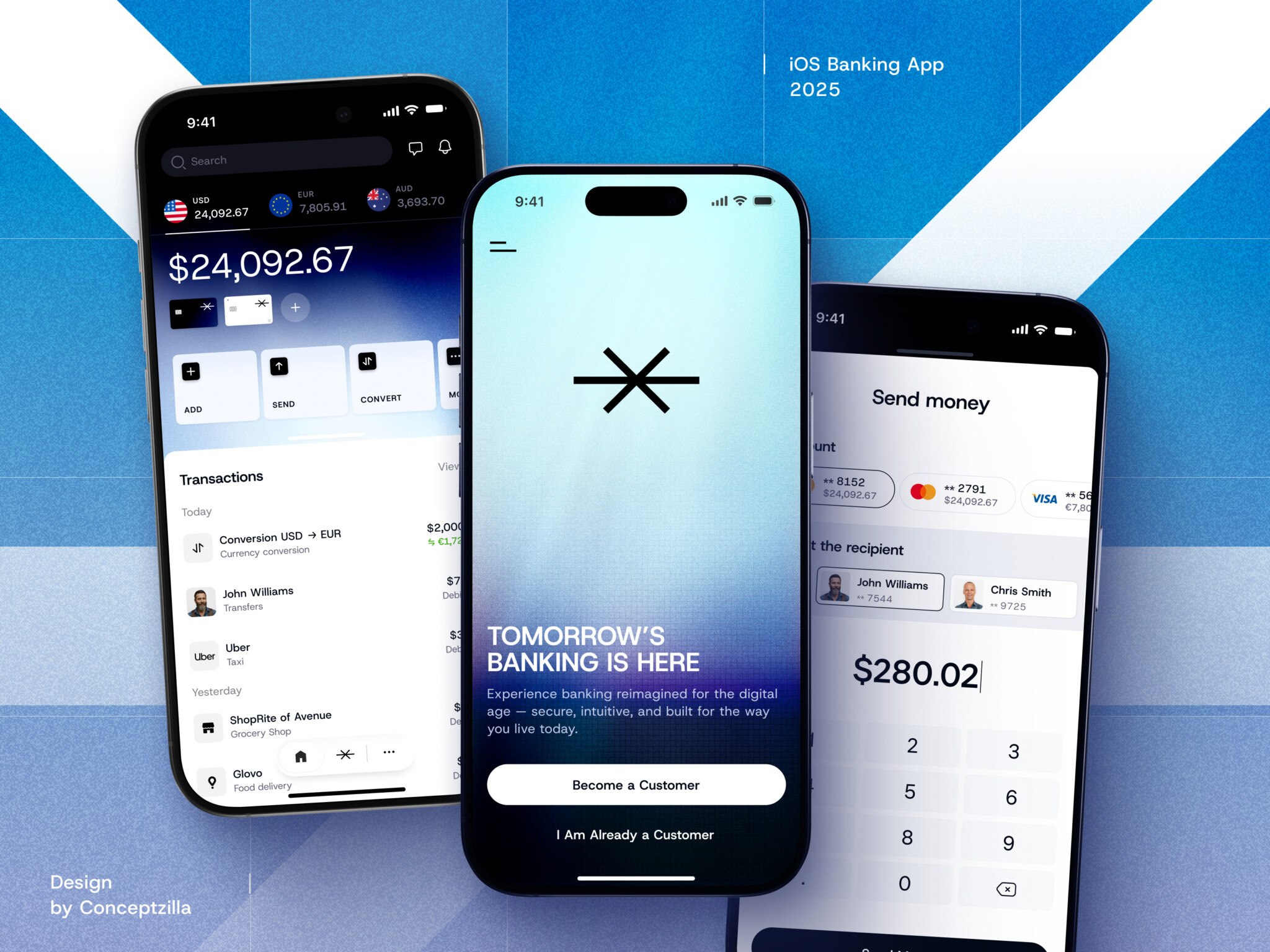
Digital banking software development is the work of building the online channel a customer uses to see accounts, move money the institution already allows, and finish everyday service tasks. The same job is sold as online banking software development, internet banking, or e-banking. The channel can be a website, a mobile app, or both. It is not the ledger, not a banking license, and not a card scheme.
Shakuro designs and builds that channel to order for a bank or a fintech that already has a system of record. If you have the customer jobs and a description of the core interface, get in touch. The rest of this page is the boundary that turns that conversation into a scope: what the first release includes, what makes an implementation fail, and which neighboring products we will not pretend to be.
If the job is the ledger of deposits and loans, that is a core banking platform. If the product is a new customer app on a sponsor license, with no existing branch channel to replace, that is a neobank app. If the job is market data or a warehouse of financial records, that is a financial data platform.
For those who prefer to listen, this article is also available as a podcast on Spotify.
What is online banking software development?
Online banking software development builds the customer channel on top of a system that already holds the accounts. The channel shows balances, starts transfers the core or the processor will accept, and records what the customer did. Internet banking software development and e-banking software development are older names for that same channel. A bank that asks to implement digital banking software usually means this layer, not a new general ledger.
The words “banking platform” get used for both the ledger and the screen. On this page, banking platform development and online banking platform development mean the customer platform: web, mobile, and the services between them and the core. Online banking system development is the same boundary. The ledger is a different build, with a different owner.
| Piece | What it owns | What to send elsewhere |
| Online, internet, or e-banking channel | Balances, transfers the core or processor already accepts, statements, support tasks | A new ledger, a license, a card scheme |
| Core banking platform | Deposits, loans, and the account record | The login screen and the marketing site |
| Neobank app | A customer app where there is no existing branch channel | A reskin of a bank’s current internet banking |
| Payment orchestration | Routing one payment across several processors | The account screen |
| Payment gateway | Accepting a card payment as a merchant | The bank’s own internet banking |
| Financial data platform | Market data and the warehouse of financial records | The transfer button |
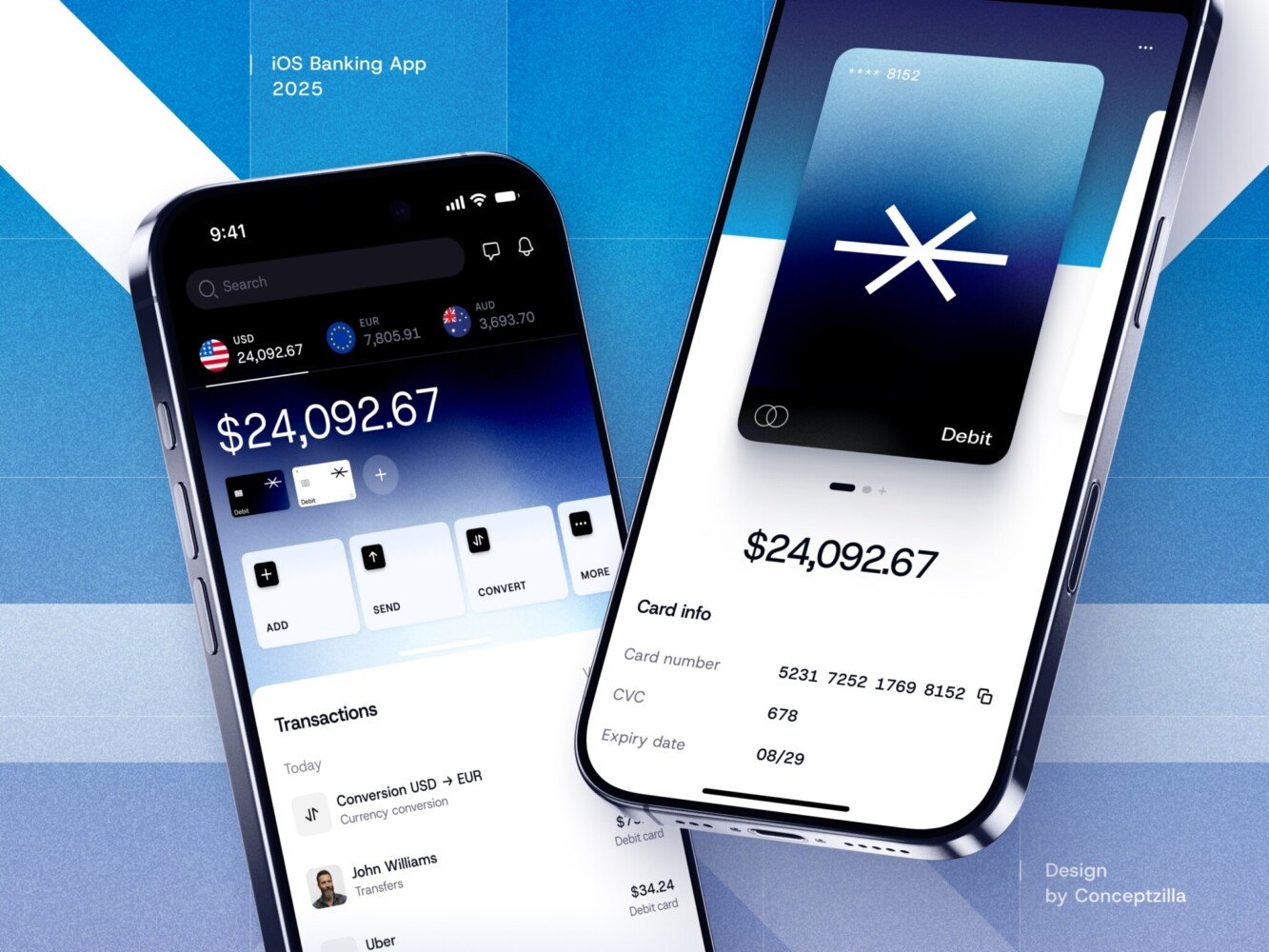
Fintech Mobile Banking App by Conceptzilla
A transfer between two of your own customers is not, by itself, a P2P payment app. Routing one payment across several processors is a payment orchestration platform. Taking a card payment as a merchant is payment gateway software. Those products can sit beside a bank channel. They are not the channel, and a contract for one of them does not deliver the others.
When is custom development the right buy?
Commission a custom channel when a packaged internet-banking product cannot show your products, limits, or approval states, and you are not trying to replace the ledger in the same project. The usual shape is a core, or a sponsor ledger you do not own, plus a channel you do.
Custom development is the wrong buy when you need a license. Software does not grant one. Counsel has to name the permission before anyone draws the onboarding flow. It is also the wrong buy when the real backlog is a ledger replacement: that estimate belongs with the core banking platform, not on this page. A public site that explains the bank, without an authenticated account screen, is a different purchase from the channel. If nobody has written which customer jobs the first release must finish, there is nothing to estimate.
Software development for banks usually starts from an existing core and an existing internet-banking system the new one must run beside. A fintech more often starts from a sponsor ledger and has no branch channel to retire. The engineering questions are similar. The license and the cutover are not. Banking-as-a-Service can supply the ledger. It does not remove the channel, the failure states, or the person who reconciles an unknown payment. This page does not rank sponsor platforms.
What should the first release of an online banking platform include?
A first release lets a customer finish a short list of jobs against the system of record you already have. If a job needs a ledger function the core does not expose, it is a core change. It does not belong in the channel estimate.
- Sign in and see posted balance, available balance, and pending items as separate numbers when the core treats them as separate numbers.
- Start an internal transfer or a payment the core or the processor already accepts, and show accepted, rejected, and unknown as different states.
- Freeze or reorder a card only if the processor’s interface allows that call.
- Download a statement the core already produces.
- Hand a failed payment to a person, with the reference the core uses, rather than a generic error code.
Leave a ledger of your own, a mortgage decision engine, a trading book, and a gateway you operate out of this release. If the product is still a sketch, the earlier question is how to create a fintech app, not which screen to decorate.
What are the banking software implementation risks?
Banking software implementation risks show up as scope and cutover problems. A missing animation is not the failure mode that costs the parallel run.
- The word “digital” hides a core replacement. The backlog includes product rules the core does not have. Settle a written list of core operations the channel may call before build starts.
- Payments are not safe to repeat. A double tap creates two transfers. Settle the core’s idempotency key, or a channel rule that refuses a second submit of the same payment.
- Two channels disagree. Old internet banking and the new app show different available balances. Name which system may display available balance during the parallel run.
- Compliance arrives as a later sprint. Onboarding collects data counsel has not mapped to a duty. Name the duties before the flow is drawn. The software can record a decision. It cannot invent the duty.
- Nobody owns reconciliation. The channel says accepted and the core says unknown. Name the person and the report for that unknown state before launch.
Adding people to a vague brief does not close these. A boundary does: this release is the channel, these calls, these states.
How does the channel talk to the core and to other firms?
The channel is only as honest as the interface behind it. A documented API with payment calls that can be repeated safely is a different project from a nightly file, and a different project again from a core that has to be driven through a terminal. Ask for the interface before you ask for a visual design. If the interface does not exist, the work includes an adapter, and the core team has to be in the room. That adapter is not a new ledger.
Where the account is accessible online in the EEA, the channel is not the only reader. Article 67 of Directive (EU) 2015/2366 of the European Parliament and of the Council of 25 November 2015 on payment services in the internal market says a payment service user has the right to use account information services when the payment account is accessible online. The account information service needs the user’s explicit consent and may not use the data for another purpose. The account-servicing provider must treat those data requests without discrimination for other than objective reasons. Building that access is open banking API work. It is a duty of the account-servicing provider, not a feature invented for a slide. The text cited here is the copy published by legislation.gov.uk.
Card data is a separate boundary. The PCI Security Standards Council says PCI DSS provides a baseline of technical and operational requirements designed to protect payment account data, for entities that store, process, or transmit cardholder data or could impact the security of that environment. If a processor tokenizes the card and the app never sees the number, the app should stay outside that data. If the app stores the number, PCI DSS scope is part of the build. A development contract does not award a certificate. Operating the acceptance path as a merchant product is payment gateway software, already split out above, not internet banking.
What should the banking interface make obvious?
People abandon a banking screen when they cannot tell whether the money moved. The interface has to show posted, pending, and available as the core defines them, and a rejected payment with the reason the core or the processor returned. A spinner is not a state.
That is design work with a ledger constraint. Fintech web design services cover the screens a customer uses under that constraint: balances, a payment confirmation, and the failure states. A public site that only explains the bank, with no authenticated account screen, is the same design practice and a smaller job. A dark theme does not change the states.
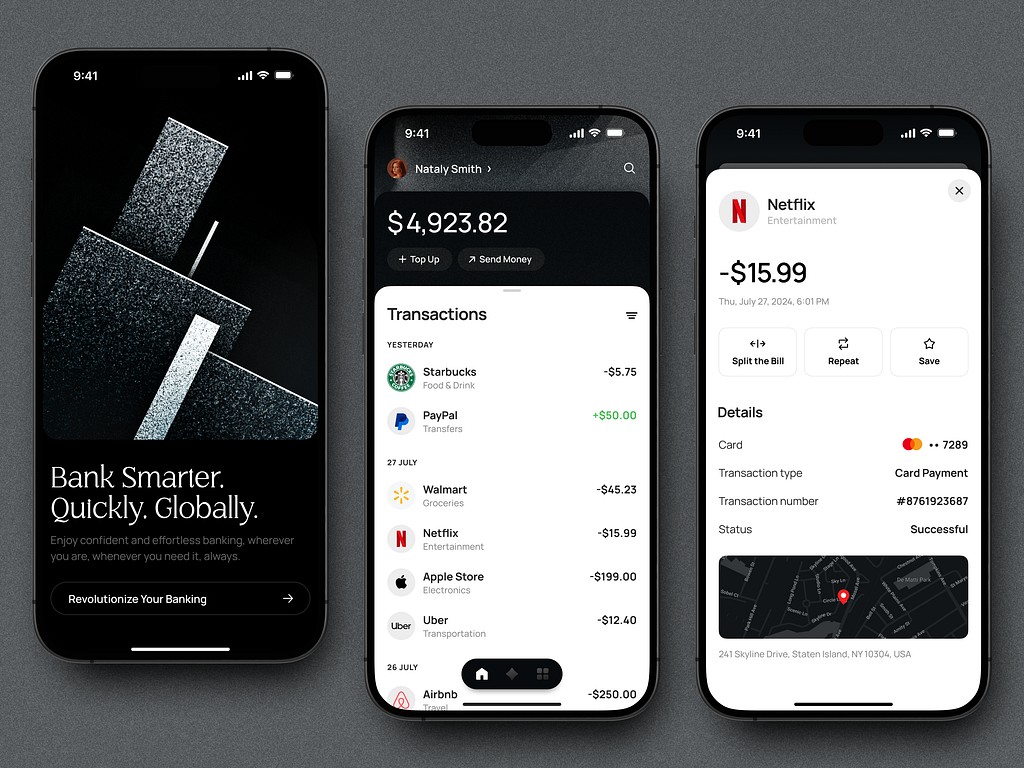
Fintech Mobile App UI Design by Shakuro
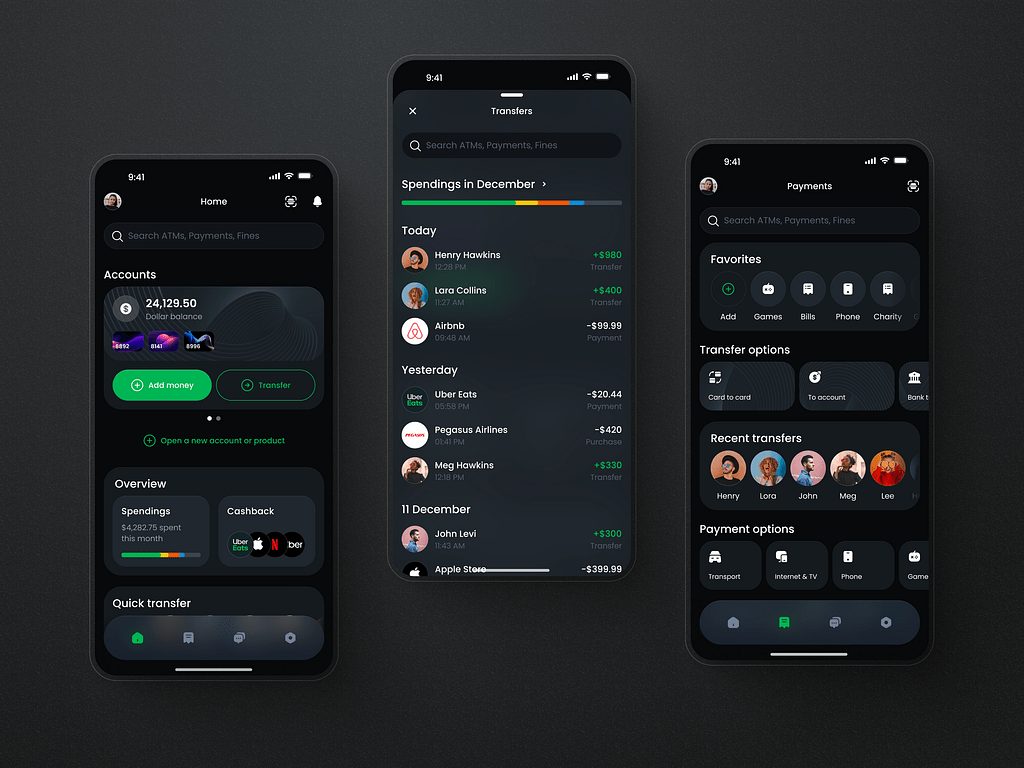
Dark theme for a fintech app by Shakuro
How do web banking and the mobile app stay one product?
Online banking system development fails when the website and the app invent different rules. Both have to call the same operations and show the same states. Internet banking can keep the long tasks: statements, limits, a payment that needs a second review. The phone can keep the short ones: a balance, a transfer under the limit, a card freeze. The states still come from one place.
The authenticated web channel is fintech web development services. The phone is fintech mobile app development services. A team that only draws the phone, or only the website, leaves the other channel free to disagree. A sponsor ledger does not remove either build.
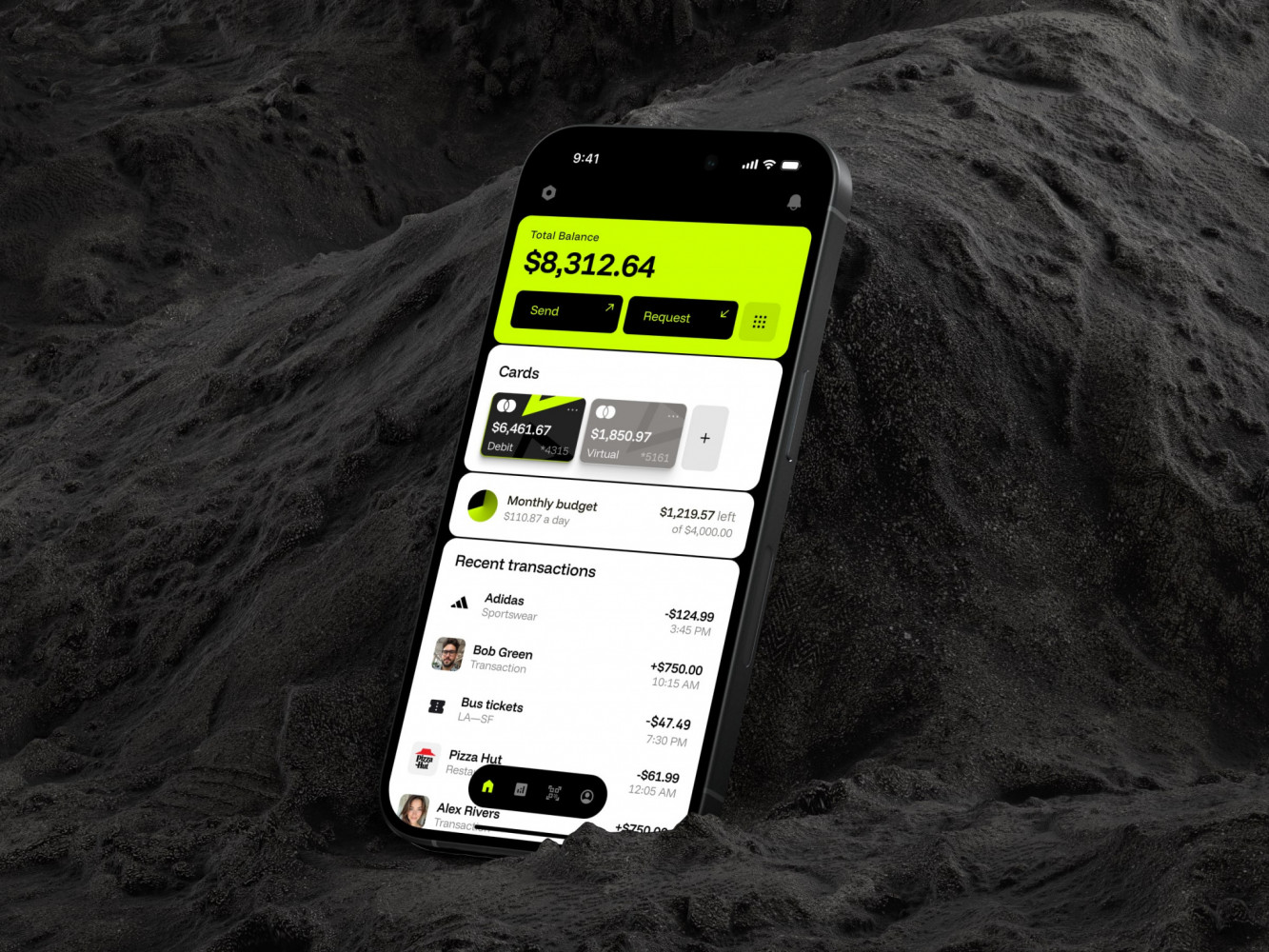
Mobile Banking App by Conceptzilla
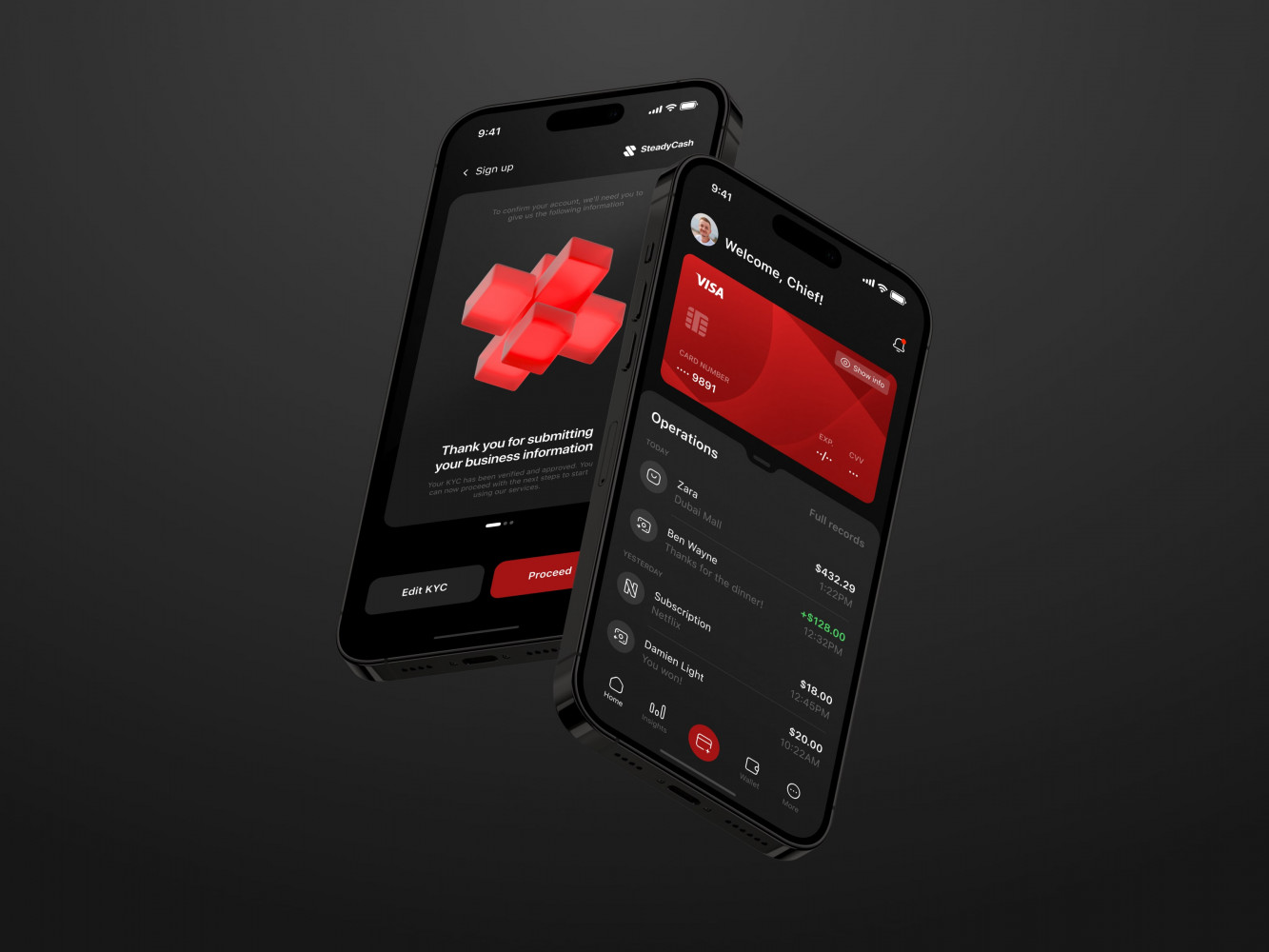
Mobile Banking App by Coneptzilla
What belongs in the estimate?
There is no honest single price for banking software development. The number moves with the boundary. Ask for an estimate against a written first release, not against “a digital bank.” We do not publish a price or a week count on this page.
| Driver | What changes the estimate | What does not |
| Customer jobs in the first release | Each job needs a core call, a failure state, and a test | A longer list of screens that call the same operation |
| Core access | A documented API versus a file or a terminal | The age of the core, by itself |
| Markets | Duties counsel has named for those markets | A promise that one build satisfies every regulator |
| Card data | Whether the app stores, processes, or transmits the number | A logo that says “secure” |
| Parallel run | Reconciling old internet banking with the new channel | A launch date with no reconciliation owner |
| After launch | Who watches unknown payments and core changes | A handover that is a zip file |
The calculator below is a starting scope for a software project. It is not a quote for a banking license, a core replacement, or a card-scheme certificate, and it does not know your core interface.

Bring the job list, the core interface you can share, and the markets counsel has already named. Get in touch and we will say what the channel estimate includes, and what has to be a separate core or processor project.

What should you ask a development partner?
A useful partner can read a core interface, draw the failure states, and name what they will not build. Ask who owns reconciliation, who talks to the core vendor, and which published projects are channels rather than pictures of channels. A headcount without those answers is not a team plan. This page does not publish one. A sponsor or a small in-house group can still own the product. Someone still has to read the interface and refuse a second submit of the same payment.
Shakuro’s delivery for this job is the fintech web and mobile work linked above, with the interface design on the same boundary. The wider practice, including banking apps next to payments and lending tools, is fintech app development. That conversation does not include a license, and it does not include a promise that a regulator will accept the result.
What do the published cases prove?
Shakuro does not have a published case of a bank’s internet-banking channel or a core ledger. Two public fintech projects are easy to misread as that work. They are not.
ZAD is published as mobile app UX/UI design for a Shariah-compliant investment platform that combines a robo-advisor and trading. The case describes interface work for that product. It does not document a bank ledger, a deposit account, or a banking license. Product rules for that model belong with Shariah-compliant banking software, not with this channel guide. The screen below is from that design. It is not an authentication platform we operate.
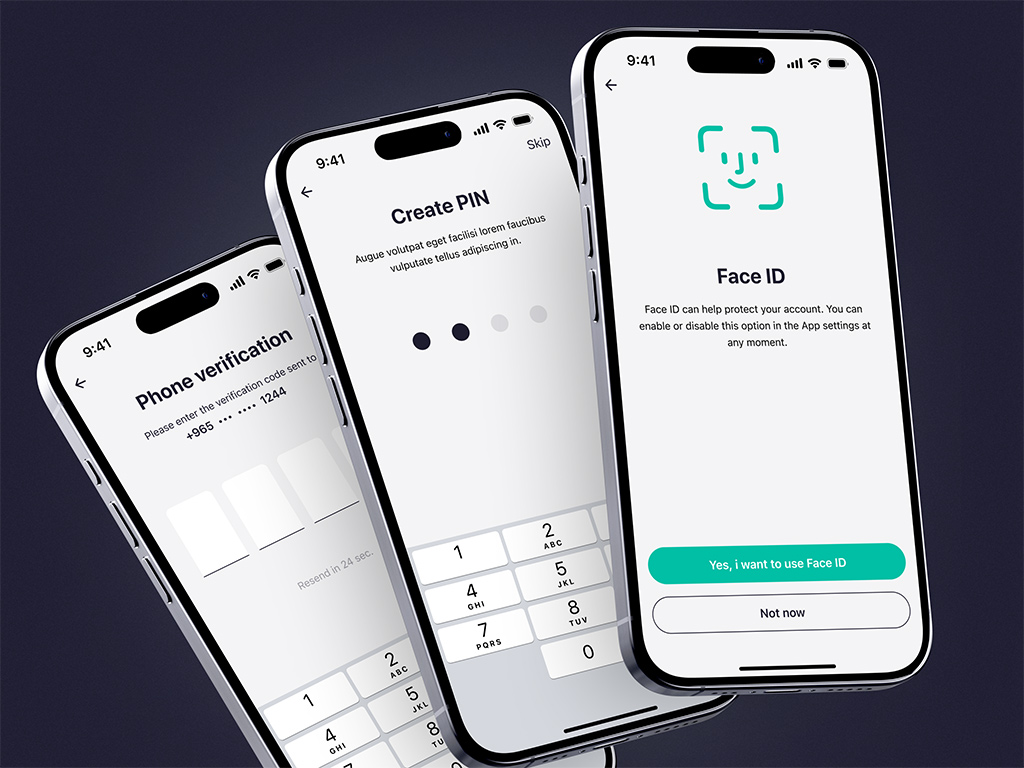
Silent authentication for ZAD app by Shakuro
Solio is published as a mobile app for a South Korean stock-trading product, with branding and mobile app work. It is not an online banking channel and not a core. A trading screen does not prove a transfer against a bank ledger.
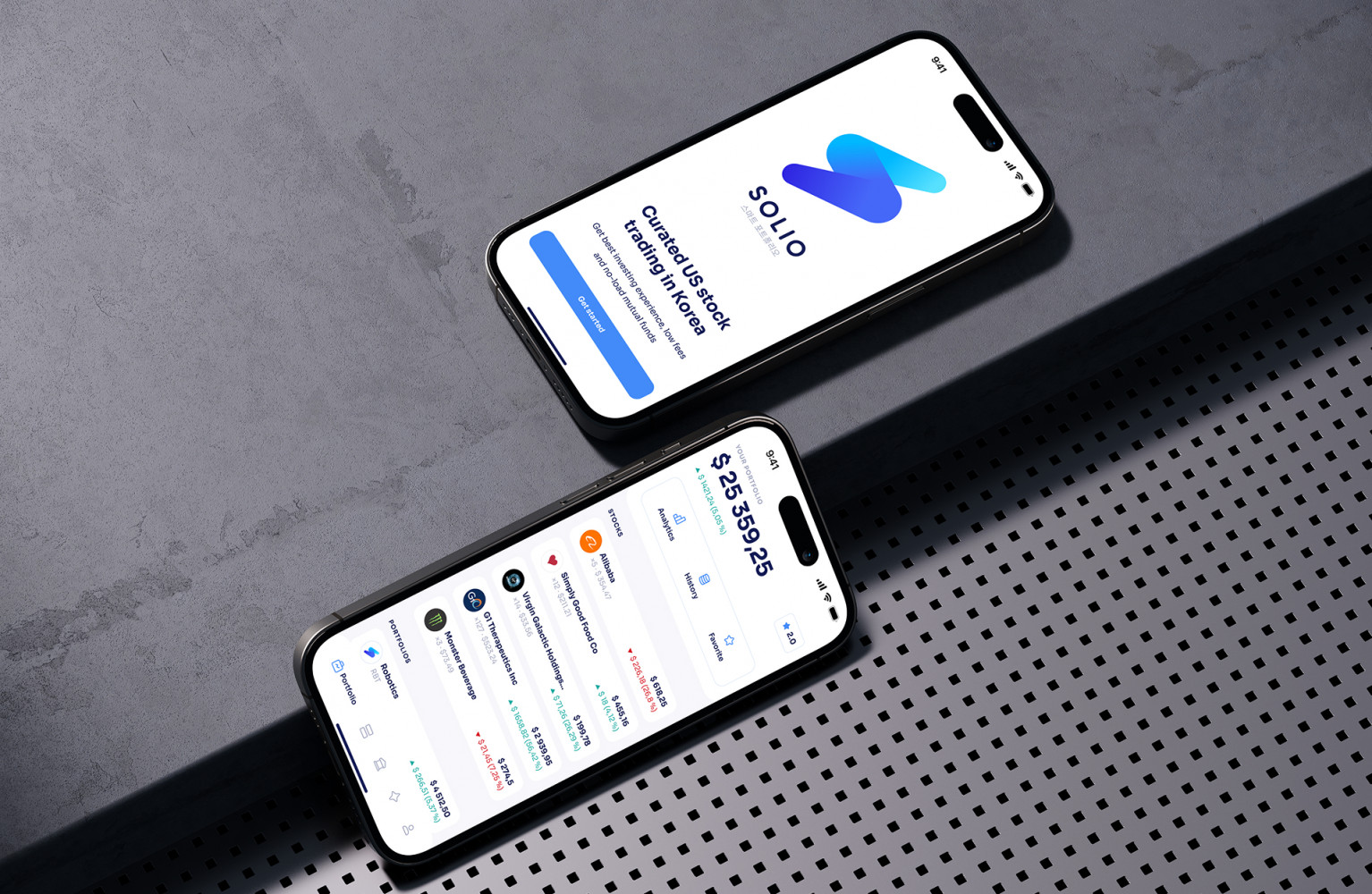
Solio app by Shakuro
What should you verify before you sign?
Before a contract, the packet should already answer these. If it does not, the estimate is a guess.
- Which customer jobs the first release finishes, and which core call each one uses.
- Which system may show available balance while the old internet banking is still live.
- What the channel does when the core returns unknown, and who reads that report.
- Whether the app will store, process, or transmit a card number.
- Which duties counsel has named for the markets you will launch in, and which of those the software must record.
- Who is allowed to change the core interface after launch.
If that packet is ready, or if you want help turning a core interface into that packet, get in touch. Bring the job list and the interface description. We will tell you whether the work is a digital banking channel, a core project, or something we should not take.
FAQ
What is digital banking software development?
It is the work of building the online and mobile channel a customer uses to see accounts, move money the institution already allows, and finish everyday service tasks. Internet banking, e-banking, and online banking software are names for that channel. It is not the ledger and not a banking license.
How is online banking software different from a core banking platform?
Online banking software shows balances and starts transfers the core or the processor will accept. A core banking platform holds deposits, loans, and the account record. A channel project that quietly includes a new ledger is a core project. Price it there.
What are the risks of implementing digital banking software?
A scope that says “digital” and means a core replacement. Payments that are not safe to repeat. Old internet banking and the new app showing different available balances. Compliance screens drawn before counsel names the duties. A launch with nobody assigned to payments the core returns as unknown.
Should the first release include a custom core?
No. The first release should call the ledger you already have, whether that is your core or a sponsor’s. A function the core does not expose is a core change, not a channel feature. A new customer app with no existing branch channel is a neobank app, not a reskin of this project.
What drives the cost of banking software development?
The customer jobs in the first release, the quality of core access, the duties counsel has named, whether the app touches card numbers, the parallel run against old internet banking, and who watches unknown payments after launch. A longer list of screens that call the same operation does not, by itself. We do not publish a price without that list.
How long does online banking software development take?
As long as the core interface, the job list, and the parallel run. A documented API and a short list of customer jobs is a different project from a terminal-driven core and a full product catalog. A week count without that list is a guess, so this page does not give one.
Does building the software include a banking license?
No. Software does not grant a license. Counsel names the permission for the markets you will launch in. The build can record a decision counsel has named. It cannot invent the duty, and a development contract is not a regulator’s approval.
How do you choose a partner for banking software development?
Ask who can read the core interface, who draws the failure states, who owns an unknown payment, and which published projects are channels rather than pictures of channels. A headcount is not that answer. Shakuro takes the channel when the job list and the interface are real, and says so when the work is a core project instead.