Looking for a reliable web development company to bring your solution to life? Then you probably know how exhausting the search is. People usually promise the moon, talk about “revolutionary AI-driven ecosystems,” and show off awards from conferences nobody actually attends. Or offer skyrocketing quotes. And all you really want is someone who can just build your thing properly without turning it into a science experiment.
That’s exactly why we put together this list of the top web development companies for right now. But we didn’t rank them based on how cool their office looks or how many buzzwords they cram into their pitch decks.
What you’ll find below is practical stuff. For each company, we break down what they actually build day-to-day, where their real strengths lie, and when they are actually a good fit for your specific stage. Maybe you need a team that excels at complex fintech backends, or perhaps you need folks who can iterate a consumer app faster than you can say “sprint review.” A P2P payment app, for example, needs a partner that understands ledgers, fraud checks, and instant transfers. Some of these shops are perfect for early-stage chaos, while others shine when you’re dealing with enterprise-level headaches.
These ten companies have proven they care about long-term product impact. So, if you’re tired of the fluff and ready to see who can actually deliver results that matter two years from now, let’s dive in.
TL;DR
This article reviews top web development companies working on scalable digital products. The list is based on real-world projects, technical expertise, client feedback, and long-term product outcomes.
Here is a comparison table of top web developers if you are short on time:
| Company | Location | Specialization | Rating | Notable Strengths | Best For |
| Shakuro | San Francisco, USA, distributed | Full-Stack Web Development & UI/UX Design | Clutch: ~5.0
DesignRush: 4.7 GoodFirms: 5.0 |
Robust backend & frontend development, AI features | Projects from regulated industries, with high conversion rates |
| Digital Silk | New York, USA | Web Development, Digital Strategy, Branding | Clutch: ~4.9
DesignRush: 4.9 GoodFirms: listed profile |
In-house strategic marketing team; strong expertise in Shopify Plus and enterprise branding. | Established businesses looking for a full digital transformation including branding, strategy, and e-commerce. |
| Innowise Group | Warsaw, Poland | Custom Web Dev & IT Staff Augmentation | Clutch: ~ 4.9
DesignRush: 4.9 GoodFirms: 5.0 |
Project management; highly flexible engagement models. | Enterprises needing rapid scaling of development teams or long-term outsourcing partnerships. |
| Scopic Software | Sofia, Bulgaria | Custom Web Dev, AR/VR | Clutch: ~4.9
DesignRush: 4.9 GoodFirms: 5.0 |
Expertise in apps with high performance, web hybrids | Projects requiring specialized immersive tech, IoT integration |
| Ramotion | San Francisco, USA | UI/UX Design & Web App Development | Clutch: ~ 4.9
DesignRush: 4.9 GoodFirms: listed profile |
Motion design, seamless handoff between design and code | Projects with a complex backend but intuitive frontend |
| Instinctools | Stuttgart, Germany | Product Engineering & Digital Transformation | Clutch: ~4.7
DesignRush: 4.9 GoodFirms: 4.9 |
Strong focus on “product thinking” and business alignment; robust cloud migration capabilities. | Mid-to-large enterprises undergoing digital transformation or building complex SaaS products from scratch. |
| Geniusee | Warszawa, Poland | Fintech, Enterprise Software | Clutch: 4.9
DesignRush: 4.5 GoodFirms: 5.0 |
Huge experience with big data and real-time processing | Scale-ups and startups that are launching into hyper-growth mode |
| ELEKS | Tallinn, Estonia | Enterprise Software | Clutch: ~ 4.8
DesignRush: 4.9 GoodFirms: 5.0 |
Experience in regulated industries, legacy modernization | Companies needing to modernize systems or build secure platforms |
| MindK | San Francisco, USA | SaaS Development & Dedicated Teams | Clutch: 4.9
DesignRush: listed profile GoodFirms: 5.0 |
Robust backend, real-time data processing and mapping integrations | Logistics and transportation projects |
| SumatoSoft | Riga, Latvia | Custom Web App Development | Clutch: ~4.9
DesignRush: 4.8 GoodFirms: 5.0 |
Agile flexibility; integration of complex APIs | Complex SaaS applications or modernization for an outdated app |
What Makes a Good Web Development Company?
Anyone can hack together a demo that looks shiny for a pitch meeting. The real test is whether the system your partner builds stays stable and actually adapts when your user base grows from a hundred to a hundred thousand. You want a partner who thinks about next year, not just next week.
What actually matters:
- Architecture and scalability mindset: The best teams are obsessed with this before writing a single line of code. They think about things like: How will this handle sudden spikes in traffic? How will we deal with the scenario when we want to add a new payment provider? Can they explain the scaling plan in plain English? That’s a red flag, by the way, if they can’t answer those questions. They have to have great experience with frontend development.
- Experience with real products: It’s one thing to build a marketing site and another thing to run a sophisticated SaaS or data-intensive dashboard. Web development agencies with experience have scars to prove it. They have experience with messy migrations, tricky compliance, and those 3AM page loads when something is broken. They know the difference between theoretical solutions, different stacks, and custom tools when you’re sleep-deprived.
- Code quality and maintainability: Maintainable code means your future self or the next team won’t hate you. Does the company write tests? Do they document their decisions, or do they just leave cryptic comments like “fix this later”? Little things like that add up. If the code feels like a tangled knot, you’re going to spend all your budget untangling it instead of building new features.
- Clear and practical communication: If you can’t get a straight answer about timelines or risks, how are you supposed to run your business? The best partners talk to you like humans. They admit when they’re stuck. They push back when an idea sounds risky.
At the end of the day, you’re buying peace of mind. You want a system that grows with you, not one that holds you back. That’s worth waiting for.
How We Tested the Best Web Development Companies
This isn’t some rigid, scientific ranking where we gave everyone a score out of ten based on a checklist. Honestly, trying to objectively rank creative and technical work like that always feels a bit forced. Even the best web development company might be perfect for a fintech startup but totally wrong for a media platform.
Instead, the goal here was simpler. We wanted to find teams that consistently deliver when the pressure is on. We were hunting for the companies that have the scars to prove they’ve shipped real stuff.
First off, we ignored concepts. Everyone has a great case study about a project that’s “coming soon” or a flashy prototype that never saw the light of day. We skipped those. We only looked at live, breathing products.
Then we dug into the nitty-gritty. We looked at system complexity. Did they just slap together a basic CMS, or did they build a custom backend that handles thousands of transactions an hour? Infrastructure matters too. With cloud costs going crazy, a team that knows how to optimize server usage is worth their weight in gold.
What’s more, we checked if their solutions actually scale. It’s easy to build something that works for fifty users; it’s a whole different ballgame when you hit fifty thousand.
Our team also spent way too much time scrolling through Clutch and other review sites. What we really cared about were the long-term engagements. Did the client stick with the agency for two, three, or even five years? That tells you everything. If a company only does one-off projects and then vanishes, that’s a warning sign. We wanted partners who stick around for the long haul.
Post-MVP experience. A lot of shops are great at getting you to launch, but then they ghost you when you need to iterate. Real products change. Requirements shift. Users complain. We looked for teams that have a solid process for ongoing support and feature additions. Can they keep up the MVP speed without breaking what already works? That’s the real test.
Basically, we filtered out the noise to show you top web development companies. We didn’t care about awards or how many employees they claim to have. We cared about who’s still standing after the launch party is over and the real work begins. If a team showed up in our research as the ones founders keep coming back to, year after year, they made the list.
The 10 Best Web Development Companies in 2026
Shakuro
- Location: USA (San Francisco), distributed team
- Website: https://shakuro.com
Platform ratings
- Clutch: ~5.0 / 5 (90+ reviews)
- DesignRush: 4.7 (4 reviews)
- GoodFirms: 5.0 (48 reviews)
Brief overview
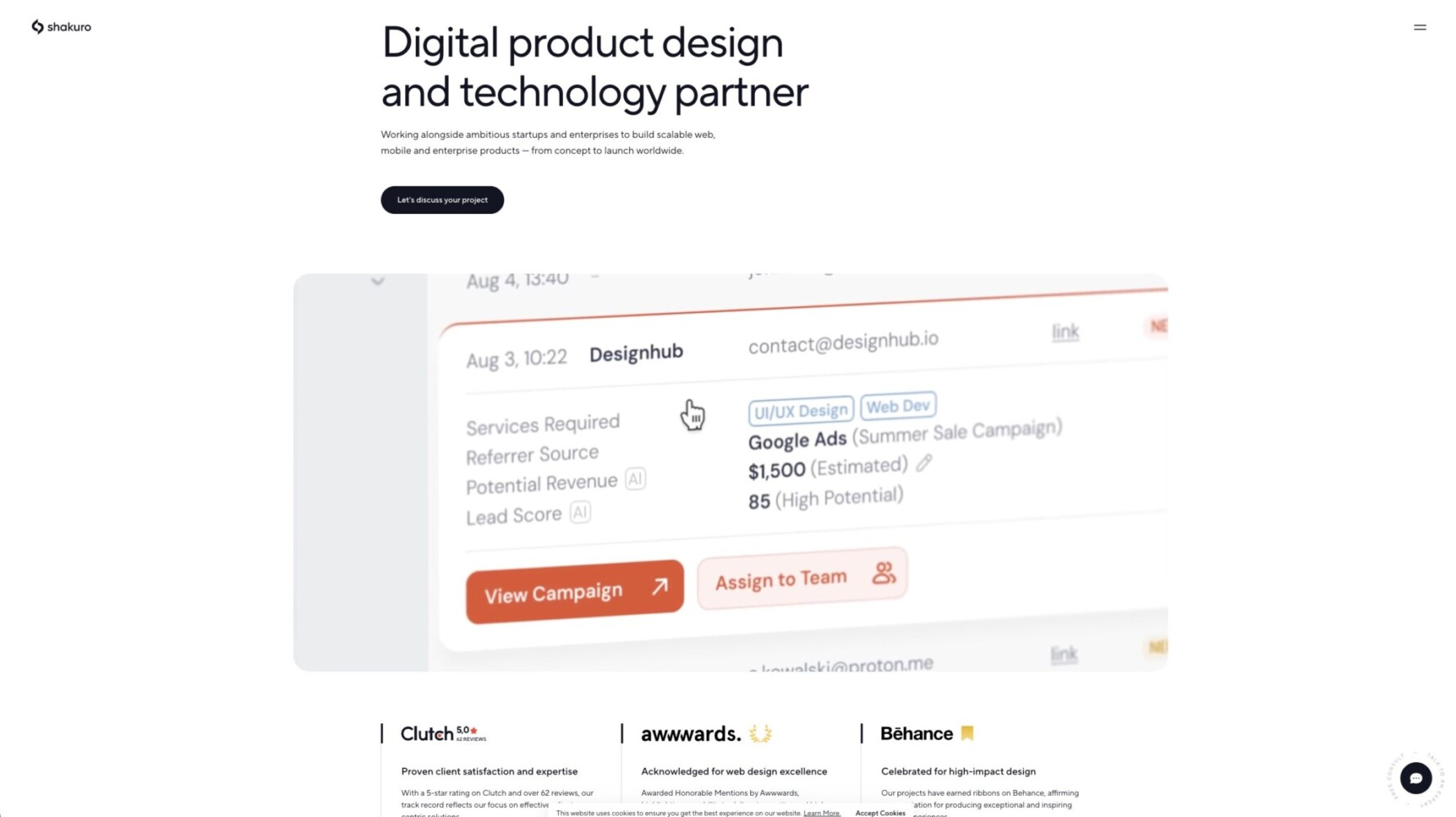
Shakuro sits right at the intersection of high-end design and serious engineering. For a custom web development company, their positioning is quite unique: they combine the web development industry practices with a user-centric approach to deliver high-performance solutions that actually convert. This approach plays a huge role when it comes to fintech and SaaS projects because it helps with turning heavy data into easy-to-use UIs. Moreover, Shakuro uses various AI tools to shorten delivery time, offering you features like image & voice recognition, automation, and analytics.
Portfolio & examples
They have strong case studies in SaaS, particularly for B2B platforms where the user flow needed a complete overhaul to reduce churn or attract new clients. For fintech companies, they deliver investor dashboards that handle complex data visualization without overwhelming the user. There are AI solutions for predictive analytics that cater to professional traders. As for healthcare, Shakuro has launched patient portals that manage sensitive data while keeping the interface accessible. They integrate valuable features like telemedicine, AI assistants, glanceable reports, etc.—all backed up by a robust infrastructure.
Client/industry feedback
Founders often highlight their “conversion-focused” mindset. Shakuro pushes back on design choices if they think it’ll hurt user retention because your success equals their success. Others mention the proactive approach to problem-solving, which leads to measurable business growth. There is close collaboration between frontend and backend, which speeds up the development process.
Notable strengths
Their ability to merge comprehensive UI/UX strategy with robust backend development is their standout feature. They are particularly strong in React, Node.js, and Python, but their real edge is in industries that require trust and clarity, like fintech, healthcare, and complex B2B SaaS. They treat compliance and accessibility as core design constraints.
Best fit
Choose Shakuro if you are in a regulated industry (fintech, health, legal tech) or if your product relies heavily on user trust and clear information architecture. Also, in case you need a web development company that cares equally about the code quality and the conversion rate, this is them.
Digital Silk
- Location: USA (New York), with remote teams.
- Website: digitalsilk.com
Platform ratings:
- Clutch: ~4.9 (49 reviews)
- DesignRush: 4.9 (34 reviews)
- GoodFirms: listed profile
Brief overview
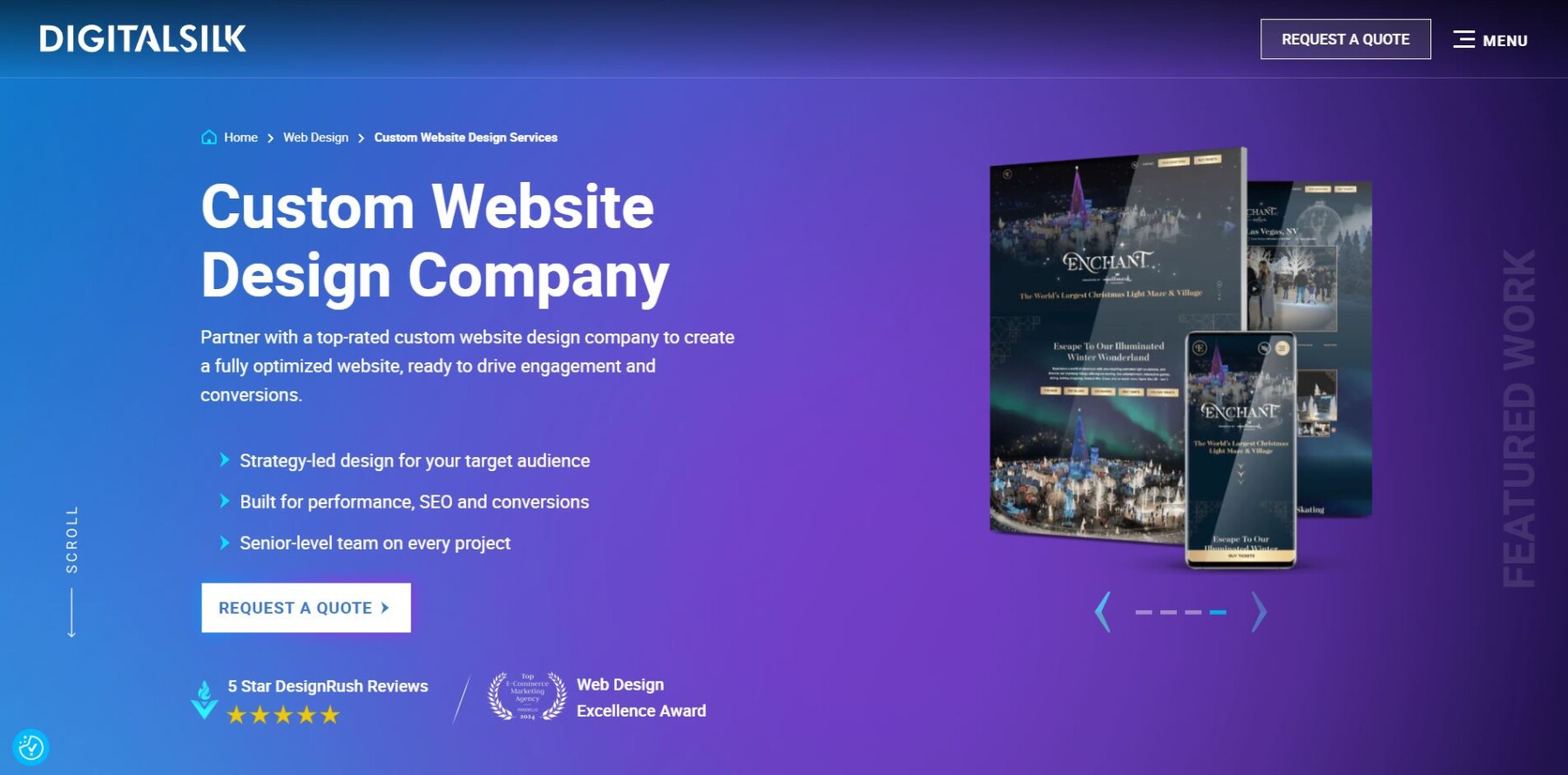
They position themselves firmly at the premium end of the market, blending high-impact branding with solid engineering. They aren’t the cheapest option out there, and they don’t try to be. Instead, they focus on companies where the website is the primary sales channel or brand statement.
Portfolio & examples
As a custom web development company, they’ve worked with some big names on specific divisional sites and educational portals. It says a lot about their ability to handle complex content structures while keeping things visually stunning. On the startup side, they’ve built platforms for fintech firms where trust is everything and every pixel has to scream “legitimacy.” They also do a lot of work for luxury brands and high-end service providers who can’t afford a generic look.
Client/industry feedback
The feedback usually centers on their strategic approach to design. Clients often say, “They didn’t just make it look good; they fixed our messaging.” However, a few smaller startups have noted that the process can feel a bit intense if you’re not used to such a high level of scrutiny on your brand assets.
Notable strengths
Their superpower is definitely the marriage of brand strategy and web development. They excel in WordPress, Shopify Plus for high-volume e-commerce, and headless CMS architectures. They are really good at taking a messy brand identity and turning it into a cohesive, high-converting digital experience. Their SEO foundation is also strong, which is a nice bonus.
Best fit
They are the go-to if your primary goal is to elevate your market perception and if your website needs to carry the weight of your entire brand story. If you’re looking for a quick, cheap MVP to test an idea, they might be overkill.
Innowise Group
- Location: Warsaw, Poland (with offices across Europe)
- Website: innowise-group.com
Platform ratings
- Clutch: ~ 4.9 (72 reviews)
- DesignRush: 4.9 (12 reviews)
- GoodFirms: 5.0 (22 reviews)
Brief overview
They are a bit of a juggernaut in terms of size, offering everything from staff augmentation to full-cycle development. Despite their size, they manage to keep a personalized feel for mid-market clients. They position themselves as a “one-stop shop” for digitalization.
Portfolio & examples
They built a telemedicine platform for a major European healthcare provider and developed a custom CRM for a large real estate conglomerate. They also have a strong portfolio in fintech, including payment gateway integrations.
Client/industry feedback
Clients appreciate the breadth of skills available and effective project management. Some note that communication requires discipline due to the team size, but the output is consistent.
Notable strengths
Versatility. They cover most of the popular stacks like .NET, PHP, Java, Node, etc. The strength of top web developers lies in assembling dedicated teams quickly for specific project phases.
Best fit
Suitable for companies that need to scale up rapidly or require a diverse set of technologies under one roof. Good for projects with a clear scope but a need for flexible resourcing.
Scopic Software
- Location: Sofia, Bulgaria
- Website: scopicsoftware.com
Platform ratings:
- Clutch: ~4.9 (62 reviews)
- DesignRush: 4.9 (18 reviews)
- GoodFirms: 5.0 (14 reviews)
Brief overview
Scopic operates fully remotely with a very tight-knit culture. They focus heavily on desktop and web applications that require high performance. The agency feels more like a boutique studio than a factory.
Portfolio & examples
They created software for real estate companies and built complex inventory management systems for retail chains. Scopic also has a strong track record in developing custom tools for the construction industry.
Client/industry feedback
In their web development services, the personal touch stands out. Founders often mention feeling like they are working with friends. “They care about the product success as much as we do” is a frequent comment.
Notable strengths
C#/.NET and Electron for cross-platform desktop/web hybrids. They are excellent at optimizing performance for resource-intensive applications. Moreover, their project management is very hands-on.
Best fit
Ideal for SMEs and startups looking for a dedicated, long-term partner who will treat the product like their own. Especially good if you need desktop-web hybrid solutions.
Ramotion
- Location: San Francisco, USA
- Website: ramotion.com
Platform ratings:
- Clutch: ~ 4.9 (29 reviews)
- DesignRush: 4.9 (23 reviews)
- GoodFirms: listed profile
Brief overview
They position themselves as a “design-led engineering” partner. The vibe is very Silicon Valley: sleek, fast, and obsessed with the user experience, but backed by code that actually holds up under pressure.
Portfolio & examples
On the startup side, they’ve built entire platforms for fintech unicorns where the app’s usability was the main selling point. They also did a massive overhaul for a healthcare scheduling platform that needed to be intuitive for both doctors and patients. A notoriously hard balance to strike.
Client/industry feedback
Founders love them for the “wow” factor that doesn’t sacrifice function. The only slight caveat? Because they are so design-obsessed, the initial discovery and prototyping phase can feel a bit longer than with a pure dev shop. But clients say it’s worth it because it prevents costly reworks later.
Notable strengths
Their secret sauce to becoming one of the top web development companies is the seamless handoff between design and code. They are incredibly strong in React, React Native, and Swift, with a heavy focus on animation and micro-interactions that make a product feel alive. Their QA process includes a specific “design fidelity” check that most agencies skip.
Best fit
They are perfect for consumer-facing apps (B2C), fintech, healthtech, or any brand where trust and ease of use are your competitive advantages. If you have a complex backend but need a frontend that feels magical and intuitive, they are probably your best bet. Just don’t go to them if you need a quick-and-dirty internal tool with no regard for UI.
Instinctools
- Location: Stuttgart, Germany
- Website: instinctools.com
Platform ratings
- Clutch: ~4.7 (34 reviews)
- DesignRush: 4.9 (10 reviews)
- GoodFirms: 4.9 (23 reviews)
Brief overview
Instinctools positions itself less as a “build everything from scratch” agency and more as a strategic engineering ally for digital transformation. Their sweet spot is taking messy, old-school enterprise systems and modernizing them without breaking the business. They have a very German approach to process—structured, reliable, and thorough—but with enough agility to handle startup-style pivots when needed. It’s that rare mix of corporate stability and tech flexibility.
Portfolio & examples
They’ve done heavy lifting with automotive software solutions, helping bridge the gap between hardware and cloud services. In the media space, they built a content management ecosystem that handles massive traffic spikes during live events. They also have a strong track record in fintech, creating secure banking portals for European institutions that had to migrate from mainframes to modern cloud architectures.
Client/industry feedback
Most people highlight strong management skills and cultural fit. Some smaller startups find their web development services a bit formal compared to a bare-bones dev shop, but most agree that the rigor saves money in the long run by preventing security gaps and scalability issues.
Notable strengths
Their expertise in legacy modernization is arguably best-in-class. They are wizards at Java, .NET, and cloud migration (AWS/Azure), specifically for regulated industries. Their focus on “Product Engineering” means they care about the entire lifecycle, not just the initial build.
Best fit
This team is ideal for mid-to-large enterprises, especially in automotive, manufacturing, finance, or media, that need to modernize their tech stack. If you’re sitting on a mountain of technical debt and need a partner who can refactor your system while keeping the lights on, instinctools is a top contender. They are also a great choice if you need to set up a dedicated development center (DDC) that feels like an extension of your own company rather than an outsourced vendor.
Geniusee
- Location: Warszawa, Poland
- Website: geniusee.com
Platform ratings:
- Clutch: 4.9 (68 reviews)
- DesignRush: 4.5 (2 reviews)
- GoodFirms: 5.0 (12 reviews)
Brief overview
Geniusee is one of those web development agencies where positioning is all about “business-driven development.” They challenge your assumptions. If you walk in with a feature request that doesn’t make sense for your ROI, they’ll tell you. They blend strong engineering with a very pragmatic product mindset, making them feel less like a vendor and more like a co-founder who happens to write code.
Portfolio & examples
They’ve built some complex stuff, for example, a large-scale e-learning platform that handles millions of interactions daily, complete with gamification and real-time analytics. In the fintech space, they created a neobank backend that integrates with multiple payment gateways and handles strict compliance checks without slowing down the user experience. They also have a notable case study in logistics.
Client/industry feedback
Clients often talk about their energy and proactivity. Some founders mention that their pace can be intense: if you’re used to slow, plodding progress, Geniusee might feel like a whirlwind. But for teams that need to move fast and iterate constantly, that intensity is exactly what they need.
Notable strengths
Their proficiency in full stack is evident, especially with Node.js, Python, and React. However, they have even more experience with big data and real-time processing, and that helps them to stand out from the crowd. At the same time, their QA automation is very good, making it possible for them to roll out new versions frequently without the usual fear of breaking things.
Best fit
Geniusee is best for scale-ups and startups that are launching into hyper-growth mode, where speed to market for features without compromising stability is a priority. They thrive when data analytics, live updates, and user interactions fuel the product.
ELEKS
- Location: Tallinn, Estonia
- Website: eleks.com
Platform ratings:
- Clutch: ~ 4.8 (31 reviews)
- DesignRush: 4.9 (22 reviews)
- GoodFirms: 5.0 (3 reviews)
Brief overview
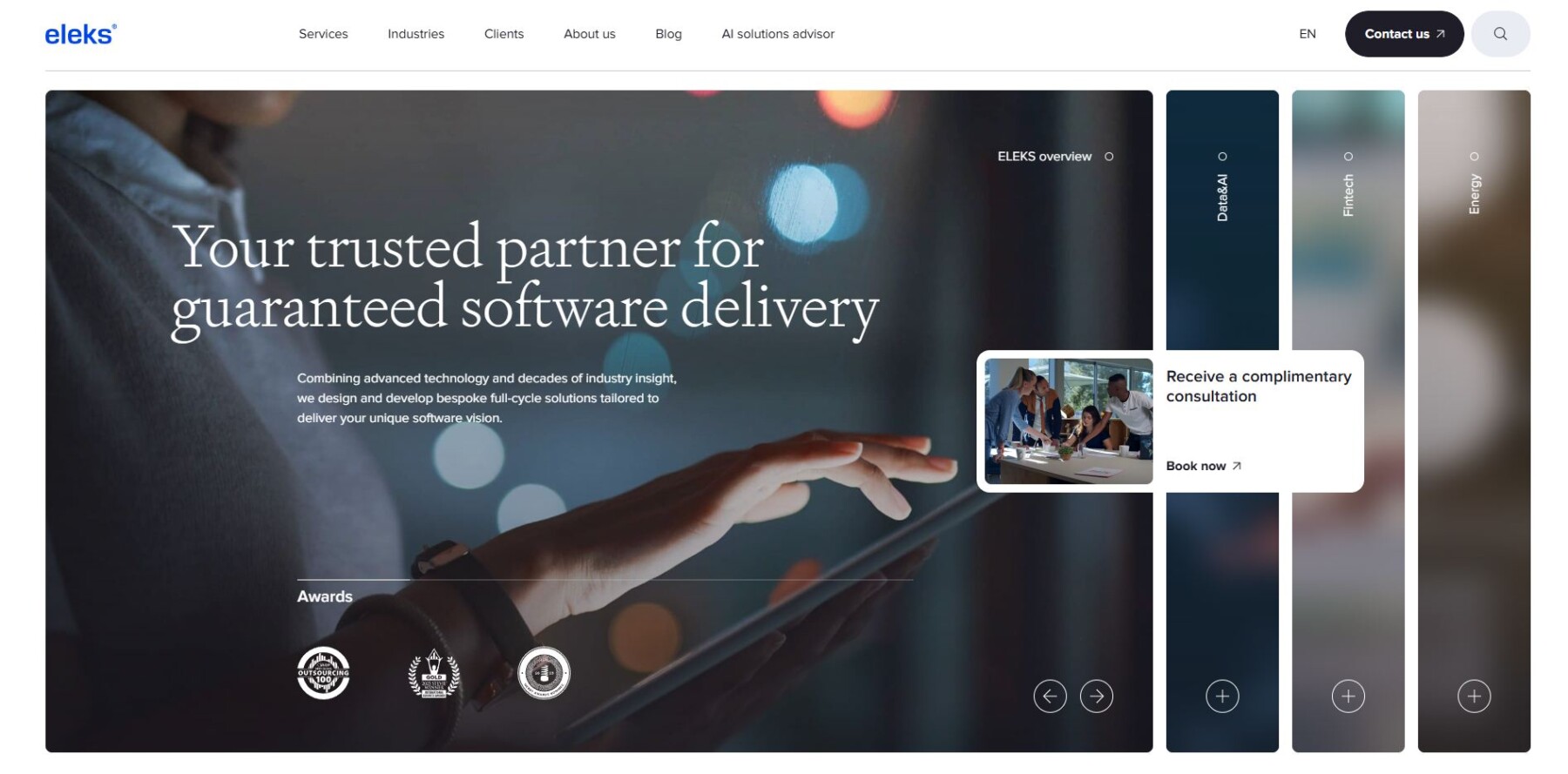
ELEKS is a well-established custom web development company with three decades of experience under their belt. They specialize in legacy modernization and delivering ultra-secure enterprise-level solutions. The team has a preference for working on big, complex projects and utilizes agile methodologies for efficiency.
Portfolio
Their portfolio is quite diversified and includes projects from various industries, including logistics, healthcare, agriculture, and retail. Some notable cases include automation systems, elaborate ecosystems, and migrations from outdated platforms.
Client feedback
They are commended for working with highly regulated industries like finance and healthcare with ease. However, some projects were negatively impacted due to communication gaps caused by differences in time zones.
Notable strengths
Data science, cybersecurity, and cloud-native architecture. The team has strong technical proficiency across various technologies, for example, Java, .NET, C#, React Native, and more.
Best fit
Companies needing to modernize old systems or build secure, data-heavy web platforms.
MindK
- Location: San Francisco, USA
- Website: mindk.com
Platform ratings:
- Clutch: 4.9 (19 reviews)
- DesignRush: listed profile
- GoodFirms: 5.0 (1 review)
Brief overview
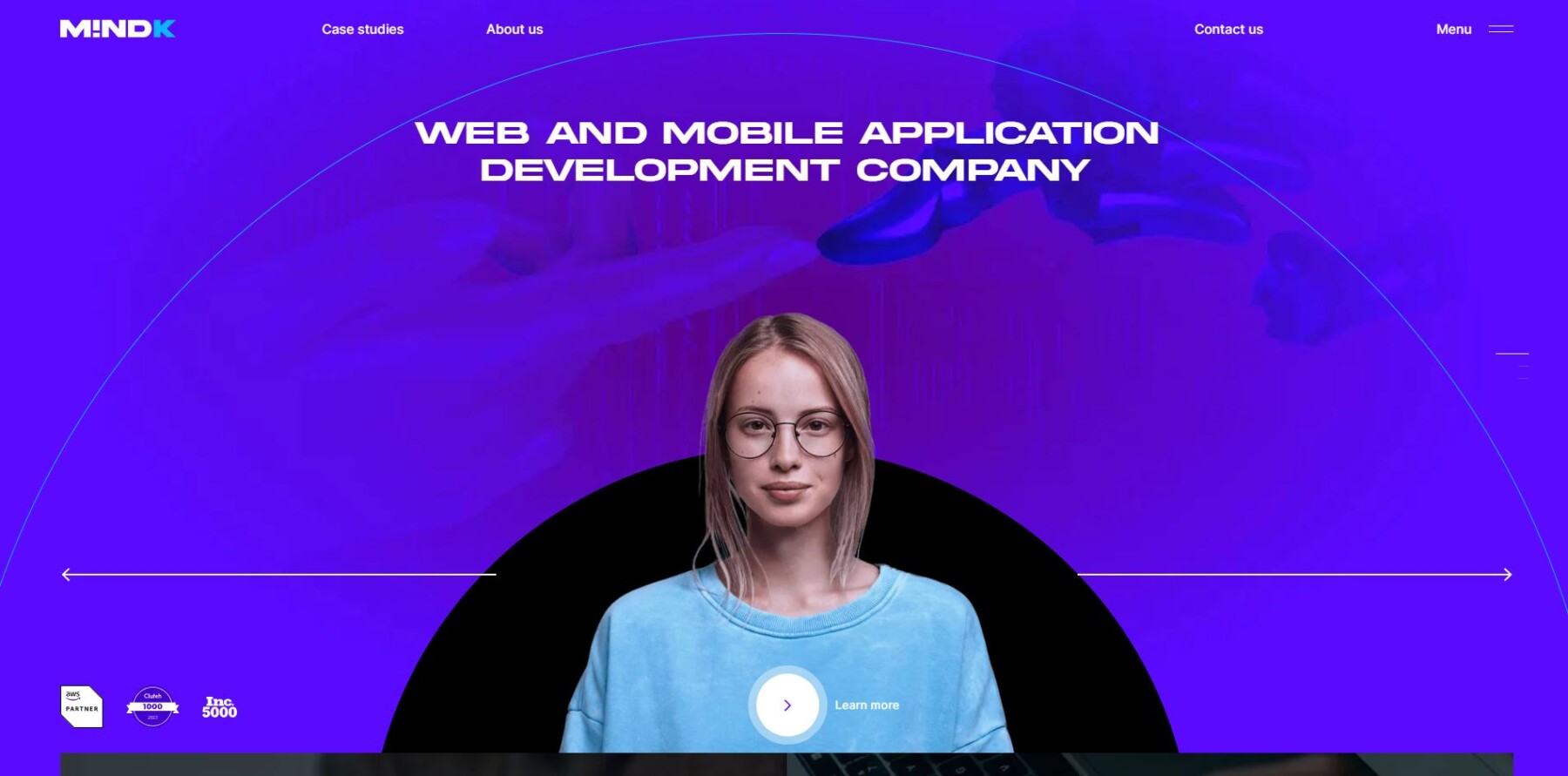
MindK has managed to establish itself as a respectable player among the top web development agencies for IoT and fleet management projects, as well as delivering top-notch general SaaS development work. Their approach is pragmatic and results-oriented, always keeping a focus on delivering tangible business results. Many projects begin with a Discovery Phase to ensure product-market fit before writing a single line of code.
Portfolio & examples
The agency’s logistics projects are what stand out the most, though they also have experience in management systems, healthcare analytics platforms, and even SaaS-based insurance solutions and more.
Client/industry feedback
Reliability is the keyword here. Deadlines are rarely missed, and the quality of work is top-notch, as are communication and staying within budgets for different project sizes. There are some comments on how the agency could improve by having a better understanding of the client culture and speed of decision-making.
Notable strengths
MindK is known for having a robust backend skill set with proficiency in languages such as Java, Python, and Go. They are also known for excelling in real-time data processing and mapping integrations. Their QA process is also rigorous and aligns with safety-critical aspects of many IoT projects.
Best fit
Logistics and transportation projects are a natural fit, as are IoT projects and anything that requires real-time data accuracy to be non-negotiable. They are also well-suited for long-term maintenance contracts.
SumatoSoft
- Location: Riga, Latvia, with a remote EU delivery.
- Website: sumatosoft.com
Platform ratings
- Clutch: ~4.9 (25 reviews)
- DesignRush: ~ 4.8 (6 reviews)
- GoodFirms: ~ 5.0 (7 reviews)
Brief overview
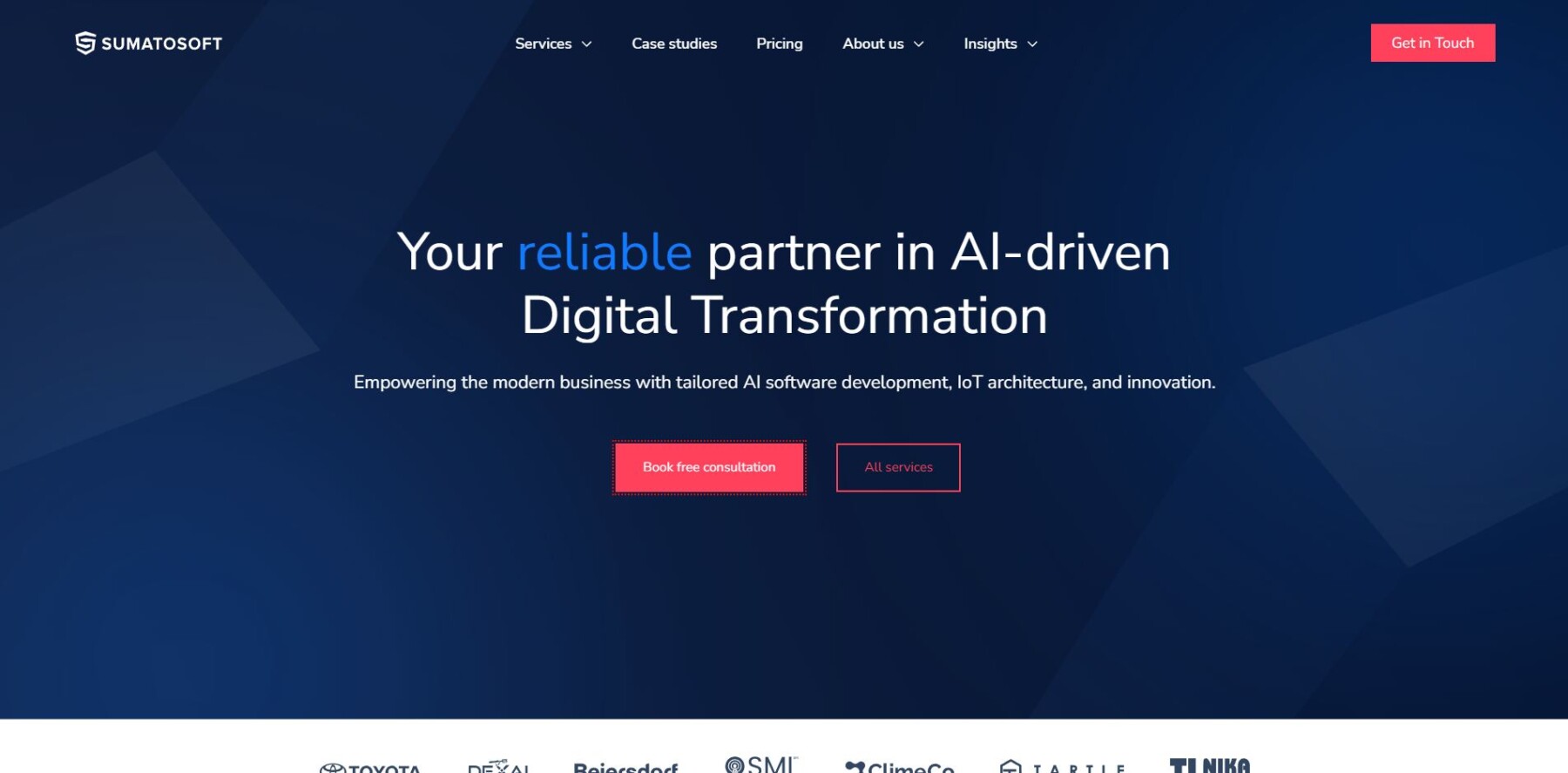
They position themselves as a “full-cycle” partner, but what that really means in practice is they are exceptionally good at taking a vague idea and turning it into a structured, scalable product without losing momentum. They don’t get bogged down in endless discovery phases; they like to build, test, and iterate. It’s a very pragmatic, engineering-first culture with just enough design sense to keep things user-friendly.
Portfolio & examples
SumatoSoft has a significant presence in the logistics and supply chain management industries. They have successfully developed a full-fledged fleet management system, where thousands of vehicles are being tracked in real-time. In the startup ecosystem, they have assisted in launching a peer-to-peer marketplace, where the heavy lifting of matching algorithms and splits is done behind the scenes. SumatoSoft has also had significant success in EdTech, where they have developed interactive learning platforms with high video streaming capabilities and user data handling.
Client/industry feedback
The most common thing you’ll hear from clients is about their reliability during tough times. Even with the challenges in their region over the last few years, their web development services never really skipped a beat. They are praised for being straightforward: no sugar-coating estimates or hiding technical debt. If something is going to take longer, they tell you upfront.
Notable strengths
Their backend development skills are quite good. They are heavy users of Python, including Django and FastAPI, Node.js, and have experience in integrating complex APIs without making the codebase look like a mess. This ensures proper communication. They are also good at saving costs on cloud services, which is a big plus point when you are scaling.
Best fit
SumatoSoft is an excellent choice for a long-term technical development partner who can assist in developing a complex SaaS application from scratch or modernizing an outdated application. They are ideal if you value engineering stability and clear communication over flashy marketing or trendy design experiments.
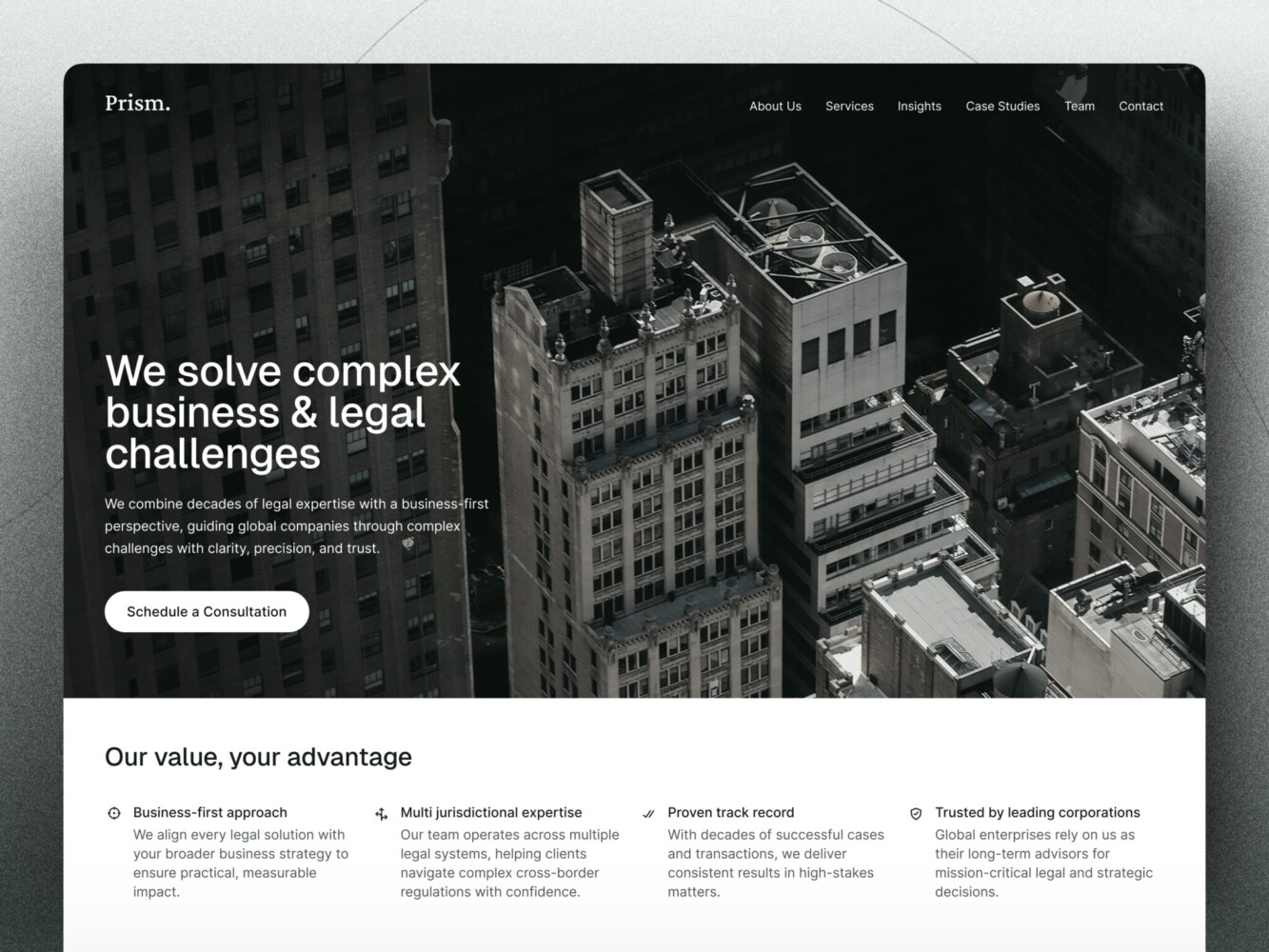
Website Design for Consulting Firm by Conceptzilla
Web Development Company Buyer’s Guide
By now you’ve probably seen the lists. You know who the big players are, who has the shiny awards, and who shows up first on Google. But picking the best web development company on paper doesn’t mean they’re the best for you. I’d compare the process to buying a Ferrari when in reality, you need a reliable pickup truck. I get it, the Ferrari is impressive, but it’s not going to help you haul lumber.
The key is finding the right partner, and that ultimately comes down to finding a “fit.” To get a sense of that fit, ask yourself some tough questions about your position and what you’re really looking for. Let’s go through it.
- Where are you in your product stage?
- MVP / Early stage: At this stage of your product lifecycle, you’re likely still validating your idea and don’t need to worry about microservices and uptime. You need speed, flexibility, and a team that’s comfortable making changes as user feedback suggests your initial assumption is wrong. You want a team that’s expert in rapid prototyping and lean development. They should be comfortable with “good enough for now” code that’s clean enough to refactor later.
- Scaling / Growth: This stage is triggered by increased user adoption, where you are worried about stability and performance. So you want a team of experts that have experience optimizing databases and scaling infrastructure without trashing UX.
- Enterprise / Mature: Now, you’re likely dealing with legacy systems and integration issues. Your primary goal is keeping everything secure and compliant. That’s why the needs here are the top web development companies that have the processes, security clearances, and ability to navigate the complex world of large organizations. Speed is still important, but reliability and risk avoidance are the primary concerns.
- What type of system are you building?
- SaaS products: These require a specific mindset around multi-tenancy, subscription billing, and continuous feature deployment. You want a team that understands churn, onboarding flows, and how to build features that keep users sticky.
- Marketplaces: You’re building for two or more sides of a user base, managing liquidity, and handling complex matching algorithms. You need folks who have solved the “chicken and egg” problem technically and know how to balance supply and demand dynamics in the code.
- Internal tools: Often overlooked, but critical. If you’re building dashboards or admin panels for your team, you need a group that prioritizes usability and efficiency over flashy design. They should understand workflow optimization and data visualization, not just pretty buttons.
- How clear are your requirements?
Be honest here. Do you know exactly what you want, or are you still figuring it out?
- High uncertainty: If your requirements are vague, which is totally normal for new ideas, avoid rigid, process-heavy agencies. You need collaborative top web developers who enjoy discovery workshops, wireframing, and iterative feedback loops. They should act as a product consultant, helping you define the scope as you go.
- Clear specifications: If you have detailed docs and a fixed scope, you can work with more structured teams. They’ll give you accurate timelines and costs upfront. Just make sure they have a change management process that isn’t a nightmare if you do need to tweak something mid-sprint.
- Architecture and scalability needs
Ask potential partners, “How do you plan for scale?” If their answer is generic or they dismiss the question because “we’ll cross that bridge later,” be careful. For high-growth products, you need a team that thinks about database sharding, load balancing, and asynchronous processing from day one.
Also, check their portfolio for systems that handle real load. Did they build something that serves thousands of concurrent users? Or is everything a simple brochure site? The difference matters.
- DevOps and infrastructure capabilities
Does the company have dedicated DevOps engineers, or do the devs just “handle it” on the side? You want a custom web development company that automates deployments, monitors performance proactively, and has a solid disaster recovery plan.
Next, ask about their cloud strategy. Are they locked into one provider, or do they recommend the best fit for your needs? Do they optimize for cost? Cloud bills can spiral out of control fast if no one is watching the meter.
- Post-launch support
The launch is just the beginning. Seriously. What happens after you go live? Bugs will appear. Users will ask for tweaks. Competitors will release new features.
Look for companies that offer clear retainer models or ongoing support packages. Do they have an SLA for response times? Can they scale the team up or down as needed? A partner who ghosts you after the final payment is a red flag. You want a long-term relationship, not a one-night stand.
- Communication and collaboration style
This is the soft stuff that often makes or breaks the project.
- Time zones: Do you need overlap with your working hours, or are you okay with async communication? Some teams thrive on daily standups; others prefer weekly syncs and detailed tickets.
- Transparency: Do they use tools you can access (Jira, Trello, Slack)? Can you see the code progress in real time? Avoid black boxes. You should feel like part of the team, not a client waiting for status updates.
- Culture fit: Do they speak your language—literally and figuratively? Are they willing to push back when you suggest something risky? A “yes man” team might feel nice initially, but they’ll lead you off a cliff eventually.

E-Commerce Website Design by Shakuro
FAQ Section
What is a web development company?
It’s a group of experts in web development, design, and management working together to build, maintain, and improve websites and web applications for businesses like yours. Instead of working with just one web developer, you get the whole team, and their collective expertise is at your disposal. They take care of every step in web development, from initial design and coding to server configuration and updates. They are like your external department, and you can hire them for your big and complicated projects without having to hire a whole team.
How do I choose the best web development company?
The first step is to find a web development company that is a good fit for your business at this time. Look at their portfolio and find examples of their work, which is similar to what you want to build. If you are building a complex SaaS application, for example, look for web development agencies that have built similar applications, not marketing websites. Then, consider their technology and process, and find out what they think about scalability and post-launch updates, since you want a web development company, not just a web development vendor. Lastly, talk about communication, and find a company that is a good fit for your team.
How much does web development cost in 2026?
The price tag varies because you’re paying for real expertise and the level of complexity involved. If you want to develop a simple MVP with a lean team, it will cost you anywhere between $15,000 and $40,000. If you want to develop a robust and scalable SaaS with custom integrations and security, it will cost you anywhere between $50,000 and $150,000+. The cheaper option will end up costing you more in the long run because you will have to debug and refactor the code. It is better to think of this as an investment in the foundation of your product.
What technologies do top web development companies use?
The leaders mostly rally around a few proven, scalable ecosystems. You’ll see React (often with Next.js) and Vue dominating the frontend because they offer the best balance of performance and developer experience. On the backend, Node.js, Python (Django/FastAPI), and Go are the heavy hitters for building fast, data-heavy APIs. For infrastructure, it’s almost entirely cloud-native now: AWS, Azure, or Google Cloud, managed via Kubernetes and Terraform. They stick to these because they have massive communities and proven track records for scaling.
Should I hire an agency or in-house developers?
If you want to launch quickly, require a set of specialized skills to complete a project in a hurry, or don’t have the resources to manage a team of developers, hire a web development agency. If you want to develop a core product that requires long-term maintenance, demands in-depth knowledge of your business logic, and requires developers to align with your company culture, hire in-house developers.
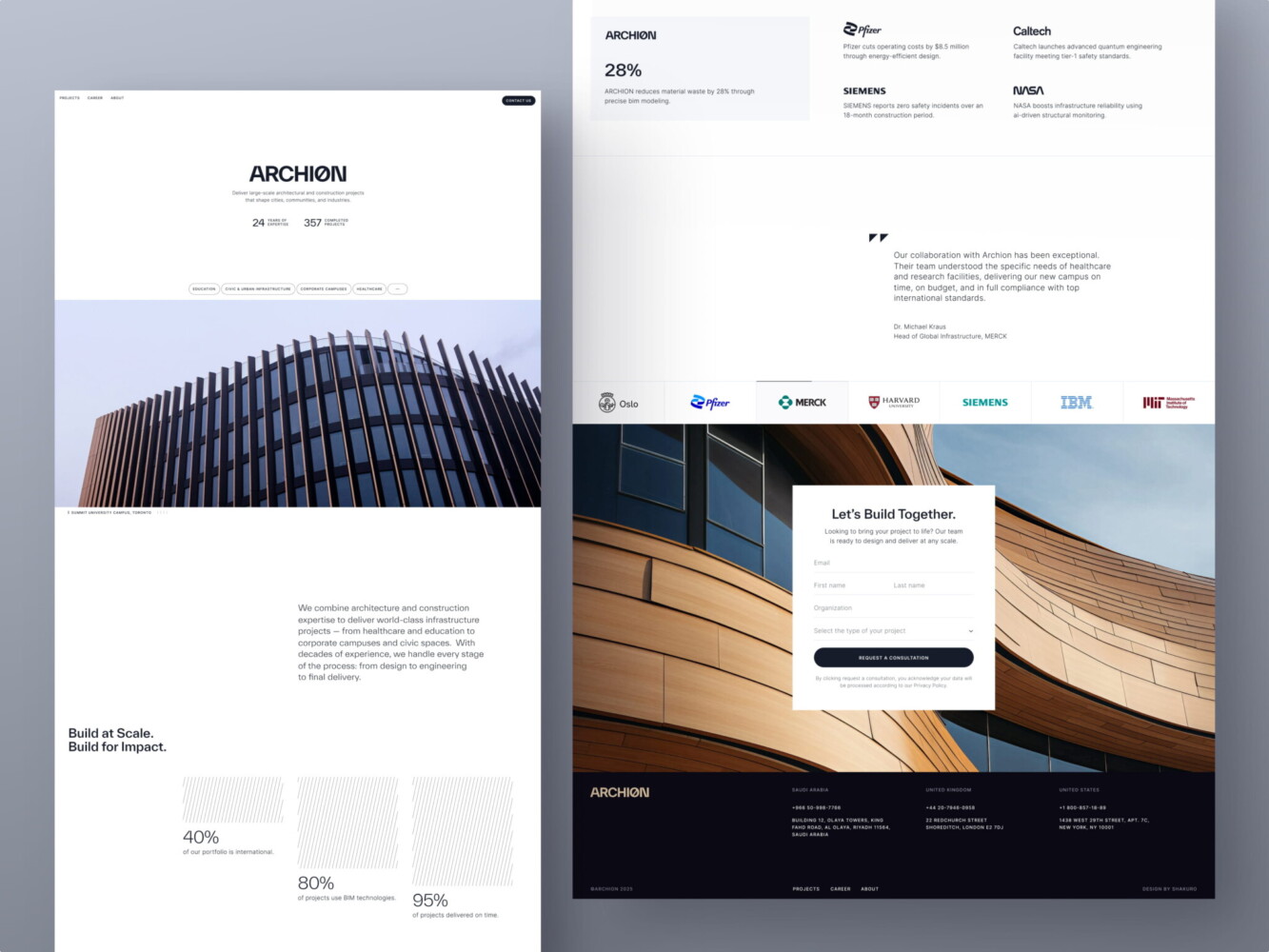
Web Design for Architectural Company by Conceptzilla
Final Word
There isn’t a single best web development company for every occasion. It’s almost obvious, yet it’s simple to get caught up in rankings, accolades, and shiny case studies. The agency that knocked it out of the park on a beautiful fintech platform for a Series C-funded startup might not be the best choice for your early-stage MVP. The boutique agency that excelled at rapid prototyping might not be able to handle your enterprise-scale data requirements.
The right partner depends on your position today and your goals for tomorrow. Are you in idea validation mode or optimizing a system that processes millions of transactions? Do you need a team that is flexible and able to change direction on a dime, or one that requires strict adherence to regulations? The sophistication of your product should dictate the type of partner you need—the team whose skill set and experience match your unique pain points and challenges.
The biggest mistake entrepreneurs make is prioritizing short-term velocity over long-term sustainability. Launching in four weeks is fantastic, but launching in four weeks with a codebase that takes six months to fix because it’s a mess isn’t saving you time; it’s mortgaging your future at exorbitant interest rates.
The top web development companies care about what you’re building two years from today, not just today. They’re building systems that are sustainable, flexible, and accessible to others.
Take your time and look beyond the marketing fluff. You want a team that understands your vision, your constraints, and your goals. That’s the secret to your success.
Related reading