Pharmaceutical software development means building systems for drug makers, pharmacies, and the healthcare providers around them: clinical trial data management, drug traceability from factory to pharmacy, pharmacovigilance, and online pharmacy apps with e-prescribing and refills. An MVP pharmacy app with login, prescription view and refill, search, payment, and delivery tracking costs $60,000–120,000 and takes 3–5 months. A full-scale product with telehealth, FHIR/EHR sync, insurance eligibility checks, and automated compliance workflows costs $200,000–600,000+ and takes 8–14 months.
The field has a reputation for being hard: FDA 21 CFR Part 11, GxP validation, data privacy, slow hospital IT systems, and code that people’s health depends on. It is also where software has a direct effect, like helping an older patient take her pills on time. Compliance and integrations have to be planned from the first sprint.
This guide covers how healthcare and pharma software differ, core services and clients, online pharmacy app development, essential features, the development process, tech stack, security and compliance, industry trends, case studies, and cost and timeline.
For those who prefer to listen rather than read, this article is also available as a podcast on Spotify.
Understanding Healthcare and Pharma Software Development
What Is Healthcare Software Development?
I’ll put it simply. You’ve got a patient. They go to a clinic, get scanned, tested, and admitted. All their info, like names, diagnoses, lab results, billing, etc., has to live somewhere. This type of software has exactly that purpose.
It is a whole ecosystem of tools that help doctors, nurses, hospitals, insurers, and even patients manage care. For example, electronic health records (EHRs), telemedicine platforms, patient portals, appointment schedulers, remote monitoring apps for chronic conditions, etc.
The goal is to make care smoother, safer, and less paper-heavy. So the apps strive for trust and robustness. Yes, they have to follow regulations like HIPAA in the US, GDPR if you touch EU data, plus all kinds of regional rules. I’ll dwell on that topic later.
What Is Pharmaceutical Software Development?
Instead of clinics and patients, this software is aimed at supply chains and clinical trials to get new drugs to them tomorrow.
Like an app that manages clinical trial data: tracking who got which dose, when, and what side effects showed up. Or systems that ensure drug traceability from factory to pharmacy. There’s also manufacturing execution systems (MES), pharmacovigilance platforms for spotting adverse events, and AI-powered tools helping researchers predict molecule behavior.
Regulations here are intense too. FDA 21 CFR Part 11 (electronic records), GxP compliance, and audit trails that log every single click. The same goes for validation. You can’t just deploy and pray—everything has to be documented, tested, and retested.
Key Differences and Overlaps
Healthcare software tends to focus on delivery. The main question here is—how do we get care to people efficiently? It’s user-facing, often real-time, and lives close to the patient in the form of apps, dashboards, and messaging between providers.
Pharma IT solutions lean more toward discovery and control. It’s about R&D, quality assurance, and regulatory reporting. Different users, different timelines, different stakes. But these two overlap more than you’d think.
Take personalized medicine. You need EHR data to identify candidates for a targeted therapy, then pharma systems to manufacture and track that treatment. Both fields wrestle with interoperability. Good luck getting a hospital EHR to talk to a clinical trial management system without some serious middleware magic.
Security is non-negotiable, too. A breach in healthcare leaks medical histories. In pharma, it could expose proprietary research worth millions.
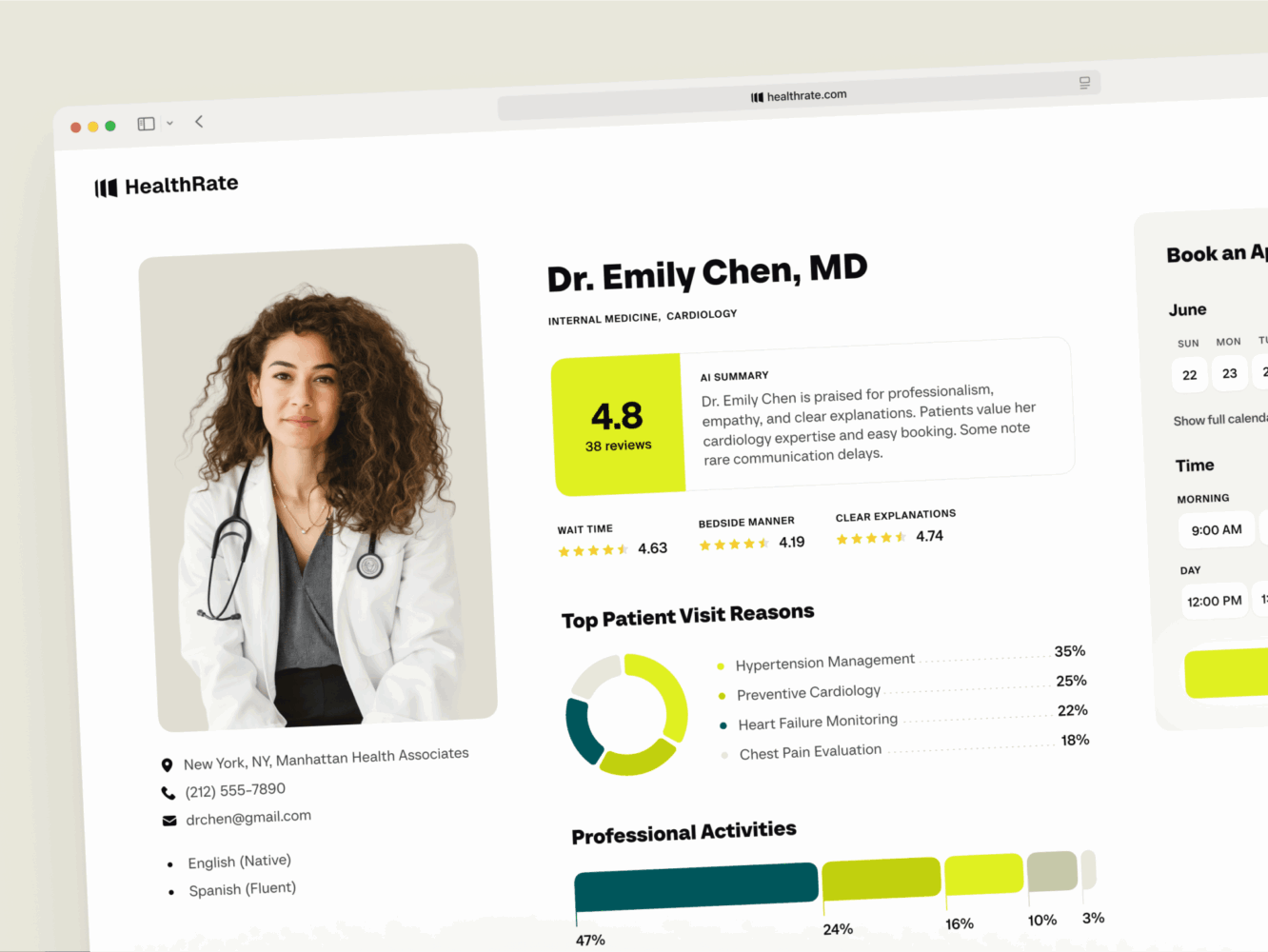
Design for Healthcare Platform by Conceptzilla
Core Development Services
Custom Healthcare Software Development
Off-the-shelf tools have their place. But if you’re building something versatile that actually solves a real pain point, you’re going to need custom software. A white-labeled app with your logo slapped on it will hardly be a solution.
Custom development means starting with the actual problem. Maybe it’s a specialty clinic drowning in paper forms. Or a rehab center needing remote progress tracking. These problems can’t be fixed with generic EHR add-ons. You need software shaped around how people really work.
Yeah, it takes longer than buying something pre-built. And sure, it will be more costly because the custom approach requires time and talent. But if the end result fits like a glove, it is totally worth it.
Patient-Centered Digital Health Solutions
Software that guides, reminds, and encourages users. For example, apps that help patients manage diabetes, mental health platforms with real-time mood tracking, and post-op recovery guides.
The key here is empathy, as well as accessibility. Even a grandma should be able to figure it out in two taps. So, there are usually simple layouts with voice commands, screen reader support, and plain language.
Healthcare Operational Solutions
Scheduling systems that don’t double-book surgeons. Inventory trackers that know when insulin is about to expire. Staffing tools that adjust shifts based on ER volume forecasts.
In general, robust software that automates and streamlines workflows in hospitals. And many places are still using spreadsheets or 20-year-old software. So even if you release a modestly smart solution, you can bring healthcare digital transformation.
Clinical and Research Solutions
Electronic data capture (EDC) for trials, clinical decision support tools, or research databases that link genomic data with treatment outcomes.
These systems live at the crossroads of medicine and data science. They need to be accurate, auditable, and usable by clinicians who aren’t techies. So they should be easy to navigate and use. Doctors already have enough on their plate. If your tool slows them down, they’ll skip it.
Research solutions should be embedded into existing workflows. Like a CDSS that pops up a warning inside the EHR when a drug interaction is detected, not in some separate dashboard they’ll never check.
Pharmaceutical Software Development
Pharma IT Consulting
Before writing a single line of code, smart companies bring in consultants. Jumping straight into development without understanding GxP, validation requirements, or data integrity rules is unwise. You can build an unnecessary product, get fined, or lose your reputation.
Specialists translate this intricate pharmaceutical language into a common one. They help devs understand why a timestamp needs millisecond precision in batch records. Or why “undo” buttons are dangerous in certain systems.
Legacy Software Modernization
You know the ghosts in the machine: ancient mainframes running COBOL, internal tools no one dares touch because “Bob from 2003” was the last person who understood them.
Modernizing these is urgent. Old systems are security risks, integration nightmares, and talent magnets in reverse. The trick isn’t always ripping everything out. Sometimes it’s wrapping APIs around old systems, gradually shifting modules to modern stacks.
Pharma Digital Transformation
Digitizing paper-based batch records. Moving from Excel trackers to integrated quality management systems. Connecting lab instruments directly to cloud platforms.
It’s about speed, accuracy, and traceability. An automation of deviation reporting can cut investigation time from days to hours. That’s huge when you’re under FDA scrutiny.
This type works best when you involve lab techs, QA officers, and warehouse staff in HIPAA compliant software development. They’ll tell you what actually matters.
Data Integration & Analytics
Pharma generates tons of data from labs, trials, manufacturing lines, and safety reports. Problem is, it’s usually trapped in silos.
Integrating that data safely and securely unlocks insights. Like spotting trends in adverse events before they become recalls or optimizing production yield by analyzing sensor data from reactors.
Tools like Mulesoft, Kafka, or even custom HL7/FHIR-like pipelines for non-clinical data are becoming common. But integration isn’t plug-and-play: you’ll fight schema mismatches, inconsistent naming, and missing metadata.
Business Process Automation
Remember all those manual checks, approvals, and document reviews? Yeah, they’re ripe for automation.
Systems that route tasks based on rules, send reminders, and log every action. For example, automated workflows for change control, CAPA (Corrective and Preventive Actions), or release testing. It reduces errors, speeds things up, and makes auditors pleased because everything’s tracked.
AI Drug Discovery
AI won’t replace medicinal chemists anytime soon. But it is helping narrow down candidate molecules, predict toxicity, or repurpose existing drugs faster than traditional methods.
You can use ML models trained on massive datasets like PubChem, ChEMBL, or proprietary libraries to simulate how compounds might behave. This approach cuts down lab experiments and saves time and cash.
But as a pharma software development company, you need to temper expectations. These models need quality data. Garbage in, garbage out. Validation is even harder than usual. Regulators want to know why the AI made a call, not just that it did.
GvP Data Analytics & Implementation
Many companies still rely on slow, manual processes to analyze adverse event reports. Which sucks when you need to act fast.
Modern GvP systems use analytics to flag signals early, like a sudden spike in a certain side effect across regions. Glanceable dashboards and NLP simplify complex case reports, while automated submissions speed up regulatory bodies.
However, all this should be balanced with human oversight. You don’t want to miss a real risk or trigger a false alarm that wastes months of investigation.
Healthcare System Integration
Standalone apps don’t survive long in healthcare. Integration is the glue. Telehealth tools need to pull patient history from the EHR. Monitoring devices should talk to the nurse’s station.
FHIR, HL7, DICOM, API gateways, middleware—it’s the unglamorous backbone that makes digital health actually work.
Integration is challenging, no doubt. Hospitals run on different versions of various systems. Some still use fax machines, and it is no joke. You’ll spend weeks negotiating access, dealing with firewalls, and mapping fields.
Emerging Technology Consulting
New tech pops up constantly. It’s exciting, sure, but also risky if you jump in blind. Emerging tech consulting helps you ask: Does this actually solve a problem? Is it feasible? Can we sustain it?
Experienced consultants help you test ideas fast and cheap, for example, with prototypes, PoCs, and sandbox environments, before betting the budget on something flashy but fragile.
The goal here is to make old things better and finally fix what’s been broken forever.
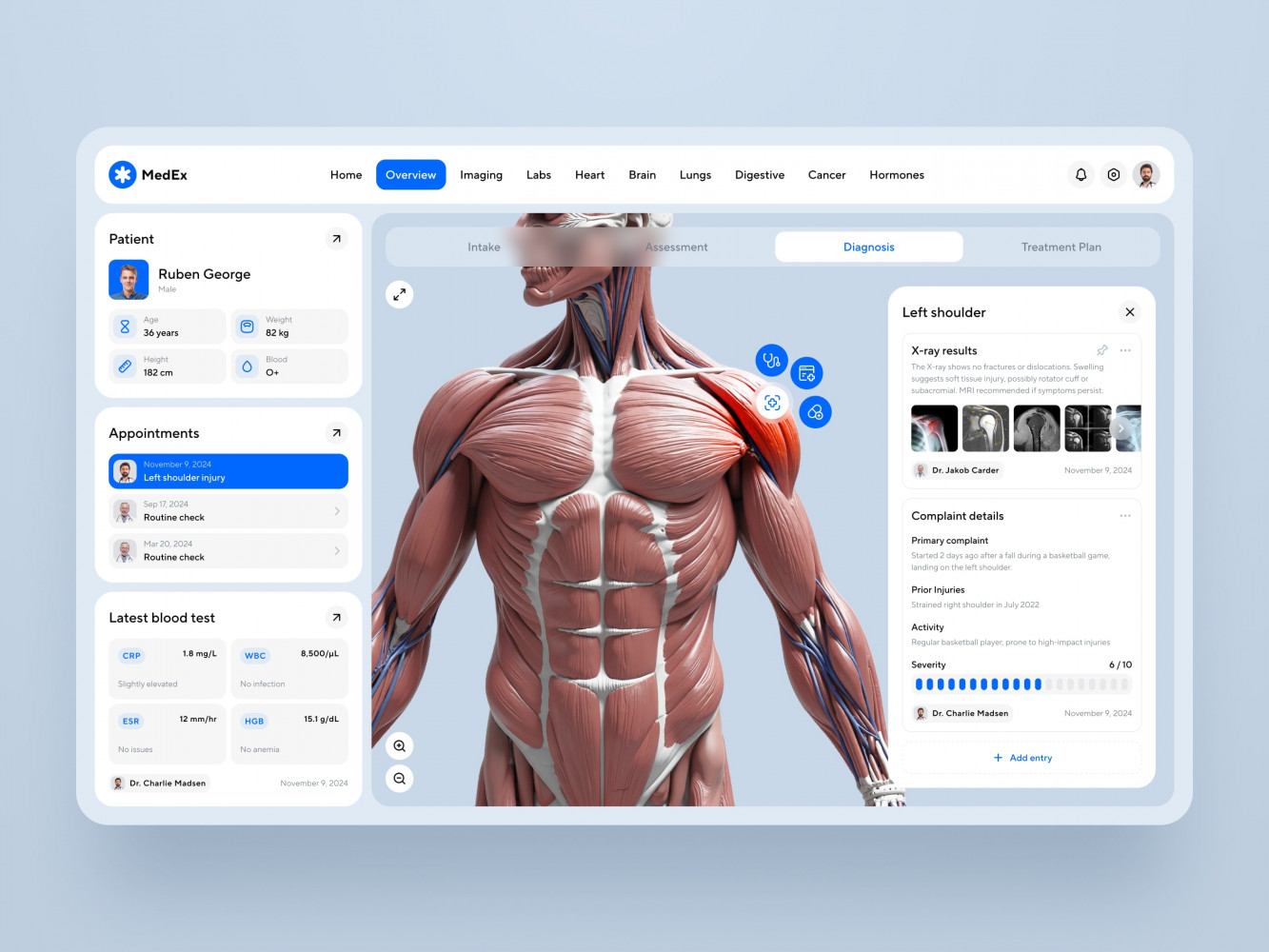
Medical Practice Management Software Dashboard Design by Shakuro
Target Clients & Industries
Healthcare Providers and Hospitals
A lot of them are running on software that feels like it’s held together with duct tape and prayers.
These are your core users for a healthcare app development company that builds EHR integrations, patient engagement tools, telemedicine platforms, or internal workflow systems. However, as I mentioned before, no two hospitals work the same way. One might use Epic, another Cerner; a small rural clinic could be on something totally niche. Their IT teams move slowly because they have to. You can’t just “update” a system when lives depend on uptime.
Still, there’s a huge opportunity. Nurses often suffer from burnout from documentation overload. ERs are drowning in patient intake forms. Chronic care patients vanish after discharge because no one followed up. Building something that actually eases those pains without adding more clicks can get you attention.
Pharmaceutical Companies
Enterprises and mid-sized players need software too. These companies live under intense regulatory pressure. Every step—from R&D to manufacturing to post-market safety—has to be documented, auditable, and compliant.
They’re investing heavily in digitizing old processes. If you can speak GxP, understand 21 CFR Part 11, and treat compliance as part of the design, you’re already ahead of most devs.
However, culture matters. In some orgs, change is glacial. In others, especially those pushing into personalized medicine or digital therapeutics, there’s real hunger for innovation. So your software better play by the rules.
Life Sciences & Biotech Firms
These teams are doing gene editing, cell therapy, and mRNA research. So their needs are super specialized. Something like LIMS (Lab Information Management Systems), ELN (Electronic Lab Notebooks), or data pipelines that connect sequencers to analysis engines.
They generate massive datasets of genomic sequences, protein structures, and high-throughput screening results. Making them usable is the main goal, because there can be issues such as data wrangling. Researchers often spend a lot of time moving files between systems instead of analyzing them. A clean integration layer can cut that down to hours per week.
Medical Device Manufacturers
With healthcare software development, you make the hardware like pacemakers, insulin pumps, and imaging machines smart. Remote monitoring features, AI-powered diagnostics in ultrasound devices, or firmware updates are delivered securely over the cloud. Also, post-market support is growing. Usage analytics and predictive maintenance are all software-driven.
This sphere is a regulatory minefield, too. FDA classifies software as a medical device (SaMD) now. So your code is a part of a regulated product. That means strict development lifecycle controls, risk management, and documentation for every decision.
So if you’re building for this space, you’re a partner in certification and compliance. Heavy responsibility, but also long-term contracts and deep collaboration.
Digital Health Startups
You’re likely reading this because you’re one of them, creating a healthcare MVP. You want speed, agility, and low upfront cost, and you’re terrified of HIPAA. No need to worry though because you don’t need to do everything yourself. But you do need to build on solid ground.
Too many startups fail as a result of ignoring compliance early on. Then suddenly, an investor asks for an SOC 2 report, and panic sets in. Or they pick a tech stack that can’t scale when pilot programs turn into real deployments. So partner with a pharma software development company that has done this before.
Online Pharmacy Businesses
Online pharmacies blew up during the pandemic. Now they’re maturing and facing tighter regulations, competition, and logistics headaches.
They need software that handles e-prescriptions securely, checks for drug interactions, manages inventory across warehouses, and integrates with insurers for instant pricing. Regulatory-wise, they walk a fine line: DEA rules, state-specific licensing, and controlled substance tracking. Temperature-sensitive meds, same-day dispatches, last-mile tracking with proof of delivery—it all needs tight coordination. What’s more, they need fraud detection for fake prescriptions and insurance scams.
So if you’re building for this space, think beyond the checkout flow. You need to offer safety, compliance, and patient experience in one system.
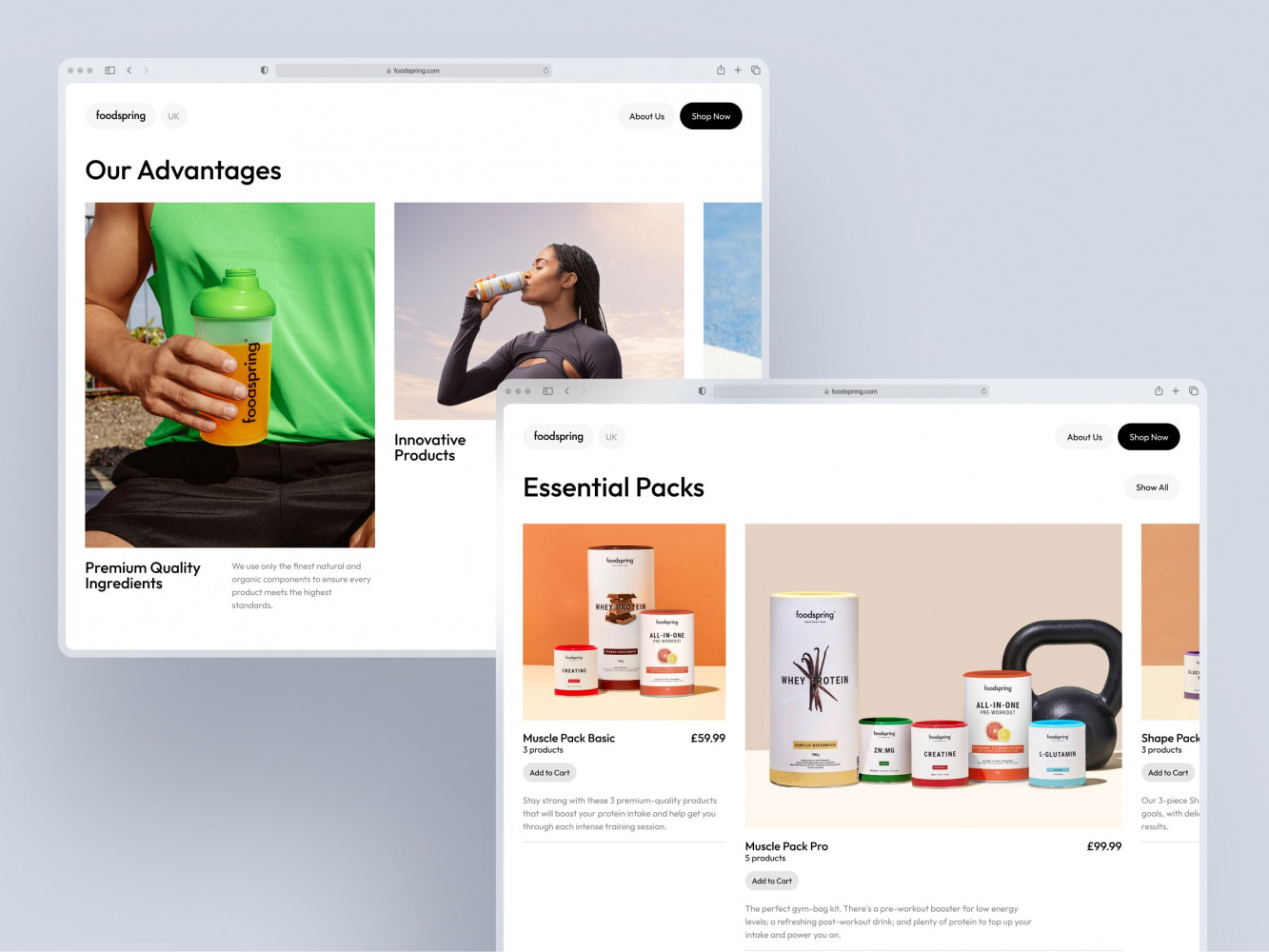
Web Design for a Supplements and Accessories Brand by Conceptzilla
Online Pharmacy App Development
Market Overview
You’ve probably ordered something online lately: coffee, clothes, maybe even groceries. So why not meds? Turns out, a lot of people are already doing it. Around 52% of American adults are using an online pharmacy. Post-pandemic habits stuck, and younger generations expect digital-first experiences. They’d rather not wait in line at a pharmacy when they can get refills with two taps.
In the U.S. alone, e-pharmacy sales hit over $100 billion recently, and that’s before full FDA approval for broader telehealth-to-prescription models. Globally, emerging markets are catching up fast, especially where physical access to pharmacies is spotty.
Telemedicine (Teladoc and Amwell), mental health (Calm and Headspace), health and fitness tracking (Fitbit), and medication management (MyChart and Medisafe) are the most popular spheres for custom healthcare software development. Researching their pros and cons can give you valuable insights.
Types of Pharmacy Applications
Marketplace Pharmacy Apps
It’s like UberEats, but for pills. These platforms connect users with multiple pharmacies in their area. You search for a drug, compare prices, choose delivery speed, and someone drops it at your door. Big players like Capsule or Medly started this way. The model works best in dense urban areas where logistics are manageable.
From the standpoint of a healthcare app development company, these need strong geolocation logic, real-time inventory sync, and solid partner APIs from local pharmacies. Handling controlled substances is tricky and requires extra layers of verification and compliance tracking.
Online Store Pharmacy Apps
This is the “direct-to-consumer” route. You’re the pharmacy, like Blink Health or K Health’s prescription arm. You handle sourcing, fulfillment, customer service, the whole shebang. More responsibility, sure, but also better margins and tighter control over user experience.
These apps usually integrate with telehealth services too. User chats with a doctor, gets a digital Rx, and checks out in one flow.
Tech-wise, you’ll need e-prescription gateways, insurance eligibility checks, and secure payment processing that handles FSA/HSA cards. Plus audit trails because every prescription change must be logged.
Chain Management Apps
Big pharmacy chains, such as CVS, Walgreens, Boots, run on complex internal systems. But many still rely on clunky tools for inventory, staff scheduling, or cross-store transfers.
A chain management app helps them centralize operations. Real-time stock visibility across locations, automated reordering based on demand forecasts, and even AI-driven expiry alerts so nothing goes to waste.
These aren’t consumer-facing, but they solve real pain points. And because they tie into ERP and POS systems, they tend to lock customers in long-term.
Drug Handbook & Reference Apps
Not all pharmacy apps sell items. Some, like Epocrates, Lexicomp, or Medscape, are reference tools for healthcare pros.
Doctors use them to check dosages, interactions, or IV compatibility mid-consultation. Nurses look up drip rates. Pharmacists verify substitutions. They monetize through subscriptions, ads, or freemium models. Accuracy is non-negotiable because these apps carry liability if they give wrong info.
To build one, you’ll need access to trusted medical databases, frequent updates, and offline functionality. UI should be fast and scannable because nobody wants to scroll during a code blue.
Business Benefits of Custom Pharmacy Apps
Look, off-the-shelf solutions exist. But if you’re serious about standing out and scaling efficiently, you’ll eventually need custom healthcare software development. Here’s why.
Revenue Growth & Market Expansion
A successful app serves existing customers and pulls in new ones. Especially younger demographics who’d rather text a chatbot than call a pharmacy.
Digital reach breaks geographic limits. A rural patient who couldn’t access specialty meds locally will order from you if you have a convenient delivery. With features like subscription refills, loyalty programs, or bundled OTC recommendations, you build a revenue stream.
Enhanced Customer Engagement
Most people don’t enjoy dealing with pharmacies because of long waits, confusing labels, surprise costs, etc. It’s crucial for elderly or mobility-challenged patients.
Your app can change that. Using push notifications, chat support with real pharmacists, and personalized adherence tips, you show that you truly care about clients. This reinforces your brand.
If you also collect anonymized usage data with consent, you can refine offerings. For example, if an app notices that lots of users are taking sleep aids and anxiety meds together, it can offer a wellness bundle.
Operational Efficiency
Behind the scenes, expert healthcare software development saves time and money.
Automation lifts off a heavy weight from the doctors’ shoulders. Manual reviews, inventory tracking, document management, audits—all of this is hours of back-and-forth. If a specialist misses something, the automated error-checking mechanisms will flag it. Even simple things like letting patients upload ID and insurance photos in-app save staff lots of time.
It also reduces costs because operational and administrative expenses are lower.
Competitive Advantage
Generic pharmacy apps feel generic. Same layout, same flow, same soulless vibe.
Build something tailored, like a slick UI, smarter personalization, or deeper clinical integrations, and you stand out. Maybe your app connects to wearables and adjusts medication reminders based on activity levels. Or maybe it integrates with EHRs so doctors see what patients actually picked up.
Differentiation matters because when two apps offer the same meds at similar prices, guess which one wins? The one that feels easier.

Healthcare Website Design Concept by Conceptzilla
Essential Features for Pharmacy & Healthcare Apps
Must-Have Core Features
People usually want things simple, reliable, and secure. So before you go building the next moonshot feature, make sure these core pieces are solid.
Secure User Login
You can’t just slap on a username and password field and call it a day. These aren’t movie tickets you’re protecting. It’s medical history, prescriptions, and insurance info. One breach and you’re toast.
At minimum, you need multi-factor authentication (MFA): SMS codes, authenticator apps, biometrics, etc. OAuth 2.0 with identity providers also helps, but don’t rely on it alone for sensitive flows.
Session management is super important as well. Keep hackers out with auto-logout after inactivity, encrypted tokens, and device binding. The same goes for access roles. A pharmacist should see more than a delivery driver.
Prescription & Refill Management
This is the heart of any pharmacy app. If this part sucks, nothing else matters.
Users need to:
- See their active prescriptions
- Request refills with one tap
- View refill status (pending, approved, shipped)
- Get alerts when meds are running low
Bonus points if you auto-suggest refills based on usage patterns. For example, you could say, “You usually reorder every 30 days. Would you like us to initiate the process?” But what if the doctor hasn’t approved the refill? Or does insurance need verification? Your app should explain delays and issues clearly.
Search, Filter, & Payment Processing
Your search bar should handle misspellings, brand vs. generic names, and even symptoms. For more convenience, add autocomplete and filtering by OTC, prescription, price range, or form (tablet, liquid, etc.). This way, users will definitely find what they’re looking for.
As for payment, you’ve got FSA/HSA cards, insurance copays, instant savings coupons, and manufacturer rebates. Sometimes all in one transaction. So, in pharma IT solutions, your checkout flow needs to be flexible. For example, show real-time pricing after insurance adjudication. Or let users split payments. And, of course, support digital wallets.
However, avoid storing raw credit card data. Instead, use tokenization through PCI-compliant gateways (Stripe, Braintree). If a payment fails because the insurer rejected the claim, tell the user why, not just “Something went wrong.”
Delivery Tracking & Notifications
Meds are often crucial for people’s health, especially if it’s insulin or heart medication.
So once an order ships, give them visibility. Not just “out for delivery,” but actual updates: packed, dispatched, arrived at courier hub, handed off.
Push notifications work well here, but no spam every five minutes. One update per status change is enough. If a delivery is time-sensitive, add SMS pushes too. In case the client still missed a delivery, don’t make them call. The app should notify immediately and offer rescheduling.
Advanced Features
Alright, now that the basics are locked down, let’s talk about more advanced features you can add during pharmaceutical software development. These aren’t must-haves for launch, but they’re the differentiators that build loyalty and open new doors.
AI-Powered Drug Interaction Checker
Patients often take multiple meds, sometimes without telling anyone. So they can easily get side effects.
An AI-powered interaction checker goes beyond static databases. It cross-references current prescriptions, OTCs, supplements and flags risks in plain language. For example, it might say, “There is a high risk of bleeding; please consult your doctor before use.”
Some apps even learn over time. If a user reports dizziness after combining two drugs, that feedback can improve future warnings. It gives patients a safety net between visits.
Telemedicine Integration
The smoothest experience is to go from symptom check → video consult → e-prescription → checkout all in one app. No switching tabs, no re-entering info.
You don’t need to build the telehealth engine yourself. Integrate with reliable platforms (like Twilio Video, Zoom for Healthcare, or specialized APIs), but make the handoff seamless. There is one crucial thing you have to do, though. Make sure the connection between clinical decision and pharmacy fulfillment is tight with no delays or miscommunication.
The same goes for privacy because you deal with sensitive info. End-to-end encryption, HIPAA-compliant storage, and consent forms baked into healthcare software development.
Analytics Dashboards
This one is super valuable once you scale, especially for pharmacies. They track top-selling meds, refill rates, customer lifetime value, delivery performance, etc. The analysis spots trends and helps adjust inventory accordingly. Clinics or chains might want population-level views: “30% of diabetic patients in this ZIP code missed refills last month.”
But it is also valuable for patients: personalized dashboards showing adherence rates (“You’ve taken 92% of your doses on time!”), upcoming refills, and even health insights (“Your blood pressure med works best when taken in the morning”).
To make the feature work for every part of the target audience, keep it clean, visual, and role-specific. No one wants to stare at spreadsheets.
IoMT Device Connectivity
Internet of Medical Things is basically a term for “your smart devices talking to your app.” Like glucose meters, blood pressure cuffs, inhalers with sensors, and even smart pill bottles that track when they’re opened. If your pharmacy app can pull data from these devices, you unlock next-level care.
For example, a diabetic patient logs high sugar readings via their glucometer. The app notices they’ve missed two insulin doses and sends a gentle nudge: “Hey, did you forget your evening dose?” Or it alerts their care team if levels stay dangerous.
Implementing IoMT into HIPAA compliant software development isn’t a walk in the park. It needs secure APIs, device compatibility, data normalization, and other things, but the payoff is huge.
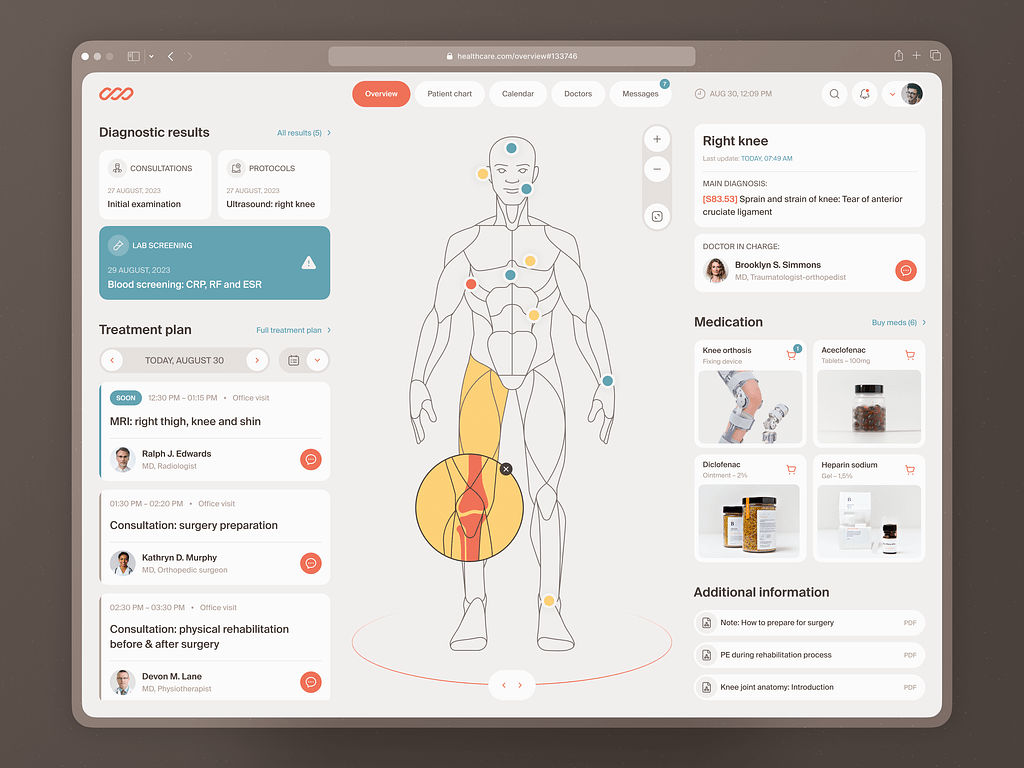
Medical Check-In Web Dashboard by Shakuro
Development Process & Methodology
Discovery & Market Analysis
Rushing into development without understanding the landscape is letting good ideas go off the rails.
It’s better to start with discovery. Not just “what” you’re building, but why it matters and who actually needs it. Talk to real people: pharmacists drowning in refill calls, patients frustrated by delivery delays, clinic admins stuck with paper logs. Ask open questions and listen more than you pitch.
Also, check the competition to see where they fall short. Maybe everyone has fast delivery, but none explain why a prescription was rejected. That’s your opening.
And don’t skip regulatory basics early. Is your app handling e-prescriptions? Then Surescripts integration isn’t optional. Dealing with controlled substances? You’ll need extra audit trails and DEA compliance checks.
This phase saves you months later when you’re not rebuilding half the app because you missed a key workflow.
Feature Planning & Scope Definition
When you’ve got clarity, it’s time to decide: what goes in and what stays out?
This is where dreams meet reality. You want AI-driven adherence predictions, blockchain-based traceability, and live telehealth at the same time. Cool, but also probably unrealistic.
Instead, focus on the core loop: what must work for users to get value? For a pharmacy app, that’s usually login → view prescriptions → refill → pay → track delivery. Get that nailed first. Everything else is a bonus.
Use tools like user story mapping or MoSCoW prioritization (Must-have, Should-have, Could-have, Won’t-have) to keep scope tight. It’s tempting to add “just one more thing,” but feature creep kills timelines and budgets. Define your MVP as “the smallest thing that still feels magical.” Just enough to impress and retain early users.
This also reduces the cost of healthcare app development because you don’t waste resources on unwanted things.
UX/UI Design & Prototyping
In pharmacy apps, bad design can be dangerous. Imagine someone misreading a dosage because the font was too small or missing a critical alert buried under five tabs. So it should be clear, accessible, and reduce cognitive load.
Start with wireframes to get the flow right before worrying about colors or logos. Can a 70-year-old navigate from login to refill in three taps? To achieve accessibility, you need to work on contrast ratios, screen reader support, voice commands, consistency, and resizable text. If your app excludes people with vision or motor impairments, you’re failing both ethically and legally.
After initial testing, move to clickable prototypes and show them to real users. Watch where they hesitate.
Agile Development & QA
When coding, opt for short sprints (2–3 weeks), regular standups, and demos at the end. They keep everyone aligned and let you adapt fast. Break features into small tickets. “Implement password reset” instead of “build auth system.” Such tasks are easier to track, with less risk of last-minute surprises.
To coordinate work and reduce errors during pharmaceutical software development, use version control religiously, CI/CD pipelines, and automated testing where possible. Even basic unit tests save headaches later. As for the testing, you’re not just checking if the button works. You’re verifying:
- Data encryption in transit and at rest
- HIPAA/GDPR compliance in every flow
- Audit logs capturing every action
- Error states handled gracefully (no blank screens!)
- Edge cases like expired prescriptions or failed insurance checks
Manual testing still matters, though. Automated bots won’t catch that a warning message says “medication conflict” but links to the wrong help page. Since security is non-negotiable, don’t forget about penetration tests, vulnerability scans, dependency checks, etc.
Release, Deployment & Support
When everything is checked and double-checked, launch to a pilot group: a few clinics, a single pharmacy location, or a beta user list. Monitor closely and gather feedback.
Roll out changes gradually and scale up once you’re scaled, but keep support active. Users will get stuck. Password resets, delivery issues, insurance hiccups. So always have a plan: in-app chat, help center, phone support if needed.
Technology Stack and Innovations
Core Technologies
For custom healthcare software development, you need a stack that’s secure, scalable, and easy to maintain over time.
Frontend
Most teams go with React or Angular. React is popular, especially for web-based admin panels and patient portals. It’s flexible, with a strong ecosystem. And for mobile, React Native is a go-to. It allows you to share logic between iOS and Android without sacrificing too much performance. Flutter’s gaining ground too, especially if you want pixel-perfect, custom UIs across devices.
However, don’t pick a framework just because it’s trendy. If your team knows Angular better, stick with it. Speed and stability beat coolness every time in healthcare.
Backend
Node.js is common for APIs. It’s fast, lightweight, and plays well with real-time features like delivery tracking. Python (with Django or FastAPI) is another favorite, especially when you’ve got data-heavy workflows or plan to add AI later.
Java and .NET still hold strong in enterprise settings. Big hospitals and pharma companies often run on legacy systems that play nicer with these.
Database
PostgreSQL is a solid all-rounder—ACID-compliant, with JSON support. This tool is great for structured and semi-structured data. MongoDB pops up in prototyping phases for speed, but be careful. In regulated apps, schema rigidity can actually be a good thing because it makes audits easier.
Cloud & DevOps
AWS and Azure dominate this field. Both offer HIPAA-eligible services, GxP-aligned infrastructure, and solid encryption controls. Google Cloud’s there too, but less common in pharma.
Docker and Kubernetes are pretty standard for containerization and scaling. CI/CD pipelines with Jenkins, GitHub Actions, or GitLab keep deployments smooth. Automated testing hooks are non-negotiable, especially for regression checks after updates.
For monitoring, you can opt for Prometheus, Grafana, or the ELK stack. You need to see what breaks before users do.
Advanced Technologies
Now we’re getting into the fun stuff: the tools that push healthcare digital transformation. These aren’t for every project, but when they fit, they can be game-changers.
AI/ML
In pharma, ML models predict drug interactions, optimize clinical trial recruitment, or even suggest molecular structures with higher success rates.
AI personalizes recommendations (“People who bought metformin also used glucose monitors”) or powers chatbots that handle basic customer queries, freeing up pharmacists for complex cases.
The challenge is in data training. Garbage data in = garbage predictions out. Explainability matters, too, because if an AI denies a refill suggestion, you better know why. Black-box models don’t fly during FDA reviews.
Python is the core tech for implementing AI. Combine it with FastAPI to serve model predictions and React or Angular to build dashboards.
IoMT
If you plan to integrate smart inhalers that track usage, connected insulin pens, wearable ECG patches, or even pill bottles with sensors that log when they’re opened, then you need IoMT.
They generate real-world data (RWD) for monitoring and adjusting medications. From a dev standpoint, you’ll need secure APIs (often HL7 or FHIR-based), device authentication, and data normalization. Not all devices speak the same language, sadly.
Blockchain in Pharma
Actually, blockchain solves a real problem: trust in the supply chain. Drug counterfeiting is a $200B+ global issue. How do you prove a vial of insulin hasn’t been tampered with? Or that it stayed cold during shipping?
Blockchain offers a tamper-proof ledger. Each step from manufacturer to distributor to pharmacy is recorded.
The U.S. Drug Supply Chain Security Act (DSCSA) pushes for this kind of traceability by 2025. So more companies are experimenting with private blockchains (mainly Hyperledger Fabric) to meet compliance. As for the tech stack, the common one is Node.js/TypeScript for smart contracts paired with a React-based frontend and PostgreSQL/CouchDB for off-chain data.
Anyway, if you’re building logistics pharma IT solutions for generics or specialty meds, this feature is worth exploring.
AR/VR in Training
Increasingly relevant in healthcare training, and some innovative pharma firms are using it. For example, techs practice IV compounding in VR before touching real drugs. Or med reps use AR glasses to show doctors how a biologic works inside the body, layer by layer.
It’s niche, sure. But as headsets get cheaper and software easier to build, AR/VR gets more popular, especially in education and remote support. Use Unity or Unreal Engine as a base, Node.js or .NET, Firebase for backend, and Blender for 3D modelling.
Big Data & Predictive Analytics
Big data platforms (Apache Kafka, Spark, Snowflake) help ingest and process massive streams: prescription volumes, inventory turnover, patient adherence rates, and adverse event reports.
Predictive analytics allows healthcare organizations to foresee trends. Like forecasting regional demand for flu meds based on early outbreak signals or identifying pharmacies at risk of stockouts using historical patterns.
It’s also crucial for pharma R&D, where specialists analyze genomic datasets across populations to help identify which patient groups respond best to certain drugs.
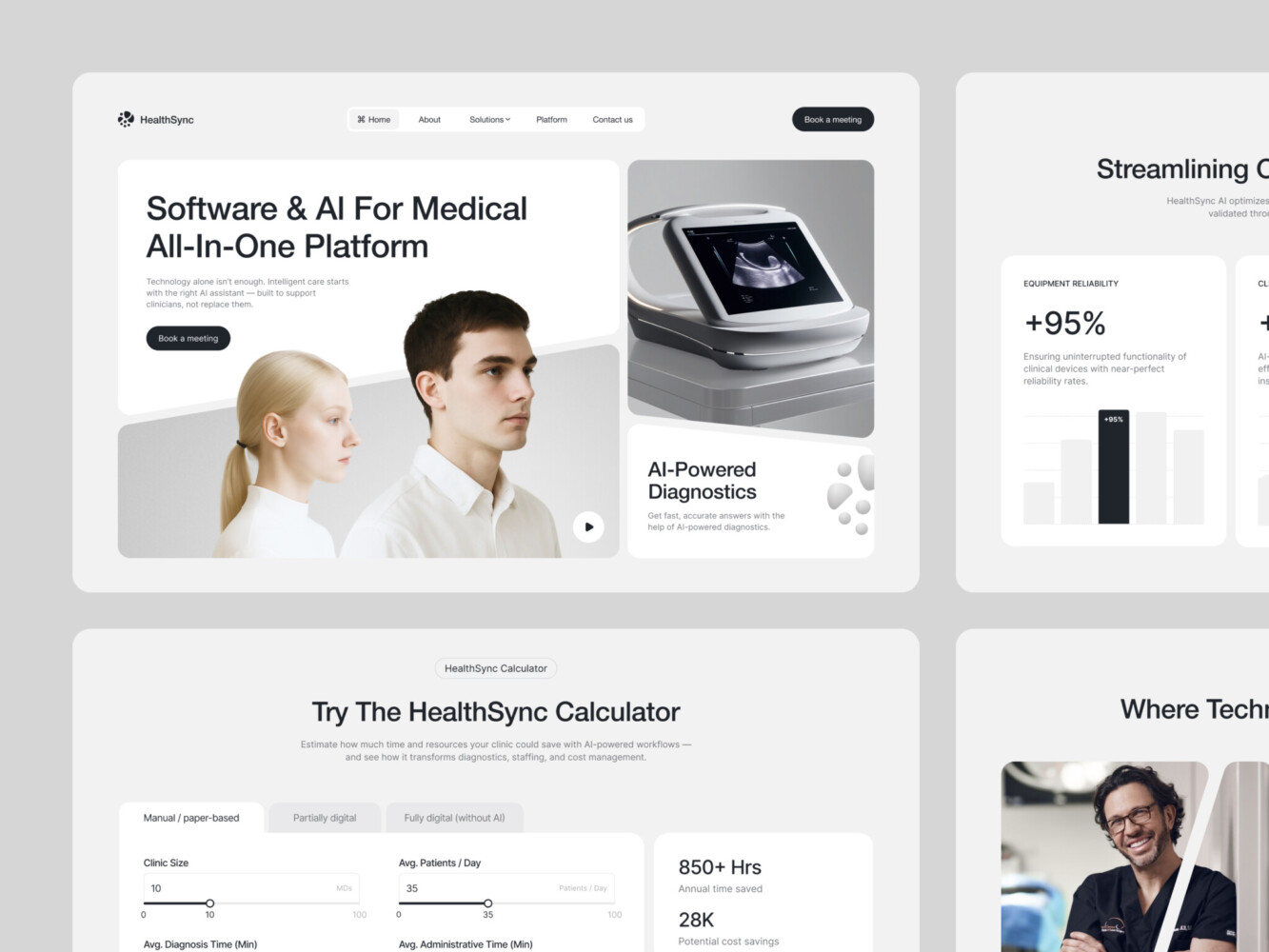
AI-Driven Medtech Website Design by Shakuro
Security, Compliance, and Quality Assurance
Healthcare Compliance Standards
In healthcare software development, compliance is a part of the foundation. Ignore it, and you’re risking trust, licenses, and even patient safety.
HIPAA, GDPR, HITECH, DSCSA
I’m sure you’ve heard about HIPAA. It regulates access controls, audit logs, business associate agreements (BAAs), and knowing where Protected Health Information (PHI) lives down to the database field level.
Don’t assume that cloud providers handle everything. You’re still on the hook. If your app stores PHI in AWS, you need encryption and proper IAM policies and logging enabled.
Even if you’re U.S.-based, touch a single EU patient’s data and you’re in the scope of GDPR. Right to erasure, data portability, consent tracking—it’s stricter than HIPAA in some ways. And the fines, too.
HITECH amps up HIPAA. It mandates breach notifications, pushes for EHR adoption, and increases penalties for non-compliance. Also encourages “meaningful use” of health IT, which is why interoperability matters more now.
DSCSA (Drug Supply Chain Security Act) sounds niche, but it’s huge for pharma and online pharmacies. It requires digital tracing of prescription drugs at the package level. So if you’re building logistics or inventory software for meds, you’ll need serialization, verification systems, and secure data exchange between trading partners.
Our Quality-First Approach
None of the features matter if your app crashes during peak refill season or leaks data because someone forgot to rotate a key. That’s why we don’t treat quality as a phase. It’s a mindset from the first wireframe to post-launch support.
Security by Design
We build security into every layer of pharma IT solutions:
- Auth with MFA and OAuth 2.0 / OpenID Connect
- End-to-end encryption (in transit and at rest)
- Role-based access control (RBAC) with least-privilege
- Regular dependency scans
- Automated penetration testing in CI/CD pipelines
And the team documents everything because when an auditor shows up, “we think it’s secure” won’t cut it. You need evidence: threat models, risk assessments, and incident response plans.
Future-Proof Architecture
Healthcare moves slowly, but tech doesn’t. Your app today might run on a single cloud region. In two years, you could be handling millions of users across states or countries.
So we design with change in mind:
- Microservices over monoliths (easier to scale, patch, and comply)
- APIs built to standards (FHIR, HL7, REST/GraphQL) so you can plug into EHRs later
- Modular compliance layers where you can swap out auth or logging without rewriting everything
The team keeps core logic portable, avoiding vendor lock-in where possible with managed services.
Scalability & Compliance Focus
Your app might work perfectly at 1,000 users. Then double that, and the database chokes, or worse, the audit log stops capturing events because the queue overflowed.
We implement scalability in the very software foundation, making sure it can correspond to your business needs and stay compliant at the same time. It should be able to process millions of encrypted transactions daily, perform real-time monitoring for suspicious activity, and use automated backup retention.
Our load testing is not just for performance but also to verify logs stay intact, alerts fire, and no data slips through cracks.
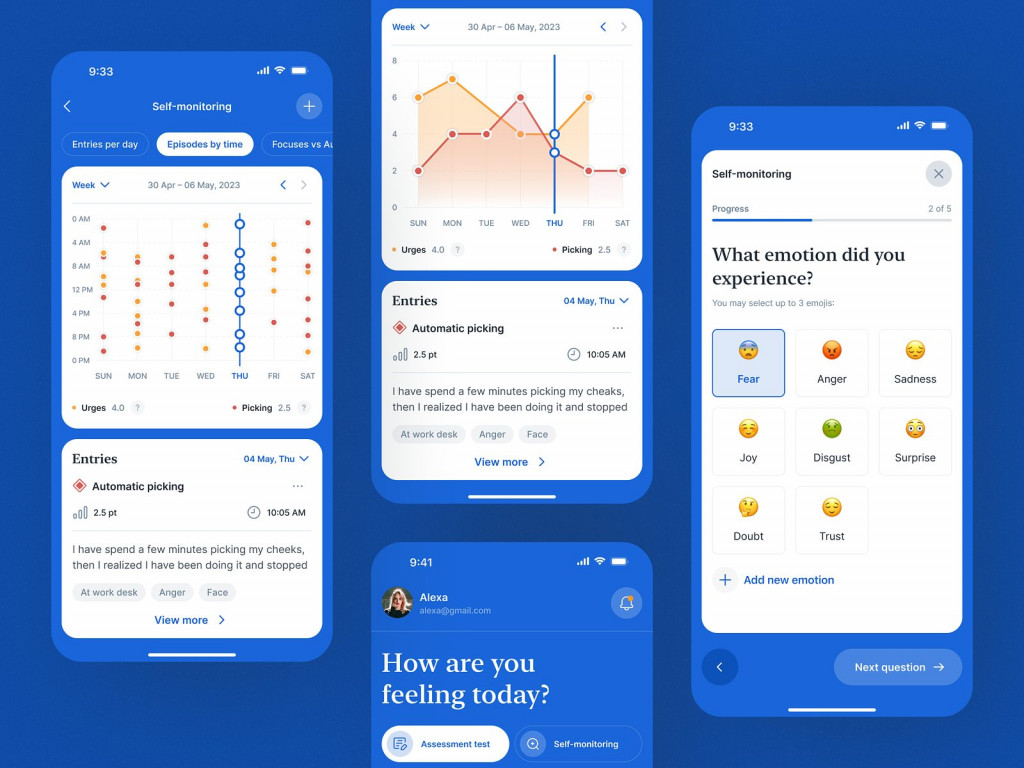
Helping Minds Healthcare Mobile App Concept by Shakuro
Industry Trends & Future Outlook
Emerging Trends in Healthcare Software
Chronic disease management, mental health support, and even post-op recovery are increasingly handled through apps, wearables, and virtual visits. No surprise because it saves time and effort for both patients and specialists. With this trend, most services are available at home, remotely.
There are other noticeable healthcare technology trends in 2025. For example, interoperability is finally getting real. FHIR APIs are being used. Patients can pull their records from one system to another. Apps talk to EHRs without needing custom middleware spaghetti.
Patient expectations have also changed. They accept and demand digital tools. A recent survey showed over 60% of patients under 45 would switch providers for a better app experience. Think about that. People care about UX in healthcare now.
Value-based care models are pushing software adoption too. When clinics get paid for outcomes, not visits, they need tools to track adherence, prevent readmissions, and actually keep people healthy. Which means more data, smarter alerts, and better software.
Pharma Market Evolution
Personalized medicine is leading the charge. Gene therapies, mRNA platforms, and oncology treatments tailored to tumor genetics—these aren’t sci-fi anymore. They’re in trials, in clinics, and in pharmacies.
These therapies are complex, expensive, and often require tight coordination between labs, hospitals, and specialty pharmacies. So pharma companies are delivering care programs that need software.
Speaking about healthcare technology trends of 2025, generics and biosimilars are getting smarter. Competition’s fierce, so manufacturers are adding digital services like adherence tools and patient support portals to stand out.
Digital therapeutics (DTx), such as FDA-cleared apps treating insomnia, ADHD, and even type 2 diabetes, are gaining reimbursement traction. Certain DTx companies recently got covered by Medicare Advantage plans.
Technology Innovations Reshaping the Sector
Real innovation is happening at the intersection of biology, data, and code.
AI is going beyond hype. In clinical settings, it’s flagging sepsis hours before symptoms appear. In R&D, it’s cutting trial recruitment time by matching patients to studies using real-world data. In pharmacies, predictive models now forecast local demand for meds based on weather, flu trends, and social media chatter.
I’ve already mentioned IoMT. It’s also a recent healthcare trend. Instead of sending all sensor data to the cloud, smart devices process it locally. For example, a pacemaker detecting arrhythmias in real time and adjusting pacing without waiting for a server response. Latency matters when you’re dealing with heartbeats.
Low-code platforms are also making waves for rapid prototyping and internal tools. QA teams are building their own validation trackers, and clinics are customizing intake forms, speeding things up, as long as security stays tight.
Open-source is gaining trust. Projects like OHDSI (for health data standardization) or BioPython (in pharma research) are being adopted by serious players. Transparency helps with scrutiny, and regulators like auditability.
Why Choose Our Development Services
Proven Expertise
Any agency can say they offer healthcare software development. But when the FDA asks for your validation docs, or a hospital IT team wants to see your FHIR implementation, you better have more than just confidence. What matters is experience. The kind you don’t get from one project.
Our team brings battle scars and lessons. For more than 18 years, we’ve built different types of projects for healthcare, including mobile and web apps, analytics dashboards, internal tools, portals, etc. They were tailored to various compliances and regulations like HIPAA and GDPR, as well as regional and cultural specifics.
And it’s not just technical chops. We understand how hospitals actually work and what inconveniences the patients usually experience. Why a pharmacist might skip your fancy dashboard if it takes three extra clicks. Or why a legacy lab system outputs CSV files with inconsistent headers.
We’ve been through the fire before, so you don’t have to light it yourself.
Comprehensive Service Portfolio
We cover the whole journey: discovery, UX, deployment, and support. No gaps.
Our portfolio contains more than 500 relevant projects where the Shakuro team helped businesses overcome the challenges and scale later. The products we create correspond to the latest industry trends and users’ demands, allowing you to get a solid niche in the market.
At the same time, “well enough” is not for us. We strive to have depth across specialties: security, interoperability, clinical workflows, cloud architecture, etc. Everything should speak the same language.
Client-Centric Approach
Our team understands the hurdles of both small and large businesses. You’ve got a vision. Maybe it’s helping rural patients access meds or speeding up drug development for rare diseases.
We listen to you and ask, “Why?” to make sure you’re solving the right problem. Depending on your needs, we adapt the process to you, and not the other way around. No-jargon updates, clear iterations, fast delivery.
The team analyzes the target market, potential competitors, and users’ pains to deliver a solution fine-tuned to your needs. Apart from that, we make sure that it helps your clients achieve their goals as well. This turns your product into an essential solution.
Long-Term Partnership Model
Most pharma IT solutions don’t end at launch. Your app will need tweaks due to new regulations, API changes, or user feedback.
We stick around after the release. To us, you are a business partner, and our success depends on your product. The team provides feature iterations, security patches, compliance upgrades, and scaling support. We help it stay relevant in the competitive field, where new trends and technologies emerge almost weekly.
There are several collaboration models, for example, extended or fixed teams. Our project managers will help you adjust the model according to the budget and timeline.
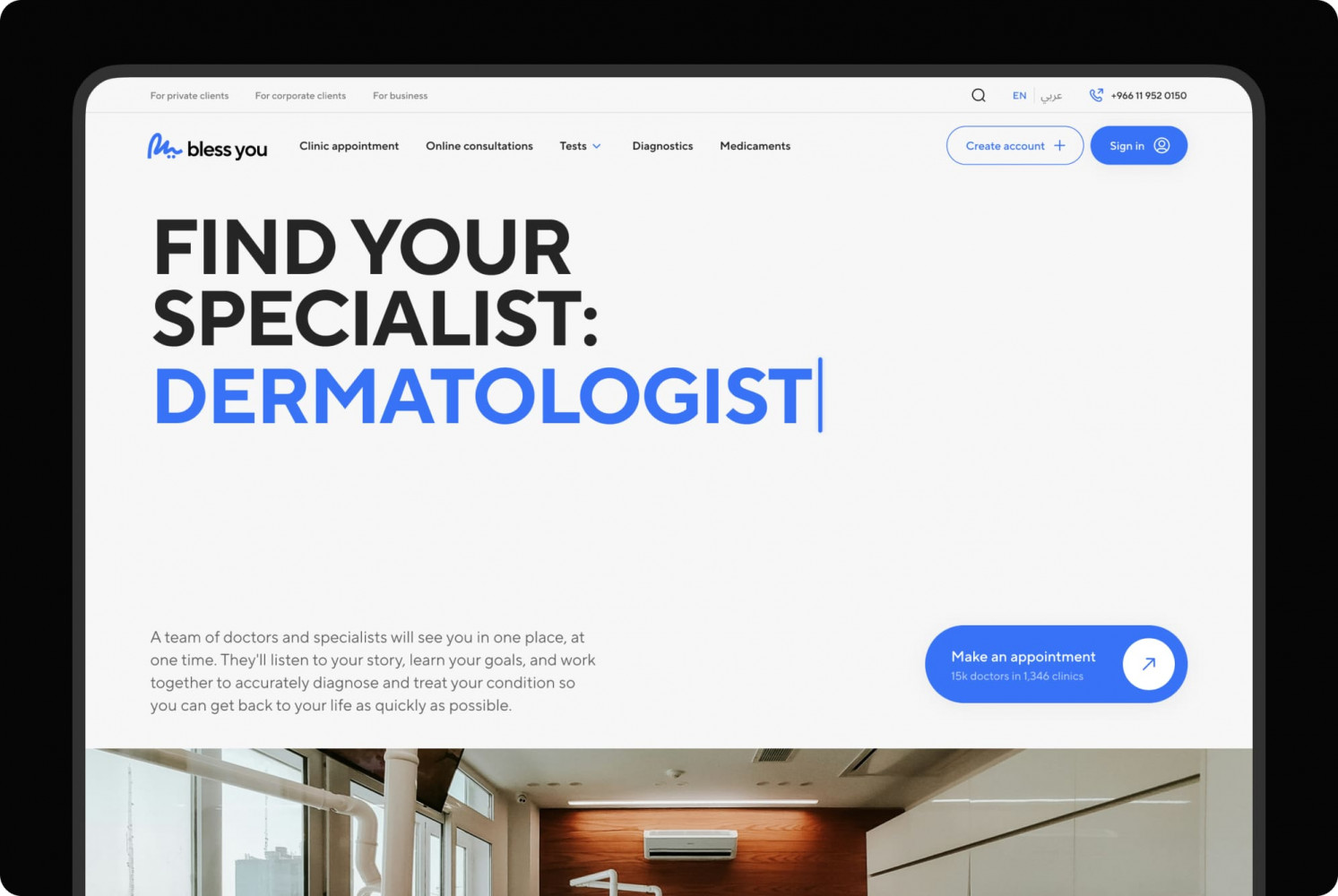
Bless You healthcare platform by Shakuro
Case Studies & Success Stories
Featured Healthcare Projects
Bless You
Bless You is a healthcare platform for accessible treatment services. They needed a mobile app and a website suitable for the residents of the Kingdom of Saudi Arabia and tourists.
Challenge
The main challenge was working with Arabic interfaces based on right-to-left reading. It affects navigation and element placement. What’s more, the product had to correspond to local regulations (GDPR), cultural and religious differences. Also, there were region-specific needs, which vary in terms of technology adoption, preferences, and connectivity.
Solution
We created a branding with familiar elements for both residents and tourists. The team kept the UI clean, without any distractions or extra taps. It was easy to use and navigate even for people with disabilities. Together with the Arabic version, we built English localization, where all elements were more common for the healthcare industry.
Result
Focused on readability and accessibility, Bless You delivered a universal solution that helped both target audiences solve their health problems fast. With the English localization, the app now targets the worldwide market.
Channel D
Channel :D is a video platform that provides content for waiting rooms in dental clinics. They wanted our help in building UIs for their platform accessible via Amazon Fire TV Stick, as well as the website.
Challenge
A solid narrative with the main focus on the educational videos. Also, UI/UX should be accessible regardless of the TV OS limitations.
Solution
After a discovery session with the Channel D creators, we outlined the main objectives and strategies. The designer’s team started to build the style based on the existing videos, creating sketch-styled illustrations. Later we expanded this style on the TV platform and the website, revealing the service value without making it feel medical. To make the TV app more convenient, we added a multiple-user access, with no AV experience.
Result
Any employee of the dental clinic could operate the Channel D app, creating a daily portion of content based on multiple topics. Both the website and the platform were easy to use, with lots of educational videos. The product helped build a bridge between the dentists and the clients.
Pharma Software Case Studies
Celéri Health
We had an opportunity to collaborate on Celéri Health—a platform that focuses on collecting and utilizing pain data, particularly Patient-Reported Outcomes (PROs). The goal is to change the paradigm of care for people living with chronic pain by ensuring they get the right therapy at the right time. The company needed a website that could represent their services and mission.
Challenge
Unify different services: medical practices, medical device manufacturers, and pharma manufacturers. Moreover, we had to represent complex processes and statistics in a clear way.
Solution
Together with the Celéri Health team, we built an easy-to-use, scalable platform that delivered a unified approach for collecting pain data. The interface showcases the company’s services in an easy-to-grasp way, with clear layouts and data representation. We made sure there were no
distractions, and complex information was glanceable.
Result
The platform keeps growing, with more and more professionals joining the Celéri Health network. They strive to help pharmaceutical companies run real-time, regulatory-focused studies faster and more cost-effectively.
Client Testimonials
Here are a few testimonials from our clients to support our expertise. You can also check out our Clutch for more reviews.
It is a modern, all-in-one medical platform that simplifies healthcare by helping users track their health, book doctor appointments, and access medical services with ease. It offers a seamless, user-friendly experience. (c) Bless You
It was a great experience; they engaged eagerly, and ideas were flowing. We’ve also learned a lot about dentistry from the videos! (c) Channel D
They aren’t just a company to follow instructions, they put forward their ideas and get creative. They’re specialists, and they brought a lot of good ideas to the project that we otherwise wouldn’t have thought of. (c) Skodel
What impressed us the most was their ability to find creative, functional, effective, and unique solutions. (c) Mirko Romanelli
Their capacity to distill complicated information into accessible formats truly sets them apart. (c) Hyphen Global AG
Thanks to the robust platform developed by Shakuro, we have grown the business three times and now have 20 instructors offering courses. (c) Proko
You could truly tell that Shakuro cared just as much as our company about the final delivery. (c) Pebble
Cost and Timeline
Factors Affecting Development Cost
The cost of two pharmacy apps built around the same idea with the same core features can differ drastically. But that’s on the surface, yes. Dig deeper, and the differences make sense.
So what actually drives the cost of healthcare app development?
- Scope. Are we building a simple refill-and-delivery app or something with telehealth, AI-driven adherence nudges, and EHR integration? Each extra layer adds time, complexity, and people.
- Compliance needs. HIPAA-ready isn’t the same as HIPAA-compliant. The latter means audit trails, BAAs, encryption key management, penetration testing, etc. That doesn’t come free. Same for FDA-regulated software or DSCSA traceability in pharma logistics.
- Design & UX. A clean, intuitive interface that works for older users or busy pharmacists takes more than stock templates. Accessibility (screen readers, contrast checks), usability testing, prototyping—it all adds up.
- Integrations. Need to pull data from Epic or Cerner? Connect to Surescripts for e-prescribing? Each API has quirks, rate limits, and authentication hurdles. Some take weeks just to get sandbox access.
- Team location & expertise. Hiring senior full-stack devs with healthcare experience costs more than generalists. Fair. But I’d rather pay more upfront than rebuild after a security flaw or failed audit.
- Maintenance. You’ll need updates, bug fixes, OS compatibility patches, and compliance refreshes. Budget 15–20% of initial dev cost per year for that.
Typical Cost Breakdown (MVP vs Full Product)
What’s better in terms of cost of healthcare app development—an MVP or a full product? Let’s see.
MVP (Minimum Viable Product)
The goal here is to test core assumptions, gain early users, and attract funding. For typical features, you should go with a User login, prescription view/refill, basic search, payment, delivery tracking, and maybe SMS/email alerts. But no deep integrations yet.
- Approximate cost: $60,000—$120,000
- Team: Small (3–5 people). PM, 2 devs, QA, part-time designer
- Timeline: 3–5 months
This gets you into the water, where you can prove the concept. But don’t expect bells and whistles. No AI, no advanced analytics.
Full-Scale Product
In contrast to an MVP, you launch a full-scale product publicly, scale across regions, integrate with real systems, and meet compliance fully. As for the features, you have to deal with more stuff: everything in MVP plus telehealth integration, FHIR/EHR sync, insurance eligibility checks, admin dashboards, reporting, role-based access, audit logs, automated compliance workflows, and whatnot.
- Approximate cost: $200,000—$600,000+
- Team: Large (6–10+). A dedicated backend/frontend, DevOps, security expert, UX researcher, QA engineers, project lead
- Timeline: 8–14 months
This is serious healthcare software development. The kind of hospitals or pharmacy chains will consider adopting it. You’re validating, documenting, and testing under real conditions. And yeah, the jump from MVP to full product is exponential because now you’re solving edge cases, handling load spikes, preparing for audits.
Healthcare app MVP vs full-scale product, based on the breakdown above:
| Product scope | MVP | Full-scale product |
| Features | User login, prescription view/refill, basic search, payment, delivery tracking, SMS/email alerts | Everything in MVP plus telehealth, FHIR/EHR sync, insurance eligibility checks, admin dashboards, audit logs |
| Team | 3–5 people: PM, 2 devs, QA, part-time designer | 6–10+: backend/frontend, DevOps, security expert, UX researcher, QA engineers, project lead |
| Timeline | 3–5 months | 8–14 months |
| Approximate cost | $60,000—$120,000 | $200,000—$600,000+ |
Timeline Expectations
“Can we launch in three months?” Aspiring founders eager to move fast.
In reality, you can launch a basic MVP that fast. But only if the scope is tight, the team is ready day one, and you’re not waiting on third-party approvals. Which often you are.
Here’s a realistic breakdown:
- Weeks 1–4: Discovery & planning. Talk to users, map workflows, define MVP features. Don’t skip this. Rushed discovery = rework later.
- Weeks 5–8: UX/UI design & prototyping. Clickable prototype tested with real users? Worth every day.
- Weeks 9–16: Core development. Backend setup, auth, prescription flow, basic frontend. First internal demos.
- Weeks 17–20: Integrations & QA. Add payment, notifications, maybe a test connection to Surescripts. Start security and compliance checks.
- Weeks 21–24: UAT, fixes, deployment prep. Real users test in staging. Fix bugs. Document everything.
- Week 25+: Launch (soft rollout), monitor, iterate.
That’s six months for a solid MVP. Less is possible, but risky. Especially if you need legal review, pharmacy licensing, or partner onboarding. The full product will require even more—from 8 to 14 months. Not because devs are slow, but because testing cycles are longer and compliance reviews take time.
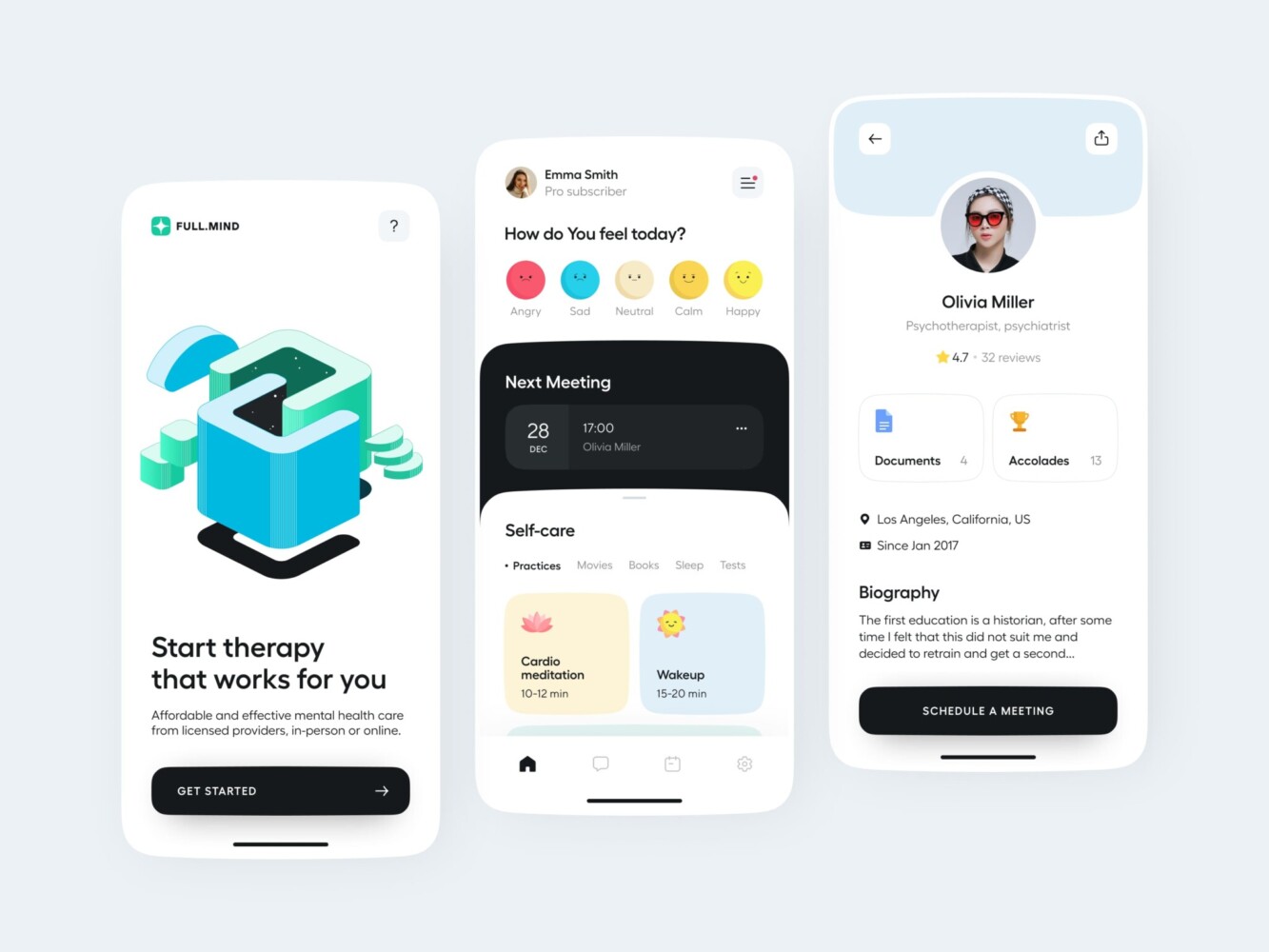
Healthcare app design concept by Shakuro

Getting Started
Discovery Call & Needs Assessment
We usually start with a simple call. The goal is to actually get what you’re trying to do. Not just “I want a pharmacy app,” but why. Who’s it for? What pain are you solving? Have you talked to pharmacists, patients, or clinic staff? What keeps you up at night about this project?
Sometimes founders come in with a fully fleshed-out spec. Others just have a napkin sketch and a hunch. Both are fine. In fact, that early stage is often the best time to jump in, before you’ve sunk months into a direction that might not work.
We’ll ask about:
- Your target users
- Must-have features vs. nice-to-haves
- Regulatory concerns you’re aware of
- Timeline and budget expectations
Project Kickoff & Planning
Once we both feel it’s a fit, we move to kickoff. We start with a short discovery phase where we dig deeper. We map out user journeys and define the MVP scope together by prioritizing what delivers real value fast.
After the tech planning, you get a clear roadmap: timelines, milestones, and team roles. Moreover, it will flag risks early. Example: “Your telehealth integration depends on a third-party vendor that takes 6 weeks to approve sandbox access, so we should apply now.”
Next Steps to Begin Your Project
So, how do you actually start?
✅Shoot us a short message via e-mail or contact form. Tell us what you have in mind and schedule a call.
✅During the meeting, ask us about past projects, challenges we’ve faced, and how we handle regulatory stuff. We’ll do the same with you.
✅Bring whatever you’ve got: sketches, notes, competitor research, even a list of questions you’re stuck on.
✅ Decide if it feels right and start collaborating with Shakuro.
Frequently Asked Questions
How much does pharmaceutical software development cost?
An MVP of a pharmacy or healthcare app costs approximately $60,000-$120,000, and a full-scale product runs $200,000-$600,000+. The gap comes from scope, compliance needs, design and accessibility work, integrations such as Epic, Cerner or Surescripts, and the seniority of the team. After launch, budget 15-20% of the initial development cost per year for updates, bug fixes, OS compatibility patches and compliance refreshes.
How long does pharmaceutical software development take?
A tightly scoped MVP takes 3-5 months, while a full product needs 8-14 months. In the week-by-week plan, discovery covers weeks 1-4, design and prototyping weeks 5-8, core development weeks 9-16, integrations and QA weeks 17-20, and user acceptance testing weeks 21-24. Third-party approvals, legal review, pharmacy licensing and partner onboarding are the usual reasons schedules slip.
Which regulations apply to pharmaceutical software development?
HIPAA and HITECH apply to US health data, and GDPR applies as soon as you touch a single EU patient’s data. Pharma systems also face FDA 21 CFR Part 11 for electronic records, GxP compliance with audit trails, and DSCSA, which requires package-level digital tracing of prescription drugs. Online pharmacies add DEA rules, state-specific licensing and controlled substance tracking.
How do you make pharmaceutical software HIPAA compliant?
Plan compliance into the architecture from the first sprint instead of adding it before release. That means access controls, audit logs, business associate agreements, and knowing where protected health information lives down to the database field. Cloud providers do not cover everything: data stored in AWS still needs encryption, proper IAM policies and logging. Keep threat models, risk assessments and incident response plans ready for auditors.
What tech stack is common for pharmaceutical software development?
Most teams use React or Angular on the web, React Native or Flutter for mobile, and Node.js or Python with Django or FastAPI on the backend. Java and .NET remain common in enterprise pharma settings with legacy systems. PostgreSQL is a solid database choice, and AWS or Azure provide HIPAA-eligible, GxP-aligned infrastructure. FHIR and HL7 APIs keep the product ready for EHR integration.
What should a pharmaceutical software MVP include?
An MVP should cover the core loop: user login, prescription view and refill, basic search, payment, delivery tracking and possibly SMS or email alerts. Deep integrations, AI and advanced analytics wait for the full product. A small team of 3-5 people is typical, for example a PM, 2 developers, a QA engineer and a part-time designer, with MoSCoW prioritization keeping the scope from creeping.
How do I choose a development partner for pharmaceutical software?
Choose a team that has shipped regulated healthcare products and can explain its compliance process in concrete terms. Ask about past projects, the challenges they faced and how they handle regulatory requirements such as GxP and 21 CFR Part 11. Check that they can show validation documentation and FHIR implementation experience, and that they plan support after launch for new regulations and API changes.
Related reading