Predictive analytics system development is the work of building software that estimates what happens next and puts that estimate where someone can act. The same job is searched as predictive analytics architecture and as a predictive analytics platform. A packaged score is enough when the vendor’s definition is the definition the team will use. Custom work starts when the score has to follow your decision, your data, and the action your team already takes. This page does not name a price, a delivery date, or a model accuracy.
Three neighboring products get mixed in with this one. A customer data platform stores a profile. Financial analytics software totals posted money. An AI analytics platform also summarizes reports and points at unusual changes. This page is the narrower build: one estimate, and a path from that estimate to an action.
This guide covers what the system is, the predictive analytics architecture under it, why a finished model still sits unused, how a first release is scoped, what moves an estimate, and how to choose a development partner.
Quick Facts
| Question | Answer |
| Best for | A repeated decision that is expensive when it is late: who to call, what to order, what to inspect, what to review. |
| Not this product | A report of what already happened, a customer profile store, or a finance close that must match the books. |
| Core of the architecture | Sources, a pipeline, storage, a rule or a model, a decision rule, a screen, and a watch on missing inputs. |
| Main risk | A score nobody opens, or a score the team cannot explain and therefore will not use. |
| What to send for an estimate | The decision, the sources you already have, who acts, and what a wrong score costs. Not a model name. |
What Is a Predictive Analytics System?
IBM describes predictive analytics as a branch of advanced analytics that makes predictions about future outcomes by using historical data combined with statistical modeling, data mining techniques, and machine learning (IBM, What is predictive analytics?). That is the method. It is not yet a product.
A predictive analytics system names three things the definition does not: the decision, the person who acts, and what that person does when the estimate is wrong. A file that outputs 0.73 is not the system. The system is the path from inputs, through a score or a rule, to a list someone opens on a Tuesday morning.
What a Predictive System Is Not
A report of last month is descriptive. A search for why last month moved is diagnostic. A recommended action with a written rule is prescriptive. Those can sit next to a forecast. They are not the same build, and a title that promises all four usually delivers a dashboard.
A store of profiles, with an email and a billing contact on one record, is a customer data platform. A figure that has to match a posted entry is financial analytics software. If the next question is a model rather than a total, say so at the start. Mixing the three in one statement of work is how the first release misses all of them.
Where Predictive Analytics Creates Business Value
The useful cases are repeated decisions that are expensive when they are late. Which accounts to call this week. Which parts to order before a stockout. Which machines to inspect before a failure. Which applications to review before a credit meeting. A one-off chart for a board deck does not need this system.
On a SaaS product the first list is often accounts that may cancel. The inputs are product events, support tickets, and billing status. The action is a task for the person who owns the account, not a chart in a weekly deck. That is a product decision. It is not a profile store, and it is not a finance close.
A queue of transactions for a person to review is fraud detection software. Keep that product on its own page. A general predictive system that also “does fraud” usually does neither well: the review queue, the evidence on the row, and the time limit are a different scope.
Forecasts of posted money — revenue, cash, credit loss — belong on financial analytics software. This page starts when the question is what may happen next, not what the books already say.
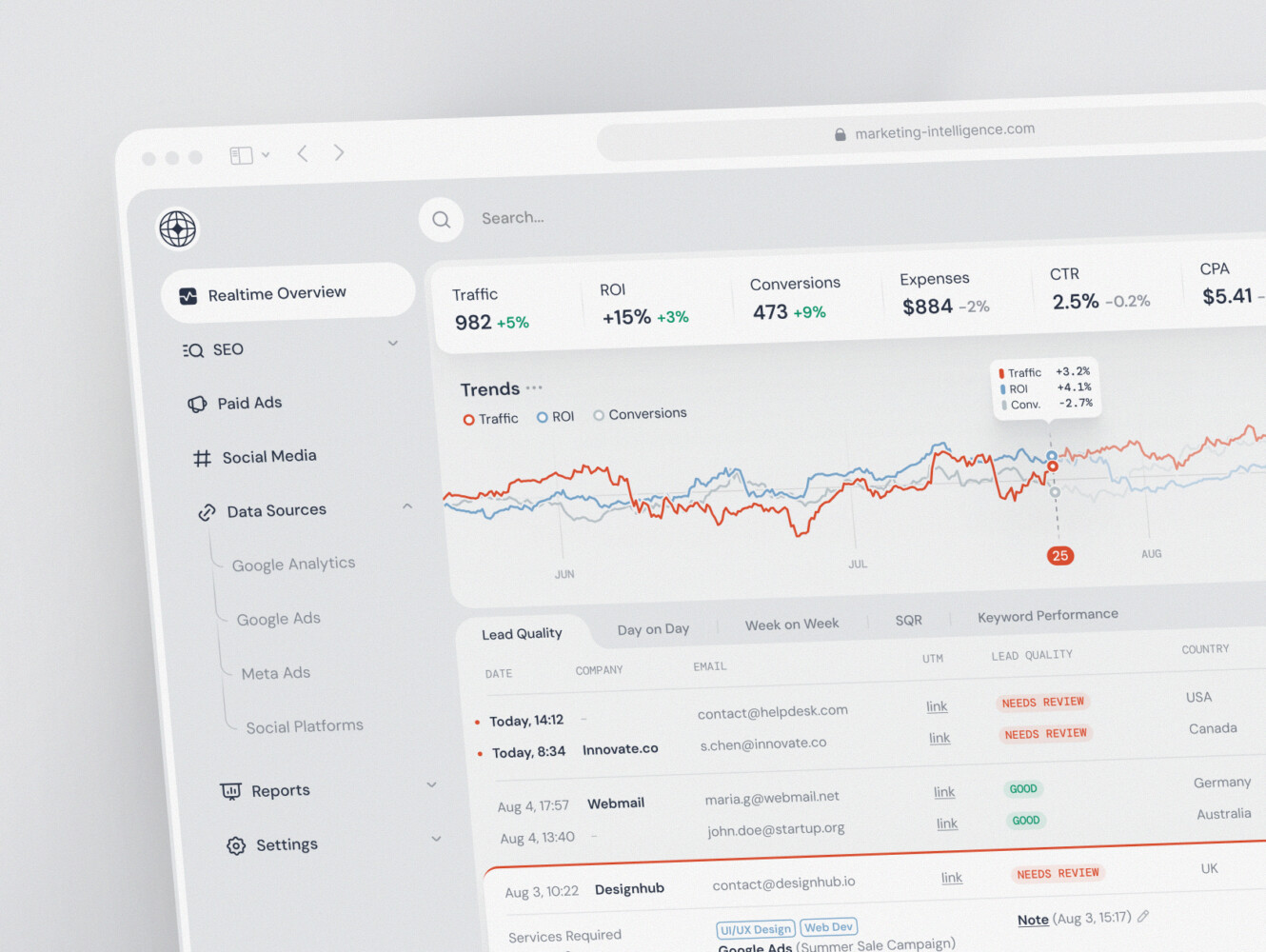
SaaS marketing dashboard by Conceptzilla
The frame above is an interface design for a marketing dashboard. It is not a running model, and it is not evidence that a score is in production.
Key Features of Predictive Analytics Software
A feature list that starts with “AI” is usually the wrong order. The features that decide whether the system gets used are plainer.
- A written definition of the score: what it estimates, over what window, from which inputs, and what it does not estimate.
- A named person and a named action. If nobody owns the list, the score is a report.
- A reason on the row, in words a person who did not train the model can read. “Similar to accounts that canceled” is a start. A coefficient table is not.
- A freshness mark: when the inputs were last complete. A stale score should be hidden, not shown with last month’s confidence.
- Roles. A score about a person is not a number for every login in the company.
- A record of what the team did. Ignored rows are not the same as acted-on rows, and the next version should not treat them as the same.
Predictive Analytics System Architecture
Predictive analytics architecture is the order of jobs between the source and the action. Skip a layer and the model still “works” in a notebook while the team keeps the spreadsheet.
| Layer | What it does | What it is not |
| Sources | The systems that already hold the events, tickets, orders, or readings. | A new warehouse built before anyone has named the decision. |
| Pipeline | A job that lands the same inputs, with the same names, every run. | A one-time export that nobody can rerun. |
| Store | A place the score and the inputs can be read together. | The prediction itself. |
| Score | A rule or a model that outputs an estimate for one decision. | A platform, a dashboard, or a promise that the estimate will hold. |
| Decision rule | The threshold, the exception, and who may override it. A business choice, dated. | A default of 0.5 left over from a tutorial. |
| Screen | The list a person opens, with the reason, the freshness, and the action. | A chart of model quality for the team that built it. |
| Watch | Missing inputs, failed jobs, and scores hidden because the inputs were stale. | A single accuracy number on a slide. |
The pipeline is data engineering. If the job cannot be rerun, the score cannot be explained later. The store is often a data warehouse you already run. Building a new one before the decision is named is how the first year goes to plumbing.
The score itself is a smaller piece than the architecture diagram suggests. A narrow question can start as a rule: if these three inputs are missing, do not show a score. When the estimate is a service other products call, that service is often a Python app development job. Training or hosting a model is AI development. Neither one, by itself, makes the score fit to show to a team.
The screen people open is a custom web application development job. If they never open it, the model does not matter. The decision rule sits between the score and that screen: which rows appear, which are suppressed, and who is allowed to change the cutoff. That rule is not a model metric. It is a choice someone has to own.
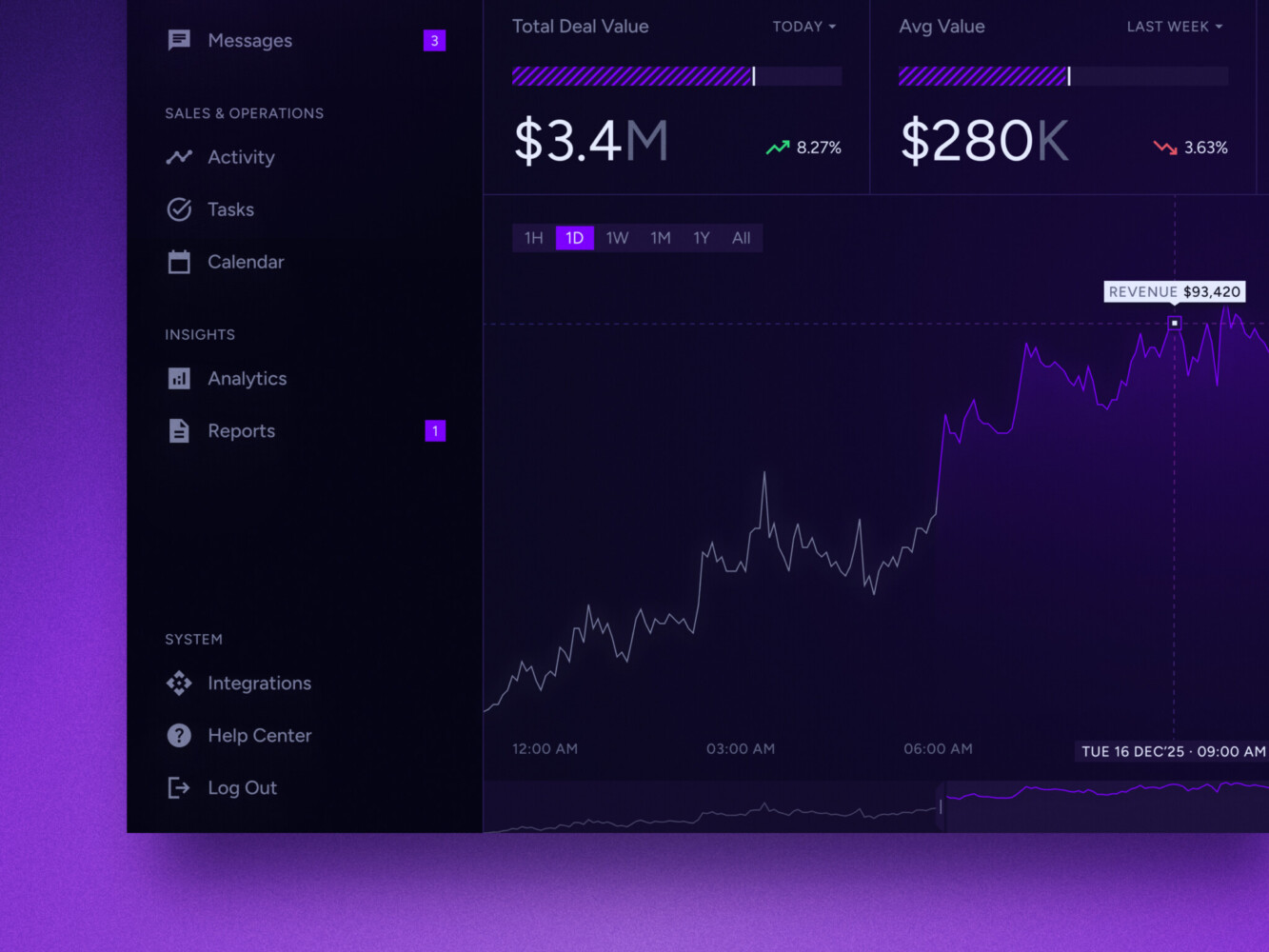
Real-time data dashboard by Shakuro
The frame above is an interface design for a live dashboard. A picture of a chart is not a pipeline, and it is not a watch on missing inputs.
Why Dashboard Design Matters More Than People Expect
The failure mode that shows up after launch is not a bad chart type. It is a model that never changes a list. Teams ask for predictive analytics platforms where models actually improve decisions instead of sitting unused. The unused part is usually the screen, not the algorithm.
The screen has to answer four questions without a meeting: what might happen, how fresh the inputs are, why this row is here, and what the person can do now. A bare number with no definition answers none of them. UI/UX design on this product is the work of making those four answers visible, including the case where the score should not be shown.
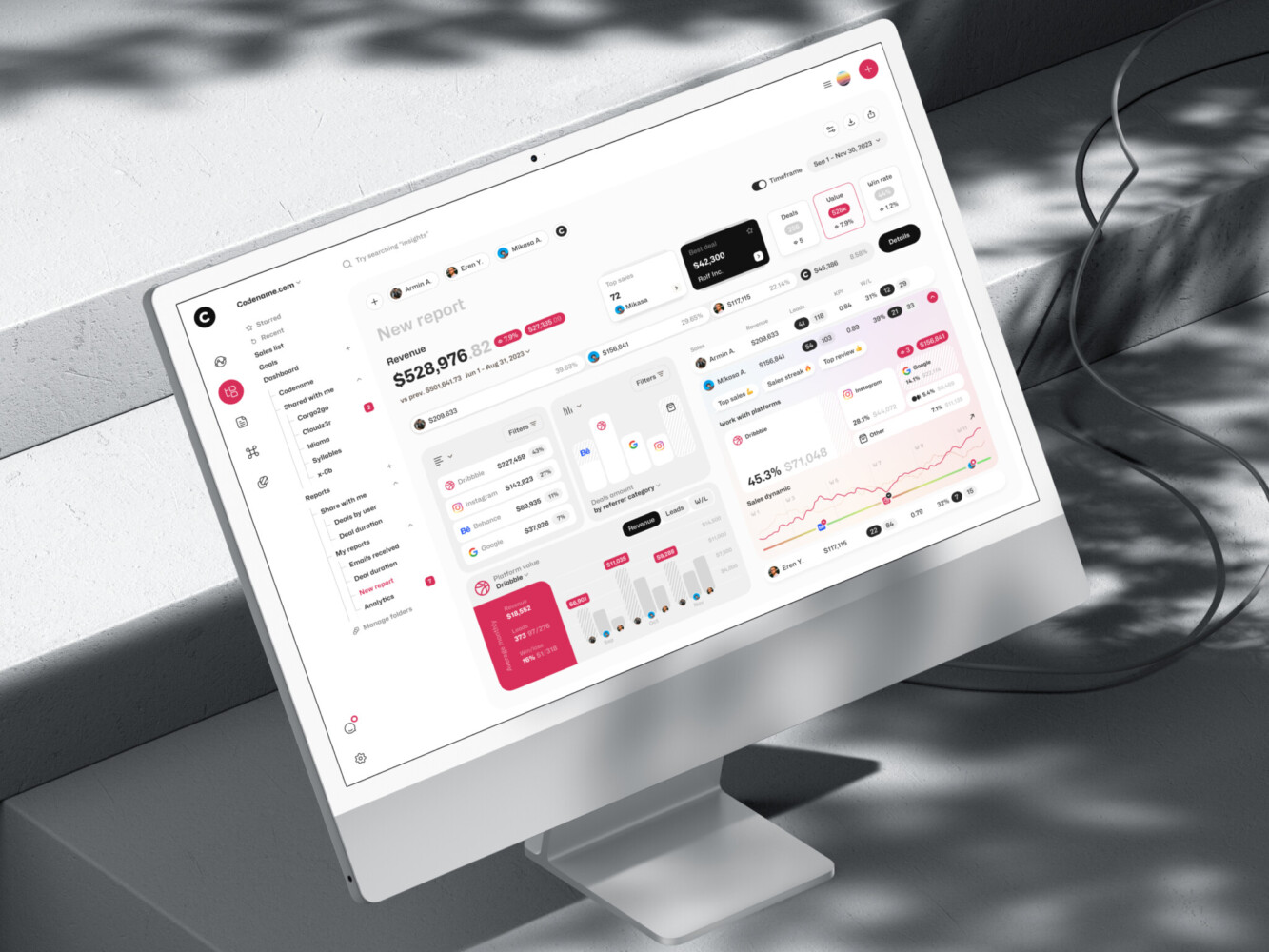
Marketing analytics dashboard by Shakuro
A marketing dashboard design can show the shape of the list. It does not prove that anyone changed a decision because of it.
How to Build a Predictive Analytics System
The order below is the order that keeps the first release about one decision. Skipping to a model usually means the definition gets written after the score exists, which is too late.
1. Define the Business Question
Write the decision in one sentence: who acts, on what list, by when, and what they do if the estimate is wrong. “We want predictive analytics” is not a question. “The account owner calls this list on Monday, and a wrong call costs a conversation, not a payout” is a question. The cost of being wrong sets the threshold. It is not a number a model picks.
2. Audit the Data
Check whether the inputs exist, whether two systems agree on the same account, and whether you are allowed to use them for this decision. A clean sample in a notebook is not an audit. If the label you would train on is missing — nobody recorded who was called, or who canceled, or which machine failed — the first release may be a rule and a log, not a model.
3. Design the Workflow
Draw the path for a wrong score before you draw the happy path. Who sees it, who can hide it, and what gets written down. If the only response to a bad score is “the team will know,” the workflow is not designed.
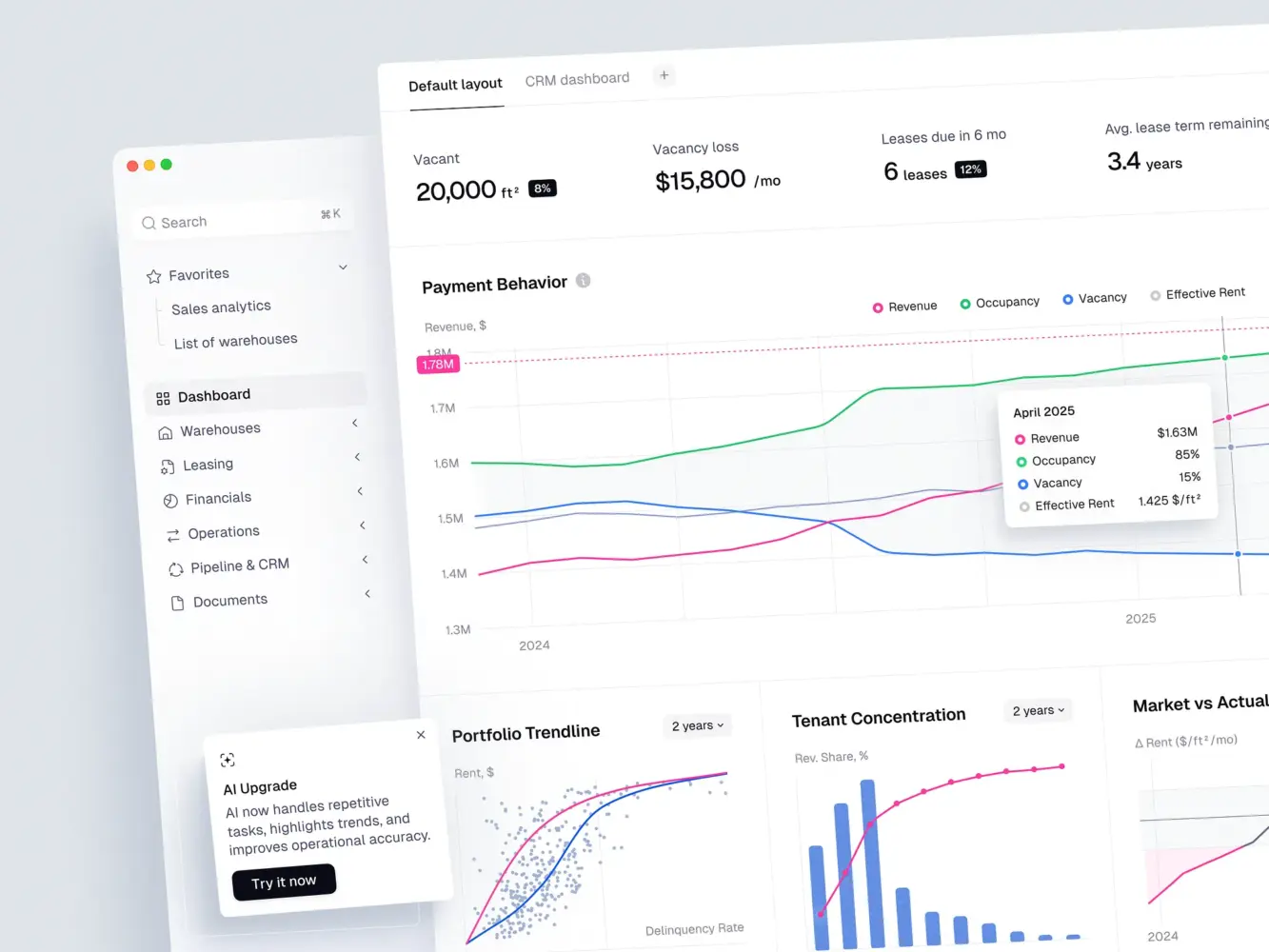
ERP Dashboard Design for Warehouse Portfolio Management by Shakuro
An operations dashboard design shows where a list could sit in a workday. It is not a warehouse, and it is not a scoring service.
4. Choose the Technical Approach
You do not need a complex model on day one. Some first releases start with rules, a score from a small model, or no score at all until the team has logged a month of actions. Building predictive analytics models is one step in that choice. A model without the screen and the decision rule is not the system people came to buy.
5. Construct the MVP
A first release is one decision, one set of sources, one score or rule, one screen, and one action. It is not a platform, not a second use case, and not a retraining schedule you have not earned yet. If the packaged tool’s score is the score the team will act on, stop here and do not build.
6. Test with Real Users
The people who act have to open the list and say whether they would act. A holdout metric that the builders like is not that test. If they cannot say why a row is there, the row is not ready, however strong the fit looked in training.
7. Deploy, Monitor, and Improve
After launch, watch the jobs and the inputs. A failed overnight run should be visible before people open the list. A score computed on stale inputs should be hidden. Improvement is a dated change to the definition or the threshold, not a quiet swap of a model file.
Common Development Challenges
The same five problems show up on this kind of build. None of them is fixed by adding another chart.
- Inputs that do not agree. Two systems, two account ids, and a score that cannot name which one it used.
- A score the team cannot explain, so they keep the spreadsheet that they can.
- Last year’s fit on this year’s inputs. The product changed, the mix of customers changed, or a source went quiet. The old score does not transfer. That is drift. It is not a reason to promise that a new model will stay right.
- A threshold nobody owns. The cutoff stays at whatever the first notebook used.
- Too many use cases in the first release. Each new decision is a new definition, a new label, and a new person who has to act.
How Much Does Predictive Analytics Software Cost?
There is no honest single price for a predictive analytics system, and this page will not invent one. The estimate moves with the decision, not with a model brand.
What to put on the table before anyone names a figure: how many sources have to agree, whether a person who did not build the model must be able to read the reason, whether a wrong score has a written response, how often the score must be recomputed, who is allowed to see a score about a person, and who watches the jobs after launch. A secure store for the inputs is part of that list. It is not a separate product you can price from a headline.
| Scope | Fits when | First release | What adds a later phase |
| One decision | One team will act on one list. | One source set, one rule or score, one screen, one action, a log of what they did. | More sources, roles, alerts, a second decision. |
| Several workflows | More than one team uses the same score, or the score feeds a tool they already open. | Roles, a written definition, a way to hide a stale score. | A retraining job, an audit of who saw the score. |
| A wrong score has a customer or compliance cost | Someone outside the building can be affected, or a reviewer will ask why a row appeared. | Access logs, a reason on the row, a named owner for the threshold. | Separate ownership of the watch, a longer review of which inputs are allowed. |
Justifying the cost is the same conversation. If the decision is rare, or a packaged score is the one the team will act on, a custom build is the wrong spend. If the decision is weekly and a wrong or late action is expensive, the spend is the sources, the screen, and the watch — not a license line you cannot see. Tell us the decision, the source list, and what a wrong score costs. That is enough for an estimate. It is not a request for a model name, and it is not a promise of a date.
Published Designs, and What They Do Not Prove
Shakuro has published interface work next to data-heavy products. That work is not a case study of a predictive analytics system. A dashboard frame does not show a score definition, a retraining job, or a person acting on a list.
Symbolik is a charting and trading-analysis product. The published page describes a UI/UX redesign of the chart experience, illustrations, and a client note about coding work and the interface. It does not describe a predictive model, a threshold, or a watch on missing inputs. We do not treat it as one.
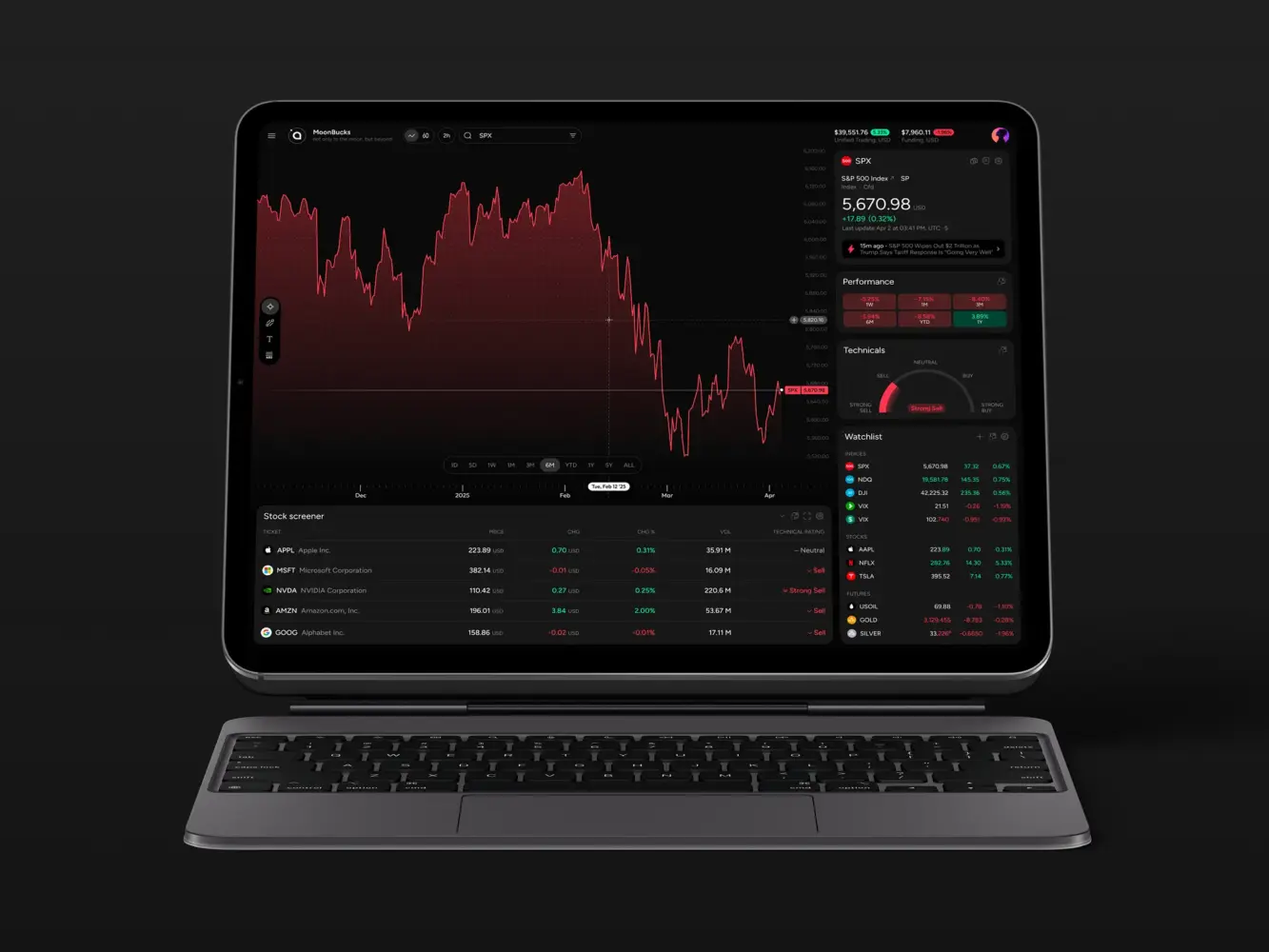
Financial Market Trading Analytics Tool Dashboard Design by Shakuro
The frame above is a trading-analytics dashboard design. It is not the Symbolik product, and it is not a forecast engine.
TraderTale is a fintech product that turns trading performance into a profile and a reputation. The published services on that page are UI design and UX design. They are not a scoring service and not a predictive system.
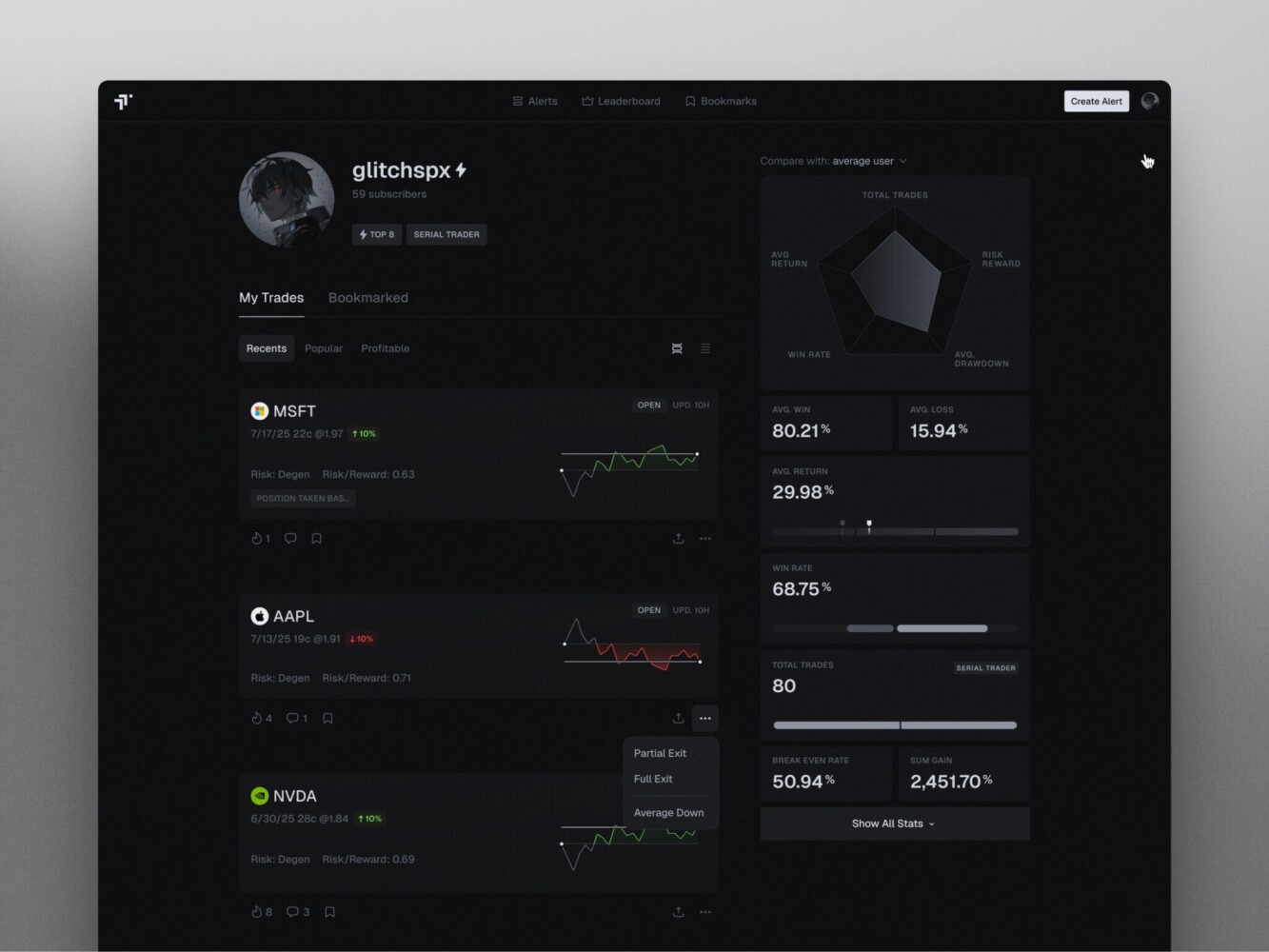
TraderTale: Social Platform for Traders by Shakuro
Why Work With a Development Company on Predictive Analytics Systems?
The work is not a model file. It is a written definition of the score, sources that can be rerun, a decision rule someone owns, a screen people open, and a watch on jobs that fail. A team that only trains a model will hand you a notebook. A team that only designs a dashboard will hand you a picture of a list.
Shakuro’s part of that, when the scope is a custom build, is the service layer, the model work, and the application people open: Python app development, AI development, and custom web application development. We do not promise that a model will stay right, and we do not quote a price from a page.
If you already know the decision and the sources, tell us those two things and what a wrong score costs. If a packaged tool’s score is the one you will act on, say that too. The useful answer is sometimes not to build.


Final Thoughts
A predictive analytics system is justified when a repeated decision is expensive if it is late, and a packaged score is not the score the team will use. The architecture is the path from sources to an action, not a diagram of a model. The first release is one decision. The thing to watch after launch is missing inputs and unused lists, not a promised accuracy.
Bring the decision, the source list, and the cost of being wrong. That is the brief. Tell us when you have it.
FAQ
What is a predictive analytics system?
Software that estimates what happens next and puts that estimate where a named person can act. A model file, a dashboard, and a customer profile store are not the same product. The system includes the inputs, the score or rule, the decision rule, the screen, and a watch on missing inputs.
How is predictive analytics different from descriptive and prescriptive analytics?
Descriptive work says what already happened. Diagnostic work looks for why. Predictive work estimates what may happen next. Prescriptive work recommends an action under a written rule. A predictive system can sit beside the others. It does not replace a report, and it does not replace a rule someone has to own.
What data is needed for predictive analytics software?
The inputs that the decision actually uses, a way to rerun them, and a label if you intend to train rather than start with a rule. If nobody recorded the outcome — who canceled, what failed, who was called — you do not have a training set yet. You may still have enough to log actions and define the score.
How long does it take to build a predictive analytics MVP?
This page does not name a duration. The schedule moves with data readiness, how many sources have to agree, and whether the first release is a rule or a model. A first release that waits on a year of missing labels is not an MVP. A first release that is one decision, one screen, and one action is.
Can predictive analytics be added to existing products and workflows?
Yes, and that is the usual case. The list should show up in the tool the person already opens, or one click away from it. A separate portal that nobody visits is how a model sits unused. The existing product still needs a place for the reason, the freshness, and the action.
How do you keep a predictive analytics system accurate after launch?
You do not keep a promised accuracy. Inputs change, the product changes, and last year’s fit does not transfer. After launch, watch failed jobs and stale inputs, hide a score when the inputs are incomplete, and date any change to the definition or the threshold. A single accuracy number on a slide is not that watch.
How much does predictive analytics software cost?
No single figure on this page. The estimate depends on how many sources must agree, whether a non-builder must read the reason, what a wrong score costs, how often the score is recomputed, and who watches the jobs. Send the decision and the source list if you want a number for your scope. A packaged tool is the cheaper path when its score is the one you will act on.
How do I choose a development partner for a predictive analytics system?
Ask who writes the score definition, who owns the threshold, and what the team sees when a job fails. A partner that leads with a model accuracy, a price from a blog table, or a dashboard picture is not describing this system. Ask for the first release as one decision. If they cannot say what they will not build, keep looking.
Related reading
- Customer Data Platform: Use Cases, Tools, Architecture, and How to Choose a CDP
- AI Analytics Platform Development: How to Build Intelligent Data Analytics Systems
- Financial Analytics Software Development: How to Build Data-Driven Financial Systems
- Data Analytics for eLearning Platforms: How to Build Data-Driven EdTech Systems
- Fraud Detection Software: Features, Architecture, Cost, and Development Process