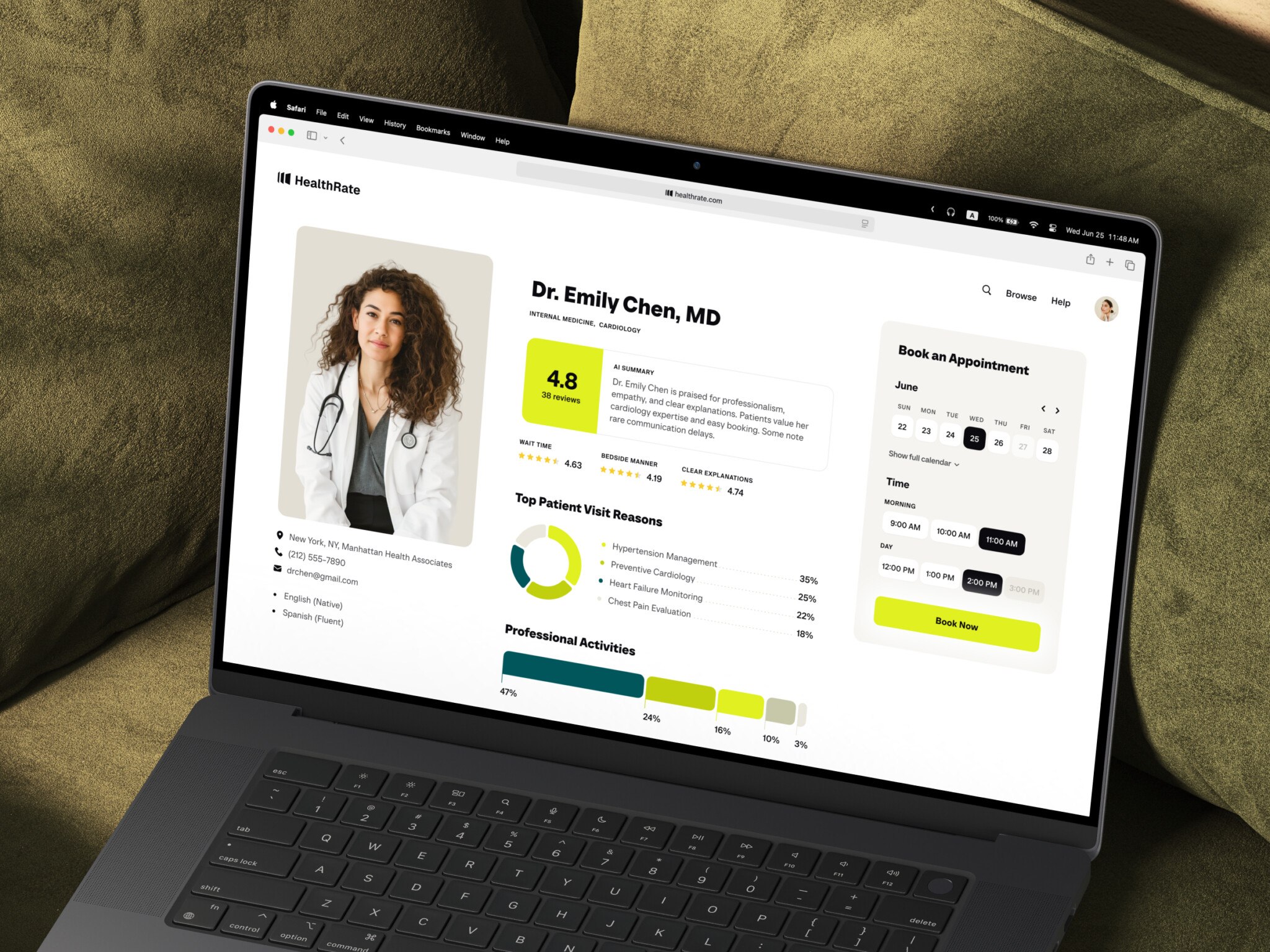
You can see the problem your product should solve. Patients filling out the same forms twice. Clinic staff chasing appointment updates over the phone. A doctor opening three different screens just to prepare for one consultation. Surely, there’s a better way to handle this.
Turning that idea into a healthcare SaaS app is where the questions start piling up. What belongs in the first release? Will clinics need it to connect with the software they already use? Who gets access to which records? And how much of your budget will be left once those decisions turn into development work?
Meanwhile, you need something tangible to show investors or get a pilot customer on board. It’s frustrating. You want to move, but some of the biggest unknowns sit underneath the few screens everyone keeps discussing.
This guide walks through healthcare SaaS development from that first workable scope to launch. We’ll cover features, architecture, security, integrations, and costs, so you can see what needs attention early and make a realistic plan for getting your product into people’s hands.
Key Takeaways:
- Start small, validate fast. Don’t build a Ferrari when you need a skateboard. Pick one core workflow for your MVP and get it in front of real doctors before adding complexity.
- HIPAA is a mindset, not just a checkbox. Compliance isn’t only about encryption; it’s about organizational culture, clear contracts (BAAs), and understanding that security is everyone’s job.
- Integration is the make-or-break factor. If your tool doesn’t talk to existing EHRs via standards like FHIR, clinicians won’t use it. Validate vendor access early to avoid nasty surprises.
- Architecture dictates your future. Choose between shared or dedicated multi-tenancy wisely. A solid foundation for data isolation and scalability saves you from expensive rewrites later.
- Retention happens after the launch. Onboarding, training, and responsive support are just as critical as the code itself. Track usage metrics to fix friction points before they cause churn.
What Is a Healthcare SaaS Platform?
At its core, it is just healthcare software that lives in the cloud. You don’t buy servers. You don’t hire a team to patch things at 2 AM. Instead, you pay a subscription fee—monthly or yearly—and access the tool through a browser or app. The vendor handles the heavy lifting: security updates, backups, scalability. It’s centrally maintained.
In a typical B2B SaaS, you have admins and users. In healthcare, you have three distinct layers. First, there’s the customer organization—the hospital, clinic, or private practice paying the bill. Then, you have the staff accounts: doctors, nurses, admin personnel who need deep access to manage workflows. And finally, you have the patients. They aren’t “users” in the traditional employee sense; they’re the subjects of the data, often accessing a portal to view results or book appointments. Keeping these permissions strictly separated isn’t just good UX; it’s a legal necessity.
You’ve probably seen the common use cases floating around. Practice management systems that handle scheduling and billing (boring but essential). Patient engagement tools that send reminders so people don’t no-show. Telemedicine platforms for video consults. And increasingly, remote patient monitoring, where data from wearables flows directly into the clinician’s dashboard.
Custom Healthcare Development vs. Ready-Made Solutions
But here’s the million-dollar question: do you build a configurable product or go full custom?
In my experience, most startups should start with a configurable healthcare SaaS platform. Why? Because hospitals are surprisingly similar in their basic needs. They all need to schedule, bill, and store records. If you build a flexible core that can be tweaked via settings—custom fields, workflow rules, branding—you can sell to ten different clinics without rewriting code. It scales.
However, there’s a tipping point. Large hospital networks or specialized research centers often have weird, legacy-specific requirements. Maybe they need to integrate with a 20-year-old mainframe system. Or perhaps they have unique compliance needs for a specific government grant. That’s when custom healthcare software development becomes unavoidable. It’s expensive, slow, and painful, but sometimes it’s the only way to fit the square peg in the round hole.
For most founders, though? Stick to the vertical approach. Solve one problem really well for a specific niche. If you’re curious about how that plays out in other industries, check out our take on [Vertical SaaS development]. It’s the same playbook, just with higher stakes.
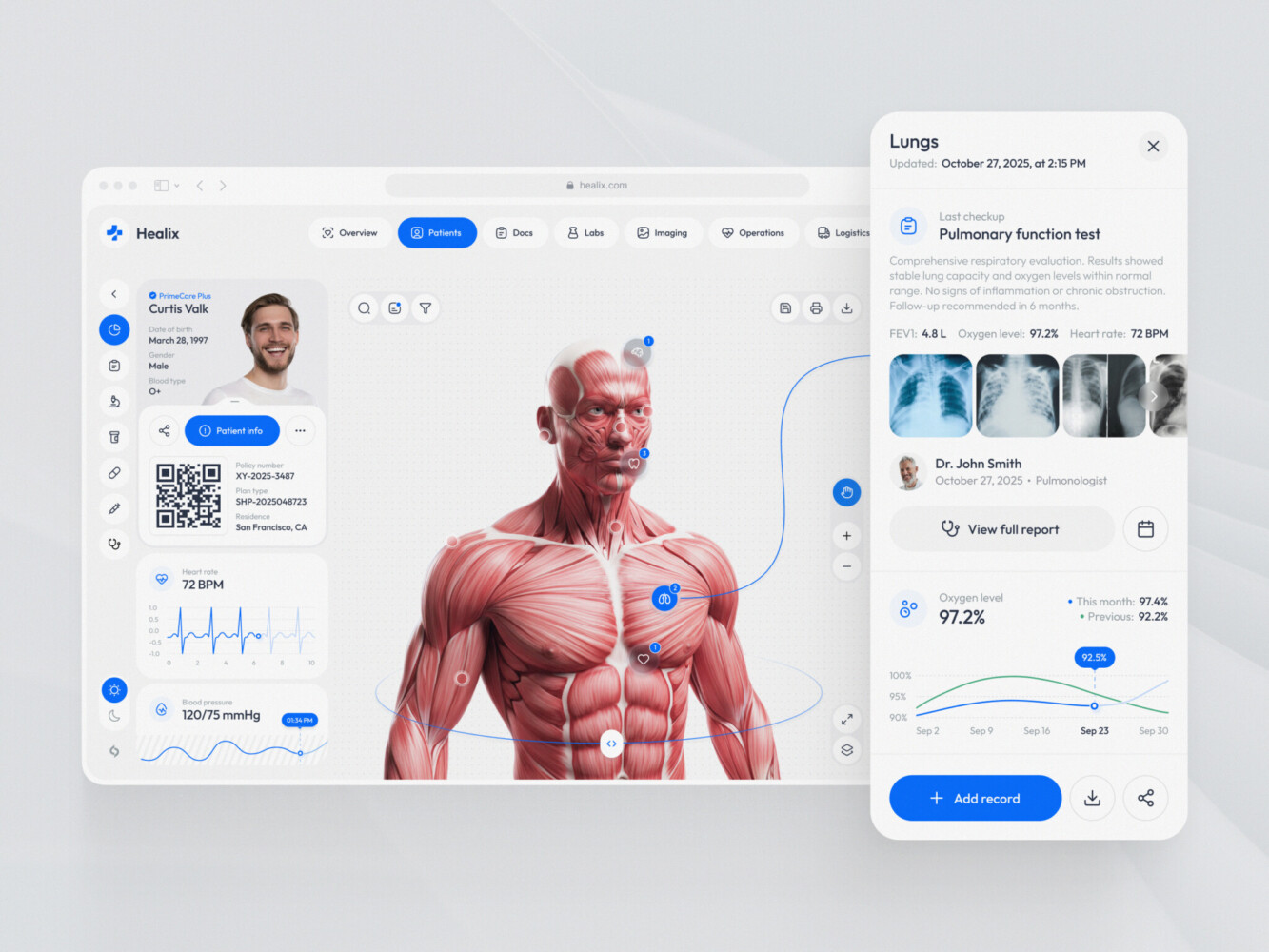
Healthcare operations and logistics platform design by Shakuro
Essential Features to Prioritize Before Development
Many teams try to build the Ferrari when they should have built a skateboard. In healthcare software product development, scope creep is the enemy. It’s not just about wasting money; it’s about delaying the moment you actually get feedback from real doctors. And trust me, their feedback will surprise you.
Here’s what actually matters in the beginning.
Patient and Clinician Workflows
This is the heart of the app. If this part is clunky, nothing else matters. You need to map out the journey. How does a patient get into the system? Intake forms need to be simple, not a twenty-page ordeal. Scheduling has to be intuitive—doctors hate double-booking almost as much as patients hate waiting.
Then there’s secure communication. Not email. Not SMS. Encrypted, compliant messaging within the platform. And crucially, access to relevant records. A doctor shouldn’t have to click through five menus to see a patient’s last blood pressure reading. Follow-up tasks are key too. If the system doesn’t remind the staff to check in on a post-op patient, it’s failing. Keep this loop tight.
Administration and Reporting
Who sees what? This isn’t just a nice-to-have; it’s a security requirement. You need robust role-based permissions. A receptionist shouldn’t see clinical notes. A nurse shouldn’t be able to change billing codes. Organization settings allow each clinic to tweak things to their liking without breaking the core code.
Dashboards are helpful, but don’t go overboard early on. Basic activity history is more important. Who logged in? Who changed this record? When? Audit trails are your best friend if something goes wrong. Keep it clear, keep it searchable.
SaaS Operations
Don’t confuse this with the medical side. This is how you run the business. How do new customers sign up? Is there a self-service onboarding flow, or do you need a sales engineer to hold their hand? You need subscription plans managed in the backend. Feature access should be tied to these plans automatically. If they pay for the “Pro” tier, they get the analytics module. Simple.
Billing here is for the clinic, not the patient. This is a common mix-up. Your SaaS billing handles the monthly subscription fee the practice pays you. Patient payments, co-pays, and insurance claims? That’s a whole different beast, often handled by separate clearinghouses or integrated payment gateways. Don’t try to build an insurance claims engine in version 1.0. Just handle your own subscription revenue cleanly.
The “First Usable Workflow” Rule
Here’s my advice: pick one workflow. Just one. Maybe it’s “schedule a telemedicine visit.” Build that end-to-end. Make it flawless. Ignore the rest for now. No fancy reporting. No complex admin roles beyond “admin” and “user.” Get that one thing working, put it in front of a doctor, and watch them.
Designing Architecture That Supports Security and Growth
Let’s break down the structural stuff that actually matters in healthcare software development.
Multi-Tenancy and Data Isolation
How do you host multiple clinics on the same infrastructure without them seeing each other’s data? You generally have two paths.
First, there’s the shared approach. One database, one app instance, but every row of data has a tenant_id. It’s cheaper. Much cheaper. Maintenance is easier because you update one codebase for everyone. But the isolation is logical, not physical. If your code has a bug, Clinic A might see Clinic B’s records. That’s a nightmare scenario.
Then there’s the dedicated approach. Separate databases, or even separate servers, for each customer. The isolation is physical. It’s safer, feels more secure to enterprise clients, and makes compliance audits simpler. But it’s expensive. You’re managing dozens of databases. Backups are harder. Updates take longer.
For most startups, I’d say start with strong logical isolation in a shared environment, but design it so you can peel off big clients into dedicated instances later. Don’t paint yourself into a corner.
Application and Data Layers
Think of your platform like a layered cake. At the top, you have the interfaces—what the doctors and patients see. Keep this thin. It should just talk to the backend.
The backend services are where the logic lives. Authentication, scheduling algorithms, notification triggers. These should be modular. If you need to change how reminders work, you shouldn’t have to touch the billing module.
Databases store the structured data—patient names, dates, codes. File storage is different. Think X-rays, PDFs, consent forms. Don’t shove these into your database. Use object storage (like S3) and just keep the link in the DB. And don’t forget background jobs. Sending emails, generating reports, syncing with labs—these shouldn’t block the main app. Offload them.
Reliability and Scalability
Healthcare isn’t 9-to-5. Emergencies happen. Flu seasons spike. Your architecture needs to handle uneven workloads. Auto-scaling is your friend in healthcare SaaS development. When traffic jumps, add more servers. When it drops, scale down. Save money.
But scaling means nothing if you lose data. Backups need to be automated, encrypted, and tested. Not just “we think they work.” Actually try restoring from them. Monitoring is crucial too. You need to know a service is down before the hospital calls you screaming. Set up alerts for everything: error rates, latency, disk space.
Performance testing isn’t optional. Simulate a hundred doctors logging in at 8 AM. Does it choke? Find out now, not on launch day.
Choosing the Technology Stack
Here’s where opinions fly. But in healthcare SaaS, boring is often better. Why? Because you need people who can maintain it in five years.
Look at your team’s expertise. If everyone knows Python, use Python. Don’t pick Rust just because it’s trendy if no one on your team understands it. Integration needs matter too. Healthcare loves HL7 and FHIR standards. Make sure your stack has good libraries for handling those.
Maintainability is key. Will a new hire understand this code in six months? Infrastructure requirements too. Some stacks are heavy on memory, others on CPU. Match the tool to the job. And remember, you’re not just building for today. You’re building for the long haul.
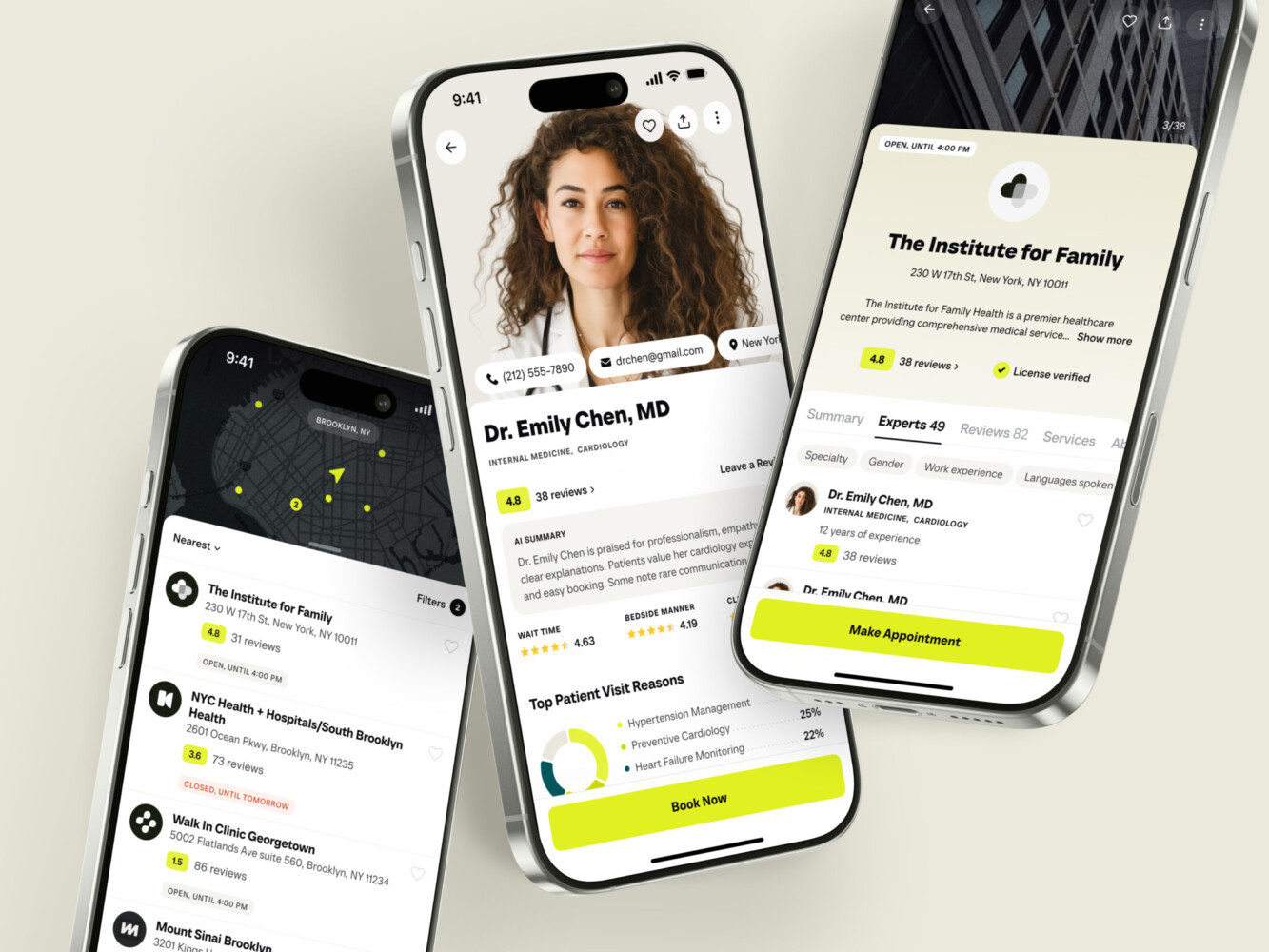
Healthcare app concept by Conceptzilla
Planning for HIPAA-Compliant Software Development
For many founders, this is the part that makes them want to quit. It sounds like a maze of legal jargon and endless checklists. But here’s the truth: HIPAA isn’t just a technical hurdle. It’s a mindset. And if you’re building a healthcare SaaS platform, you can’t ignore it.
First off, does HIPAA even apply to you? Not every health app is covered. If you’re building a fitness tracker for general wellness, you’re probably fine. But if you’re handling Protected Health Information (PHI) on behalf of a covered entity—like a doctor’s office or hospital—you’re in the game. This usually happens through what’s called a Business Associate Agreement (BAA). Basically, the hospital says, “We’re trusting you with our patients’ data. Don’t mess it up.” Once you sign that BAA, you’re legally on the hook.
So, what does that actually mean for your development process?
It starts with a risk analysis. You have to look at your system and ask, “Where could things go wrong?” Is it the database? The API? The laptop of a remote developer? You need to identify these vulnerabilities and fix them. It’s not a one-time thing; it’s ongoing.
Then there are the technical safeguards. Encryption is non-negotiable. Data needs to be encrypted at rest (in the database) and in transit (moving between the user and your server). Access controls are huge too. Who can see what? You need strict role-based access. And auditability. Every time someone views a patient record, it needs to be logged. Who, when, and what did they look at? If you can’t answer that, you’re not compliant.
But here’s where people get tripped up. They think using AWS or Azure makes them compliant automatically. It doesn’t.
Cloud providers like AWS will sign a BAA with you. That’s great. It means they promise to keep their infrastructure secure. But they don’t care how you configure it. If you leave an S3 bucket open to the public, that’s on you, not Amazon. The division of responsibility is clear: they secure the cloud; you secure what’s in the cloud. You need your own operational policies. How do you handle a lost laptop? What’s your incident response plan if you get hacked?
According to HHS guidance on cloud computing, compliance is a shared effort, but the ultimate responsibility lies with the business associate—that’s you. You need contracts, yes, but you also need culture. Your team needs to understand that security isn’t just a feature; it’s the foundation.
HIPAA-compliant software development isn’t about checking boxes. It’s about building trust.
Connecting the Platform With EHRs and Other Healthcare Systems
Doctors live in their Electronic Health Records (EHR) systems. Epic, Cerner, Athenahealth—they’re the central hubs. If your healthcare software development effort requires a clinician to log out of their EHR, open your app, type in data, and then go back—you’ve already lost. They won’t use it. It’s too much friction.
So, integration isn’t a “nice-to-have” for version 2.0. For many use cases, it’s essential for day one. But which ones? Don’t try to boil the ocean. Start with the basics: patient demographics and maybe clinical notes or observations. If you’re doing telemedicine, you need scheduling sync. If you’re doing remote monitoring, you need vital signs. Keep it focused.
Now, how do you actually connect? Enter FHIR.
Fast Healthcare Interoperability Resources (FHIR) is the modern standard for exchanging healthcare information. Think of it as the REST API of healthcare. Instead of messy, old-school HL7 v2 messages that look like gibberish, FHIR uses JSON. It’s web-friendly. It’s modular. The official HL7 overview describes it as a framework for exchanging electronic health records, and honestly, it’s the best thing to happen to interoperability in decades. If you’re building today, build for FHIR.
But here’s where it gets messy. Just because FHIR exists doesn’t mean every vendor implements it the same way.
During healthcare SaaS development, you’ll need to deal with vendor API access. Some EHRs have open APIs; others require you to jump through hoops, pay fees, or wait months for approval. You need to check which versions they support. Are they on R4? STU3? It matters. Data mapping is another headache. Your app might call it “Date of Birth,” but the EHR calls it “DOB” or “Birth_Date.” You need a translation layer.
And patient matching is surprisingly hard. How do you know that “John Smith” in your app is the same “J. Smith” in the hospital’s system? You need robust algorithms to match patients safely without creating duplicates.
Synchronization failures will happen. Networks drop. APIs time out. You need a strategy for retrying and logging these errors so data doesn’t just vanish into the ether. When testing, use testing environments. Never, ever test against a live hospital database. Most vendors provide sandbox environments with fake patient data. Use them.
As for other integrations—payment gateways, lab systems, wearables—only tackle these if your specific use case demands it. Don’t build a lab interface if you’re just doing scheduling. Keep your scope tight. Integration is complex, expensive, and fragile. Treat it with respect.
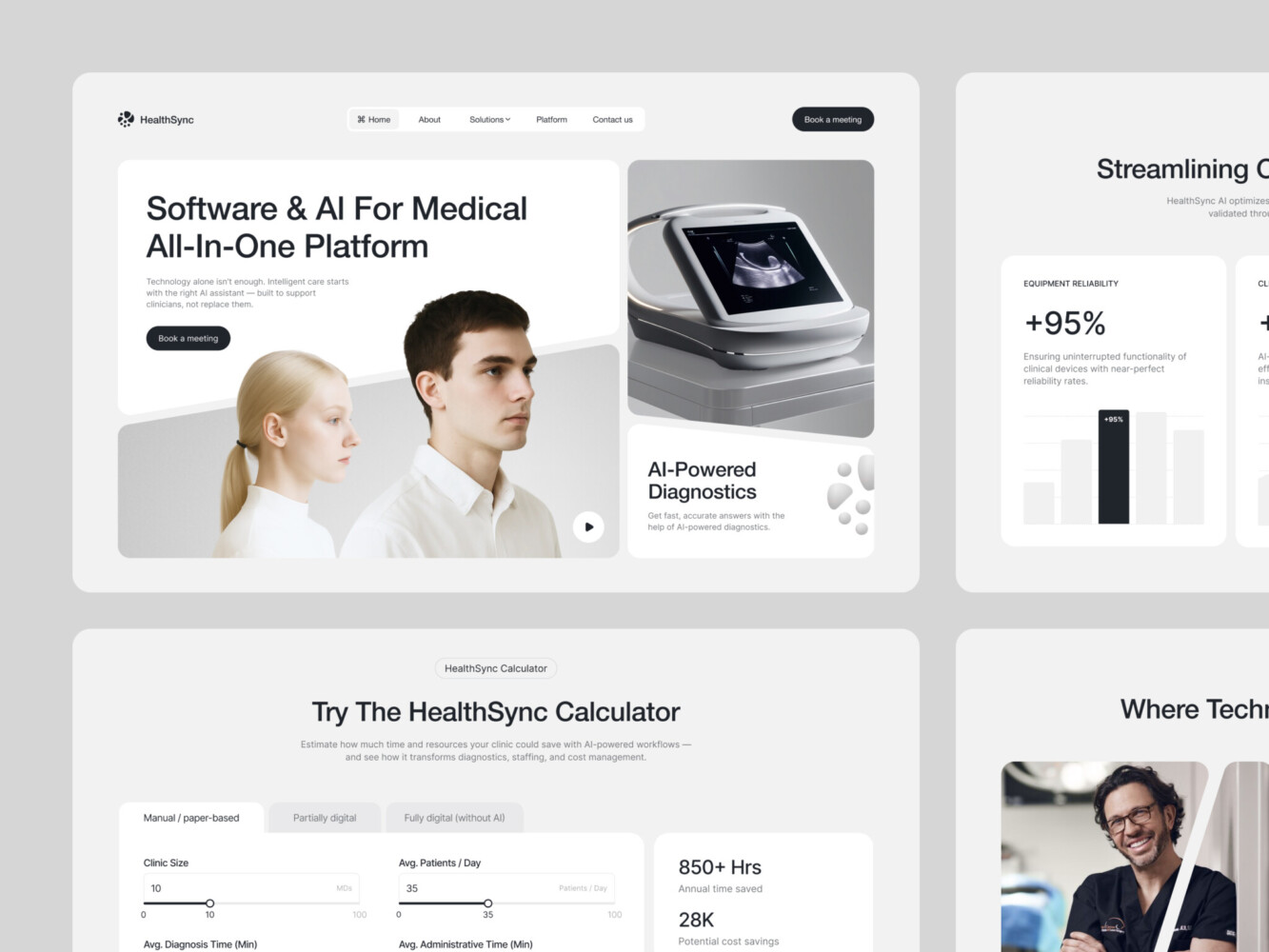
AI-Driven Medtech Website Design by Shakuro
Healthcare SaaS Development: From Discovery to Launch
You can’t just “move fast and break things.” If you break things here, people get hurt. Or sued. So, you need a process. It doesn’t have to be rigid, but it needs to be clear.
Discovery and Validation
Don’t start with code. Start with conversations. Talk to the people who will buy this (the clinic owners) and the people who will use it (the doctors and nurses). Map out their current workflows. Where are the bottlenecks? What makes them groan? Define measurable goals. Not “make it better,” but “reduce scheduling time by 20%.” The deliverable here is a validated problem statement and a clear set of product goals.
MVP Planning
Resist the urge to build everything. Pick one workflow. Just one. Maybe it’s patient intake. Maybe it’s telemedicine scheduling. Identify the essential integrations needed for that single flow. Set acceptance criteria. When can you say it’s “done”? The deliverable is a tight, focused MVP scope document. Nothing more.
UX/UI Design
Healthcare users are stressed. They’re tired. Your interface needs to be calm and clear. Prototype the journeys for patients, clinicians, and admins. Test it with real people. Is it accessible? Can a doctor with poor eyesight read the font? Can a nurse use it with one hand while holding a chart? The deliverable is a clickable prototype and a usability report.
Architecture and Security Planning
This is where you lay the foundation. Document how you’ll handle multi-tenancy. Who sees what data? How does information flow from the frontend to the database? Map out your infrastructure and operational responsibilities. Who handles backups? Who responds to alerts? The deliverable is a technical architecture document and a security plan.
Development and Integration
Now you build. Focus on the core workflow first. Then add customer administration and subscription functions. Finally, tackle those tricky integrations with EHRs or other systems. Keep the code clean. Keep it modular. The deliverable is a functional beta version of the platform.
Testing and Pilot
Don’t launch to everyone yet. Pick a friendly pilot customer. Verify permissions rigorously. Ensure customer data is isolated. Test how integrations behave when things go wrong. Check performance under load. Try breaking your own recovery processes. The deliverable is a pilot report and a list of critical fixes.
Launch and Support
Roll out gradually. Don’t flip a switch for everyone at once. Monitor issues closely. Train the customer teams—they’re your best advocates. Prioritize improvements based on real usage, not guesses. In healthcare software product development, the launch is just the beginning of the relationship. The deliverable is a live, supported product and a feedback loop for future iterations.
Healthcare Software Development Cost: What Shapes the Budget?
There is no single number. Asking “how much does it cost?” is like asking “how much does a house cost?” It depends on whether you’re building a shed or a skyscraper. But we can break it down into three rough scopes to give you a sense of the landscape.
First, the focused MVP. One workflow, basic security, maybe one simple integration. You’re not trying to boil the ocean. You’re just proving the concept. This might run you anywhere from $50k to $150k, assuming you’re working with a lean team or a specialized agency in a moderate-cost region. It’s tight, but it gets you in the door.
Second, a product with several integrations. You need to talk to Epic, maybe a lab system, and a payment gateway. You have multiple user roles—doctors, nurses, admins. The complexity jumps. So does the price. We’re likely looking at $200k to $500k. The integrations alone can eat up half that budget because every vendor has their own quirks, documentation gaps, and testing hurdles.
Third, the enterprise platform. This is for serving large hospital networks. You need dedicated instances, advanced audit logs, 99.99% uptime guarantees, and a sales team that speaks “procurement.” This is a multi-year, multi-million dollar endeavor. Easily $1M+. And that’s just to get started.
So, what drives these numbers?
Workflow complexity is huge. If your app just stores data, it’s cheap. If it makes clinical decisions or sends real-time alerts, healthcare software development costs get expensive. User roles add layers of permission logic. Migration is a silent killer. Moving data from an old system is always harder than you think. Security work isn’t optional; it’s a baseline tax. Testing in healthcare is rigorous because the stakes are high. And availability expectations? If you promise 99.9% uptime, you need redundant servers, failovers, and a 24/7 on-call team. That costs money.
It’s also crucial to separate initial development from recurring costs.
Initial development is a one-time hit. But then you have infrastructure (cloud bills), support (people to answer tickets), vendor fees (for APIs or third-party tools), and maintenance (keeping things secure and updated). These recur every month. A good rule of thumb? Budget 20-30% of your initial dev cost annually for maintenance and operations.
Here’s a simple estimation framework:
- Scope: Define your features clearly.
- Effort: Estimate hours for each feature. Be realistic. Add 20% for buffer.
- Rates: Multiply by your team’s hourly rate. ($50/hr vs $150/hr makes a massive difference).
- Ongoing: Add infrastructure, support, and vendor costs.
Remember, these ranges are assumptions based on typical market rates for specialized teams. They aren’t gospel. But they should help you frame the conversation.
Common Challenges—and How to Address Them Early
Here are the big ones that trip up most teams in custom healthcare software development.
Clinical Workflow Mismatch
This is the classic “we built it, but they hate it” scenario. You think a doctor wants five clicks to prescribe a med. They actually want one. Or two. How do you fix this? Stop guessing. Involve real users—doctors, nurses, admins—during discovery. Not just once. Keep them in the loop during pilot testing. Watch them use it. See where they hesitate. See where they get frustrated.
Integration Delays
You promised a launch date. Then you found out the EHR vendor takes six weeks to approve your API access. Oops. Don’t commit to hard delivery dates until you’ve validated vendor access. Talk to their developer relations team early. Ask about their sandbox environments. Test the connection before you sign the contract. Technical dependencies are real, and they don’t care about your roadmap.
Permission Complexity
Who can see what? It sounds simple until you have a clinic with ten different roles: front desk, billing specialist, nurse practitioner, attending physician, specialist, admin, etc. The list goes on. If you don’t define organization boundaries and access rules before you start coding, you’ll end up with a security nightmare. Write it down. Get it signed off. Then build it. Don’t try to figure it out as you go.
Difficult Onboarding
You built a great tool. But getting a hospital to actually use it is like turning a tanker. They have legacy data. They have staff who are resistant to change. Plan for migration early. How will you move their old records? Who will train their team? Do you have customer support ready to answer basic questions? Onboarding isn’t an afterthought; it’s part of the product. If they can’t get started, they’ll churn.
Rising Operating Costs
Cloud bills in healthcare SaaS development are sneaky. They start small, then suddenly you’re paying thousands a month because one customer is running heavy reports 24/7. Track infrastructure usage by customer. Track support effort too. If one client is eating up 50% of your support time, you need to know. Maybe they need a different plan. Maybe they need better training. But don’t let it bleed you dry silently.
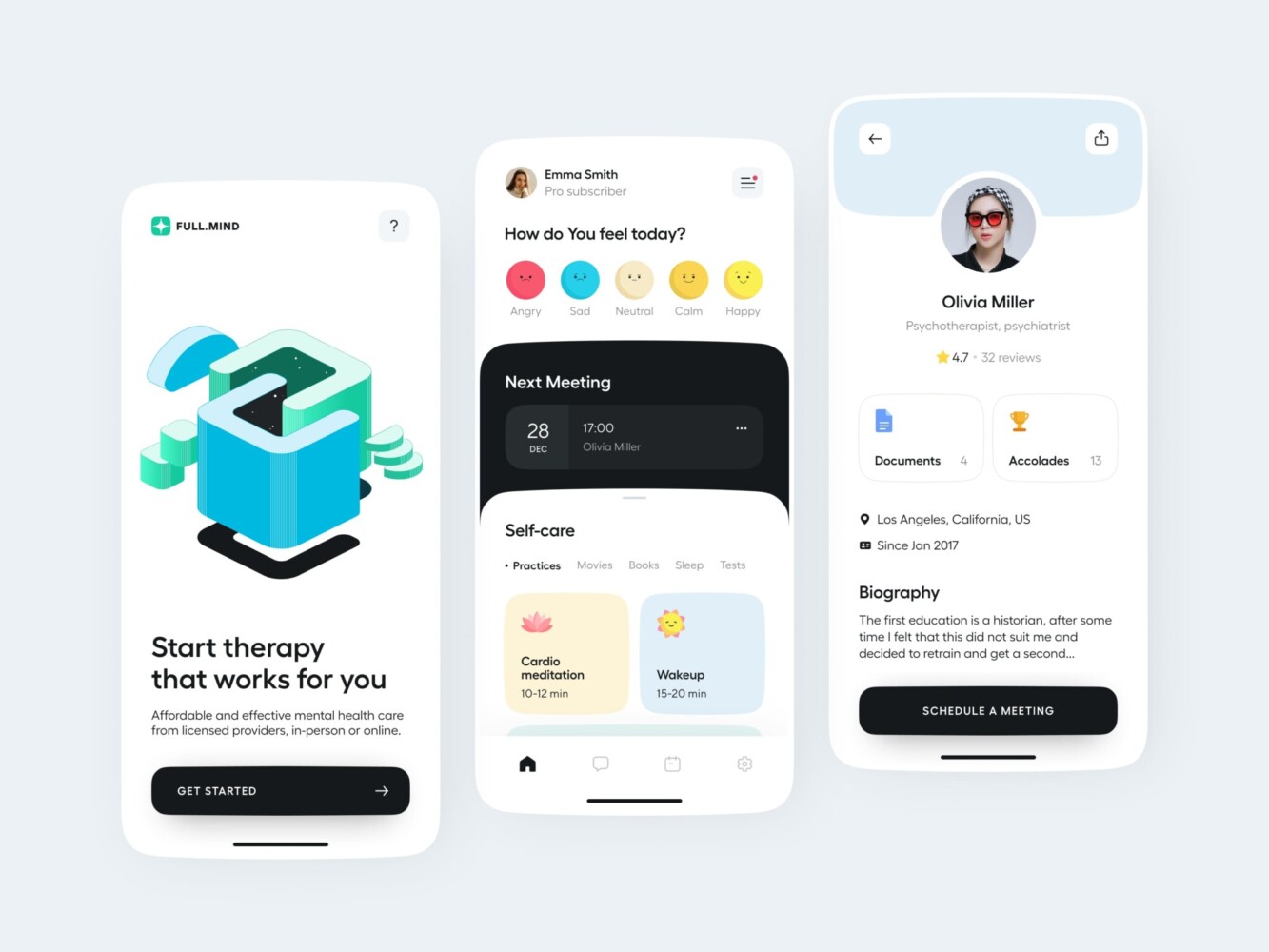
Healthcare app design concept by Shakuro
Improving Adoption and Retention After Launch
In healthcare SaaS, retention is about trust and habit. If a doctor stops using your tool, it’s not because they forgot. It’s because it got in their way. Or they didn’t know how to use it. Or they lost confidence in it.
Let’s talk about the lifecycle after launch.
Customer onboarding is where most churn starts. If it takes three weeks to get a clinic set up, you’ve already lost them. You need a smooth path from “signed contract” to “first patient seen.” Activation is key here. What’s the moment they realize value? Is it sending their first secure message? Booking their first telemedicine slot? Get them to that moment fast.
Training matters. Doctors are busy. They don’t have time for hour-long webinars. Give them bite-sized videos. Cheat sheets. In-app tooltips. And support? It needs to be responsive. If a nurse can’t figure out how to upload a document, they need help now, not tomorrow.
Renewals aren’t a surprise event. They’re the result of months of good service. Check in regularly. Show them the value they’re getting. When someone leaves, account offboarding should be clean and professional. Maybe they’ll come back. Maybe they’ll refer someone else. Don’t burn bridges.
But how do you know if it’s working? You need metrics.
Don’t just look at revenue. Look at behavior. Time to first completed workflow is huge. How long does it take a new user to do something useful? Active customer organizations tell you who’s actually logging in. Task completion rates show you where people get stuck. Churn is obvious, but look at why they churn. Support demand is a leading indicator. If tickets are spiking, something is broken.
Here’s the secret sauce: combine customer feedback with product usage data.
Feedback tells you what people say they want. Usage data tells you what they actually do. Sometimes they’re different. A doctor might say they love a feature, but the data shows no one uses it. Or they might complain about a bug that only affects 1% of users. Use both to prioritize improvements. Fix the things that block value. Build the things that drive adoption.
Choosing a Healthcare SaaS Development Partner
Choosing a partner for custom healthcare software development is a bit like choosing a surgeon. You wouldn’t just pick the one with the cheapest rates, right? You’d want to know their track record, their hygiene standards, and how they handle complications.
It’s the same here. You’re handing over your vision, your reputation, and your customers’ sensitive data. So, how do you vet them?
Look for specific evaluation criteria. First, workflow discovery. Do they ask deep questions about how doctors actually work, or do they just nod and start coding? Integration experience is non-negotiable. Have they connected to Epic, Cerner, or major lab systems before? Ask for details. Security responsibilities should be clear from day one. Who handles the HIPAA audit? Who manages the encryption keys? Testing practices matter too. Do they have automated tests for patient data isolation? Do they test for performance under load?
And don’t forget documentation and ongoing support. If they build it and vanish, you’re stuck. You need a partner who documents their code and offers a clear path for maintenance.
Here are some tough questions to ask:
- “Who owns the code at the end of the project?”
- “What does the handover process look like?”
- “Can you show me evidence of relevant work? Not just screenshots, but case studies that explain the scope.”
- “How do you handle maintenance after launch? Is it a retainer? Hourly?”
Our Experience in Healthcare Software Development
For more than 19 years, we have been developing different products for the healthcare industry.
For example, take a look at projects like Bless You. It’s a healthcare platform created by doctors in Saudi Arabia for residents and tourists, Shakuro worked on UX/UI design and branding. The process included research, user profiles, wireframes, prototypes, and testing, with attention to accessibility and local cultural expectations.
Arabic came first. That shaped navigation, button placement, typography, and the way people moved through the interface. We later created an English version, keeping readability and ease of use central to both experiences. Even something as familiar as a navigation menu needs a second look when the reading direction changes.
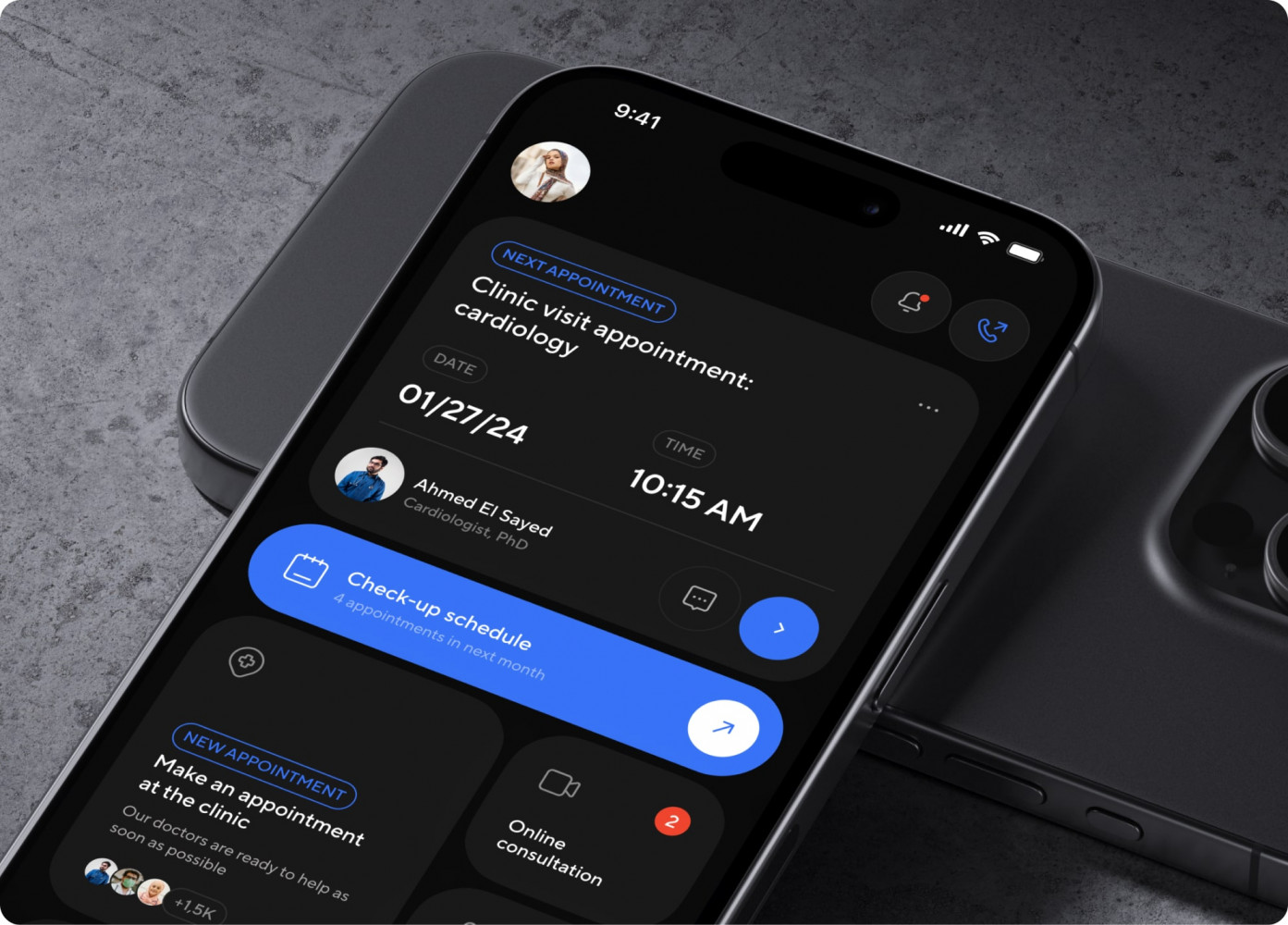
Bless You app by Shakuro
When evaluating a partner, look for this kind of documented work. Verify what they actually delivered. Did they just build the UI, or did they handle the complex backend logic and compliance too? Keep your claims tied to what’s proven.
If you’re ready to stop guessing and start building, let’s talk. Discuss your healthcare SaaS idea, core workflow, and integration needs with our team. We’ve been in the trenches, and we know where the bodies are buried. Let’s make sure you don’t join them.
Frequently Asked Questions
How is healthcare SaaS different from traditional healthcare software?
It’s all about delivery. Traditional software is often installed on local servers in the hospital basement. SaaS lives in the cloud, is centrally maintained by the vendor, and you pay a subscription. It’s easier to update, but the security and compliance burden shifts to the provider.
What should a healthcare SaaS MVP include?
Just one core workflow. Pick the most painful problem—like scheduling or patient intake—and solve it end-to-end. Include basic user roles (admin, staff) and essential security. Skip the fancy reporting and complex integrations for now. Validate first, expand later.
How long does healthcare SaaS development take?
For a focused MVP? Usually 3 to 6 months. If you’re building a complex platform with multiple EHR integrations and enterprise-grade security, expect 9 to 18 months. Healthcare moves slower than other sectors because of compliance and testing requirements.
What affects healthcare software development cost?
Complexity is the big one. More user roles, more integrations, and stricter security needs drive up the price. Migration of old data is also a hidden cost driver. And don’t forget ongoing expenses like infrastructure, support, and maintenance, which can add 20-30% annually.
When does HIPAA apply to a healthcare SaaS platform?
It applies when you handle Protected Health Information (PHI) on behalf of a “covered entity” like a doctor or hospital. If you sign a Business Associate Agreement (BAA), you’re on the hook. If you’re just building a general wellness app that doesn’t touch medical records, you might be exempt.
Can a SaaS platform integrate with an existing EHR?
Yes, but it’s not always easy. Most major EHRs support standards like FHIR or HL7, but each vendor has their own API quirks and access rules. You’ll need to validate technical dependencies early and be prepared for some messy data mapping. It’s doable, just plan for it.