The idea makes sense: help doctors spend less time on paperwork, give patients clearer answers, or take one repetitive task off a clinic’s plate. You can already picture the product. Maybe you’ve even built a demo, and it looks pretty good.
Then the questions start. Can you get the data you need? Will the tool fit the software a hospital already uses? What happens when it gives a confident answer that’s wrong? Meanwhile, you’re trying to scope an MVP, keep the budget sensible, and give your team something firmer than “we’ll figure that out later.” It’s a lot.
Healthcare AI solutions development brings together product decisions, messy data, user trust, and some uncomfortable trade-offs. This guide walks through those decisions, from choosing a useful first feature to planning integrations, validation, costs, and ongoing support. If you’re wondering what it will take to turn your idea into something people can rely on, let’s work through it.
Key Takeaways:
- Start Small and Specific: Don’t try to fix “healthcare.” Pick one measurable, painful workflow (like drafting a specific type of note) and solve it well. Narrow scope reduces risk and speeds up validation.
- Data Readiness is Non-Negotiable: Before building, confirm you have clean, accessible, and representative data. Integration with legacy EHRs via HL7/FHIR is often the biggest technical hurdle, so assess this early.
- Buy, Integrate, or Build Wisely: You rarely need to train a custom model from scratch. Start with existing APIs or pre-trained models (RAG/fine-tuning) and only build custom if your problem is truly unique.
- Trust is the Product: Healthcare AI must be transparent. Include source references, easy correction controls, and clear escalation paths. If clinicians don’t trust the output, they won’t use the tool.
- Mobile Changes the Game: If building an app, consider on-device processing for privacy and latency, robust biometric authentication, and offline capabilities. UX must be accessible and culturally localized.
- Plan for the Long Haul: Development doesn’t end at launch. Budget for ongoing monitoring, model retraining to handle data drift, and continuous clinical validation. Recurring costs for security and support are significant.
What Is Healthcare AI Solutions Development?
When people say healthcare AI solutions, they often picture some futuristic robot surgeon. But in reality, it’s usually much more grounded. It’s about building software that applies AI to a specific healthcare workflow. That’s it.
Maybe it’s triaging patient messages. Maybe it’s spotting anomalies in X-rays. The key is that the AI is part of the product’s logic, not just a buzzword slapped on the homepage.
And hey, let’s clear up a common mix-up. Using AI tools to write your code—like having an LLM generate a Python script for you—is not the same as building an AI-powered product. One helps you build faster; the other is the product. In AI healthcare solutions development, you’re embedding intelligence into the workflow itself. The user interacts with the AI’s output, not just your UI.
Predictive AI, Generative AI, and Rule-Based Automation
You don’t always need a neural network. Seriously. Many teams over-engineer simple problems because they thought “AI” sounded better to investors.
Predictive AI is great for forecasting. Think readmission risks or sepsis detection. It looks at patterns in historical data to guess what might happen next.
Generative AI? That’s your text-heavy stuff. Summarizing clinical notes, drafting patient responses, or translating medical jargon into plain English. It creates new content based on what it’s learned.
As for rule-based automation, it works, obviously, according to the rules you set. If a patient’s temperature is above 38°C, send an alert. That’s not AI. It’s logic. And honestly? It’s often enough. If a simple if/then statement solves the problem, use it. It’s easier to validate, easier to explain to regulators, and way less prone to weird hallucinations. Save the heavy lifting for cases where patterns are too complex for hard-coded rules.
Administrative Tools and Clinical Applications
If you’re building an administrative tool—say, an AI that helps schedule appointments or code billing claims—the stakes are lower. Sure, mistakes cost money and time, but they rarely hurt anyone directly. You still need good data hygiene and testing, but the regulatory path is smoother.
Clinical applications are a different beast. If your software helps diagnose a condition or recommends a treatment plan, you’re entering high-risk territory. Now you need rigorous evidence. You need to prove your model works across different demographics. You need oversight plans. Validation isn’t just a checkbox; it’s an ongoing process.
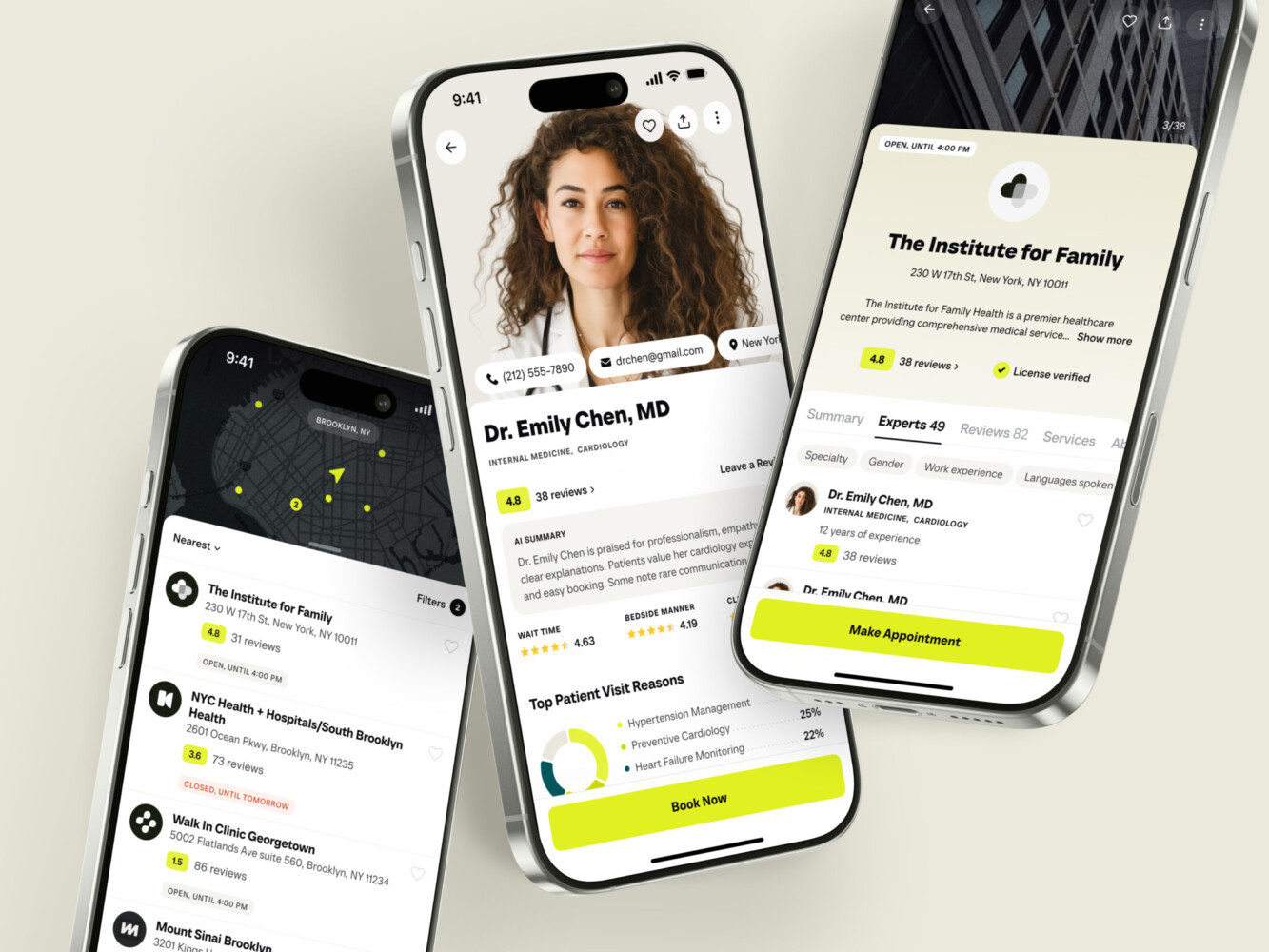
Healthcare app concept by Conceptzilla
Where AI Solutions in Healthcare Can Be Useful
Let’s get practical. Where do AI solutions in healthcare actually move the needle? It’s easy to get lost in the hype, but if you look at the daily grind of hospital staff or clinic managers, the opportunities are pretty clear. It’s about taking a specific task and making it less painful, faster, or more accurate.
Documentation and Information Retrieval
Clinicians spend hours charting. It’s exhausting. AI can help draft summaries from patient encounters or extract key data points from messy PDFs. Imagine a tool that listens to a visit (with consent, obviously) and populates the EHR fields. Or one that lets a nurse ask, “When was the last time this patient had their A1C checked?” and gets an instant answer instead of digging through ten tabs. The outcome? Less burnout, more face time with patients.
Patient Communication and Care Navigation
Patients are often confused. They don’t know where to go or what to do next. AI-driven chatbots can handle the simple stuff: “How do I prep for my colonoscopy?” or “Reschedule my appointment.”
But it needs clear escalation paths. If the bot doesn’t know, it shouldn’t guess. It should hand off to a human. The goal is reducing call center volume while keeping patients feeling heard. It’s not about replacing nurses; it’s about freeing them up for complex questions.
Operational Forecasting
Hospitals run on tight margins. No-shows kill efficiency. Healthcare AI solutions can predict who’s likely to miss an appointment based on history, distance, or even weather. Then you can send targeted reminders or double-book slots strategically. Same with capacity planning. Predicting flu surges helps staffing teams prepare instead of reacting in panic mode.
Clinical Decision Support and Imaging
AI can spot patterns in X-rays or MRIs that humans might miss, or flag potential drug interactions. But these solutions require heavy validation. You can’t just deploy a model and hope for the best. It needs clinical expertise wrapped around it. The AI suggests; the doctor decides. The outcome is earlier detection or safer prescribing, but the risk is high if it goes wrong.
Here’s a quick look at how these stack up:
| User | Task | Required Data | Success Metric | Oversight |
| Clinician | Drafting notes, finding records | EHR data, audio transcripts | Time saved per chart, accuracy | Peer review, audit logs |
| Patient | Asking questions, scheduling | FAQ knowledge base, calendar API | Resolution rate, drop-off reduction | Human handoff protocols |
| Ops Manager | Predicting no-shows, staffing | Historical attendance, demographics | Reduction in no-shows, staff utilization | Regular model retraining |
| Specialist | Analyzing images, flagging risks | Medical imaging, lab results | Sensitivity/specificity, diagnostic accuracy | FDA clearance, clinical validation |
See the pattern? The further you get from admin tasks, the heavier the data and oversight requirements become.
When Do Custom AI Solutions for Healthcare Make Sense?
You’ve identified a problem. Now comes the hard part: deciding how to solve it. Do you buy something off the shelf? Plug in an existing model? Or build the whole thing from scratch?
It’s tempting to think “custom” is always better. You get exactly what you want, right? Well, yeah, but you also get all the headaches that come with it. Custom AI solutions for healthcare aren’t a magic bullet. They’re a commitment.
Buy, Integrate, or Build
Let’s break it down. Buying an existing product is the fastest route. If there’s a vendor who already solved your specific problem—say, automated billing coding—and they’re compliant and reliable, just buy it. Why reinvent the wheel? It’s cheaper, faster, and someone else handles the maintenance.
As for integration, this is where things get interesting for startups. You might use a third-party LLM or a pre-trained imaging model and build your own custom software around it. You’re not training the brain; you’re building the body. This gives you flexibility in how the AI interacts with your users without the massive cost of training foundational models. It’s a sweet spot for many AI solutions in healthcare.
Building a custom model from scratch? That’s for when no existing tool fits your unique data or workflow. Maybe you have a proprietary dataset of rare conditions that no one else has. Or maybe your workflow is so specific that generic tools fail. This is expensive, slow, and risky. But if it works, it’s a huge moat.
Evaluate Workflow Fit and Data Readiness
Look at your data. Is it clean? Is it labeled? Do you even have access to it? I’ve seen projects stall because the hospital’s IT team wouldn’t grant API access, or the data was trapped in PDFs scanned from fax machines. Not fun.
Also, think about ownership. If you build it, you own it. That means you fix it when it breaks. You retrain it when performance drifts. You handle the security audits. If you integrate, you’re dependent on the vendor’s uptime and pricing changes. There’s no free lunch here.
Ask yourself: How much customization do I really need? If it’s just UI tweaks, buy. If it’s core logic, maybe build. But be honest about your team’s capacity to maintain it.
Quick decision checklist:
- Does an existing product solve 80% of my problem?
- Do I have clean, accessible, and labeled data?
- Is my workflow unique enough that generic tools fail?
- Do I have the engineering resources to maintain a custom model long-term?
- Is the regulatory risk manageable for a custom build?
If you checked “no” to most of these, maybe pause. Custom development is powerful, but it’s not always the smartest first step. Sometimes, the best custom AI solutions for healthcare start with integrating existing tools really well. Save the heavy lifting for when you truly need it.
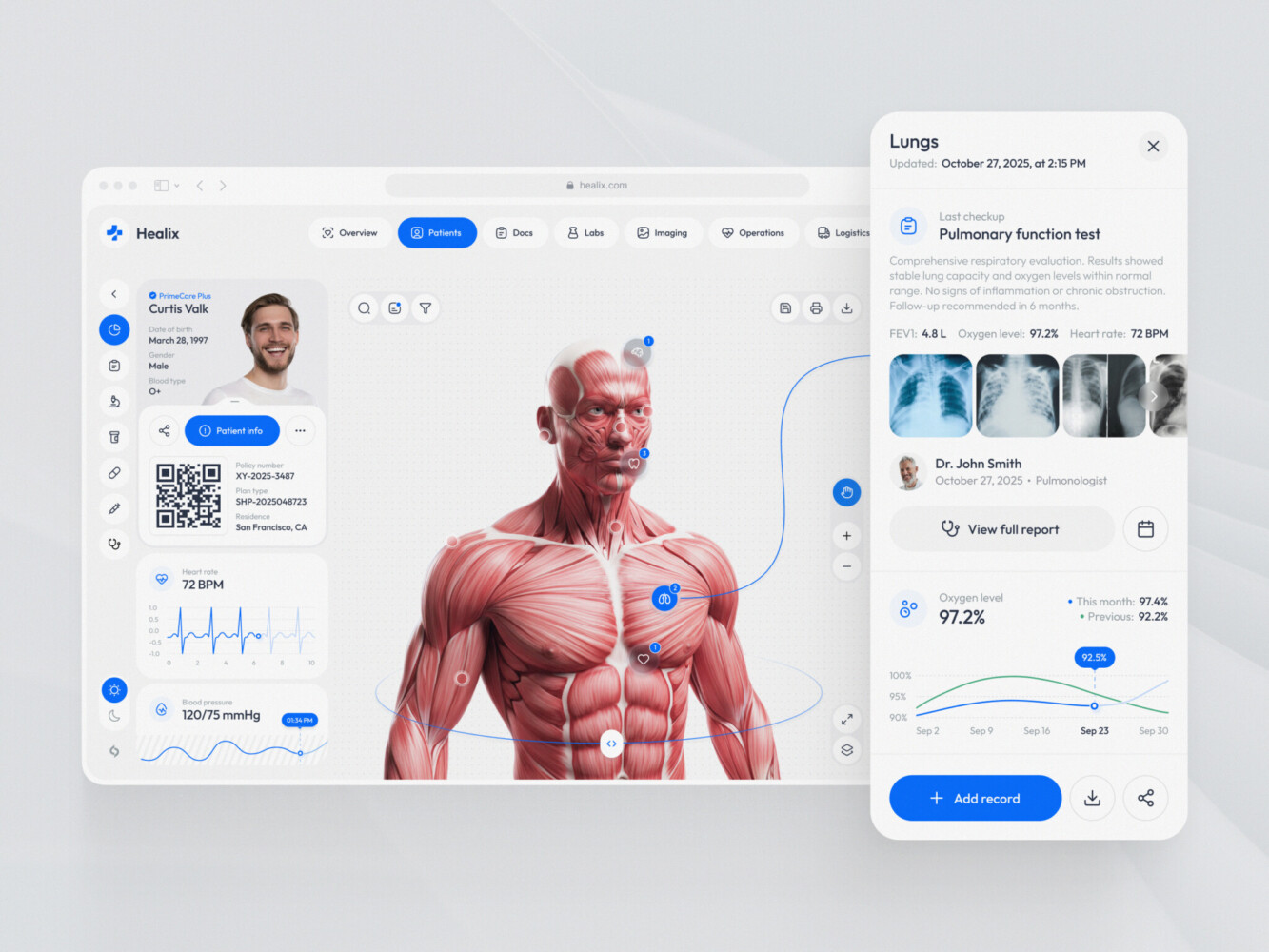
Healthcare operations and logistics platform design by Shakuro
Core Components of a Healthcare AI Product
Building a healthcare AI product isn’t just about picking the smartest algorithm. It’s more like building a house. You need a solid foundation, good plumbing, and walls that don’t leak. If you skip the boring stuff, the whole thing collapses when you try to scale.
Data Sources and Integrations
This is where most projects hit a wall. Healthcare data is everywhere, but it’s rarely in a format you can just plug into a model. You’ve got EHRs (like Epic or Cerner), PDFs from fax machines, wearable device streams, and lab results.
To make sense of this mess, you need robust integrations. This is where HL7 and FHIR come in. Think of them as the universal translators of healthcare. FHIR (Fast Healthcare Interoperability Resources) is becoming the gold standard because it’s web-friendly and easier to work with than the older HL7 v2 messages. If you do AI healthcare solutions development, you’ll likely spend a huge chunk of your time just getting data out of these systems cleanly. Without good integration, your AI is flying blind.
Model and Application Architecture
So, how does the data actually become useful?
First, you ingest the data. Then you prepare it—cleaning, anonymizing, maybe splitting text into chunks. Next comes the model inference. This is where the AI does its thing. But here’s a key point: you don’t always need to train a new model. Often, you just need retrieval.
Retrieval-Augmented Generation (RAG) is huge right now. Instead of teaching the AI every medical fact, you let it look up relevant info from your trusted documents before answering. It’s cheaper and less prone to hallucinations. Fine-tuning is for when you need the model to adopt a specific style or understand niche terminology. Custom training? That’s for when you have unique data patterns no existing model can handle.
The application logic wraps around all this. It decides when to call the AI, how to format the output, and what to show the user. The UI is just the tip of the iceberg.
Features That Support Trustworthy Use
If a doctor doesn’t trust your tool, they won’t use it.
You need source references. If the AI says “Patient has a history of diabetes,” it should link to the exact note where that was recorded. No black boxes.
Review and correction controls are vital. Let users edit the AI’s output. It makes them feel in control and gives you valuable feedback data. Permissions matter too. Not everyone should see everything. And audit trails are essential. You need to know who did what and when, especially if something goes wrong.
Also, think about fallback behavior. What happens if the AI is unsure? It should say “I don’t know” or flag a human for review. Never let it guess on critical issues.
Technology and Deployment Choices
Your tech stack for healthcare AI solutions development isn’t just about what’s trendy. It’s about constraints.
Latency is a big one. If a clinician is waiting ten seconds for a summary during a visit, they’ll hate your product. You might need faster, smaller models or edge computing.
Hosting is another decision. Do you go cloud-native for scalability, or do you need on-premise deployment because of strict hospital security policies? Integration requirements will drive this too. Some hospitals only allow certain types of connections.
And don’t forget operating costs. Running large LLMs 24/7 gets expensive fast. You need to balance performance with budget. Sometimes a simpler, cheaper model that works 95% of the time is better than a perfect one that bankrupts you.
Healthcare AI Solutions Development, Step by Step
In my experience, AI healthcare solutions development works best when you respect the process. It’s not always linear—sometimes you loop back—but having a roadmap keeps you from getting lost in the weeds.
1. Define the Problem and Intended Use
Start small. Really small. Who is this for? A busy ER nurse? A billing clerk? What exactly are they trying to do? And crucially, what are they not doing?
Define the workflow boundaries. If your tool is supposed to summarize discharge notes, it shouldn’t try to diagnose the patient too. Set a baseline. How do they do it now? How long does it take? What’s the error rate? If you don’t know where you’re starting, you can’t prove you’ve improved anything. Success criteria should be measurable: “Reduce charting time by 20%” is better than “Make doctors happier.”
2. Assess Data Access and Quality
This is the reality check. You might have a great idea, but do you have the data to back it up? Review permissions early. Getting legal and compliance approval for data access can take months. Don’t wait until week ten to ask.
Look at the data itself. Is it complete? Or are half the fields empty? Do you need labeled data for training? If so, who’s going to label it? Doctors are expensive and busy. Also, make sure your evaluation data is representative. If your model only sees data from one urban hospital, it might fail miserably in a rural clinic.
3. Prototype the User Experience
Before you build the backend, build the frontend. Well, a fake one. Use wireframes or clickable prototypes. Put them in front of real users. Watch them.
How do they interpret the AI’s output? Do they trust it immediately? Do they ignore it? Most importantly, how do they correct it? If fixing an AI mistake takes longer than doing the task manually, you’ve failed. The UX needs to support review and correction seamlessly. It’s not about replacing human judgment; it’s about augmenting it.
4. Build a Proof of Concept
Now, get technical. But keep it lean. During AI healthcare app development, identify the riskiest assumption. Is it that the model can actually read the handwriting? Or that the EHR API will give you the data you need? Test that first.
A proof of concept (PoC) isn’t a product. It’s a experiment. It might be ugly. It might break often. That’s fine. The goal is to learn fast. If the PoC shows the core idea doesn’t work, you’ve saved yourself six months of development. Kill it quickly and move on.
5. Develop the Product and Integrations
Once the PoC validates the core value, start building for real. This is where you connect the model to actual workflows. It’s about reliability.
Define error handling clearly. What happens when the API times out? What if the data format changes? Your application logic needs to be robust. Integrations are usually the hardest part here. EHRs are notoriously finicky. Plan for delays, unexpected data structures, and security hurdles.
6. Validate Performance and Usability
Testing in a lab is different from testing in a hospital. You need to validate performance in the wild. Look at task-specific quality. Does it work for common cases? What about rare ones?
Check subgroup performance. Does it work equally well for all demographics? Security testing is non-negotiable. Penetration tests, vulnerability scans, the whole nine yards. And if it’s a clinical tool, you might need formal clinical validation. This isn’t just QA; it’s evidence gathering.
7. Pilot, Launch, and Monitor
Don’t launch to everyone at once. Start with a pilot. A single department. A few friendly users. Collect feedback aggressively. What’s breaking? What’s confusing?
Have a rollback plan. If things go south, how do you revert quickly? Model updates will be ongoing. Data drift is real. Models degrade over time as patient populations or documentation styles change. Ongoing evaluation isn’t a nice-to-have; it’s part of the job. Keep watching, keep tweaking, and keep listening to your users.
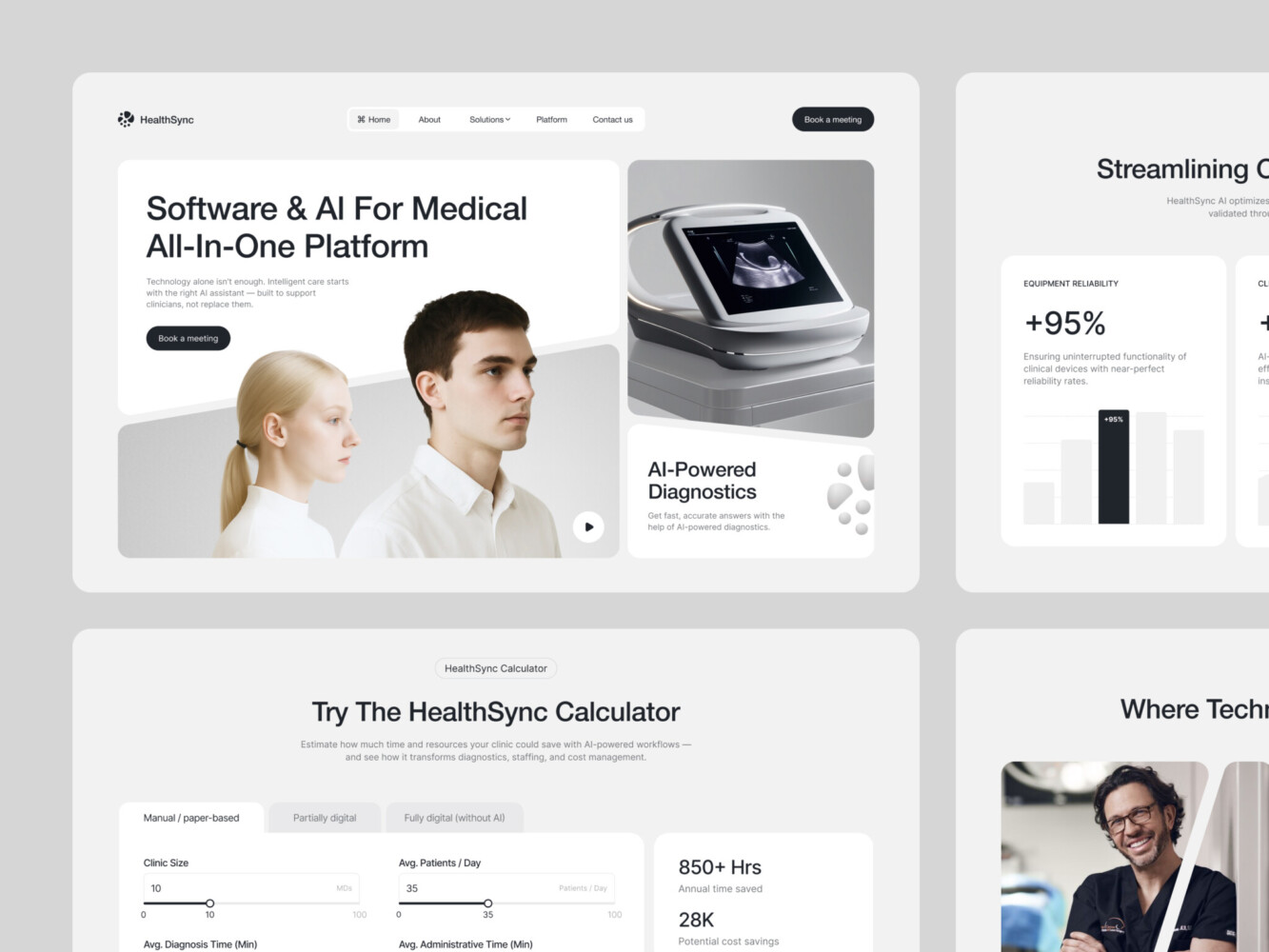
AI-Driven Medtech Website Design by Shakuro
What Changes in AI Healthcare App Development?
When you move from a web-based dashboard to a mobile app, the game changes. In AI healthcare app development, mobile introduces a whole new set of constraints and opportunities that directly impact your architecture and user experience.
First off, permissions. On the web, you might just ask for login credentials. On mobile, you’re asking for access to the camera, microphone, location, or health data. Users are skeptical. If you ask for too much too soon, they’ll uninstall. You need to explain why you need that permission right before you ask for it. Context is everything.
Authentication is another hurdle. Typing complex passwords on a phone is annoying. Biometrics—FaceID, fingerprint—are standard now. But integrating them securely while maintaining HIPAA compliance requires careful planning. You can’t just store tokens anywhere.
You also need to think about accessibility. Healthcare users aren’t always young or tech-savvy. They might have poor vision, tremors, or cognitive load issues. Your UI needs large touch targets, high contrast, and screen reader support. It’s often a legal requirement.
Connectivity is huge. Hospitals have terrible Wi-Fi in certain zones. Ambulances move. If your AI solution requires a constant server connection, it will fail when it’s needed most. This brings us to the on-device versus server processing debate.
Running models on the device (edge AI) means faster response times and better privacy since data doesn’t leave the phone. But it limits you to smaller, less powerful models. Server processing allows for heavy lifting but depends on network stability. Often, the best approach is a hybrid: simple tasks on-device, complex analysis in the cloud.
Wearable inputs add another layer. Heart rate, step count, sleep data. Integrating these streams means dealing with noisy, intermittent data. Your AI needs to handle gaps and outliers gracefully. Notifications are a double-edged sword. Too many, and users ignore them. Too few, and they miss critical alerts. Timing and relevance are key.
Take Bless You as an example of thoughtful healthcare UX. It’s not an AI product, but its design work offers valuable lessons. The team focused heavily on Arabic/English localization, ensuring the interface felt natural for both languages, not just translated. They paid attention to cultural nuances in how health information is presented. This kind of deep localization effort shows how much context matters in healthcare apps. It’s not just about functionality; it’s about trust and comfort.
In healthcare AI solutions development, these mobile-specific decisions shape everything. They determine whether your AI feels like a helpful assistant or a frustrating barrier. Get them right, and you build a product people actually want to use. Get them wrong, and even the smartest algorithm won’t save you.
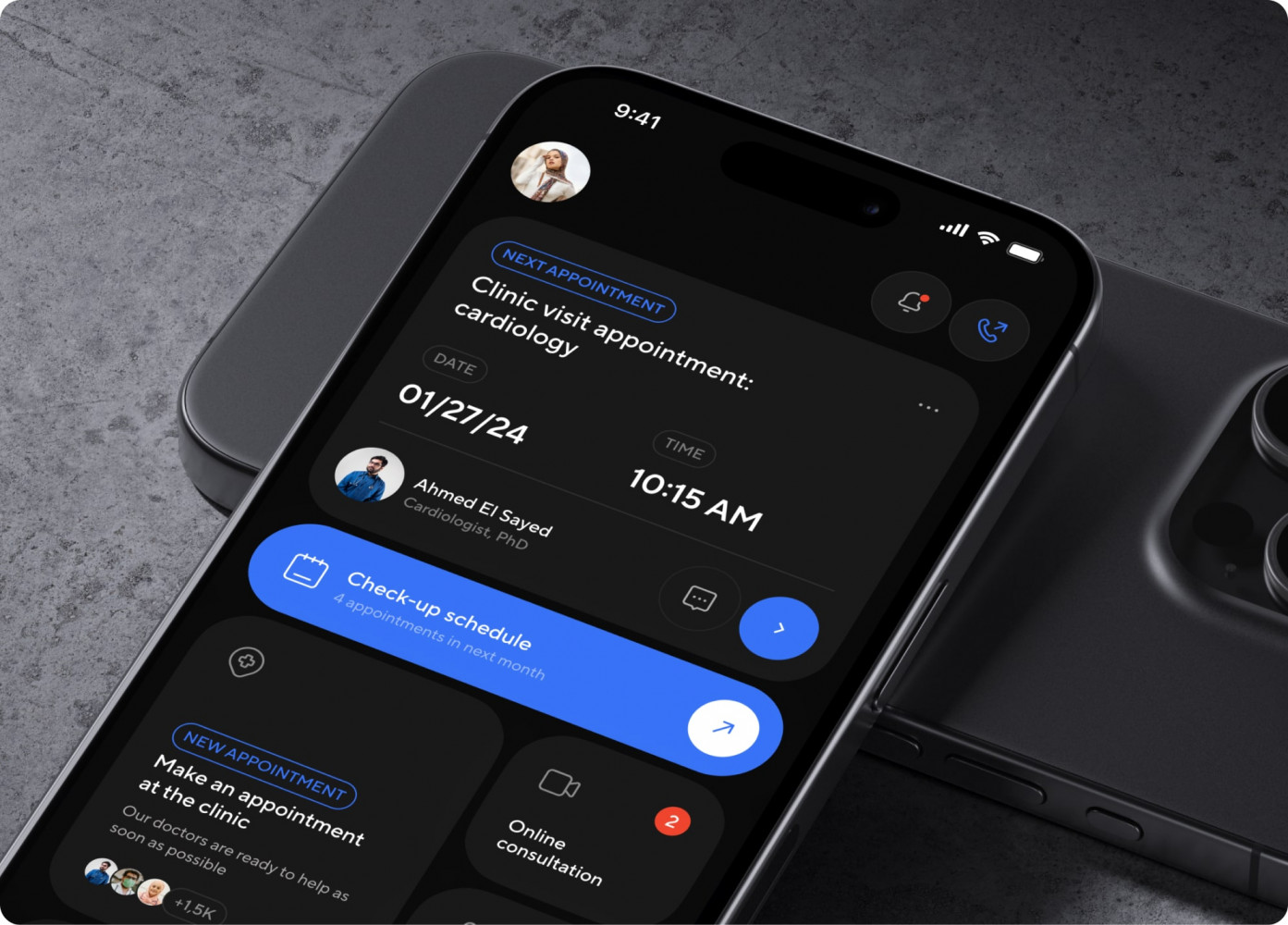
Bless You app by Shakuro
Healthcare AI Development Challenges and How to Address Them
Incomplete Data and Uneven Model Performance
Data in healthcare is messy. It’s incomplete, inconsistent, and often biased. You might have great data for one demographic but almost nothing for another. This leads to models that work well for some people and poorly for others.
The fix? Start with data audits. Understand what you have and, more importantly, what you don’t. Build representative evaluation sets that reflect the real-world population your tool will serve. Test across different subgroups—age, gender, ethnicity, geography. If your model fails for a specific group, you need to know before launch, not after. A biased model is a broken product.
Incorrect Outputs and User Overreliance
AI makes mistakes. LLMs hallucinate. Predictive models get it wrong. The danger isn’t just the error; it’s the user trusting the AI blindly. Clinicians are busy. If your tool looks confident, they might skip their own verification.
You need to design for this. Build in review steps. Make it easy for users to correct errors. Provide clear escalation paths to human experts. And be honest about limitations. Tell users when the AI is uncertain. Design safe failure behavior—if the system doesn’t know, it should say so, not guess. Never let the AI make a final clinical decision without human oversight. It’s a support tool, not a replacement.
Privacy, Security, and Regulatory Requirements
Healthcare data is sensitive. You’re dealing with HIPAA in the US, GDPR in Europe, and a host of other regulations.
When opting for healthcare AI solutions development, map your data flows. Know exactly where patient data goes, who accesses it, and how long it’s stored. Understand vendor responsibilities if you’re using third-party services. Access controls must be tight. Retention policies need to be clear.
Check resources like the HHS developer guidelines for technical safeguards. If your tool offers clinical recommendations, look at the FDA’s guidance on Clinical Decision Support (CDS) software. Some tools are exempt; others require clearance. Knowing which category you fall into early saves you from costly redesigns later.
Legacy Integration and Clinician Adoption
Hospitals run on legacy systems. Epic, Cerner, Meditech—they’re powerful but often rigid. Integrating your AI into these workflows is tough. Data formats vary. APIs might be limited or expensive.
And then there’s the human element. Clinicians are skeptical of new tech. If your tool disrupts their workflow, they won’t use it. It doesn’t matter how smart it is. Usability testing with real clinicians is crucial. Watch them use it. See where they struggle. Adjust the interface to fit their natural flow, not the other way around. Solve a real pain point, make it easy to use, and you’ll stand a chance.
Performance Changes After Launch
Your job isn’t done at launch. In fact, it’s just beginning. Models degrade over time. Data drift happens. Patient populations change. Documentation styles evolve.
You need continuous monitoring. Track performance metrics regularly. Set up alerts for drops in accuracy. Plan for revalidation. When you update the model, version it carefully. Ensure backward compatibility if possible. And keep an eye on operating costs. Running AI at scale isn’t cheap. Optimize where you can.
How Much Does Healthcare AI Solutions Development Cost?
Three Scopes
- Feasibility Prototype
This is your “does this even work?” phase. You’re testing an assumption. Maybe you’re seeing if an LLM can accurately summarize a specific type of clinical note. You’re using mock data or a small, clean dataset. The UI is basic—maybe just a simple web form. No deep integrations. No security audits yet. It’s about learning fast.
- Production MVP (One Workflow)
Now you’re serious. You’ve picked one specific workflow—say, automating prior authorization requests. You’re integrating with one EHR system. The UX is polished enough for real users. You’ve handled basic security and compliance checks. You have a plan for validation. This is a real product, but it’s focused. It does one thing well.
- Platform with Multiple Integrations
This is the big league. You’re connecting to multiple EHRs, handling various data types, and supporting different user roles. You need robust infrastructure, advanced security, continuous monitoring, and a dedicated support team. You’re building for scale and reliability. This is where costs skyrocket because complexity grows exponentially, not linearly.
Main Cost Drivers
So, what eats up the budget of AI healthcare solutions development?
- Data Preparation: This is often the biggest hidden cost. Cleaning, labeling, and anonymizing healthcare data is tedious and expensive. If your data is messy, your AI will be too.
- Model Approach: Using an existing API is cheap. Fine-tuning is moderate. Training from scratch? Very expensive. Choose wisely.
- Integrations: Connecting to EHRs is hard. HL7/FHIR interfaces require specialized skills. Each new integration adds time and cost.
- UX: Healthcare users need clarity. Designing for trust and ease of use takes iteration. Don’t skimp here.
- Validation: Proving your tool works safely isn’t free. You need testing, maybe clinical studies, and documentation.
- Security: HIPAA compliance, penetration testing, encryption. It’s non-negotiable and costly.
- Infrastructure: Hosting, compute power for models, storage. Cloud bills can surprise you.
- Support: Who fixes it when it breaks? Who answers user questions? Factor in ongoing labor.
Initial vs. Recurring Costs
Initial development is a one-time hit. It’s the build. Recurring costs are the rent. They include cloud hosting, model API fees, maintenance, updates, and support staff. Many founders forget the recurring part and run out of cash later.
Numeric Ranges
Note: These are rough ranges based on typical US/EU market rates for specialized teams. Assumptions include a small team of experienced developers, data scientists, and designers. Costs can vary wildly based on location and specific requirements.
- Feasibility Prototype: $50,000 – $150,000.
- Assumptions: 2-3 months, small team, mock or limited data, no deep integrations, basic UI.
- Production MVP: $200,000 – $600,000.
- Assumptions: 6-9 months, integrated with one major EHR, compliant security setup, validated workflow, polished UX.
- Platform with Multiple Integrations: $1M – $3M+.
- Assumptions: 12+ months, multiple EHR integrations, scalable infrastructure, advanced security/audit features, ongoing validation framework.
Remember, these are starting points. If your data is particularly complex or your regulatory path is unclear, add a buffer. It’s better to overestimate than to run out of runway halfway through.
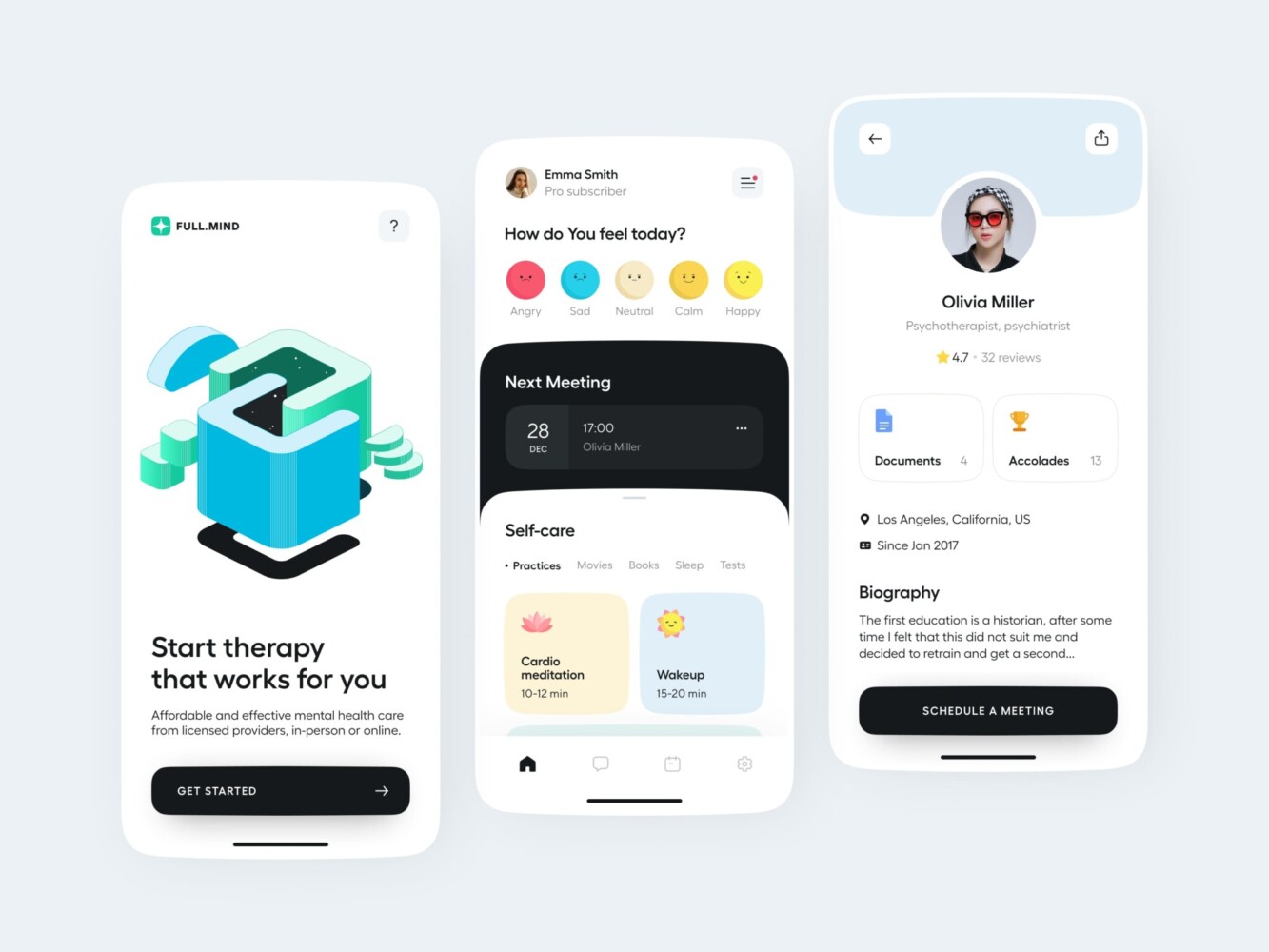
Healthcare app design concept by Shakuro
How to Choose an AI Healthcare Solutions Development Company
Choosing the right partner is arguably harder than building the product itself. You’re not just hiring coders; you’re inviting someone into a highly regulated, high-stakes environment. A generic software shop might build a beautiful app, but if they don’t understand HIPAA or clinical workflows, you’re in trouble.
When looking for an AI healthcare solutions development company, you need to look past the shiny portfolio pieces. Dig into how they think about risk, data, and real-world usage.
What Development Services Should Include
A full-service partner shouldn’t just throw code at you. The process needs to be holistic.
It starts with discovery. They need to understand your specific problem, not just the tech solution. Then comes data assessment. Can they actually work with the data you have? Or will they promise the moon and deliver nothing because the data is trapped in PDFs?
UX is critical. As we discussed, healthcare users are stressed. The design needs to support them, not add cognitive load. Engineering covers the actual build, but it must include evaluation. How do they test for bias? For accuracy?
Integration is where most projects stall. Your partner needs proven experience connecting to EHRs via HL7/FHIR. Deployment isn’t just pushing to a server; it’s ensuring compliance and security. And support? It’s ongoing. Models drift. Bugs happen. You need a team that sticks around. These are the core AI healthcare solutions development services you should expect.
Questions to Ask Before Signing
Don’t be shy. Ask the tough questions early.
- Who owns the data and code? This is huge. If you part ways, do you keep your model? Your trained weights? Your cleaned dataset? Make sure the contract is clear.
- How is performance evaluated? Do they have a standard framework? Do they test across different demographics? “90% accuracy” means nothing without context.
- Who reviews clinical requirements? Do they have clinical advisors on staff? Or are they just guessing what doctors need?
- What happens when the model or provider changes? AI moves fast. If the underlying LLM updates or changes pricing, how does that affect your product? Who handles the migration?
What Relevant Experience Looks Like
Look for evidence, not just claims. Have they delivered integrations with major EHRs before? Can they show you a validation plan that makes sense? Do they understand the difference between a wellness app and a clinical decision support tool?
Experience in healthcare workflow understanding is key. They should know that a nurse doesn’t have ten minutes to click through five screens. They should know that data privacy isn’t a feature; it’s the foundation.
For example, companies like Shakuro offer specialized AI development and healthcare services that bridge this gap. Their relevance lies in combining technical AI expertise with a deep understanding of user-centric design and regulatory constraints. They don’t just build algorithms; they build products that fit into the complex reality of healthcare systems. Checking out their approach can give you a benchmark for what a mature AI healthcare solutions development company should offer.
Ultimately, choose a partner who asks as many questions as you do. If they seem too eager to say “yes” to everything, run. Healthcare AI requires caution, precision, and a whole lot of humility.
Start with One Workflow and a Clear Validation Plan
Look, we’ve covered a lot. The regulations, the data mess, the tech stacks. It’s enough to make anyone want to go back to building simple to-do apps. But healthcare needs better tools. And if you’re reading this, you probably have an idea that could actually help someone. Don’t let the complexity paralyze you. Just start smart.
First, choose a measurable problem. Stop trying to fix “healthcare.” Pick one tiny, painful workflow. Maybe it’s reducing the time nurses spend on discharge summaries. Maybe it’s cutting down no-shows for a specific clinic. Small wins build momentum.
Second, confirm data readiness. Before you hire a single developer, look at your data. Is it there? Is it clean? Can you actually get access to it? I’ve seen too many great ideas die because the data was locked in a legacy system nobody knew how to query. Be honest with yourself here.
Third, define how the team will judge success. Not just “it works.” But specifically: what does better look like? Is it 15% faster charting? Is it a 10% drop in billing errors? If you can’t measure it, you can’t improve it. And investors definitely won’t believe it.
Healthcare AI solutions development is a marathon. It’s messy, it’s hard, and it’s incredibly rewarding when you get it right. So take a breath, pick your battle, and start building.
If you need help developing your healthcare product, reach out to us.
Frequently Asked Questions
1. How long does healthcare AI solutions development take?
It varies, but don’t expect overnight success. A feasibility prototype might take 2–3 months. A solid production MVP usually needs 6–9 months. If you’re building a complex platform with multiple EHR integrations, think 12+ months. Healthcare moves slower than other industries because of the validation and compliance layers.
2. Do we need to train a custom AI model?
Probably not. Most startups can get 80–90% of the way there using existing APIs or pre-trained models with some fine-tuning. Custom training is expensive and data-hungry. Only go that route if you have unique proprietary data that generic models completely fail to handle. Start simple.
3. Can AI integrate with our existing EHR or EMR?
Yes, but it’s rarely plug-and-play. Most major systems (Epic, Cerner, etc.) support HL7 or FHIR standards, which makes it possible. However, every hospital has its own quirks, security gates, and API limitations. Expect integration to be one of the most time-consuming parts of the build.
4. How do you evaluate a healthcare AI solution before launch?
You test it against real-world scenarios, not just clean lab data. Look at accuracy, sure, but also check for bias across different patient groups. Run usability tests with actual clinicians to see if it fits their workflow. And if it’s clinical, you’ll likely need a formal validation study to prove safety and efficacy.
5. What affects the cost of custom AI solutions for healthcare?
Data preparation is a huge one—cleaning and labeling medical data is pricey. Integrations with legacy systems add complexity. Security and compliance requirements (like HIPAA) mean more engineering hours. And don’t forget the UX; designing for trust in healthcare takes extra iteration. The more “custom” and integrated it is, the higher the bill.
6. What support does a healthcare AI product need after launch?
It’s not a “set it and forget it” thing. You need continuous monitoring for model drift (performance drops over time). You’ll need a plan for regular retraining or updates. Plus, standard tech support for bugs, plus a channel for clinical feedback. If the AI starts acting weird, you need to know immediately.