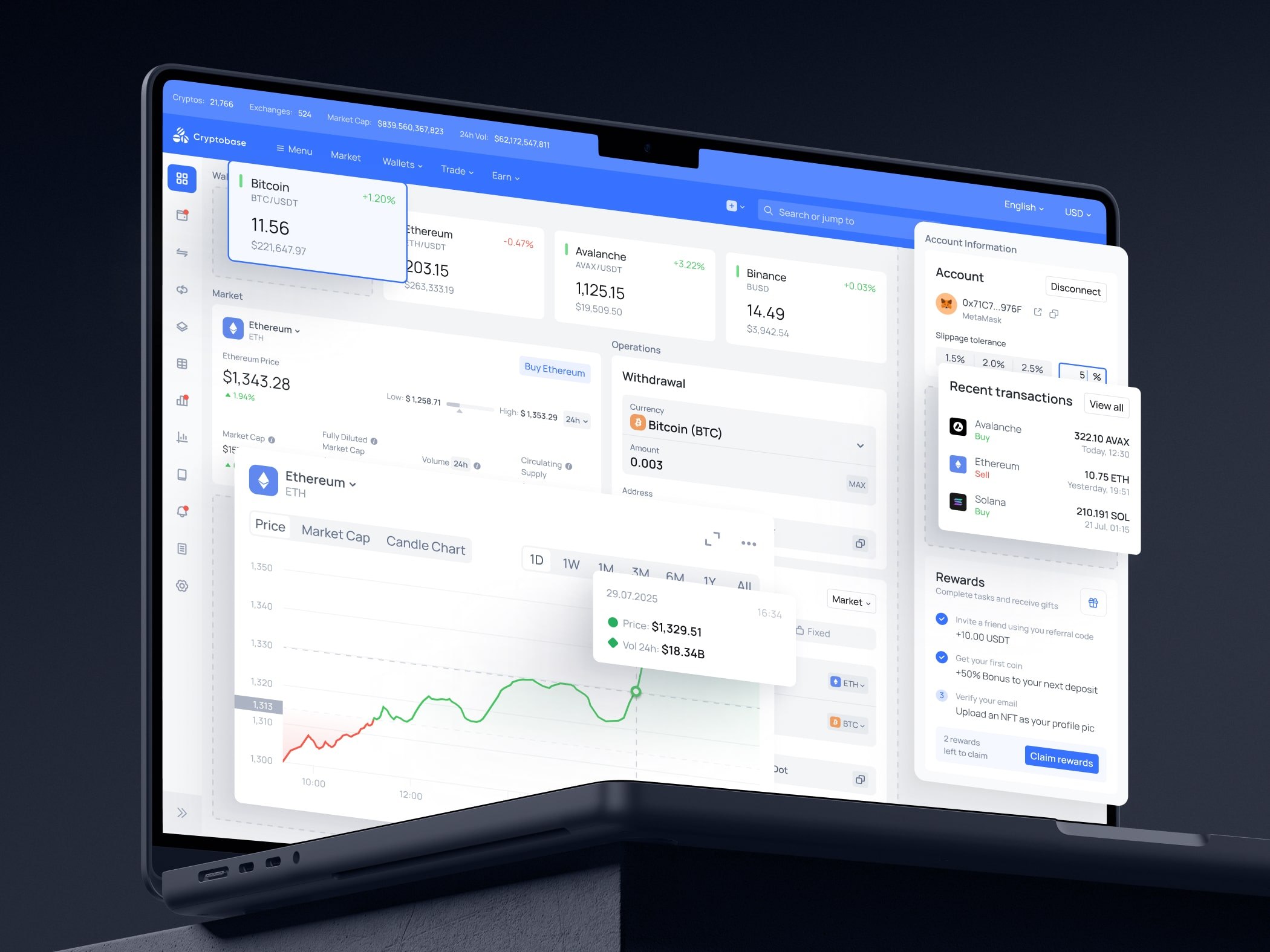
A DeFi platform is a contract that holds funds and moves them when a condition is met. Lending against collateral, a pool that borrowers draw from, and a lock with a payout the operator named, or with no payout at all, are that product. A wallet a person installs is not. A venue where one order meets another is not. A dApp that does not hold funds under those rules is not.
This page is for a company that wants that protocol built. Name the action, the chain, the collateral rule, and the price source before anyone opens a repository. The web surface is Web3 web development. The phone surface, if the brief names one, is Web3 mobile app development. Get in touch with that list. This page does not publish a rate card, a build duration, a yield figure, or a promise that the protocol is safe.
Key storage is crypto wallet development. A book, a match, and a deposit into a venue are cryptocurrency exchange software. A dApp that is not this protocol is blockchain app development. Do not add those products because the brief contains the word DeFi. An earlier edition of this page was recorded as a podcast episode. The recording is not this revision.
What Is a DeFi Platform?
Ethereum.org describes the replacement in one sentence. In DeFi, a smart contract replaces the financial institution in the transaction. A smart contract is a type of Ethereum account that can hold funds and can send or refund them based on certain conditions. No one can alter that contract when it is live. It will always run as programmed. The page is What is DeFi?.
That is a design constraint, not a comfort. The same page says there is still a need to trust the people who can read the code. A contract that cannot be edited will also keep a mistake. DeFi platform development is the work of writing those conditions down, and of building the screen that shows them before a person signs. It is not a forecast of what the position will be worth later.
A DeFi app is the screen. The platform is the contract the screen talks to. How to create a DeFi app, as a hire, starts with the action the contract performs. A screen without that action is a demo. Blockchain development for a DeFi protocol is the contract and the chain connection. It is not a reason to fold in a wallet, a venue, or a generic dApp.
Types of DeFi Platforms
Four protocol types cover the briefs that belong on this page. The choice is which condition moves the funds. It is not a ranking of which type will earn more.
| Protocol | What to write down |
| Pool lending | Lenders add funds to a pool. Borrowers draw from that pool. Name the asset, the collateral, and what happens when the price feed says the collateral is no longer enough. |
| Named loan | One borrower draws from one lender. Ethereum.org calls this the peer-to-peer form. Name both sides, and name the collateral the lender receives if the loan is not repaid. |
| Lock and reward | A token is locked for a period the operator sets. Any reward is a number in the contract, not a result this page can print. Name the number, or say there is none. |
| Liquidity inventory | The contract holds two assets and reprices from its own inventory. Name the pair and the fee. A venue that matches orders on a book is the exchange article, even if the match is on-chain. |
Ethereum.org splits lending the same way: a borrower draws from a specific lender, or lenders provide funds to a pool that borrowers draw from. In the collateral form, the borrower puts up collateral that the lender automatically receives if the loan is not repaid. That seizure is the product. It is not a side effect to hide in a footnote.
A swap that takes one token and returns another is still exchange software, linked above. A collectible market beside the protocol is NFT marketplace development. A trading terminal that sends orders to a venue is trading software development. Keep those on their own pages.
Core components of DeFi platforms
The parts that have to exist are few. Skip one, and the screen shows a position the contract does not have.
- Conditions. The rules that move funds: collateral ratio, repayment, lock period, fee. Custom smart contracts for decentralized finance and lending platforms are this list, written so a second person can read it. They are not a library dropped in because a competitor has one.
- A price source. Ethereum.org’s oracle page says a lending protocol needs a market price for the asset deposited as collateral, so the contract can value that collateral and decide how much can be borrowed. Without an oracle, a contract is limited to data already on the chain. The page is Oracles.
- Positions. What the contract believes each account supplied, borrowed, or locked. The wallet balance and the protocol position are two numbers. The screen should say which one it is showing.
- A refusal. The condition fails, and the contract does not move the funds. The screen shows the refusal before the person signs. A button that only fails after the signature is a defect.
- An operator view, if the brief names one. A pause, a bad price feed, a position that cannot close. If the only view is a chart, the operator is blind. A pause is a switch you specified. It is not evidence the protocol is safe.
The frame below is a trading-app and wallet design study. It is not a lending contract, and it is not evidence that a protocol was delivered.
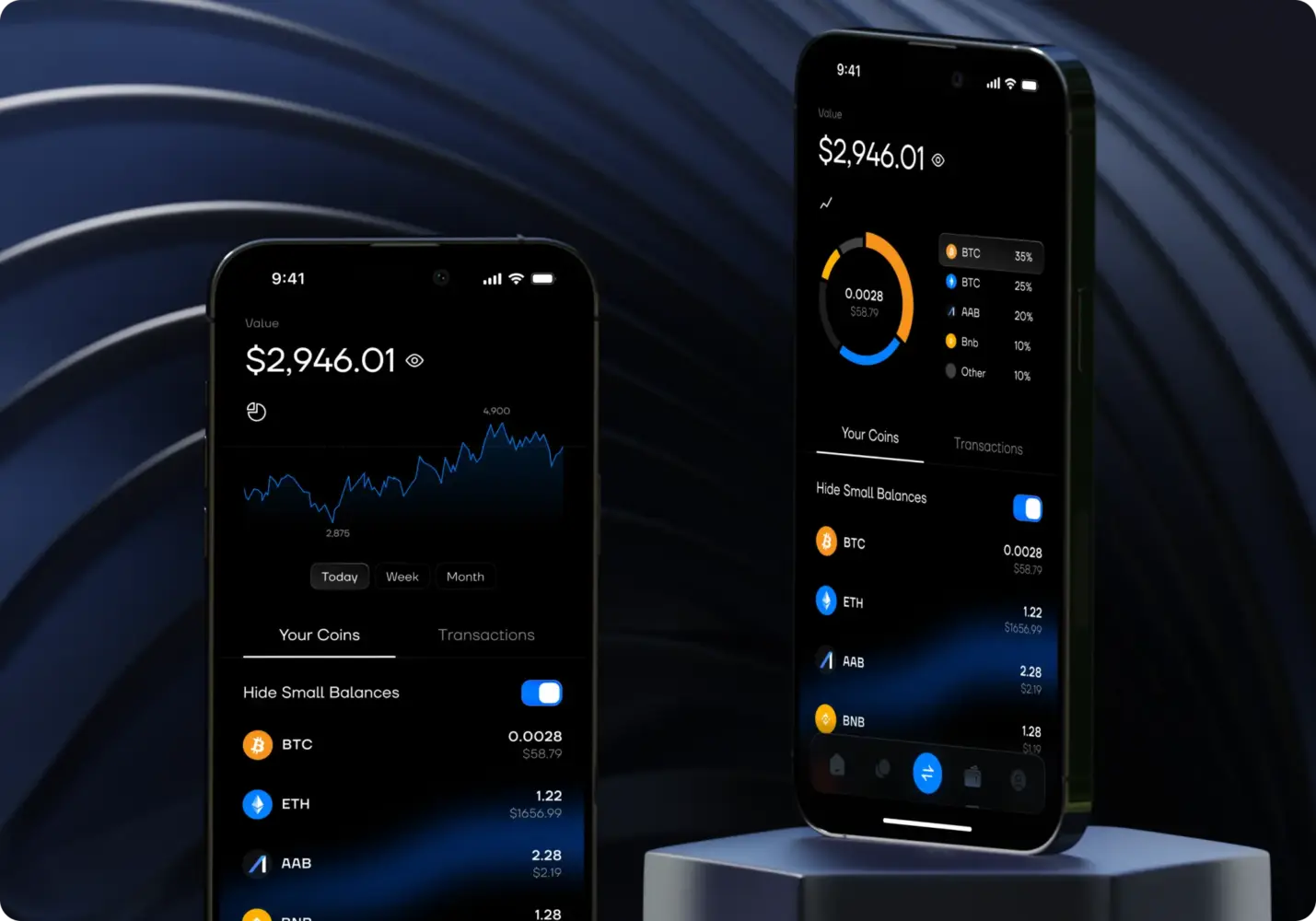
Crypto Trading App and Wallet Experience by Shakuro
Key Features of a DeFi Platform
Features follow the protocol type. A pool needs a collateral rule and a price. A lock needs a period and a reward number, or an explicit statement that there is no reward. Adding a wallet app, a matching book, and a second chain because a competitor has them is how a brief becomes three products.
Smart Contract Infrastructure
The contract is the account that holds the funds. Ethereum.org’s line is the spec: it sends or refunds based on conditions, and no one can alter it once it is live. Write the conditions before deploy. After deploy, a bug stays.
The infrastructure a protocol needs for condition-based execution is the contract, the price source, and a way to show the condition before the signature. Firms that also want staking, a token swap, and a wallet in the same brief are naming three products. The lock can stay here if the reward number is written down. The swap is the exchange article. The wallet is the wallet article.
An admin key that can move funds is a custody decision. Write who holds it, and what it can move. Calling the key a safety feature does not make the seizure, or the mistake, less final. This page will not say the contract is safe because an admin exists, and it will not say the contract is safe because an admin does not exist.
Liquidity Pools
A pool is inventory the contract holds. Lenders add an asset. Borrowers draw it, against collateral, under the ratio you named. Or two assets sit in the contract and the price moves as the inventory moves. Those are different contracts. Name which one.
The software can show the inventory and the ratio. It cannot create the lenders. If the pool is empty, the screen should say so. A picture of a deep pool is not a lender.
A reward paid to people who add inventory is a number in the contract. This page does not publish that number, and it does not say a person should add funds to earn it. If the brief says “yield” and does not name the number, the source of the number, or who pays it, the brief is not ready.
Tokenomics and Governance
A token is optional. A protocol can lend one existing asset against another without issuing a new token. A vote token, a fee switch, and a treasury are extra products. Each one needs a rule: who can change a parameter, and what they cannot change.
Because the live contract cannot be edited, a change needs a path you specified before deploy. A new contract, with a migration you can explain. Or an admin function, with the custody note above. “The community will decide” is not a path. Name the address that can call the change, or say there is no change.
Do not print a supply, a vesting cliff, or a reward rate on a page that has not seen the client’s numbers. Those figures are the client’s. A blog post that invents them will be quoted later as if they were a plan.
Wallet Integrations
The protocol does not store the keys. A person connects a wallet, reads the condition, and signs. The connection is a few calls: which account, which chain, which transaction, and a refusal the wallet already showed. Building the wallet itself is the other article.
Write which wallets the brief actually supports, and what the screen does when the person is on the wrong chain. A button that says “connect” and then fails inside the contract is the refusal, delivered late. Show the chain and the condition first.
The published ATX case is a mobile trading-app and wallet design. The case page describes the client’s product. It does not describe a contract we wrote, and it is not a reason to treat a wallet screen as this protocol. The frame below is the Aurox brand and site study. The case page mentions a protocol as the client’s product. The frame is not that protocol.
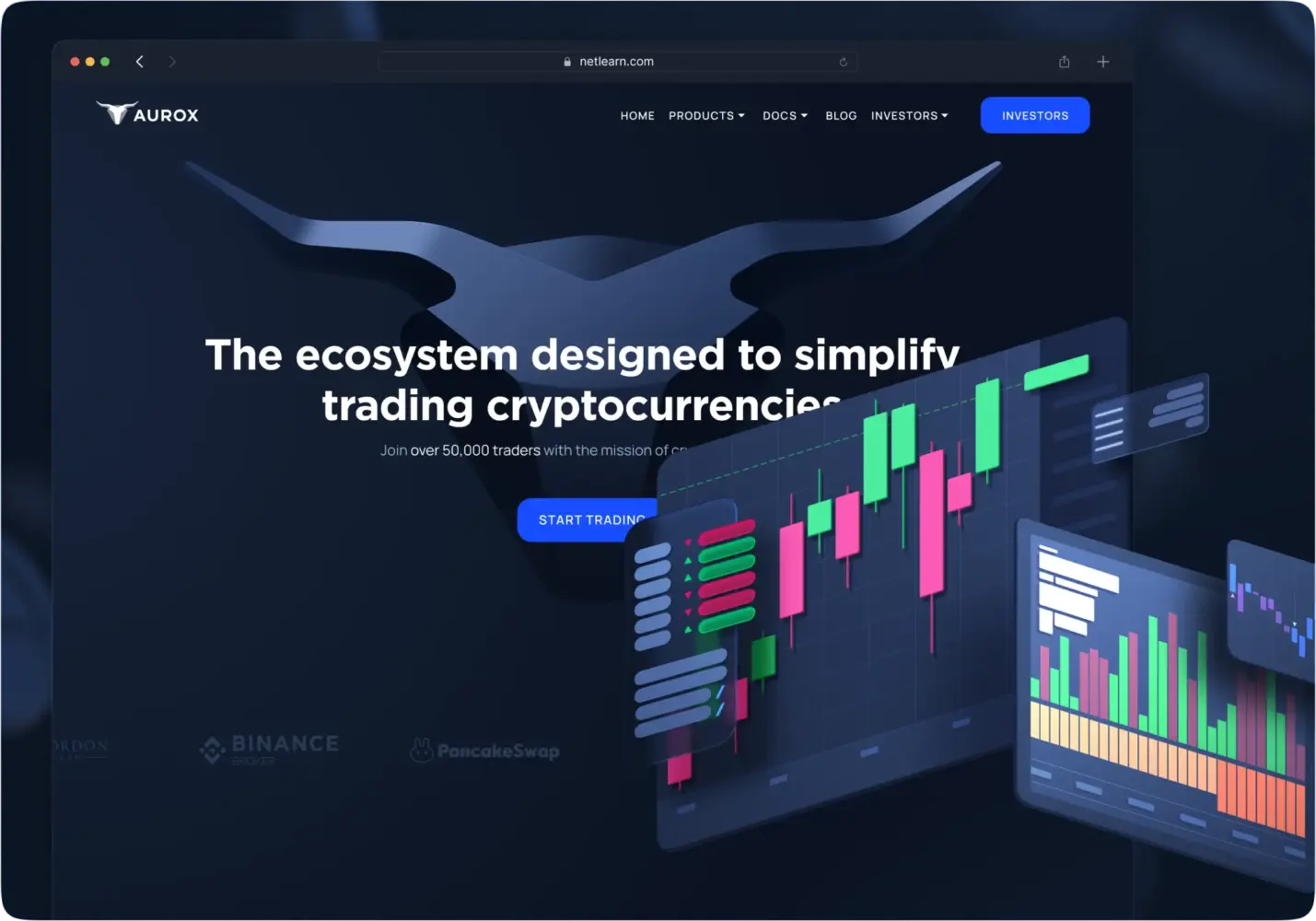
Premier Crypto Trading Ecosystem Design by Shakuro
Cross-Chain Compatibility
A second chain is a second deployment. It has its own contract, its own price feed, and its own refusal. A bridge that moves the asset between them is a separate risk: the bridge can fail, and the two contracts will not agree. Write the bridge in, or leave it out. Do not treat “multi-chain” as a checkbox that removes that question.
Start on the chain the users already have the asset on. Add another chain when the first contract’s conditions are the ones you meant, not when a slide needs a second logo.
DeFi Platform Development Process
The order below is the order that keeps the contract from being written twice. Strategy names the action and the conditions. Design names the screen a person sees before signing. The stack comes after those two, not before. How to build a DeFi app, for a company hiring the work, is this order. It is not a repository to clone.
1. Product Strategy and Protocol Design
Write five lines before anyone picks a language. Which of the four protocol types. Which chain. Which asset is supplied, and which is borrowed or locked. What the price source is. Whether anyone, including the operator, can move funds outside the conditions.
Who the protocol is for changes the screen, not the slogan. A desk that supplies a pool needs the inventory and the ratio. A person who borrows needs the collateral, the price, and the refusal, in that order, before the signature. A market for one asset the operator issued is a smaller contract, not a smaller seizure question.
Country of operation is a counsel question. This page does not say which permission a protocol needs, and it does not tell a company to launch in a given country. The engineering question is which checks and records that counsel requires, if any. A team that answers the country question with a stack diagram is answering the wrong question.
2. UX/UI Design for DeFi Applications
The screen that matters is the one before the signature. Asset, amount, collateral, price, ratio, and what the contract will do if the ratio breaks. If any of those are missing, the person is signing a sentence they have not read.
Two other screens matter, and briefs skip them. The refusal, with the reason. The position after the transaction, including a liquidation if the feed has already crossed the line. A chart with no refusal is a demo.
The web screen is the Web3 web development work linked above. The published service page describes DeFi interfaces, dashboards, wallet flows, and contract interactions. That is the surface. It is not a published lending protocol, and it is not a certificate. The phone screen, if you named one, is the Web3 mobile app development work linked above. A phone app that only repeats the web form is a second client of the same contract. It should not keep a private copy of the position.
The frame below is a landing-page study. The caption names an exchange marketing site. It is not a venue we shipped, and it is not this protocol.
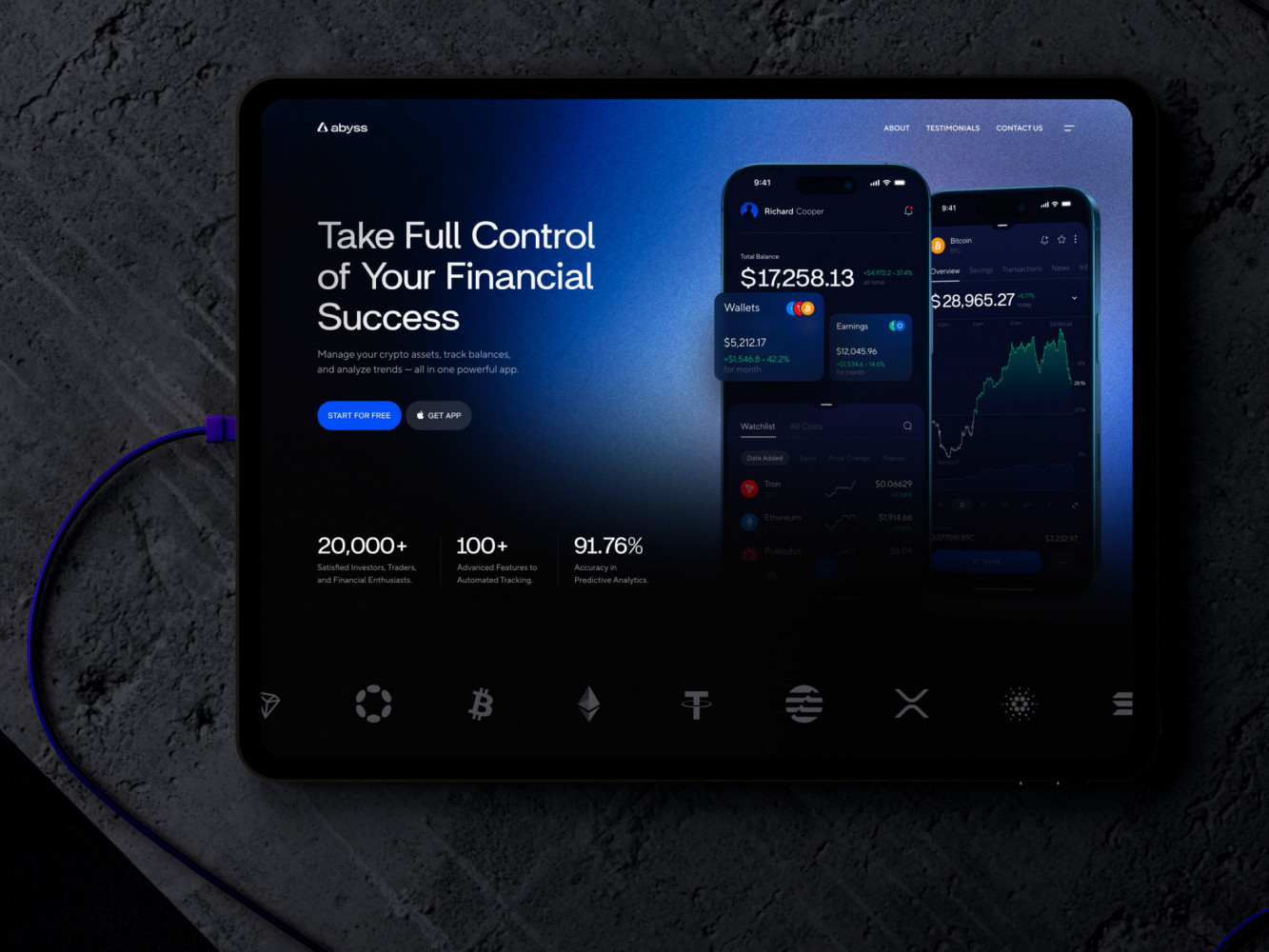
Landing Page Design for Crypto Exchange Platform by Shakuro
3. Choosing the Technology Stack
The contract language follows the chain you named in the strategy section. Naming a framework before that chain is a guess. The web surface can be a separate client. The published Web3 web development page lists React, Next.js, and TypeScript for the site, and Python or .NET where a backend is not the contract. Those are the service page’s words for the site. They are not a protocol stack, and they are not a reason to skip the conditions.
An indexer, a wallet connection, and a price feed fail on their own clocks. The screen needs a place to show a feed that has gone quiet, and a place to show a signature that has not confirmed. Picking a language does not answer that. Name the failure before you name the library.
4. Smart Contract Development and Security
The heading says security. The work is a list. Which function moves funds. Which condition must be true. What the contract does when the price feed is stale, zero, or far from the last price you accepted. Who, if anyone, can pause. What a pause stops, and what it does not stop.
Ethereum.org’s oracle page states the failure in plain language. A centralized oracle can be wrong, and there is no way on the chain to confirm the figure. If the oracle is corrupt, the contract executes on bad data. For a lending protocol, bad data is a liquidation of the wrong position, or a loan the collateral does not cover. Name the feed. Name what the contract does when the feed is late. That is the work. It is not a promise that the feed, or the contract, is safe.
An external reading of the contract, before value sits in an account that cannot be edited, is a separate engagement. This page does not issue that reading, and it does not claim one has been done for a client. Ask who reads, and ask to see the issues they filed. A slide that says “audited” is not the reading. Ethereum.org’s other line still stands after the reading: someone has to be able to read the code. A PDF does not retire that.
5. Blockchain Integrations
Connect in the order the money moves. The chain you named. The price source you named. The wallets you named. Then a second chain, a bridge, or a phone app, only if the brief named them.
Each connection needs a refusal path. A feed that sends zero. A wallet on the wrong chain. A transaction that does not confirm. The contract should refuse or wait, not move funds from the bad event.
The wallet product, the exchange venue, and a generic dApp stay on the pages linked at the top. Connecting them later is a new brief. It is not a hidden part of this one.
7. Deployment and Maintenance
The outline keeps this number. There is no step here that signs off the contract as safe, and this page will not insert one. Deployment is the moment the contract can hold funds. After that, a release cannot rewind a liquidation. You need a way to ship a screen fix without pretending the live contract was edited. It was not. Ethereum.org already said it cannot be altered.
Maintenance is the feed, the indexer, the screen, and the parameters you left changeable. It is not a promise of uptime this page can print. Name who is paged when the feed goes quiet, and what they can do at night without an admin key the brief said nobody has.
A first public use is one action, one chain, one collateral, and a cap on the inventory small enough that a bad feed is a small seizure. It is not a launch announcement, and it is not a reason for anyone to supply funds.

Cost of DeFi Platform Development
There is no rate card for DeFi platform development on this page. An earlier edition listed factors and did not print a price. This revision will not add a price range or a duration. The estimate follows the factors below, and it is a conversation after those factors are written down.
| Factor | What it changes |
| Protocol type | Pool lending, a named loan, a lock, or inventory that reprices itself |
| Chain | The contract language and the confirmation the screen must wait for |
| Collateral rule | What is seized, at what ratio, and whether the feed can trigger it |
| Price source | Who publishes the figure, and what the contract does when it is late |
| Admin path | Whether anyone can move funds or change a parameter after deploy |
| Surfaces | The website, the phone app, or a named subset of the two |
| Second chain | A second deployment, and a bridge only if you wrote the bridge in |
Send the factor list through get in touch. Do not attach a price you invented, and do not expect one in the reply until the protocol type and the chain are written down. The calculator below is a prompt for that conversation. It is not a published tariff.

Common Challenges in DeFi Platform Development
Four problems show up after the screens look finished.
The feed is late and the contract is not. A liquidation fires on a price that was already wrong, or a loan opens against collateral the feed has not updated. Halt the action when the feed is older than the threshold you set. Show the halt on the signature screen. Ethereum.org’s note is the reason: if the oracle is corrupt, the contract executes on bad data.
The screen and the position disagree. The wallet shows a balance. The protocol shows a position. A person withdraws the wallet balance and the position is unchanged, or the reverse. Label both numbers. Do not add them.
The conditions were written after the deploy. The live contract cannot be altered. A fix is a new contract and a migration you can explain, or it is not a fix. Discovering the collateral rule in production means the first users took the unfinished rule.
The brief grew a second product. A wallet app, a matching venue, or a generic dApp appeared because a competitor has one. Those are the other pages. Adding them here does not make the protocol safer, and it does not make a reward more likely. This page does not discuss returns.
The block below is the studio. It is not a headcount, and it is not a claim that a protocol team has already been assigned.
Our Experience in Web3 and Fintech Development
Published work is narrower than a lending protocol, and this page will not widen it. ATX is a mobile trading-app and wallet design. Aurox is brand, website, and visual language for a trading ecosystem. The Aurox case page mentions a DeFi protocol as the client’s own product. The published Shakuro work on that page is not that protocol. Abyss is UI and UX for a cryptocurrency app. The case page does not describe a collateral rule or a price feed. Culture Pulse is a collectibles brand: physical items, an NFC chip, and a token as a certificate. That is marketplace and brand design, not a pool.
The frames in this section are those design studies. They show how a crypto screen can be drawn. They do not show a production contract, a liquidation, or a feed.
Selected Works
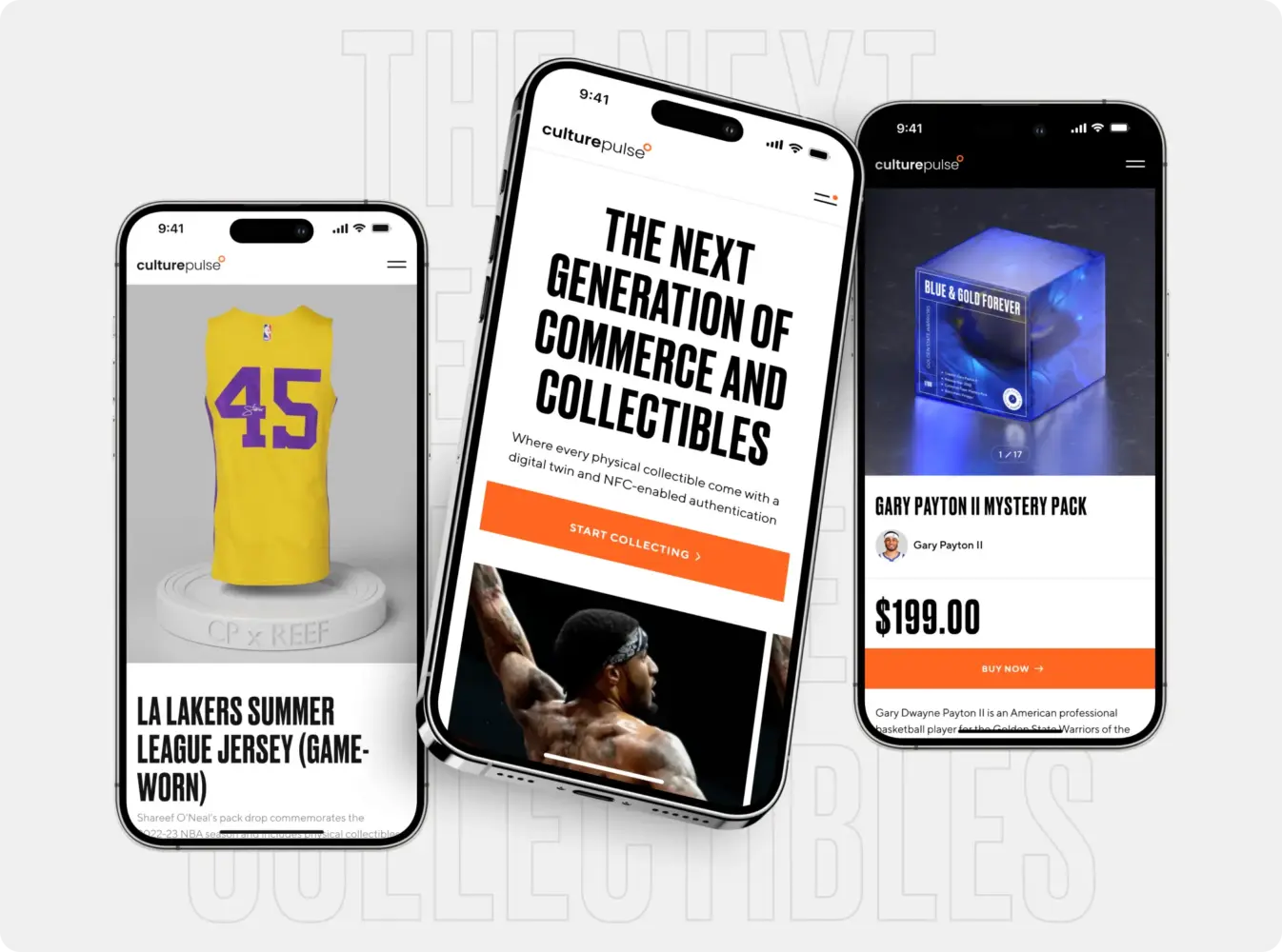
Revolutionary Web3-infused Technology and Collectibles Brand by Shakuro
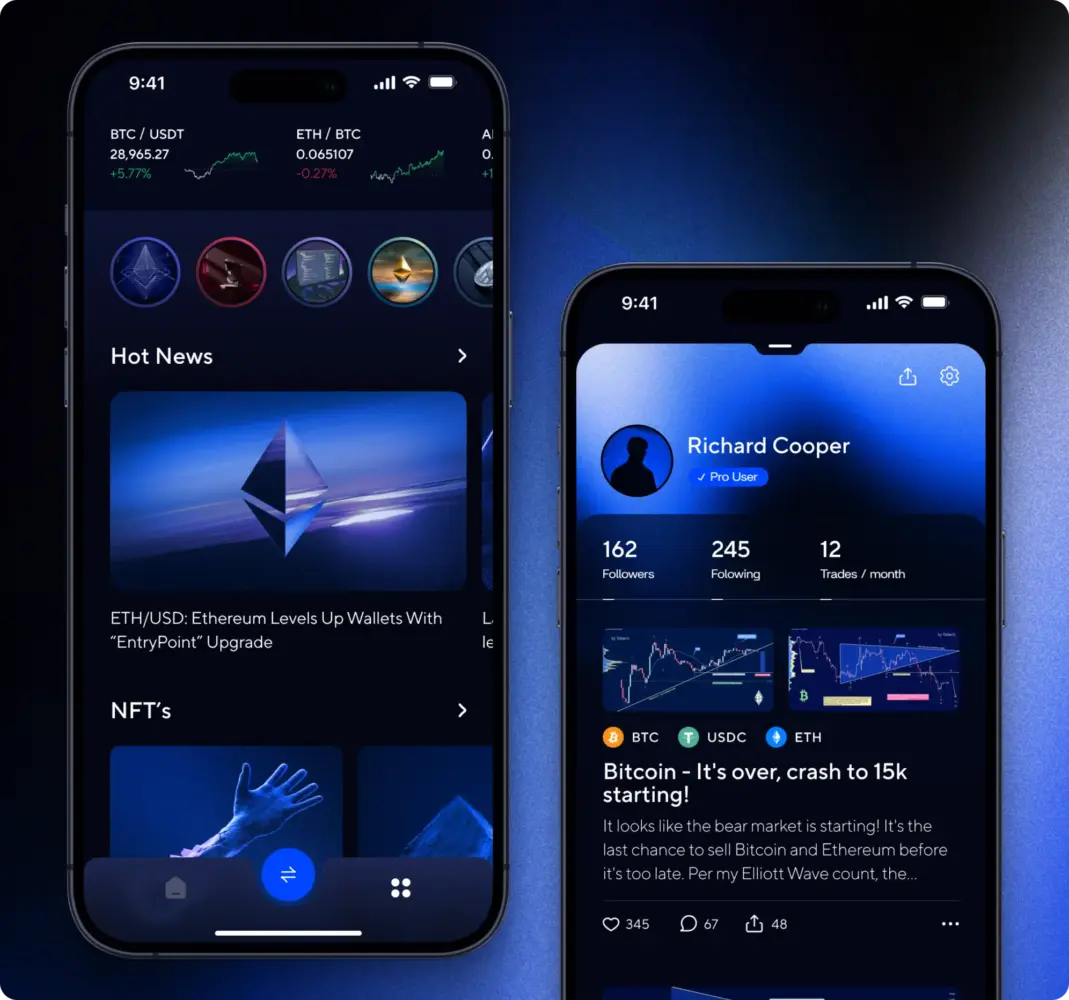
Crypto Trading App by Shakuro
What you can hire from the published service page is the web product around a protocol you have specified, including the DeFi interfaces that page names. The phone product is the other service, if you named a phone. The wider map of product types is Web3 app and software development. That page lists swaps, staking, lending, and liquidity pools among the products it describes. A swap is still the exchange article. This page is the contract that holds funds and moves them when a condition is met. Ask to see the design-study limit in writing before you treat a frame as a protocol.
Why Work with a DeFi Development Company
Hire for the protocol, not for a stack list. A useful partner can say which of the four types they are being asked to build, can separate the contract from key storage, and can show the condition on the screen before the signature. A useful partner can also say what they have not shipped. On this site, that sentence is the design-study limit above.
Ask four questions before you sign. Which condition moves the funds. What the contract does when the price feed is late. Who, if anyone, can move funds outside those conditions. Which neighboring product they will refuse to hide inside the same contract. A team that answers all four with a claim of long experience has not answered.
Shakuro can take the Web3 web development surface, and the Web3 mobile app development surface if you named a phone. The contract conditions are scope you name in the same conversation. That conversation starts with the factor list, not with a tariff, not with a yield figure, and not with a country recommendation. Get in touch when the list exists.
FAQ
What drives the cost of decentralized finance platform development?
The factors in the cost table: protocol type, chain, collateral rule, price source, whether anyone can move funds after deploy, surfaces, and a second chain only if you wrote it in. There is no universal price on this page. A range invented before those factors are written down is not an estimate.
What should an MVP of a decentralized finance platform include?
One action, one chain, one collateral, one price source, a screen that shows the condition before the signature, and a refusal when the condition fails. Add a phone app, a second chain, a new token, or a reward number only if the brief names them. The wallet, the exchange venue, and the generic dApp stay on their own pages.
Why are security audits necessary in decentralized finance platform development?
The live contract cannot be altered. A second reading, before value sits in it, is how you find a condition you did not mean. The reading does not make the protocol safe, and this page does not issue one. Ask who reads, and ask to see the issues. Ethereum.org’s note remains: someone still has to be able to read the code. A slide that says “audited” is not that reading, and it is not a reason to supply funds.
Which tech stack is used for decentralized finance platform development?
The chain you named decides the contract language. This page will not pick a chain for you. The published Web3 web development page lists React, Next.js, and TypeScript for the site, and Python or .NET where a backend is not the contract. The price feed and the wallet connection are integrations you named, not a stack slogan.
Should a decentralized finance platform support multiple blockchains?
Not by default. A second chain is a second contract and a second price feed. A bridge is a separate failure. Add it when the first contract’s conditions are the ones you meant. A logo row is not that reason.
How do I choose a development partner for decentralized finance platform development?
Ask which condition moves the funds, what happens when the feed is late, and which product they will refuse to hide in the same contract. Ask what they have not shipped. On this site the published crypto work named above is design, not a lending protocol. Then send the factor list through get in touch. Do not accept a duration or a yield figure from a page that has not seen the list.
Final Thoughts
Before you write, check five lines. The protocol is a pool, a named loan, a lock, or inventory that reprices itself. The chain is named. The collateral rule is named, including the seizure. The price source is named, including the late-feed rule. You know whether anyone can move funds outside those conditions.
If a line is blank, the contract will be guessed. If the brief has grown a wallet, a matching venue, or a generic dApp, put those back on their own pages. If you want a view on returns, this is the wrong page.
When the five lines are filled, use the form linked in the opening and again in the cost section. Bring the list. The invented price, the yield figure, and the question of whether the protocol is safe stay off this page.
Sources
- What is DeFi? on ethereum.org. A smart contract replaces the institution in the transaction, can hold funds, and sends or refunds them based on conditions. No one can alter that contract when it is live. Lending can be peer-to-peer or pool-based. If a loan is not repaid, the lender receives the collateral. Someone still has to be able to read the code.
- Oracles on ethereum.org. Oracles bring off-chain data to a contract. A lending protocol needs a market price to value collateral. If the oracle is corrupt, the contract executes on bad data. Without an oracle, a contract is limited to data already on the chain.
- ATX, Aurox, Abyss, and Culture Pulse, for the published scope of the design work named above. The service pages linked in the opening describe the web and mobile surfaces, not a completed lending protocol.