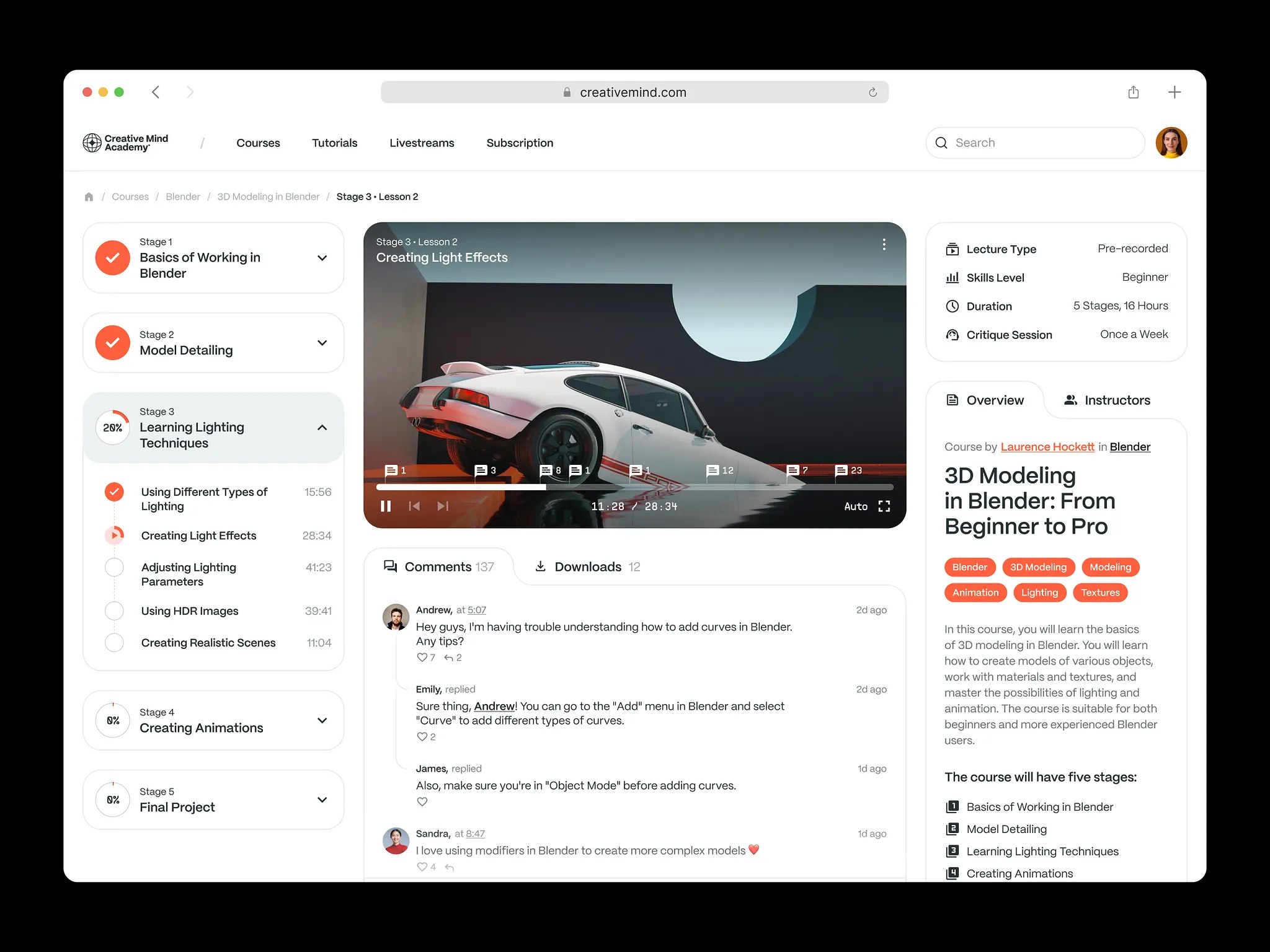
Corporate training platform development is the build of an internal system that assigns training by role, keeps a record of who finished it, and reads the employee record from the HR system the company already runs. Custom corporate training software development is the right commission when those assignment rules belong to the company, not to a vendor template. A course catalog with a completion checkbox is a different buy.
Shakuro builds this as e-learning web development for companies that train employees, partners, or both. The work sits in e-learning software. If the roles and the first workflow are already written down, write to us with that list. We scope the first release from it. We do not quote a universal price, and we do not treat a published school platform as proof that an internal compliance desk is already built.
For those who prefer to listen rather than read, this article is also available as a podcast on Spotify.
What Is a Corporate Training Platform?
A corporate training platform is the place where a company assigns required learning, stores the materials, and can show who finished what. It is internal software. It is not a public catalog of courses, and it is not the HR system that already holds payroll, time off, and the employee record.
Four jobs show up on almost every brief. Onboarding: a new hire in one department does not get the same sequence as a new hire in another. Upskilling: a role change has to swap the required set, not leave the old one attached. Compliance records: the company needs the date, the result, and the expiry, not a verbal assurance that someone “did the training.” Knowledge that has an owner: a procedure that currently lives in one person’s inbox has a named editor and a place in the sequence.
The platform does not make the company legally compliant. It stores the evidence the company decided to keep. Naming a statute, a retention period, or an audit format is a decision for the company’s counsel and the team that owns the policy, not a feature a vendor can switch on. HR software remains the system of record for the person. This platform reads that record and writes training status back when the two sides agree on the fields.
| Situation | What to commission |
| Assignment follows department, role, and approval. The record has to survive a review. | Custom corporate training software. This page. |
| A course catalog and a completion checkbox match the vendor’s roles. | An off-the-shelf product. How an LMS development project is shaped is a separate article. Do not brief both as the same build. |
| Payroll, time off, and the employee record itself. | HR software. This platform consumes that record. It does not replace it. |
| A public store that sells courses. | An online course platform. Not an internal desk. |
| A marketplace where many providers sell courses. | An edtech marketplace. Buying a ready-made catalog from a vendor is a purchase, not this build. |
| Reports that go past who finished, into patterns across courses and time. | Learning analytics. A later scope, not the first release of this platform. |
A ready-made catalog such as Udemy Business is a reasonable buy when the company wants general courses and does not need its own assignment rules. It is the wrong buy when the content is an internal procedure, a certification with an expiry, or a sequence that changes when someone moves departments.
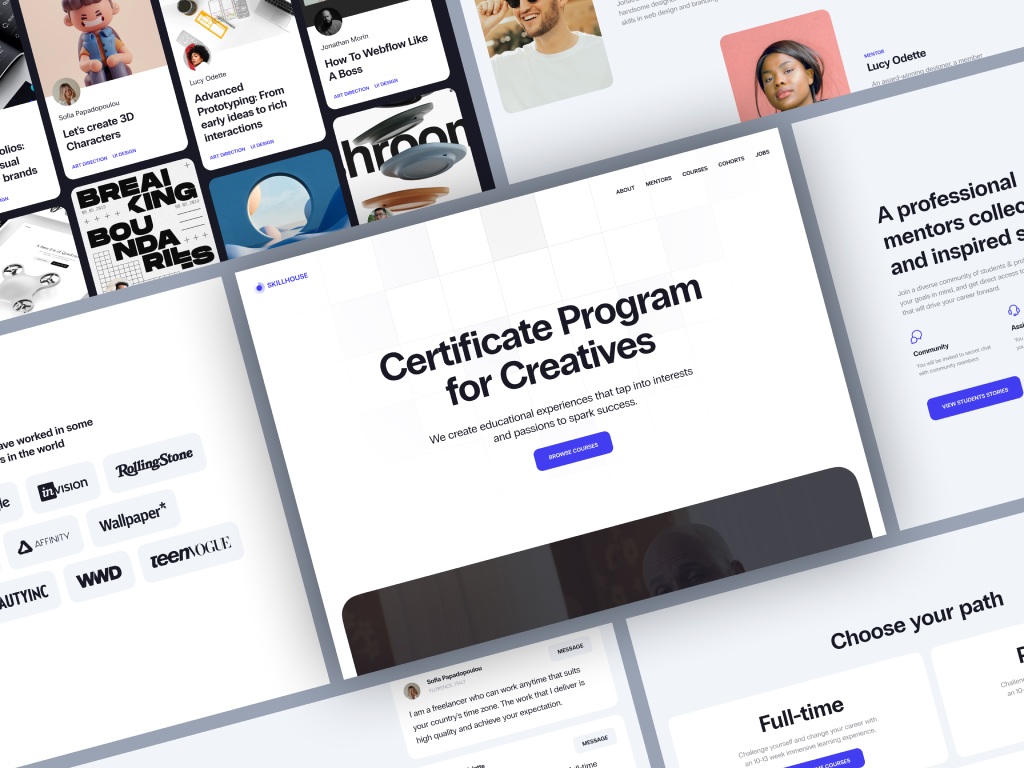
Skillhouse e-learning platform, a design by Shakuro. Not a shipped corporate training system.
Types of Corporate Training Platforms
The type is set by who is allowed in, not by the visual style of the course player.
An internal platform serves employees. The identity provider the company already uses is the front door. Departments and roles come from the HR feed. A manager sees their team, not the whole company, unless that right is explicit.
A compliance-record platform is the same product with a stricter log. The useful fields are assignment date, completion date, score if there is a gate, expiry, and who reassigned the course. A certificate image without those fields does not help an internal review.
An extended platform also trains partners, vendors, or customers. Each outside organization needs its own space, or one company will see another’s people. That separation is a different estimate from an internal desk, and it starts to look like an educational SaaS platform. Do not fold it into the first release because the word “partners” appeared in a workshop.
Core Components of a Corporate Training Platform
Five parts have to exist before the first group of employees is enrolled. Everything else can wait.
- Content with an owner. Someone can publish, replace, and retire a lesson without a developer. A lesson with no owner goes stale, and nobody can say who is allowed to replace it.
- Roles. Learner, manager, content owner, and admin are the usual four. A fifth role is a reason to stop and name who it is, not a default.
- Assignment rules. Who gets which sequence, what blocks the next step, and what happens on a role change.
- A completion record. Started, finished, overdue, score, expiry. That list is this product. Patterns across courses are not.
- An HR feed. At least employee id, department, role, manager, and start or end date. If those fields are empty in the source, the platform cannot invent them.
Key Features of Corporate Training Platforms
Features are the workflows the first release must finish, not a catalog of screens. If a feature does not change who is assigned, what they must finish, or what a manager can see, it waits.
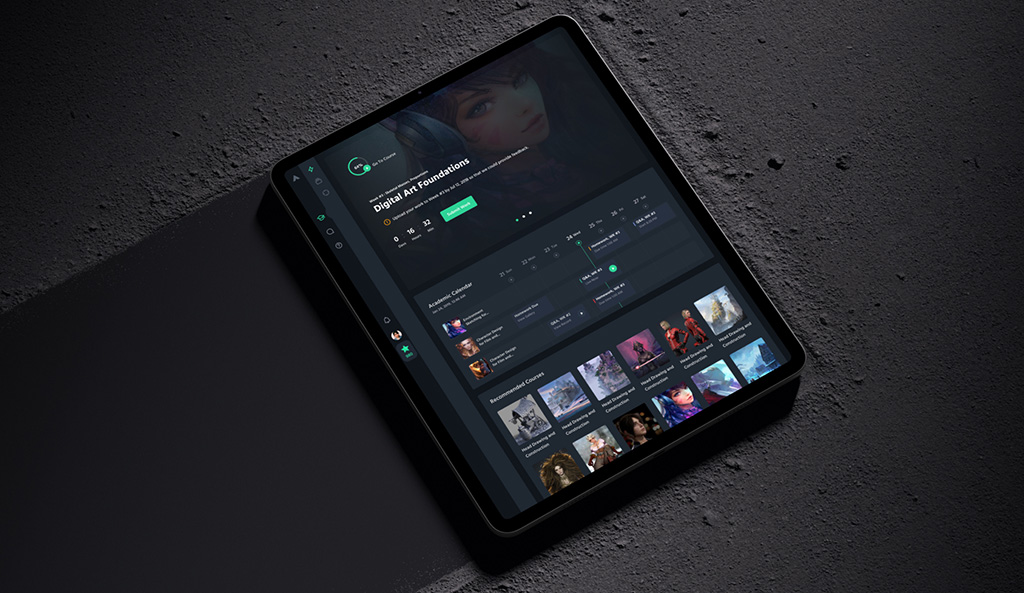
CGMA platform, a design by Shakuro. The published build is a virtual classroom for an art school, linked in the experience section.
Employee Onboarding Systems
Onboarding fails when the sequence lives in a manager’s memory. The first release replaces that with an order: company-wide steps, then the steps for that role, then the steps a manager must confirm. A start date in the HR feed can assign the sequence. A missing start date cannot.
A developer, a recruiter, and an operations hire share the company-wide steps and then split. Rebuilding that split by hand for every hire is the thing the platform is supposed to stop. A recording is a file inside the sequence, not the sequence. Storage, playback, and captions for those files are a video-based learning platform question, and they are not a substitute for the assignment record.
Learning Path Personalization
The first version of a path is a rule: role, department, and sometimes seniority. A new team lead gets one set. A support specialist gets another. That rule is understandable, testable, and enough for the first release.
A product that changes the next lesson because of how someone behaved in the last one is an AI-powered learning platform. It needs a different data set and a different estimate. Do not put it in the first release to make the brief sound current. Most internal training never needs it. The rule on the role is the part people actually miss.
Progress Tracking and Reporting
A manager needs five answers without exporting a spreadsheet: who was assigned, who started, who finished, what is overdue, and the score if the step has a gate. HR needs the same answers for a department, not a second product.
That is a completion list. It is not a study of which lesson predicts a later result, and it is not a live chart of engagement. Those questions belong to learning analytics and should be briefed there, after this platform can already say who finished. Shipping the chart first, with no reliable completion record under it, produces a dashboard nobody trusts.
Assessments and Certification
A quiz that reinforces a lesson and a gate that blocks the next responsibility are different objects. The brief has to say which steps are gates. A gate with no owner for the questions becomes a formality in a month.
A certificate is a record: person, course, date, result, expiry, and the file if someone needs to download it. Expiration and reassignment belong in the same record. A PDF with a name and a logo, and no expiry, is a keepsake. It does not answer a review.
Integration with Business Systems
Three connections are worth building before any other integration. The HR feed, so a hire, a role change, and a departure update the assignments. The identity provider, so people sign in with the account they already have and a departed employee loses access when that account is closed. A notification path, so an overdue item reaches the learner and the manager without someone chasing them in chat.
CRM data matters only when the audience includes partners or customers and the CRM is where those relationships already live. A calendar or a chat tool is a later convenience. Connecting five systems in the first release, before the assignment rule is stable, is how these projects stall.
Corporate Training Platform Development Process
The sequence is requirements, the two screens people actually use, the jobs the system must run, then integrations, then a launch check. A framework choice does not come first.
1. Business Requirements and Use Case Definition
Write three workflows before any screen. A new hire in a named department. A person who changes role. A certificate that expires. For each one, name who assigns, who must finish, who can see the record, and what “done” means.
The room for that conversation is small: the person who owns learning content, a manager who will use the report, and someone from the team that runs the HR system or the identity provider. A workshop with twelve stakeholders and no sample employee record produces a feature list, not a first release.
Also write what the first release will not include. Native app, partner companies, behavior-based recommendations, and reports beyond the completion list are the usual exclusions. A brief that cannot name an exclusion is not ready to estimate.
2. UX/UI Design for Enterprise Platforms
Two screens decide whether the product gets used. The learner needs to see what is required, what is next, and what is overdue, on a phone browser as well as a desk. The admin needs to publish a lesson, assign a sequence, and find one person’s record without a developer. E-learning web design for this product is those two jobs, not a marketing site in front of a course player.
A design frame of a course app is not evidence that the admin screen exists. If the admin path is missing from the prototype, the estimate is missing the expensive half of the work.
3. Choosing the Technology Stack
The stack has to support four jobs: sign-in against the company’s identity provider, assignment rules that run when HR data changes, storage for lessons and recordings, and an audit log that is not a spreadsheet export. The named framework is a later choice, made against the team’s ability to maintain it. A list of languages does not change the estimate. The assignment rules and the quality of the HR feed do.
Do not pick a database, a cloud, or a mobile toolkit in the first meeting. Those decisions follow the workflows in the previous step. A team that opens with a framework, before it can describe the role-change workflow, is estimating a different product.
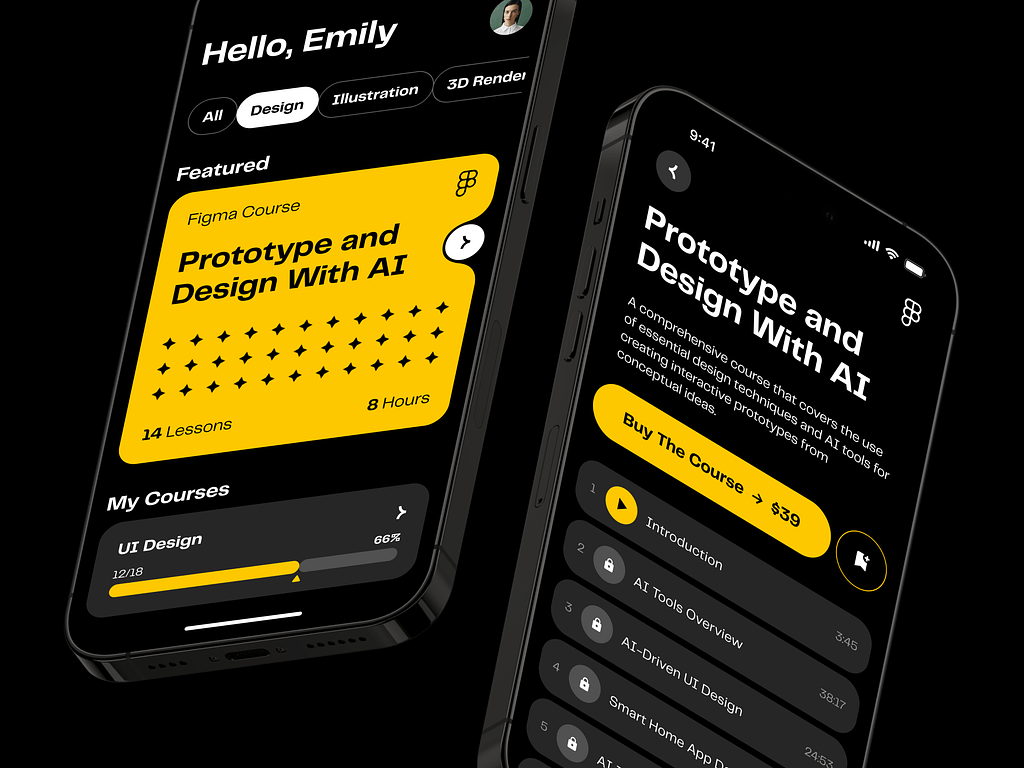
Course app design concept. Not a shipped product. The price on the screen is part of the mock, not a Shakuro rate.
4. Platform Architecture
Roles and the audit log exist on day one, even if only four roles are live. Adding “who can see this record” after employees are enrolled means a migration, not a setting. Partner spaces, if they are in a later phase, need a tenant boundary in the data model. They do not need to be built in the first release.
Content, assignment, and the completion record can live in one web application. A separate service for video processing is justified only when the company hosts its own recordings at a volume the course player cannot handle. That is the video platform question again, and it should be a line in the estimate, not an assumption.
5. Integrations and Automation
Automate the three events from the requirements step, and stop. A new hire gets the sequence for their role. A role change removes the old required set and assigns the new one, without deleting the completion history. An expiring certificate assigns the renewal and tells the manager when the date passes.
Each of those jobs needs a field in the HR feed. If department or manager is blank for a large share of employees, fix the feed or define a manual fallback before writing the integration. The fallback is part of the product. Pretending every record is complete is how the launch week is spent.
6. Testing and Deployment
Launch is blocked by four checks, not by a generic test pass. A new hire in a named department receives only that department’s sequence. A role change updates the required set and keeps the old completion record. A manager cannot open another department’s people. A departed account cannot sign in, and the completion history is still there for the review.
Run those checks on a copy of real HR data, with the empty fields still empty. A demo tenant full of tidy records will pass and teach nothing.
7. Maintenance and Scaling
After launch the content owner changes lessons, departments are renamed, and a new required course appears. That is normal operation, not a phase two surprise. Agree who publishes content, who approves a new required course, and how a department rename is handled in the feed. A platform with no named publisher turns back into a pile of files.
Scaling here usually means more roles and more outside users, not more servers. Add a role when a real person needs a right the current four do not cover. Add partner spaces only when an outside company must not see employee records.

Cost of Corporate Training Platform Development
There is no honest universal price for corporate training platform development. The estimate moves with the assignment rules, the state of the HR feed, and how many audiences the first release includes. A company of about 200 employees with one internal audience and a usable HR export is a smaller build than several offices, partner companies, and a certificate that has to be reassigned on a schedule. That is a scope contrast, not a rate card.
What pushes the estimate up, in the order teams actually feel it:
- Assignment rules that are not “everyone gets the same course.” Role, department, approval, and a change of role are four rules, not one.
- An HR feed that is missing department, manager, or start date for a large share of people. Cleaning that feed is work, whether the company’s team does it or the build includes a fallback.
- Gates and certificates with expiry, plus the history a review will ask for.
- A second audience, such as partners, which means a separate space and a separate permission model.
- A native phone app, offline lessons, or reports beyond the completion list. Each of those is its own line, not a checkbox on this one.
What does not belong in the first estimate: a named framework preference, a marketing site, and a chart of engagement. Send the roles, the system that already holds the employee record, and what the first release will not include. Get in touch with that, and the scope can be written against it. A call without those three items produces a range too wide to decide on.

E-learning education web platform, a design by Conceptzilla. Not a shipped training system.

Common Challenges in Corporate Training Platform Development
The build is rarely blocked by the course player. It is blocked by data, by permissions, and by content nobody owns.
People ignore a platform when the assigned sequence is not their job. A cleaner interface does not fix a sequence that is the same for every role, or a lesson whose owner left the company. Engagement is a content and assignment problem. We do not promise a completion rate.
HR data is incomplete more often than the brief admits. Titles do not match the roles used in training. Managers are blank. Contractors sit in the same export as employees. The platform has to define what it does with a record it cannot classify, or those people fall out of the required sequence in silence.
Permissions get copied from the HR system and then surprise everyone. A regional lead who can see salaries should not automatically see every training score, and a manager who can see training scores should not see another region’s people. Write the matrix. Do not inherit it.
A phone is part of the first release only as a browser. The learner screen has to be usable on a phone without a native app. A native app, offline lessons, or push notifications are a separate product and a separate estimate: e-learning mobile app development. The product questions for a learning product whose main surface is the phone are covered on the mobile learning platform page. This page does not take that key.
Compliance language in a sales conversation is another trap. A stored completion date is not a legal opinion, and a certificate template is not an audit. If the company needs a specific retention period or a named control, that requirement has to come in writing from the team that owns the policy. We will not invent the period to fill a proposal.
Our Experience in SaaS and Enterprise Platform Development
The published case closest to this problem is not an internal corporate desk. It is a virtual classroom for CG Master Academy, an online school for digital art. The case page calls it a virtual classroom platform. Work started in early 2018. The updated platform launched in May 2020. The old site was Drupal and could not carry the next set of functions. It was rebuilt on Ruby on Rails. Data going back to 2010 was migrated. That stack is what that project used. It is not a recommendation for every corporate training build.

Virtual classroom for CG Master Academy by Shakuro. An online art school, not an internal employee system.
The product has three portals: student, instructor, and admin. Live session links that used to go out by email were connected to Zoom. Course chat uses Discord, including for people who do not have a Discord account. Payments use PayPal, including installment purchases. Support tickets use Freshdesk. Customer records use Salesforce. Email automation uses ActiveCampaign. Receipts and certificates are generated as PDFs. The published case describes thousands of students and dozens of courses running at the same time. It also describes an ongoing support partnership after the May 2020 launch. It does not describe an employee onboarding flow, an HR feed, or an audit record for mandatory workplace training.
Those are the transferable parts: separate portals by role, a migration off a CMS that could not grow, live sessions inside the product, and a certificate that is a file tied to a person. A company training its own staff still has to define the assignment rules and the HR feed. Treating this case as a finished corporate training platform would misstate what was shipped.
Why Work with a Corporate Training Platform Development Company
The useful test of a team is not a stack slide. It is whether they can write the first release as a boundary. Who is in it, which three workflows are in it, and what is explicitly out. A team that adds a native app, partner tenants, and a recommendation engine to “be safe” is estimating a program, not a platform you can launch.
Ask how a role change updates assignments without deleting history. Ask what happens when the HR export has no department. Ask who publishes a lesson after launch. Those three answers tell you more than a list of industries. Shakuro’s e-learning work is the service linked above. The published academy case is the evidence we will actually stand behind, with the limits in the previous section.
Bring the roles, the system that already holds the employee record, and the list of what the first release will not include. Get in touch with that list. The conversation is about whether this platform is the right commission, not about filling a feature sheet.
FAQ
What drives the cost of employee training platform development?
Scope, not a daily rate we can print here. One internal audience with a usable HR export costs less to shape than several offices, partner companies, and certificates that must be reassigned on a date. Role-based paths, gates, manager views, and an audit history of completion and expiry all add lines. There is no honest universal number. A company of about 200 employees is a useful size example only as a smaller internal rollout, not as a price.
What should an MVP of an employee training platform include?
One audience, one sequence that splits by role, a completion record, and a manager view of assigned, finished, and overdue. A start date in the HR feed should be able to assign that sequence. Leave out the native app, partner companies, behavior-based recommendations, and any report that is not the completion list. Those are later estimates. An enterprise rollout with many roles and outside users is phased. It is not a larger copy of the same first release pasted into a proposal.
When does custom corporate training platform development make more sense than an off-the-shelf LMS?
When training has to follow the company’s own structure: role-based paths, onboarding tied to a department, an approval, a certificate with an expiry, and a manager view that matches how the company is actually organized. An off-the-shelf LMS is the better buy when its roles and its completion checkbox already match. Public course catalogs are a better buy when the content is general and not an internal procedure. Stretching a generic tool past those limits is the point where a custom build costs less effort than the workaround. The LMS article covers that product. This page does not.
Which integrations does an employee training platform usually need?
The HR system, for employee id, department, role, manager, and start or end date. The identity provider, for sign-in and for closing access when an account is closed. A notification path for overdue items. Partner or customer training may also need the CRM where those relationships live. Three automations are enough for the first release: a new hire, a role change, and an expiring certificate. More connections before those three work is how the integration list hides an unfinished assignment rule.
How does an employee training platform handle compliance training?
It keeps a record: who was assigned, who finished, when, the result, whether the certificate expired, and whether retraining was assigned. That record has to remain after the person changes role or leaves. The platform does not decide the retention period and it does not make the company compliant. Those decisions come from the team that owns the policy. If that period is not in the brief, it is not in the estimate.
How do I choose a development partner for an employee training platform?
Ask for the first release in writing, including what will not be built. Ask how a role change keeps history. Ask what the team does with an HR export that has blank departments. A partner who cannot answer those three is not ready to estimate. Experience with an online academy is relevant to roles, content, and certificates. It is not a substitute for the HR feed and the assignment rules of an internal desk. Bring the three items in the cost section and get in touch. A portfolio of unrelated products does not answer the brief.
Final Thoughts
Before you commission corporate training platform development, check four things. The assignment rules are yours, not a vendor template. Someone owns the lessons. The HR export has department, role, manager, and a start date for the people who must be trained. You can name what the first release will not include.
If one of those is missing, fix it before you ask for screens. If all four are true, the next step is a scope conversation, not another article. E-learning web development is the service. Get in touch with the roles, the system that holds the employee record, and the exclusion list.