The name everyone liked on Monday belongs to another app by Wednesday. Your second choice sounds fine until someone says it out loud. Meanwhile, the designer needs a wordmark, marketing wants to finish the launch page, and you’re still sharing a spreadsheet called “Names_final_v4.”
Naming can eat up a surprising amount of time. You want something memorable, easy to say, and right for the people you’re trying to reach. But after enough brainstorming sessions, even a decent suggestion starts to sound strange. Is it actually wrong for the product, or have you just been staring at it too long?
A product name generator is tempting at that point. Put in a few words, get fresh ideas, finally move things along. Fair enough. Then comes the harder part: deciding whether any of those suggestions deserves a place on your website, in an app store, or at the top of an investor deck. Not to mention the linguistic and availability check you need to do all by yourself.
That’s where a product naming service enters the conversation, along with another question: is professional help worth the budget?
There’s no single “right” answer. But understanding the difference between slapping words together algorithmically and actually crafting a brand identity might save you from a rebrand six months down the line.
So, let’s break it down. With real talk about what actually happens when you try to name something new. Because you deserve a name that doesn’t make you cringe every time you say it out loud.
Key Takeaways:
- Generators are for speed, services are for strategy. Use AI tools for early brainstorming and low-stakes experiments. Hire professionals when you need legal safety, global screening, and a strategic narrative.
- “Free” isn’t really free. While generators have low upfront costs, the time you spend filtering, checking domains, and verifying trademarks adds up fast. Factor in your own hourly rate.
- Availability ≠ Legal Clearance. Just because a domain or app store handle is open doesn’t mean you’re safe from trademark lawsuits. Always do proper legal due diligence.
- You can mix both approaches. A smart hybrid workflow uses generators to spark ideas and experts to validate and screen the best candidates. It’s often the most cost-effective path.
- Define your criteria first. Before you look at names, decide what matters: memorability, spelling, relevance, or availability. Use a simple scoring matrix to keep emotions out of the decision.
What Does a Product Naming Service Include?
From Positioning to a Reasoned Shortlist
When you hire a product naming service, you’re not just paying for a list of words. You’re paying for the thinking that happens before the words even appear. It’s a process. A messy, human, iterative process.
It usually starts with discovery. They’ll dig into your business. Who are you? Why does this product exist? They’ll talk to your team, maybe even your customers. They’re looking for the “hook.” The thing that makes your product different.
Then comes the research. They look at competitors. Not just to copy them, but to avoid them. They map out the landscape. Where is the white space? Where can you stand out?
Based on that, they create creative directions. Maybe one direction is “tech-forward and sleek.” Another is “warm and helpful.” They’ll present these concepts to you. It’s not about names yet; it’s about vibe.
Once you pick a direction, they start generating candidates. But they don’t just throw them at you. They filter them. They check for obvious red flags. Then, they build a rationale for each one. Why this name? How does it connect to your strategy?
Finally, they present a shortlist. Usually three to five names. Each one comes with a story. They explain why it works, how it fits the brand, and what the potential risks are.
In comparison with app naming generators, where you get just a list of names, here you get a strategic asset with detailed explanations.
Product Naming vs Brand Naming
Here’s where people get confused. A product naming service focuses on one specific offering. Like a new app, a feature, or a physical gadget. It’s tactical. It needs to fit within your existing brand or stand on its own as a sub-brand.
A brand naming service is bigger. It’s naming the company itself. Or a whole portfolio of products. This is high-stakes. The name has to carry the weight of the entire organization. It needs to be flexible enough to grow with you.
The research and testing vary a lot between the two. For a single product, you might do quick user tests. For a company name, you might do extensive linguistic screening across ten countries. You might run focus groups for weeks.
Some providers only do one. Some do both. But the scope changes everything. Naming a new flavor of soda is different from naming the soda company. One is fun; the other is foundational.
So, when you’re looking for help, be clear about what you need. Are you naming a thing? Or are you naming the whole show? Because the price tag—and the headache—will be very different.
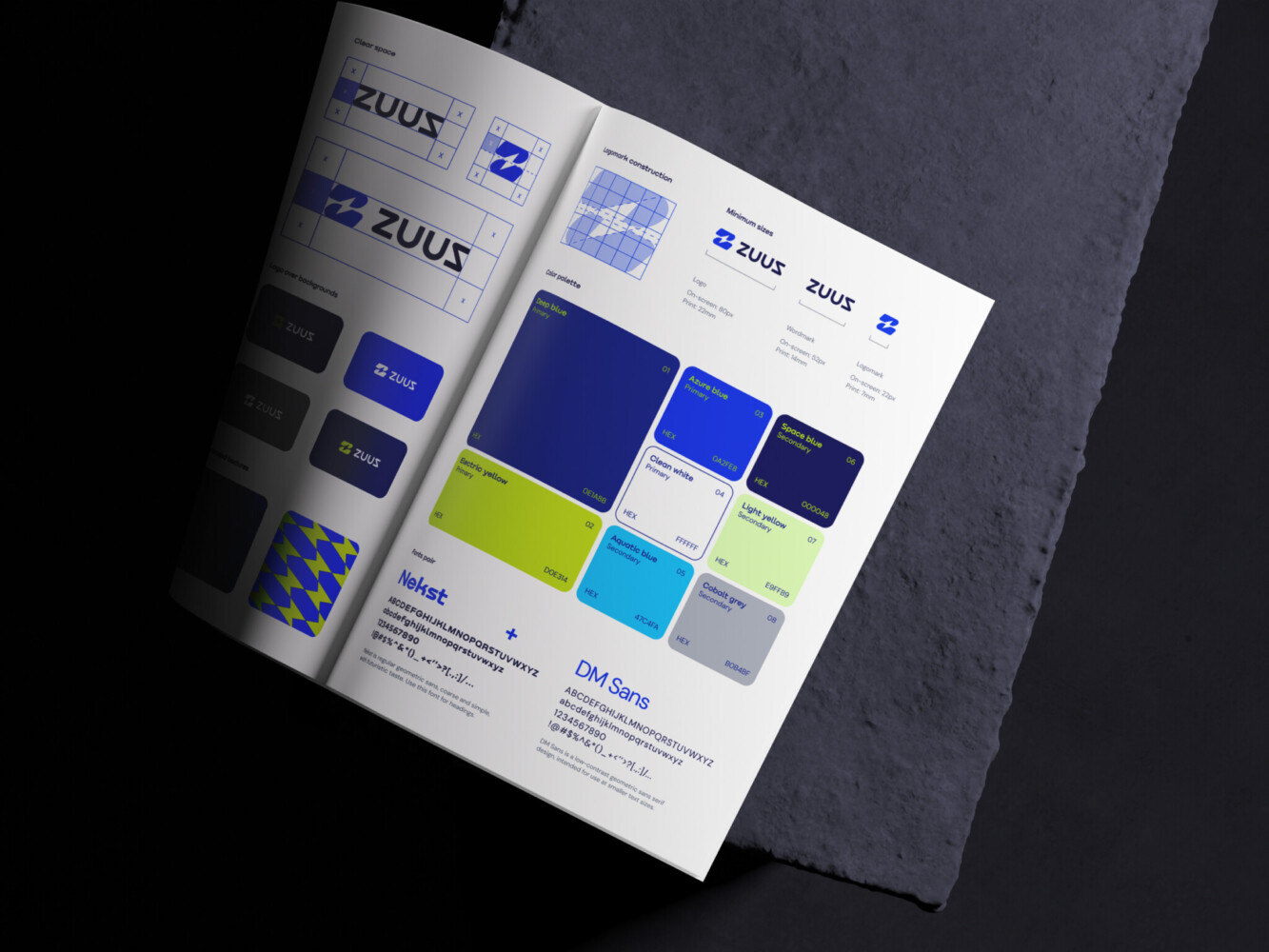
ZUUS branding by Shakuro
How Does a Product Name Generator Work?
Using a Product Name Generator Based on Keywords
Most generators start simple. You type in a word or two—maybe “fast” and “payment”—and hit enter. It’s basic, sure, but it gets the ball rolling. The better tools, though? They ask for more. And honestly, you should give it to them.
Think about what you’re actually building. Who’s it for? Is it for stressed-out moms or tech-savvy gamers? What’s the vibe? Serious and trustworthy, or playful and weird? Most generators let you pick a tone. Some even let you list words you absolutely hate. Like, if you never want to see the word “cloud” again, you can ban it. That’s handy.
You also plug in your category. Finance? Health? Gaming? This helps the algorithm avoid suggesting “MediCare” for a skateboarding app. By feeding it benefits instead of just features, you get names that hint at the value, not just the function. It’s a small tweak, but it changes the output from robotic to slightly less robotic.
What an AI Product Name Generator Adds
Here’s where it gets interesting. Old-school generators just mashed words together. “Pay” + “Fast” = “PayFast.” Groundbreaking, right? Not really.
AI generators are a bit smarter. They understand context. You can give them a richer brief—like a mini business plan—and they’ll chew on it. They don’t just swap synonyms; they look for patterns. Metaphors. Abstract connections.
And they’re iterative. If you hate the first batch, you can say, “More modern,” or “Less corporate,” and it adjusts. It feels less like pulling a lever and more like having a brainstorming partner who doesn’t get tired. Well, mostly.
But let’s be real for a second. The AI doesn’t know if a name sounds pretentious in French or if it’s already a slang term for something bad in another country. It spits out options. Good ones, bad ones, and some that are just plain weird. You still have to use your brain. You have to evaluate. Does it fit? Does it feel right? The tool gives you raw material, not a finished product. Don’t skip that part.
When an App Naming Generator Helps
If you’re building an app, specifically, these tools can be a lifesaver in the early stages. Why? Because app stores are crowded. Really crowded.
You might come up with a cute name, only to find there are twelve other apps with “Quick” in the title already. A good app naming generator often checks availability as it goes. It’ll flag if a name is taken on the iOS App Store or Google Play. Saves you the heartbreak of falling in love with a name you can’t use.
It also helps with the practical stuff. Spelling. Pronunciation. If users can’t spell it after hearing it once, you’ve got a problem. Generators often favor shorter, punchier names that are easier to type on a small screen. They lean into what works for mobile.
So, if you’re just sketching out concepts, tossing ideas around, trying to see what sticks? It’s perfect. Low stakes, high speed. Just don’t treat the output as gospel. Treat it as a starting line.
Abyss branding by Shakuro
Product Naming Service vs Name Generator: Key Differences
Let’s get into the nitty-gritty. It’s easy to think one is just a “cheap” version of the other, but they’re really different beasts. One is a tool; the other is a process.
Here’s how they stack up side-by-side.
| Feature | Product Name Generator | Product Naming Service |
| Initial Cost | Low (often free or subscription) | High (thousands to tens of thousands) |
| Time to First Ideas | Seconds | Weeks |
| Founder Effort | High (you do the filtering) | Low (they do the heavy lifting) |
| Positioning | Generic or based on keywords | Strategic, aligned with brand story |
| Creative Rationale | None (it’s an algorithm) | Detailed explanation of why it works |
| Iteration | Instant, unlimited | Slow, often capped by contract |
| Audience Testing | You do it yourself | Usually included in the package |
| Screening Scope | Basic trademark/domain checks | Deep legal, linguistic, and cultural checks |
See the difference? A product name generator gives you volume. You might get 500 names in five minutes. But you’re the one sifting through the trash to find the gold. You’re checking if “Zappo” is already a shoe company in Peru. You’re asking your friends if it sounds weird.
A product naming service, on the other hand, gives you a shortlist. Maybe just five names. But each one comes with a rationale. They’ve tested it. They’ve checked if it means something offensive in another language. They’ve thought about how it looks on a billboard.
It’s not just about the deliverable. A generated list is raw data. A researched shortlist is curated insight. One is a pile of bricks; the other is a blueprint.
Does that mean the service is always better? Not necessarily.
Both approaches can produce usable candidates. Both can also give you duds. The generator might give you something unpronounceable. The agency might give you something so abstract no one gets it.
The key isn’t just which tool you pick. It’s knowing what you’re actually buying. Are you paying for speed? Or are you paying for peace of mind?
What Does Each Approach Really Cost?
Tool Fees and the Time Spent Filtering Ideas
Let’s talk money. Because “free” is rarely actually free, is it?
If you go the product name generator route, the upfront cost is low. You might pay $10 to $30 a month for a decent AI tool. Or maybe nothing at all if you’re okay with ads and basic features. Sounds cheap, right?
But here’s the hidden cost: your time. And your team’s time.
Say you generate 200 names. Now someone has to read them. All of them. Then you shortlist ten. Then you check domains. Then you check social handles. Then you ask your co-founder. Then you realize one of them is a slang term for something rude in German.
In my experience, this “filtering” phase can eat up 10 to 20 hours easily. If you’re a founder billing your time at even a modest rate, that’s hundreds of dollars in opportunity cost. Plus, you’re likely doing manual research on trademarks because the generator won’t do a deep legal dive. You might miss something. And fixing that later is way more expensive.
Revisions are free with a generator, sure. But you’re the one doing the revising. It’s iterative, but it’s on you.
What Changes a Professional Naming Quote?
Now, let’s look at the product naming service. This isn’t a flat fee everywhere. It varies wildly. A small boutique agency might charge $5,000. A big global firm? $50,000 or more. Why the gap?
It depends on what you’re asking for.
- Markets and Languages: Naming for just the US is one thing. Naming for Europe, Asia, and Latin America? That requires linguistic checks in dozens of languages. Each layer adds cost.
- Product Portfolio: Are you naming one app? Or an entire suite of products that need to sound related? The latter is much harder.
- Stakeholder Rounds: How many people need to agree? If you have five founders and three investors all needing to sign off, the agency has to manage more feedback loops. More meetings, more presentations, more cost.
- Testing: Do they just suggest names, or do they test them with real users? Focus groups, surveys, A/B testing—all of this adds up.
- Deliverables: Are you just getting a list? Or are you getting brand guidelines, logo concepts, and a rollout strategy?
And then there’s the scary part: rework. If you launch and realize the name doesn’t stick, or worse, gets sued, you’re back to square one. A professional service tries to prevent this with thorough screening. But if you skip the testing to save money, you risk paying for a rebrand later. And trust me, rebranding costs way more than the initial naming project.
So, when you see a $15,000 quote, it’s not just for “ideas.” It’s for the safety net. It’s for the hours spent making sure you don’t accidentally name your fintech app after a notorious scammer. Is it worth it? Depends on your budget and your risk tolerance.
Branding for Emerill by Shakuro
Which Approach Fits Your Product?
Choose a Generator for Early Exploration
Look, not every project needs a five-figure naming budget. Sometimes you just need to see if the thing works.
Think about a prototype. You’re building a small internal tool, or maybe a side project to test a hypothesis. You don’t know if anyone will even use it yet. Spending weeks on a name feels like overkill, doesn’t it?
This is where a product name generator shines. It’s low stakes. You can throw in some keywords related to your experiment and get a list of options by lunchtime. If the project dies in two months, you haven’t lost much. If it takes off? Well, you can always rename it later. It happens.
Choose a Naming Service for a More Complex Launch
But let’s say you’re launching the main event. The flagship product. The one that needs to stand out in a crowded market and convince investors you’re the real deal.
Here, differentiation is key. You can’t just be “another” anything. You need a name that carries weight. A name that tells a story. If you’re going into multiple markets, you need to make sure it doesn’t mean “bad luck” in Japanese or “cheap plastic” in Spanish.
An app naming service handles this complexity. They align stakeholders. When you have a CEO, a CMO, and three board members all with different opinions, having an external expert mediate is a relief. They provide the rationale to shut down the “I just don’t like it” arguments.
Plus, if you’re naming a suite of products—like a core app, a pro version, and an enterprise dashboard—you need a system. A naming architecture. Generators struggle with that. They treat each name as an island. Agencies build bridges.
Combine Generated Ideas With Expert Evaluation
Here’s a secret: you don’t always have to pick one. You can mix them.
Try this hybrid workflow. Start with a product name generator. Get those hundreds of ideas out of your system. See what patterns emerge. Do you keep liking names that end in “ly”? Or ones that sound like verbs?
Take your top 20 favorites from the generator. Then, bring in a consultant or a branding expert for a shorter engagement. Don’t pay for the whole brainstorming process. Just pay them to evaluate your shortlist. Have them check the trademarks, do the linguistic screening, and give you their honest take.
It’s cheaper than a full service but safer than going it alone. You get the volume of AI and the safety net of human expertise.
Decision checklist:
- Budget: Under $500? Go generator. Over $5k? Consider a service.
- Internal Expertise: Do you have someone who knows trademark law? If no, get help.
- Launch Scope: One city? Generator might work. Global? Get a service.
- Time: Need it tomorrow? Generator. Have three months? Service.
It’s not about which is “better.” It’s about which fits your reality right now.
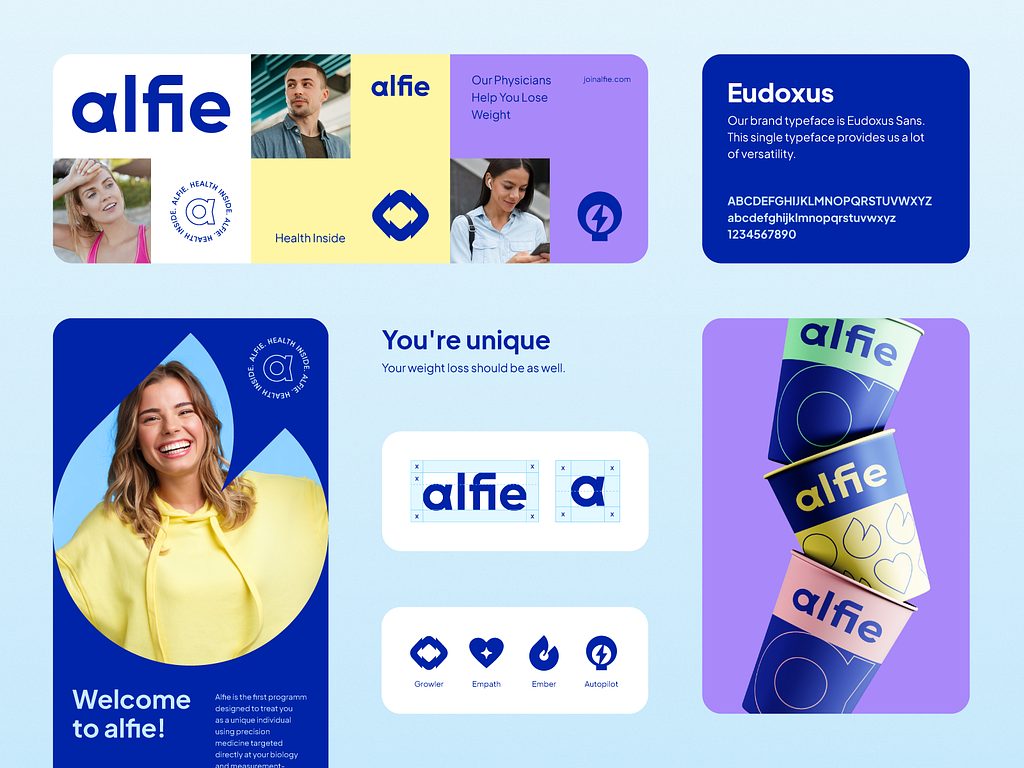
Alfie Branding Concept by Shakuro
How to Evaluate a Name Before You Commit
So you’ve got a list. Maybe it’s from a generator, maybe it’s from an agency. Doesn’t matter. Now comes the part where most people mess up: they pick the name they like instead of the name that works.
A founder falls in love with a name because it reminds them of their college dorm. Great story. Terrible business decision.
Here’s how to actually evaluate a name before you print it on t-shirts.
Define Selection Criteria First
Before you look at a single name, write down what matters. Is it short? Easy to spell? Does it sound premium? If you don’t have criteria, you’re just guessing. And guessing is expensive.
Shortlist Candidates
Take your big list and cut it down. Be ruthless. If you hesitate for more than two seconds, cut it. You want maybe five to ten names left. Not fifty. Ten.
Check Pronunciation, Spelling, and Associations
Say it out loud. Call your friends and tell them the name. Ask them to spell it back to you. If they get it wrong, it’s too complicated.
Also, Google it. Just type the name into the search. What comes up? If the first result is a scandal or a competitor, move on. You don’t want those associations.
Review Competitor Similarity
Look at your top three competitors. Do their names sound like yours? If everyone in your space uses “Tech” or “Soft” or “IO,” and you do too, you’re invisible. You want to stand out, not blend in.
Research Domains, Handles, and App Stores
This is the practical stuff. Check if the .com is available. Or at least a decent alternative. Check Instagram, Twitter, LinkedIn. If you’re building an app, check the App Store and Google Play.
Note: This is just availability. It’s not legal clearance. Don’t confuse the two. Just because you can buy the domain doesn’t mean you should use the name.
Gather Audience Feedback
When you choose a product name, ask real people. Apart from your friends who want to be nice. Ask potential customers. Show them the name and ask: “What do you think this company does?” If they say “shoes” and you’re selling insurance, you’ve got a problem.
Arrange Appropriate Trademark Review
Finally, get a lawyer. Or at least a trademark search service. This is non-negotiable if you’re serious. They’ll check if you’re infringing on someone else’s rights. It costs money, but it saves you from getting sued later.
Sample Naming Brief
Keep it simple.
- Product: A budgeting app for freelancers.
- Audience: Creative professionals, 25-40.
- Tone: Empowering, clear, not stuffy.
- Must-haves: Easy to spell, available as .com.
- Avoid: Words like “cheap” or “poor.”
Simple Scoring Matrix
Rate each name from 1-5 on these factors:
| Name | Memorability | Relevance | Availability | Legal Safety | Total |
| Example 1 | 4 | 5 | 3 | 4 | 16 |
| Example 2 | 3 | 4 | 2 | 5 | 14 |
| Example 3 | 5 | 3 | 4 | 3 | 15 |
It’s not perfect, but it stops you from picking a name just because it sounds cool. It forces you to look at the whole picture.
If you need a piece of advice on how to choose a product name, check out an article on ten product naming best practices.
Final Thoughts: Choose Around Your Launch Needs
So, where does that leave us? Honestly, there’s no magic bullet. It really comes down to what you’re building and what you can afford right now.
If you’re still in the messy exploration phase, just use an app naming generator. Seriously. Don’t overthink it. Get ideas flowing, test concepts cheaply, and save your budget for when it actually matters. But if you’re launching something complex, entering new markets, or needing stakeholder buy-in? That’s when a professional product naming service earns its keep. The risk of getting it wrong is just too high to DIY.
And remember, you can always mix them. Use AI to spark ideas, then bring in experts to validate them. It’s often the sweet spot.
Naming is hard, but it doesn’t have to be lonely. Discuss your product’s naming and brand direction with Shakuro.
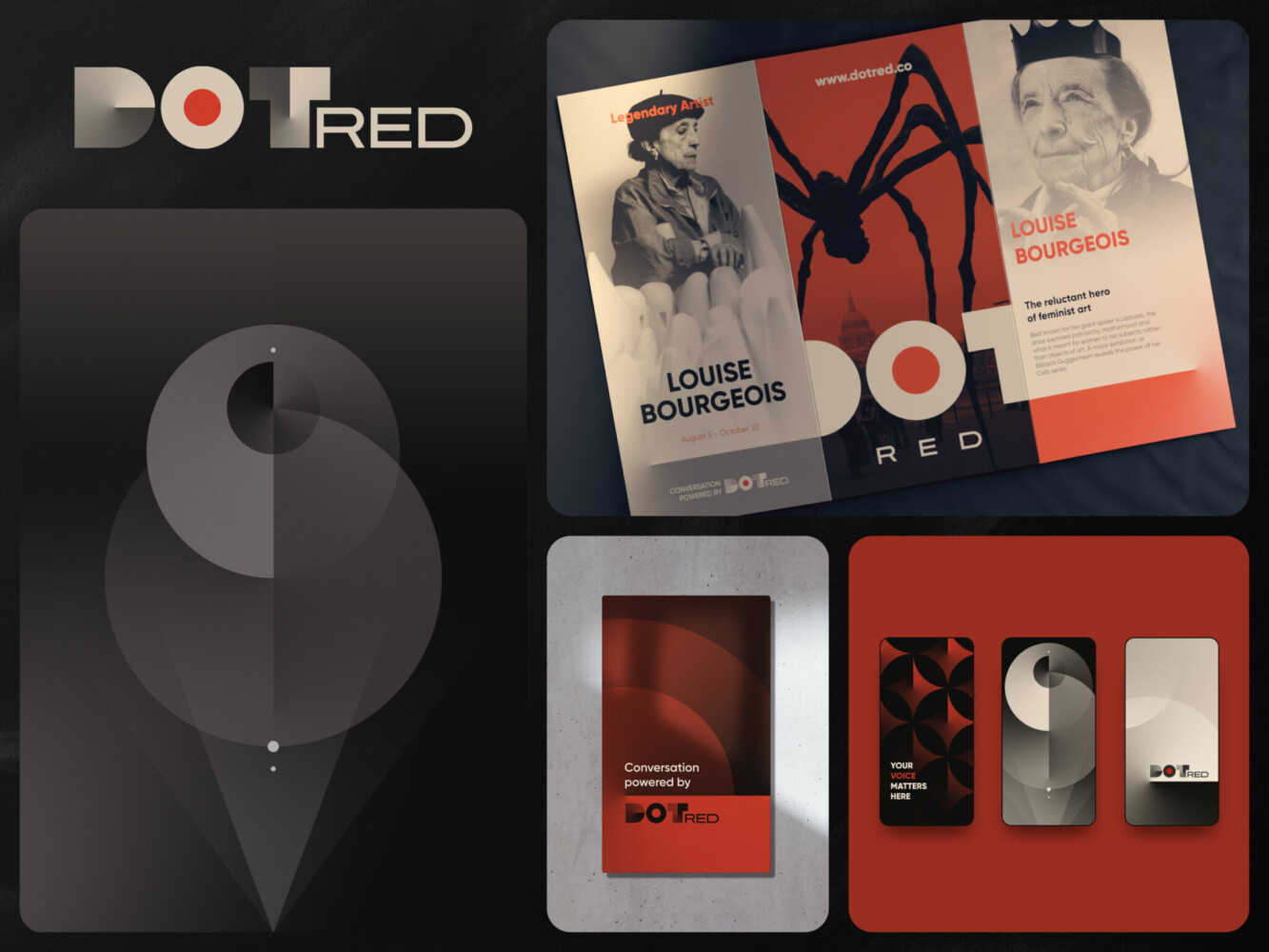
Dot Red branding by Shakuro
FAQ
Can an AI product name generator create a launch-ready name?
Technically, yes. But it’s risky. The AI doesn’t know trademark law or cultural nuances. It might give you a great name that’s already owned by someone else in your industry. You can use it as a starting point, but don’t skip the legal checks.
What should I provide to a product name generator based on keywords?
Don’t just throw in one word. Give it context. Your category, who your audience is, and the tone you want (serious, fun, techy). Also, list words you definitely don’t want. The more specific you are, the less garbage you’ll have to sift through.
How is a brand naming service different from product naming?
Scope. Brand naming is for the whole company or a major portfolio. It’s high-stakes and needs to be flexible for future growth. Product naming is for a single item or app. It’s more tactical and often fits within an existing brand structure. Brand naming usually involves deeper research and higher costs.
Can I bring generator ideas to a naming agency?
Absolutely. In fact, many agencies like it. It shows you’ve done your homework and helps them understand your taste. They can take your favorite AI-generated options and run them through proper legal and linguistic screening. It’s a great way to save time and money.
Does an available domain mean a name is cleared for use?
No. Definitely not. A domain being free just means no one bought that specific URL. It doesn’t mean you have the trademark rights. Someone else could own the brand name even if they don’t own the .com. Always do a proper trademark search before you commit.