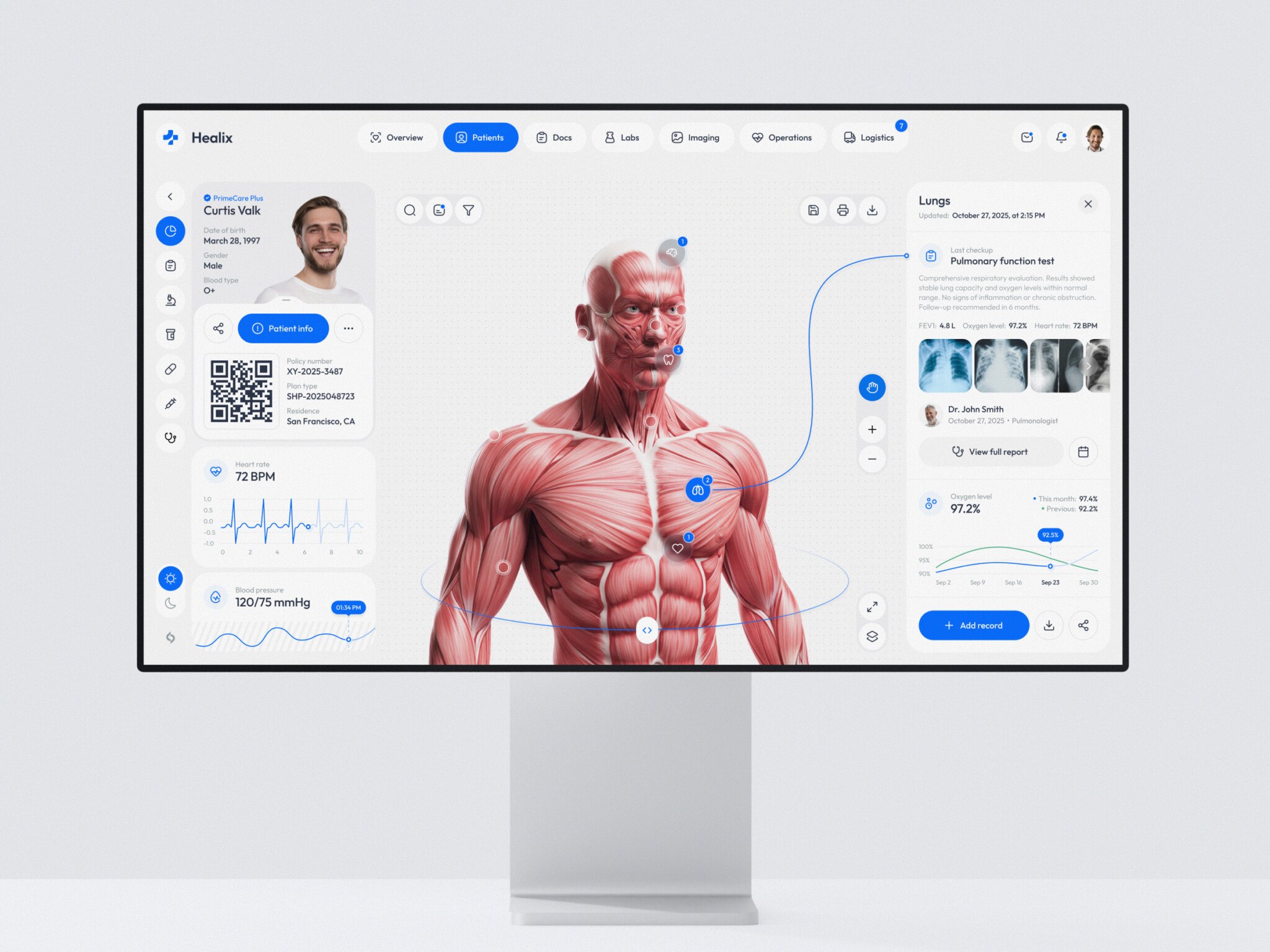
A patient fills out an online form. At the clinic, someone copies those answers into another system, then calls the patient to check a detail they already provided. It’s a small frustration. Multiply it by a full appointment book, though, and you can see why a team starts talking about building something better.
Maybe you’re dealing with that kind of daily friction. Or you’re launching a digital health product and trying to turn a promising idea into something patients and clinicians actually want to use. Either way, the questions pile up quickly. Will it connect to the systems already in place? What happens to sensitive data? And how much can you realistically build with the budget you have?
The hardest part of custom healthcare software development is deciding what deserves to be built first. A long feature list is easy to assemble. A useful first release takes some difficult choices, including a few things you’ll have to leave for later.
This article will help you work through those choices. We’ll cover features, integrations, security, costs, and how to assess a development partner, so you can approach the project with a clearer scope and better questions to ask before committing your budget.
Key Takeaways:
- Fit over features: Custom software is worth it when off-the-shelf tools force you into rigid workflows or cause data silos. It’s about solving specific pains, like manual entry or fragmented patient experiences.
- Start small: Don’t try to build a massive platform on day one. Focus your MVP on one complete, high-value workflow and validate it with real users before adding more complexity.
- Integrations are the hard part: Connecting to EHRs and legacy systems is where most projects stall. Plan for API access delays and messy data mapping early in the discovery phase.
- Security is a culture, not just code: Compliance (like HIPAA) requires ongoing organizational processes, staff training, and strict access controls, not just encryption.
- Know your numbers: Costs vary wildly based on scope. A focused tool might cost $50k–$150k, while a broader platform can easily exceed $500k. Always separate initial build costs from ongoing maintenance and infrastructure fees.
- Choose partners wisely: Look for a development company that understands healthcare workflows, not just coding. Ensure you own the code and have clear plans for post-launch support.
What Is Custom Healthcare Software Development?
It’s not just coding for the sake of it. Think of it as building a suit tailored specifically for your body, rather than buying one off the rack that’s slightly too tight in the shoulders and loose in the waist.
At its core, it’s software built around your workflows, your users, and your specific integration requirements. It’s designed to fit how your clinic actually operates, not how a vendor thinks it should.
Now, there’s a bit of a split here you should know about. On one hand, you’ve got internal operational tools. These are the behind-the-scenes engines—stuff like staff scheduling systems, inventory trackers for medical supplies, or custom billing interfaces that talk directly to your legacy accounting software. No one sees them but your team, but boy, do they matter when they work right.
On the other hand, you have commercial digital health products. This is what patients or external providers interact with. Think of a sleek telemedicine app or a chronic disease management platform you’re selling to other clinics. The stakes feel different here because user experience is everything. If it’s clunky, people just leave.
You see examples of custom software development for healthcare all the time. Patient portals that actually let people book appointments without calling three times. Clinical dashboards that show a doctor exactly what they need to see at a glance, not ten screens deep. Specialty care tools for things like oncology or mental health that handle very specific data points generic systems ignore.
Custom Software vs. Off-the-Shelf Healthcare Platforms
It’s easy to get stuck debating which route to take. Here’s a quick breakdown to help clear the fog.
| Feature | Custom Healthcare Software | Off-the-Shelf Platforms |
| Workflow Fit | Built to match your exact processes. | You adapt your process to the software. |
| Initial Investment | Higher upfront cost. | Lower initial license fees. |
| Integrations | Designed to connect with your specific stack. | Limited to pre-built APIs; often requires middleware. |
| Ownership | You own the code and the IP. | You rent access; vendor owns the product. |
| Maintenance | Your responsibility (or your partner’s). | Handled by the vendor (updates, patches). |
| Implementation Effort | Longer timeline for build and testing. | Faster setup, but potential configuration headaches. |
See the trade-off? It’s about what fits your stage and goals. If you’re trying to disrupt a niche market with a unique model, off-the-shelf might clip your wings. But if you just need standard billing done yesterday, custom might be overkill.
When Does Custom Software Development for Healthcare Make Sense?
It’s not always the answer. Sometimes, you just need a band-aid, not a whole new limb. But there are specific triggers—little red flags—that scream “build it yourself.”
First off, look at your specialty workflows. If you’re in a niche field like pediatric cardiology or rare disease management, generic EHRs often miss the mark. They don’t have the fields you need. You end up using sticky notes or separate spreadsheets because the software just doesn’t get it. Custom healthcare software development here means building tools that speak your language. The goal? Cut down charting time by 30%. That’s huge for burnout.
Then there’s the dreaded manual data entry. You know the drill. Your receptionist takes info over the phone, types it into one system, then logs into another to schedule, then emails a form. It’s messy. It’s prone to errors. If your team is spending hours just moving data from point A to point B, that’s a trigger. Building a custom integration or a simple internal tool can slash those intake times. Imagine cutting patient check-in from 15 minutes to 5. Patients notice that. Staff definitely do.
Fragmented patient experiences are another big one. If your patients have to use three different apps—one for booking, one for telehealth, and one for lab results—they’re going to get frustrated. Churn goes up. Satisfaction goes down. A custom portal that ties it all together isn’t just nice; it’s retention. You’re aiming for fewer missed appointments and higher engagement scores.
But hold on. Not every problem needs a custom build. Sometimes, you just need to tweak what you have. If your current platform has an API and you just need to pull data into a dashboard, maybe a simple integration is enough. Or if you’re missing one feature, see if the vendor can configure it. Don’t build a Ferrari when a bike tune-up will do.
The key is linking the pain to a measurable goal. Don’t just say “it’s annoying.” Say “we lose 10 hours a week on this.” That’s when custom software development for healthcare stops being a cost and starts being an investment.
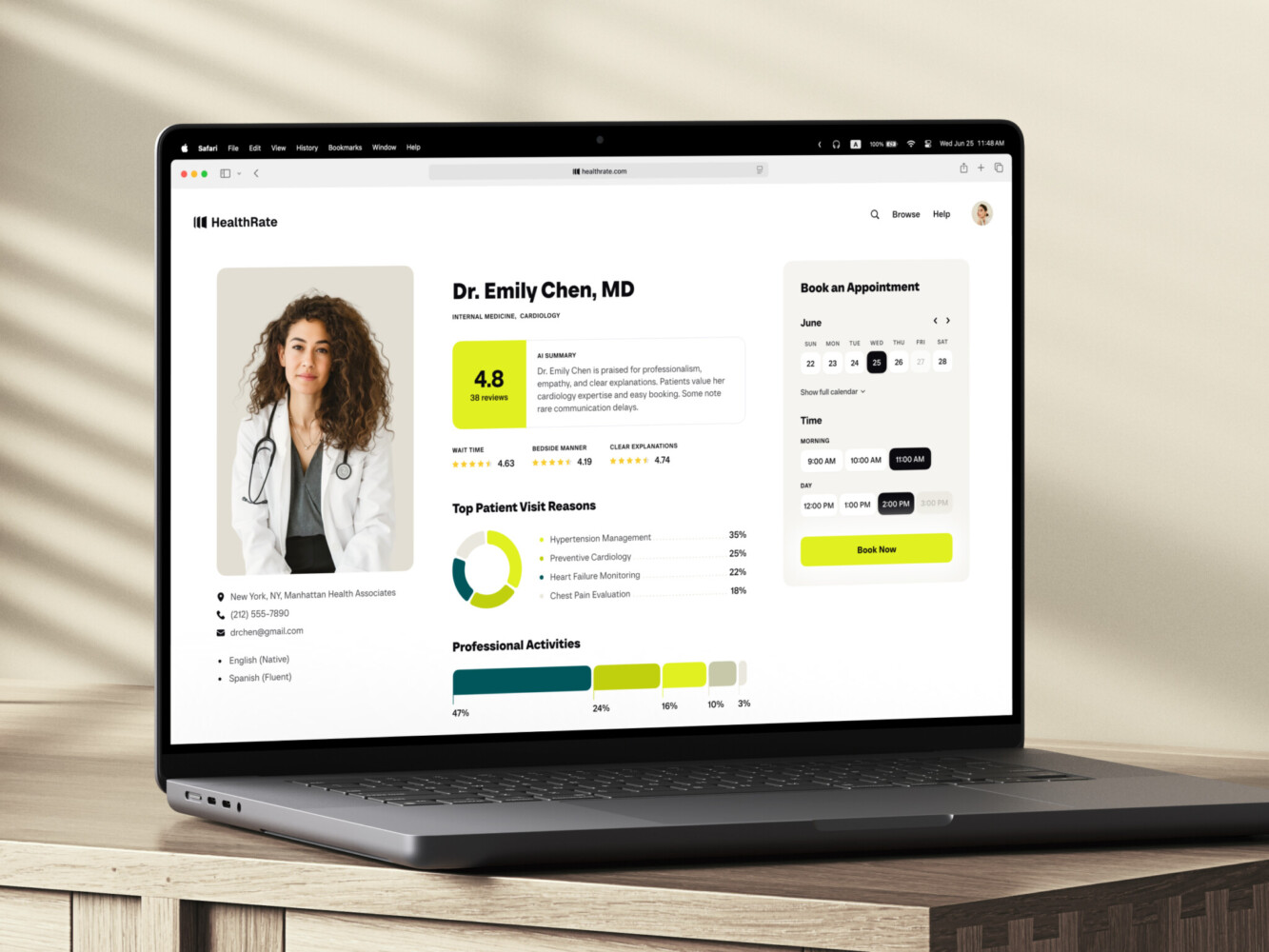
Design for Healthcare Platform by Conceptzilla
Healthcare Software Types and Features to Prioritize
When you’re staring at a blank canvas, it’s tempting to want everything. Every bell, every whistle. But in healthcare that’s a recipe for disaster. You have to prioritize.
Patient-Facing Products
Let’s start with the front door. If patients can’t get in easily, nothing else matters. The basics here are non-negotiable. Appointment booking that doesn’t require a phone call. Intake forms that don’t make them re-type their entire medical history every single time. Secure messaging is huge too—people want answers, not voicemail tags. And obviously, access to their own records. Lab results, visit summaries.
But here’s the trick: don’t build a social network on day one. Stick to the essentials. Get the booking and intake smooth first. Add the fancy health tracking widgets later.
Clinical and Administrative Tools
This is where the work actually happens. For doctors and nurses, it’s about documentation. If charting takes longer than the visit, you’ve lost. Scheduling needs to be tight—no double-booking, no ghost slots. Task management helps keep the care team aligned so things don’t fall through the cracks. As for reporting, admins need to know if the clinic is actually making money.
Prioritize the stuff that saves time. A smart template for common diagnoses is worth its weight in gold. A complex analytics suite? Maybe wait until version 2.0.
Connected Care Products
Telemedicine isn’t new anymore, but it’s still critical. Remote monitoring is where things get interesting, though. If you’re managing chronic conditions like diabetes or hypertension, pulling data from devices directly into the chart is a game-changer. But only build this if it fits your workflow. Don’t add remote monitoring just because it’s trendy. Add it because your patients need it to stay out of the hospital.
Architecture, Technology Stack, and Healthcare Integrations
Let’s talk about the stuff that usually makes eyes glaze over: architecture and tech stacks. But honestly? It’s the backbone. If you get this wrong, everything else wobbles.
Design Around Users, Data, and Deployment Needs
You can’t just pick a technology because it’s trendy. Many teams try to force a complex microservices setup when a simple monolith would have done the job twice as fast. The key is looking at who’s using it, what data they’re touching, and where it lives.
During custom healthcare software development, think about your application interfaces first. Are clinicians on tablets in a noisy ER? Then your UI needs to be big, bold, and forgiving of fat-finger taps. Backend services need to be robust but not over-engineered. Databases? Well, healthcare data is messy. You need something that can handle structured records but also those weird, unstructured notes doctors love to write.
Authentication is huge. You’re dealing with sensitive info, so standard logins won’t cut it. You need MFA, maybe even biometrics if it fits the workflow. And don’t forget integration boundaries. Know exactly where your system stops and another begins. It keeps things clean.
Your existing infrastructure matters too. If your team knows Python inside out, don’t force them to learn Go just because it’s “fast.” Availability requirements drive choices as well. If you’re building a tool for emergency response, you need 99.99% uptime. For a monthly billing report? Maybe not so much. Expected load influences this too. Don’t build for a million users if you only have ten clinics. Start small, scale smart.
Plan EHR, Laboratory, Billing, and Device Integrations
This is where most projects hit a wall. Integrations are hard. Really hard. You’re trying to talk to systems that were built in the 90s and haven’t been updated since.
FHIR (Fast Healthcare Interoperability Resources) is the gold standard here. It’s basically a way to make healthcare data speak a common language. Instead of sending a massive, confusing file, you send specific “resources” like a Patient or an Observation. It’s cleaner. More flexible. If you’re building anything serious, you need to understand FHIR.
But knowing FHIR isn’t enough. You have to deal with vendor access. Some EHRs make it easy; others charge you an arm and a leg just to look at their API. Data mapping is a pain. Your system might call it “DOB,” theirs might call it “Birth_Date.” You spend weeks just aligning these fields. Synchronization is tricky too. What happens when two systems update the same record at the same time? And failed requests? They will happen. You need a way to catch them, log them, and retry them without crashing the whole app.
Build for Reliability and Growth
Look, things break. Servers go down. Networks hiccup. You need to plan for it. Monitoring isn’t optional. You need to know when something’s slow before your users start calling. Backups? Daily. Hourly, maybe. And recovery plans—test them. Actually pull the plug and see if you can get back up.
Performance matters. No one wants to wait ten seconds for a patient’s name to load. Optimize your queries. Cache what you can.
And if you’re serving multiple organizations—say, a SaaS platform for different clinics—data isolation is critical. You can’t let Clinic A see Clinic B’s patients. Ever. It’s a legal and ethical nightmare. Use separate databases or strict schema separation. Keep it tight.
It sounds like a lot, I know. But getting this right early saves you from tearing it all down later. And trust me, you don’t want to do that.
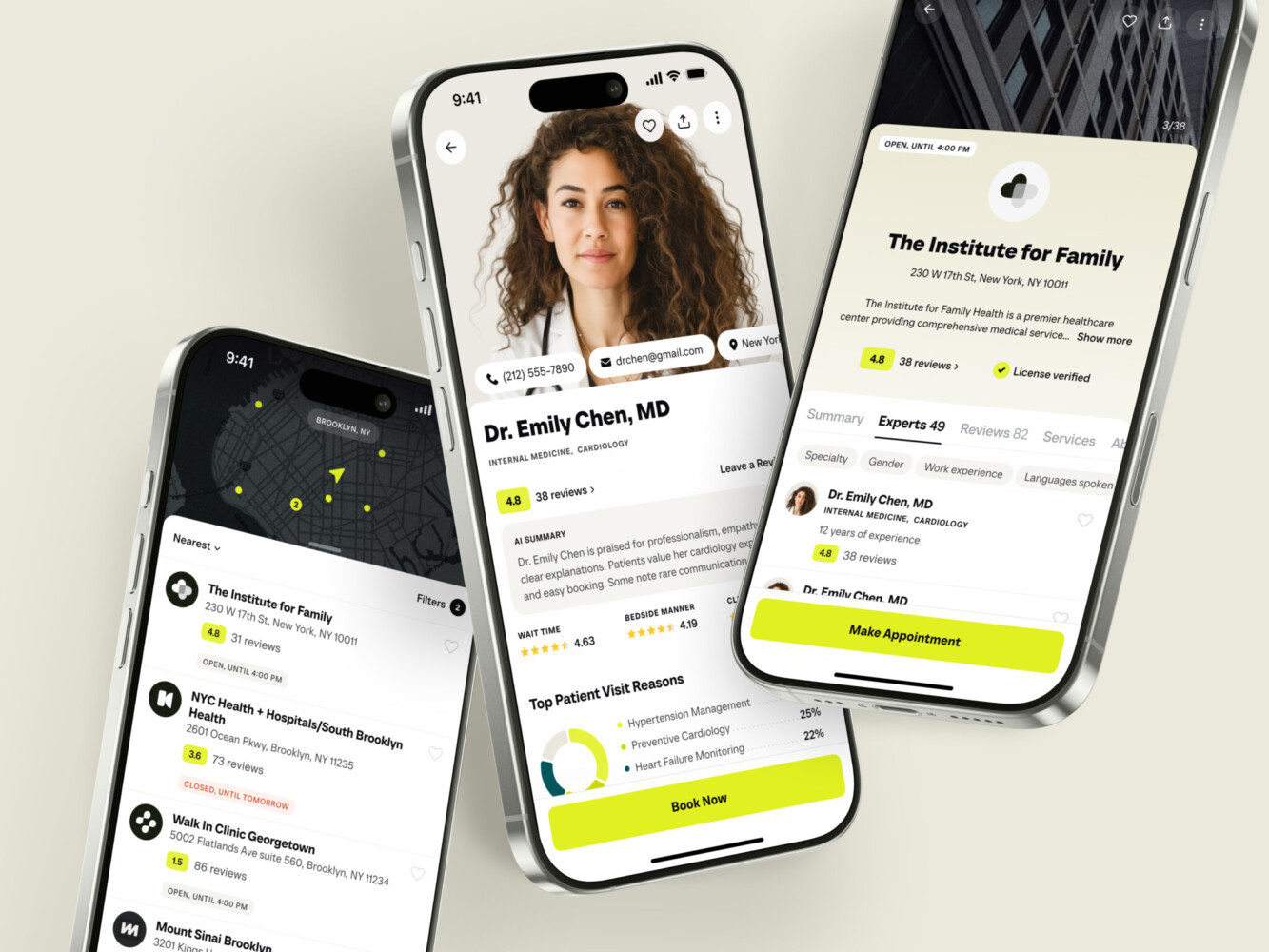
Healthcare app concept by Conceptzilla
Security and Compliance in Healthcare Software Development
Security in healthcare is the foundation. If you mess this up, you’re not just looking at a bug fix; you’re looking at lawsuits, fines, and a total loss of trust. That’s the end of the road for most startups.
First, you have to figure out what rules actually apply to you. It depends on where you’re operating, who you are, and where the data flows. In the US, HIPAA is the big one. But if you’re dealing with patients in Europe, GDPR kicks in. It’s a maze. You need to map out exactly what data you touch. Is it just names and emails? Or are you handling full medical histories? The more sensitive the data, the heavier the obligations.
Risk analysis is where it starts. The HHS (Department of Health and Human Services) is pretty clear on this: you can’t just guess. You need a formal, documented process to identify where your vulnerabilities are. What happens if a laptop gets stolen? What if an API key leaks? You have to look at every angle. It’s not a one-time thing, either. Things change. New features mean new risks.
Then there’s the technical stuff. Access permissions need to be tight. Not everyone needs to see everything. A receptionist doesn’t need access to surgical notes. Use role-based access control. Authentication should be strong—MFA is basically mandatory now. And audit trails? They’re your best friend. You need to know who looked at what, when, and why. If something goes wrong, that log is your only proof of innocence.
In healthcare software product development, encryption is non-negotiable. Data at rest, data in transit. Encrypt it all. And have a plan for when things go wrong. Because they will. Incident response planning isn’t about “if,” it’s about “when.” Who do you call? How do you notify patients? How do you stop the bleed?
But here’s the thing people forget: compliance isn’t just code. It’s people. It’s processes. You can have the best encryption in the world, but if your intern writes passwords on a sticky note, you’re done. It requires ongoing organizational effort. Training staff, updating policies, reviewing logs. It’s a culture, not a feature.
And don’t think you can outsource all the responsibility. Sure, your cloud provider handles the physical security of the servers. Your dev partner might write secure code. But at the end of the day, the healthcare organization is usually the one holding the bag. You’re responsible for how you use the tools. It’s a shared burden, but the ultimate accountability often sits with you.
The Healthcare Software Product Development Process
Building software in healthcare is a bit like navigating a minefield while blindfolded. You need a map. A good process doesn’t just keep you on track; it keeps you out of trouble.
Discovery and Workflow Research
This is where most people skip ahead, and it’s a huge mistake. You can’t build what you don’t understand. Spend time with the actual users. Shadow a nurse during a shift. Watch how a doctor switches between tabs. Map out the existing processes, even the messy ones. Identify where the dependencies are—like that one legacy system no one knows how to turn off.
The goal here is to agree on measurable outcomes. Don’t just say “make it faster.” Say “reduce intake time by 5 minutes.” The deliverable? A detailed requirements document and workflow maps. It’s your north star.
MVP Scope and UX Validation
Now, trim the fat. You don’t need everything. Pick one complete workflow and nail it. Maybe it’s just the patient registration process. Build a prototype—doesn’t have to be code, just clickable screens—and put it in front of representative users. Watch them struggle. Listen to their confusion.
Healthcare software product development lives or dies by usability. If a doctor can’t figure it out in ten seconds, they won’t use it. The deliverable here is a validated UX prototype and a tight MVP scope. Keep it small. Keep it focused.
Technical Planning and Integration Validation
Before you write a line of code, check the pipes. Can you actually get access to that EHR API? Did the vendor lie about their documentation? Confirm your architecture. Figure out if you need to migrate old data. And lock down those security requirements early.
The deliverable is a technical specification and an integration plan. This saves you from hitting a brick wall three months in when you realize you can’t talk to the lab system.
Development and Testing
This is the grind. Build the thing. But don’t just test if it works. Test if it breaks. Check functional behavior, sure. But also test permissions. Can a junior staff member accidentally delete a record? Test accessibility as well. Healthcare tools need to be usable by everyone. Test integration failures. What happens when the network drops? And performance. Load it up and see if it crawls.
The deliverable is a tested, secure build ready for the real world. Not just “done,” but “ready.”
Pilot, Rollout, and Ongoing Improvement
Don’t just flip a switch. Plan a pilot with a small group. Train them. Actually sit with them. Provide support when things go weird. Monitor everything. Look for feedback loops. What are they complaining about? What are they ignoring?
Rollout is a phase, not an event. The deliverable here is a launch plan, training materials, and a feedback loop for ongoing improvement. Because let’s be honest, version 1.0 is never the final version. It’s just the beginning.
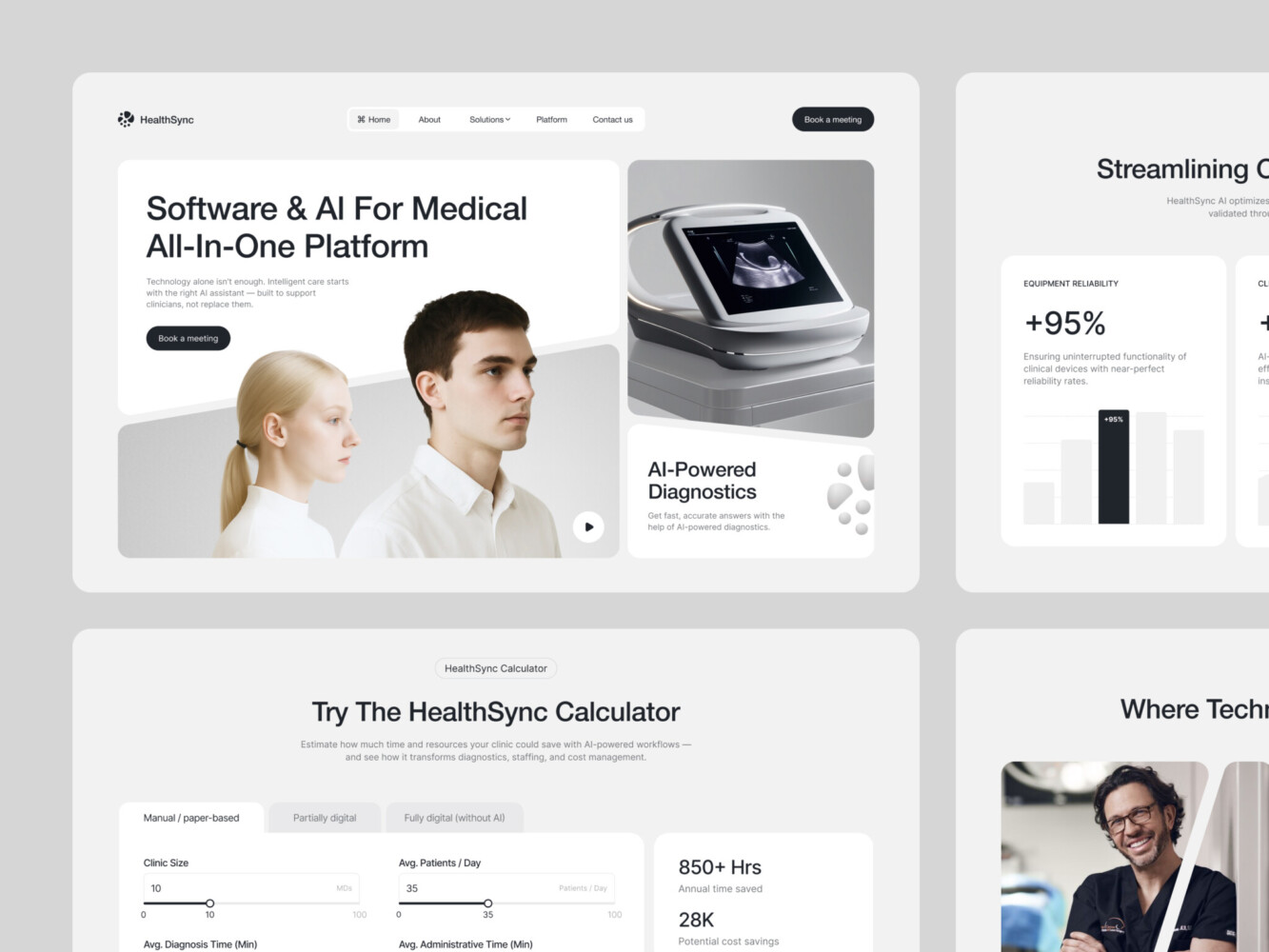
AI-Driven Medtech Website Design by Shakuro
How Much Does Custom Healthcare Software Development Cost?
First, you’ve got a focused workflow tool. Think of a simple internal app for staff scheduling or a specific intake form for one specialty. It’s small. It doesn’t talk to many other systems. You’re looking at a smaller team, maybe 2-3 people, for a few months.
Next is an integrated application. This is your typical patient portal or telemedicine module that needs to pull data from an EHR, push billing info, and maybe sync with a lab system. It’s more complex. More moving parts. More things that can break.
Finally, a broader platform. This is a full-scale digital health product. Maybe a remote monitoring suite for chronic care that handles thousands of patients, multiple user roles, and heavy data analytics. This is a beast. It requires a large team and a long timeline.
So, what drives these costs up? It’s not just code.
- User roles: Every new type of user (doctor, nurse, admin, patient) means new permissions, new views, and new logic.
- Integration complexity: Talking to one modern API is easy. Talking to five legacy systems? That’s where the budget burns.
- Migration: Moving old data is messy. It takes time to clean and map it.
- Security work: HIPAA compliance isn’t free. You need audits, encryption, and strict access controls.
- Testing: In healthcare, you can’t just “move fast and break things.” You have to test everything. Thoroughly.
Here are some rough estimates to help you gauge the investment. Keep in mind, these are broad ranges based on typical US/European development rates and standard project complexities.
- Focused Workflow Tool: $50,000 – $150,000
- Think: A simple internal staff scheduler, a specific digital intake form, or a basic patient feedback app. Low integration needs, 1-2 user roles.
- Integrated Application: $150,000 – $500,000+
- Think: A patient portal that syncs with an EHR, a telemedicine module with billing integration, or a specialty care dashboard. Moderate complexity, multiple user roles, and 2-3 external system connections.
- Broader Platform: $500,000 – $1.5M+
- Think: A full-scale remote monitoring suite for chronic disease, a multi-clinic management SaaS, or a complex digital health marketplace. High complexity, heavy data analytics, strict compliance needs, and many integrations.
It’s important to separate initial development from the ongoing stuff. Building the app is one cost. Then you’ve got infrastructure (cloud servers), vendor fees (for APIs or third-party tools), maintenance (fixing bugs, updating libraries), and support (helping users). Don’t forget those.
Here’s a simple framework to estimate it yourself:
- Scope: Define exactly what you’re building.
- Effort: How many hours will it take? (Be realistic, add buffer).
- Team Rates: What do your developers charge?
- External Costs: APIs, cloud hosting, legal reviews.
- Contingency: Add 20%. Something always goes wrong.
Timeline matters too. If you’re waiting on vendor access for an EHR API, your team might be sitting idle. That costs money. Stakeholder reviews in healthcare can be slow. Doctors are busy. Executives are cautious. These delays add up.
The best way to get a real number for custom healthcare software development services? Define your scope tightly. The vaguer you are, the higher the quote will be to cover the risk.
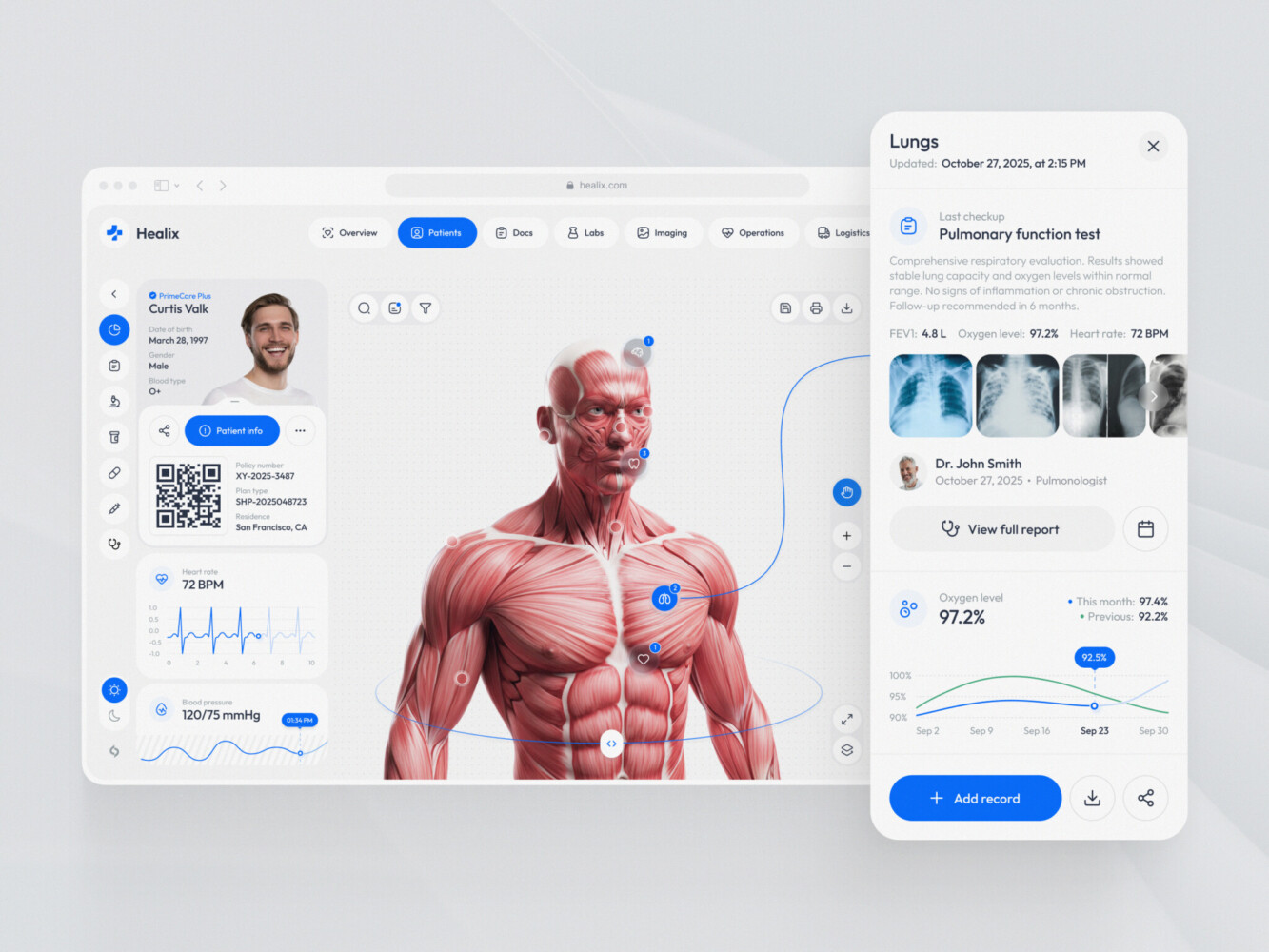
Healthcare operations and logistics platform design by Shakuro
Common Challenges and How to Address Them
Let’s break down those common headaches and how to actually handle them, because knowing the problem is only half the battle.
For starters, inaccessible legacy data. It’s a classic. You’ve got years of patient history stuck in some old system that barely runs anymore. The fix? Don’t wait until the end of the project to figure it out. Start migration rehearsals early. Take a small chunk of that messy data and try to move it. You’ll find the formatting nightmares before they become emergencies.
One doctor spells “hypertension” one way, another uses an abbreviation, and a third just leaves it blank. So you end up with inconsistent records. The best move here is to build data cleaning rules right into the intake process. Fix it at the source. It’s much harder to clean up thousands of records later than it is to guide the user to enter it correctly the first time.
Delayed integration access matters too. You’re ready to code, but the EHR vendor hasn’t sent you the API keys yet. Weeks go by. Money burns. The solution? Request those credentials during the discovery phase. Actually validate that you can talk to their systems before you finalize your scope. If their documentation is a mess, you need to know that on day one.
Low clinician adoption is heartbreaking. You build this beautiful tool, and the doctors just ignore it. Why? Because it’s not intuitive. Or it takes too many clicks. The response is simple: involve them in UX testing from the start. Watch them use it. If they fumble, redesign it. If it doesn’t fit their workflow, they’ll find a workaround involving paper and sticky notes.
Finally, expanding scope. Everyone wants “just one more feature.” It’s tempting to say yes. But don’t. Stick to a strict “must-have” list for your MVP. Push everything else to a version 2.0 backlog. Keep your release priorities clear. If it doesn’t solve the core problem right now, it waits. It’s the only way to actually ship something.
Early integration checks are vital. I mean, actually try to connect to the EHR or lab system before you’ve built half the app. If the vendor says “yes” but their documentation is garbage, you need to know that now, not later. Migration rehearsals are similar. Take a small slice of real data and try to move it. It’ll show you all the weird formatting issues you didn’t expect.
User testing isn’t just a formality. In custom software development for healthcare, if a tool adds even thirty seconds to a doctor’s workflow, they’ll find a workaround. And that workaround usually involves paper. Test with real users, in their real environment. Watch them fumble. It’s painful, but it saves you.
Scope creep is the silent killer. Everyone wants one more feature. “Just this one little thing.” But those little things add up. Keep your release priorities clear. If it doesn’t solve the core problem, it waits.
This is exactly why a pilot is so important. Before you roll out to the whole organization, run a small-scale test. A pilot should resolve risks like: does the data actually sync correctly under load? Do the staff actually understand how to use it without a manual? Are there hidden security gaps we missed? If you can answer “yes” to these in a pilot, you’re ready for the big leagues. If not, you’ve just saved yourself a massive public failure.
Our Experience in Healthcare Software Development
Bless You is a healthcare platform created by doctors in Saudi Arabia for the country’s residents and tourists. It brings together appointment booking, health tracking, and access to medical services. These are closely related patient needs: someone monitoring an ongoing condition may also need to find a specialist or arrange their next check-up.
Connecting those tasks takes more than putting them in the same app. Patients need to understand what they’re looking at and where to go next, especially when they’re worried about their health. Shakuro’s design approach focused on readable information, clear navigation, and removing unnecessary visual distractions. Research, wireframes, prototypes, and testing helped shape the experience around users’ tasks.
Language also shaped the interface. The team designed the Arabic version first, accounting for right-to-left navigation, element placement, and typography, then created an English localization. Making information clear meant considering how each audience would read and move through the product.
For teams planning custom healthcare software development, Bless You offers a useful design lesson: organize the experience around what patients need to accomplish. Booking care, reviewing health information, and finding a service should each have a clear path, even when they share one platform.
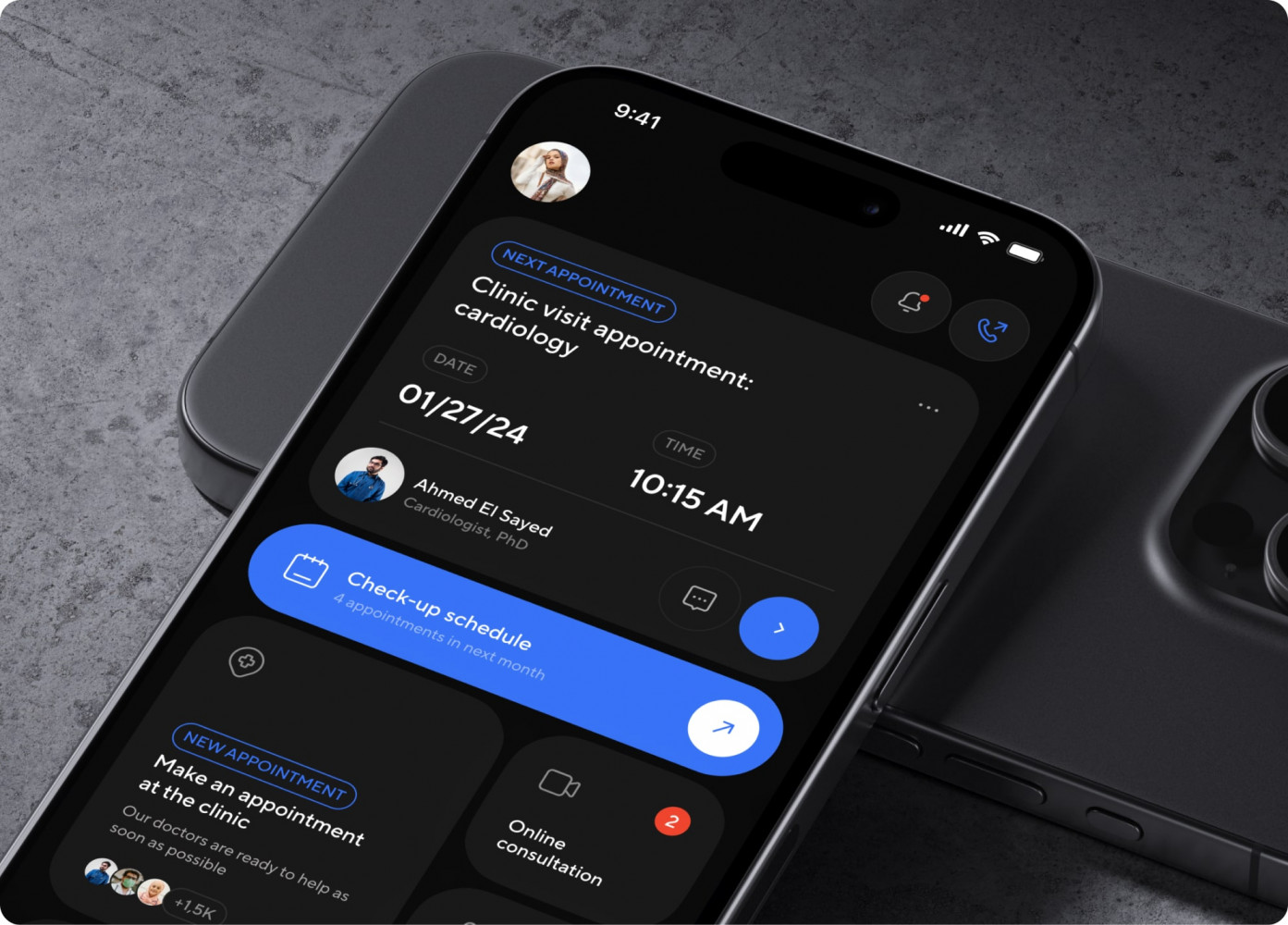
Bless You app by Shakuro
How to Choose a Custom Healthcare Software Development Company
Choosing a partner for this isn’t like picking a web design agency. It’s more like choosing a surgical team. You need to trust them with your patient’s data and your business’s future. So, how do you actually pick the right custom healthcare software development company?
First, look for workflow understanding. Do they ask about how your nurses actually work? Or do they just talk about tech stacks? If they don’t care about the human side of the clinic, run. Relevant project experience matters too. Have they built something in your specialty before? Healthcare is full of niche rules. A generalist might miss the mark on something critical like HIPAA-compliant messaging.
Integration planning is another big one. Ask them how they handle EHR connections. If they say “it’s easy,” be skeptical. It’s rarely easy. They should have a plan for API access, data mapping, and what happens when things break. Security practices need to be front and center. Don’t just take their word for it. Ask about their encryption standards, their audit trails, and their incident response plans.
You want to know what’s happening every week. Not just “we’re coding,” but “we’re building the intake form, and here’s a preview.”
Now, the hard questions. Who owns the code? If you’re paying for it, you should own it. What about documentation? Is it included? Who holds the keys to the deployment accounts? And who is responsible for maintenance after launch? These aren’t small details; they’re the difference between a partnership and a hostage situation.
Here are a few questions to throw at them during the interview:
- “What exactly do I get from the discovery phase?”
- “How do we define ‘done’ for each feature?”
- “What does post-launch support look like?”
- “How do you handle it if I need to change a requirement halfway through?”
A good proposal for custom healthcare software development services should be clear. No vague promises. It should list specific deliverables, a realistic timeline, a breakdown of costs (including external fees), and a clear scope of work. If it’s twenty pages of buzzwords and no actual plan, keep looking. You want a partner who sees the messiness of healthcare and has a plan to navigate it, not someone who thinks it’s just another app.
Plan Your First Release
So, where do you actually start? It’s easy to get lost in the “what ifs.” But the best way to move forward is to keep it simple. Focus on your first release. Not the dream version, but the one that actually solves a problem today.
To get clear, try filling out this brief. It doesn’t have to be perfect, but it forces you to think about the essentials:
- Intended Users: Who is this for? (e.g., pediatricians, physical therapists, or patients with diabetes?)
- Core Workflow: What is the one main thing they need to do? (e.g., Book an appointment, log a blood pressure reading, or review lab results?)
- Required Integrations: What other systems must it talk to? (e.g., Your current EHR, a billing platform, or a specific lab device?)
- Target Market: Where are you launching? (This dictates your compliance rules, like HIPAA vs. GDPR.)
- Budget: What’s your realistic range? (Be honest. It helps us suggest the right scope.)
- Success Measures: How will you know it’s working? (e.g., 20% less time on charting, or 50 new sign-ups in month one.)
The goal of your discovery phase isn’t to build the whole thing. It’s to resolve the biggest uncertainties. Find out if that API actually works. See if the doctors actually like the prototype. Fix the big risks before you spend the big money.
If you’re ready to stop guessing and start building something that fits, let’s talk. Tell us about your healthcare project.
Frequently Asked Questions
What is the difference between custom healthcare software and an off-the-shelf platform?
Custom software is built to fit your specific workflows and you own the code. Off-the-shelf platforms are pre-built; you adapt your processes to them and usually just rent access.
What should a healthcare software MVP include?
Just one complete, core workflow. Think patient intake or appointment booking. Keep it small, testable, and focused on solving one major pain point.
How long does custom healthcare software development take?
It varies, but a focused tool often takes 3–6 months. Complex, integrated platforms can take 9–12 months or more. It really depends on scope and integration hurdles.
Can custom software integrate with an existing EHR?
Yes, mostly through APIs like FHIR. But be warned: vendor access can be slow, and data mapping is often trickier than people expect.
What affects development and maintenance costs?
The number of user roles, how complex your integrations are, data migration needs, security requirements, and how much testing you need. Ongoing costs include hosting, updates, and support.
What should I prepare before contacting a development company?
Know your intended users, the core workflow you want to fix, any must-have integrations, your target market, and a realistic budget range. The clearer you are, the better the quote.