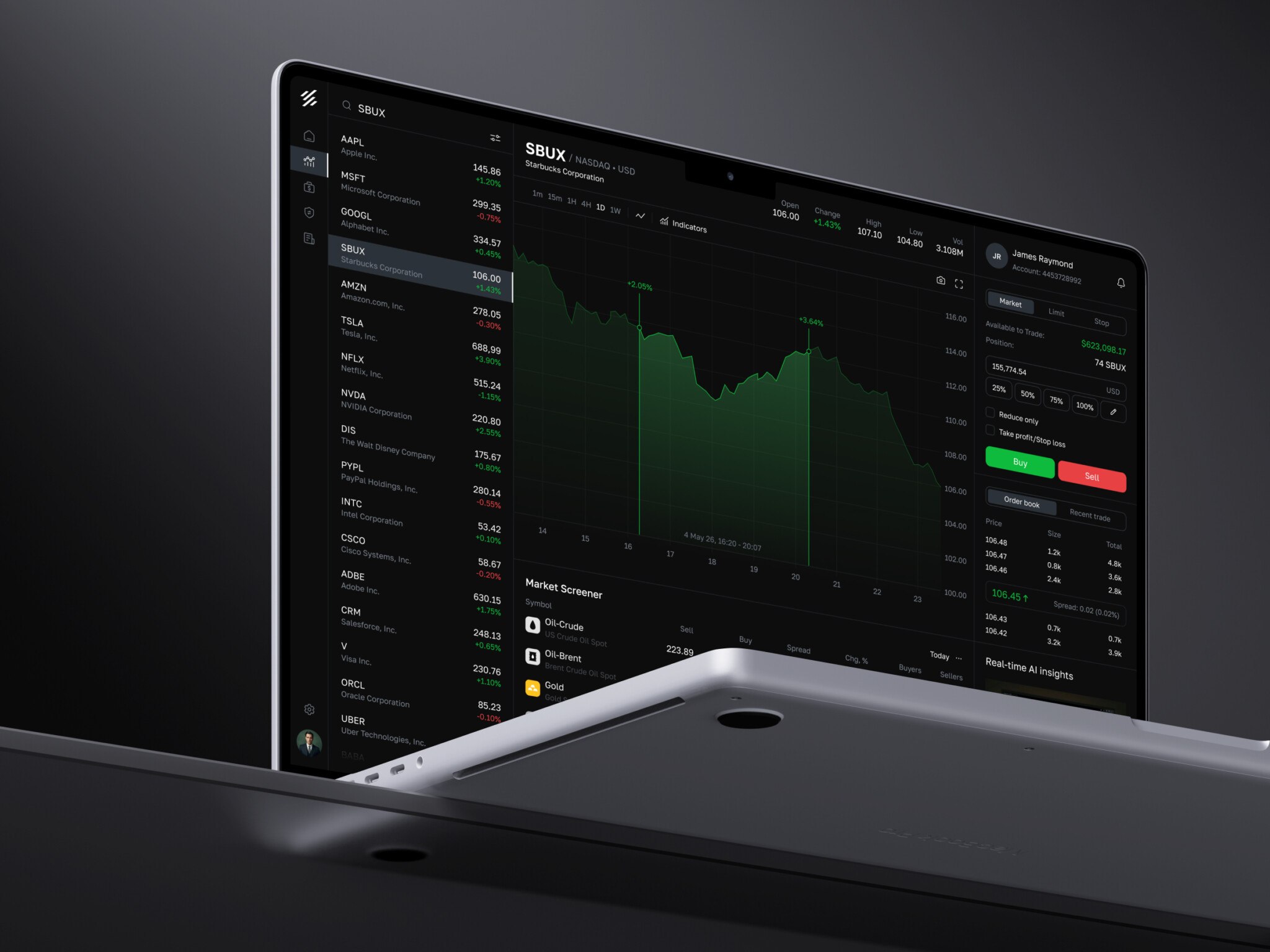
Introduction
A good recommendation can feel almost invisible. You open an app, see the right product, course, playlist, article, or next step, and think, “Yeah, that’s probably what I needed.” No drama. Just a useful nudge at the right moment.
That is the quiet power behind AI recommendation system development. Let’s be honest, most users do not want to browse 900 options. They want the app to understand the context and give them a decent starting point.
But the idea of building one can feel massive. Like, where do you even start without burning through cash or hiring a whole new team? There’s so much noise out there about algorithms and data pipelines that it’s easy to get paralyzed.
And one more point. Even if you have the tech figured out, how do you know it’ll actually move the needle for your specific business?
So, if you’re sitting there weighing the risks and wondering whether an AI recommendation engine is worth the headache right now, stick around. We’re going to skip the hype and talk about what actually matters when you’re trying to build something that works in the real world.
What is an AI Recommendation System?
An AI recommendation system is software that predicts what a user is likely to want next. It looks at user behavior, product or content data, business rules, and sometimes outside context, then turns all that into a ranked list of suggestions.
You can think of it as a very practical decision layer. It sits between the user and your catalog, feed, course library, marketplace, or database. Instead of showing the same thing to everyone, it adapts the experience.
A recommendation system is not always the same as search. Search starts when the user asks for something. Recommendations often appear before the user knows exactly what they want. That is why they can be so useful and, occasionally, a little spooky. We have all had that moment where an app recommends something oddly specific. Helpful? Yes. Slightly unsettling? Also yes.
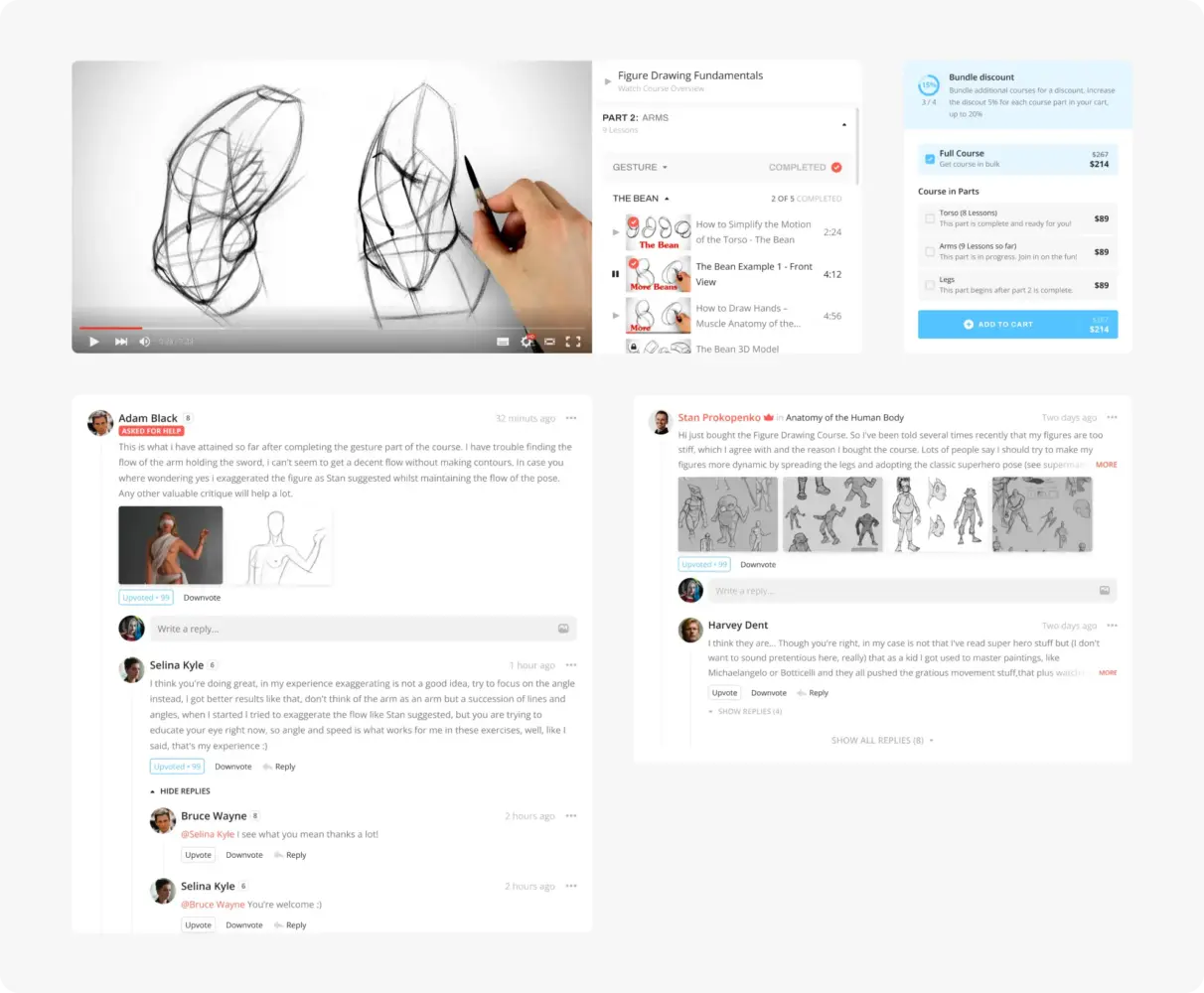
Website Design Concept for Proko by Shakuro
How AI Recommendation Systems Work
Most recommendation engines start with data.
The system may collect metrics like clicks, views, purchases, watch time, likes, ratings, etc. Then it tries to understand patterns. What do similar users do? Which products are often bought together? Which lessons usually come after this one? Which article keeps people reading?
From there, the AI recommendation engine builds models of users and items. A user model may include interests, habits, price sensitivity, engagement history, or favorite categories. An item model may include title, description, tags, images, price, author, difficulty level, popularity, or availability.
Then comes ranking. The system scores possible recommendations and decides what to show first. That ranking may depend on relevance, freshness, margin, inventory, user goals, or business rules. A music app cares about listening behavior. An online course platform may care about skill level and course progress. An ecommerce store probably cares about conversion, stock, and returns too.
Teams often expect the model to be the hard part. But often, the hard part is deciding what “good” means. More clicks? Higher revenue? Longer sessions? Better retention? Fewer refunds? You need that answer early.
Main Types of Recommendation System Algorithms
There are several common recommendation system algorithms, and they each have a different personality, if you want to put it that way.
Collaborative Filtering
This type of AI recommendation system looks at behavior patterns across users or items. If two people behave similarly, the system may recommend things one person liked to the other. If two products are often viewed or bought together, they may be connected.
This approach works nicely when you have enough user behavior data. It is the classic “people who liked this also liked that” logic. The catch is that it struggles when a product is new, a user is new, or the data is thin.
Content-Based Filtering
A content-based recommendation system focuses on the properties of the items themselves. If a user likes beginner watercolor courses, the system can recommend more beginner watercolor content. If someone buys minimalist black sneakers, it can suggest visually or categorically similar products.
This AI recommendation engine works well when you have rich metadata. Tags, descriptions, categories, images, attributes, all that useful but slightly boring catalog work. The downside is that it can become repetitive. Users may keep seeing more of the same.
Hybrid Recommendation Systems
Most serious systems use a hybrid approach. They combine behavior, item metadata, rules, popularity, and sometimes manual editorial control.
That makes sense. People are complicated. A user may like jazz, running shoes, and tax planning articles. One method rarely captures the full picture.
Deep Learning and Embeddings
Modern design for machine learning recommendation systems often uses embeddings. These turn users, products, articles, or videos into vectors, which are mathematical representations of similarity. It sounds abstract, but the result is practical: the system can find relationships that are harder to capture with simple categories.
For example, two products may not share the same tag, but user behavior shows they solve a similar need. Embeddings can help reveal that.
Rule-Based Recommendations
Rules still matter. A lot.
You may not want to recommend out-of-stock products, unsuitable financial content, adult items to underage users, or a premium plan to someone who already bought it. The Artificial Intelligence part should not bulldoze business logic. It should work with it.
Where AI Recommendation Engines Create Value
Recommendation systems show up in more places than people usually think.
In ecommerce, they suggest products, bundles, accessories, alternatives, and “you may also like” sections. A recommendation system for ecommerce can really help users move through a large catalog without feeling lost.
In e-learning, recommendations can suggest the next course, the next lesson, a peer discussion, or practice material. On an edtech marketplace, the same logic helps learners choose between thousands of instructors. This is where it gets quite human. If someone is learning drawing, coding, or finance, the next step should feel encouraging, not random.
We built smart recommendations for Proko, where the system suggests courses, lessons, or tutors based on users’ interests.
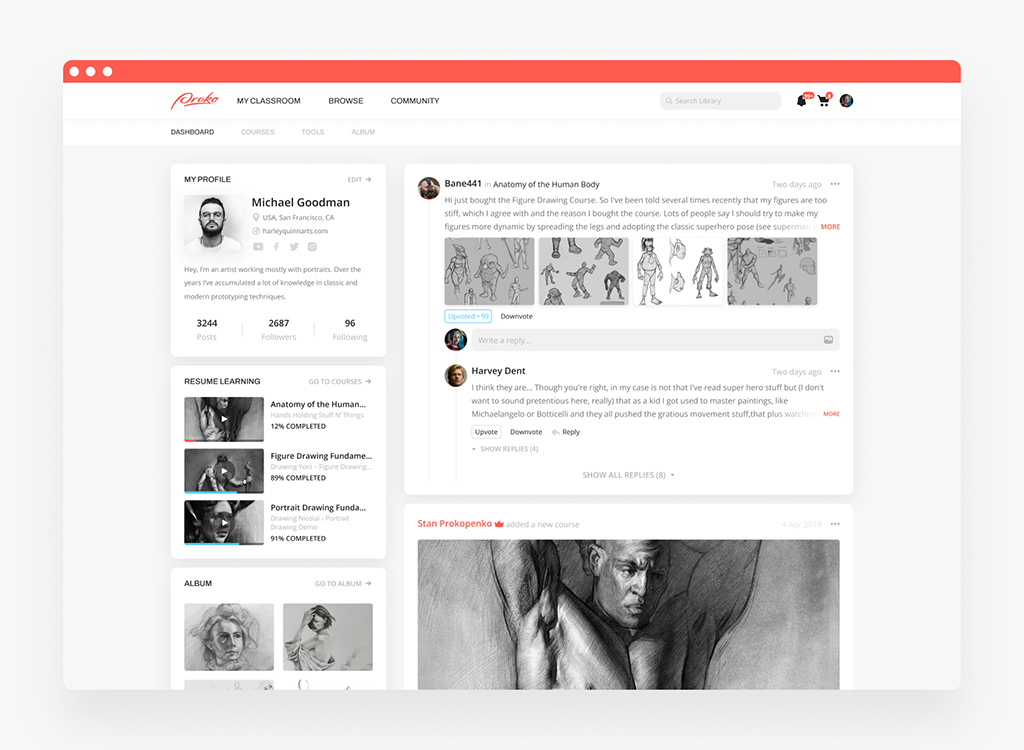
Proko platform by Shakuro
In media and entertainment, AI recommendation engines drive feeds, playlists, watch lists, and content discovery. Users may not notice the system when it works, but they definitely notice when it gets weird.
In fintech, recommendations need more care. A product may suggest educational content, portfolio insights, watchlists, or risk-aware actions. Here, relevance matters, but trust matters more.
For instance, a robo-advisor we’ve created for ZAD that suggests suitable risk profiles and recommends actions for improving a portfolio.
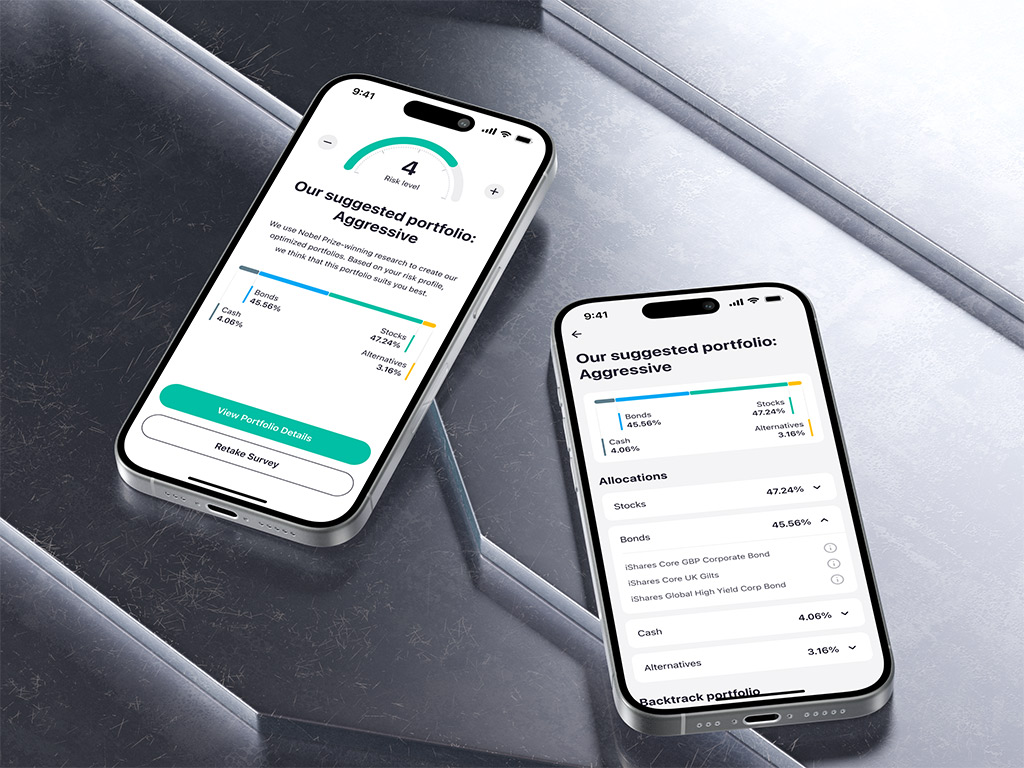
Risk profiling in ZAD app
For SaaS products, recommendations can suggest workflows, templates, next actions, features, or automation ideas. It is less flashy than movie recommendations, but sometimes more useful.
Core Features of a Production-Ready Recommendation System
A production system needs more than a model sitting in a notebook. That part is important, sure, but it is not the full product.
You need event tracking, so the system can learn from real behavior. Also, you need data pipelines that clean and prepare information. APIs to deliver recommendations to the frontend are a must. And, of course, you need admin controls so teams can adjust rules, block items, promote content, or manage experiments.
Analytics are also essential for machine learning recommendation systems. You should be able to see click-through rate, conversion, revenue impact, engagement, retention, and model performance. Otherwise, you are just guessing with extra steps.
A/B testing is another big one. Sometimes a recommendation that looks smart in theory performs poorly in the real product. Users are funny like that. They do not always behave the way a spreadsheet says they will.
And one more point: explainability helps. Even a small “Recommended because you watched…” or “Similar to your last purchase” can make recommendations feel less random.
AI Recommendation System Architecture
A typical recommendation system design includes several layers.
First, there are data sources. These may include a product database, content management system, CRM, analytics tools, search logs, payment data, user profiles, and third-party APIs.
Then comes the data pipeline. It collects events, cleans messy records, enriches metadata, and prepares training data. This is not the most glamorous part of AI recommendation system development, but it is one of the most important. Bad data gives you bad suggestions. Simple as that.
The model layer handles scoring and ranking. It may include collaborative filtering, content-based models, embeddings, vector search, or learning-to-rank models.
The API layer delivers recommendations to the product. It also handles caching, fallback logic, permissions, and latency. Nobody wants to wait five seconds for “you may also like.”
Finally, the frontend displays recommendations inside the user experience. This matters more than teams sometimes think. A useful recommendation in the wrong place can still fail. The UI needs to make suggestions feel natural, not pushy.
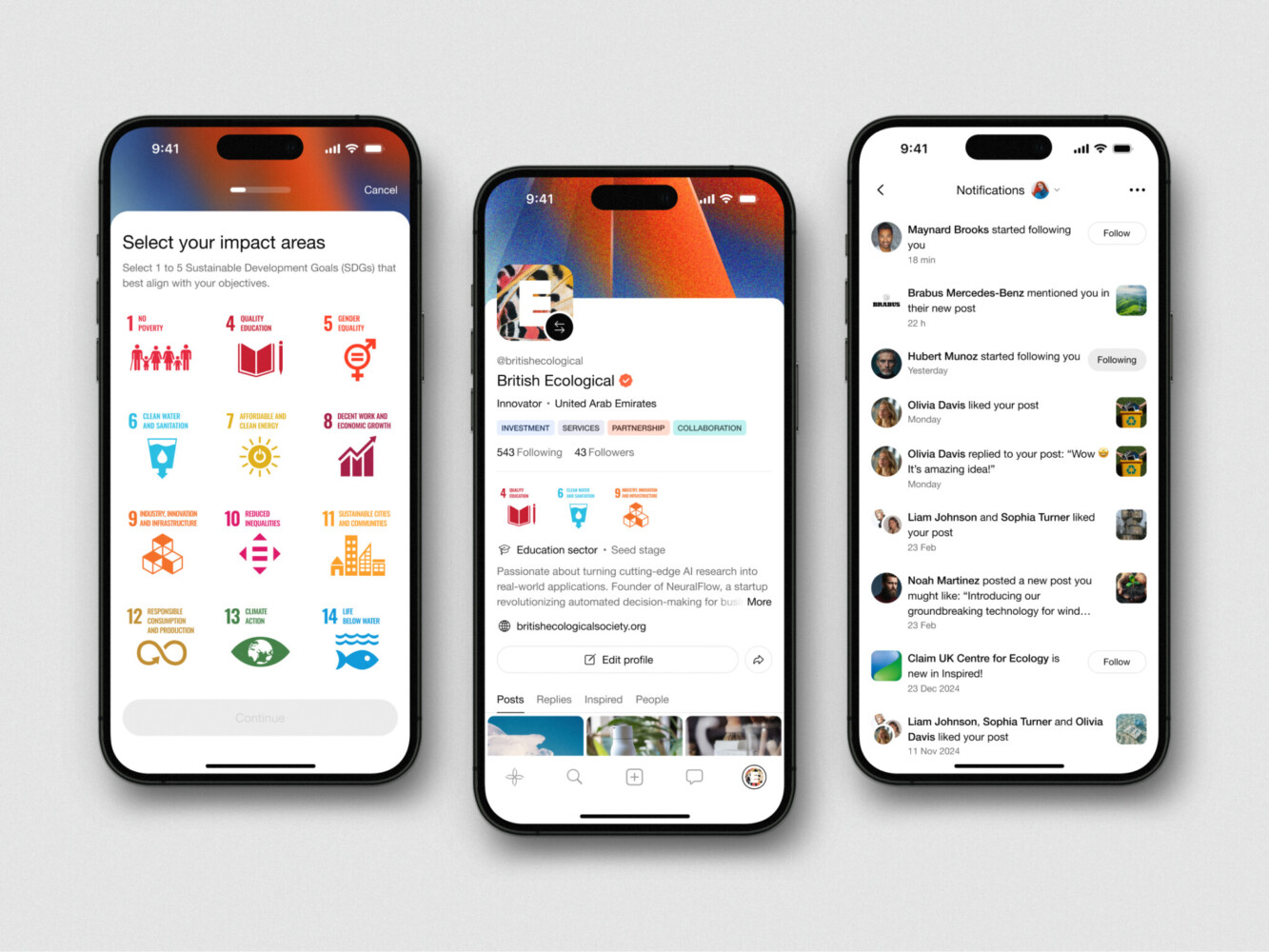
Mobile App Design for Inspired by Shakuro
How to Build a Recommendation System Step by Step
Building a recommendation system is not a straight march from idea to model to launch. AI recommendation system development is more like a loop. You learn, build, test, adjust, and repeat.
1. Discovery and Strategy
Start with the business goal. Do you want higher conversion? Better content discovery? More engagement? Less churn? More completed courses?
This sounds obvious, but I have seen teams skip it because everyone is excited to talk about models. Then three months later, nobody agrees on whether the system worked.
2. UX/UI Design
Decide where recommendations appear. Homepage? Product page? Checkout? Search results? Dashboard? Notifications?
The UX should give users control. Let them dismiss, save, filter, or refine recommendations. A recommendation that traps people is not helpful. It is annoying, and users can smell that.
3. Data Audit and Architecture Planning
Check what data you already have. Is it clean? Is it enough? Can it be legally used? Are events tracked correctly? Are product attributes complete?
This step is not very exciting, but it prevents expensive surprises later. And yes, missing metadata will come back to bother you. It always does.
4. MVP Model Development
Start simple. A first version does not need to be the most advanced system in the universe. Popular items, similar items, basic collaborative filtering, or content-based recommendations can be enough to test value.
The best option is usually the one you can measure quickly.
5. Backend, API, and frontend integration
Once the model works well enough, connect it to the product. Build APIs, caching, admin tools, and frontend components.
This is where AI becomes software. And software has all the usual responsibilities: speed, errors, permissions, logging, security, and maintenance.
6. Testing and Validation
Test relevance, latency, edge cases, bias, fallback logic, and business rules. What happens when a user has no history? What happens when an item is removed? What happens when the model recommends the same thing five times?
It is a little annoying, but you get used to it over time. Good testing saves everyone from awkward launches.
7. Deployment and Optimization
In AI recommendation system development, it’s better to launch gradually. Measure behavior. Compare versions. Retrain the model. Tune the ranking logic.
A recommendation system is never really “done.” It gets better as your product and users change.
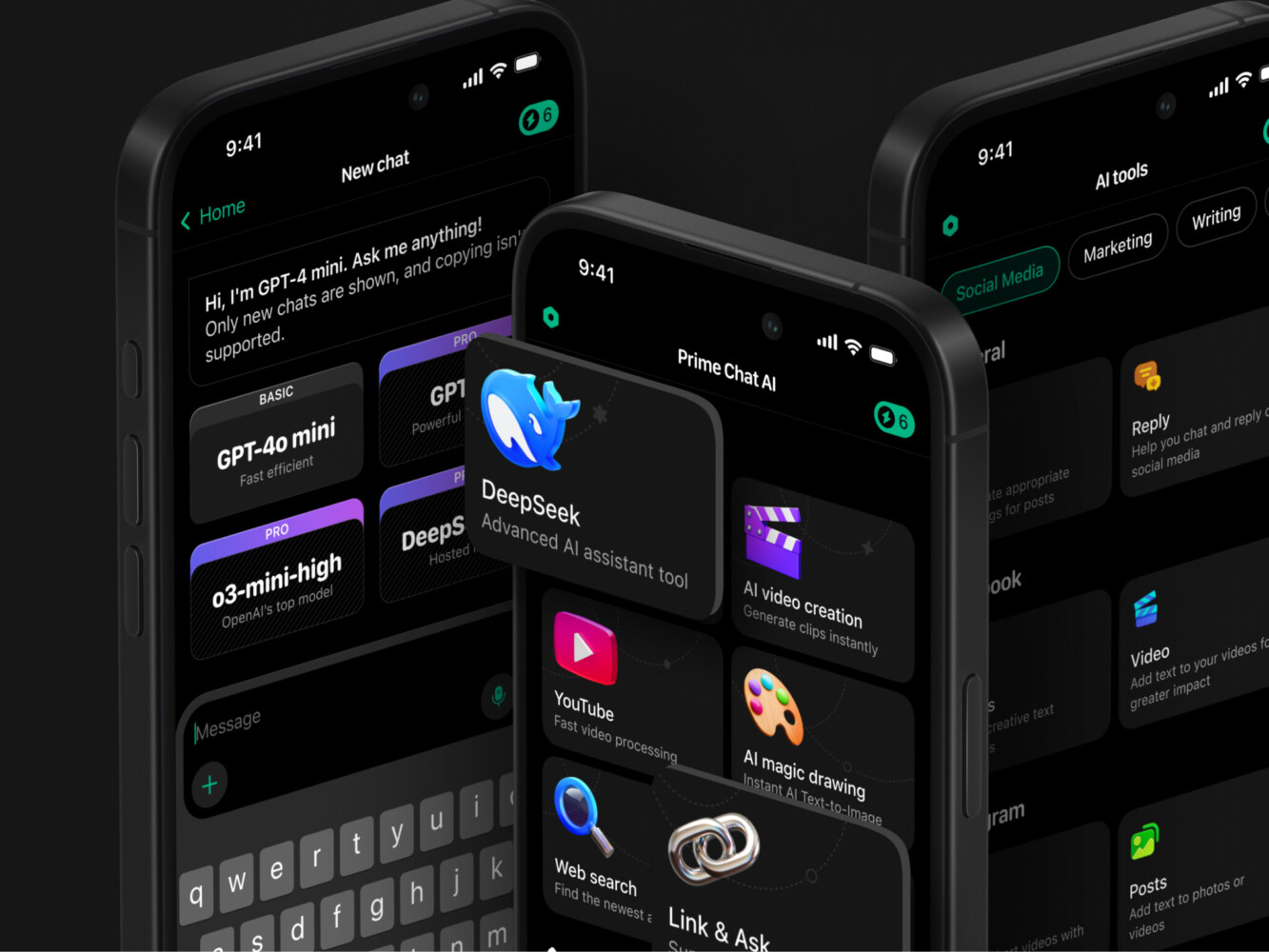
Prime Chat AI Mobile Assistant by Shakuro
Tech Stack for Recommendation System Development
The tech stack depends on the product, but a common setup may include Python for data work, TensorFlow or PyTorch for machine learning, FastAPI for serving model output, PostgreSQL or MongoDB for storage, Redis for caching, and Elasticsearch or OpenSearch for search-related logic.
For embedding-based recommendations, teams may use a vector database. For frontend work, React or Angular can support dashboards, admin panels, and recommendation widgets.
Cloud infrastructure matters too. You may need object storage, scheduled jobs, streaming tools, monitoring, CI/CD, and logging. For higher-traffic products, performance planning becomes a real concern. A recommendation that arrives too late is basically not a recommendation.
How Much Does AI Recommendation System Development Cost?
The cost depends on scope, data quality, integrations, and how advanced the system needs to be.
A simple MVP might have simple recommendation logic, limited event tracking, a small admin panel and few product placements. This is usually enough to check if the recommendations change the behaviour of the users.
Systems in the middle tier may have hybrid models, better analytics, A/B testing, user segmentation, API integrations and a more polished front-end experience.
Real-time personalization, multiple models, re-training pipelines, high-load infrastructure, compliance workflows, detailed monitoring, and complex business rules can also be part of an enterprise-grade system.
The biggest cost drivers for AI recommendation system development services are not always the model itself. Often they are data preparation, integration with existing systems, UX design, security, testing, and long-term optimization. Not very glamorous, again. But real.
| System type | Approximate cost | What’s usually included | Best for |
| MVP recommendation system | $25,000-$60,000 | Basic recommendation logic, limited user behavior tracking, simple content/product matching, API integration, basic admin controls, and a few recommendation blocks in the app or website. | Testing whether recommendations improve engagement, sales, or content discovery. |
| Mid-level recommendation system | $60,000-$150,000 | Hybrid recommendation models, better data pipelines, analytics dashboard, user segmentation, A/B testing, third-party integrations, caching, and more polished UX across several product areas. | Growing products that already have user data and need measurable personalization. |
| Enterprise-level recommendation system | $150,000-$400,000+ | Real-time personalization, multiple ML models, retraining pipelines, vector search, advanced analytics, compliance controls, high-load infrastructure, monitoring, experimentation tools, and ongoing optimization. | Large platforms with heavy traffic, complex data, strict security needs, or several recommendation scenarios. |
These ranges can move quite a bit depending on data quality, number of integrations, model complexity, infrastructure needs, and whether the system is built from scratch or added to an existing product.

Common Challenges in Recommendation Engine Development
Cold start is the classic problem of AI recommendation system development. New users have no history. New items have no engagement. The system needs some fallback logic or onboarding questions or popularity signals or content-based matching.
Another is data quality. Recommendations can be hurt by duplicate products, weak tags, missing descriptions, inconsistent categories, and broken event tracking.
Scalability is important as the product grows. A model that works for 10,000 users may not work the same way for 5 million.
Privacy and compliance also need to be addressed. If you’re using personal data, you need consent, secure storage, access controls, and clear policies.”
Then there is over-personalization. Sometimes the system becomes too narrow and traps users in a tiny bubble of familiar choices. A good recommendation engine leaves room for discovery. People like to be understood, but they also like a pleasant surprise now and then.
Our Experience in Building AI Recommendation Systems
I’ve already mentioned Proko. It is a useful reference for this topic. Proko grew from a simpler learning website into a full e-learning and community platform. They needed an improved search and course recommendations based on users’ interests. Thanks to voice recognition technology, people can search for information based on tutors’ speech. If they said something relevant, the system will find it. A support bot can also search content across the vector base and give relevant answers or suggest courses.
Symbolik is another relevant example from a different angle. It is a trading analysis platform and social product for traders, investors, and money managers. The useful lesson here is data-heavy UX. Recommendation systems often live inside products where users need clarity, not noise. Symbolik shows how complex information can be shaped into something people can actually use.
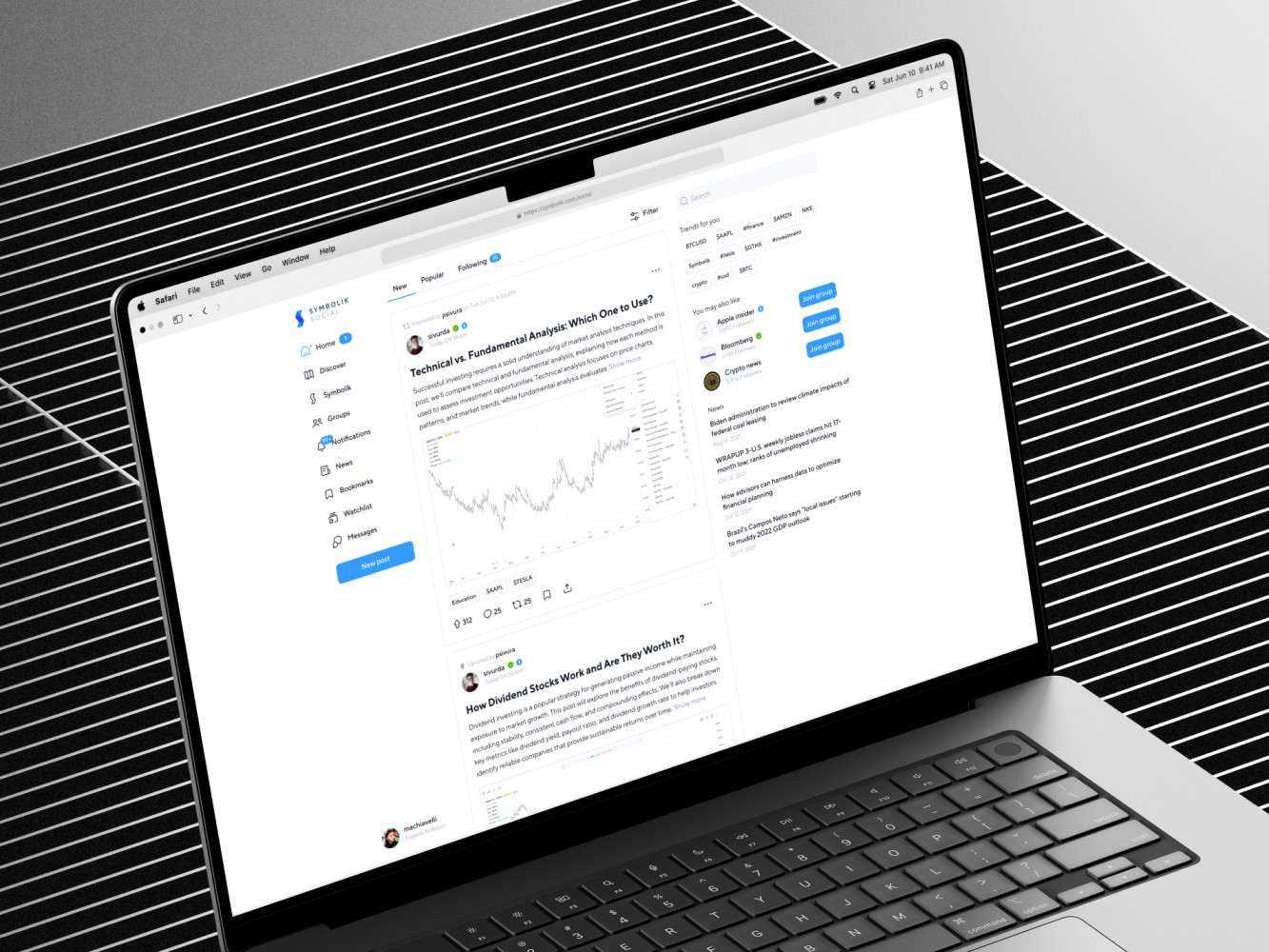
Symbolik case by Shakuro
Why Work With an AI Recommendation System Development Company?
You can build a small recommendation feature in-house, especially if your team already has product data, backend experience, and machine learning knowledge. For some products, that is enough.
But when the system touches revenue, user retention, compliance, or large volumes of data, outside help can make sense. An AI recommendation engine development services team can help with architecture, model selection, UX, data pipelines, backend integration, testing, and post-launch improvement.
The point is not to make the system more complicated. Usually, the point is the opposite. Keep the first version focused, prove value, and then add complexity only where it actually helps.
Final Thoughts
A good AI recommendation system feels simple to the user because a lot of careful work happens behind the curtain. Data needs to be clean. Models need to be chosen for the right reasons. The interface needs to feel natural. Business rules need to be respected. And the system needs to keep learning after launch.
If you are thinking about building one, start with the user moment. Where does a recommendation genuinely help? What choice feels heavy, repetitive, or easy to get wrong? That is usually where the product opportunity begins.
Want to talk through your idea? Tell Shakuro about your project, and we can help shape the first version into something useful.
FAQ
How Long Does It Take to Build an AI Recommendation System?
A basic MVP can take a few months, depending on data readiness and integrations. A more advanced system with real-time personalization, dashboards, A/B testing, and retraining pipelines takes longer. The honest answer: the cleaner your data is, the faster the first useful version can happen.
What Data is Needed for a Recommendation Engine?
You usually need user behavior data, item or content metadata, transaction history, search logs, ratings, clicks, views, and profile information. You do not always need all of it at the start, but the more reliable signals you have, the better the recommendations can become.
Can a Recommendation System be Added to an Existing App?
Yes. It is often added via APIs, event tracking, and frontend recommendation blocks. Usually, the more difficult part is tying the system into the existing databases, analytics tools, business rules, and user flows without making the product feel messy.
What is the Best Algorithm for Recommendations?
There is no one best algorithm. There are different cases where collaborative filtering, content-based filtering, hybrid models, embeddings, and rule-based logic work. That depends on your data, product type, user behavior, and business goals.
How Do You Measure Recommendation System Performance?
Typical metrics are click-through rate, conversion rate, revenue per user, watch time, course completion, retention, average order value, and engagement with recommended items. Also look for negative indicators, such as multiple dismissals or users completely ignoring the recommendation block.
Related reading
- NLP Application Development: Process, Use Cases, Cost, and Key Challenges
- AI Chatbot Development: A Practical Guide for Building Business-Ready Chatbots
- AI for Software Development: Benefits, Challenges, and Tools to Know
- AI Automation Software Development: What to Build, What to Automate, and Where to Start