Key Takeaways
- Start with a promise your club can keep. Talk to prospective members, look at nearby clubs, and get specific about what would make someone want to join yours.
- Test the identity where people will see it. Try the emblem on a cap, print a scorecard, view the entrance sign from the road, and open the website on your phone.
- Give website visitors one clear next step. Offer updates, a membership inquiry, or an application based on what’s ready. Tell people what happens after they submit.
- Build interest while the course takes shape. Share progress people can see, put someone in charge of following up, and send preview invitations and founding-member terms once they’re confirmed.
- Make the first visit feel like the club you described online. Time signage, apparel, and welcome materials around confirmed dates and quantities. Then walk through arrival day from a visitor’s point of view.
The first time someone asks about joining your golf club, you might be standing outside a site trailer with mud on your shoes. They’ve seen the crews out there for months. Now they want to know what kind of club it’ll be, when they can play, and whether they can put their name down. Fair questions. A little awkward if you’re still debating the name.
That’s the tricky part of golf club branding before you open. You’re trying to describe a place people can’t play yet, and every week seems to bring another decision about the course, the clubhouse, or the opening date. I’d start with something you can picture now. Who do you want coming back every Saturday, and what would make them look forward to it all week?
That answer gives you something to work with when you’re choosing a name, briefing a designer, or figuring out what to put on the website. This guide takes you through those decisions in order, right down to what to send the people on your waitlist when the opening date is still penciled in.
What Should a Golf Club Brand Communicate Before Opening?
Before the first tee time, people are already trying to picture themselves at your club. Would they feel at home there? Could they get a round in on a Saturday morning? What would they get out of joining? Your golf course branding should give them a clear sense of who the club is for, what a visit might feel like, and why they can believe you’ll deliver it.
Say you’re opening a private club for local golfers who want a regular weekend game and still need to be home by lunch. That’s a pretty specific audience. It gives you something concrete to talk about on your membership page. If you’ve decided to leave more time between groups, explain why. If members will be able to book a week ahead, tell them how that’ll work. Those details help someone picture a Saturday at the club, right down to whether they can make it to their kid’s soccer game afterward.
Some of those decisions may still be up in the air. That’s fine. Share what you’ve settled on and give interested golfers a way to hear about the rest. For a public course, the same thinking applies, though readers may care more about who can book, how far ahead they can do it, and what kind of round to expect.
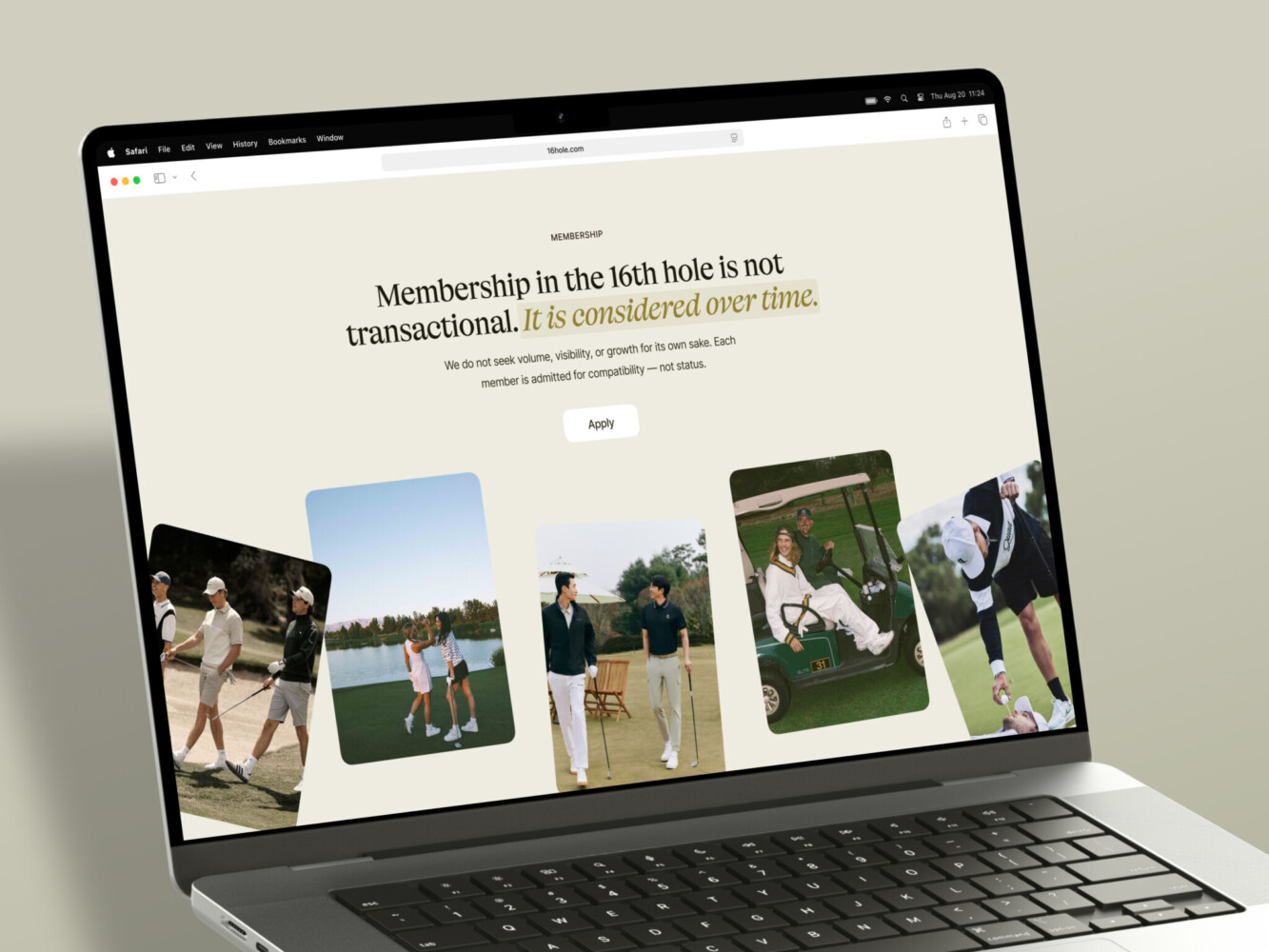
Golf club website by Shakuro
Define Your Positioning and Choose a Club Name
Start With the People You Want to Attract
Talk to a few people you’d like to see on your membership list. Ask where they play now, when they can usually get out, and what would make joining a club worth it. You might hear that they love their Saturday group but can rarely make a full round, or that they’d take more lessons if they had people at a similar level to play with afterward.
When working on a golf club branding, look at the clubs nearby. Read their membership pages, ask about the typical week, and pay attention to what your own course, setting, and team can realistically offer. Say you have a teaching pro and room on the tee sheet on Thursday evenings. “Members can take a short clinic and play nine holes together after work” gives people a much clearer reason to join than “a premium golf experience.” It also gives your team something specific to plan for.
Turn the Positioning Into a Name and Voice
Look close to home for golf course name ideas. There might be a ridge you can see from the first tee, an old name for the property that locals still use, or a club tradition you’re already planning to start. Try each name in a sentence you’d actually say, like “I’ll meet you at ___.” Then print it at scorecard size. A name can feel quite different there than it did on a whiteboard. Check domain availability and leave time for trademark clearance before committing.
Carry the same voice from the membership page into your opening updates. If the club you’re describing is warm and straightforward, a note about a delayed preview can sound that way too. “The practice green needs a little more time. We’ll send a new date as soon as it’s ready.” It should feel like it came from the same people who’ll greet members when they arrive.
Build a Visual Identity That Works On and Off the Course
A golf club logo design can look great on a designer’s screen and turn into a blur when it’s stitched onto a cap. That’s a frustrating thing to find out after you’ve ordered two hundred of them.
Give each part of the identity a job. The wordmark makes the club’s name easy to recognize. The emblem gives you a compact mark for things like caps and bag tags. Your typefaces need to handle both a welcome sign and the tiny numbers on a scorecard. Pick a color palette that feels at home on the property and gives you enough contrast to keep things legible. And think about what you’ll photograph. The view down the first fairway gives people a sense of the place. A few golfers lingering over coffee tell them something about club life.
Before you sign off, get a sample of the emblem embroidered at the size you’ll use. Print a scorecard and try reading it outside. Look at the entrance sign from the distance where a driver first sees it. Then pull up the website on your phone. Can you read the club name and find the membership link without pinching the screen? These checks are easier to make while you can still change the artwork.
For Emerill Golf Club, Shakuro took cues from the open landscape and the unhurried feel of the place. Deep green and warm beige picked up tones from the surroundings, while natural textures and generous spacing gave the landscape photography room. The wordmark and emblem carried that same character across entrance signage, printed materials, apparel, and digital layouts.
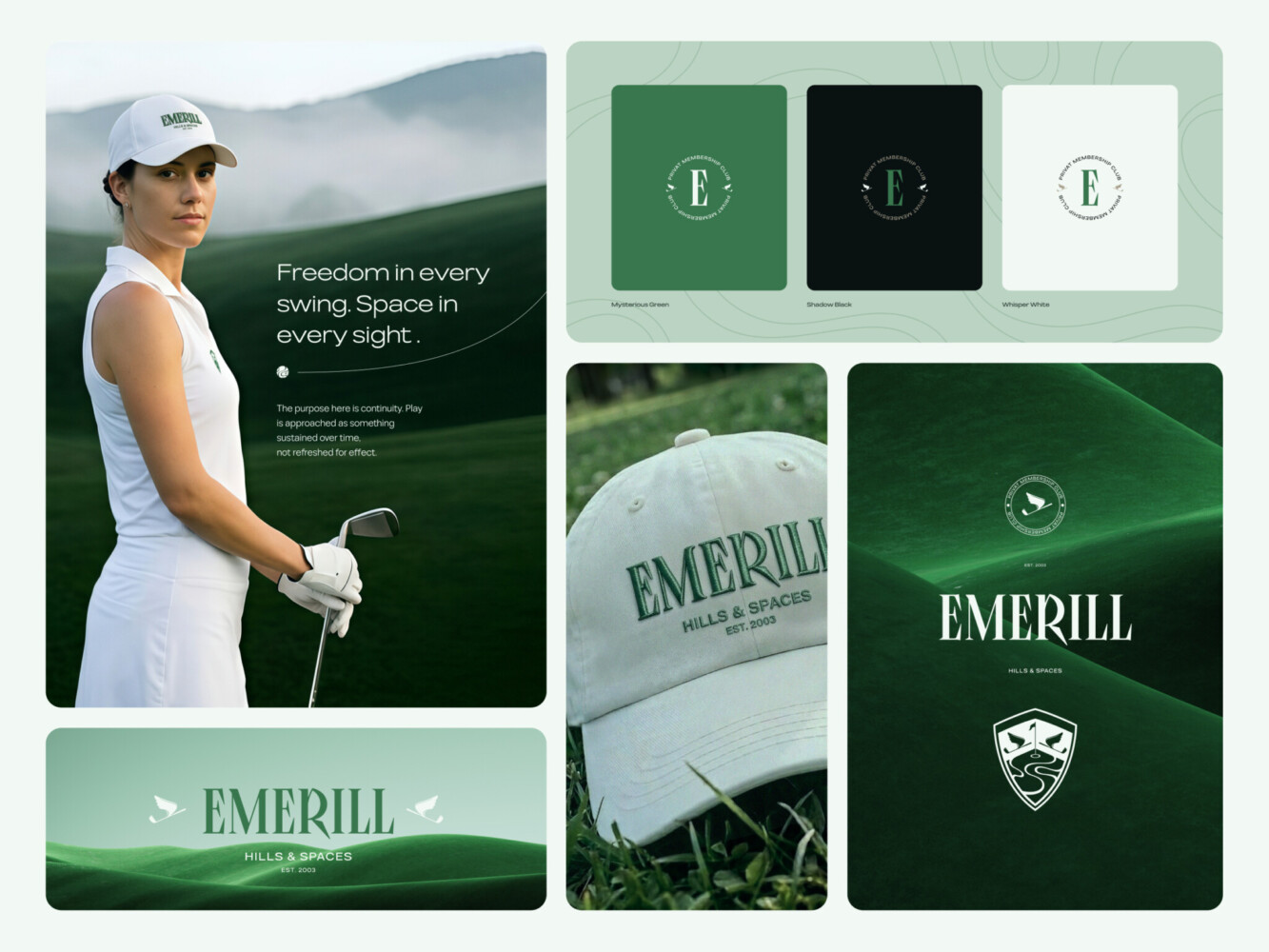
Branding for Emerill by Shakuro
Launch a Website That Gives Prospective Members a Next Step
Publish a Focused Pre-Opening Site
Picture someone hearing about your club from a friend and looking it up on their phone after a round. They should be able to tell where it is, what kind of club you’re building, and how to stay in the loop. At this stage, golf course website design can be pretty simple. Explain what makes the club worth a visit, show where it is, and give people a look at the course. A routing map or a few photos from the build will do. Share the opening details you’ve confirmed, then give visitors one clear action to take.
Greensward, Shakuro’s website design concept for a private golf club, shows how that can work. The Course section makes details like par and yardage easy to scan, while the About section uses photography and a slower pace to give readers a feel for the club. Both are easy to explore on a phone or a desktop.
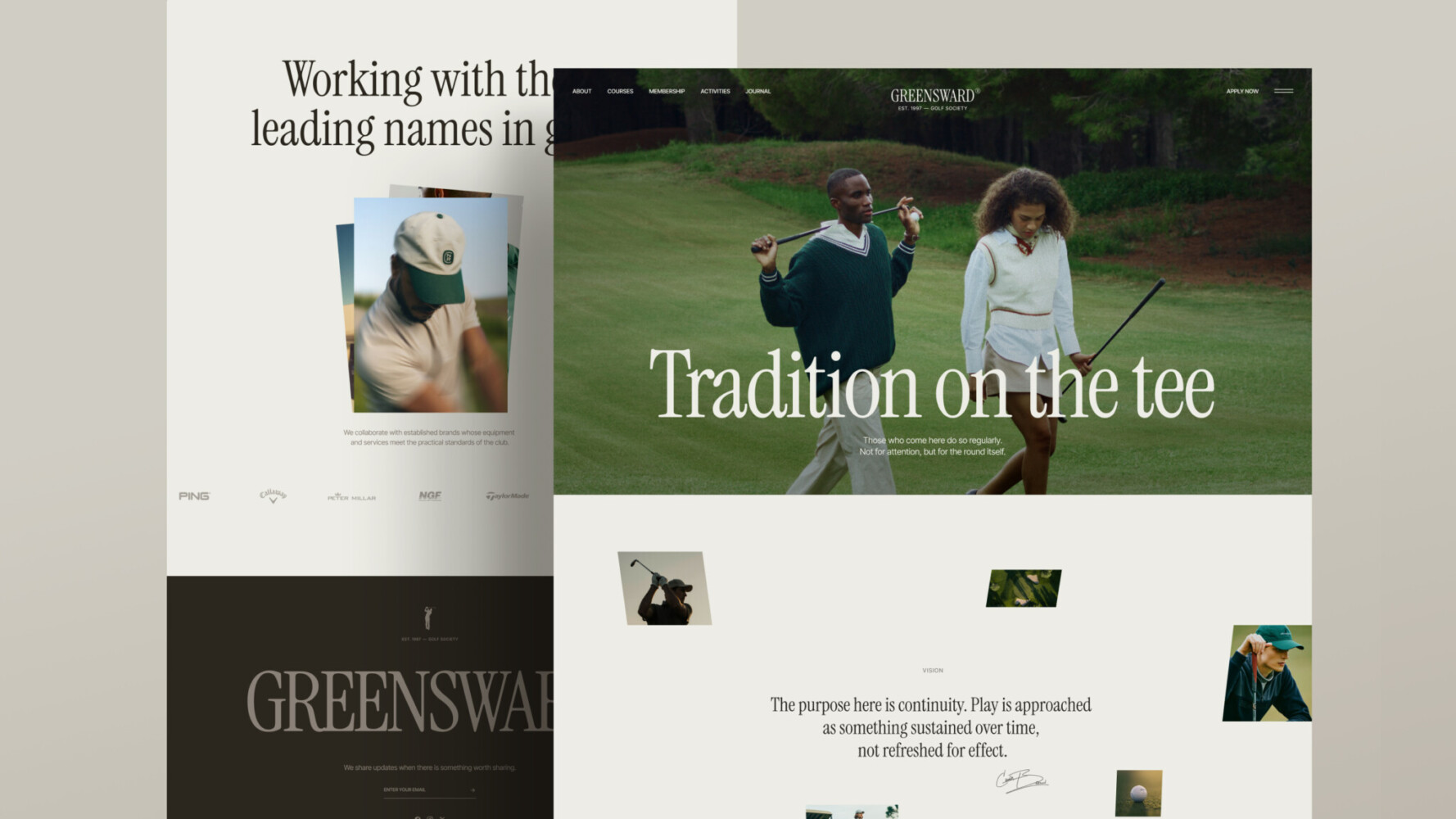
Greensward website by Shakuro
Choose a Call to Action That Matches What You Can Offer
If membership terms are still taking shape, invite people to sign up for updates. Call it a waitlist if joining gives them a place in a queue, and explain how invitations will go out. Use an inquiry form when someone on your team has time to reply. An application makes sense once you can tell people who’s eligible, what membership includes, and when they can expect a decision.
When working on golf course branding, try submitting the form yourself. Does the confirmation tell you when the next update will come or who’ll be in touch? It’s a small detail, but it saves people from wondering whether their message went anywhere. If tee-time booking or a member portal is part of the plan, you can add it when members are ready to use it.
Build a Pre-Opening Marketing Plan Around Founding Members
Give People a Reason to Follow the Build
A golf course marketing plan can start with a simple introduction. Tell people who the club is for, what drew you to the property, and what you’re building there. A short interview with the head pro can help. Ask what they’d like a new member to feel comfortable doing in their first week at the club.
As the course takes shape, give people something they can see. Walk a few holes with the superintendent and let them explain why a green sits where it does. If a stretch still looks like a field, show it again once the contours are visible. People who’ve been following along will have something to look for the next time they drive past.
Once your dates and offers are confirmed, your golf course marketing can get more direct. Send a preview invitation with the date, what guests will see, and how to RSVP. If you’re ready to open founding memberships, explain what’s included and give people a way to ask questions before they decide.
Turn Early Interest into Membership Conversations
Country club branding gets personal pretty quickly when you’re talking to prospective founding members. Say someone asks whether the Thursday clinics are suitable for a golfer who’s just getting back into the game. Have someone from the club answer that question and offer to introduce them to the pro. Give that person on your team time to follow up, too. Even a short conversation can tell you something about what prospective members are looking for.
Keep your golf course email marketing simple. Send a confirmation when someone signs up, share progress when there’s something worth showing, and send invitations when you have a firm date. Track where signups come from, which inquiries are a fit for the membership you’re offering, and how many applications come in once they open. That’ll help you decide where to spend your time in the weeks before opening.
Decide What Needs to Be Ready for Opening Day
A lot of things will feel urgent at once. The sign shop wants final artwork, the opening date has moved again, and someone has just asked what founding membership actually includes. It helps to sort the work by what you can decide now and what depends on the details still coming together.
- Start with the golf club branding and the website. Agree on who the club is for and what you can promise them. Settle on a name and a core visual identity, then get the pre-opening site live. Give one person clear ownership of membership inquiries and make sure they know where to go for answers.
- Proof the opening-day materials early. Get samples or proofs of the entrance signage, scorecards, apparel, and member welcome materials. Ask vendors when they need final artwork and quantities. Once you have a firmer date and a better idea of how many people you’re welcoming, confirm the orders and book installation.
- Check the details before people arrive. Walk the route a first-time visitor will take from the road to the clubhouse. Check that the signs point them where they need to go, the welcome materials match what members were promised, and the website has the latest information.
The budget starts to come into focus when you price the actual work. For printed materials and apparel, quantities, finishes, and reorders all matter. Signage adds fabrication and installation.
For photography, decide whether you need a progress shoot now and a second visit once the course is ready. On the website, connecting a signup form to an email list is a smaller job than integrating tee-time booking or a member system.
At Shakuro, we design branded apparel, accessories, and other merchandise to help you spread awareness about your golf club.
If construction slips, update the website and tell the people who’ve already made plans to visit. Leave dates off materials you’ll want to use again. And if membership benefits are still being finalized, give your team a plain answer they can use on the phone or over email. Tell people what’s confirmed and when they can expect to hear more.
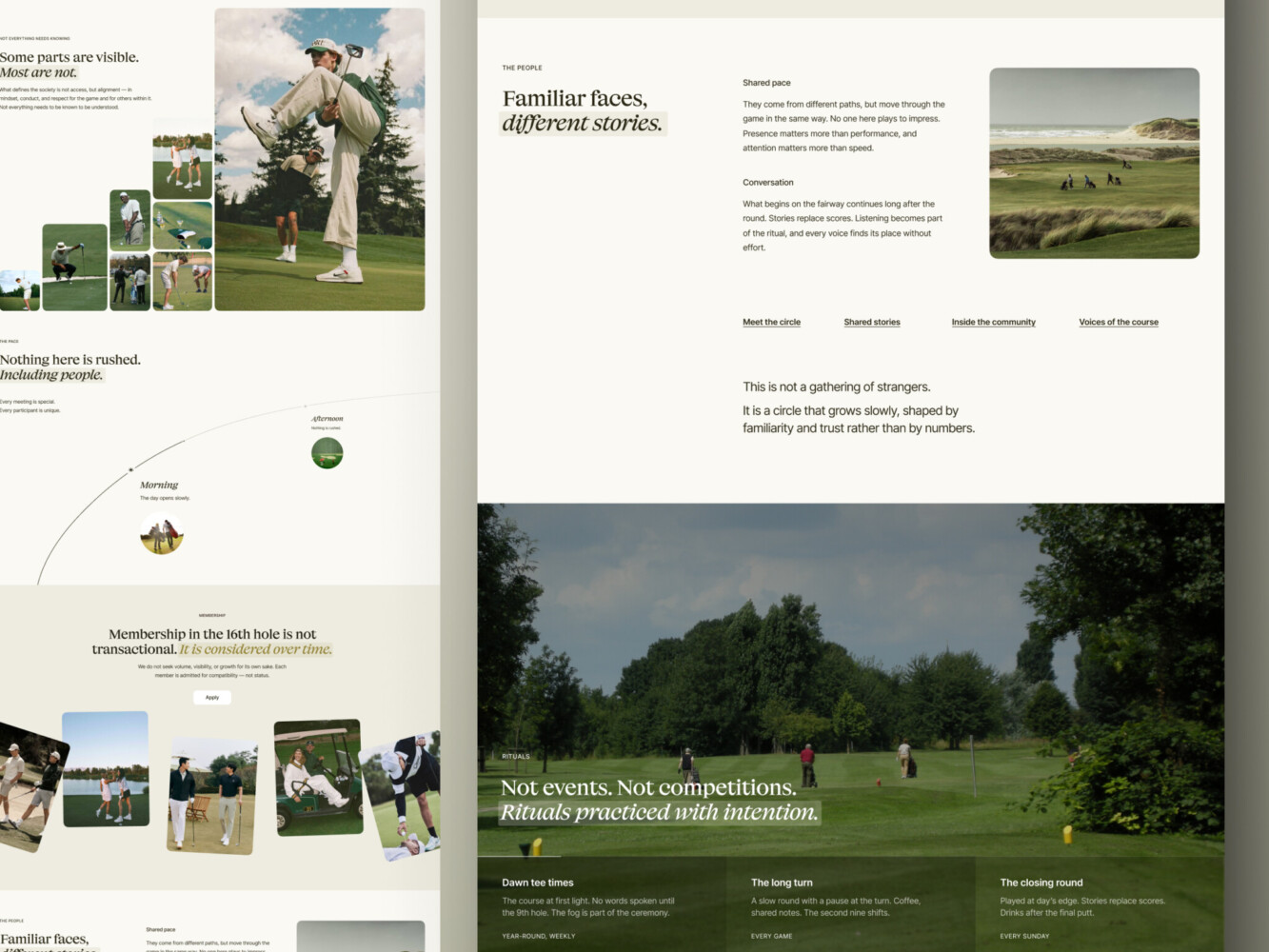
Golf website by Shakuro
Bring the Brand Into the First Visit
Picture someone pulling in for a preview. Your website made the club sound relaxed and easy to get to know. Now they’re looking for the turn off the road and wondering where to go once they park. A sign they can read as they approach and a warm “You’re in the right place” at the clubhouse make that promise feel real.
Start golf club branding by defining what people can expect from your club. Give interested golfers a clear way to put their name down and find out what happens next. Then carry the same look and voice into opening day, right down to the scorecard they pick up and the welcome they hear.
If you’d like to talk through your club’s brand identity or launch website, we’d love to hear what you’re building.
Frequently Asked Questions
When should you start golf club branding?
Start while the course is still under construction. You can talk to prospective members, define what the club will offer, choose a name, and build a visual identity well before anyone tees off. You can share progress along the way. Announce an opening date, take tee-time bookings, or invite people to an on-site preview once the work those plans depend on is confirmed.
How do you attract founding members before the course opens?
Start with personal introductions. Ask people who know the local golf community to connect you with players who might be a good fit. Follow up with photos or short updates that show how the course is taking shape, and invite people out for a preview when the site is ready. Once founding memberships are available, spell out what they cost, what’s included, and when members can start using the club.
What should a pre-opening golf club website include?
Tell visitors what kind of club you’re building, where it is, and what they can expect from the course. A routing map or a few recent photos can help. Share the opening details you’ve confirmed and give people one clear next step, such as signing up for updates or asking about membership. The confirmation should tell them when they’ll hear from you and what to expect.
How much should you budget for golf club branding?
Price the essentials first. Get a quote for a core identity and a landing page with a signup form. Then build out the opening-day budget with separate estimates for photography, signage and installation, scorecards, apparel, and member welcome materials. If the site needs to connect to tee-time booking or a membership system, price those integrations separately, too. That gives you a budget you can adjust as the opening date and order quantities firm up.