Healthcare mobile app security and compliance start at the architecture stage, not after launch. In the U.S., an app connected to the healthcare system falls under HIPAA, which governs how protected health information is stored, accessed, and transmitted. In Europe, GDPR adds user control over medical data. Both shape technical choices: where data lives, how logs and backups are handled, and which third-party tools and cloud providers you can use.
The baseline is encryption at rest and in transit, multi-factor and biometric authentication, clear access boundaries, and regular security audits with penetration testing. Postponing these decisions is expensive, and the stakes are personal: a leaked password can be reset, but a leaked diagnosis can follow someone for years. Regulated products such as fintech mobile application development follow the same logic, and medical data raises the bar further.
Below, we cover protecting sensitive patient data, the key regulations (HIPAA and GDPR), security best practices, design and usability considerations, and how we handle security and compliance in our healthcare projects.
For those who prefer to listen rather than read, this article is also available as a podcast on Spotify.
Protecting Sensitive Patient Data
Healthcare apps deal with information people don’t usually share casually. Medical histories, prescriptions, test results, mental health records—this data carries context and consequences. Prescription and medication data also flows into pharmacy and pharma software, which adds its own regulatory requirements. When someone enters it into an app, they’re extending a certain level of trust, whether they think about it explicitly or not.
On the engineering side, protecting that data is less about one big solution and more about consistency. Encryption is expected. After that, it’s a series of smaller decisions: limiting access properly, keeping data flows understandable, avoiding unnecessary duplication, being careful with logs and integrations. Most risks appear in the gaps between systems, not in obvious places.
When those decisions are made early, they tend to hold up well. When they’re postponed, they often turn into awkward patches. That’s why many teams borrow heavily from mobile app security best practices at the planning stage rather than trying to retrofit them later.
There’s also a practical layer that doesn’t show up in mobile healthcare app compliance checklists. Users notice when an app behaves predictably with their data. Clear permissions, no unexpected sharing, understandable boundaries—these details quietly shape whether a healthcare product feels safe to use. And in this space, that feeling matters more than most teams initially expect.
Key Regulations and Compliance Standards for Healthcare Apps
Once a healthcare app moves past the idea stage, regulation stops being background noise. You’re no longer just shipping features—you’re working inside systems that already have rules, expectations, and real consequences. Teams usually feel this the moment an app starts dealing with real users instead of demos.
Another complication is that there’s no universal framework. Requirements shift depending on region and even on how the product is positioned. A telemedicine app, a monitoring tool, and a wellness companion can end up in very different legal categories. The differences don’t always look dramatic on the surface, but they affect how the product is built and maintained.
In practice, though, a few frameworks come up repeatedly. In the U.S., most conversations eventually circle back to HIPAA compliance for mobile apps. In Europe, GDPR plays a similar role, especially when medical data is involved. They’re not interchangeable, but both influence day-to-day technical decisions more than teams initially expect.
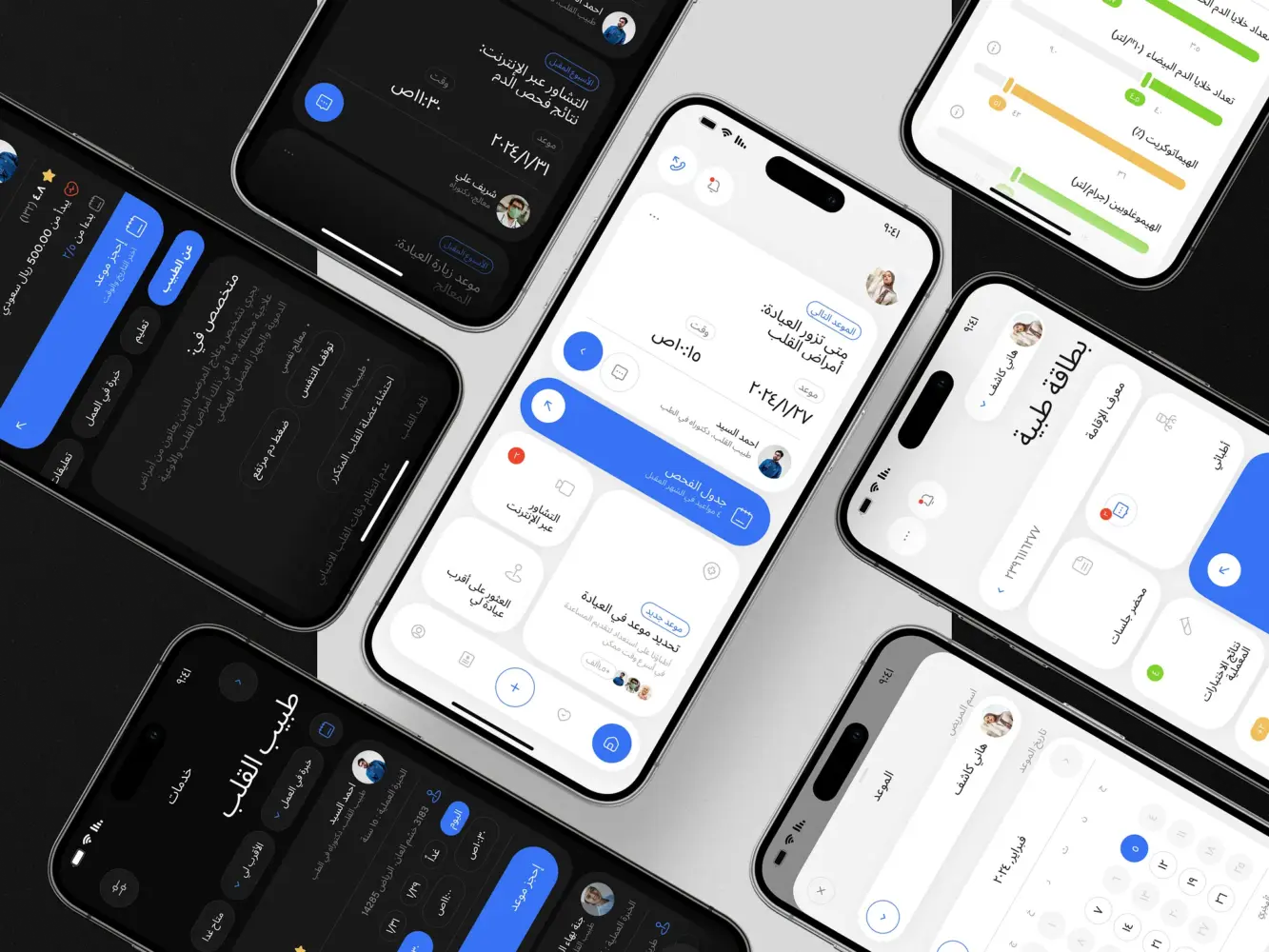
Bless You – Arabic Health App, Branding by Shakuro
HIPAA Compliance for Mobile Apps
If an app connects in any way to the U.S. healthcare system, HIPAA tends to enter the picture sooner or later. It revolves around protected health information (PHI) and how that data is handled — stored, accessed, transmitted.
For mobile teams, HIPAA rarely arrives as a single requirement. It’s more like a set of constraints that build up over time. Encryption is a given. Authentication needs to be reliable. Access boundaries should be clearly defined. Logging has to exist for real reasons, not just as a box-ticking exercise.
Where things usually get more complicated is outside the app itself. Infrastructure providers, analytics platforms, cloud storage, logging tools—all of these can influence compliance. The moment third parties are involved, Business Associate Agreements become part of the process. Not exciting work, but it reflects how HIPAA compliance for mobile apps looks at the whole environment, not just the codebase. A HIPAA compliance checklist helps keep track of all these pieces.
Working within these constraints tends to change how a mobile app development team operates. There’s more upfront clarity. Fewer assumptions. Decisions are written down more often. It can feel heavier, but it also removes a lot of ambiguity.
GDPR Compliance in Healthcare Apps
If a product touches European users, GDPR is hard to ignore. It applies broadly, but healthcare data falls into a more sensitive category, which raises expectations in practice.
Compared to HIPAA, GDPR feels less technical on the surface and more centered around user control. People should understand what data is collected and why. They should be able to see it, correct it, or ask for deletion. That pushes part of the responsibility into product design—consent flows, account settings, and data visibility stop being purely legal topics.
On the engineering side, GDPR often leads to more restraint. Collect only what’s needed. Don’t store data longer than necessary. Be explicit about where it lives and how it moves. These ideas affect schema design, backups, and integrations in quiet but very real ways.
Then there’s the infrastructure angle. Data residency and cross-border transfers come up quickly, especially with global cloud setups. Even tools that feel routine—analytics, crash reporting—sometimes need a second look.
More than anything, GDPR changes the mindset. Privacy stops being a milestone and becomes something ongoing. In healthcare apps, that shift usually feels natural. Users already expect a higher level of care around their data—GDPR just makes that expectation harder to ignore.
Mental Health App Development: Extra Privacy Requirements
Mental health app development follows the same HIPAA and GDPR rules as other healthcare apps, but the data is more sensitive and users are often in a vulnerable state, so several decisions need extra care.
- Classify the data early. Mood logs, therapy notes, and chats with a clinician are health data. Under HIPAA, psychotherapy notes get stronger protection than the rest of the record, and in the U.S., records from substance use disorder treatment fall under separate federal confidentiality rules. Under GDPR, data about mental health is special category data.
- Keep third-party SDKs away from sensitive screens. Analytics and advertising tools that log screen names or events can reveal that a person uses a therapy or addiction app, and the U.S. Federal Trade Commission has acted against health apps that shared such data with advertisers.
- Design for discretion: neutral notification text, an app lock with a PIN or biometrics, and nothing sensitive on the lock screen.
- Plan the crisis path. An app with chat or self-help content needs a visible way to reach emergency help and a written rule for what staff do when a message signals risk.
These choices shape the data model, the analytics setup, and onboarding, so they belong in discovery, not in a post-launch audit.
Security Best Practices for Healthcare Mobile Apps
In healthcare apps, security stops being a feature and becomes part of the baseline. By the time real users enter the system, most of the important decisions should already be made. Trying to bolt security on later usually means compromises—and in healthcare, those compromises tend to surface sooner or later.
Part of the challenge is how long medical data stays relevant. A leaked password can be reset. A leaked diagnosis or treatment history can follow someone for years. That’s why healthcare teams tend to lean toward layered protection rather than relying on a single strong mechanism.
There’s no universal checklist that guarantees safety, but a few patterns show up consistently in mature products. They’re not exotic— mostly well-understood healthcare app development best practices applied with more discipline.
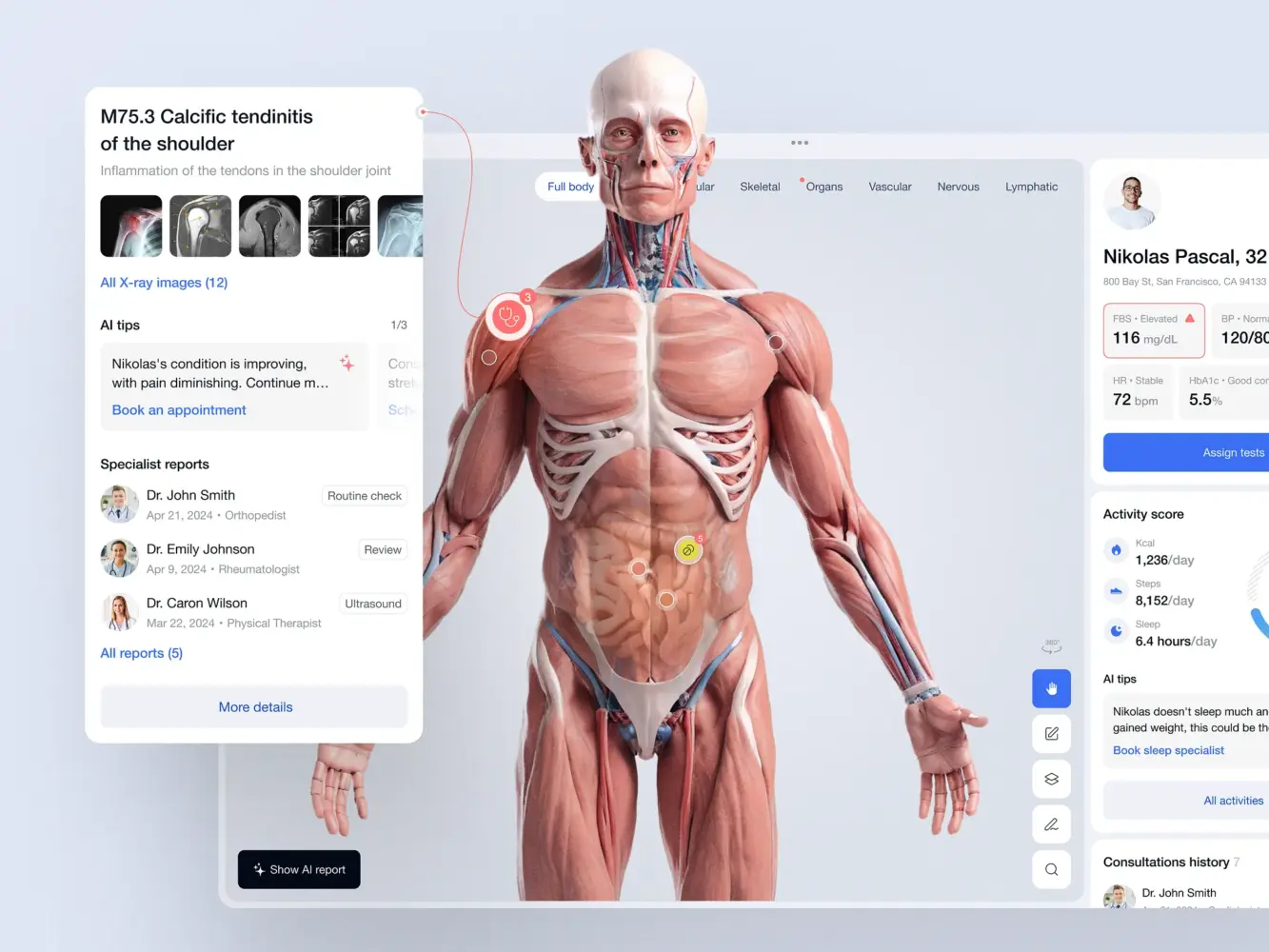
Doctor’s Dashboard Design Concept by Shakuro
1. Data Encryption at Rest and In Transit
Encryption is the floor, not the ceiling. Healthcare apps are expected to protect data while it moves through the network and while it sits in storage. Both states matter, and weak handling in either one tends to become a liability.
In transit, TLS is standard, but the edge cases are where problems hide. Background sync, third-party SDK traffic, older API versions—these are common places where encryption policies drift if nobody keeps an eye on them.
At rest, the conversation shifts toward infrastructure. Database encryption, key rotation, backup handling, and access policies all come into play. These choices are hard to revisit later, so teams that treat encryption as an architectural decision early on usually have fewer surprises down the line.
2. Secure Authentication Methods (MFA, Biometrics)
Once sensitive health data is involved, authentication deserves more attention than it often gets in consumer apps. A basic password model leaves too much room for account takeover, which is still one of the most common breach vectors.
Multi-factor authentication closes part of that gap. Even simple MFA setups raise the effort required to compromise an account. In secure healthcare mobile apps that trade-off is usually acceptable, even if it introduces a bit more friction.
Biometrics make the experience more practical on mobile. Fingerprint and face unlock are already familiar to users, and when handled correctly, they improve everyday session security. They’re not a replacement for backend controls, but they reduce risks tied to lost devices or reused passwords.
What matters most is alignment. The stronger the data exposure, the more deliberate authentication needs to be. Inconsistent access flows are often where problems start.
3. Regular Security Audits and Penetration Testing
Even solid systems don’t stay solid automatically. A new integration here, an updated library there, a feature that shipped fast and never got revisited. None of this looks risky in isolation, but the surface area slowly grows.
Security audits help reset that perspective. They’re less about hunting dramatic flaws and more about spotting quiet misalignments—permissions that grew too wide, outdated configurations, assumptions that no longer hold.
Penetration testing approaches the same problem from the outside. Instead of reviewing architecture, it treats the app as a target. That shift in viewpoint often reveals things internal teams miss, especially in authentication flows or integration layers.
Running these checks regularly keeps issues small while they’re still easy to fix. It also feeds back into engineering habits. Teams that expect scrutiny tend to write cleaner boundaries and make fewer casual security assumptions.
There’s also a practical side effect: stronger security almost always introduces some overhead. Encryption, additional checks, monitoring—none of it is free. Teams that pay attention to mobile app performance optimization early usually avoid having to untangle security and speed later.
Mobile App Development for Healthcare: Design and Usability Considerations
In healthcare apps, design isn’t something people consciously notice—but they feel it immediately when it’s off. These products are often opened in less-than-ideal moments: when someone is worried, tired, or trying to figure something out quickly. In that state, even small friction stands out.
Mobile app development for healthcare tends to favor clarity over expression. Most users aren’t exploring—they’re trying to get in, do something specific, and leave. If the structure isn’t obvious, the experience starts to feel heavier than it should.
The products that hold up over time usually share the same quality: they don’t draw attention to themselves. No clever patterns, no surprises. Just predictable structure that behaves the way users expect it to.
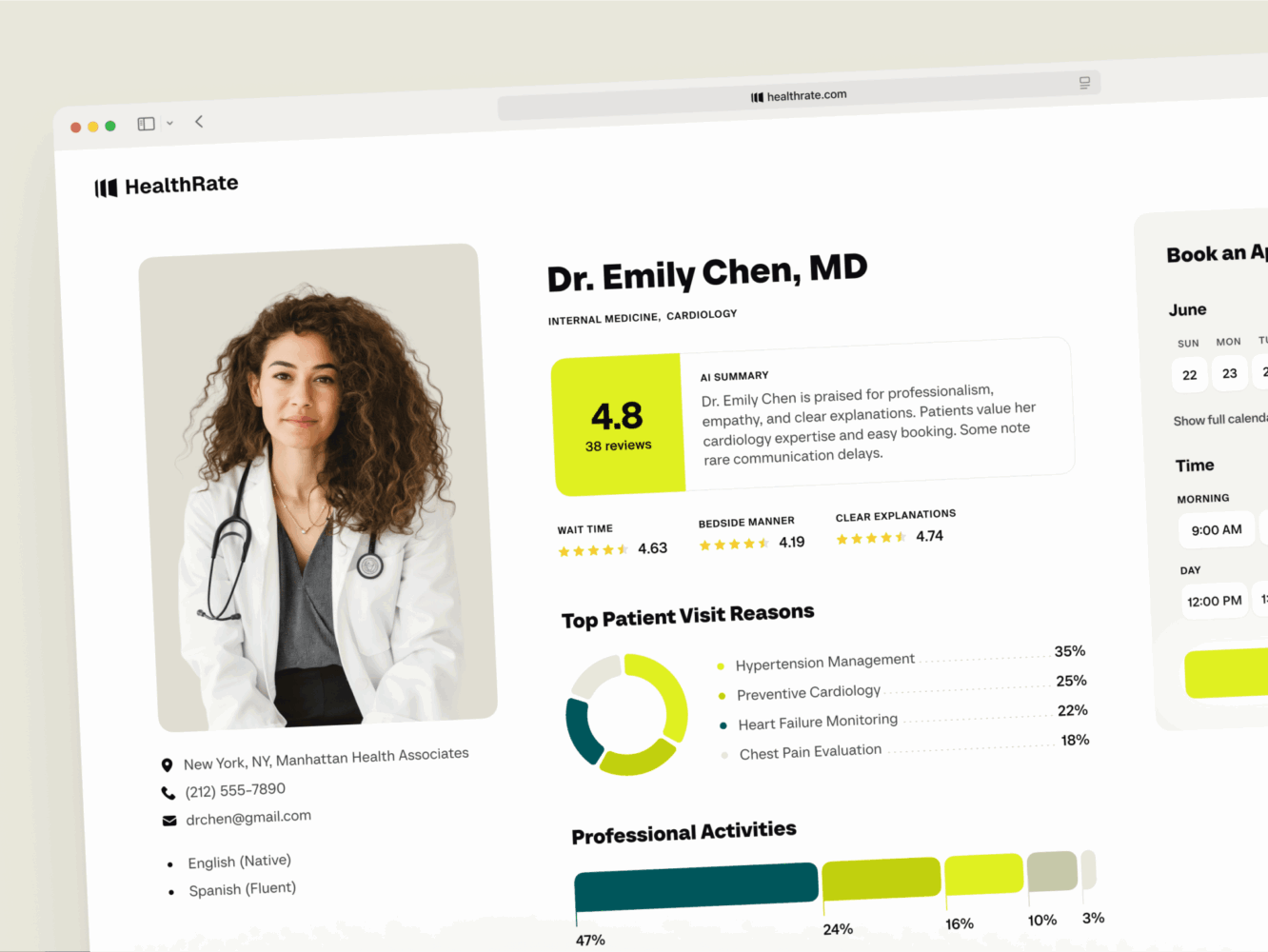
Design for Healthcare Platform by Conceptzilla
1. Streamlining Patient Onboarding and Information Access
The first real interaction is usually onboarding, and it leaves a strong impression. If the entry feels demanding, people don’t always push through—they stall, postpone, or abandon the setup entirely. Healthcare apps feel especially sensitive here because the information being requested is personal from the start.
Making onboarding easier is mostly about pacing. Not asking for everything at once. When the flow feels understandable, resistance drops on its own.
After that, the everyday experience takes over. Once inside the app, the basics should be easy to reach without thinking. Appointments, medications, results—the things people check most often should stay in stable, familiar places. Constantly shifting navigation creates low-grade confusion that builds over time.
There’s also a subtle trust factor in how editable information feels. If users know they can fix something later, they’re less anxious about entering it in the first place. That sense of reversibility makes the whole interaction feel safer.
2. Ensuring Accessibility for All Users
Healthcare apps rarely have a uniform audience. Alongside confident digital users, there are people who are older, unwell, distracted, or simply not comfortable with apps. The same interface can feel very different depending on the situation someone is in.
Accessibility here isn’t about special modes—it’s mostly about restraint. Text that doesn’t demand zooming. Buttons that don’t require careful aiming. Contrast that works in bright light or late at night. These things sound basic, but they change how usable the app feels in real life.
Language plays into this as well. Medical terms already carry weight. When the interface adds density on top, it becomes tiring quickly. Apps that keep wording simple and direct tend to feel more manageable, even when the subject matter is complex.
Then there are assistive features—screen readers, larger text, voice input. In healthcare, these aren’t edge cases. Assuming the platform will handle everything by default usually isn’t enough; gaps tend to show up once real scenarios are tested.
One pattern shows up again and again: accessibility work rarely benefits only a narrow group. When interactions become clearer and screens less demanding, the whole product becomes easier to live with. For most teams, that realization comes after the first round of real user feedback.
How Shakuro Ensures Security and Compliance in Healthcare Mobile Apps
Mobile app development for healthcare leaves less room for guesswork than most digital products. Healthcare app security and compliance aren’t layers you add later—they influence how the product is shaped early on. In practice, this changes the whole medical app development process. Instead of starting from patterns that worked elsewhere, the process usually begins with context: where the app will live, who will use it, and what kind of data moves through it.
That context tends to matter more over time. Healthcare apps rarely stay frozen in their first version. They expand, adapt to new regions, or pick up new responsibilities. Decisions that feel minor early on—around structure, flows, or data handling—often define how smoothly that evolution goes.
Tailored Solutions for Healthcare Providers
Healthcare software looks similar on the surface, but the reality underneath varies a lot. A telemedicine app, a patient companion, and an internal clinical tool may all sit in the same category, yet behave very differently once people start using them.
Tools built for providers tend to prioritize clarity and stability. Medical staff don’t interact with software in exploratory ways—they need interfaces that behave predictably and don’t slow them down. Patient-facing products shift the balance. The challenge there is usually emotional as much as technical: people might be anxious, distracted, or unfamiliar with the format.
Localization adds another layer that’s easy to underestimate. Healthcare apps don’t just translate text—they adapt to reading direction, cultural expectations, and local regulations. Those factors quietly shape layout decisions and interaction patterns.
There’s also the question of longevity. Many healthcare products begin with a narrow scope and grow outward. When that growth is expected early, the structure tends to hold up better later.
Proven Success in HIPAA-Compliant Mobile Apps
Shakuro has worked on a range of products where privacy and data structure were central constraints, not afterthoughts.
Bless You is one of the clearer examples. It’s a healthcare platform built for users in Saudi Arabia, which immediately introduced specific requirements. The interface had to work naturally in Arabic, including right-to-left reading and layout logic, while still leaving room for an English version later. That duality influenced a lot of small decisions early on.
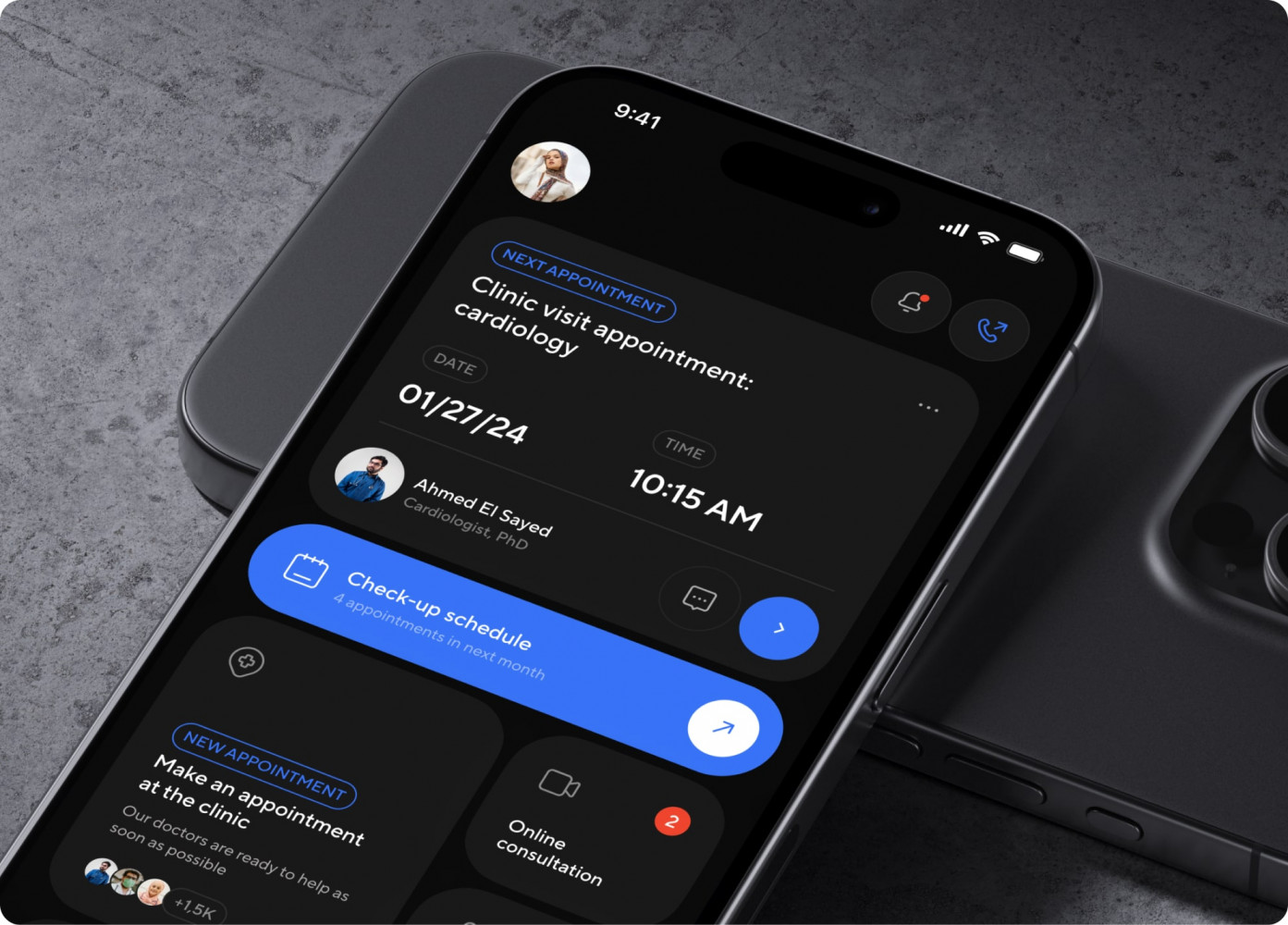
Bless You App by Shakuro
Healthcare mobile app regulations and privacy expectations were part of the background from the start. The product needed to align with regional requirements and remain compatible with broader standards like GDPR. Addressing those boundaries early made the product easier to evolve without reworking core flows.
A lot of attention also went into usability. The interface stayed deliberately restrained—minimal distractions, straightforward navigation, clear hierarchy. The assumption was simple: people dealing with health concerns shouldn’t have to decode the interface while using it.
Even in adjacent domains, similar patterns show up. Fit for Bucks, for example, wasn’t a clinical app, but it dealt heavily with user-generated data from wearables. Different devices meant different syncing logic, and reliability became a real concern. The system needed safeguards to prevent manipulation and keep the data trustworthy. Problems like that aren’t unique to wellness apps—they echo challenges that appear in regulated environments where data integrity matters.
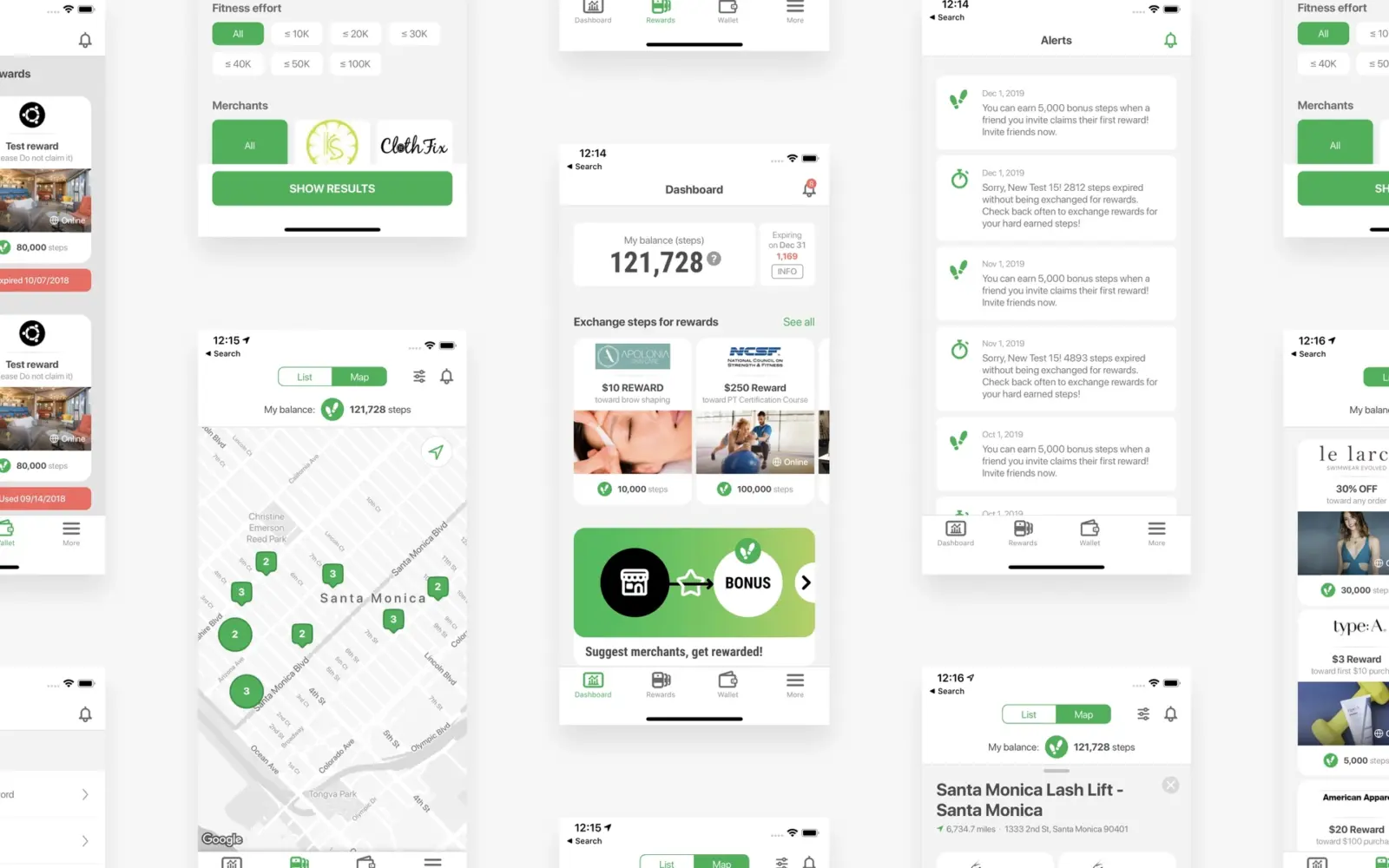
App For a Well-Being Business Startup by Shakuro
Looking across projects like these, the through-line isn’t a specific stack or framework. It’s a way of structuring the product so data flows are predictable and the interface stays out of the way. In healthcare, that combination tends to matter more than any individual feature.
If you’re building a healthcare product and want a team that understands both compliance and real-world usability, it’s worth exploring a collaboration with an experienced healthcare mobile app development company like Shakuro.
FAQ
Does a healthcare mobile app need to be HIPAA compliant?
If the app connects in any way to the U.S. healthcare system and handles protected health information, HIPAA applies. It requires encryption, reliable authentication, defined access boundaries, and meaningful logging. Compliance also covers the environment around the app: cloud storage, analytics, and logging tools. Once third parties handle the data, Business Associate Agreements become part of the process, and a HIPAA checklist helps track all the pieces.
What does GDPR require from a healthcare app?
GDPR applies when a healthcare app touches European users, and medical data falls into a more sensitive category. Users must understand what data is collected and why, and be able to see, correct, or delete it, so consent flows and account settings become part of product design. Engineering-wise, collect only what’s needed, don’t store data longer than necessary, and check data residency and cross-border transfers.
What security measures does a healthcare mobile app need?
A healthcare app needs encryption at rest and in transit, including background sync and third-party SDK traffic, plus database encryption, key rotation, and careful backup handling. Authentication should use multi-factor authentication, with fingerprint or face unlock for everyday sessions. Regular security audits and penetration testing catch permissions that grew too wide, outdated configurations, and weak spots in integrations.
Can security be added to a healthcare app after launch?
Not without paying for it. By the time real users enter the system, most important security decisions should already be made. Choices about encryption, data storage, access, and integrations are hard to revisit later, and postponed decisions usually turn into awkward patches. Teams that treat security as an architectural decision from the planning stage have fewer surprises and fewer compromises down the line.
How does compliance change the healthcare app development process?
Compliance makes the process more deliberate. Teams start from context: where the app will be used, who will use it, and what data moves through it. There is more upfront clarity and fewer assumptions, and decisions are documented more often. Security also adds overhead, from encryption to monitoring, so plan performance optimization early to keep the app fast.
Related reading