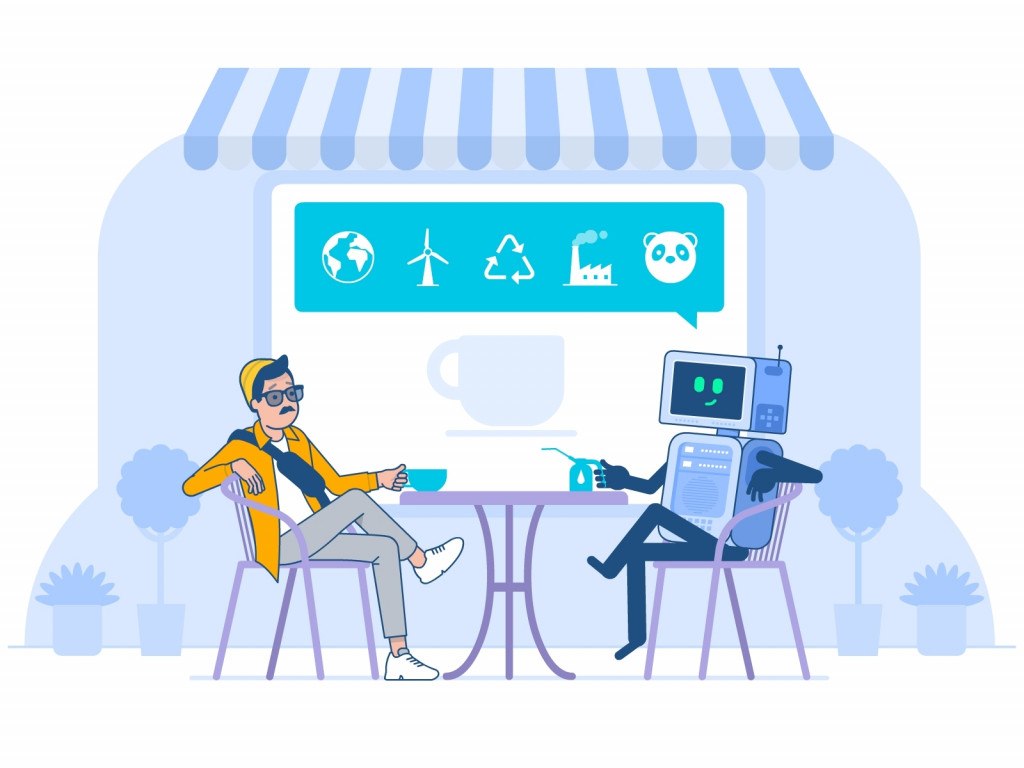
ChatGPT can improve app usability by giving users personalized, contextual answers right inside the product: it automates communication with customers, handles many inquiries at once, and powers chatbots and AI tutors that answer questions around the clock. It is a transformer-based neural network by OpenAI, pre-trained on a vast amount of text to generate human-like responses.
Neural networks have become an integral part of UI/UX design, programming, and machine learning, and the global AI market is expected to grow at a CAGR of 37.3% from 2023 to 2030.

Recurrent neural networks power Siri and Google’s voice search, while transformers are the state of the art in natural language processing. ChatGPT is not the only option, and comparisons like ChatGPT vs Gemini show how quickly the field is moving.
This article explains what ChatGPT is and how it works, why startups and product owners use it, its benefits for the user experience, how to use ChatGPT and set up a chatbot with it, and the pros and cons of artificial intelligence.
What is ChatGPT?
ChatGPT is an AI chatbot built on OpenAI’s GPT models that generates human-like responses to text-based inputs. It is based on the GPT (Generative Pre-trained Transformer) architecture, which uses deep learning to generate high-quality text content. ChatGPT is an intelligent automation tool that allows businesses to automate their communication with customers and provide personalized and contextual responses.
How exactly does ChatGPT work?
The network uses a transformer-based architecture that is pre-trained on a vast amount of data to generate natural-sounding responses to text-based inputs. It is trained on a large corpus of text, including books, articles, and social media posts. This pre-training allows the model to understand the context and meaning behind words and generate responses that are coherent and relevant to the input.
ChatGPT also uses a technique called fine-tuning, which involves training the model on specific data sets to improve its performance on a particular task. Fine-tuning allows ChatGPT to learn from the specific context of your application and generate responses that are tailored to your users’ needs.
Why is it important for startups and product owners to use ChatGPT?
The neural network offers several benefits that can help startups and product owners improve the usability of their applications, making it an essential instrument in mobile app development. But what are those advantages exactly?
- High sales conversion: A powerful tool that companies can use to boost sales conversion. It provides them with a wide range of follow-up questions and natural language processing options for asking customer inquiries and providing a great customer experience.
- Automated communication: Automated communication with customers, reduced workload on customer support teams, and faster response time to user inquiries.
- Cost-effective: A cost-effective alternative to hiring a large customer support team, as it can handle a large volume of user inquiries at once.
- Scalability: Possibility to scale and meet the demands of growing businesses, providing a reliable and efficient communication channel for customers.
It is a powerful tool that can improve the usability of your application by providing personalized and contextual responses to users. With the growing popularity of natural language processing (NLP) and text-based interactions, incorporating ChatGPT into your application can enhance the user experience, automate communication, and provide cost-effective and scalable solutions for growing businesses. Chat assistants are among the most visible NLP application use cases, but far from the only ones.
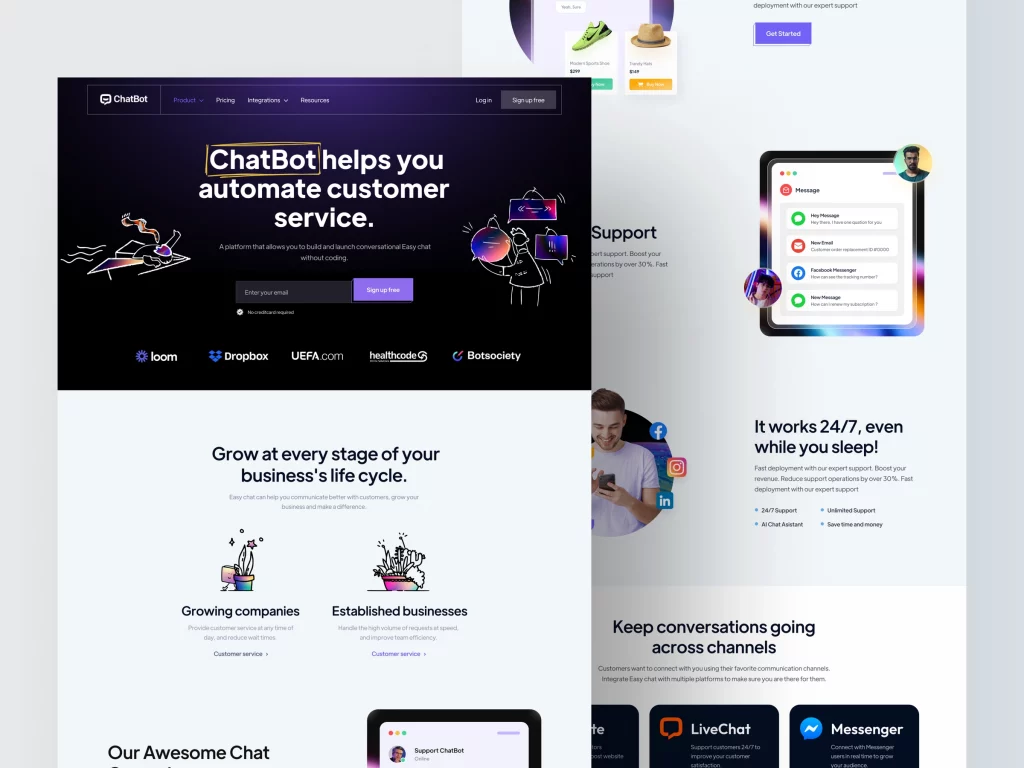
Chatbot platform web design by Mansurul Haque
Benefits of ChatGPT
We can all agree that this is a powerful tool that can enhance the usability of your application in several ways. Now let’s are some more advantages of using ChatGPT:
Improved user experience (UX)
Maximizing your app usability with ChatGPT is the smartest thing to do as a business owner since it provides personalized and contextual responses to users, enhancing their experience and making interactions with the application more seamless.
Better customer service
One of the most important benefits provided is increased customer satisfaction. ChatGPT, with its extensive set of follow-up questions, natural language processing, and powerful tool, can assist enterprises in quickly and efficiently responding to customer inquiries, resulting in a better overall customer experience. It is a valuable tool for businesses because of the language model, user feedback, and human-like text.
Increased engagement
Increased customer engagement is a valuable asset for businesses. ChatGPT is a powerful tool that enables businesses to efficiently execute engagement strategies with a wide range of customer inquiries. It can respond to customer inquiries with human-like text and create valuable content for the customer experience using natural language processing and its user-friendly language model.
Support for multiple languages
ChatGPT is useful for individuals and businesses with the desire to communicate with people who speak other languages as OpenAI is working on models that support multiple languages. GPTs can understand natural language and respond in a way that is meaningful to users.
The network can act as a bridge between a business and its customers all over the world. It will assist you in staying ahead of the competition. Conversations in other languages are automatically translated by ChatGPT. Customers will be able to interact with GPT agents in their preferred language, resulting in more tailored and unique interactions with the service.
Security and safety
ChatGPT provides a safe and discrete environment for users to communicate. It employs artificial intelligence to detect potentially dangerous information, spam, and censorship, resulting in a secure environment free of outside influence.
Moreover, the network does not store or disclose personally-identifying information to third parties as an added security measure. All messages sent to and received from users are encrypted and stored locally, making it a highly secure option for customers to use in the event of a query.
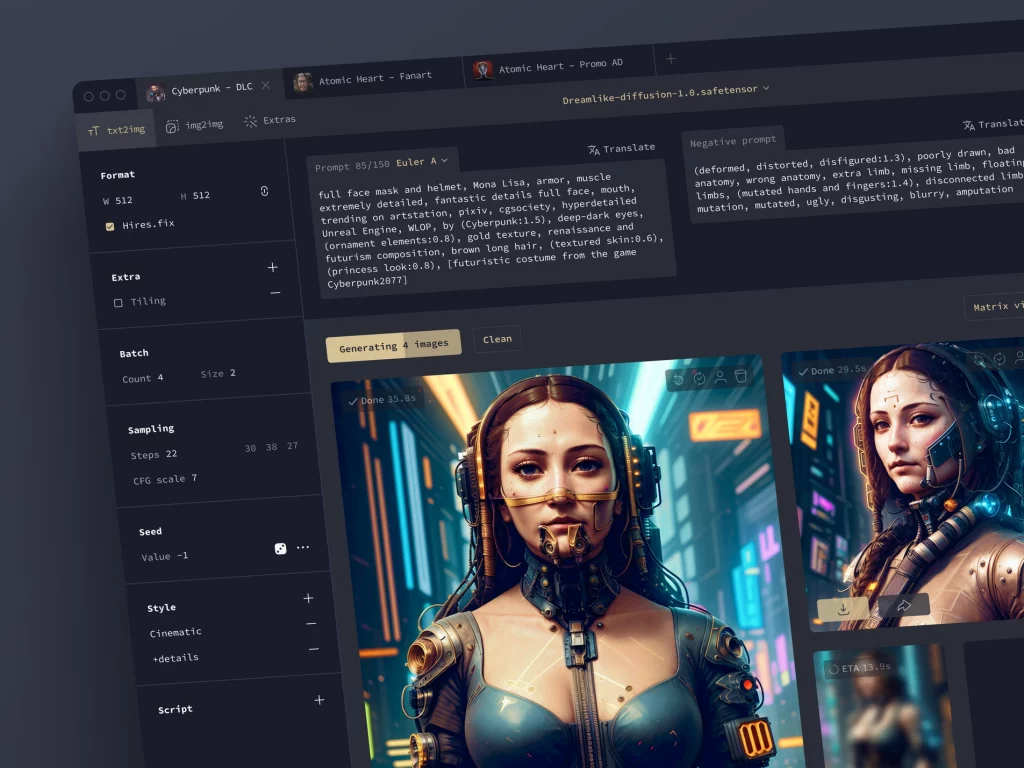
Neural network design concept by Shakuro
How to use ChatGPT
ChatGPT is a large language model trained by OpenAI that can help answer a wide range of questions and perform various tasks. To use the network effectively, follow the steps outlined below.
- Choose a platform for interaction: ChatGPT can be accessed through various platforms, including messaging apps like Facebook Messenger, Telegram, and WhatsApp, as well as through websites that offer ChatGPT services.
- Type in your query: Once you have chosen a platform to interact with ChatGPT, simply type in your query or question. It will then use its knowledge and algorithms to provide you with a response.
- Ask follow-up questions: If the initial response provided is not sufficient or if you have additional questions, you can ask follow-up questions to clarify or expand upon the initial response.
- Use specific commands for certain tasks: a series of tasks can be performed beyond answering questions, such as summarizing text, generating text, or even playing games. To use these features, you can use specific commands or prompts that are specific to the platform you are using.
- Stay respectful and use proper grammar: While ChatGPT can understand a wide range of queries and responses, it is important to stay respectful and use proper grammar and spelling when interacting on the platform.
By following the steps outlined above, you can use ChatGPT effectively and efficiently.
How to use ChatGPT to set up a chatbot
ChatGPT is a cutting-edge tool that can help you create, train, and test chatbots. It uses machine learning algorithms to learn from human conversations and generate responses that mimic natural language. With Chat GPT, you can set up a chatbot, train it to recognize and respond to different user intents and test its performance to improve its accuracy and effectiveness.
- To get started with using ChatGPT to set up a chatbot, you can begin by interacting with the ChatGPT model itself, which has been specifically trained to interact with users naturally. This will give you a sense of how ChatGPT works and what kind of responses you can expect from it.
- To train your chatbot, you will need to provide it with a dataset of human conversations that cover a wide range of topics and intents. You can use tools like ChatGPT to preprocess and clean your data, and then train your chatbot using supervised learning algorithms. During the training process, you can evaluate your chatbot’s performance and make adjustments to improve its accuracy and responsiveness.
- Finally, to test your chatbot, you can use various metrics like accuracy, precision, and recall to evaluate its performance on a test dataset. You can also perform user testing and gather feedback from real users to identify areas where your chatbot can be improved.
Overall, ChatGPT is a powerful tool for building and improving chatbots, and it can be used to create them for a variety of industries, such as UI design. Whether you’re building a customer service chatbot or a virtual assistant, ChatGPT can help you create a chatbot that is engaging, informative, and effective.
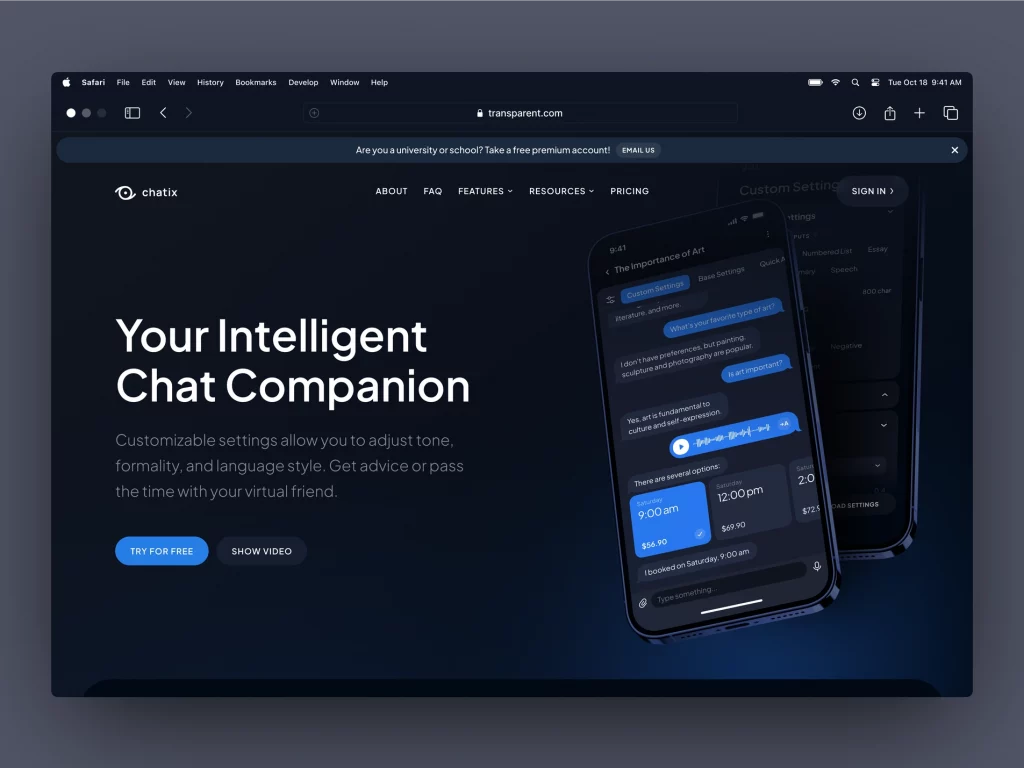
ChatGPT prompt assistant website by Conceptzilla
Pros and cons of Artificial Intelligence
Artificial intelligence has the potential to transform the usability of applications, but it also has its drawbacks. Here are some of the pros and cons of using AI for applications:
Pros:
- Intelligent automation: AI can automate repetitive tasks, such as customer service inquiries, freeing up time for human employees to focus on more complex tasks.
- Improved customer service: AI can provide faster and more accurate responses to customer inquiries, enhancing the user experience and improving customer satisfaction.
- Natural language processing: AI can analyze and understand natural language, providing personalized and relevant responses to user inquiries.
Cons:
- Over-reliance: Over-reliance on AI can lead to reduced human interaction, which may negatively impact the user experience.
- Bias: AI can be biased based on the data it is trained on, which may lead to discriminatory outcomes.
- Inaccuracy: It is unable to interpret and adapt to unique queries, resulting in incorrect and irrelevant text.

FAQ
How can ChatGPT improve app usability?
ChatGPT improves app usability by answering users’ questions with personalized, contextual responses instead of static help pages or long waits for support. It can guide people through features, respond to follow-up questions, and talk to customers in their preferred language. For the business, it automates communication, reduces the workload on support teams, and speeds up responses to user inquiries.
How does ChatGPT work?
ChatGPT uses a transformer-based architecture, part of the GPT (Generative Pre-trained Transformer) family, pre-trained on a large corpus of text, including books, articles, and social media posts. This lets it understand context and generate coherent, relevant responses. Fine-tuning on specific datasets then adapts the model to a particular task, so answers match the context of your application.
How do you set up a chatbot with ChatGPT?
Start by interacting with the ChatGPT model itself to see what kind of responses to expect. Then prepare a dataset of human conversations that covers the topics and user intents your chatbot must handle, clean it, and train the bot. Test it on a separate dataset with metrics like accuracy, precision, and recall, and gather feedback from real users to find what to improve.
What are the benefits of ChatGPT for startups?
For startups, ChatGPT is a cost-effective alternative to hiring a large customer support team, since it can handle a large volume of inquiries at once. It helps boost sales conversion with natural follow-up questions, automates routine communication, scales with a growing business, and improves engagement and customer satisfaction through faster, more personal answers.
What are the risks of using AI in an app?
The main risks are over-reliance on AI, which reduces human interaction and can hurt the user experience, bias inherited from training data, which may lead to discriminatory outcomes, and inaccuracy with unique queries, which produces incorrect or irrelevant text. Businesses should also keep data privacy in mind and balance AI features with human support.
Conclusion
In conclusion, ChatGPT is a powerful tool for improving the usability of applications and providing personalized and relevant responses to user inquiries. However, businesses should also be aware of the pros and cons of using AI in general, including the risks of over-reliance on AI, data privacy concerns, and the potential for bias.
By balancing the benefits of AI with the risks and drawbacks, businesses can leverage AI technologies like ChatGPT to improve the user experience, automate communication, and provide cost-effective and scalable solutions for growing businesses. With proper implementation, you can enhance your UX design and lead to Improving app performance with ChatGPT.
Are you ready to create a web or mobile app for your project? Contact us, and we will develop a cutting-edge application with great usability and the latest technologies.
Related reading