Introduction: Why Branding Matters for Startups
You’ve almost finished creating your idea, you might even have some low-level concepts, and, before presenting it to investors, you face the question: “Who are we, really, as a brand? What makes us different?”
Hard truth is, your tech might be great, but if nobody feels anything when they hear your name, you’re invisible. However, you’ve already got a lot on your plate with building a startup, and the last thing you want is to waste time on “brand stuff” that doesn’t move the needle. Still, doing branding for startups right actually saves you time later. Because once you know who you are, what you stand for, and who you’re talking to—it gets way easier to make decisions. And get noticed by investors.
So if you’re feeling stuck, overwhelmed, or just plain skeptical about branding, stick around. we’ll walk you through how to build a brand.
Key takeaways:
- Startup branding is about being recognizable and standing for something clearly so people know whether you’re for them
- Investors need to believe in you beyond metrics—strong branding reduces perceived risk by showing you understand your audience
- For customers, your brand becomes a proxy for trust when there are no reviews or case studies yet
- Start branding immediately, even before you have a product, because every impression counts
- B2B and B2C require different strategies—B2C sells to desires with emotional messaging, B2B sells to committees focusing on risk reduction
The Role of Branding in Startup Success
Startup branding is about being recognizable. Standing for something so clearly that people don’t have to think twice about whether you’re for them.
When you’re bootstrapped and unknown, every impression counts. That tweet, that pitch deck, that cold email—each one is a tiny moment where someone decides, “Are these the people I trust with my time/money/attention?” If your vibe is all over the place, people hesitate, and it kills momentum.
Also, early on, branding often becomes your unfair advantage. Big companies can’t move fast on identity. They’ve got committees, legacy perceptions, and shareholders. You can be bold, weird, specific, etc. And that’s how you build fans.
Branding for Investors, Customers, and Talent
To better understand this take, let’s imagine a situation. You’re in a pitch meeting. Investor’s flipping through your deck, sipping sad conference room coffee. They’ve seen 40 versions of your idea this month. What makes them lean in?
It’s not just TAM or burn rate. It’s whether they believe in you. A lot of it comes from how clear and confident your brand feels. If your messaging is wishy-washy, if your website looks like it was designed last night in Canva under pressure, if you can’t say in one sentence who you help and why—you’re already losing points.
Investors are betting on traction, and traction starts with perception. A strong startup brand strategy says, “These people know what they’re doing. They’ve thought about their audience. They’re not just coding into the void.” That reduces perceived risk.
Now, customers. People buy from people. Especially early on, when there are no reviews, no case studies, nothing. Your brand becomes the proxy for trust. If you sound human and specific, like you actually get the problem your customer lies awake thinking about, that’s gold.
Talent often sneaks up on founders. You’re heads-down building, and suddenly you need a designer, a backend dev, maybe a growth person. But why would someone leave their stable job to join your unknown crew? People Google you, check your tweets, read your blog posts. If there is no branding for talent acquisition, and all they see is jargon and silence, they move on.
Startup Branding Trends in 2025
- Anti-perfection: Polished, soulless branding feels outdated. People want raw, real, slightly messy things like founder-led newsletters, unedited social clips, and websites that admit flaws.
- Quiet branding with loud values: No neon logos or aggressive slogans. Instead, subtle design, clean copy, and obvious ethics. Sustainability, transparency, fair labor are baked into the brand.
- Founder-as-brand: People buy into people. Founders doing podcasts, writing brutally honest threads, and showing up on Zoom calls—it all builds trust faster than any ad.
- Micro-communities over mass reach: Smart startups are building tiny, obsessed groups, for example, Discord servers, niche subreddits, or private Slack channels. Not for selling but for listening, where the brand becomes part of the conversation.
- AI-washing fatigue is real: Actually explaining how AI helps is far more valuable. For example, saying, “We use AI to reduce errors, not replace humans,” is better than just “AI-powered.”
- Motion-first identity: Tiny animations, dynamic type, loading screens with personality make the brand feel alive.
- Voice and tone matter more than visuals: You can’t fake voice. The way you write sticks harder than a color scheme.
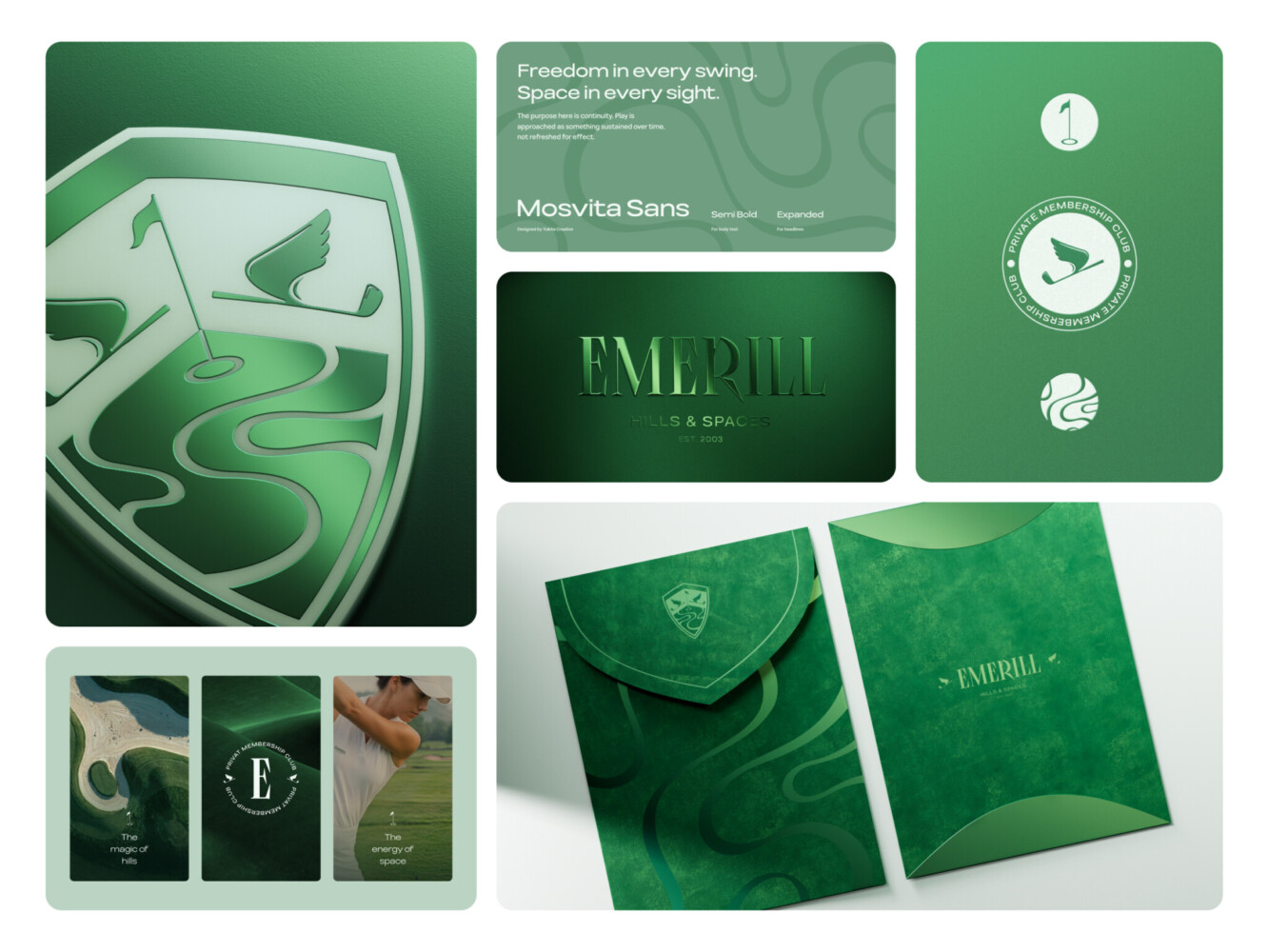
Branding for a private golf club by Shakuro
What is a Brand? Startup Branding 101
Time to learn what that “brand” actually means, and what doesn’t relate to this topic. Here are all the essentials you need to know.
Defining Your Brand vs. What a Brand Is Not
A brand is a name, term, design, symbol, or any other feature that distinguishes your product or service from those of others. It is the gut feeling someone has about your startup before they even try your product, a pattern of impressions. Like reputation, but faster and more emotional.
Key components of a brand
- Identity: This includes the name, logo, and design elements that make a product or company recognizable.
- Perception: A brand is the sum of all perceptions of a product or business, including how customers, employees, and the public view it.
- Value: Strong brands create value (brand equity) that benefits the customers, owners, and shareholders.
- Marketing and communication: These are the tools companies use to shape perception through advertising, public relations, and other communication efforts.
- Emotional connection: A successful brand forges an emotional connection with its audience, leading to loyalty and trust.
What is not a brand
- Not your logo: That pretty icon is just a symbol. It stands for something, but it’s not the thing itself. You can change your logo tomorrow and still have the same brand. For example, Twitter → X.
- Not your website or color palette: Sure, those are expressions of your startup brand strategy. But swap the purple for green, and you’re not suddenly a different company. Unless the vibe behind it was fake to begin with.
- Not marketing fluff: Your brand is proven by action. If your support takes three days to reply, no amount of “we care” will save you.
- Not something you “launch”: You don’t roll out a brand like a feature update. It grows slowly through consistency.
- Not just for customers: Your brand also shapes how your team shows up. So is how you pitch investors or respond to criticism.
Brand Identity and Visual Presence
We’ve already mentioned visual identity design. Let’s speak about its contents, for example, a logo or typography, and how they influence your presence in the market.
So, a logo is a signal. It doesn’t have to be complex. In fact, the best ones work at favicon size. Take a look at Dropbox, Slack, or Airbnb. They have simple and easy-to-recognize logos.
However, it should fit your startup. A playful mascot on a serious B2B security tool feels off. A cold, metallic emblem on a mental wellness app—weird. And no, you don’t need a redesign every six months. Pick one that holds up and test it on a real phone screen. If it looks like a blob, go back.
Colors carry cultural weight, sure, but more importantly, they set the tone. A fintech startup using neon pink might seem bold or confusing, depending on the audience. Also, accessibility matters. That cool purple gradient might look slick, but if text on it is unreadable, you’re excluding people.
For example, a restrained palette in Conceptzilla’s case where they developed a design concept for a private golf club startup. Just greens abd whites.
Typography is sneaky because fonts do way more than people think. For instance:
- A clean sans-serif (like Inter or SF Pro) says “modern, efficient, no-nonsense.”
- A serif (like Georgia or Playfair) whispers “trusted, editorial, thoughtful.”
- A quirky handwritten font says “casual, creative, maybe a little unprofessional.”
Pick one or two typefaces and stick with them because consistency builds recognition.
Imagery is where so many startups drop the ball. Using generic stock photos of actors pretending to laugh at laptops makes you instantly forgettable. Or worse—it feels fake. Branding for startups that stand out uses real photos. Like team snapshots, screenshots with actual user quotes, and hand-drawn illustrations. Even memes sometimes.
The Connection Between Branding and Marketing
A strong brand shapes your marketing, and not the other way around.
For example:
- If your brand voice is dry and witty (like Basecamp or Slack), your tweets can be sarcastic, minimal, human.
- If you’re warm and educational (like Notion or Duolingo), your content leans into tutorials, empathy, clarity.
- If you’re bold and disruptive (early Tesla, maybe Stripe), your campaigns feel ambitious, even polarizing.
You don’t have to reinvent the tone every time you launch a feature. Just stay in character. That’s what makes people go, “Oh, that’s so them.”
Also, marketing becomes easier when the brand voice and tone are clear. Take a look:
- Who are we talking to? → Already defined.
- What should we say? → Flows from core messaging.
- Where should we show up? → Depends on where our people hang out.
No more guessing. No more “let’s try TikTok because everyone else is.” You make decisions faster.
At the same time, branding sets the rules for what marketing won’t do. Like, if your brand stands for privacy, you probably won’t run aggressive retargeting ads that follow people across the web. If you value transparency, you won’t hide pricing behind a demo wall.
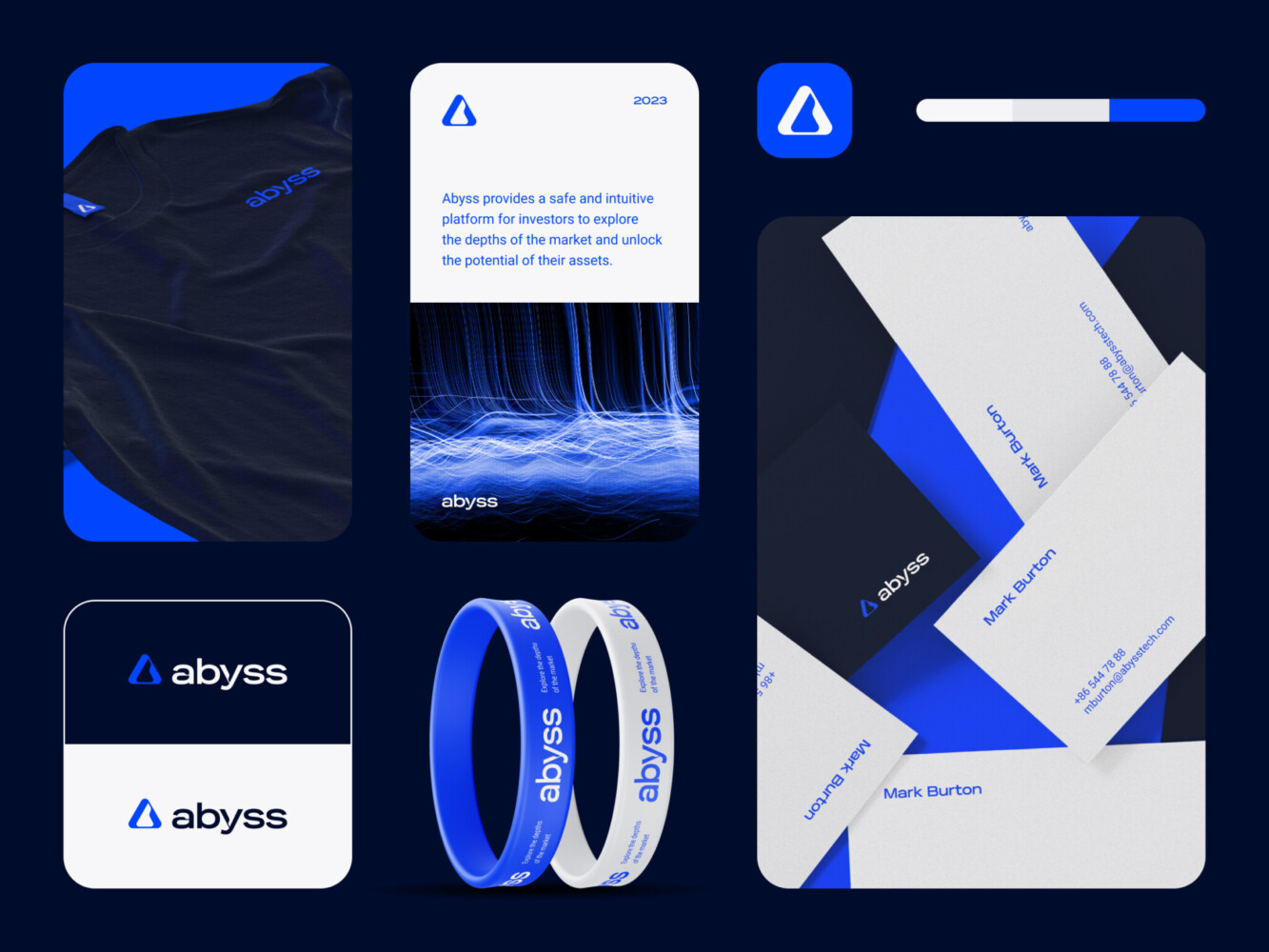
Abyss branding by Shakuro
When Should Startups Start Branding?
Right now. But seriously, before you even have a product, before the pitch deck, and before the LLC paperwork.
Branding for startups begins the second someone hears your name. You tell a friend about your idea, and they form an impression. You post in a founder group, and people judge tone, ambition, and clarity. An investor Googles you to see silence, or noise, or something in between.
When startups scramble at the last minute, they write copy that feels generic. Because they treated branding like a finish line task instead of a starting line habit.
Doing this early forces clarity. When you try to explain your startup simply, you realize fast if the idea actually makes sense. If you can’t describe it in a way that excites someone in 30 seconds, maybe it’s not ready.
Let’s dwell more on timing for branding and its evolution in general.
Early-Stage Branding: Laying the Foundation
Your earliest brand decisions are invisible, but they shape everything. Still, you don’t need a full startup brand strategy on Day One. But you do need a few core things early:
- What’s your company name? Is it descriptive like “TaskFlow” or abstract like “Notion”?
- A clear answer to: Who are we helping, and why?
- A tone of voice that doesn’t sound like every other startup.
- Visuals, even rough ones, that feel like you, not a template.
Share it with your co-founder or test it on a brutally honest friend. The longer you wait, the more you’ll have to unlearn: bad habits, mixed messages, confused early users.
When you know your “why,” feature decisions get clearer. You stop chasing trends and start building something that feels yours. Also, culture starts here. The way you communicate internally, how you treat early users, whether you admit mistakes publicly—those are all brand moments.
Pre-Launch Branding: Creating Anticipation
First, stop saying “coming soon.” That phrase is empty because it means nothing. Like, “soon” could be tomorrow or never. Instead, start positioning when creating branding for investors.
Who are you helping? What pain are you fixing? Why hasn’t it been solved before?
Your messaging should feel like a conversation, not a press release. Founders often write pre-launch copy like they’re announcing an iPhone: “Revolutionary. Next-gen. Seamless integration.” But instead, people crave brands that talk like a human who’s excited about solving a problem.
And keep in mind internal branding. Your co-founder, your first hire, and possibly a contractor all need to be aligned as well. If you’re all telling slightly different stories, it leaks. Investors and early adopters will notice.
Now, how do you create anticipation?
- Share progress: Not vanity metrics. Real stuff like “We shipped beta invites to 100 users today.” “Here’s what we learned from our first user test.”
- Give sneak peeks: A blurred screenshot. A 10-second screen recording. “This is the part we’re obsessed with.”
- Make people feel chosen: “You’re on the list. We’ll DM you when spots open.” Feels exclusive.
- Use FOMO lightly but authentically: “First 200 get a lifetime discount.” Works because it’s clear, fair, and finite.
Branding While Scaling: Staying Flexible
What to do when you’ve survived the chaos? After measuring brand impact, continue working on your brand because it’s like clothes that should always fit your body.
Voice gets tested
Early on, your brand voice was the founder’s voice. Casual tweets, honest newsletters, maybe some well-placed sarcasm. But now you’ve got a marketing team. And if they’re all using slightly different tones, your brand starts sounding like a chorus with no conductor. To avoid that, you need to document the tone of voice so they would all have aligned vision.
Audience expands
You served a tiny, passionate group. Now you’re targeting bigger markets, maybe enterprise or global users. And suddenly, that same tone that charmed indie hackers lands flat with CFOs. Does that mean you ditch personality? No.
It means layering where core values stay and expression adapts. Like, Basecamp didn’t stop being themselves when they scaled. They just offered more entry points with one message for curious freelancers and another for teams evaluating tools.
Consistency becomes infrastructure
If everyone picks their own blue for your designs, you look sloppy fast.
This is where simple systems help:
- A basic design library (colors, fonts, button styles)
- Template slides for sales
- Email signature rules
- Even a shared folder of approved images
You’ll lose some fans
Some early adopters will bail when you raise funding, add features they don’t need, or start charging more. But growth requires trade-offs. You can’t serve everyone the same way forever. Stay true to your core belief, instead of every opinion you had in Year One.
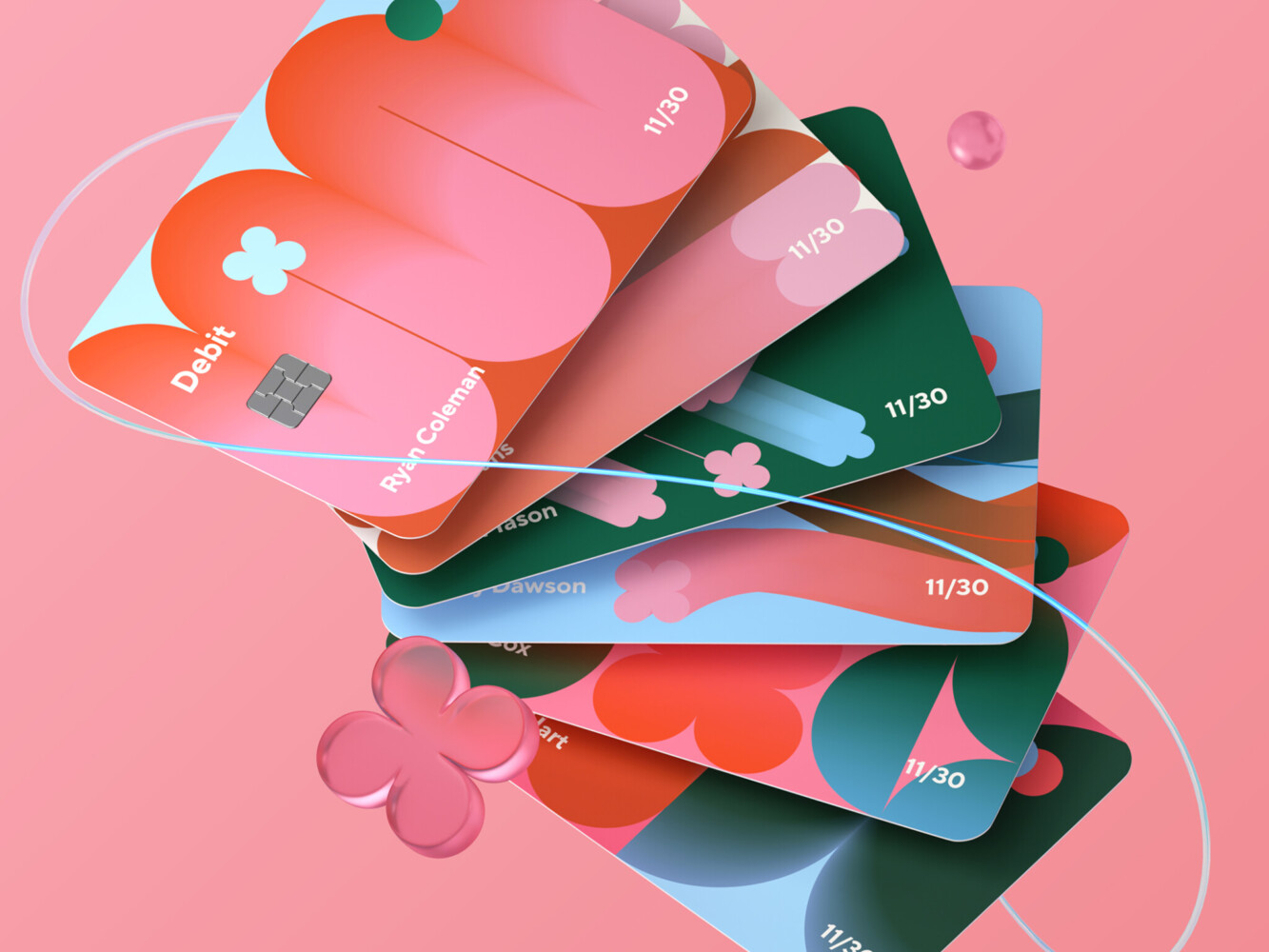
Branded card covers by Shakuro
Core Elements of a Memorable Startup Brand
You know you need branding and some basics during different stages, etc. However, if we are creating a memorable startup branding, what core elements should it have? Is there any recipe?
Logo: Simple, Scalable, and Aligned with Your Mission
As we said before, your logo isn’t your brand. But it is often the first thing people see, so make it count.
The best startup logos aren’t flashy. They’re simple. Dropbox, Notion, or Stripe have no gradients, no 3D effects, and no mascot riding a rocket. Just clean, recognizable shapes that work at any size: favicon, app icon, business card, you name it.
Another important thing—it should actually fit your mission. A playful doodle might suit a kids’ app but feels off for a cybersecurity tool.
Color Scheme: Evoking Emotion and Perception
Colors really matter in visual identity design because they evoke emotions. Why do you think most banking apps have a blue scheme? It means trust, calm, distant, and something like that.
Pick one dominant, one accent, maybe a neutral color that match the feeling you want to create. Then test them in real life. You see, a deep purple can look great on your MacBook but turn black on some Android screens.
For instance, Airbnb uses warm coral because it says “welcome,” “human,” “belonging.” Slack’s rainbow reflects connection across difference.
Typography: Functional and On-Brand
Fonts are like accents: you don’t notice them directly, but they shape how everything sounds. We’ve already touched this topic a bit; like a crisp sans-serif (like Inter or SF Pro) feels modern and efficient. It is great for tech, tools, or anything speed-focused. If you’re writing warmly but using a sterile corporate typeface, there’s a disconnect. But limit yourself to two fonts max—one for headlines and one for body.
Voice & Tone: Consistent Across Channels
For example, your website voice is friendly and direct, but on X you’re cracking jokes, and the answers to support emails feel robotic. That’s really confusing for users—where is the real you? They can follow one voice but then stumble on another and leave.
Your brand voice and tone should be recognizable no matter where someone meets you. Yes, you’ll be more upbeat on social, more serious in a crisis update, but the core stays.
Mission Statement: Inspiring and Actionable
It’s the meaningful answer to the question, “Why do we exist beyond making money?” But not like a LinkedIn bingo card. “Empowering innovation through scalable synergies.” What does that even mean?
Look at Patagonia: “We’re in business to save our home planet.” You understand the mission, the sphere, and the tone instantly. So, you need something your team can rally behind and customers can believe in.
Tagline and Naming: Memorable and Clear
Your name and tagline are your handshake. If people mishear it, can’t spell it, or have to ask, “Wait, what’s that again?” you’ve lost momentum. Avoid clever puns no one gets or made-up words that sound like typos. For example, Notion: “One workspace for everyone.”
Good names are:
- Easy to say
- Easy to remember
- Available as a domain (sadly, still matters)
Brand Story and BHAG: Bold Goals Inspire Stronger Branding
People follow stories. But your brand story isn’t a press release. It’s: Why did we start? What pissed us off? Who are we fighting for? Tell it like you would over coffee to a friend and pair it with a BHAG (Big Hairy Audacious Goal)—a bold, long-term, and ambitious objective that challenges you to push beyond current limits.
For instance, “We’re building the internet for creators, not algorithms.”
When your story and vision align, your brand gains gravity.
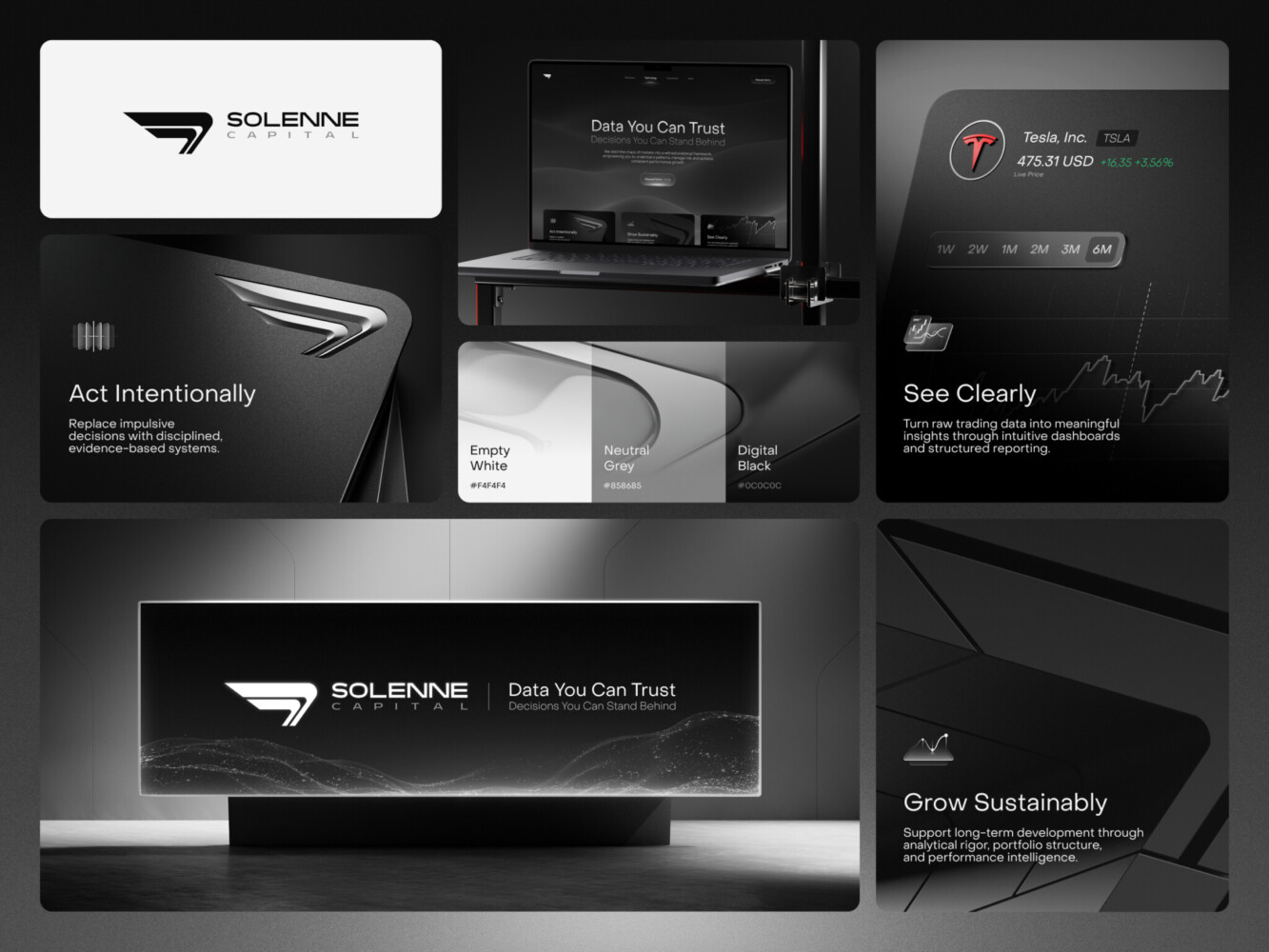
Branding for a trading company by Shakuro
Step-by-Step Startup Branding Process
Step 1: Go Back to Your Story
Take your co-founder or core team, sit down, and answer these:
- Who are we helping? Be specific, for example, “freelance designers who hate chasing invoices.”
- What problem do we solve, and why does it suck right now? Get emotional with this one. “It wastes their time,” “They feel disrespected,” etc.
- Why us? What’s different? Maybe you’ve lived it. Maybe you’re tired of bloated tools.
- What do we believe that others might not? Like, “Small teams shouldn’t need enterprise budgets to be efficient.”
Step 2: Define Your Brand Vision and Values
You don’t need a style guide yet. Just pick three words that describe how you sound.
For example, friendly, direct, no-nonsense. Or bold, rebellious, witty. Then test them with a fake tweet, support reply, or a one-sentence pitch. Does it match the words?
Also, decide on when you dial it back, like during outages or sensitive topics. Keep this list somewhere visible and revisit it when necessary.
Step 3: Craft Your Core Messaging
Now package your answers into simple, repeatable lines. You’ll use these everywhere: website, pitches, emails. However, don’t overthink. Write ten versions and kill nine.
- Mission: Why we exist. (“We help X stop wasting time on Y.”)
- Tagline: Short, sticky. Goes under the logo. (“Finally, invoicing that doesn’t suck.”)
- Elevator pitch: One sentence. Product + audience + difference. “We’re a time-tracking tool for remote dev teams who hate clunky project managers.”
Step 4: Pick Visual Basics
You don’t need a pro designer for visual identity design yet, just consistency.
Colors:
- Pick 1–2 main colors. Use tools like Coolors.co or Adobe Color.
- Ask: Does it fit the vibe? Warm = friendly. Cool = calm/professional.
- Avoid neon unless you’re selling energy drinks.
Fonts:
- Google Fonts is fine. Pick one clean sans-serif (Inter, Open Sans, Manrope).
- Use one for headlines, same or similar for body.
Imagery style:
- Will you use real photos? Illustrations? Screenshots? Meme-style?
- Just pick a direction. Even “no stock photos of people laughing at laptops” is a rule.
Document the choices you made and stick to them.
Step 5: Design a Simple Logo
Use Figma, Canva, even Sketch, or pay on Fiverr for a clean version later.
Options:
- Wordmark: Just your name, styled nicely.
- Lettermark: Initial or icon + name.
- Symbol only: Riskier, but works if you’re confident.
Rules you need to follow are simple. Make sure it works in black and white. Make sure it’s legible at a small size. No gradients, no drop shadows, no 3D effects. The easier it is to recognize, the better.
Step 6: Build Your Minimal Brand Presence
You need some home base:
- A simple landing page (use Carrd, Webflow, or Framer) with your name + tagline, one clear value prop, and a way to join a waitlist or contact you
- A basic Twitter/LinkedIn/X profile using your colors and voice
- A consistent email signature
Now you exist somewhere, consistently. As a bonus for branding for investors, you can write a short founder story with two paragraphs max explaining why you started this.
Step 7: Test It in The Wild
Show it to 5 people you trust and who won’t sugarcoat their opinion. Ask:
- What do you think we do?
- Who’s this for?
- What’s the vibe? (Friendly? Serious? Techy?)
If answers are all over the place, you have to go back to Step 1. But if most get it, you’re on the right track. After measuring brand impact, you can move further.
Step 9. Document and Scale It
Gather all the notes you’ve made during the process into one document that everyone in your team can refer to. This will give you consistency across different materials and resources. When you hire someone, show them the doc. When you design a feature, check the tone.
As you grow, you’ll refine the old statements. A designer will build guidelines, styles, design systems, etc. Maybe rebrand slightly according to the latest trends. But by starting intentionally, you avoid the scramble later.
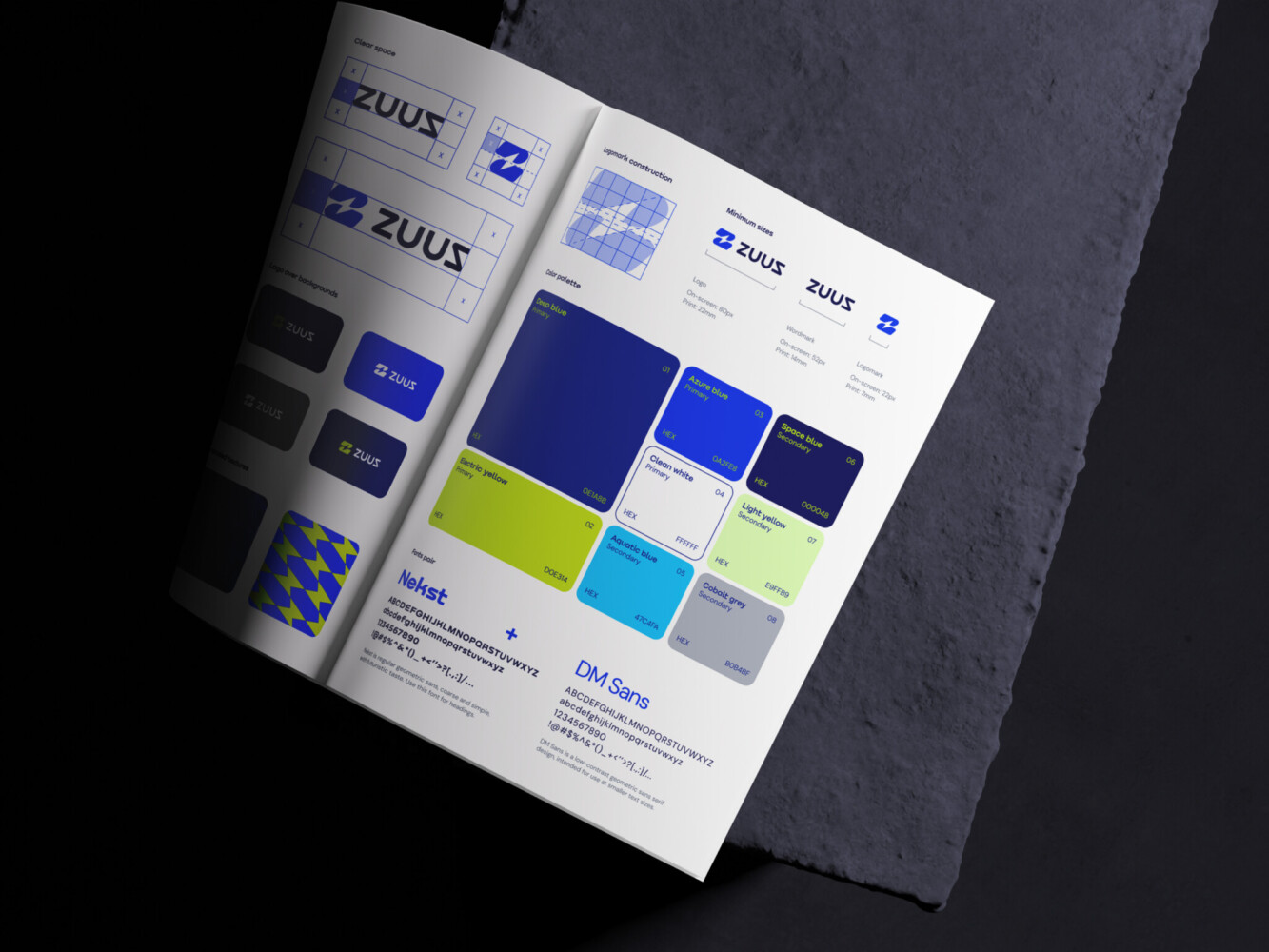
ZUUS branding by Shakuro
Divergent Branding Strategies: B2B vs B2C
Time to discuss a mistake we see all the time: startups treating B2B and B2C branding like they’re basically the same. But they aren’t.
Sure, both need clarity, consistency, and a pulse. But how you speak, where you show up, and even what “trust” means—these two are totally different games.
Audience Segmentation and Decision-Making Processes
Who you’re talking to changes everything in brand identity for startups. B2C sells to desires, while B2B sells to risk reduction.
B2C: You’re selling to individuals. They are often emotional and make fast decisions. For example, someone downloads a habit-tracking app after seeing a TikTok. They don’t need approval. They just feel a pain (“I’m distracted”), see a solution, and click “Get Started.”
It’s personal—the buyer is the user.
B2B: You’re selling to committees, or at least, multiple stakeholders. Engineer checks if it works, manager cares about cost, security team wants compliance, etc. Decision takes weeks or even months. And the person who discovers your tool isn’t the one who signs the check.
So your brand has to appeal to different roles, each with their own fears and goals.
Messaging and Communication Tone
Now, how you talk also changes completely based on who’s listening.
B2C: The tone can be playful, urgent, or even irreverent, because you’re speaking to emotions like frustration, hope, or identity. Here is an example from Headspace: “Stop overthinking. Start doing.”
B2B: The tone needs to be clear, credible, and value-focused. Not flashy or cute. You’re answering: What problem does this solve? How much time/money does it save? Is it safe? For instance, “Reduce cloud costs by 30% without sacrificing performance.” Sometimes, it’s more formal, but the best B2B brands still keep it human.
Channel Selection and Branding Tactics
Where you show up and how depends on how your audience discovers things.
B2C channels:
- Social media (TikTok, Instagram, YouTube)
- Influencers / UGC
- Paid ads (Meta, Google, programmatic)
- Viral loops (referrals, shareable content)
Startup brand strategy here is to create moments, memes, challenges, and FOMO. It’s about visibility and emotion, where you make people feel something fast. A great example, in our opinion, is Duolingo: they literally turned their mascot into an instantly recognizable meme.
B2B channels:
- Industry newsletters/podcasts
- Webinars, whitepapers, case studies
- SEO-driven content
- Virtual or real events
For B2B, you build authority and show proof. A killer case study often converts better than a slick ad. Also, word of mouth in B2B is quiet but powerful.
Visual Identity Considerations
Even visual identity design shifts depending on who you’re trying to reach.
B2C: Visuals can be bold, emotional, lifestyle-focused, with real people having wins. Design prioritizes desire and identity. “This is who I want to be.” Motion matters too, so add snappy animations and fun micro-interactions.
B2B: Lean toward clean, structured, trustworthy visuals. The colors are often neutral (blues, grays), with one accent color for energy. Imagery consists of screenshots, UI snippets, and team-in-action photos. Less “look how fun we are,” more “look how clear and reliable we are.”
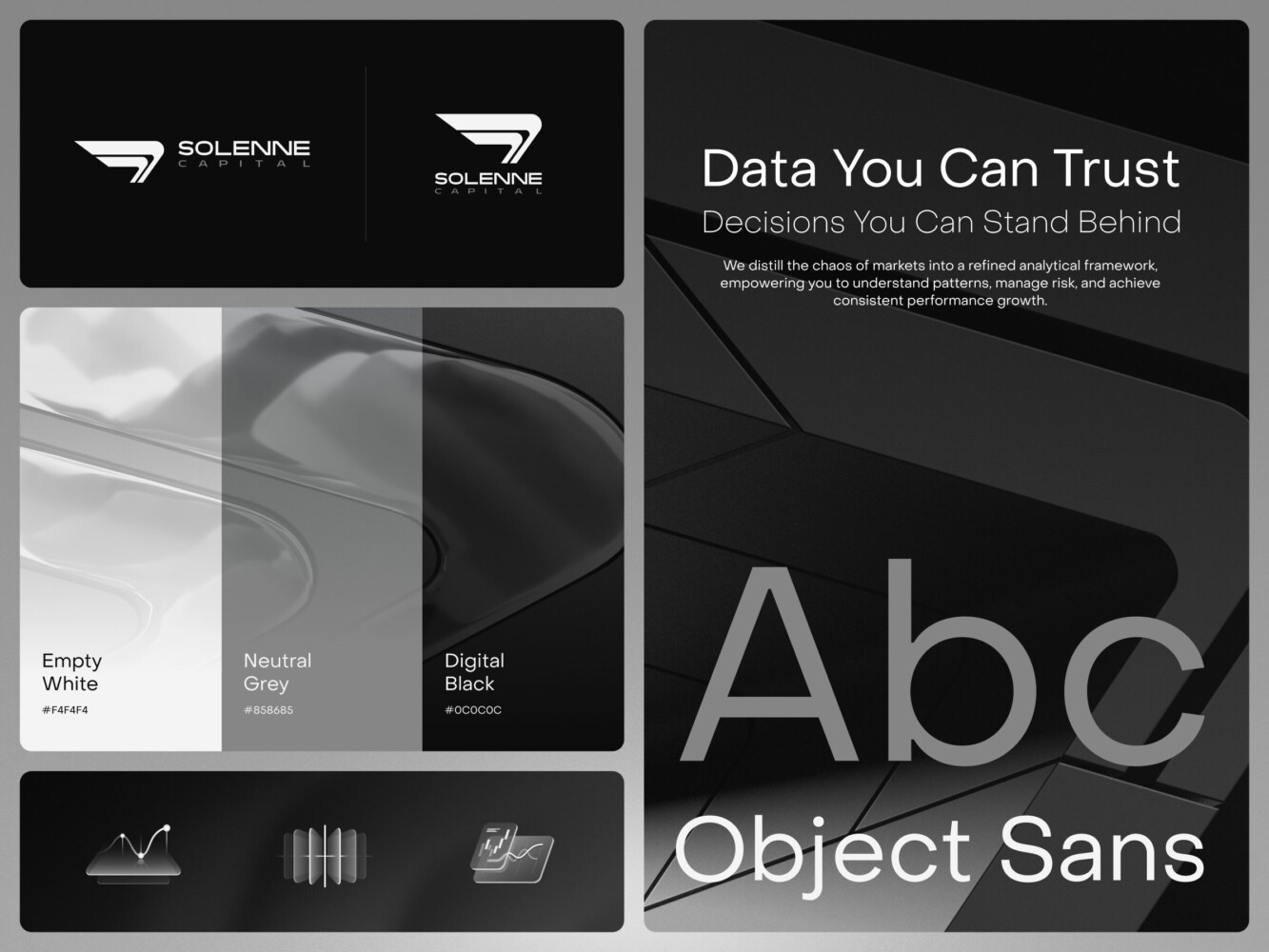
Branding for a trading company by Shakuro
Branding for Fundraising and Investor Relations
Creating Investor Confidence Through Branding
Investors are buying belief as much as they’re buying traction. They want to know whether you can build a product and create a company noticed by people.
A strong branding for investors signals you’re not just coding in a basement. You have positioning, understanding of the target audience, and clear communication.
Let’s take a look at the situation. Two startups, similar tech, same space. One has a generic name, a bland website, and inconsistent messaging. The other has a clean identity, a sharp voice, and a clear mission. Which one feels more investable? Even if both are pre-revenue, the second feels further along because they’ve done the hard work of defining who they are.
Building a Compelling Brand Narrative
Your brand narrative should be a captivating story that sticks in the memory better than spreadsheets.
It should answer:
- Why does this problem keep someone up at night?
- Why hasn’t it been solved yet?
- Why you?
- What future are you trying to create?
Differentiating From Competitors
What stands out? A branding for startups that owns its difference. Instead of saying, “We compete with Asana and ClickUp,” you can say, “We’re the only team tool built for remote-first teams who hate meetings.”
Using honest comparison matrices, you can show trade-offs. Say, “We don’t do X because we believe Y.” This level of transparency builds credibility. In a crowded market, being clearly narrow beats being vaguely broad.
Pitch Deck Design and Visual Storytelling
Templated Keynote dumps are all fun, but not as a pitch deck. It should feel like your brand.
That means:
- Consistent colors and fonts
- Clean layout with breathing room
- Visual hierarchy that guides attention
- Imagery that supports the story
When creating a pitch deck, avoid death-by-bullets and replace dense text with bold headlines + spoken explanation.
Instead, use visuals to tell the arc:
- The pain (show a real moment)
- Your insight (what others miss)
- The solution (simple, visual)
- Early proof (screenshots, metrics, user love)
- The future (big, but believable)
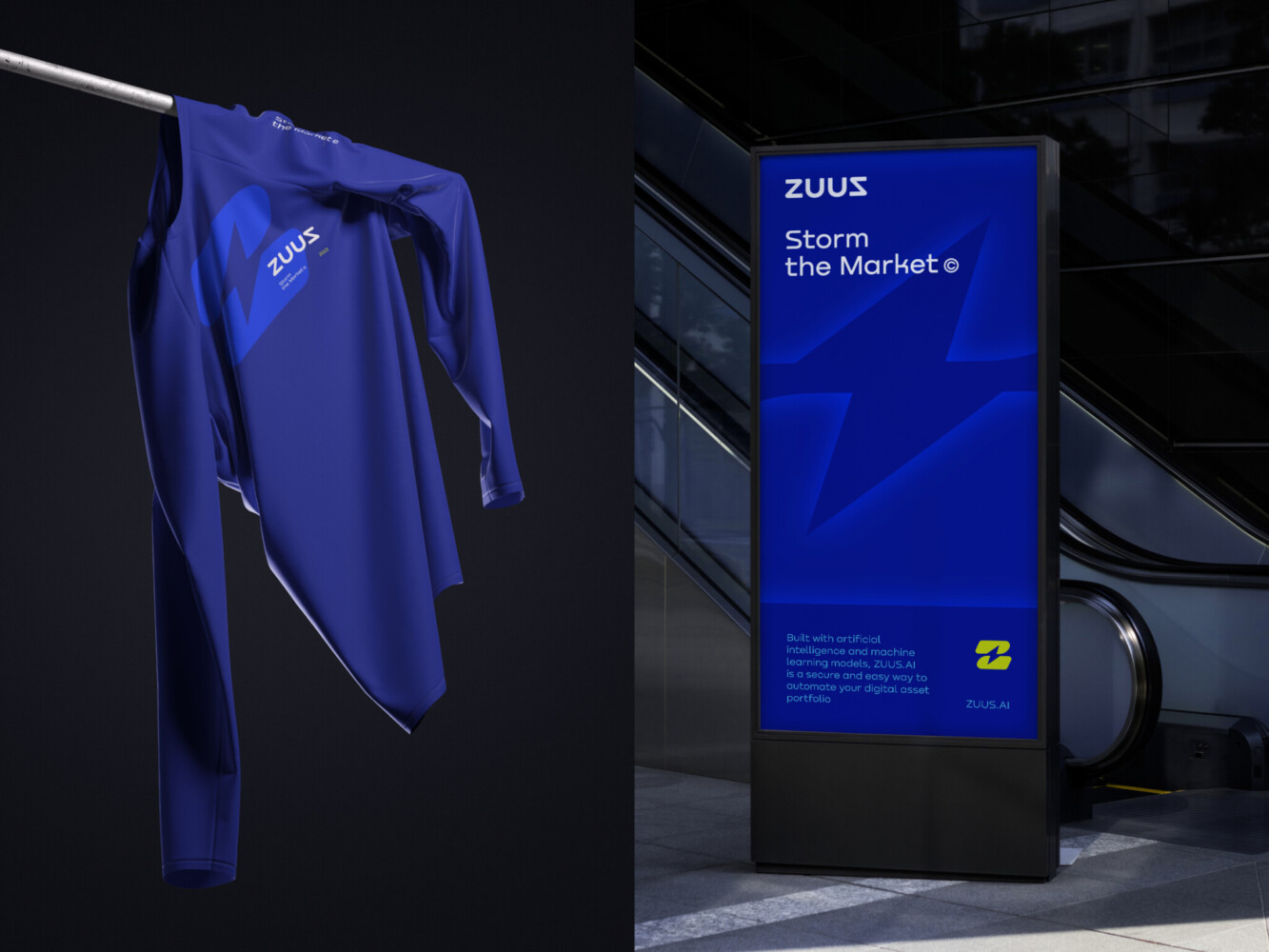
ZUUS branding by Shakuro
Branding for Talent Acquisition and Team Building
Attracting Top Talent
Let’s be real: your job post on LinkedIn is competing with 50 others. What cuts through? A brand that feels human. As we said, most candidates Google you. They check your website, your tweets, your Glassdoor reviews, and maybe even your founder’s old blog from 2018. If all they see is jargon and silence, they move on.
But if they find honest posts from a founder, real photos of the team, etc., they notice you and believe in what you’re doing.
Enhancing Employee Retention
If your external brand says “we value transparency,” but internally decisions are made in secret Slack threads, that gap breeds distrust. Same if you say “work-life balance,” but, according to the current branding for talent acquisition, expect replies at midnight.
Your brand sets expectations. When reality matches the message, people stay. When it doesn’t, they leave. So yes, branding affects retention.
Fostering a Cohesive Team Culture
Culture lives in daily moments: the way you run meetings, how you give feedback, what gets celebrated, etc. Branding gives those moments a voice. So a clear brand helps your team speak the same language.
When everyone knows the tone (“helpful, not salesy”), the values (“default to open”), and the mission (“we’re here to simplify, not impress”), decisions get easier.
The same goes for the distributed teams. When you’re across time zones, a shared identity matters. The logo, the colors, the way you sign off emails—it all adds up to belonging.
Common Startup Branding Mistakes
Over-Reliance on External Agencies
Handing off your brand to a team who doesn’t live your mission, talk to your users, or feel the stress of the runway running out is not a wise decision.
Agencies bring expertise, sure. But if you’re not involved in the core thinking—the voice, the values, the why—you’ll end up with something that looks good but has no soul.
Instead, use agencies for execution (design, video, web). The heart of your brand should come from you.
Lack of a Clear Brand Strategy
Founders skip the hard questions and jump straight to visuals.
Without a mission, defined audience, and tone guide, their messaging feels scattered. Also, their teams are always confused with the culture or positioning.
Spend a weekend writing down (you can find the more detailed steps above):
- Who you serve
- What you believe
- How you sound
Inconsistent Branding Across Channels
When all your sources sound different, it kills the recognition. Although people don’t notice the dissonance right away, but over time, it erodes trust. They signed up for the newsletter because of the friendly tone, however, when they open X and read the robotic tweets? Something is instantly off.
To avoid that, you need to use the same fonts, colors, voice, and audit your key touchpoints. Do they feel like the same brand? Even small alignment builds credibility.
Ignoring Customer Feedback
Some founders treat branding for startups as a one-way broadcast: “This is who we are. Deal with it.” But it is also how people receive it.
For example, if customers keep saying, “I thought you were a free tool,” maybe your pricing isn’t clear. If they call you “that AI thing,” but you’re actually workflow automation—messaging is off.
Ask real users, “What’s the first thing that comes to mind when you hear our name?” Their answer is greater than your opinion. Use it as a base for making decisions.
Overcomplicating Brand Messaging
Founders often overthink this. They want to sound impressive, especially in branding for investors, and end up sounding like every other pitch deck. If you need three sentences to explain what you do, you haven’t figured it out yet.
Let us give you an example: “We leverage disruptive AI-driven synergy to empower scalable digital transformation.” What does that even mean?
To attract people, you have to talk like a human. Use short words and say who it’s for and what it does, clearly.
Neglecting the Brand Experience
Your brand is the whole experience. How fast you reply to support, whether your app crashes on login, and if your onboarding explains things or leaves you lost. Same goes for internal stuff: how you treat contractors and whether you pay invoices on time.
If the experience leaves much to be desired, all that visual polish is wasted because the experience derails the efforts.
The solution is rather simple: find where the brand promise breaks. Fix those gaps, even if no one sees them.
Failing to Adapt to Market Changes
Some founders lock their brand down early and refuse to evolve while markets shift and audiences grow. The competitors don’t stand still either. But teams cling to their “edgy startup” vibe long after they’ve hired 50 people and started selling to enterprises. Or worse, they ignore cultural shifts and still use lazy stock photos with tone-deaf humor. That feels out of touch.
We’ve already mentioned this, but yeah, you need to revisit your brand every 6 or 12 months. Be willing to tweak without losing your core.
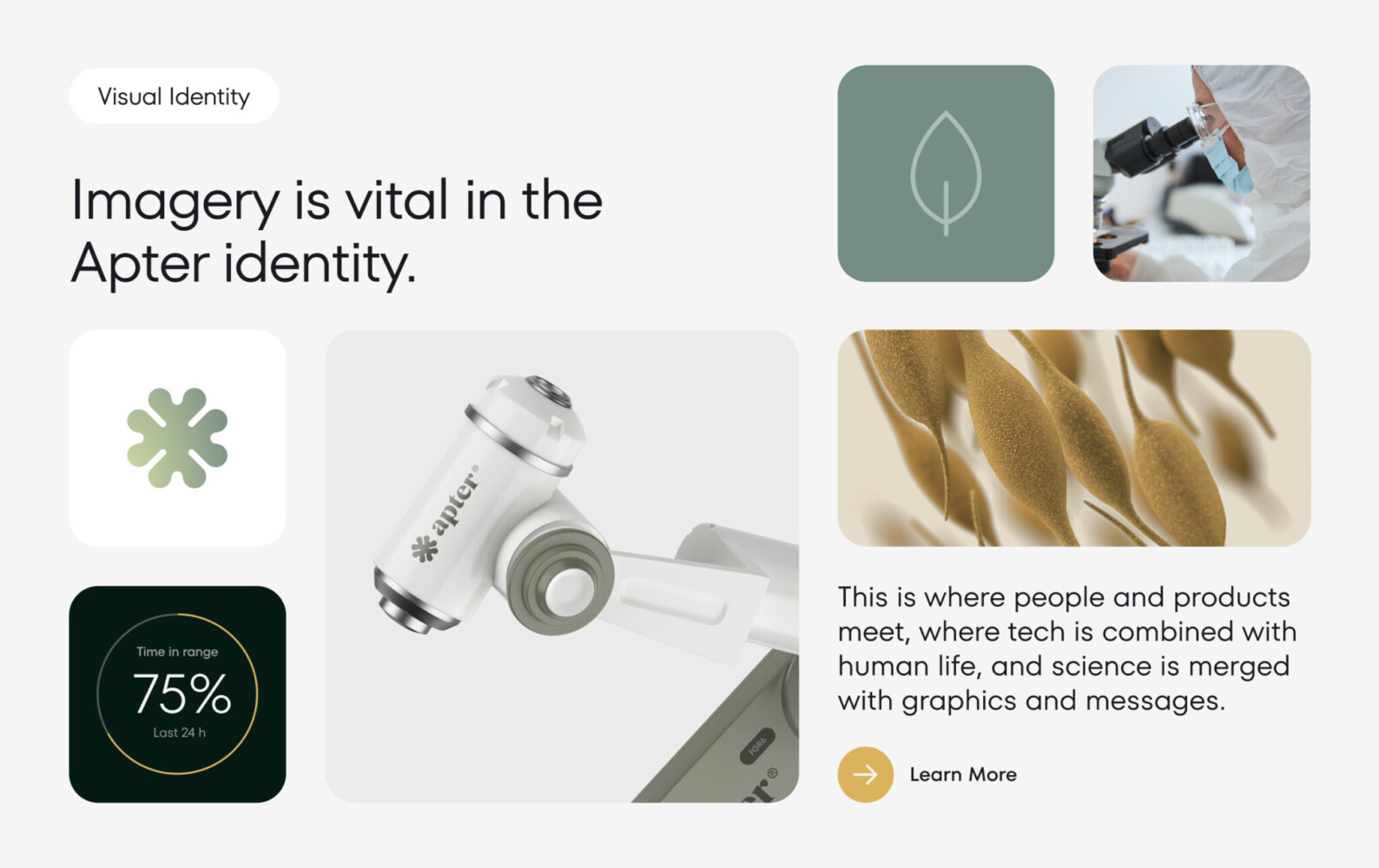
Apter branding by Shakuro
Measuring Brand Impact For Startups
Key Metrics for Brand Awareness
These are early signs of brand traction:
- Direct traffic to your site: If more people are typing your URL or clicking bookmarked links, that’s real recognition. Google Analytics shows these results under “Acquisition > Direct.”
- Search volume for your brand name: Use Google Trends or Search Console. Is “Company X” growing as a search term? That means word is spreading.
- Social mentions: Tools like Mention or even X search can show untagged references. When someone says “that tool with the yellow logo” and means yours, that counts.
- Referral sources from trusted channels: Got featured in a newsletter? Invited to speak? Those are trust signals that boost perceived credibility.
You can also ask new users, “How did you hear about us?” If more say “I’ve seen you around” instead of “I saw an ad,” you’re building awareness.
Website Conversion and User Engagement
Website drop-off or conversion tells you whether it’s working. Check these:
- Time on site / bounce rate: If people stick around, your messaging likely resonates. If they leave fast, maybe the vibe feels off or confusing.
- Waitlist signups or free trial starts: Are visitors converting without heavy incentives? That suggests emotional alignment.
- Scroll depth: Are people reading your story? Or bouncing at the headline? Hotjar or Microsoft Clarity can show this.
- Content engagement: Do your blog posts or newsletters get shared? That’s a sign your voice matters.
Investor and Customer Feedback
With investors, you need to listen to how they describe you. Are they saying things like, “You’re the team I keep hearing about” or “You’ve got a clear point of view”? That’s brand equity.
But if they say, “Seems like another [competitor]” and “Not sure who this is for,” then it’s a red flag. Your startup branding isn’t differentiating.
When dealing with customers, ask simple questions, like “What’s the first thing that comes to mind when you think of us?” Their language will tell you if your messaging is landing or if it’s getting lost.
Case Studies: Startup Branding in Action
UZE: Easy, Fast, and Convenient Urban Charging
UZE, an American urban charging startup, strives to fix the problem of portable solutions with their power banks and chargers suitable for all devices. Their tech wasn’t wildly different from others, but their brand voice made them stand out.
They didn’t talk like another infrastructure company. They sounded like city dwellers who were done with the hassle. If you visit their website, you can read a daily life story that inspired them, and that story is similar to some your friends might tell you when they travel.
- Tagline: “A new era of charging technology”
- Tone: Direct, slightly annoyed, no fluff.
- Messaging: Focused on speed, simplicity, and reclaiming time.
As a result, they have eight successful funding projects. Why did it work? They didn’t try to sound like Tesla. They became the voice of the stressed city EV owner, a student who has only 5% of phone battery left, and tourists who have to spend nights in the cars. That emotional fit built loyalty fast.
Boombrush: Confident and Fresh Brand Identity
Boombrush is an electric toothbrush with a focus on recycling. Yeah, no mistake—the company highlights leveraging sustainable and recyclable materials, and users can return the used brush heads for recycling. With a decent subscription fee, it provides free brush heads and toothpaste for the device every 24 weeks.
Spiced up with a friendly tone of voice and bright green colors (=nature), this branding is extremely different from other dental products. They stopped selling a brush and started building a community where everyone shares the same goal—having a great smile while taking care of nature. Quite memorable and easy-to-recognize visual identity design.
Pillars: Reliable SRE Solutions
This one is from our portfolio. Pillars is an outsourced SRE service that needed a unique visual identity.
During brand creation, we focused on huge work done in shadows, just like SRE services companies rely on. So we opted for a sci fi looks with abstact and mysterious nature. No direct connection to hardware or materials, though. As for the logo, it symbolizes the solid technological pillars holding the foundation for many companies. As a result, the Pillars branding represented their services and attacted attention.
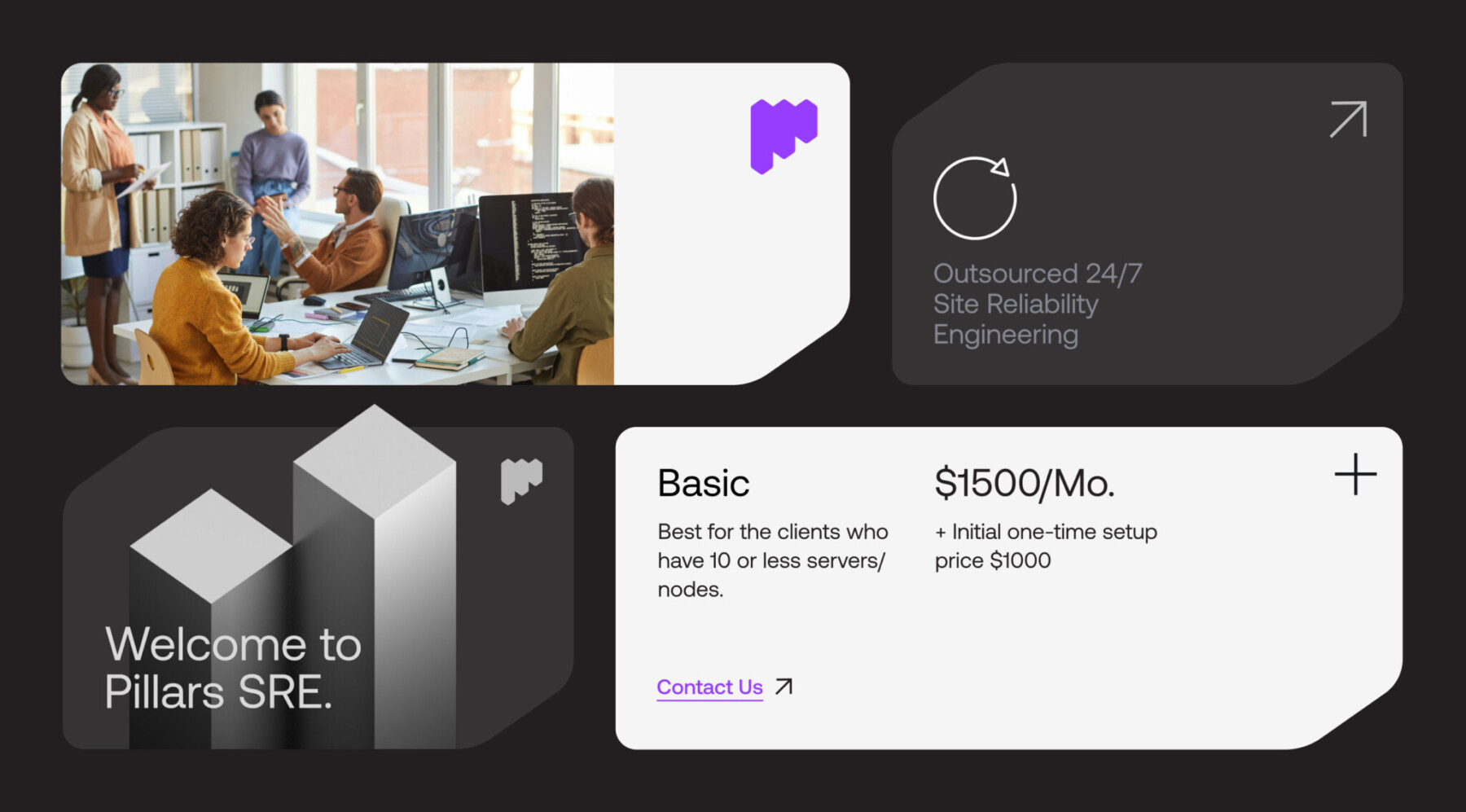
Pillars branding by Shakuro
Tools and Resources for Effective Branding
Branding Books and Courses
Books:
- “Building a StoryBrand” by Donald Miller—Not perfect for every startup, but killer for clarifying your message. It teaches you to position your customer as the hero.
- “Start With Why” by Simon Sinek—Yeah, it’s everywhere, but there’s a reason. The book helps you dig into purpose. So it’s useful when you’re stuck on “Why should anyone care?”
- “Design Is Storytelling” by Ellen Lupton—Short, visual, and brilliant. Connects design choices to narrative and is perfect if you’re more builder than creative.
Courses:
- “Brand Management: Aligning Business, Brand and Behaviour” on Coursera—Free to audit. Academic but practical. It covers how a brand lives inside and outside a company.
- Superpath’s Content Strategy Courses—Especially good if you’re B2B. Teaches voice, SEO, and storytelling in one go.
Style Guides and Templates
Free templates:
- Frontify’s Free Brand Templates—Covers logo use, colors, tone, imagery. Export as PDF and drop in Slack.
- Canva’s Brand Kit—You can upload your colors, fonts, and logo, then apply them consistently across social posts, or presentations.
- Templates from Figma Community—Search Figma’s community tab, there are tons of free, editable files.
DIY your own in a doc:
It works, seriously. Just open a Google doc and include the following to configure your brand voice and tone:
- Mission + tagline
- Voice: “We say ___, we don’t say ___”
- Color hex codes
- Font names
- Example emails/tweets (good vs. bad)

Branding Websites and Platforms
For naming & messaging:
- Namelix—AI-powered name generator with branding potential. Gives short, brandable names and logo previews.
- Copy.ai or Jasper (light use only)—Not for full content, but great for brainstorming taglines or email subject lines when you’re stuck.
For visuals:
- Coolors.co—Fast, intuitive color palette generator with an export to CSS, Figma, etc. Lock one color, generate the rest.
- Google Fonts + FontPair.co—Best combo for finding readable, on-brand typefaces. FontPair shows what fonts work together.
- Unsplash, Pexels, Storyset—Real photos, free videos, and editable illustrations.
- SVGOMG & Figma—For logos and icons. SVGOMG compresses SVGs so they load fast. Figma is the go-to for building simple brand assets collaboratively.
For consistency & collaboration:
- Notion or Coda—Use them to house your brand docs, embed colors, logos, and examples. Share with the team and update in real time.
- Loom—Record quick video walkthroughs of your brand tone or design choices. Easier than writing long explanations.
For listening:
- X Advanced Search & Reddit—Search your name or category and see how people talk about you or your competitors.
- Google Alerts—Set up for your startup name. Know when you’re mentioned, even off social.
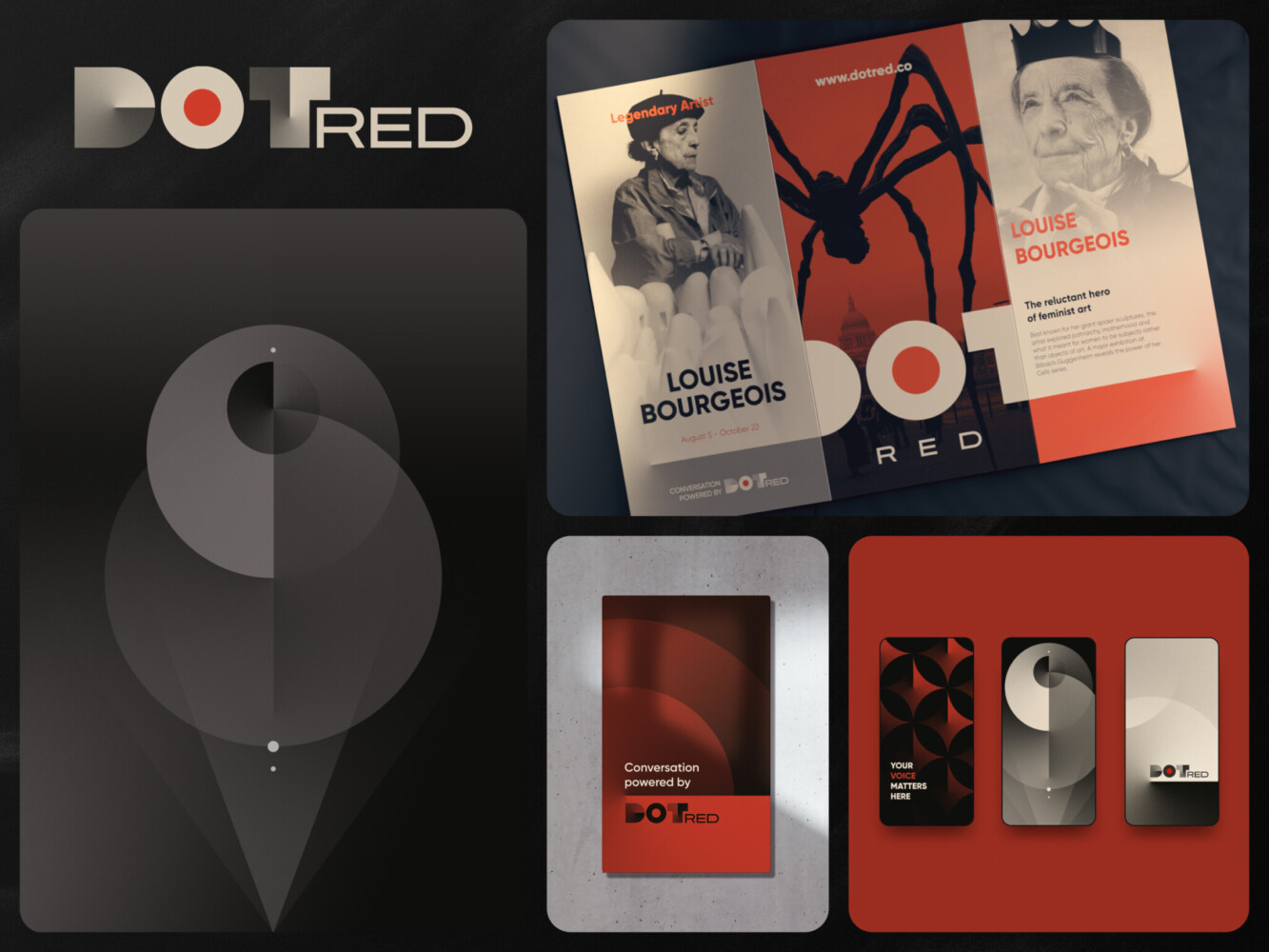
Dot Red brand identity by Shakuro
Conclusion
Why Strong Branding Sets Startups Apart
Great ideas are everywhere. Funding is tight. Talent has options. And attention? More expensive than ever. So what makes one venture stand out while another with a better product fades into silence? It’s not just timing. It’s branding for startups—the quiet force that turns “another new thing” into “this is different.”
A strong brand clarifies and tells your story before you speak. It gives people a reason to care because you feel real.
Next Steps: Build a Memorable, Scalable Brand
You don’t need a big budget or to wait for the right moment. You can start small and scale using the tips from this article. Write down your thoughts, and then build from there:
- Pick colors, fonts, and a voice and stick to them.
- Let your founder(s) lead the narrative early.
- Show up consistently, even if it’s just on one channel.
- Listen to users, adapt, and stay human.
Don’t think about branding as a one-time project, though. It should be a way of showing up every day that is different from the others but speaks directly to the users’ hearts, knows their problems, and actually solves them.
That’s what we strive to do in Shakuro when making concepts—to give your idea a unique voice that reaches the ears of the target audience and stays in their memory.
Related reading