For those who prefer to listen rather than read, this article is also available as a podcast on Spotify.
Should I hire an in-house web designer or just hand it all over to an agency? This nagging question hunts the minds of many startuppers day and night. An agency might think they’d be your growth secret weapon but be completely clueless about your funnel. At the same time, burned-out in-house designers might treat your site like a cheap brochure. And speaking of a budget that’s tighter than your pair of jeans after holiday snacks…
Truth is, both paths can work, but they serve wildly different needs. If you pick wrong, you’ll waste time, cash, and momentum. At a stage where every click counts, that’s kind of brutal. So this comparison is about what actually moves the needle for your product right now.
Stick around, and I’ll break down the key differences between an in-house web designer vs web design agency. Costs, use scenarios, actionable guidance, advantages and disadvantages, etc.
Why This Decision Has a Bigger Impact Than Most Founders Expect
The choice between these two approaches should not be influenced just by pretty buttons or neat Figma files. It’s actually one of those sneaky, under-the-radar decisions that quietly shapes how fast you grow or how slowly you stall.
Early on, many startups assume design is a support function, something that comes after product decisions. Turns out, your designer or team is often the one connecting product intuition with user behavior. They’re the ones tweaking that horrible CTA button or noticing that your onboarding flow feels like a maze and simplifying it so trial users actually stick around.
A bad alignment here leads to a clunky homepage, yes. But also it means slower experiments, fewer A/B tests, and weaker user feedback loops. It means your growth engine sputters because design isn’t fueling it.
You might not see the impact right away. But six months in, you’ll either be iterating like crazy, turning insights into pixels within hours, or waiting two weeks for a “revision round” while your competitors eat your lunch.

E-Commerce Website Design by Shakuro
What You Really Get With an In-House Web Designer
The 3 Real Advantages of an In-House Designer
Hiring an in-house web designer for the first time feels like finally getting a teammate who gets it. Not just “gets it” as in “can move things around in Figma,” but actually understands why that button needs to say “Start free trial” instead of “Learn more.”
First off, fast feedback loops. You tweak a headline at 10 a.m., and by lunch, it’s live. No waiting for agency availability, no ticket queues, and no time-zone ping-pong. That speed matters a lot when you’re still figuring out what resonates with your audience.
Then there’s deep product context. Your in-house designer sits in the same standups, overhears customer support calls, sees the churn data, and feels the pressure when conversion dips. They’re living your priorities. This immersion leads to designs that are truly purposeful.
And finally, internal alignment. No more awkward handoffs or misinterpreted briefs. When your designer’s embedded in the team, they can casually ask the engineer, “Hey, if we change this flow, will it break the API?” or push back on a PM’s wild idea because they’ve seen five versions of it fail already.
The Hidden Limitations That Appear After the MVP Stage
Here’s where it gets tricky. That same designer who was in your MVP might start hitting walls once you’re past “just make it work.” Because one person = one skill set. Maybe they’re killer at UI but haven’t run a proper A/B test in their life. Or they’ve never dug into GA4 event tracking, so your “conversion-optimized” page is basically designed in the dark.
Suddenly, you realize you’re missing CRO depth. You’re trying to move metrics. But your designer doesn’t know how to interpret heatmaps, set up multivariate tests, or tell if that new layout actually boosts signups or just looks better.
Same goes for UX research. Post-MVP, you need more than a gut feeling. You need user interviews, task analysis, and behavioral data. Most solo in-house designers aren’t trained to run that kind of work. So you end up guessing instead of learning.
And don’t get me started on technical SEO or performance. That gorgeous animated hero section might be tanking your Core Web Vitals. Your designer didn’t mean to hurt your organic traffic, but unless they’ve worked closely on web design for business growth with dev and SEO teams before, they just won’t see those landmines coming.
It’s not their fault, though. You hired a designer, not a growth squad. But if you miss these gaps early, you’ll wake up six months later wondering why your traffic’s flat and your bounce rate’s climbing.
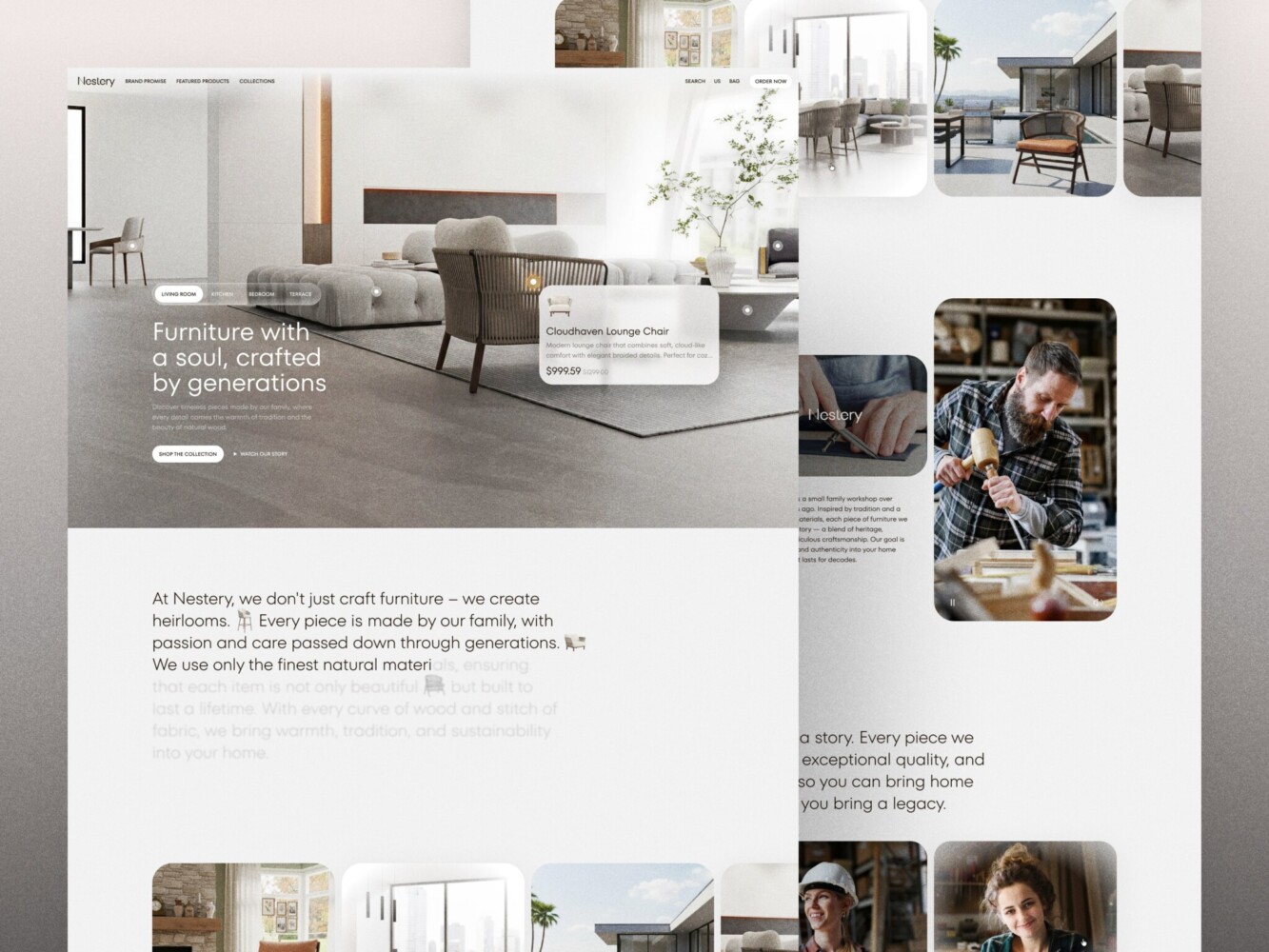
E-Commerce Website Design by Shakuro
What a Web Design Agency Brings That In-House Teams Usually Can’t
Cross-Functional Expertise in One Team
A good web design agency isn’t just a “design vendor.” They’re not the people you ping when you need a hero image swapped out. At their best, they function like a mini growth engine, bundled with specialists who’ve been down this road before, together.
When you work with a web design agency for growth, you’re tapping into a unit where the designer already talks daily with a CRO strategist, a front-end dev who obsesses over Lighthouse scores, a UX researcher who just wrapped up 20 user interviews for a SaaS client in your niche, and maybe even an SEO specialist who flagged a critical indexing issue before launch.
And because they’re structured to collaborate across disciplines from day one, their output is built to perform. Buttons are placed where eye-tracking data says users actually look. Pages load fast by design. Navigation is engineered to reduce cognitive load and push users toward trial signup. Everything clicks.
Pattern Recognition From Dozens of Products
Something almost no single in-house designer can replicate: they’ve seen this movie before.
Agencies work across industries, business models, tech stacks, and growth stages. That means when your homepage bounce rate spikes, they don’t start from zero. They’ve seen exactly this pattern in three other startups last quarter, and they know whether it’s a messaging issue, a trust deficit, or just a broken mobile menu masquerading as a “design problem.”
This pattern recognition is low-key powerful. It lets them anticipate bottlenecks. For example, we’ve implemented our knowledge of Arabic culture and traditions when designing a web platform for Bless You healthcare. Our team used alternative colors, illustrations, and flows to deliver relevant experiences to the target audience. Not to mention the localization.
When you’re deep in your own product, everything feels unique. But a surprising amount of what slows growth follows predictable patterns, like onboarding friction, weak value prop above the fold, and unclear next steps. Agencies recognize those red flags fast because they’ve fixed them a dozen times over.
In-House vs Agency Web Design: A Growth-Focused Breakdown
Speed to Market (Who Gets You to Results Faster?)
Honestly, if you need something now, an agency often wins, hands down.
Hiring an in-house designer? Even if you find the right person fast, you’re still looking at 2–4 weeks just for onboarding: ramping them up on your product, your users, your brand voice, your weird internal Slack conventions, etc. Then they need to build trust with engineering, align with marketing, figure out your deployment pipeline, and whatnot.
Meanwhile, a solid agency hits the ground running. Their team’s already aligned. They’ve got playbooks. They ask the right questions on day one and ship testable designs within days. No waiting for HR approvals, no equity negotiation delays. Just “here’s our kickoff doc; when do you want version one?”
That said, if you’re past the “throw spaghetti at the wall” phase and into iterative optimization, an in-house designer can catch up and eventually outpace an agency on speed. But only after they’ve soaked in enough context. Early on, agencies definitely move faster.
Conversion and UX Depth (Where Agencies Win)
Most solo in-house designers don’t do real CRO because it’s not just purely design-related. It’s data analysis, behavioral psychology, copy testing, funnel mapping, and technical implementation.
If we compare an in-house design team vs agency, a single designer, especially in a lean startup, is usually juggling UI, branding, marketing assets, and maybe a dash of user feedback. They don’t have time or often the training to run statistically valid A/B tests, interpret scroll depth heatmaps, or diagnose why users drop off at step three of your checkout.
Agencies bake this into their workflow. Their teams work alongside CRO specialists who define hypotheses before a single mockup is made. Such specialists know that “make it pop” won’t move the needle, but tightening your value proposition above the fold might lift conversions.
Which is why we always say: conversion rate optimization starts with web design, not A/B tests. If your layout isn’t structured to support testing and behavioral insight from the start, you’re just polishing a leaky bucket.
Scalability Without Rebuilding Everything
You launched with a one-off homepage built by your lone designer. It worked, but now you’re adding pricing tiers, a resource hub, a self-serve onboarding flow, and everything feels stitched together with duct tape.
The reason is the single designers, especially under pressure, optimize for the current conditions. They don’t always have the bandwidth or mandate to build a proper design system: buttons behave differently across pages, form styles drift, and micro-interactions feel random.
Agencies, by contrast, think in components and systems from day one. They build web design for business growth: reusable UI kits, consistent interaction patterns, and documentation that survives team turnover.
So when you scale from 3 pages to 30, you’re not redesigning everything. You’re extending a coherent system. That saves dev time, reduces QA headaches, and keeps the user experience consistent as you grow.
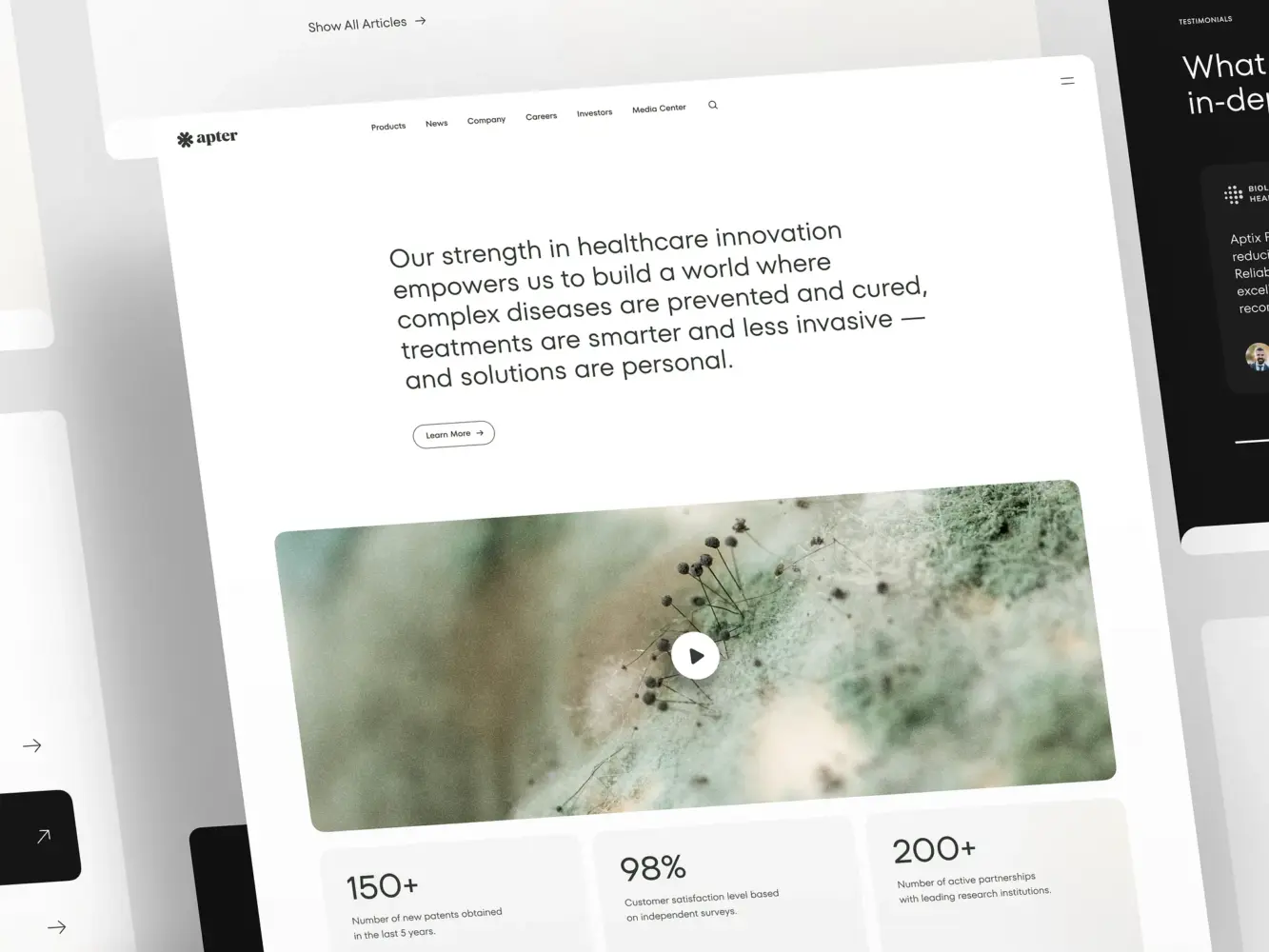
Landing Page Design for a Pharmacology and Medical Provider by Shakuro
The Real Cost Comparison (Including What No One Talks About)
True Cost of an In-House Designer
Sure, you see the salary and think, “That’s manageable.” But the real cost can be sneakier.
First, hiring risk. You spend weeks screening, interviewing, and negotiating, only to realize 3 months in that your “senior” designer has never shipped a responsive e-commerce flow or worked with real analytics. Now you’re back to square one, minus the budget in wasted time and onboarding.
Then there’s churn. Early-stage startups aren’t always stable. If your designer leaves, you lose all that hard-won product context. Replacing them means the same cycle and the same risk.
Finally, opportunity cost. That designer is working 40 hours a week, but how much of that is growth-focused design? Often, they’re pulled into last-minute marketing banners, investor deck tweaks, or fixing broken Shopify templates. Their output is limited by bandwidth and scope. One person can’t be a UX researcher, motion designer, and CRO expert all at once.
So yeah, the sticker price looks lower. But when you factor in delays, misfires, and the lack of specialized impact, the “cheap” option often costs more in missed momentum.
Why Agencies Often Deliver Higher ROI
Agencies do cost more upfront. Retainers can feel steep: approximately $5K, $10K, even $20K/month. But you’re not paying for hours. You’re paying for outcomes.
When comparing an in-house web designer vs web design agency, you can see that the latter hits the ground with a growth mindset baked in. Their first deliverable is a hypothesis-driven design built to lift signups, reduce bounce, or clarify your offer. And because they’ve got CRO, dev, and UX folks already aligned, that design works from day one, meaning faster validation and revenue.
The truth is, ROI isn’t about line-item budgets. It’s about what changes because of the work. If you’re only tracking “hours spent” or “pages delivered,” you’re missing the whole point. Agencies win on ROI because they’re built to move your business, not just make it look nice.
When an In-House Designer Actually Makes Sense
Scenarios Where In-House Works Well
Not every startup needs an agency, and pushing one on you when it’s not the right fit is just creating more noise. In-house really shines in a few specific situations.
If you’re in true MVP mode, like, “We’re launching in 10 days and need a landing page + basic dashboard,” having someone embedded makes sense. You need speed, flexibility, and zero handoff friction. An agency might over-engineer it; your in-house person will ship what’s just enough.
It also works well for internal tools: admin panels, ops dashboards, CRM interfaces—stuff your customers never see. These don’t need conversion science or SEO finesse. They need to be functional, consistent, and built fast alongside your engineers. In terms of a web design agency vs in-house, the latter one is perfect for this task.
If you’re in a low-growth or stabilization phase, for example, you’ve hit product-market fit but are holding steady before your next funding round, an in-house designer can maintain, polish, and support without the pressure of constant experimentation. No need to pay agency rates to tweak a button color twice a year.
So, the key question is why you’re hiring them. If it’s for tactical execution within a narrow scope, in-house can be lean, efficient, and cost-smart.
Scenarios Where Agencies Consistently Win
Flip the script, and the agency edge becomes undeniable.
When you’re scaling (actively adding features, markets, or user segments), you need more than one brain. A strategy should be baked into every screen. Agencies bring tested frameworks for onboarding flows, pricing architecture, localization—the things that are hard to wing with a solo designer.
Full site redesigns? Almost never goes well in-house unless you’ve got a whole design org. Redesigns are about rethinking your entire user journey. Agencies treat them like growth projects, not paint jobs.
Let me give you an example: the Select case from our portfolio, where we redesigned both the mobile app and website. We had to take into account the desires and pains of many users and onboard them painlessly to the new app. Not to mention implementing new features and trends while keeping the brand message. That’s an enormous amount of work.
And if conversions, performance, or technical SEO are actual business goals, agencies win again. They’ve got specialists who know that lazy-loading images wrong can tank your Core Web Vitals and your organic traffic.
Same goes if we compare a web design agency vs in-house in terms of rebranding. It’s not just a new logo. It’s how that brand voice translates into microcopy, interaction patterns, and trust signals across every touchpoint. Agencies orchestrate that holistically; in-house teams often end up patching it together piece by piece.
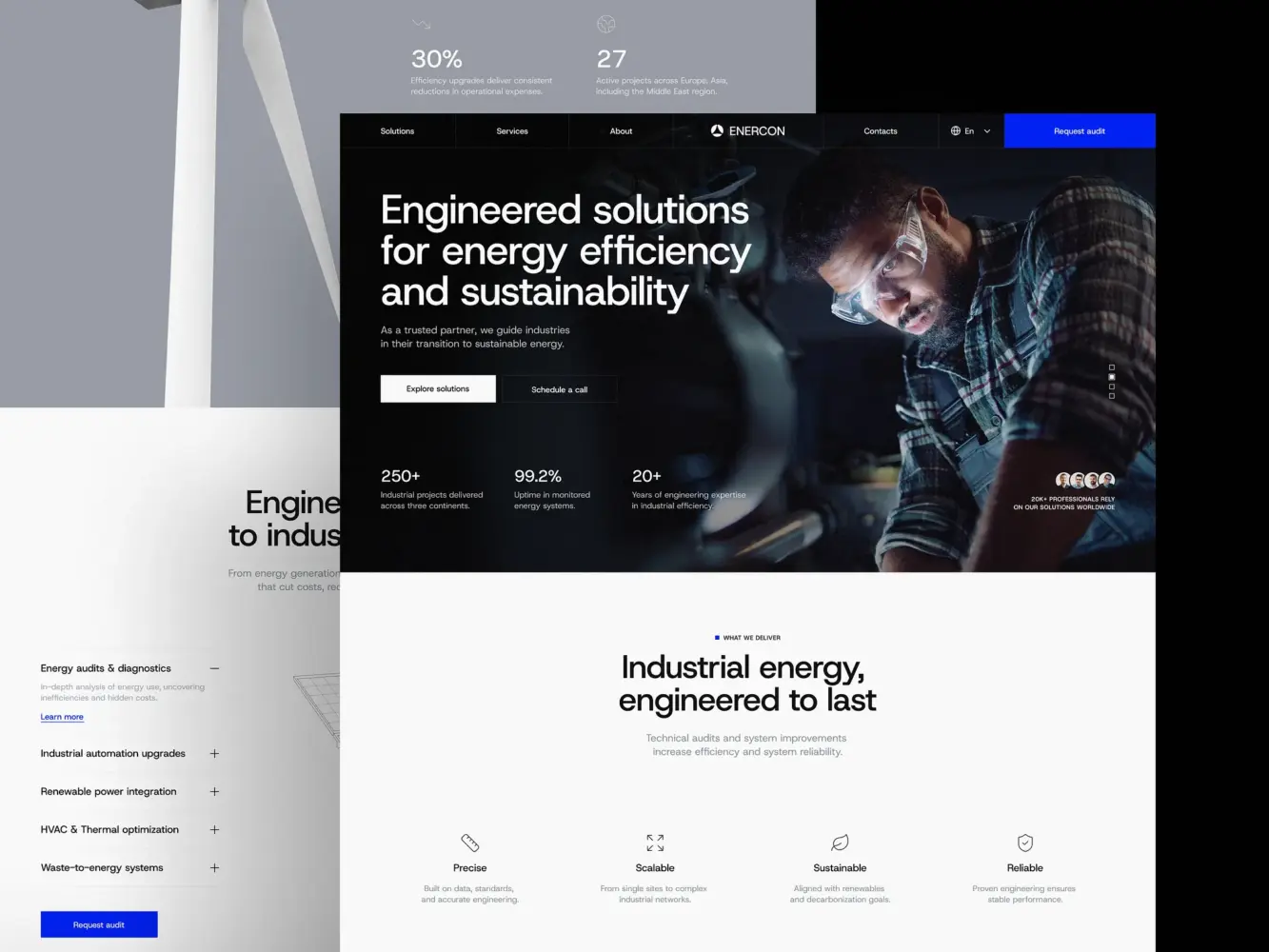
Industrial Company Website Design by Shakuro
How to Choose Based on Your Growth Stage
Early-Stage Startups
If you’re pre-PMF or just past it, your priority isn’t “perfect design.” It’s fast validation.
You need someone who can turn a rough idea into a clickable prototype today, tweak it based on user feedback tomorrow, and not freak out when the CEO suggests something in the middle.
In this phase, an in-house designer can work if they’re scrappy, full-stack enough to handle basic HTML/CSS, and okay with ambiguity. But honestly, many early teams are better off with a lean, growth-minded agency that operates like an extension of your team. So look for one that charges by project or sprint, not by the hour, and has a track record of working with seed-stage startups.
Why? Because they’ll help you avoid building a beautiful dead end. They’ll push you to define your core value prop before polishing the navbar. After such a thorough preparation, your design will be easier to scale together with the whole project later.
If you go this route, keep it tight: one key page, one user flow, and one clear goal. No “brand guidelines” yet.
Scaling SaaS and B2B Products
Now you’re past “Will anyone use this?” and into “How do we get 10x more qualified trials without blowing CAC?” Attracting and working with other businesses is a whole different game, and design needs to shift from execution to systemization.
At this stage, you’re dealing with:
- Complex demo and trial flows that must guide users from “curious” to “committed” in under 90 seconds
- Multi-tier pricing pages that balance clarity with upsell potential
- Self-serve onboarding that reduces support load while driving feature adoption
- Consistent UX patterns across dozens of pages
Hiring in-house web designers in this case is an unwise decision, because they don’t bring in comprehensive UX systems. Agencies build a component library that ensures every modal, tooltip, and error message behaves the same way, so your engineering team isn’t reinventing the wheel for every new feature.
They’ll also pressure-test your conversion paths with real behavioral data. Does your free trial require too many steps? Does your demo request form scare off SMBs? They’ve seen these patterns before, and they know how to fix them without a full rebuild. Which saves you lots of resources early on and influences your revenue directly.
And what’s crucial for SaaS solutions, the agencies scale smoothly with you. Need to localize for Europe next quarter? Add a partner portal? A good agency already has the structure to handle it. An overworked in-house designer might be drowning in Jira tickets by Tuesday.
The Hybrid Model Most Fast-Growing Teams End Up Using
To be honest, the teams that scale smoothly rarely go all-in on just in-house or just agency. They mix both.
In practice, it looks like this: an in-house designer or small design lead owns the product vision, brand guardrails, and day-to-day context. In its turn, a specialized agency drives the heavy lifting on growth-focused UX, conversion architecture, and scalable design systems.
In contrast to cases where we compare an in-house web designer vs web design agency, here the flow is different. The in-house person presents in every product meeting. They keep things on-brand, consistent, and aligned with the roadmap. They’re the glue.
The agency comes in with fresh eyes, battle-tested frameworks, and the bandwidth to run what the in-house team simply can’t. Full-funnel CRO audits, performance-optimized redesigns, A/B test ideation, and even building out a proper design system with documented components and interaction logic. This combo works because it plays to each side’s strengths without pretending one person can do it all.
And honestly, it’s more cost-efficient than it sounds. You’re not paying agency rates for banner ads or Slack emoji packs. You’re paying them to move metrics, while your in-house designer keeps the ship steady.
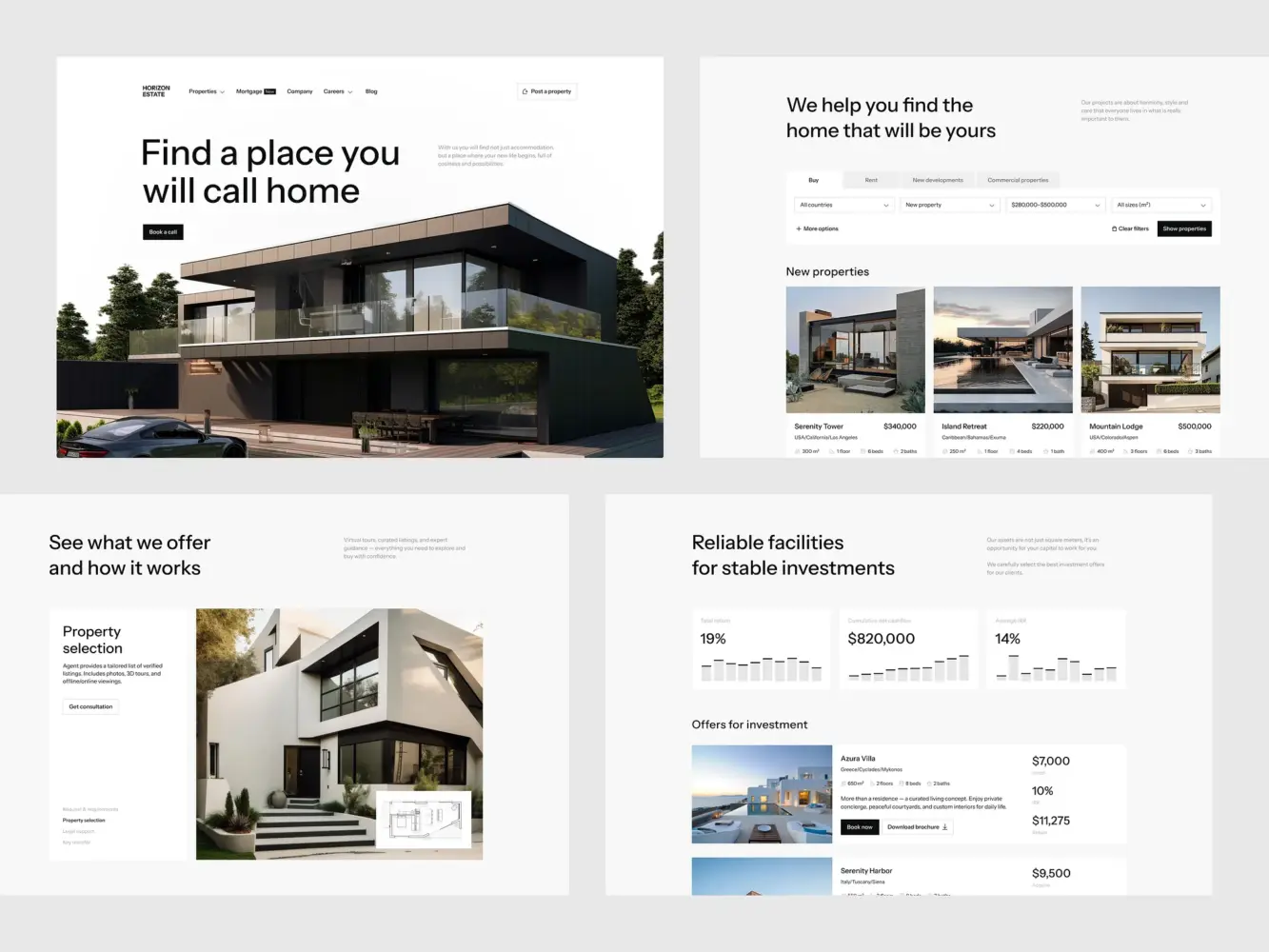
Real Estate Website Design by Shakuro
Final Verdict: Growth Velocity Beats Control
The One Question You Should Ask Before Deciding
When looking at the in-house web designer vs web design agency comparison, yeah, it feels safer to keep everything in-house. You know the person. You control the schedule. You can walk over and point at a pixel. But if that “control” means slower iterations, weaker conversions, and missed opportunities because you’re bottlenecked by one overworked designer, well, you’re not really in control. You’re just moving slower.
Many founders cling to “ownership” while their bounce rate climbs and their trial-to-paid drop-off gets worse. Meanwhile, teams that embraced outside expertise started shipping growth, not just screens.
So before you decide between in-house or agency, forget titles, forget org charts, forget who reports to whom. Ask yourself just one question: “Which option gets us to measurable growth faster?” Not “which feels more comfortable?” or “which looks better on our cap table?” Which one moves the needle sooner?
If the answer is an in-house hire (maybe you’re building internal tools, or you’ve got runway but no urgency), great. Go for it. But if you’re trying to scale, convert, reduce churn, or rebuild with intent? If web design for business growth is your North Star, then the agency path isn’t a compromise. It’s your accelerator.
✅ Hire in-house when:
- You’re in true MVP mode and need someone embedded to ship fast, iterate daily, and wear multiple hats (UI, basic HTML, marketing assets).
- You’re building internal tools (dashboards, admin panels, ops interfaces) that don’t touch customers or drive conversions.
- Your product is stable, growth is slow or paused (e.g., between funding rounds), and you mostly need maintenance, small tweaks, and brand consistency.
- You already have strong CRO/UX/SEO support elsewhere on the team and just need a designer to execute within that framework.
- You’re past Series B+ and have the scale to justify a full design org (with researchers, product designers, motion specialists, etc.).
🚀 Hire an agency when:
- You’re actively trying to scale and need conversion-optimized flows.
- Your current site isn’t performing: high bounce rate, low trial signups, poor mobile experience, or SEO issues baked into the design.
- You’re doing a redesign, rebrand, or launch that must align with business goals.
- You lack CRO, UX research, or performance expertise and can’t afford to hire 3–4 specialists full-time.
- You need speed with strategy: ready-to-execute teams that bring data, systems, and cross-functional collaboration from day one.
- You want to test before you commit: run a 6–8 week growth sprint with an agency before deciding if you need long-term in-house talent.