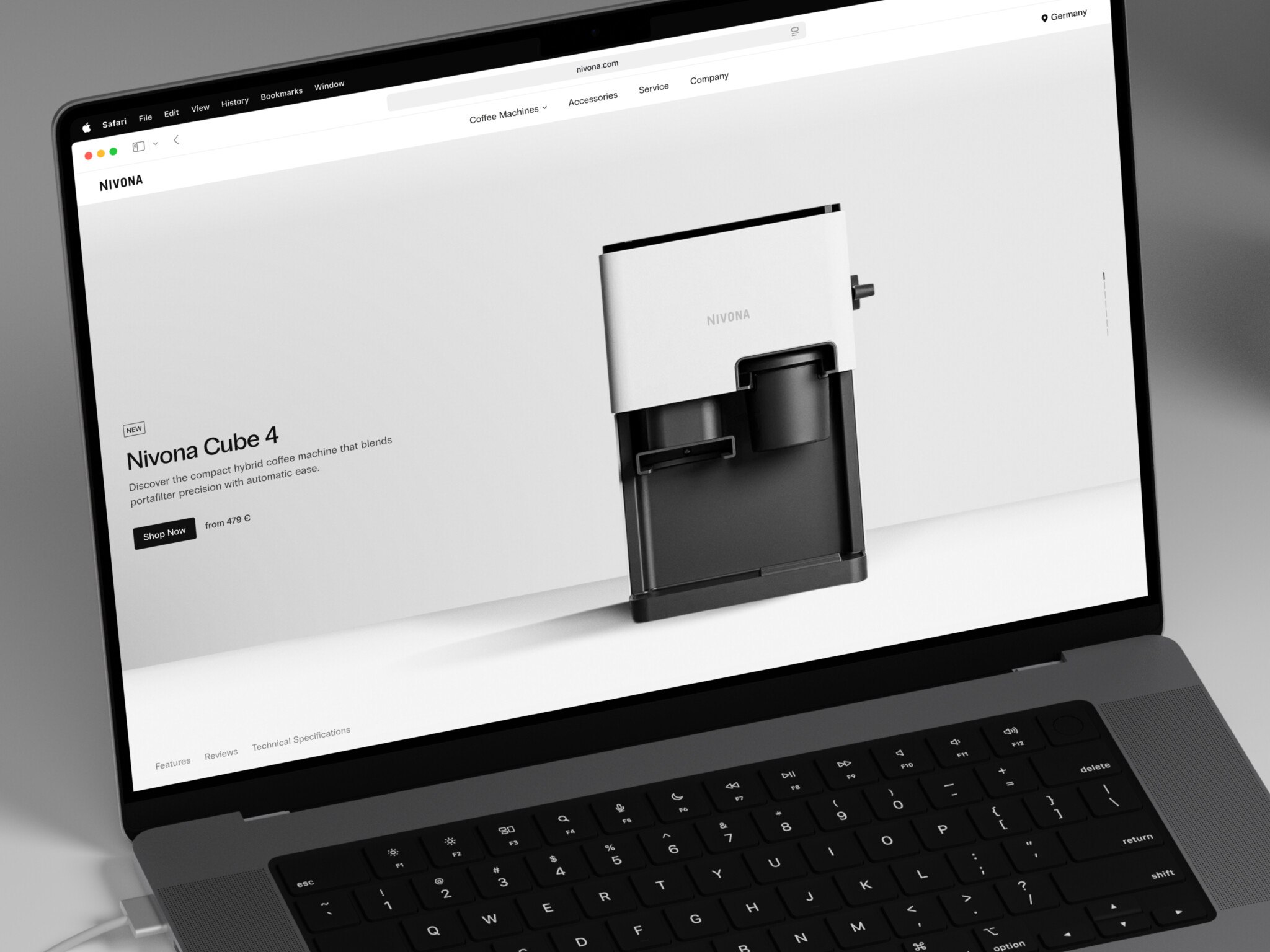
Development cost optimization for startups comes down to five decisions: a small but experienced team, a clear product concept, a detailed roadmap with an MVP, careful QA and beta testing, and outsourcing where it saves money. It matters because budgets are tight: 58% of projects initially have less than $25,000 at their disposal, and 42% of startups fail because the team misunderstood the current market demand.
Launching a startup doesn’t require a big office: more than 69% of startup companies were home businesses in the early stages. What drives the budget up is complexity, the technology stack, missed bugs, and a team that is too large to manage. Users find around 44% of in-app bugs, and each one costs more to fix after release. Products with payments or sensitive data, such as fintech web development projects, also need security testing from the start.
Below, we go through the five tips one by one, with the methods and testing types that keep startup development costs under control.
#1 Hire a small but experienced team
Let’s start with team size. Many people would opt for a large staff, thinking it would speed up the development process. However, this is not a great idea since managing hundreds of people will spread your limited resources even more.
That’s why hiring a smaller but very skilled team is better in terms of MVP development сost. The experts will be more efficient: they will require little time to understand the tech stack and might even suggest a few ideas for better workflow. Experienced app developers will select a suitable architecture while UI / UX designers create helpful style guides and mood boards. Also, the detailed feedback will come in handy.
For sure, there is a gimmick. The specialists prefer working in certain conditions, so you will have to establish a convenient working environment like communication channels, methodology, software, hardware, etc. This fact doesn’t neutralize the cost reduction factor because these standards will drastically improve development quality.
To provide better conditions for the experts, study cutting-edge technologies. The Internet of Things and its intelligent devices can be used to create a fast business workflow. With e-learning platforms, the startup members will sharpen their skills. No-code programming will increase the development speed and allow your employees to switch their attention to more critical tasks. For better cybersecurity and backup, it’s wise to keep and share data via cloud storage.
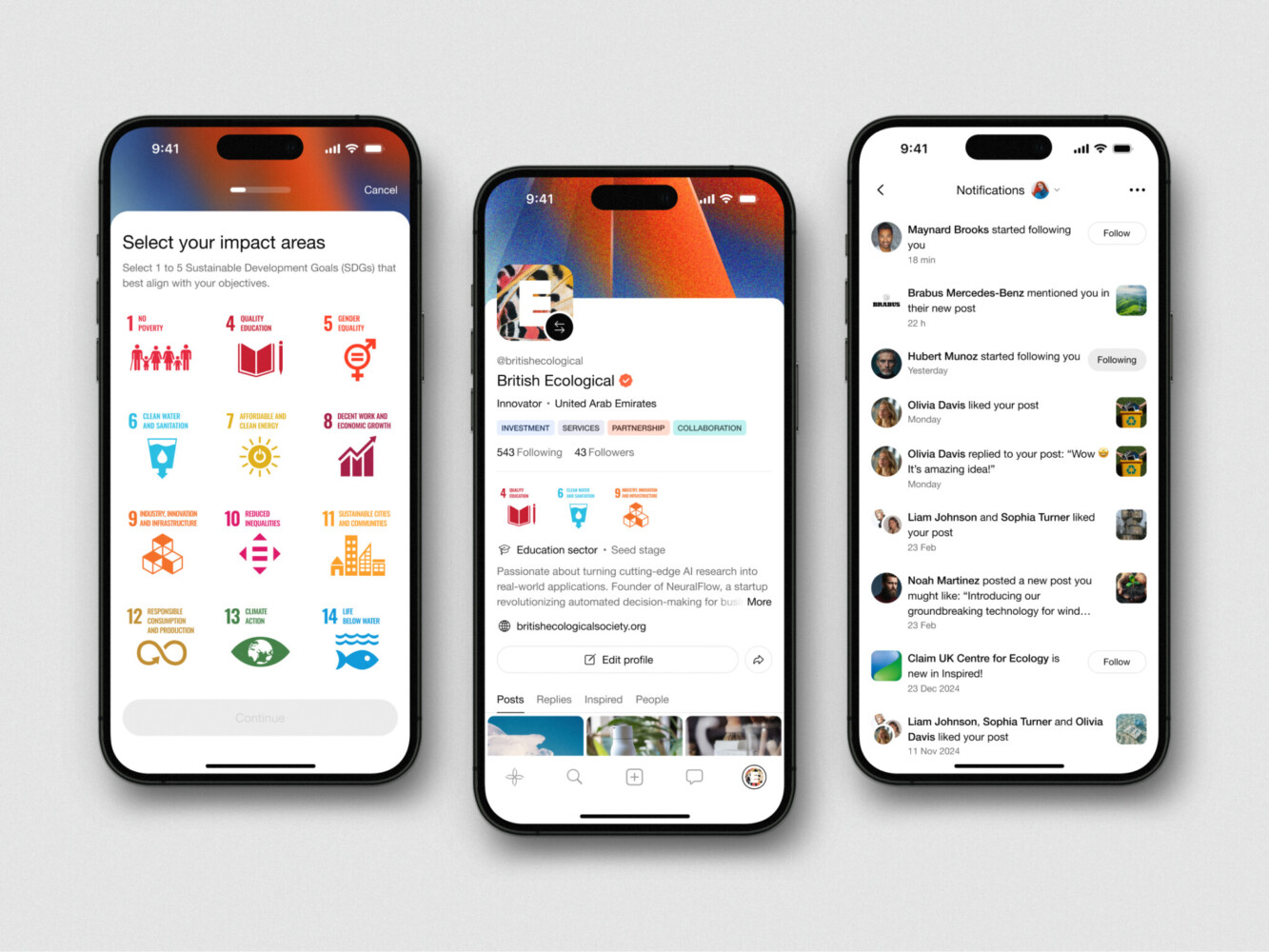
Mobile App Design for Inspired by Shakuro
#2. Easy-to-grasp product concept
Extensive market and user research are crucial for startup cost optimization. Your product should target a specific audience and solve their main problem. Otherwise, it won’t be successful.
You can perform the research yourself or hire marketing experts. In the end, you should have a clear concept for the future project. What’s it about, what issue does it solve, and who can benefit from using it? Don’t try creating the product based only on your considerations. Understanding the actual needs of your potential clients helps you prioritize features during the planning and development phases.
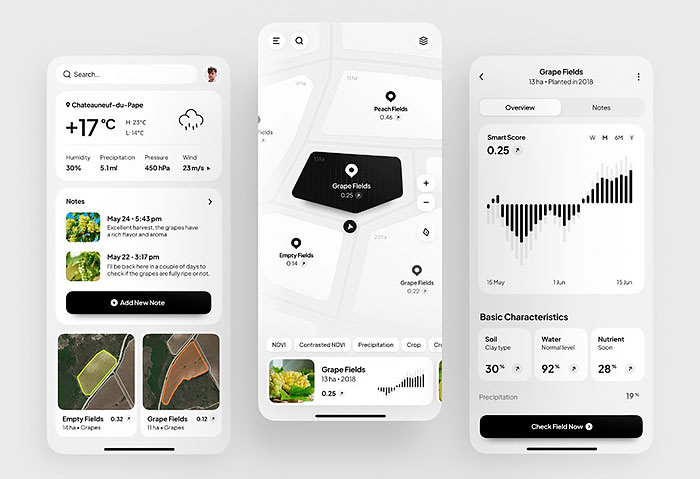
Agriculture assistant app concept by Conceptzilla
There are different methods you can use to define the target audience. The easiest one is to conduct surveys via a newsletter or on social media with Google Forms. Alternatively, you can study your competitors and see what their community is. Last but not least — a persona method. Together with project managers and UX designers, you can create user personas, or simply speaking, people portraits, for your product. This way also allows the team to prioritize critical tasks and postpone secondary ones. Two or three personas are enough to get the design started.
#3. Detailed roadmap & project planning
Every project begins with a business plan. It helps the team to create a task pool and assign it to the costs. Without the plan, people tend to underestimate the possible expenses, which leads to higher business startup costs.
42% of startups fail because the team misunderstood the current market demand. So, after you get a complete image of your target audience, start planning the application development. During this phase, you should also consider the time and human resources required for each task on the list. This strategy allows you to see if your staff is too small so that you can get more experts asap.
This cost optimization practice requires the team to develop a specific methodology. Agile is one of the most popular strategies for optimizing MVP development cost, and it’s not surprising — projects based on this system have a 64% success rate. The Agile method provides better control over the process thanks to daily and weekly team reports. Also, the investors or stakeholders are deeply involved in decision-making, so the result is up to their expectations. With this methodology, your team will have better risk management, avoiding mistakes made in previous sprints.
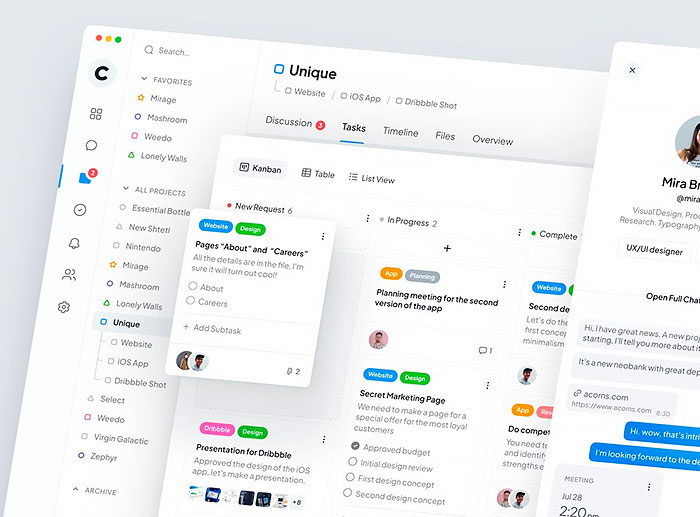
Team management dashboard concept by Conceptzilla
When launching a startup with limited resources, it’s wiser to release an MVP rather than waste all the money on creating a full application. A minimum viable product or MVP allows you to get a place on the market in advance and attract first users for the feedback. As a result, you can see the potential of the future product, get more investors and fix issues missed by QA testers.
However, to make an MVP successful, the team must find a balance between must-have and nonessential features. Must-haves are the tools that make the skeleton of your product — it simply won’t function without them. Nonessentials just add more value but can be implemented later.
#4 Careful QA & beta testing
According to the statistics, a user finds around 44% of in-app bugs. That’s why proper testing for all features is crucial for the project’s success. The more issues the team misses, the more expenses they have later on to fix bugs. When the app doesn’t work as intended, it also damages the company’s reputation and viability of future products.
What types of testing can improve development cost optimization?
- Accessibility test. Decide on the release platforms and test your application only on those devices. Check how the app works and run some user scenarios to see whether people can reach their goals. This strategy will reduce the test coverage and save some money.
- Security tests. If the project includes vulnerable spots like payment methods or data exchange, their testing is a must. Otherwise, potential cyberattacks or breaches will damage not just users’ private info but your reputation.
- Testing of external APIs and third-party services. For sure, their testing requires more effort, but it will pay off in the process.
- Beta testing. To cover more features, you can launch a beta version among a selected group of users. Their feedback may highlight issues your team hasn’t noticed before.
Nevertheless, overtesting also harm mobile app development since it takes too many resources. Instead of hunting for non-existent bugs, people should work on more pressing tasks.

#5 Outsourcing tasks
Outsourcing is a great way to reduce the task pool of your in-house team. While you focus on the business processes, the offshore staff continue developing the project. This strategy provides a wide range of other opportunities for cost optimization. First and foremost, you can find more talented people across the world. Their pro-level skills provide access to cutting-edge technologies useful for your projects, like IoT or process automation.
Moreover, experienced employees don’t need extensive mentoring, which eliminates expenses on basic training costs. They grasp the project idea and get started quicker than the newbies. Also, outsourced staff usually prefers working remotely, which cuts a huge part of costs: transportation, presence at the office, cafe lunches, a place with high-end equipment, etc. These facts are crucial for startups since their time and resources are limited.
Outsourcing practices change yearly, so you must stay updated with the latest trends. New techniques will eventually pay off and significantly speed up the development process.
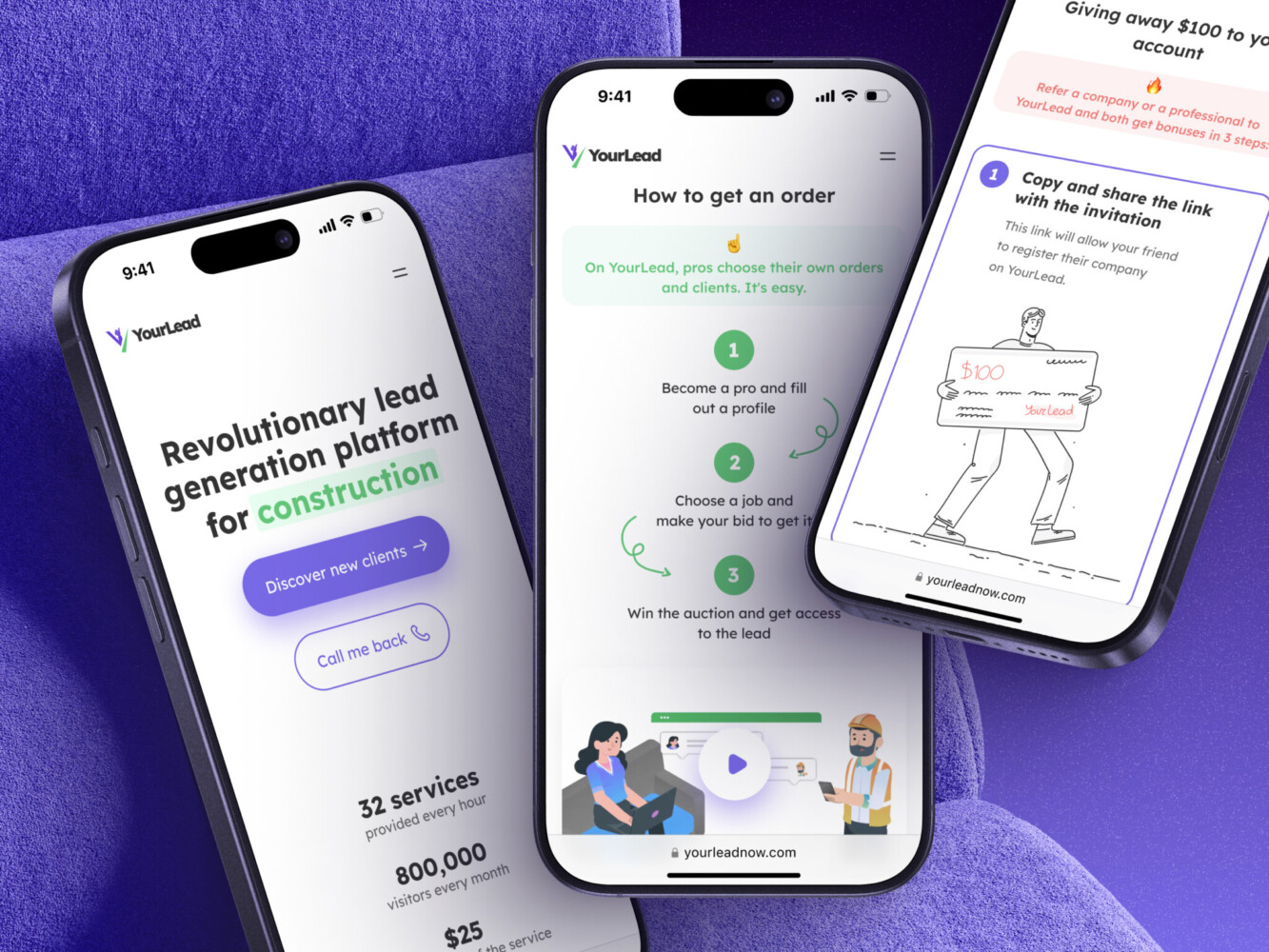
Mobile App for Construction Lead Generation Platform by Shakuro

FAQ
How can a startup reduce software development costs?
A startup can reduce software development costs with a small but experienced team, a clear product concept based on user research, a detailed roadmap with an MVP instead of a full application, careful QA and beta testing, and outsourcing part of the tasks. Agile helps too: projects based on this methodology have a 64% success rate.
Is a small team or a large team cheaper for startup development?
A small but very skilled team is usually cheaper for startup development. Experienced specialists need little time to understand the tech stack, choose a suitable architecture, and suggest better workflows, while a large staff spreads limited resources thin. You will need to set up convenient conditions for them: communication channels, methodology, software, and hardware.
Why should a startup launch an MVP first to save costs?
An MVP lets a startup get a place on the market early, attract first users for feedback, and show investors the product’s potential without spending the whole budget on a full application. The team must separate must-have features, without which the product won’t work, from nonessential ones that can come later. This matters when 58% of projects start with less than $25,000.
Which testing saves money in startup app development?
Testing only on the chosen release platforms, security testing of payments and data exchange, testing external APIs and third-party services, and beta testing with a selected group of users save money in startup app development. Users find around 44% of in-app bugs, and every missed issue costs more later. Overtesting wastes resources too.
Does outsourcing lower development costs for startups?
Yes, outsourcing usually lowers development costs for startups. You get access to talented specialists across the world, experienced people don’t need extensive mentoring or basic training, and remote work removes office costs like transportation, workspace, and high-end equipment. Meanwhile, your in-house team can focus on business processes while the outsourced staff continues development.
In conclusion
Launching a startup is difficult: one needs to manage business, teams, and expenses in a short period. The result must be on the competitors’ level, which can be medium-size companies or enterprises. However, that’s not impossible. Thanks to modern technologies and cost optimization strategies, small teams can create ground-breaking projects.
Have a startup idea that needs implementation? Contact us, and we will help you bring it to life.
Related reading
- How to Make An App Like Uber: Tips On Cost Estimation & Development
- How to Create a Budget For Your Startup: a Comprehensive Guide
- How to Create A Language Learning App For Kids And How Much Does It Cost?
- Why Redesign Existing Mobile Apps Or Websites And What Problems Does It Solve?
* * *
This article was originally published in August 2022 and was updated in July 2026 to make it more relevant and comprehensive.